



Help support our mission, donate today and be the change. Every contribution goes directly toward driving real impact for the cause we believe in.
WASHINGTON – The shooting at the White House Correspondents’ Dinner marks one of the most serious security breaches at a high-profile US political-media event in years, raising urgent questions not only about immediate failures, but also about the broader climate of political violence, polarisation, and institutional vulnerability in the United States.
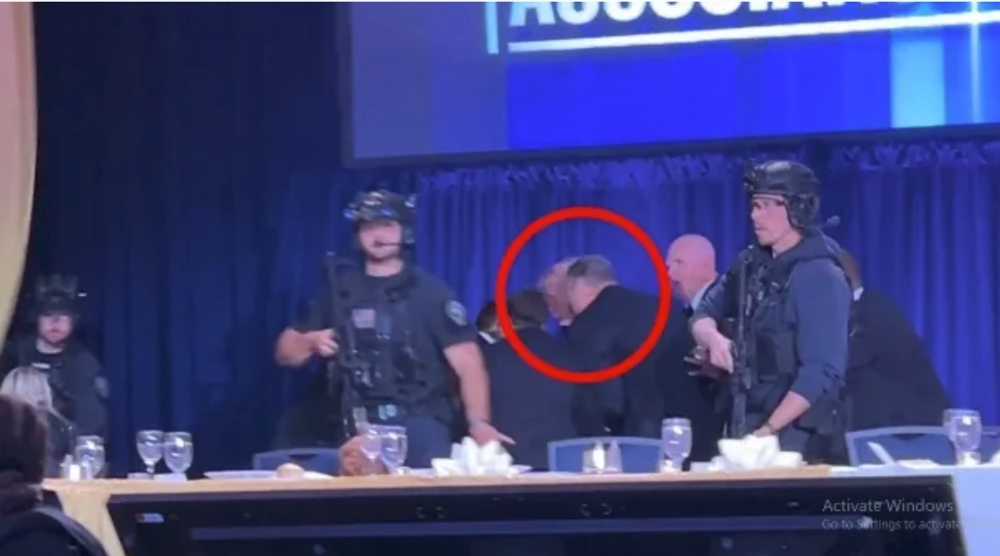
Chaos At A Symbolic Event:
The annual White House Correspondents’ Association (WHCA) dinner, long framed as a celebration of press freedom and political satire, descended into panic when a gunman attempted to breach a secured checkpoint at the Washington Hilton.
According to officials, 31-year-old suspect Cole Thomas Allen, reportedly from California, approached the venue armed with a shotgun, handgun, and multiple knives. Law enforcement says he fired at least one shot, striking a Secret Service officer at close range. The officer survived due to body armour.
Inside the ballroom, where President Donald Trump, Vice President JD Vance, and hundreds of journalists were gathered, confusion spread rapidly.
Veteran CNN anchor Wolf Blitzer described the moment starkly: he saw a man with a “very serious weapon” firing multiple rounds. Guests ducked under tables as Secret Service agents flooded the room and physically shielded the president before evacuating him.
A TIME reporter present noted agents “ran through the crowd” as loud bangs echoed, while a voice shouted: “Get down!”
A Narrowly Avoided Assassination?
Authorities have stopped short of confirming a definitive motive, but the language from senior officials suggests the incident is being treated as a potential assassination attempt.
Acting Attorney General Todd Blanche stated the suspect was believed to be targeting members of the Trump administration, adding that charges could include attempted assassination.
“It does appear that he set out to target folks that work in the administration, likely including the president,” Blanche said.
The suspect, who reportedly travelled cross-country by train before checking into the hotel, is said to be “not actively cooperating” with investigators. He faces multiple federal charges, including assault on a federal officer and firearms offences, with an arraignment scheduled in federal court.
FBI Director Kash Patel confirmed a full background investigation is underway, including analysis of digital footprints and possible ideological motivations.
Security Failures Under Scrutiny:
Despite the Secret Service’s rapid response, the fact that an armed individual reached a high-security checkpoint at one of Washington’s most heavily policed events has triggered immediate concern.
Washington Mayor Muriel Bowser confirmed the suspect was stopped at a screening point, but crucially, only after he had already penetrated part of the security perimeter.
Serious questions now hang over the security architecture of one of Washington’s most tightly controlled political events. Under the heavy presence of the Secret Service, local police, and multiple federal agencies, how did an armed individual manage to reach a secured checkpoint with a shotgun, handgun, and knives? What does this say about the integrity of layered security systems that are specifically designed to prevent exactly this kind of breach, particularly at an event attended by the sitting president, senior officials, and hundreds of journalists?
If, as officials confirmed, the suspect was a registered guest at the Washington Hilton, why were there not stricter internal screening procedures in place for hotel residents during a high-risk, high-profile gathering? Should guests have been subject to additional checks, especially given the presence of the president and vice president inside the ballroom? Or does this point to a critical blind spot, where “trusted” access through accommodation status may have bypassed more rigorous scrutiny?
Authorities have also indicated that the event operated under a controlled invitation system, with attendees vetted and credentials checked. If that is the case, how did an armed individual, whether invited or not, get close enough to a security checkpoint to open fire? Were all invitations genuinely verified against identity and threat databases, or was there a breakdown between credentialing and physical security enforcement?
At the same time, speculation has begun circulating, particularly online, questioning whether the incident could have been staged or politically manipulated. There is currently no credible evidence to support claims that the shooting was orchestrated to influence electoral outcomes or benefit Donald Trump politically. However, the fact that such suspicions are gaining traction raises another troubling issue: in an era of deep political polarisation and mistrust, even violent incidents are quickly pulled into competing narratives. Does this erosion of trust risk overshadowing the factual investigation, and what are the consequences when public confidence in institutions, security agencies, and political leadership is already so fragile?
These unanswered questions are likely to define the next phase of the investigation, as officials attempt not only to establish motive, but to explain how a breach of this magnitude was possible in the first place.
Trump’s Response: Security And Political Messaging.
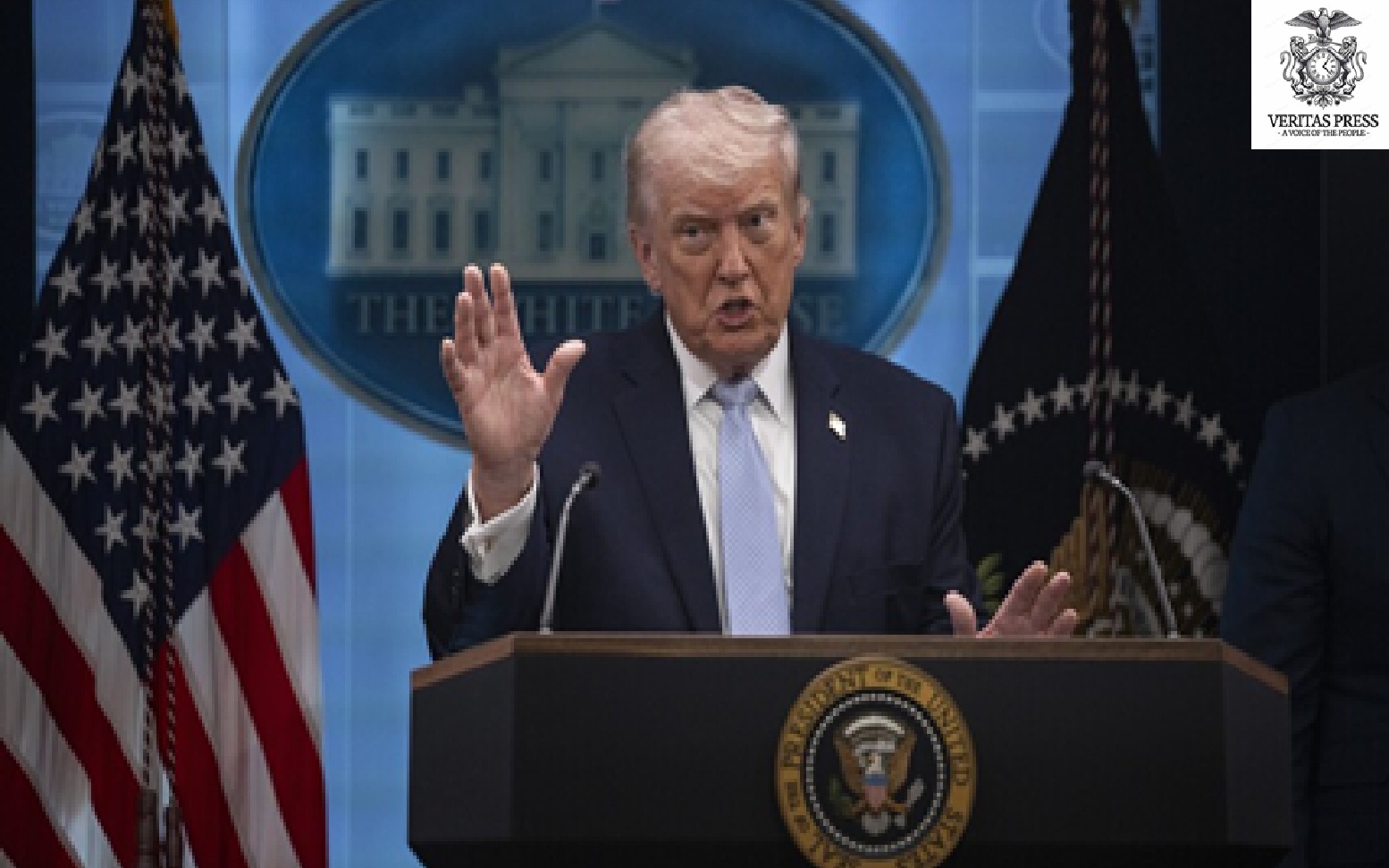
Trump framed the incident both as a personal threat and as a justification for expanded security infrastructure.
He described the suspect as “a sick person, a very sick person” and suggested he may have been the intended target. At the same time, he used the moment to promote plans for a fortified White House ballroom:
“It’s drone-proof, it’s bulletproof glass… Secret Service and the military are demanding it.”
The remarks reflect a pattern in Trump’s rhetoric, linking security incidents to broader narratives about threat, disorder, and the need for hardened state infrastructure.
Notably, Trump also drew historical parallels, referencing assassinated leaders like Abraham Lincoln, implying that political prominence attracts violence.
A Pattern Of Escalating Political Violence:
The attack does not exist in isolation. It comes amid a wider escalation of political threats and violence in the United States.
House Democratic leader Hakeem Jeffries said:
“The violence and chaos in America must end.”
Meanwhile, Republican House Speaker Mike Johnson said he was “praying for our country tonight.”
These bipartisan reactions highlight a rare moment of consensus, but also underline how routine such condemnations have become.
Journalism Under Threat:
Perhaps most symbolically, the attack targeted an event dedicated to press freedom.
WHCA president Weijia Jiang, who was seated next to Trump, reflected on the deeper implications:
“When there is an emergency, we run to the crisis, not away from it… We must also think about how fragile they are.”
Her remarks point to a troubling reality: journalists, already facing increasing hostility, were directly exposed to armed violence at one of their own institutional gatherings.
Global Reaction: Condemnation And Concern.
International leaders responded swiftly, framing the incident as an attack on democratic norms.
UK Prime Minister Keir Starmer condemned “any attack on democratic institutions or the freedom of the press.” European Commission President Ursula von der Leyen said “violence has no place in politics,” while Canadian Prime Minister Mark Carney described it as a “disturbing event.”
Israeli Prime Minister Benjamin Netanyahu went further, calling it an “attempted assassination,” reflecting how the incident has been interpreted globally.
Unanswered Questions And A Deepening Crisis:
Despite the rapid arrest, critical uncertainties remain: the suspect’s motive, the extent of his planning, and the apparent vulnerabilities in one of the most heavily secured political environments in the country.
What unfolded at the WHCA dinner was not just a security breach; it was a rupture in one of the few remaining spaces where media and political power intersect in a controlled, symbolic setting.
If even this environment can be penetrated, what does that mean for the broader public sphere?
As investigators continue to piece together the facts, the incident is already exposing deeper fractures within US security systems, political culture, and public trust itself.
Conclusion: A Breach Beyond Security.
What happened at the White House Correspondents’ Dinner cannot be reduced to a “lone wolf” incident or an isolated lapse in protocol. It represents a convergence of deeper structural failures, security, political, and societal issues that now demand far more scrutiny than official briefings have so far offered.
At the most immediate level, the breach exposes uncomfortable truths about the limits of even the most sophisticated security apparatus in the world. The US Secret Service, alongside federal and local law enforcement, is tasked with protecting the highest office in the country. Yet an armed individual was still able to advance far enough to fire a weapon at a federal agent within proximity of the president. This was not a near miss in abstract terms; it was a measurable, physical penetration of a supposedly hardened security perimeter. The question is no longer whether systems worked, but where, precisely, they failed, and whether those failures are systemic rather than exceptional.
But the implications extend well beyond operational shortcomings. The fact that such an attack unfolded at an event dedicated to press freedom adds a layer of symbolic rupture. The White House Correspondents’ Dinner has long functioned as a carefully managed space where power and accountability coexist, however uneasily. That this space could be transformed, within seconds, into a scene of panic and armed confrontation signals a deeper erosion of the civic norms that underpin democratic life.
Equally significant is the information vacuum that has followed. While officials, including Todd Blanche and Kash Patel, have pointed to an ongoing investigation, critical details remain unclear: how the suspect moved through security layers, whether warning signs were missed, and what, if any, intelligence failures preceded the incident. In that vacuum, speculation has flourished. Claims of political staging, while unsupported by evidence, have nonetheless gained traction, reflecting a public sphere in which trust has become so degraded that even acts of violence are immediately refracted through partisan suspicion.
That erosion of trust may ultimately prove as consequential as the breach itself. When citizens begin to question not only the competence of institutions but their legitimacy, the ground shifts beneath democratic governance. The rapid politicisation of the incident, whether through rhetoric, deflection, or opportunistic framing, risks obscuring the accountability that such a moment demands.
President Donald Trump’s response, which combined personalisation of the threat with calls for expanded physical security infrastructure, fits into a broader pattern: crises are not only managed but narrativised. The danger is that structural questions, about access, oversight, and prevention, become secondary to political messaging about strength, resilience, or victimhood.
Ultimately, this incident forces a more difficult reckoning. It is not simply about how one man with weapons reached a checkpoint. It is about how a political environment saturated with hostility, distrust, and increasingly normalised violence creates the conditions in which such acts become conceivable, and, more alarmingly, recurrent.
If the investigation remains narrowly focused on the individual suspect, it risks missing the wider architecture of risk that made this breach possible. And if those broader questions go unanswered, the next incident may not end with an officer saved by a bulletproof vest, but with consequences far more severe, and far less containable.
Source: Multiple News Agencies
Submissions:
For The Secure Submission Of Documentation, Testimonies, Or Exclusive Investigative Reports From Any Global Location, Please Utilise The Following Contact Details For Our Investigations Desk: enquiries@veritaspress.co.uk or editor@veritaspress.co.uk
Help Support Our Work:
Popular Information is powered by readers who believe that truth still matters. When just a few more people step up to support this work, it means more lies exposed, more corruption uncovered, and more accountability where it’s long overdue.
Help Protect Independent Journalism, Which Is Currently Under Attack.
If you believe journalism should serve the public, not the powerful, and you’re in a position to help, becoming a DONATOR or a PAID SUBSCRIBER truly makes a difference.
DONATION APPEAL: If You Found This Reporting Valuable, Please Consider Supporting Independent Journalism.
Help Support Our Work – We Know, We Know, We Know …
Seeing these messages is annoying. We know that. (Imagine what it’s like writing them … )
Your support fuels our fearless, truth-driven journalism. In unity, we endeavour to amplify marginalised voices and champion justice, irrespective of geographical location.
But it’s also extremely important. One of Veritas Press’s greatest assets is its reader-funded model.
1. Reader funding means we can cover what we like. We’re not beholden to the political whims of a billionaire owner. We are a small, independent and impartial organisation. No one can tell us what not to say or what not to report.
2. Reader funding means we don’t have to chase clicks and traffic. We’re not desperately seeking your attention for its own sake: we pursue the stories that our editorial team deems important and believe are worthy of your time.
3. Reader Funding: enables us to keep our website and other social media channels open, allowing as many people as possible to access quality journalism from around the world, particularly those in places where the free press is under threat.
We know not everyone can afford to pay for news, but if you’ve been meaning to support us, now’s the time.
Your donation goes a long way. It helps us:
- Keep the lights on and sustain our day-to-day operations
- Hire new, talented independent reporters
- Launch real-time live debates, community-focused shows, and on-the-ground reporting
- Cover the issues that matter most to our communities, in real time, with depth and integrity
We have plans to expand our work, but we can’t do it without your support. Every contribution, no matter the size, helps us stay independent and build a truly people-powered media platform.
If you believe in journalism that informs, empowers, and reflects the communities we serve, please donate today.

Houthi forces have captured the historic Red Sea port of Mocha and are advancing on
London’s historic sanctions against Israeli settlements mark a watershed moment in UK foreign policy, but
With 95% of Gaza’s population now wholly dependent on aid and more than 90% stripped
India calls for Kashmir and Ladakh to appear only on its official map after a
ISLAMABAD – In the high-stakes political theatre of Pakistan, the battleground has shifted from the
Francesca Albanese says third states have an ICJ-mandated obligation to end Israel’s occupation. But with
As Israeli jets bomb a Syrian air base over alleged Turkish deployment plans, Ankara, Washington
QUSRA, OCCUPIED WEST BANK – In the rugged hills south of Nablus, a slow-motion displacement
Beneath the wreath-laying and “plunder” rhetoric lies a contest for Iraq’s logistical arteries and post-war
As mediators push for ceasefire extensions, airstrikes on police infrastructure reveal a strategic campaign to