



Author:
Help support our mission, donate today and be the change. Every contribution goes directly toward driving real impact for the cause we believe in.
In The Case Of Dr. Hussam Abu Safiya, The Clinical And Legal Void Swallowing Palestinian Medical Workers, And What His Indefinite Solitary Confinement Says About The Rule Of Law In Israel’s Military Courts.
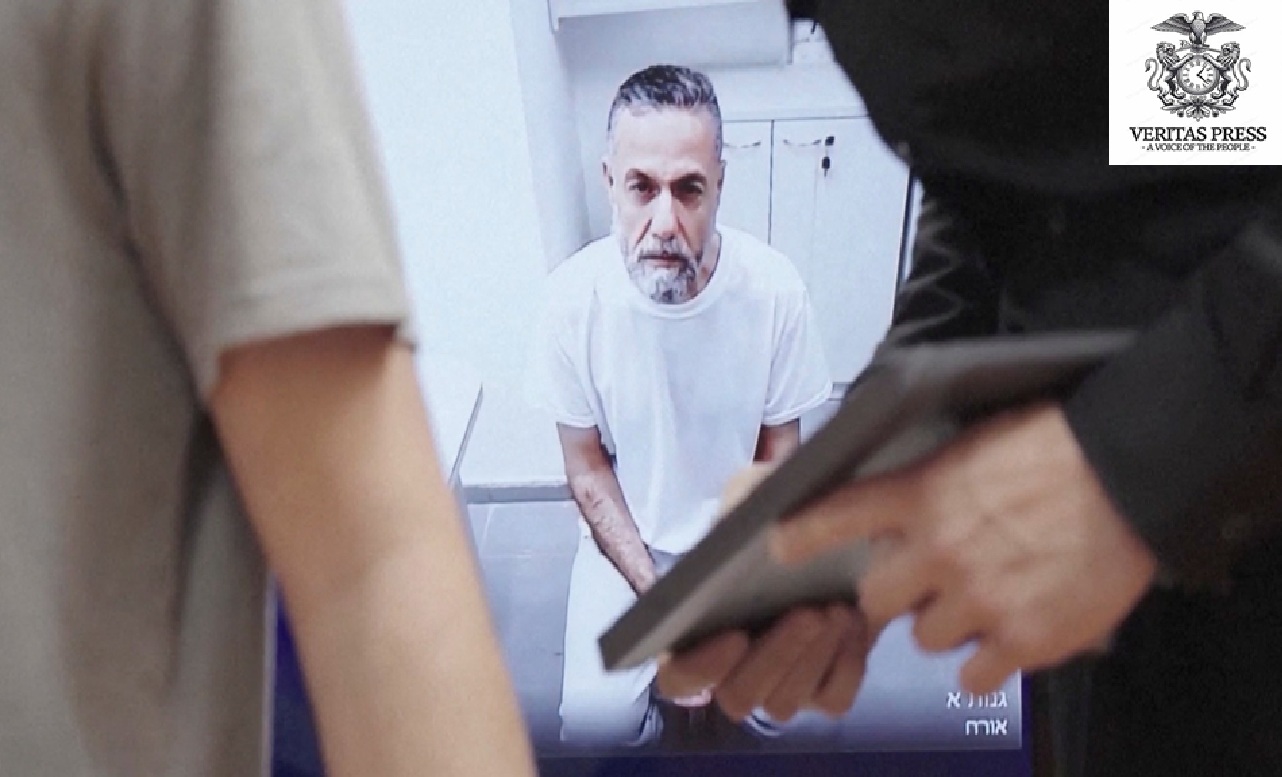
JERUSALEM / GAZA CITY — On a screen flickering inside a Jerusalem courtroom last Wednesday, Dr. Hussam Abu Safiya appeared for the first time in nearly a year. The paediatrician who refused to abandon newborn babies as Israeli forces closed in on northern Gaza sat handcuffed, visibly emaciated, lesions spreading across his hands. He told the Israeli Supreme Court that his detention was “unjust and arbitrary” and begged for his freedom. On Tuesday, the court answered: his appeal was rejected. The 53-year-old director of Kamal Adwan Hospital will remain locked away under Israel’s Unlawful Combatants Law, without charge, his continued imprisonment justified by “confidential materials” that neither he nor his lawyer is allowed to see.
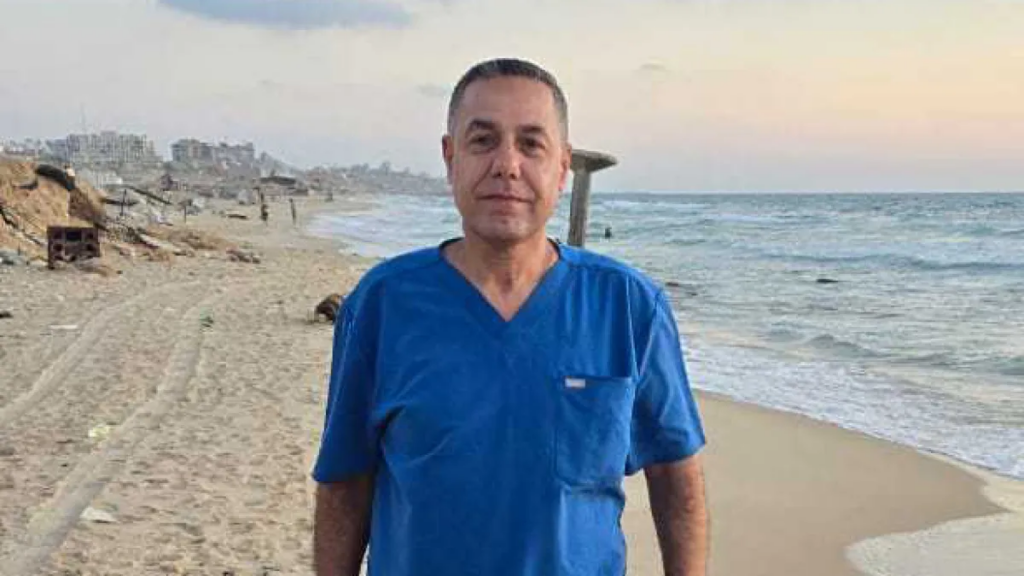
The ruling, made public on 16 June 2026, closes a 531-day chapter of judicial ambiguity and opens a darker one of legalised disappearance. For the physicians, jurists, and human rights organisations tracking the case, the decision does more than keep one man in solitary confinement; it codifies a doctrine under which medical personnel can be seized from conflict zones, stripped of due process, and held perpetually on the basis of secret intelligence that the detainee is structurally unable to challenge. “The message sent by this decision is unmistakable,” said Naji Abbas, director of the Prisoners and Detainees Department at Physicians for Human Rights Israel (PHRI). “A medical professional can be deprived of his liberty indefinitely without being charged and without the authorities presenting evidence against him in open court.”
The Man Who Stayed:
To grasp the severity of the moment, one must recognise the symbol Dr Abu Safiya has become. In the final weeks of 2023, as Israeli ground forces tightened their siege on northern Gaza, Kamal Adwan Hospital was the last partially functioning medical facility in the area. Inside, dozens of premature infants lay in incubators running on dwindling generator fuel. The Israeli military ordered all medical staff to evacuate. Dr. Abu Safiya, a paediatrician by training and the hospital’s director, refused. “I am a paediatrician who provides medical services and care to patients, the wounded and vulnerable people in the Gaza Strip,” he later told the court. “I carried out my work in accordance with international law and humanitarian standards.”
He would continue working as the hospital was raided, shelled, and stripped of supplies. On 27 December 2024, Israeli forces stormed Kamal Adwan for the final time. Dr. Abu Safiya was seized, along with other staff. Since that day, he has not been free.
The Israeli military has accused him of being a Hamas operative. It has provided no evidence to support the allegation, nor has it presented any charges before a court. The Gaza Ministry of Health and Hamas have denied the claim. For more than 500 days, Dr. Abu Safiya has been held under the Unlawful Combatants Law, a statute originally designed for foreign nationals suspected of hostile activity who do not qualify for prisoner-of-war status under the Geneva Conventions. The law permits prolonged detention with minimal judicial oversight, and in the doctor’s case, it has been used to deny him even the rudimentary protections afforded to criminal defendants.
A Trial Without Evidence:
The Supreme Court hearing on 10 June 2026 marked a turning point precisely because of how little it turned. Dr. Abu Safiya’s lawyer, Nasser Abu Odeh, argued that his client’s detention is a glaring violation of the Geneva Conventions, which expressly protect medical personnel from attack, arbitrary arrest, and mistreatment during armed conflict. International humanitarian law states that doctors and nurses may not be punished for carrying out their medical duties, even if they are treating wounded combatants. Abu Odeh demanded that the state produce the factual basis for its accusations.
Instead, the three-justice panel relied on a confidential dossier submitted by the Israeli security establishment. The content of that dossier remains unknown to the defence. When PHRI’s Abbas told Reuters that the court “based its decision on ‘confidential materials’ that were not shared with Abu Safiya or his lawyer,” he was describing a proceeding that would be unrecognisable as justice in any democratic legal tradition. The Supreme Court spokesperson declined to comment. The ruling itself is classified.
Legal scholars who spoke to this investigation on condition of anonymity due to the sensitivity of the case described the reliance on undisclosed evidence as the functional equivalent of a secret trial. “You cannot cross-examine a ghost,” said one Israeli human rights lawyer not involved in the case. “The state says, ‘trust us, he is dangerous,’ and the court says, ‘we trust you.’ That is not adjudication. That is a rubber stamp.”
The Unlawful Combatants Law already imposes a lower evidentiary threshold than ordinary criminal law. Detainees can be held for months before a first judicial review, and the standard for continued detention is not “beyond a reasonable doubt” but a loose balancing of security risk. The injection of secret intelligence material moves the process entirely into the executive branch’s control, with the judiciary serving as a legitimising facade. In Dr. Abu Safiya’s case, that facade has now been cemented by Israel’s highest court.
“The Marks Of Torture, Pain And Exhaustion”:
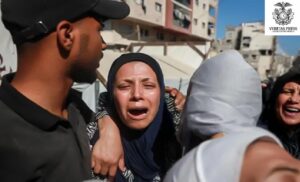
If the legal architecture is impenetrable, the physical condition of the man at its centre is devastatingly visible. When Dr. Abu Safiya appeared via video link from Nafha Prison last week, his family watched from Gaza. “When we saw his latest image, we received it with shock, with tears and with weeping,” his son Ilyas Abu Safiya told Al Jazeera after the session. “We did not only see the face of a father we have missed for many long months, we saw the marks of torture, pain and exhaustion clearly etched on his face.”
Attorney Abu Odeh has documented a litany of abuses that, taken together, suggest a deliberate programme of physical and psychological degradation. The doctor is held in solitary confinement, shackled by both hands and feet for extended periods. He is given insufficient food and no access to safe drinking water. His glasses have been confiscated and not returned, leaving him with worsening vision problems. He suffers from chronic illnesses requiring regular medication and treatment that prison authorities are systematically withholding. Skin diseases, described by the lawyer as widespread among Palestinian political prisoners, now cover his hands. He endures severe back and neck pain from a previous assault. He vomits frequently and cannot keep food down.
Former Palestinian detainees who were released from Israeli prisons have provided some of the most harrowing corroboration. Their testimonies, collected by the Asra Media Office, paint a picture of targeted sadism. Hamza Abu Amira, a former inmate, said the doctor was subjected to “exceptionally harsh treatment,” including continuous humiliation and severe physical and verbal torture by specialised prison units. Guards forced him, under extreme pain, to repeat degrading phrases meant to strip him of his humanity.
Rami Abu Amira described an incident that he called among the most disturbing he had ever witnessed: interrogators “stripped Dr. Hussam completely naked and unleashed police dogs on his frail body,” leaving deep wounds and scratches. He added that the doctor often returned from interrogation sessions “physically shattered and barely conscious.”
A third former detainee, Ahmad Qaddas, recalled that “the prison cells echoed with the doctor’s screams under severe beatings.” Other prisoners were forbidden from approaching his cell or even asking about his condition. “The abuse inflicted on Abu Safiya,” Qaddas said, “was not merely physical torture, but an attempt to crush his humanity, identity, and dignity.”
Israel’s prison service has denied all allegations of abuse. Yet the accounts align with a broader pattern documented by Palestinian and Israeli rights groups. Approximately 9,500 Palestinians are currently held in Israeli prisons, and organisations like Addameer and PHRI have catalogued systematic starvation, medical neglect, and torture that have led to dozens of deaths in custody since October 2023. Former detainees describe a network of facilities where the Unlawful Combatants Law operates as a license for cruelty, creating zones of impunity far from public or judicial scrutiny.
In late May 2026, Dr. Abu Safiya was transferred from the Negev Prison to Nafha, a facility in southern Israel known for harsh solitary confinement conditions. PHRI reports that for at least the last 13 days, he has been locked in isolation, his contact with the outside world reduced to almost nothing. The transfer itself, his legal team argues, was a punitive measure following growing international attention.
A Health System Systematically Decapitated:
The targeting of Dr. Abu Safiya cannot be divorced from the wholesale destruction of Gaza’s medical infrastructure. Since the war began in October 2023, more than 930 attacks on healthcare have been recorded by the World Health Organization. All 36 hospitals in the Gaza Strip have sustained damage. As of mid-2026, only half are even partially functional. The physical obliteration of buildings is matched by a human decimation: Medical Aid for Palestinians (MAP) reports that at least 1,722 medical workers were killed between October 2023 and October 2025, an average of more than two every single day.
The number of physicians detained without charge has also risen sharply. Dr. Abu Safiya is among at least 14 doctors from Gaza held in Israeli custody for more than a year under the Unlawful Combatants Law. The pattern suggests a deliberate strategy to eliminate the clinical leadership of the enclave’s healthcare system. “His arrest and detention are a reflection of Israel’s systematic targeting of Palestinian health workers and the decimation of the healthcare system in Gaza in order to inflict conditions of life calculated to bring about the physical destruction of Palestinians,” Amnesty International stated in a report earlier this year.
UN special rapporteurs Tlaleng Mofokeng (on the right to health) and Ben Saul (on counter-terrorism and human rights) have been blunt. In March 2026, they declared that Dr. Abu Safiya’s health “remains dire” and that “he has been systematically denied critical medical examination and treatment, and deprived of essential care to such an extent that his life, health, and wellbeing have been gravely endangered.” They emphasised that his arbitrary deprivation of liberty, combined with torture and the erosion of his right to health, constitutes a cascade of human rights violations for which Israel bears direct responsibility.
The rapporteurs, along with a coalition of international NGOs, have called for Dr. Abu Safiya’s immediate release, the provision of urgent medical care, and an end to the policy of arbitrary detention against medical and humanitarian personnel. The Palestinian Centre for Prisoners Advocacy, in a statement following Tuesday’s ruling, condemned the decision as “a clear violation of international humanitarian law and the Geneva Conventions” and held “the Israeli occupation authorities fully responsible for the life and safety of Dr. Hussam Abu Safiya.”
The Dark Logic Of The Unlawful Combatants Law:
To grasp how a paediatrician can be held for a year and a half without charge, one must examine the legal instrument that enables it. Israel’s Unlawful Combatants Law, originally enacted in 2002, was amended in 2023 to expand the state’s power. It allows the military to detain foreign nationals who are suspected of participating in hostilities against Israel or belonging to a group that does so, without affording them prisoner-of-war status. Detainees can be held for up to 45 days before being brought before a judge, and even then, the judge’s review is largely administrative. The law permits the use of secret evidence that is withheld from the detainee and their counsel, rendering any meaningful challenge nearly impossible.
In practice, the law has become a parallel justice system for Palestinians from Gaza. Unlike administrative detention, which is used for Palestinians in the occupied West Bank and is subject to renewable six-month orders, the Unlawful Combatants Law imposes no clear maximum duration. Detainees can be held as long as the “security situation” warrants, a determination made by the executive branch with minimal judicial interference. Human rights organisations have long argued that the law violates international standards on arbitrary detention and the right to a fair trial. The Supreme Court’s decision in Dr. Abu Safiya’s case effectively endorses its most extreme application: the indefinite incarceration of a humanitarian worker based on evidence the world will never see.
Legal experts note that the Geneva Conventions’ protections for medical personnel are absolute. The First Geneva Convention states that medical staff “shall not be the object of any attack and shall at all times be respected and protected.” Additional Protocol I, to which Israel is not a party but which reflects customary international law, stipulates that medical workers may not be prosecuted or punished for providing care, irrespective of the patient’s identity. The International Committee of the Red Cross has repeatedly emphasised that “medical personnel must never be punished for carrying out their medical duties.”
Against this legal mountain, Israel’s Supreme Court ruled with a whisper. The only public rationale is a security claim that remains unproven, shielded behind the classification stamp. This institutional silence is its own form of violence. “The court’s decision constitutes a clear violation of international humanitarian law,” the Palestinian Centre for Prisoners’ Advocacy said, “and provides special protection for medical personnel during armed conflicts and prohibits their targeting or arbitrary detention for carrying out their humanitarian and professional duties.”
A Doctor’s Body, A State’s Message:
While the legal machinery grinds on, the physical reality of Dr. Abu Safiya’s imprisonment sharpens with every report that leaks from behind prison walls. Former detainees describe a man who has become a specific target of the state’s punitive apparatus. Guards raid his sleeping area and throw sound grenades and gas canisters, even when his health is visibly failing. He is forced to insult himself and recite humiliating litanies. His chronic illnesses, details of which have been communicated to prison authorities by his legal team, are ignored. The skin lesions spreading across his hands are a signature of untreated infections that flourish in the unhygienic, overcrowded conditions of Israeli lock-ups.
PHRI has repeatedly petitioned for adequate medical care, to no avail. “It appears the Israeli authorities are deliberately withholding medical care to further oppress Palestinian detainees held within these prisons,” said attorney Abu Odeh. The UN special rapporteurs have warned that the denial of treatment is so severe that it “gravely endangers” his life. This calculated medical neglect, combined with the psychological torment of indefinite isolation, amounts to a form of slow-motion execution that international law defines as cruel, inhuman, and degrading treatment, and potentially torture.
The doctor’s family, separated by war and the blockade, lives in a state of suspended grief. Ilyas Abu Safiya’s words after the video hearing captured the helplessness of loved ones who can only witness suffering from a distance: “We did not only see the face of a father we have missed … we saw the marks of torture, pain and exhaustion.” The face that appeared on the courtroom screen was already a map of the violence inflicted on Gaza’s medical corps.
Silence Is Complicity:
The international response, while rhetorically sharp, has been practically inert. Statements from UN experts and human rights organisations have proliferated, but no concrete consequences have materialised for Israel’s judicial and military institutions. The European Union, the United States, and other states with influence over Israel have refrained from linking the case to their broader diplomatic and military support. The UN rapporteurs pleaded with the international community to “ensure prevention, recourse and justice,” yet no state has publicly threatened sanctions, recalled ambassadors, or invoked universal jurisdiction to investigate the officials responsible.
For Palestinian medical workers still attempting to provide care in the ruins of Gaza, the message of the Abu Safiya case is chilling. If a senior paediatrician who treated premature babies and stayed at his post when ordered to evacuate can be abducted, held incommunicado, tortured, and judicially abandoned, then no doctor is safe. The targeting of healthcare is no longer incidental to the war; it is a central front. The WHO and medical NGOs have documented how the systematic destruction of health facilities and the killing or detention of medical staff create conditions that make survival impossible for the civilian population. In this framework, detaining a hospital director without charge is not an aberration but a logical step in a campaign to dismantle Palestinian health infrastructure as a whole.
Dr. Hussam Abu Safiya has now joined a growing list of Gaza’s disappeared individuals swallowed by a legal void, their bodies used as sites of punishment, their names reduced to case files in secret courts. The Supreme Court’s ruling this week closes a judicial door that was never truly open. It also invites the international community to act, or to accept that medical neutrality has been buried in the rubble of Gaza. The doctor’s life hangs in the balance, and with it, the credibility of the legal and moral frameworks that the world claims to uphold.
Source: Veritas Press C.I.C. | Multi News Agencies
Help Support Our Work By Donating.
Popular Information is powered by readers who believe that truth still matters. When just a few more people step up to support this work, it means more lies exposed, more corruption uncovered, and more accountability where it’s long overdue.
Help Protect Independent Journalism, Which Is Currently Under Attack.
If you believe journalism should serve the public, not the powerful, and you’re in a position to help, becoming a DONATOR or a PAID SUBSCRIBER truly makes a difference.
DONATION APPEAL: If You Found This Reporting Valuable, Please Consider Supporting Independent Journalism.
Your support fuels our fearless, truth-driven journalism. In unity, we endeavour to amplify marginalised voices and champion justice, irrespective of geographical location.
But it’s also extremely important. One of Veritas Press’s greatest assets is its reader-funded model.
1. Reader funding means we can cover what we like. We’re not beholden to the political whims of a billionaire owner. We are a small, independent and impartial organisation. No one can tell us what not to say or what not to report.
2. Reader funding means we don’t have to chase clicks and traffic. We’re not desperately seeking your attention for its own sake: we pursue the stories that our editorial team deems important and believe are worthy of your time.
3. Reader Funding: enables us to keep our website and other social media channels open, allowing as many people as possible to access quality journalism from around the world, particularly those in places where the free press is under threat.
We know not everyone can afford to pay for news, but if you’ve been meaning to support us, now’s the time.
Your donation goes a long way. It helps us:
- Keep the lights on and sustain our day-to-day operations
- Hire new, talented independent reporters
- Launch real-time live debates, community-focused shows, and on-the-ground reporting
- Cover the issues that matter most to our communities, in real time, with depth and integrity
We have plans to expand our work, but we can’t do it without your support. Every contribution, no matter the size, helps us stay independent and build a truly people-powered media platform.
If you believe in journalism that informs, empowers, and reflects the communities we serve, please donate today.
Help By Donating Today
Submissions:
For The Secure Submission Of Documentation, Testimonies, Or Exclusive Investigative Reports From Any Global Location, Please Utilise The Following Contact Details For Our Investigations Desk: enquiries@veritaspress.co.uk or editor@veritaspress.co.uk
GENEVA — A United Nations fact-finding mission has concluded there are “reasonable grounds to believe”
Iran’s GDP is projected to contract by 5.4 to 6.1% in 2026, its worst performance
The Trump administration is preparing a $2.8 billion weapons package for Israel containing 40,000 2,000-pound

Film alleges mass civilian deaths are routinely built into military decisions amid Israel’s genocidal war
The Israeli rights group says violence, displacement, economic strangulation, and settlement expansion form part of

Houthi forces have captured the historic Red Sea port of Mocha and are advancing on
London’s historic sanctions against Israeli settlements mark a watershed moment in UK foreign policy, but
With 95% of Gaza’s population now wholly dependent on aid and more than 90% stripped
India calls for Kashmir and Ladakh to appear only on its official map after a
ISLAMABAD – In the high-stakes political theatre of Pakistan, the battleground has shifted from the