








Help support our mission, donate today and be the change. Every contribution goes directly toward driving real impact for the cause we believe in.
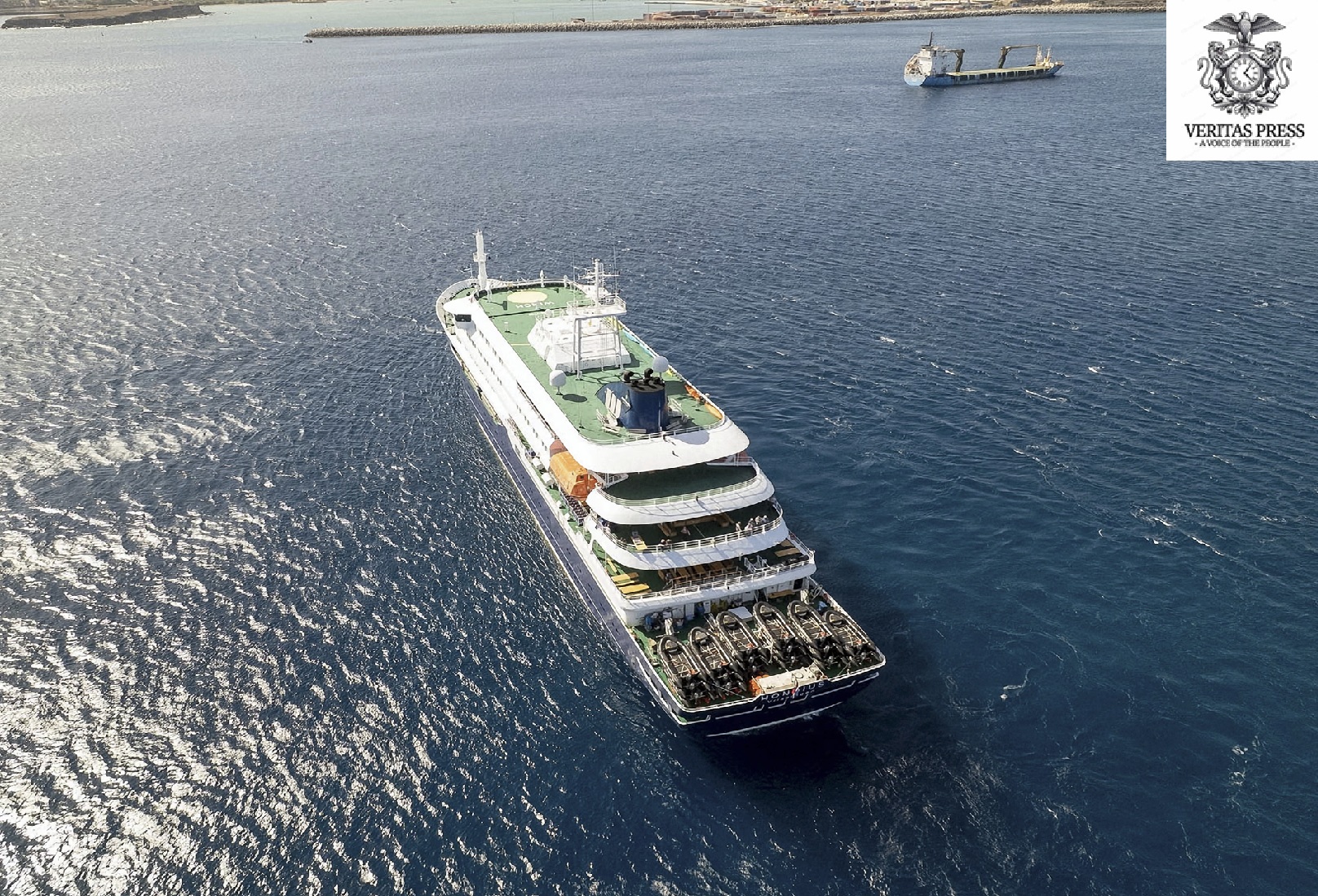
A health crisis aboard a Dutch-flagged cruise ship in the Atlantic has left three people dead and a British national fighting for his life in a Johannesburg intensive care unit. Officials are now racing to medically evacuate symptomatic passengers while the vessel remains anchored off Cape Verde, denied permission to dock.
The outbreak marks a highly unusual mass infection of a virus that rarely transmits between humans, posing a complex logistical and diagnostic challenge for global health authorities.
What Is Hantavirus, And Why Is This Outbreak Unusual?
Hantaviruses are a family of viruses spread mainly by rodents. Unlike respiratory viruses such as influenza or COVID-19, hantavirus is not typically airborne in a way that triggers travel-related outbreaks. Each hantavirus strain is usually specific to a particular rodent host; humans contract the virus by inhaling aerosolised particles from rodent urine, droppings, or saliva, or through direct contact.
The resulting disease, hantavirus pulmonary syndrome (HPS) in the Americas, begins with flu-like symptoms, fever, muscle aches, and fatigue, and can rapidly progress to severe respiratory failure as the lungs fill with fluid. The disease has a high fatality rate, around 38% for HPS in the Americas. A different form, haemorrhagic fever with renal syndrome (HFRS), is more common in Europe and Asia. Early symptoms include intense headaches, abdominal and back pain, and nausea, sometimes followed by shock and kidney failure.
Crucially, person-to-person transmission is rare. The only hantavirus strain confirmed to spread between humans is the Andes virus, documented in isolated clusters in South America. This outbreak’s epicentre is a cruise ship that departed from Ushuaia in southern Argentina, a region within the Andes virus’s known geographic range, which is why health investigators suspect it as the likely culprit, though laboratory confirmation is still pending for most cases.
The World Health Organization (WHO) has been careful to state that “the risk to the wider public remains low” and there is no need for travel restrictions. However, contact tracing is underway in South Africa for hospital staff, airport contacts, and others who may have encountered the evacuated patients.
The Vessel’s Grim Timeline:
The MV Hondius, operated by specialist polar travel company Oceanwide Expeditions, departed Ushuaia on 20 March with around 150 tourists from various countries. It was a long-haul Antarctic itinerary that included stops at several remote South Atlantic territories before its scheduled arrival in Cape Verde on 4 May.
The first signs of a serious health threat emerged when a 70-year-old Dutch man suddenly developed a fever, splitting headache, abdominal pain, and diarrhoea. His condition deteriorated so rapidly that he died on arrival at the British overseas territory of St Helena. In a cruel twist, his 69-year-old wife, evacuated from the ship to South Africa, collapsed at the airport as she was about to board a flight back to the Netherlands. She later died in a Johannesburg hospital.
Oceanwide Expeditions subsequently confirmed that a third passenger, a German national, had also died during the voyage.
The sole person in whom hantavirus has been definitively laboratory-confirmed is a 69-year-old British man. He fell critically ill near Ascension Island and was evacuated to a private medical facility in Johannesburg, where he remains in intensive care. His positive test result has served as the linchpin for the entire public health response, confirming that hantavirus, not another pathogen, is behind the cluster of sudden deaths and acute illness.
Five other individuals, in addition to the confirmed British case, are being treated as suspected infections. Two of them, reported to be crew members, are still on board and require urgent hospital care.
Cape Verde Refuses Docking, Medical Airlift Planned:
A diplomatic and medical standoff is now unfolding off the coast of Cape Verde. Health authorities in the island nation have taken a hard line, stating they will “not authorise docking” for the vessel “with the aim of protecting national public health.” The ship remains anchored offshore, its passengers effectively quarantined.
The refusal has forced a more complex and costly evacuation. The Dutch government has taken the lead in coordinating a multinational repatriation effort. In a statement, Oceanwide Expeditions confirmed that “Dutch authorities have agreed to lead a joint effort to organise the repatriation of the two symptomatic individuals on board MV Hondius from Cape Verde to the Netherlands.”
The Dutch foreign ministry has been more circumspect, saying it was “busy looking at the possibilities to medically evacuate a few people from the ship,” and noting that any successful operation would require co-operation from Cape Verde.
Those talks appear to have made progress. Cape Verdean officials said the co-ordination with Dutch and UK authorities “has enabled a swift, safe and technically appropriate response,” allowing for “the preparation of all necessary precautionary measures, including a possible medical evacuation by air via air ambulance.”
The plan currently under discussion involves an air ambulance flying the two symptomatic crew members directly from Cape Verde to the Netherlands. The same flight is also expected to repatriate the body of a deceased individual and escort one non-symptomatic guest who was closely associated with the deceased. The shipowner stressed that this repatriation “depends on many factors, including the authorisation and support of local Cape Verdean health authorities.”
South Africa Conducts Contact Tracing:
While the world’s attention focuses on the ship, South Africa is dealing with the aftermath of having already received critical patients before the cause of the illness was known. The National Institute for Communicable Diseases (NICD) has launched contact tracing in and around Johannesburg.
Health officials are tracking down people who interacted with the Dutch woman before her death, as well as the medical staff and airport workers who may have been exposed to both her and the critically ill British man. While the risk of human-to-human transmission is considered low, South Africa is not taking chances with a virus that has a high mortality rate when it does produce severe illness.
The Vessel & Voyage:
- Ship: MV Hondius, operated by Oceanwide Expeditions.
- Route: Departed Ushuaia, southern Argentina, on 20 March. The voyage was expected to end in Cape Verde on 4 May.
- Current Location: Anchored off the coast of Cape Verde, having been denied permission to dock by local authorities “to protect national public health.” The shipowner is now considering sailing to Las Palmas or Tenerife for disembarkation.
- Onboard: Approximately 150 passengers and crew (Cape Verde officials put the figure at 147).
Confirmed & Suspected Cases:
The World Health Organization (WHO) states there is one laboratory-confirmed case of hantavirus and five additional suspected cases.
- British National (Confirmed Case): A 69-year-old man is in intensive care in Johannesburg, South Africa, having tested positive for the virus. He became ill near Ascension Island.
- Two Dutch Nationals (Deceased):
- A 70-year-old man developed a sudden fever, headache, abdominal pain, and diarrhoea, and died on arrival at St Helena.
- His 69-year-old wife was evacuated to South Africa but later collapsed at an airport as she tried to return to the Netherlands and died in a Johannesburg hospital.
- German National (Deceased): The shipowner confirmed the third fatality was a German national. Details of where this death occurred have not been fully specified in all reports, but it occurred before the ship’s arrival off Cape Verde.
Current Status Of Passengers & Crew:
- Repatriation Underway: The Dutch authorities are leading a joint effort to medically evacuate two symptomatic individuals (reportedly crew members) from the ship in Cape Verde to the Netherlands. The repatriation flight is also planned to include the body of one of the deceased and a non-symptomatic guest closely associated with them.
- South African Contact Tracing: South Africa’s National Institute for Communicable Diseases is carrying out contact tracing in Johannesburg for people who may have been exposed to the infected passengers.
Official Risk Assessment:
- WHO’s Position: Dr Hans Henri P. Kluge, WHO regional director for Europe, stated: “The risk to the wider public remains low. There is no need for panic or travel restrictions.”
- Hantavirus Transmission: The virus is primarily spread to humans from infected rodents through their urine, faeces, or saliva. Human-to-human transmission is rare but possible.
The situation remains fluid, with the central challenge being the medical evacuation of the remaining symptomatic individuals from a ship that Cape Verde has refused to let dock.
What Happens Next?
With Cape Verde maintaining its ban on docking, the shipowner has made it clear that the next port of call will likely be a European one. A statement noted that the vessel was considering sailing to Las Palmas in the Canary Islands or Tenerife for disembarkation.
That voyage, however, leaves the remaining non-symptomatic passengers and crew in a prolonged, highly stressful limbo. The UK’s Foreign Office has acknowledged it is closely monitoring the situation, stating: “We are in touch with the cruise company and local authorities.”
For now, the MV Hondius remains a ship adrift, waiting for a complex airborne medical extraction that could finally relieve the immediate health crisis, even as questions mount about how a rodent-borne virus, previously documented in only a handful of human-to-human clusters in history, ended up causing deaths and critical illness on a polar cruise ship in the middle of the Atlantic.
This Is A Developing News Story About A Suspected Hantavirus Outbreak Aboard The MV Hondius, A Dutch-Flagged Cruise Ship.
Source: Multiple News Agencies
Submissions:
For The Secure Submission Of Documentation, Testimonies, Or Exclusive Investigative Reports From Any Global Location, Please Utilise The Following Contact Details For Our Investigations Desk: enquiries@veritaspress.co.uk or editor@veritaspress.co.uk
Help Support Our Work:
Popular Information is powered by readers who believe that truth still matters. When just a few more people step up to support this work, it means more lies exposed, more corruption uncovered, and more accountability where it’s long overdue.
Help Protect Independent Journalism, Which Is Currently Under Attack.
If you believe journalism should serve the public, not the powerful, and you’re in a position to help, becoming a DONATOR or a PAID SUBSCRIBER truly makes a difference.
DONATION APPEAL: If You Found This Reporting Valuable, Please Consider Supporting Independent Journalism.
Help Support Our Work – We Know, We Know, We Know …
Seeing these messages is annoying. We know that. (Imagine what it’s like writing them … )
Your support fuels our fearless, truth-driven journalism. In unity, we endeavour to amplify marginalised voices and champion justice, irrespective of geographical location.
But it’s also extremely important. One of Veritas Press’s greatest assets is its reader-funded model.
1. Reader funding means we can cover what we like. We’re not beholden to the political whims of a billionaire owner. We are a small, independent and impartial organisation. No one can tell us what not to say or what not to report.
2. Reader funding means we don’t have to chase clicks and traffic. We’re not desperately seeking your attention for its own sake: we pursue the stories that our editorial team deems important and believe are worthy of your time.
3. Reader Funding: enables us to keep our website and other social media channels open, allowing as many people as possible to access quality journalism from around the world, particularly those in places where the free press is under threat.
We know not everyone can afford to pay for news, but if you’ve been meaning to support us, now’s the time.
Your donation goes a long way. It helps us:
- Keep the lights on and sustain our day-to-day operations
- Hire new, talented independent reporters
- Launch real-time live debates, community-focused shows, and on-the-ground reporting
- Cover the issues that matter most to our communities, in real time, with depth and integrity
We have plans to expand our work, but we can’t do it without your support. Every contribution, no matter the size, helps us stay independent and build a truly people-powered media platform.
If you believe in journalism that informs, empowers, and reflects the communities we serve, please donate today.

The Trump administration is preparing a $2.8 billion weapons package for Israel containing 40,000 2,000-pound

Film alleges mass civilian deaths are routinely built into military decisions amid Israel’s genocidal war

The Israeli rights group says violence, displacement, economic strangulation, and settlement expansion form part of

Houthi forces have captured the historic Red Sea port of Mocha and are advancing on

London’s historic sanctions against Israeli settlements mark a watershed moment in UK foreign policy, but
With 95% of Gaza’s population now wholly dependent on aid and more than 90% stripped

India calls for Kashmir and Ladakh to appear only on its official map after a

ISLAMABAD – In the high-stakes political theatre of Pakistan, the battleground has shifted from the

Francesca Albanese says third states have an ICJ-mandated obligation to end Israel’s occupation. But with
As Israeli jets bomb a Syrian air base over alleged Turkish deployment plans, Ankara, Washington