





Author:
Help support our mission, donate today and be the change. Every contribution goes directly toward driving real impact for the cause we believe in.
HAKIMPUR, WEST BENGAL, INDIA — The border checkpoint at Hakimpur is an unremarkable scar in the earth where the green flatlands of India’s West Bengal meet the densely populated delta of Bangladesh. But this summer, the dusty outpost has become the frontline of a state-engineered campaign that is redrawing the map of citizenship, faith, and belonging in South Asia.
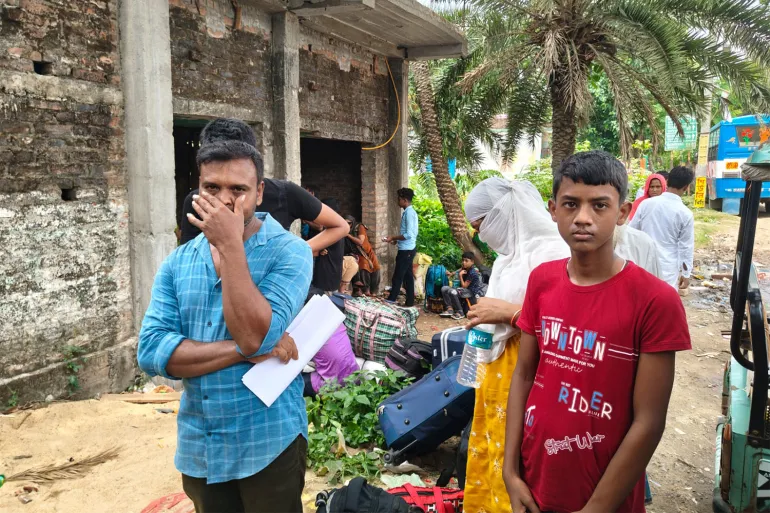
Under a blistering June sun, Raisul Islam, 38, sits slumped against a wall of raw brick in a half-constructed building that has been repurposed into an open-air holding pen. His wife, Rebeka Khatun, 36, is beside him, her skin lesions, the very ailment that drove the family from Bangladesh to India two years ago for treatment, now parched and aggravated by the absence of clean water. Their sons, Riad, 14, and Jubair, 16, watch silently as busloads of Bengali-speaking Muslims are unloaded by security forces, their biometrics recorded like cattle at an abattoir.
The Islams did not wait to be caught. They “surrendered voluntarily,” Raisul says, his voice hollow. “We decided to surrender voluntarily, fearing harassment by the locals and the police for being an immigrant settled illegally here.” They are among the more than 4,800 people that West Bengal’s newly installed Chief Minister Suvendu Adhikari boasts have already been deported in a blitzkreig that his government calls “detect, delete and deport.” Another 836 are crammed into hastily erected “holding centres”, detention camps, across the state, waiting to be pushed back across a border that, for generations of impoverished Muslim labourers, was more a membrane than a wall.
This is not a routine immigration enforcement action. It is a religious purge executed under the aegis of a constitution that India’s political rulers are systematically hollowing out. Adhikari, a lieutenant in Prime Minister Narendra Modi’s Bharatiya Janata Party (BJP), has made the target explicit: the crackdown applies only to Muslim Bangladeshis. Hindus and migrants of other faiths are exempt, shielded by a controversial amendment that has, for the first time in Indian history, imposed a religious test on asylum seekers. In practice, this has blurred the line between Bangladeshi “infiltrators” and India’s own 200 million Muslim citizens, many of whom share the same language, culture, and socioeconomic marginalisation. The deportation drive is not simply about law and order; it is the domestic spearpoint of a global Hindutva ideology that is metastasising from the alleyways of Kolkata to the streets of Leicester and the corridors of Washington, D.C.
A year ago, in the summer of 2025, neighbouring Assam, also ruled by the BJP, forcibly expelled dozens of Indian Muslims into Bangladesh, accusing them of being undocumented. Bangladesh refused them, leaving the families stranded in an infernal limbo of no-man’s land. They were eventually allowed back into India, but the message was delivered: for Bengali Muslims, citizenship is now a revocable licence. Today, in West Bengal, that threat has been fully weaponised. And as the state-sanctioned round-ups accelerate, Islamophobic violence is exploding, not just in the border districts but across India and in diaspora communities where Hindutva networks export the same narrative of the Muslim as a demographic threat, a “termite” eating the nation from within.
‘We Are Living In Constant Fear’: The Islamophobic Surge.
In the six weeks since Adhikari’s government took power, West Bengal has witnessed a staggering rise in anti-Muslim hate crimes. The West Bengal Minority Rights Watch, a non-profit that tracks communal violence, has documented at least 137 incidents of mob attacks, mosque desecrations, forced evictions, and economic boycotts targeting Muslims, a four-fold increase compared to the same period last year. In the district of Murshidabad, where Muslims form a majority, a mob armed with iron rods and saffron flags stormed a mosque on the evening of 10 June, smashing the mihrab and daubing “Jai Shri Ram” slogans on the walls. In Howrah, a Muslim-owned tailoring shop was torched after a WhatsApp rumour alleged the owner had employed Bangladeshi infiltrators. Five members of a Muslim family were beaten in the Hooghly district when they failed to produce documents proving their Indian citizenship on the spot.
“The police arrive late, if they arrive at all,” said Fatima Begum, a 43-year-old homemaker from a village near Basirhat, whose husband was attacked by a vigilante group calling itself the “Bangladeshi Extermination Force.” “They told us it was our fault for not having Aadhaar cards ready. But we have lived here for three generations. Our ancestors fought the British. Now we are being told we don’t belong.”
Teesta Setalvad, a veteran civil rights activist, told me that the state’s operation is deliberately designed to dissolve the boundary between legal and illegal. “Sadly, cops are picking up people randomly and putting them in detention centres and trying to push them back as if they are a commodity,” she said. “We fear that individuals would be detained illegally in the holding centres. The government is acting only on a preconceived agenda and rhetoric against a particular community. This is not a deportation drive; it is an ethnic cleansing operation conducted in slow motion.”
The campaign legitimises violence by making every Muslim a potential “infiltrator.” This has cascaded into the private sphere: landlords are evicting Muslim tenants, employers are firing Muslim workers, and neighbourhoods that had coexisted for decades are now partitioned by suspicion. In Kolkata’s Metiabruz area, a historically Muslim quarter, residents have started keeping night vigils to guard against lynch mobs. “We don’t sleep,” said Mohammad Imran, a rickshaw puller. “The crackdown has made us foreigners in our own country.”
The Architecture Of A Purge: ‘Detect, Delete And Deport’.
The West Bengal model is the culmination of a political project that the BJP has refined over the years in Assam and other border states. It rests on three pillars: legislative gerrymandering, judicial abdication, and extra-legal enforcement. The Citizenship Amendment Act (CAA) of 2019, which fast-tracks citizenship for non-Muslim refugees from neighbouring Islamic nations, provided the ideological scaffolding. In December 2025, the Supreme Court of India ruled that foreign nationals have “almost no rights” under the Constitution, effectively denying detainees habeas corpus or any meaningful appeal. Armed with this judicial blank cheque, the Adhikari government has dispensed with even the pretence of due process. Those rounded up are not taken before magistrates; the onus is on the deportee to prove their citizenship, a Kafkaesque inversion that is near-impossible for the poor, many of whom lack the very documents demanded by the state.
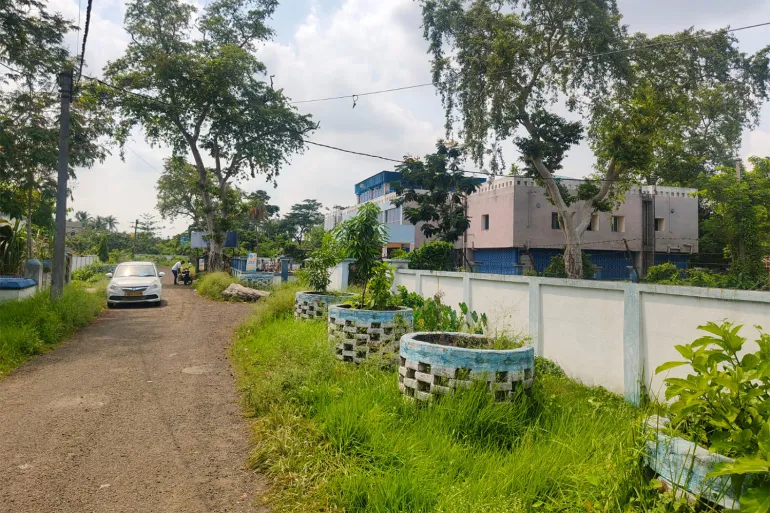
A police officer posted at Hakimpur, who spoke on condition of anonymity because he was not authorised to talk to the media, said about 250 to 300 undocumented migrants arrive at the checkpoint daily. “Besides verifying their citizenship, we are also recording their biometric details to create a digital record,” he said. The data collection evokes the spectre of a national register of citizens, a long-standing demand of the Hindu nationalist movement that would systematically disenfranchise millions of Muslims.
Mirazul Ghazi, 42, who crossed into India with his wife and son five years ago, told me they never faced trouble until the new government came to power. “The landlord asked us to vacate. We decided to return, fearing attacks on us by the locals,” he said, his wife Sabina Yasmin’s eyes downcast. The family earned $12 a day as construction workers in Kolkata, a fragile existence that has now been shattered. They are being loaded into a vehicle bound for a detention centre 18 kilometres away, their only crime being born poor and Muslim on the wrong side of a colonial line.
Rights groups have called the deportations “illegal” and “completely unethical.” Elaine Pearson, Asia director of Human Rights Watch, told Al Jazeera she was “deeply concerned about the current situation.” She stressed that “even the detainees without any valid documents should be given legal representation so that no Indian citizen is wrongfully expelled from the country.” So far, that call has been met with official silence.
The Making Of The ‘Bangladeshi Threat’:
To understand how a democratic republic arrived at this point, one must look at the decades-long construction of the “Bangladeshi” as the quintessential enemy within. Navine Murshid, a political scientist and author who has spent years studying the phenomenon, traced its genealogy for this article.
“The construction of the ‘Bangladeshi problem’, the portrayal of Bangladeshis as infiltrators or security threats, has existed in India for quite a while now,” Murshid said. “In moments of riots, ethnic conflicts in the Northeast, or broader political tensions, the ‘Bangladeshi’ often emerges as an easy scapegoat: someone who can be vilified and criminalised without significant international repercussions or damage to bilateral relations with Bangladesh.” She recalled covering the 2012 violence in Assam’s Kokrajhar district, where, within a week, politicians and media were framing Bangladeshis as a grave national security issue. “What surprised me was how natural and commonsensical this narrative had become,” she said. A mugging escalated into ethnic conflict, and immediately the muggers were branded Bangladeshi, despite no arrests or evidence. “The certainty with which the accusation was made was striking.”
That narrative rests on a deeply embedded social hierarchy. Murshid’s research reveals how class, caste, and linguistic prejudice fuse into anti-Bangladeshi animus. Bengali Muslims in West Bengal are largely confined to low-wage occupations, such as guards, peons, and construction workers, and are viewed through the lens of caste prejudice, many being perceived as historically lower-caste converts to Islam. “The same disdain directed towards Dalits is, in many ways, projected onto Bengali Muslims,” Murshid noted. “This helps explain why Bengali Muslims are frequently labelled as ‘Bangladeshis’ or ‘infiltrators’, not merely as an act of religious bigotry, but also as a way of symbolically excluding them from belonging within society itself.”
This internal othering is exacerbated by neoliberal economic forces. In West Bengal, Murshid argued, globalisation has strengthened linguistic and class hierarchies: English and Hindi are valorised as languages of aspiration, while Bangla and those who speak only Bangla become markers of backwardness. “Bengali Muslims, who are largely poor and rural, are often excluded from these privileged linguistic spaces,” she said. “Neoliberalism does not erase older inequalities; rather, it strengthens them by aligning local social hierarchies with broader global hierarchies.”
The irony is that Bangladesh itself is simultaneously seen as a “manageable” threat. “Compared to China or Pakistan, Bangladesh is perceived differently: a threat can be constructed politically and still remains controllable,” Murshid said. This allows the BJP to mobilise Hindu unity through anti-Bangladeshi rhetoric without the risk of a real military confrontation. The dehumanising language, Home Minister Amit Shah’s infamous description of migrants as “termites”, seeps across the border, fuelling anti-Indian sentiment in Bangladesh and deepening a cycle of mutual distrust.
Diplomatic Fallout And The Shadow Of Hasina:
The deportations have pushed already-strained India-Bangladesh relations to a breaking point. Relations soured dramatically after the youth-led revolution that ousted Prime Minister Sheikh Hasina in 2024. Hasina, a close ally of New Delhi, fled to India, and Dhaka’s repeated extradition requests, she has been convicted of crimes against humanity, have been ignored by Modi’s government. The newly installed coalition government in Bangladesh is struggling to rebuild ties, but the West Bengal crackdown has made it politically impossible for Dhaka to appear compliant.
Bangladesh’s Foreign Affairs Adviser Shama Obaid told a press conference in Dhaka that the government has sent “12 to 13 letters to New Delhi” over the issue, warning that the unilateral pushbacks violate established bilateral mechanisms. “There is a mechanism that Indian authorities should follow,” she said, her tone unusually sharp. The Border Guard Bangladesh (BGB) has thwarted at least 18 attempts by India’s Border Security Force (BSF) to shove roughly 180 people across the frontier since 4 June. On Monday, the two forces began three-day talks, but the atmosphere is poisoned by what Bangladeshi officials privately call India’s “illegal push-ins.”
Indian foreign ministry spokesperson Randhir Jaiswal, responding to the criticism, insisted that New Delhi is following protocol. “All foreign nationals in India, if they are here illegally, including from Bangladesh, we have laws to deal with them… and once we refer these cases to the Bangladeshi side, for them to verify the nationality of these people, and once it is verified, then we take forward the deportation process,” he said. India claims it has sent requests for nationality verification of more than 2,800 suspected Bangladeshis that remain pending with Dhaka. The standoff has exposed the fragility of a relationship built on what Bangladeshi critics call a “servile attitude” of quiet diplomacy that has long emboldened Indian bullying.
Hindutva’s Global Echo: Exporting Islamophobia.
The purification campaign in West Bengal is not a provincial anomaly. It is the domestic expression of a transnational Hindutva ideology that has found fertile ground in diaspora communities from the United Kingdom to Australia, Canada to the United States. The narrative of the Muslim “infiltrator” and demographic invader is now a global Hindutva export, weaponised to target Muslim minorities wherever significant Hindu populations reside.
In the United Kingdom, a 2025 report by the anti-racism group Hope Not Hate documented a 300% rise in anti-Muslim hate crimes linked to Hindutva extremist networks over the previous two years. The 2022 Leicester communal clashes, where mobs of Hindu men chanting “Jai Shri Ram” attacked Muslim neighbourhoods, were directly fuelled by social media disinformation about “Bangladeshi grooming gangs”, a transposition of the infiltrator trope onto British soil. Organisations such as the Overseas Friends of the BJP and the Vishva Hindu Parishad have been accused of funnelling resources and propaganda that radicalise young Hindu men against Muslims.
“What we are witnessing in West Bengal is the laboratory for a worldwide movement,” said Dr. Priya Gopal, a scholar of colonialism and diaspora at Cambridge University. “The same rhetoric, that Muslims are illegal, ungrateful, demographic time-bombs, is deployed in Assam, in Leicester, in Brampton. The Hindutva ecosystem operates across borders with a coherence that Western governments have been slow to recognise as extremism.”
In the United States, the incoming Trump administration in 2025 deepened ties with the Modi government, even as the State Department’s annual human rights report noted a “sharp increase in anti-Muslim violence and hate speech” in India. Indian-American Muslim groups have reported a surge in online trolling and physical assaults tied to Hindutva activists. In Canada, where a large Punjabi diaspora has clashed with Khalistani separatists, Hindu nationalist groups have also adopted the anti-Bangladeshi line, framing Muslim refugees as a fifth column.
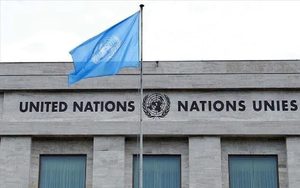
The United Nations Special Rapporteur on Minority Issues, in a statement issued last week, expressed “grave alarm” at the situation in West Bengal. “The singling out of Muslim migrants based on religious identity, the use of dehumanising language by senior officials, and the absence of due process all point to a systematic policy of discrimination that violates international human rights law,” the statement read. India’s permanent mission to the UN in Geneva dismissed the criticism as “interference in our sovereign right to secure our borders.”
A Divided Bengal: The Ghosts Of Partition.
Bengal has always been a liminal space, its identity forged in the crucible of colonial divide-and-rule. The 1905 partition of Bengal by Viceroy Lord Curzon split the province along religious lines, a move reversed in 1911 after furious protests from the Hindu elite. But the fissures never healed. In 1947, Bengal was sundered again, with the Muslim-majority east becoming East Pakistan (later Bangladesh) and the Hindu-majority west remaining in India. Yet beneath the lines on a map, a shared Bengali language and syncretic culture persisted, the legacy of poets like Rabindranath Tagore and Kazi Nazrul Islam, who sang of a humanity beyond religion.
Today, that shared identity is under concerted assault from both sides. In Bangladesh, the February 2026 parliamentary elections saw the Islamist Jamaat-e-Islami win nearly a third of the vote, its strongest showing ever, capitalising on anti-Indian sentiment and a reaction against the secular authoritarianism of the Hasina era. In West Bengal, the BJP’s vote share rocketed from 10% in 2016 to nearly 46% in 2025, delivering 207 of 294 assembly seats. The Trinamool Congress, which had ruled for over a decade under Mamata Banerjee, was decimated. Analysts say the vote was less an ideological endorsement of Hindutva and more a rejection of the incumbent’s corruption, but the outcome has opened the door to a radical Hindu majoritarianism that is moving fast.
Bangladeshi anthropologist Rezwana Karim Snigdha warned of an “ill-motivated” shift in rhetoric. “On both sides of the border, political narratives are increasingly framing identity in religious terms, sidelining language, culture and heritage,” she told DW. “When someone identifies as Bengali rather than Hindu or Muslim, it cuts across borders and challenges the political narratives built on those divisions.”
Indian historian Dipesh Chakrabarty, a leading postcolonial theorist, traced the roots of the crisis to the failure of Hindu elites in 1905 to accept the partition. “The Hindu elites failed to grasp the moment,” he told DW. “Accepting the partition might have reassured Muslims that they were not being dominated.” The lingering resentment has curdled into a reactionary politics that sees every Muslim as a potential traitor.
A Machine That Consumes Its Own:
In the detention centre 18 kilometres from Hakimpur, Raisul Islam’s family sits on the concrete floor, waiting for a future that holds only expulsion. “We took shelter in India just to give a good life to our children,” Raisul had said, tears welling as he stood near his sons. “We had no ulterior motive. But the incessant hounding and humiliation by a section of people has forced us to return with bitter memories of a land that teaches non-violence and kindness for all.”
His words hang in the humid air, a requiem for an India that is rapidly vanishing. The West Bengal crackdown is not an isolated policy; it is a tentacle of an organism that extends from the back alleys of Kolkata to the ministerial offices of New Delhi, to the temples of diaspora fundraising in Texas and London. It thrives on a simple, deadly logic: to purify the nation, the Muslim must first be made illegal. And once illegal, any violence against him becomes not a crime but a duty.
The global Hindutva movement has found in places like Hakimpur its most potent propaganda tool: the image of the Muslim being led away in handcuffs, a visual declaration that the Hindu nation is finally taking out its “termites.” But as Murshid insisted, the solution lies in recognising the constructed nature of these divisions. “It is much easier to despise an imaginary Bangladeshi than a real one, and conversely, much easier to despise an imaginary Indian than a real one,” she said. “Greater communication between ordinary people is therefore essential so that they can see through this kind of politicisation and recognise that the interests of ordinary working-class people on both sides are actually quite similar.”
For now, the communication channels are choked by the noise of hate. The BSF and BGB continue their tense negotiations. More letters will be exchanged. More families will be crammed into vans and dumped at a border that remains, for many, a death sentence. And as the sun sets over the delta, the sound of azaan mingles with the jeers of vigilantes, a grim duet for a Bengal that once dreamed of bridging worlds, not burning them.
Source: Veritas Press C.I.C. | Multi News Agencies
Help Support Our Work By Donating
Popular Information is powered by readers who believe that truth still matters. When just a few more people step up to support this work, it means more lies exposed, more corruption uncovered, and more accountability where it’s long overdue.
Help Protect Independent Journalism, Which Is Currently Under Attack.
If you believe journalism should serve the public, not the powerful, and you’re in a position to help, becoming a DONATOR or a PAID SUBSCRIBER truly makes a difference.
DONATION APPEAL: If You Found This Reporting Valuable, Please Consider Supporting Independent Journalism.
Your support fuels our fearless, truth-driven journalism. In unity, we endeavour to amplify marginalised voices and champion justice, irrespective of geographical location. We operate independently, without any financial backing from billionaires.
But it’s also extremely important. One of Veritas Press’s greatest assets is its reader-funded model.
1. Reader funding means we can cover what we like. We’re not beholden to the political whims of a billionaire owner. We are a small, independent and impartial organisation. No one can tell us what not to say or what not to report.
2. Reader funding means we don’t have to chase clicks and traffic. We’re not desperately seeking your attention for its own sake: we pursue the stories that our editorial team deems important and believe are worthy of your time.
3. Reader Funding: enables us to keep our website and other social media channels open, allowing as many people as possible to access quality journalism from around the world, particularly those in places where the free press is under threat.
We know not everyone can afford to pay for news, but if you’ve been meaning to support us, now’s the time.
Your donation goes a long way. It helps us:
- Keep the lights on and sustain our day-to-day operations
- Hire new, talented independent reporters
- Launch real-time live debates, community-focused shows, and on-the-ground reporting
- Cover the issues that matter most to our communities, in real time, with depth and integrity
We have plans to expand our work, but we can’t do it without your support. Every contribution, no matter the size, helps us stay independent and build a truly people-powered media platform.
If you believe in journalism that informs, empowers, and reflects the communities we serve, please donate today.
Help By Donating Today
Submissions:
For The Secure Submission Of Documentation, Testimonies, Or Exclusive Investigative Reports From Any Global Location, Please Utilise The Following Contact Details For Our Investigations Desk: enquiries@veritaspress.co.uk or editor@veritaspress.co.uk
GENEVA — A United Nations fact-finding mission has concluded there are “reasonable grounds to believe”
Iran’s GDP is projected to contract by 5.4 to 6.1% in 2026, its worst performance
The Trump administration is preparing a $2.8 billion weapons package for Israel containing 40,000 2,000-pound
Film alleges mass civilian deaths are routinely built into military decisions amid Israel’s genocidal war
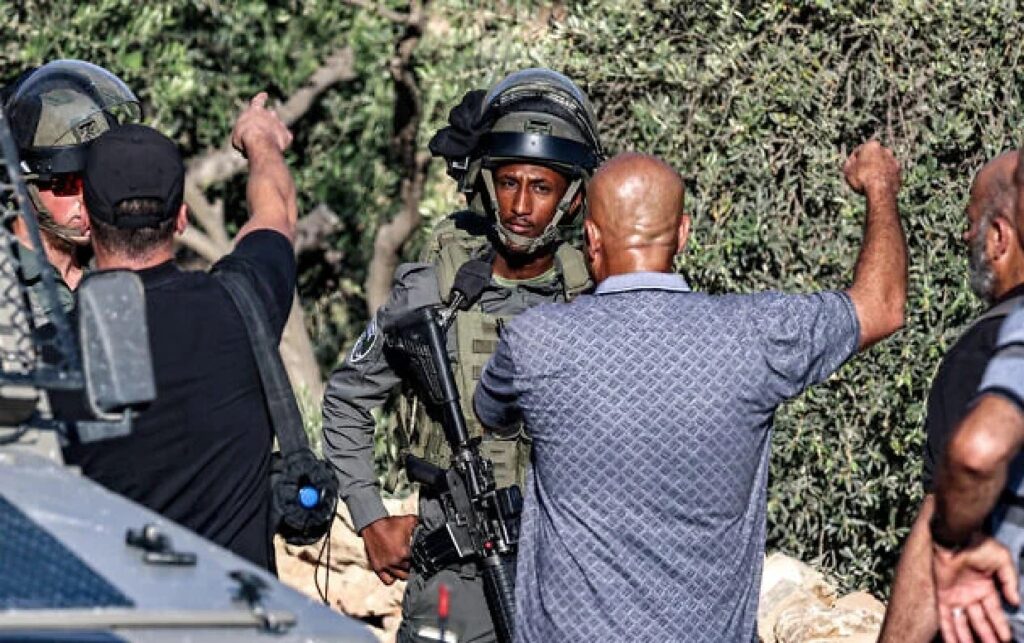
The Israeli rights group says violence, displacement, economic strangulation, and settlement expansion form part of

Houthi forces have captured the historic Red Sea port of Mocha and are advancing on
London’s historic sanctions against Israeli settlements mark a watershed moment in UK foreign policy, but
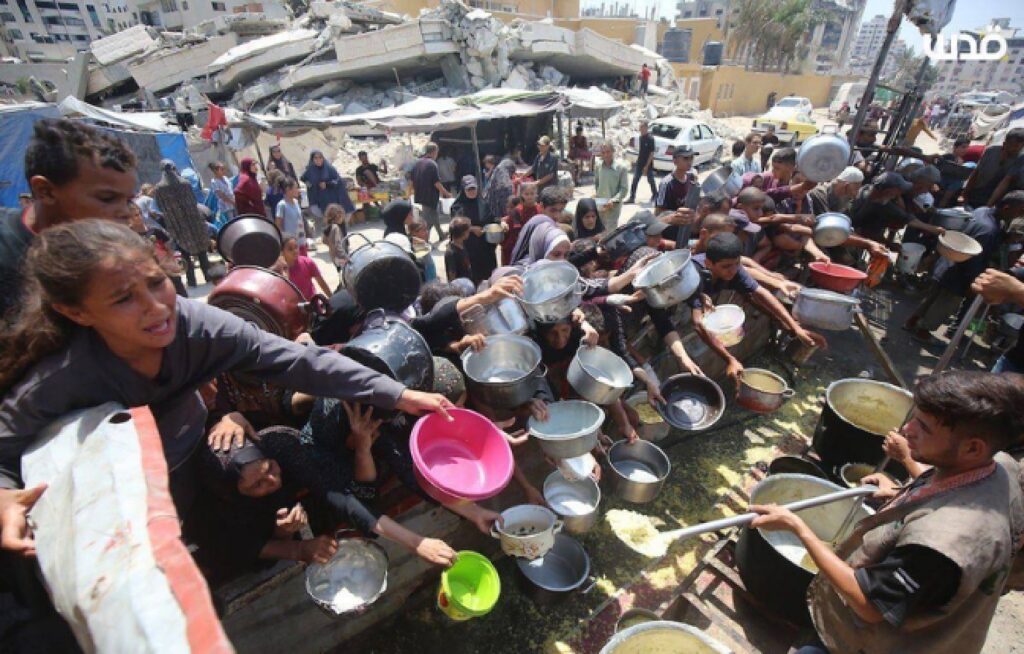
With 95% of Gaza’s population now wholly dependent on aid and more than 90% stripped
India calls for Kashmir and Ladakh to appear only on its official map after a
ISLAMABAD – In the high-stakes political theatre of Pakistan, the battleground has shifted from the

















hvs55m