


Help support our mission, donate today and be the change. Every contribution goes directly toward driving real impact for the cause we believe in.
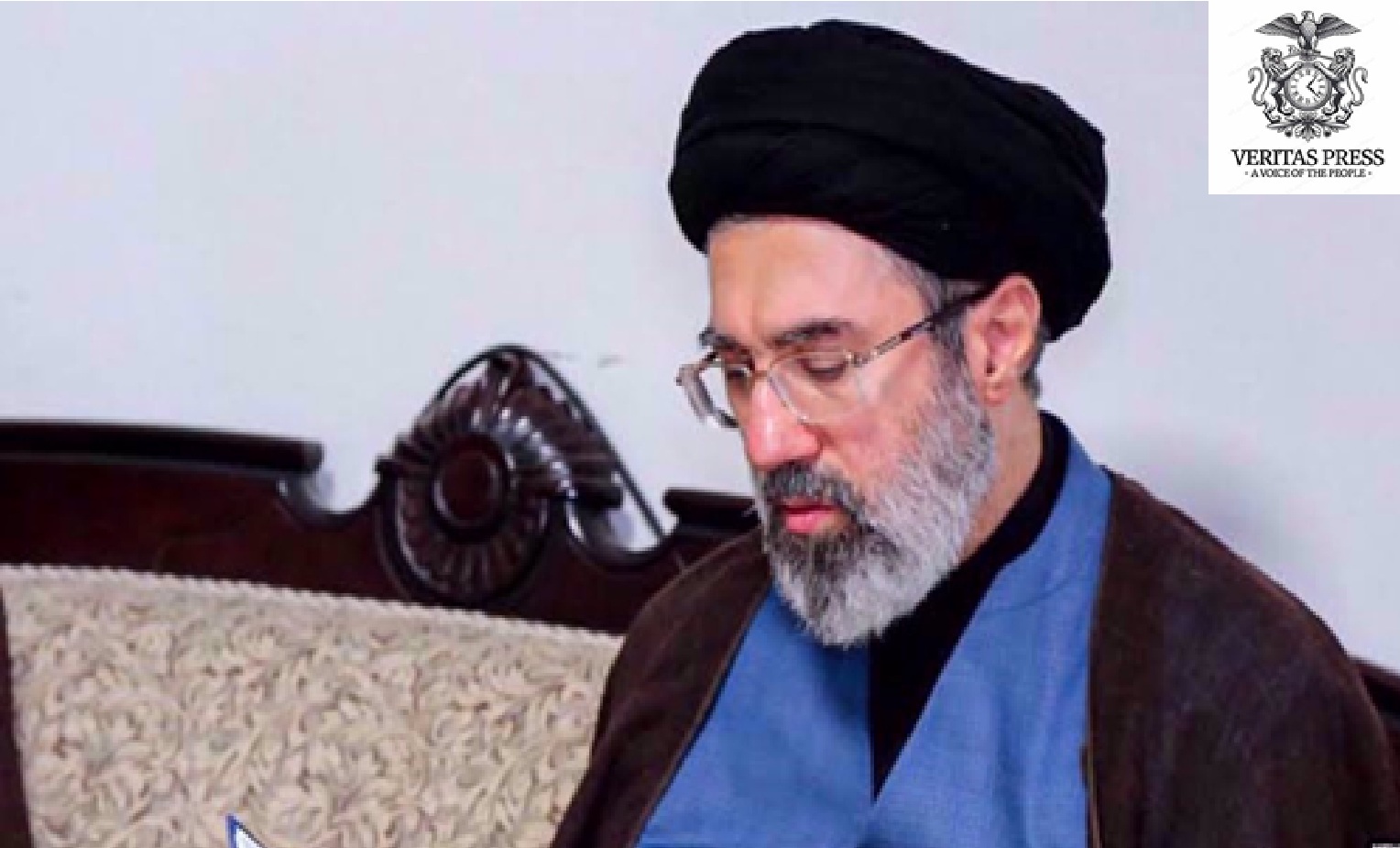
The Leader of the Islamic Revolution has vowed that the Iranian nation will defeat the enemy in the cultural and economic spheres as well, following the victory on the military battlefield.
TEHRAN / WASHINGTON / ISLAMABAD — Nearly sixty-four days into a conflict that has redrawn the geopolitical map of the Middle East, Ayatollah Seyyed Mojtaba Khamenei, Iran’s new Supreme Leader, delivered a message that was both a rallying cry and a strategic roadmap. Speaking on the occasion of Teacher’s Day and Labour Day, Khamenei declared that the Iranian nation, having “proven to the world a part of its remarkable capability in the military battle”, must now turn its focus to the theatres where wars are ultimately won or lost: the economy and the culture.
“Now that the Islamic Republic of Iran, after more than forty-seven years of struggle, relying on divine grace, has proven to the world a part of its remarkable capability in the military battle against the enemies of its progress and excellence, it must also disappoint and defeat them in the phase of economic and cultural jihad,” Khamenei wrote. He positioned teachers as “the most influential link in the cultural battle” and workers as “the most effective elements in the economic battle,” describing them as “the backbone of the arenas of culture and economy”.
The speech, delivered on May 2, 2026, amounts to more than wartime rhetoric. It is a candid admission that the military conflict sparked by the February 28 US-Israeli offensive has now metastasised into a multi-generational struggle. For the United States, the implications are grim. More than two months into a war that was initially predicted by President Donald Trump to last “four to six weeks,” Washington finds itself trapped in a strategic cul-de-sac, facing a standoff that could leave America and the world worse off than before the first bomb fell.
A Battlefield Victory, A Strategic Quagmire:
The military phase of the conflict has been devastating. The US-Israeli campaign, launched on February 28, 2026, has killed thousands, including then-Supreme Leader Ayatollah Ali Khamenei, and heavily degraded Iran’s conventional military infrastructure. Yet by almost every metric that matters, Trump’s stated war objectives remain unfulfilled.
The president’s goals have been a moving target: regime change, dismantling Iran’s nuclear programme, ending its support for proxy groups such as Hezbollah, Hamas, and the Houthis, and securing the Strait of Hormuz. None has been achieved. “While there is little doubt that waves of US and Israeli strikes heavily degraded Iran’s military capabilities, many of Trump’s often-shifting war objectives, from regime change to shutting Iran’s path to a nuclear weapon, remain unfulfilled,” as one analysis noted.
Iran’s highly enriched uranium stockpile, buried deep underground before US and Israeli airstrikes last June, is believed to remain recoverable. The Islamic Revolutionary Guard Corps (IRGC), far from being decapitated, has consolidated its grip on the state. And Iran’s proxy network, though battered, continues to operate.
Perhaps most critically, Iran has demonstrated a strategic capability that even a degraded state can wield: the power to choke the global economy. The Strait of Hormuz, through which a fifth of the world’s traded oil and gas passes in peacetime, has remained effectively closed for more than two months, triggering what analysts describe as an unprecedented energy supply shock. Over 10 million barrels per day of crude oil have been shut in, with experts warning that even if the strait reopens immediately, full production recovery could take months to years.
S&P Global has warned that if the closure persists, oil prices could surge toward 200 per barrel. Brent crude has already spiked above 126, a four-year high, with the average forecast for 2026 now revised upward to $86.38, marking a 30% increase from pre-war projections. “We estimate that around one billion barrels of oil have effectively been removed from the global market in the past 60 days,” said Dave Ernsberger, President of S&P Global Energy.
The economic pain is global, but Trump feels it acutely at home. US gasoline prices have surged above $4 per gallon ahead of November’s midterm elections, in which Republicans risk losing control of Congress. A Reuters/Ipsos poll shows Trump’s approval rating sinking to 34%, the lowest of his term. Taylor Rogers, a White House spokeswoman, described the high prices as “short-term disruptions,” but the political calendar offers little comfort.
The Hormuz Gambit: Iran’s Strategic Masterstroke.
If there is a single image that captures the transformation of this war, it is the Strait of Hormuz, a 21-nautical-mile-wide chokepoint that has become the fulcrum of an asymmetric power play. Iran’s closure of the strait, a retaliation against an illegal US naval blockade of its ports, has given Tehran a degree of leverage that belies its military losses.
“Foreigners who come from thousands of kilometres away have no place there except at the bottom of its waters,” Supreme Leader Khamenei declared in a message commemorating Persian Gulf National Day. President Masoud Pezeshkian echoed the sentiment: “The responsibility for any insecurity in this water area lies with the United States and the Zionist regime”.
Iran is now seeking to formalise its control. The Iranian parliament is advancing what officials describe as the “Strait of Hormuz Security Plan”, a binding law that would place the waterway under the formal authority of the armed forces and impose transit fees on passing vessels. Ebrahim Azizi, head of the National Security Committee of the Iranian Parliament, said the bill would ban the passage of ships affiliated with “enemy countries” and require revenues to be collected in Iranian rials.
The move has drawn fierce international condemnation. Arsenio Dominguez, Secretary-General of the International Maritime Organisation (IMO), declared bluntly that there is “no legal basis for the introduction of any tax, any customs, or any fees for on straits for international navigation”. The UN agency has also warned that a planned evacuation of some 20,000 seafarers stranded on vessels in the Gulf can only proceed once the strait is fully secure.
UAE presidential adviser Anwar Gargash was even more direct. “No unilateral Iranian arrangements can be trusted or relied upon following its treacherous aggression against all its neighbours,” he wrote, articulating the deep anxiety of Gulf Arab states that watch Iran’s assertiveness with alarm.
Analysts say the strategic implications extend far beyond the current conflict. “Iran has realised that, even in a weakened state, it can shut off the strait at will,” said Jon Alterman of the Centre for Strategic and International Studies. “That knowledge leaves Iran stronger than it was before the war.”
“Not Satisfied”: The Diplomatic Impasse.
The diplomatic track has lurched from one failure to the next. A fragile ceasefire, brokered by Pakistan, has been in place since April 8, but both sides have traded accusations of violations. Two rounds of indirect talks in Islamabad have collapsed, and a third was aborted when Trump abruptly cancelled his envoys’ trip last weekend, declaring that Iran could “telephone if it wants to negotiate”.
On Friday, Iran submitted yet another proposal via Pakistani mediators, prompting a brief dip in global oil prices. Trump’s response was swift and dismissive. “They want to make a deal, I’m not satisfied with it, so we’ll see what happens,” he told reporters at the White House. He described Iran’s leadership as “fractured” and “all messed up”.
The fundamental impasse remains the sequencing of concessions. Iran’s proposal, described as a three-stage plan, demands a total end to the war, including US-Israeli operations against Hezbollah in Lebanon, followed by the lifting of the naval blockade and restoration of shipping, with contentious nuclear negotiations postponed until after these conditions are met. For Trump, this is a non-starter. He has insisted that the nuclear issue be dealt with at the outset.
Mohammad Jafar Asadi, a senior figure in the Iranian military’s central command, warned on Friday that renewed conflict is “likely,” telling Fars news agency: “Evidence has shown that the United States is not committed to any promises or agreements.” A senior IRGC official was more explicit: “Any new aggression will be met with long and painful strikes”. Aerospace Force Commander Majid Mousavi added a chilling coda: “We’ve seen what happened to your regional bases; the same can happen to your warships”.
The underlying nuclear dimension further complicates any resolution. Omani-mediated talks had reportedly reached a breakthrough in late February on “zero stockpiling” of enriched uranium, with full IAEA verification, but that framework was shattered by the outbreak of war. Iran has since insisted it will never relinquish its right to enrichment, describing the US demand for a halt as a “red line” that violates the Nuclear Non-Proliferation Treaty. Washington is now reportedly seeking a 20-year suspension of enrichment, while Tehran is offering three to five years, a gap that may be unbridgeable.
The Economic Struggle: War On The Home Front.
In Tehran, the war’s toll is measured not in destroyed military assets but in the daily arithmetic of survival. The rial has collapsed to an all-time low of 1.84 million against the US dollar. Inflation, long a scourge of the Iranian economy, has spiralled into hyperinflationary territory for many goods.
A Peugeot 206, a modest car once within reach of the middle class, now costs 30 billion rials ($16,500). An iPhone 17 Pro Max, priced at $1,200 by Apple, is being offered at nearly 5 billion rials ($2,750) in some Tehran shops, and many vendors are simply refusing to sell at all. There are 92), supplemented by food subsidies worth less than $10 per month per person.
“You look at the prices and salaries, and you see the numbers don’t add up,” said one Tehran resident who asked not to be named. “There’s not much you can do about it except to turn the little you have into something that is not depreciating or buying something you need that you might not be able to afford later”.
It is against this backdrop that Khamenei’s call for “economic jihad” lands. He urged citizens to prioritise domestically manufactured goods and appealed to business owners, “particularly those with struggling enterprises, to avoid layoffs as much as possible.” The message is clear: resilience is the weapon, and the home front is the battlefield.
The US Treasury, under Secretary Scott Bessent, has responded with what it calls “Operation Economic Fury”, seizing nearly 500 million in Iranian cryptocurrency assets and freezing bank accounts worldwide. Iran’s Parliamentary Speaker, Mohammed Bagher Ghalibaf, dismissed the campaign as “junk advice”, 120 and could reach £140.
Yet for all the economic warfare, Iran does not appear on the verge of collapse. “The conflict has aggravated Iran’s economic plight, but it looks able to survive a standoff for now, despite the US blockade,” analysts note. The Iranian government has not released detailed employment data, but from technology firms in Tehran to steel producers in Isfahan, layoffs have been widespread. Millions of jobs are on pause, and a near-total internet shutdown, now in its 64th day, has paralysed the digital economy.
The Atlantic Cracks: A Coalition In Disarray.
Perhaps the most revealing measure of this war’s strategic costs is the fracturing of the transatlantic alliance. On Friday, the Pentagon announced the withdrawal of 5,000 US troops from Germany, a move described by a senior official as a direct response to “inappropriate and unhelpful” rhetoric from Chancellor Friedrich Merz.
Merz had stated publicly that Iran was “humiliating” the United States and questioned Washington’s exit strategy. Trump, who had not consulted European allies before launching the war, responded with fury. The drawdown, expected to take six to twelve months, would bring US troop levels in Europe back to roughly pre-2022 figures.
But the German withdrawal is merely the most visible symptom of a deeper rot. The Trump administration has reportedly drawn up contingency plans to punish other NATO allies perceived as insufficiently supportive, including suspending Spain from the alliance and reviewing the US position on Britain’s claim to the Falkland Islands. Trump has also threatened trade embargoes and suggested he may pull troops from Italy and Spain.
European diplomats, speaking on condition of anonymity, expressed a grim assessment: “It’s hard to see how this will end soon.” The US has attempted to rally support for a “Maritime Freedom Construct,” a proposed coalition to secure the strait, but France and Britain have indicated they would only consider such involvement once hostilities have formally ended.
Former US diplomat Donald Jensen told Al Jazeera that the troop withdrawal “suggests a changing US strategic set of objectives,” noting that more American forces could now be redirected toward China, which Washington views as a greater threat. “It portends a more transactional view by Washington of our European partners,” Jensen said. German Defence Minister Boris Pistorius, meanwhile, said the withdrawal was “foreseeable” and that Europeans must take greater responsibility for their own security.
The War Powers Gambit: A Legal And Constitutional Crisis.
As the conflict grinds on, a constitutional crisis is brewing in Washington. Under the 1973 War Powers Resolution, the president must secure congressional approval within 60 days of notifying Congress about hostilities, a deadline that expires today, May 2, 2026.
The Trump administration has advanced a novel legal theory: that the April 8 ceasefire effectively “paused” the 60-day clock. “For War Powers Resolution purposes, the hostilities that began on Saturday, February 28, have terminated,” a senior administration official told Reuters. Defence Secretary Pete Hegseth echoed this during Senate testimony, arguing that the clock “pauses, or stops” during a ceasefire.
Democratic lawmakers and legal experts have rejected this interpretation as having no statutory basis. The law contains no provision for pausing the deadline once it has commenced. Some former officials have even suggested that the administration could simply launch a new operation under a different name to reset the clock, a “sequel” to Operation Epic Fury that could be called “Epic Passage”.
The dispute is not merely a technicality. It goes to the heart of the constitutional separation of war powers between the executive and legislative branches. With Republicans controlling Congress by a narrow margin, a vote to authorise the war is by no means guaranteed, particularly as domestic economic pain mounts.
UN Secretary-General Antonio Guterres has warned that the prolonged disruption to global energy supplies could have “serious global consequences,” slowing growth, raising inflation, and pushing millions into poverty. Iraq, which has seen its production slashed to 1.5 million barrels per day, says it could restore exports within a week of the crisis ending, but only if security conditions allow.
The Cultural Front: A Battle For The Next Generation
Khamenei’s framing of the struggle as a “cultural jihad” is not merely rhetorical. In a nation where more than 60% of the population is under 30, the battle for hearts and minds is existential. The Supreme Leader described teachers as bearing the “grave responsibility” of teaching skills, nurturing insight, and shaping the identity of the next generation. “Students will reflect, like a mirror, the behaviours and words of their teachers,” he wrote.
This cultural dimension has been amplified by the near-total internet shutdown, now in its 64th day, which authorities have imposed to control information flows and prevent internal dissent. Limited access has been restored for some services, but most Iranians remain cut off from the global internet, a digital iron curtain that both protects the regime from external influence and inflicts immense economic damage.
Trump’s early call for the Iranian people to “overthrow their rulers” has gone unheeded. The regime, dominated by the IRGC in the wake of the leadership decapitation, has demonstrated a ruthless capacity for internal control. The cultural war Khamenei speaks of is not merely defensive; it is a proactive attempt to forge a siege mentality that can sustain the Islamic Republic through a prolonged confrontation.
Sina Toossi, a senior fellow at the Centre for International Policy, captured the dynamic succinctly: “Iran isn’t fractured or folding, it’s playing for time.”
Conclusion: Who Wins A Frozen Conflict?
As May 2, 2026, dawns, the Iran war sits at a precipice. The ceasefire holds, but barely. Diplomacy is stalled. The global economy is absorbing a supply shock of historic proportions. And the two antagonists, each convinced it holds the upper hand, appear locked in a test of political endurance.
For Trump, the calculus is increasingly dire. A war launched to showcase American resolve has instead exposed the limits of military power against an adversary willing to absorb punishment and wield asymmetric leverage. The president who promised to avoid foreign entanglements now presides over a conflict with no exit ramp, fracturing alliances and punishing American consumers at the pump.
For Iran, the costs are measured in lives lost, infrastructure destroyed, and an economy pushed to the brink. Yet Khamenei’s declaration of “economic and cultural jihad” signals that the leadership is prepared for a long war, one fought not only with missiles and mines, but with teachers, workers, and the will to endure.
Laura Blumenfeld, a Middle East expert at Johns Hopkins University, offered a stark assessment of Trump’s legacy: “He’d be remembered as the US president who made the world less safe.”
The question that hangs over the Strait of Hormuz, and over every capital from Washington to Riyadh, from Berlin to Beijing, is whether either side can find a way to climb down from a confrontation that has already reshaped the international order. The alternative, a “frozen conflict” that defies permanent resolution, would leave Iran with a legal framework to manage the strait, the US with a costly and indefinite military presence, and the world economy permanently shackled to a chokepoint 21 nautical miles wide.
As one European diplomat put it, speaking on condition of anonymity: “It’s hard to see how this will end soon.”
Khamenei, in his Friday message, offered a vision of that end that offers little room for compromise: “The bright future of the Gulf will be one without the United States presence and at the service of the progress, comfort and welfare of regional countries”. In Tehran, they are already planning for that future, with or without Washington’s consent.
Kazem Gharibabadi, Iran’s Deputy Foreign Minister for Legal and International Affairs, stated that “Iran has presented its plan to Pakistan as a mediator with the aim of permanently ending the imposed war, and now the ball is in America’s court to choose the path of diplomacy or to continue the confrontational approach.” He added: “Iran is ready for both paths in order to ensure its national interests and security, and in any case, it will always maintain its pessimism and distrust of America.”
Source: Multiple News Agencies
Submissions:
For The Secure Submission Of Documentation, Testimonies, Or Exclusive Investigative Reports From Any Global Location, Please Utilise The Following Contact Details For Our Investigations Desk: enquiries@veritaspress.co.uk or editor@veritaspress.co.uk
Help Support Our Work:
Popular Information is powered by readers who believe that truth still matters. When just a few more people step up to support this work, it means more lies exposed, more corruption uncovered, and more accountability where it’s long overdue.
Help Protect Independent Journalism, Which Is Currently Under Attack.
If you believe journalism should serve the public, not the powerful, and you’re in a position to help, becoming a DONATOR or a PAID SUBSCRIBER truly makes a difference.
DONATION APPEAL: If You Found This Reporting Valuable, Please Consider Supporting Independent Journalism.
Help Support Our Work – We Know, We Know, We Know …
Seeing these messages is annoying. We know that. (Imagine what it’s like writing them … )
Your support fuels our fearless, truth-driven journalism. In unity, we endeavour to amplify marginalised voices and champion justice, irrespective of geographical location.
But it’s also extremely important. One of Veritas Press’s greatest assets is its reader-funded model.
1. Reader funding means we can cover what we like. We’re not beholden to the political whims of a billionaire owner. We are a small, independent and impartial organisation. No one can tell us what not to say or what not to report.
2. Reader funding means we don’t have to chase clicks and traffic. We’re not desperately seeking your attention for its own sake: we pursue the stories that our editorial team deems important and believe are worthy of your time.
3. Reader Funding: enables us to keep our website and other social media channels open, allowing as many people as possible to access quality journalism from around the world, particularly those in places where the free press is under threat.
We know not everyone can afford to pay for news, but if you’ve been meaning to support us, now’s the time.
Your donation goes a long way. It helps us:
- Keep the lights on and sustain our day-to-day operations
- Hire new, talented independent reporters
- Launch real-time live debates, community-focused shows, and on-the-ground reporting
- Cover the issues that matter most to our communities, in real time, with depth and integrity
We have plans to expand our work, but we can’t do it without your support. Every contribution, no matter the size, helps us stay independent and build a truly people-powered media platform.
If you believe in journalism that informs, empowers, and reflects the communities we serve, please donate today.
The Trump administration is preparing a $2.8 billion weapons package for Israel containing 40,000 2,000-pound

Film alleges mass civilian deaths are routinely built into military decisions amid Israel’s genocidal war
The Israeli rights group says violence, displacement, economic strangulation, and settlement expansion form part of

Houthi forces have captured the historic Red Sea port of Mocha and are advancing on
London’s historic sanctions against Israeli settlements mark a watershed moment in UK foreign policy, but
With 95% of Gaza’s population now wholly dependent on aid and more than 90% stripped
India calls for Kashmir and Ladakh to appear only on its official map after a
ISLAMABAD – In the high-stakes political theatre of Pakistan, the battleground has shifted from the
Francesca Albanese says third states have an ICJ-mandated obligation to end Israel’s occupation. But with
As Israeli jets bomb a Syrian air base over alleged Turkish deployment plans, Ankara, Washington