Kamran Faqir is a volunteer investigative journalist and writer committed to exposing hidden truths and amplifying underreported stories. Driven by social justice, he brings sharp insight and fearless truth-telling to independent journalism. NUJ registered.
Original Article Date Published:
Article Date Modified:
9 minutes
Views:410
Listen to this article
Help support our mission, donate today and be the change. Every contribution goes directly toward driving real impact for the cause we believe in.
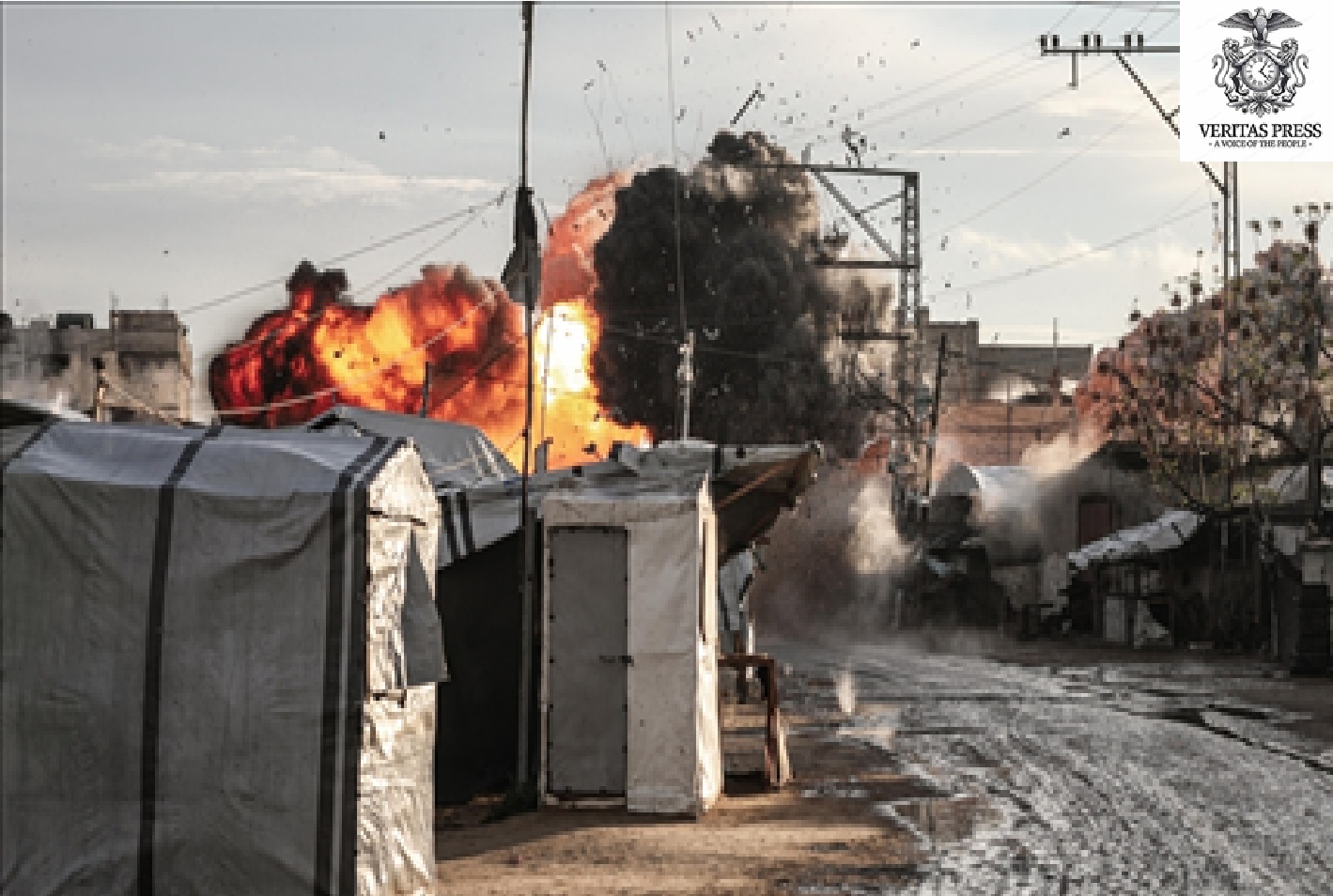
BEITLAHIA, NORTHERN GAZA – The drone appeared without warning. It hovered over the dusty courtyard near Al‑Qassam Mosque just before sunset on Wednesday, 22 April 2026, and fired a single missile into a cluster of civilians. When the smoke cleared, five Palestinians lay dead. Three of them were children.
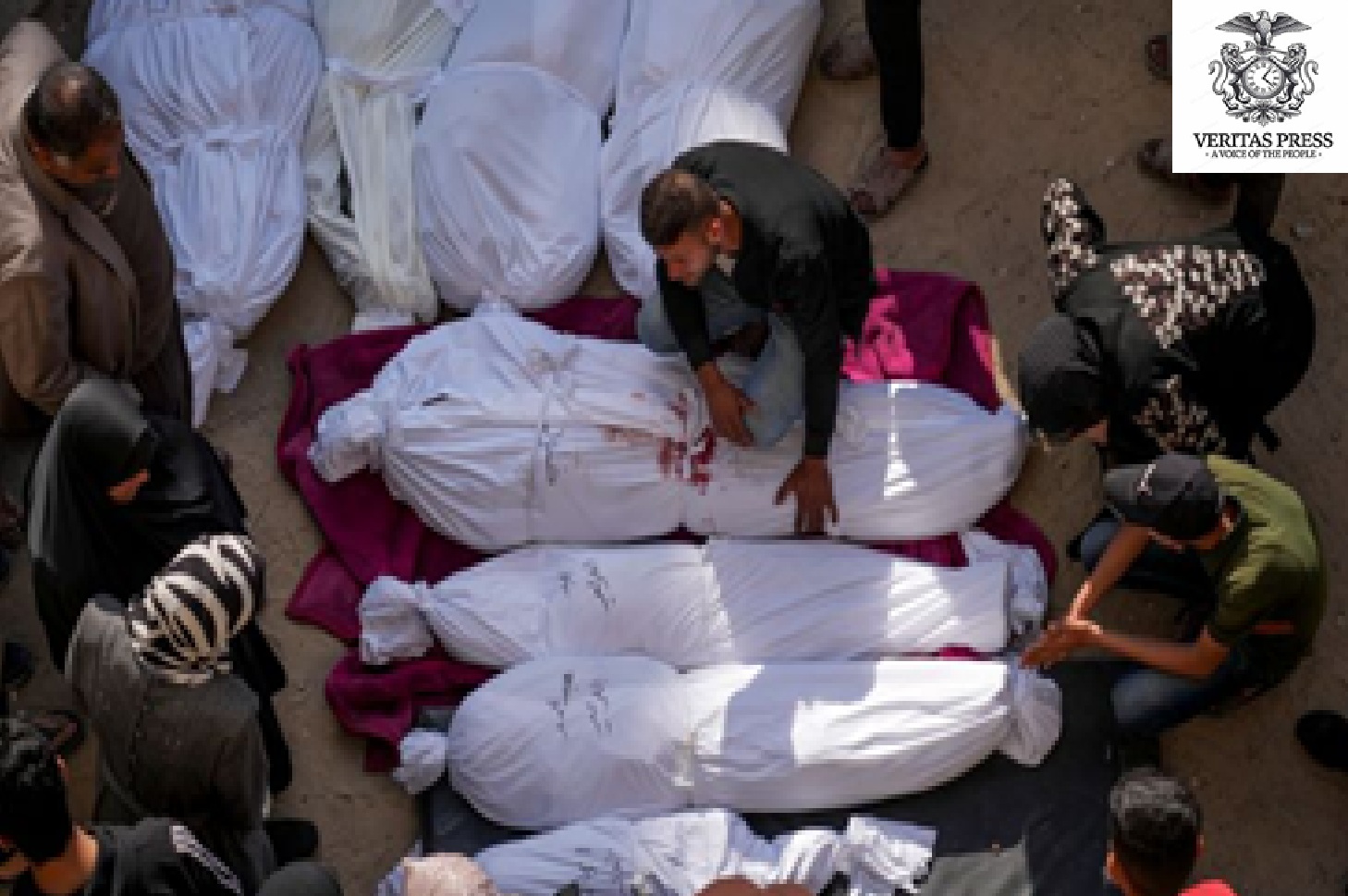
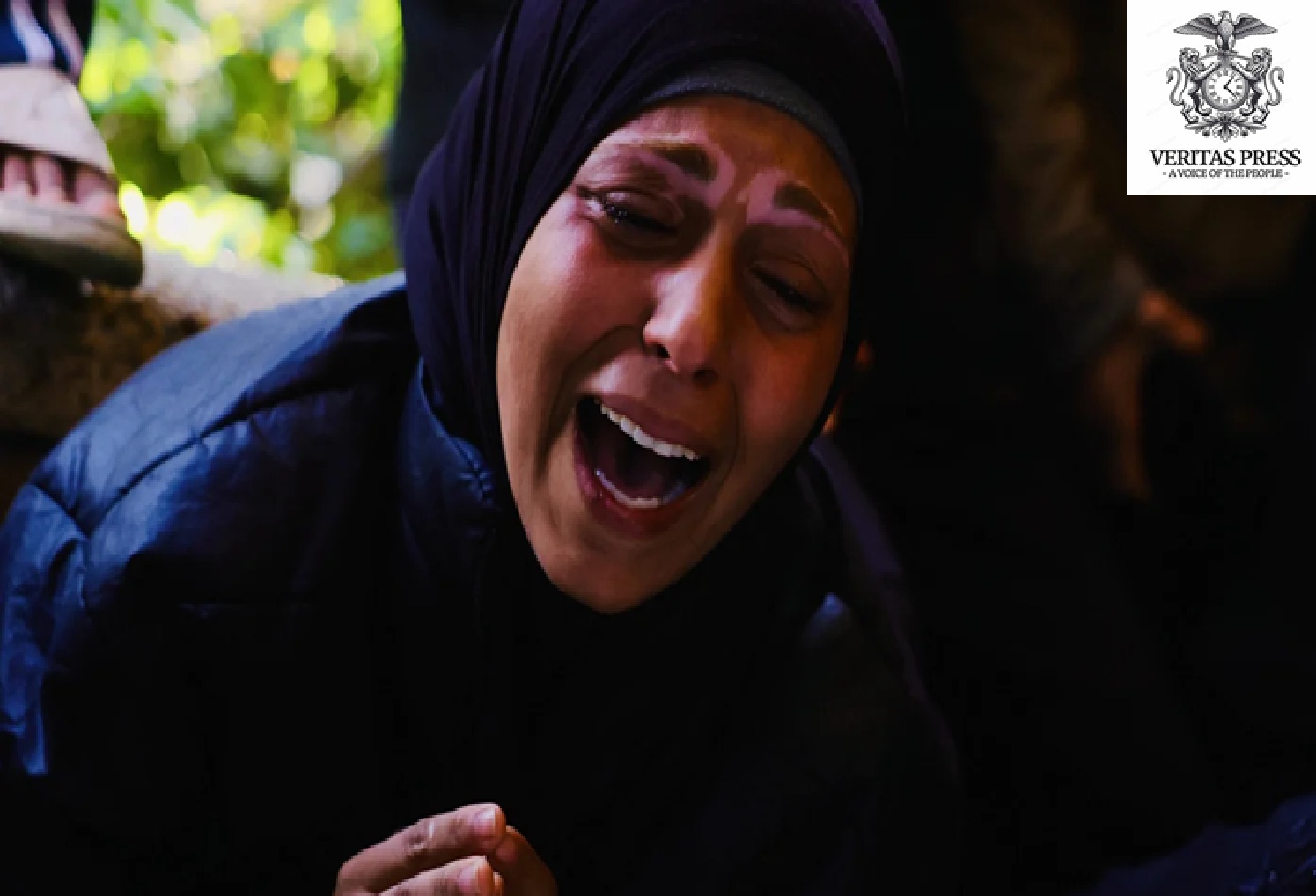
The dead were named by local journalists: Abdullah al‑Abed, 9; Salah al‑Abed, 12; Mohammed Balousha, 14; Alaa Balousha, 46; and Anas Abu Foul, 19. Their bodies were carried to Al‑Shifa hospital in Gaza City, where medics confirmed a further six people were wounded, some critically. Ambulances could do little but ferry the dead and the dying as a mother collapsed over the shrouded forms of her two sons.
“I woke up to the sound of heavy shelling and rushed out,” Amna al‑Abed told the BBC. “I looked around but couldn’t find my children beside me. I rushed outside and found them lying on the ground, martyred. My husband was there with them, wounded.”
That moment – a mother discovering her sons’ bodies in the rubble of a “ceasefire” – encapsulates the grotesque contradiction that has become daily life for the 2.4 million Palestinians trapped in the Gaza Strip. More than six months after a US‑brokered truce came into force on 10 October 2025, the violence has not only continued but has escalated.
A Ceasefire In Name Only:
Since that October day, the Israeli military has committed at least 2,400 documented violations of the ceasefire agreement, according to Gaza’s Government Media Office – violations that include targeted killings, arbitrary arrests, crippling blockades, and what aid agencies call the deliberate starvation of a population. Those breaches have killed 786 Palestinians and wounded 2,217, Gaza’s Health Ministry reports. In the month of April alone, 32 people were killed, among them Al Jazeera journalist Mohammed Wishah, who died in a drone strike west of Gaza City on 8 April.
The United Nations confirmed this week that incidents of gunfire, shelling and airstrikes surged 46% in the week of 12–18April, reaching the highest weekly level since the ceasefire began. “The North Gaza, Gaza and Deir al‑Balah governorates saw the sharpest increases,” UN spokesperson Stéphane Dujarric told reporters in New York.
In other words, what the world calls a ceasefire, Palestinians experience as a modulated war.
“Sweeping Impunity”:
The Beit Lahia strike is not an isolated “mistake” but part of what UN High Commissioner for Human Rights Volker Türk has described as “the unrelenting pattern of killings” that reflects “continuing disregard for Palestinian lives enabled by sweeping impunity.” In a 10 April statement, Türk detailed that Israeli forces had killed at least 32 Palestinians since the start of the month, bringing the post‑ceasefire toll to 738. He condemned the killing of 5‑year‑old Ritaj Rihan, shot dead on 9 April when Israeli troops opened fire on a crowded tent encampment housing her makeshift classroom in Beit Lahia. He also denounced the targeting of journalists, noting that 294 media workers have been killed since 7 October 2023, while Israel enforces a blanket ban on independent international journalists.
“The justifications presented by Israeli occupation authorities in the killing of journalists in Gaza are not based on any independently verifiable evidence,” Türk said.
The Official Narrative, And The Reality On The Ground:
The Israeli military acknowledged Wednesday’s strike but claimed it had targeted “a terrorist” who had approached troops near the “Yellow Line”, a term for the ever‑shifting front line, and posed an immediate threat. No evidence was provided, and international media, barred from entering Gaza, cannot independently verify either side’s claims.
But for Gazans, the distinction between “civilian” and “terrorist” has become meaningless. “There is no ceasefire, no truce, nothing at all,” a relative of 14‑year‑old Mohammed Balousha told reporters. “There is no safety in any area.”
That sentiment is echoed in the statistics. Between October 2023 and December 2025, more than 38,000 women and girls were killed in the Strip, according to UN Women – an average of 47 every day. Among them were over 22,000 women and 16,000 girls. “Women and girls accounted for a proportion of deaths far higher than those observed in previous conflicts in Gaza,” said Sofia Calltorp, the agency’s humanitarian action chief. “Those killed were mothers, they were daughters, sisters, and friends – deeply loved by those around them.”
As for children, the numbers are staggering. A Save the Children report issued in September 2025 found that more than 20,000 children had been killed by Israeli forces in two years of war – one child every hour, on average, and more than 1,000 of them under one year old. By November 2023, UN Secretary‑General António Guterres had already labelled Gaza “a graveyard for children.”
The Broader Pattern: Starvation, Blockade And A “Scorecard” Of Failure.
A coalition of five humanitarian organisations, the Danish Refugee Council, Norwegian Refugee Council, Oxfam, Refugees International, and Save the Children, issued a damning assessment on 9 April: six months into the ceasefire, “implementation of core provisions is regrettably failing.” Save the Children International CEO Inger Ashing put it bluntly: “At least two children a day have been killed or injured in the six months since the ceasefire for Gaza was agreed. This is not peace for children in Gaza.”
Refugees International president Jeremy Konyndyk accused the Trump administration of presiding over “a continuation of the designed deprivation that we saw throughout the hostilities.” Oxfam America’s CEO Abby Maxman added: “President Trump promised to lead an extraordinary recovery and declared a ‘new day’ for Gaza. Instead, his plan for peace is stalling, and his attention has turned away from the crisis.”
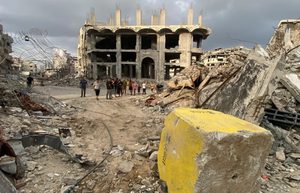
Indeed, the ceasefire plan was supposed to allow 600 humanitarian aid trucks per day into Gaza – the bare minimum needed for recovery. In reality, deliveries have been repeatedly blocked, restricted or delayed, and the entry of equipment needed to dispose of unexploded ordnance remains obstructed. More than 90% of Gaza’s civilian infrastructure has been destroyed; the UN estimates reconstruction will cost upwards of $70billion.
A Diplomatic Vacuum:
On Thursday, Hamas spokesperson Hazem Qassem accused the US‑led “Board of Peace” of “increasing failure” to compel Israel to halt violations or meet its obligations under the ceasefire. He called on mediators and guarantors to “take responsibility and pressure Israel to halt its military actions.”
But with the second phase of the ceasefire – meant to include a full Israeli withdrawal, Hamas disarmament and reconstruction – indefinitely delayed, and with the Trump administration’s attention drifting, the international response has been limited to expressions of concern. Volker Türk’s call for “meaningful actions to end Israel’s ongoing violations of international law” and for “accountability for crimes” has, to date, produced no concrete consequences.
The Long Arc Of Violence:
The Gaza war began on 7 October 2023, when Hamas‑led fighters attacked southern Israel, killing about 1,200 people and taking 251 hostages. Israel’s military response has, according to Gaza’s Health Ministry, killed more than 72,560 Palestinians and wounded over 172,320 as of 23 April 2026. The ministry’s figures are considered reliable by the United Nations.
Since the ceasefire, the Israeli military reports that four of its soldiers have been killed in attacks by Palestinian armed groups. Hamas and Israel continue to accuse each other of breaching the truce.
Epilogue: A Mother’s Plea.
Back in Beit Lahia, as the sun rose on Thursday, the three slain boys were laid out in white shrouds outside Al‑Shifa hospital. Amna al‑Abed stood before the bodies of her sons, Abdullah and Salah, and spoke the words that have become a collective lament for Gaza’s parents:
“I woke up to the sound of heavy shelling… I rushed outside and found them lying on the ground, martyred.”
Her question, “Why?”, goes unanswered. But the pattern is clear. In the gap between diplomatic language and the reality of drone‑strike killings, a generation of Palestinians is being erased. The world, six months into a “ceasefire,” is still watching and still doing next to nothing.
Source: Multiple News Agencies
Submissions:
For The Secure Submission Of Documentation, Testimonies, Or Exclusive Investigative Reports From Any Global Location, Please Utilise The Following Contact Details For Our Investigations Desk: enquiries@veritaspress.co.uk or editor@veritaspress.co.uk
Help Support Our Work:
Popular Information is powered by readers who believe that truth still matters. When just a few more people step up to support this work, it means more lies exposed, more corruption uncovered, and more accountability where it’s long overdue.
Help Protect Independent Journalism, Which Is Currently Under Attack.
If you believe journalism should serve the public, not the powerful, and you’re in a position to help, becoming a DONATOR or a PAID SUBSCRIBER truly makes a difference.
DONATION APPEAL: If You Found This Reporting Valuable, Please Consider Supporting Independent Journalism.
Help Support Our Work – We Know, We Know, We Know …
Seeing these messages is annoying. We know that. (Imagine what it’s like writing them … )
Your support fuels our fearless, truth-driven journalism. In unity, we endeavour to amplify marginalised voices and champion justice, irrespective of geographical location.
But it’s also extremely important. One of Veritas Press’s greatest assets is its reader-funded model.
1. Reader funding means we can cover what we like. We’re not beholden to the political whims of a billionaire owner. We are a small, independent and impartial organisation. No one can tell us what not to say or what not to report.
2. Reader funding means we don’t have to chase clicks and traffic. We’re not desperately seeking your attention for its own sake: we pursue the stories that our editorial team deems important and believe are worthy of your time.
3. Reader Funding: enables us to keep our website and other social media channels open, allowing as many people as possible to access quality journalism from around the world, particularly those in places where the free press is under threat.
We know not everyone can afford to pay for news, but if you’ve been meaning to support us, now’s the time.
Your donation goes a long way. It helps us:
Keep the lights on and sustain our day-to-day operations
Hire new, talented independent reporters
Launch real-time live debates, community-focused shows, and on-the-ground reporting
Cover the issues that matter most to our communities, in real time, with depth and integrity
We have plans to expand our work, but we can’t do it without your support. Every contribution, no matter the size, helps us stay independent and build a truly people-powered media platform.
If you believe in journalism that informs, empowers, and reflects the communities we serve, please donate today.
Kamran Faqir is a volunteer investigative journalist and writer committed to exposing hidden truths and amplifying underreported stories. Driven by social justice, he brings sharp insight and fearless truth-telling to independent journalism. NUJ registered.
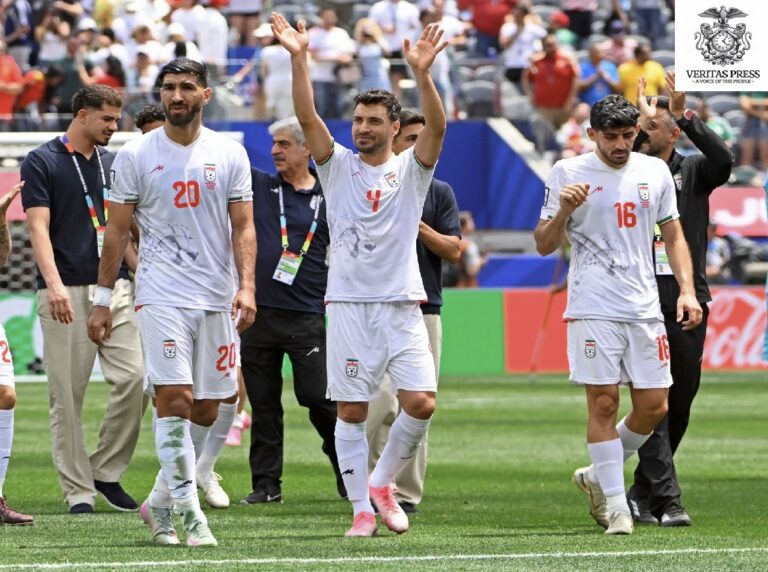
SEATTLE, TEHRAN — The U.S. Department of Homeland Security (DHS) will allow Iran’s national football team to enter the country 48 hours before their critical World Cup match against Egypt on Friday, a modest concession in a tournament where Team Melli’s travel conditions have sparked claims of oppression and competitive disadvantage.