Kamran Faqir is a volunteer investigative journalist and writer committed to exposing hidden truths and amplifying underreported stories. Driven by social justice, he brings sharp insight and fearless truth-telling to independent journalism. NUJ registered.
Original Article Date Published:
Article Date Modified:
18 minutes
Views:378
Listen to this article
Help support our mission, donate today and be the change. Every contribution goes directly toward driving real impact for the cause we believe in.
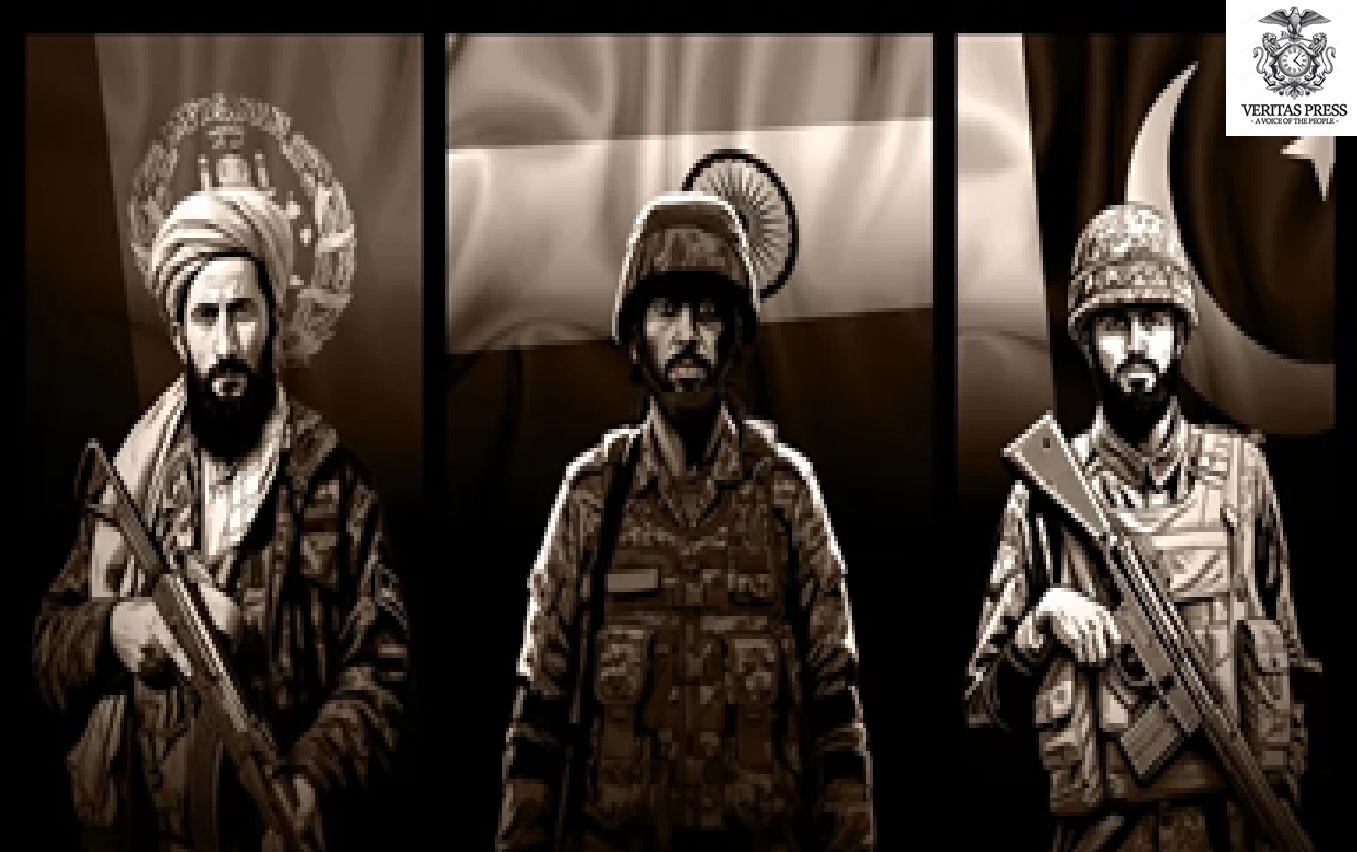
ISLAMABAD / NEW DELHI— One year after the deadliest armed attack on civilians in the disputed Himalayan region in over two decades, the chasm between the official narratives of India and Pakistan remains wider than ever. No forensic report, no independent inquiry, no physical evidence, and no conclusive international determination have bridged the gap. Instead, the anniversary of the April 22, 2025 Pahalgam massacre, in which 26 people, overwhelmingly tourists, were gunned down in the Baisaran Valley near Pahalgam in Indian-administered Jammu and Kashmir, has been marked not by closure, but by an intensification of the information war that preceded, accompanied, and outlasted the four-day military confrontation that briefly brought the nuclear-armed neighbours to the brink of full-scale war.
The past week has seen a cascade of statements from Islamabad, punctuated by a stark warning from Rawalpindi. Information Minister Attaullah Tarar, in a televised address marking the first anniversary on April 22, directly labelled the Pahalgam incident a “false flag operation” and asserted that India “has failed to provide credible evidence” even after a year.“The false flag operation in Pahalgam reflects a mindset that is hollow… driven by false pride, arrogance and greed,” Tarar declared. “Let me make it very clear that this was the last false flag operation that India carried out in Pahalgam … It will not dare to carry out such a false flag operation again.”Azad Jammu and Kashmir (AJK) Information Minister Muhammad Rafique Nayyar went further, calling India a “terrorist state” and asserting that the “hollowness of India’s fabricated narrative” now “stood fully exposed before the world.”
On April 23, Pakistan’s Foreign Office (FO) issued a formal statement rejecting what it called the “weaponisation of a false narrative” by New Delhi. “At a time when Pakistan, along with its international partners, is undertaking concerted diplomatic efforts for regional and international peace and security, it is deplorable that India has once again resorted to a campaign of baseless allegations and propaganda to link Pakistan with the Pahalgam incident,” the FO stated. “It is unfortunate that, in the midst of an ongoing regional crisis, India remains focused on weaponising its false narrative against Pakistan for narrow domestic political gains.”
This article examines, through an investigative critique, the architecture of the competing narratives, the claims and counter-claims, the evidence presented and withheld, the timelines contested, the legal provocations, and the unfinished war of perceptions that continues to shape South Asia’s most volatile relationship.
I. The Attack And The Immediate Narrative Blitz:
At approximately 1:50 p.m. on April 22, 2025, gunmen armed with automatic rifles opened fire on a group of tourists in the Baisaran Valley, a popular meadow roughly 200 kilometres from the Line of Control (LoC) that divides Kashmir. The assault, according to Pakistani military accounts, lasted roughly half an hour and was directed overwhelmingly at non-Muslim visitors.
According to the timeline presented by Pakistan’s DG ISPR, Lieutenant General Ahmed Sharif Chaudhry, the nearest police station from the incident site is at least 30 minutes away under normal conditions. Yet, an official First Information Report (FIR) was registered within approximately 10 minutes of the incident, a fact that, Pakistani officials insist, suggests the document had already been prepared in advance.“This timeline raises serious questions and indicates possible pre-planning,” General Chaudhry stated. Information Minister Tarar was more blunt: “This implies that the text of the FIR was already prepared.”
Within minutes of the first reports, Indian media outlets, and shortly thereafter, official government channels, attributed responsibility to Pakistan, specifically to militant groups allegedly operating from Pakistani soil. According to DG ISPR, this rapid attribution occurred despite the fact that Indian intelligence agencies reportedly had no prior information about the incident. General Chaudhry described the sequence as a “pre-planned narrative aimed at shifting blame without evidence.”
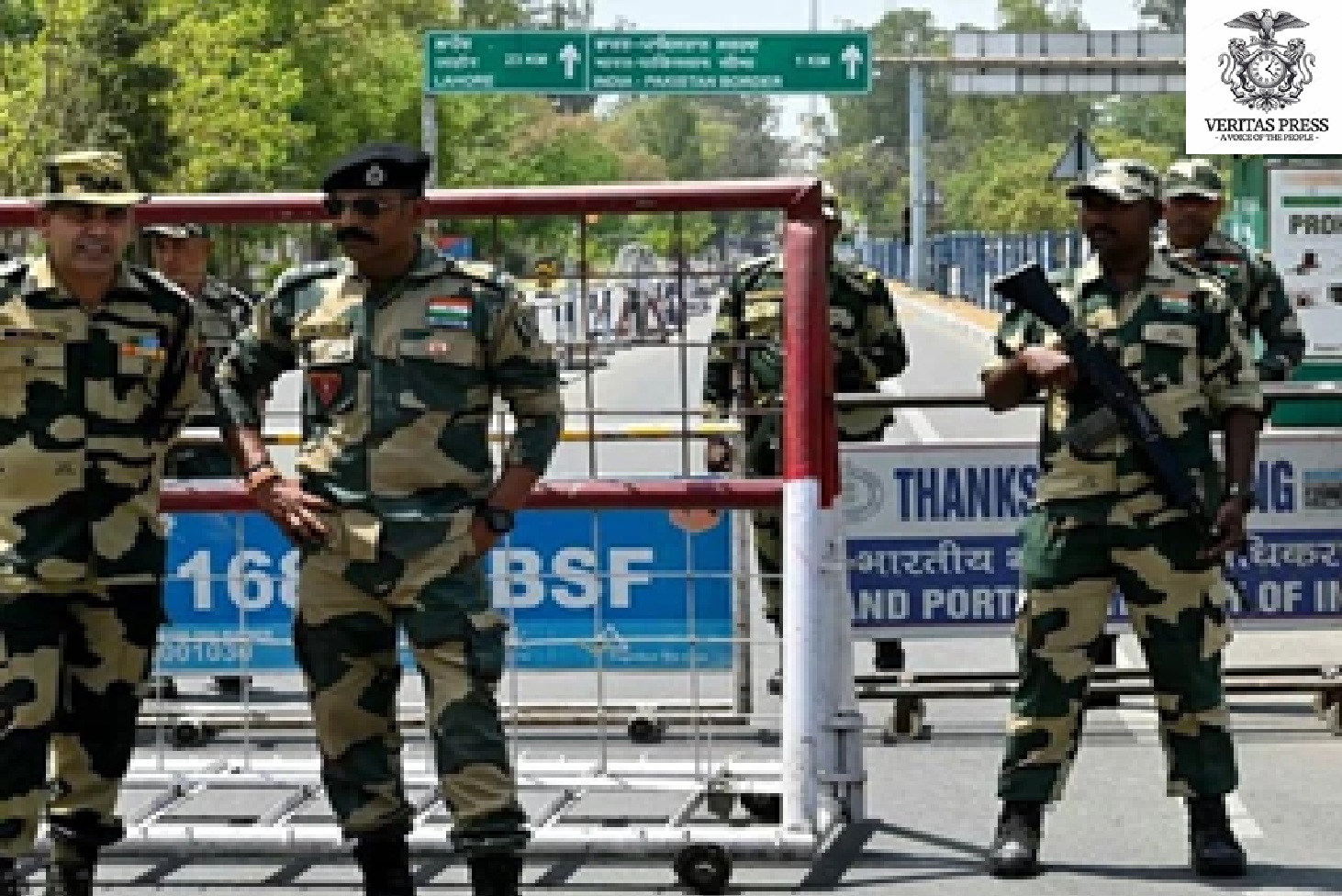
It is a matter of record that on April 23, 2025, the day after the attack, India downgraded diplomatic ties, sealed the Attari-Wagah border crossing, and announced the unilateral suspension of the 1960 Indus Waters Treaty (IWT), a foundational bilateral agreement that has survived three wars. Pakistan retaliated by suspending all trade, closing its airspace to Indian flights, and shuttering the Wagah border.
II. The Evidence That Wasn’t: A Year Of Unanswered Questions.
The central pillar of Pakistan’s critique is forensic in nature. Both the Foreign Office and Information Ministry have, over the course of the past year, repeatedly challenged New Delhi to produce what they call “credible evidence” or “verifiable proof” of Pakistani involvement, and claim that none has been advanced.
“To this day, India has not presented any solid evidence or proof regarding the Pahalgam incident, nor has it offered satisfactory explanations,” Tarar stated in his anniversary address. Pakistan’s initial call for a neutral international inquiry, articulated publicly by Prime Minister Shehbaz Sharif within days of the attack, was, according to Pakistani officials, met with Indian silence. “India avoided the offer and did not respond in a meaningful manner,” Tarar said, adding that India’s refusal to hold an inquiry itself constitutes proof that “the Pahalgam incident was a false flag operation.”
This claim is not without its geopolitical logic. As noted by the late academic and chronicler of India-Pakistan crises, Dr. Stephen P. Cohen, the subcontinent’s strategic crises invariably involve “two distinct and deeply incompatible versions of events, each sincerely held, and each serving distinct domestic political purposes.”
Critically, on July 28, 2025, Indian opposition leader and former minister P. Chidambaram publicly questioned the Narendra Modi administration’s failure to release the National Investigation Agency (NIA) investigative report. In an interview with the Indian digital outlet The Quint, Chidambaram stated that the government had “not yet presented any evidence that those who attacked Pahalgam had come from Pakistan.”Separately, a Pakistani report citing an Indian media account indicated that the Indian central government had “admitted that a security failure played a role” in the attack. This has never been formally confirmed by New Delhi, but the suggestion has only deepened the evidentiary vacuum.
A July 29, 2025, report in The Print, a digital news platform based in New Delhi, described NIA forensic findings, including ballistics analysis and witness testimony, used to identify and link the attackers to The Resistance Front (TRF). It also noted that three alleged “Pakistani” operatives had been killed in a November 2025 operation code-named “Operation Mahadev.”Home Minister Amit Shah, in a subsequent Lok Sabha address, declared that Pakistan’s perception of India’s military strikes as an attack on itself constituted “undeniable proof” of Pakistani complicity.
Yet, the full NIA report, its chain of evidence, its forensic conclusions, and the basis for its transnational attribution, has never been made public. It is this black hole that Pakistan continues to exploit to devastating rhetorical effect.
III. The “False Flag” Counter-Narrative:
The second pillar of Pakistan’s information offensive is the assertion that the Pahalgam incident was not merely a security lapse, but a deliberate “false flag” operation staged by Indian state actors to provide a pretext for planned military action and to deflect attention from domestic political discontent in Indian-administered Kashmir.
Tarar claimed that “false flag operations have been part of India’s history” and that the Pahalgam incident “follows a familiar pattern.”A comprehensive 27-minute documentary titled Marka-e-Haq (The Battle of Truth), released by the Government of Pakistan, asserts to provide “irrefutable evidence that the Indian narrative on the Pahalgam incident fails the criteria of authenticity.”
Some Indian voices, too, have challenged the official narrative. According to several Pakistani outlets citing Indian language media, segments of Indian civil society, politicians, and think tanks “raised serious questions” about security lapses at the site, the absence of CCTV cameras in an area that sees a high influx of tourists, and the rapid attribution of responsibility. The counterterrorism specialist Ajai Sahni, interviewed by Frontline in late April 2025, declared that Pahalgam represented “a policy failure, a propaganda failure, and a political failure,” adding that the problem was “not evidence; it is that you don’t want to face the evidence.”
It is crucial to underscore that scrutiny of an official counter-narrative does not imply endorsement. As Dr. Christine Fair, a scholar of South Asian security at Georgetown University, has long argued, “Pakistan’s own deep and documented ties to militant proxies operating in Kashmir” cast a shadow over its ability to credibly accuse others of “false flag” operations without overwhelming independent corroboration. A June 2025 report by the National Crisis Response Institute (NCRI), a Delhi-based think tank, alleged that Pakistani state-linked entities had “engineered and amplified a narrative framing the Pahalgam massacre as a ‘false flag’ operation” through a coordinated digital disinformation campaign.No independent verification of these specific claims exists in the public domain, but they serve to further entrench a hall of mirrors where each side accuses the other of manufacturing reality.
IV. The Legal War: Indus Waters Treaty And The Simla Agreement.
Perhaps the most consequential and overlooked dimension of the crisis was India’s decision, on April 23, 2025, to unilaterally suspend the 1960 Indus Waters Treaty. Invoking Article 62 of the Vienna Convention on the Law of Treaties (VCLT), which permits temporary suspension in the event of a “fundamental change of circumstances”, India argued that the Pahalgam attack, and what it claimed was Pakistan’s continued sponsorship of cross-border terrorism, constituted such a change.
Legal scholars were quick to push back. A May 2025 analysis in South Asian Voices noted that Article 62 explicitly excludes border treaties from the doctrine of rebus sic stantibus, while Article 60 permits suspension only in response to a “material breach” of an essential provision, criteria that do not cleanly apply to a bilateral water-sharing agreement negotiated in good faith and unaffected by security disputes. Pakistan’s former Minister of State for Law and Justice, Aqeel Malik, argued that the suspension was “not just a regional provocation; it also violates international law.”Legal commentator Ahmer Bilal Soofi, writing in The Friday Times, warned that India’s action “carries the potential to open a Pandora’s box” regarding the stability of international watercourse agreements.
Pakistan’s FO described the IWT suspension as an “illegal unilateral action” and accused India of “clear violation of international law.”The Simla Agreement of 1972, which establishes the LoC as a de facto border and commits both sides to bilateral resolution of disputes, was reportedly suspended by both sides; Pakistan on April 25, and India in subsequent weeks.
The weaponisation of water, a resource upon which Pakistan’s agrarian economy depends absolutely, remains arguably the most dangerous legacy of the Pahalgam crisis, and one that has received disproportionately little Western attention.
V. The May 2025 Military Escalation:
The information war was the prelude to a shooting war that unfolded in four phases.
Phase One (April 24 – May 2): Following cross-LoC skirmishes on April 25, both sides began mobilising forces and engaging in limited exchanges of fire. Pakistan test-fired a ballistic missile on May 3. India, on May 3, barred Pakistani-flagged ships from entering Indian ports.
Phase Two (Night of May 6-7): Indian missile strikes, launched, according to the Indian Defence Ministry, against “at least nine sites where terrorist attacks against India have been planned”, hit six cities in Pakistan’s Punjab province and in Azad Jammu and Kashmir (AJK). A mosque was struck, and Pakistan reported 31 deaths, including civilians.
Phase Three (May 7-9): Pakistan Air Force engaged Indian aircraft, claiming five kills, a figure later raised to seven. India reported the downing of several Pakistani drones. Airbases were struck, and civilians on both sides fled border areas. India suspended the Indian Premier League for a week. The G7 nations called for “maximum restraint.”
Phase Four (May 10): Pakistan launched a full-scale, tri-services retaliatory operation under the codename Operation Bunyan-un-Marsoos (“Iron Wall”), the military phase of what the ISPR termed Marka-e-Haq (“The Battle of Truth”). Analysts described it as “a textbook demonstration of integrated tri-services jointness” with coordinated use of air, land, sea, and cyber capabilities.
The operational details remain contested. According to Pakistani official accounts, over 80 Indian and Israeli-built drones were brought down; an S-400 air defence system was destroyed; BrahMos missile depots and command headquarters from Adampur to Srinagar were neutralised; and Pakistani armed drones hovered over New Delhi while cyber teams crippled Indian command systems.ISPR described the operation as “calibrated to avoid civilian casualties.” India has never confirmed an S-400 loss; Pakistan has never provided independent verification of its claimed kill ratio. The fog of information war obscures where the shooting war ended, and the propaganda campaign began.
The ceasefire, brokered through American mediation, was announced on May 10, 2025, by U.S. President Donald Trump, who posted on social media that India and Pakistan had agreed to a “full and immediate ceasefire.”According to subsequent Pakistani accounts citing Trump, the U.S. president later credited Field Marshal Asim Munir, Pakistan’s Army Chief, with “averting a nuclear war” and referred to him as “my favourite field marshal.”
VI. International Responses: Isolation Or Validation?
Both sides claim international vindication. Pakistan argues that India’s pre-emptive narrative failed to gain traction with the global community, pointing to what it describes as “global isolation” for India. Radio Pakistan, citing a report by The Wire, claimed that China “openly supported Pakistan” during the crisis, that India’s efforts in the UN Security Council “ended in complete failure,” and that Trump’s decision to invite Munir to Washington reinforced Pakistan’s diplomatic standing.
Independent analysts are more circumspect. Dr. Subir Sinha, director of the South Asian Institute at SOAS University of London, noted that the ceasefire and subsequent U.S.-brokered dialogue “marks a reversal of the Indian government’s position” of refusing bilateral talks, and that the right wing in India, which had been calling for military action against Pakistan, might react poorly to this perceived climb-down, Al Jazeera, in a post-ceasefire analysis, described a “battle of narratives” in which “[e]ach country claims ‘victory’ over the other.”
The German broadcaster Deutsche Welle (DW), reporting on the media landscape, quoted Indian academic Ankita Nath, who argued that the attack offered the Indian government “an opportunity to invoke national security with greater force, often as a pretext to silence uncomfortable or dissenting voices.”
VII. The Terrorism In The Mirror
Of all the rhetorical weapons deployed over the past year, none is as potent or as self-destructive as the mutual accusations of state-sponsored terrorism.
Pakistan’s Minister Tarar, in his anniversary address, declared that India “uses terrorism as a state policy” and cited the 2016 arrest of Indian national Kulbhushan Jadhav, a commander in the Indian Navy who Pakistan alleges was a serving agent of the Research and Analysis Wing (RAW), as evidence of New Delhi’s covert operations in Balochistan. Pakistan claims that Jadhav “confessed to carrying out sabotage and terrorist activities” on behalf of the Indian state. Beyond Jadhav, Tarar pointed to the Jaffar Express and Khuzdar bus incidents as “demonstrating India’s involvement in destabilising activities” within Pakistan, specifically through alleged support for the Baloch Liberation Army (BLA) and Tehreek-e-Taliban Pakistan (TTP).
Pakistan has submitted multiple dossiers to the United Nations in 2015, 2019, and reportedly after May 2025, detailing what it calls “irrefutable evidence of Indian state-sponsored terrorism.”According to defence experts cited by Pakistani state media, “India’s continued denial of its involvement in terrorism is exacerbating tensions in the region.”
Yet the mirror image is equally stark. According to the Global Terrorism Index 2025, Pakistan ranked second globally in terrorism impact, with deaths rising by 45% over the preceding year to 1,081, a statistic that underscores the deep internal security challenges that have long been linked to militant networks operating from Pakistani soil. A May 2025 editorial in The Express Tribune underscored the domestic salience of this issue, warning that “[India] cannot turn a blind eye to Pakistan’s claim of state-sponsored terrorism in Balochistan,” while simultaneously acknowledging that Pakistan “cannot fracture … by sowing ethnic divisions and spreading terror.”
UN documentation remains unverified in the public domain. But the pattern is familiar: both states accuse one another of the very methodologies they are themselves accused of employing, and neither has ever permitted an impartial international forensic investigation on its own territory that might settle the matter.
Conclusion: The War Of The Words That Preceded The War Of The Bullets
Twelve months on, the evidentiary cupboard remains bare. No independent, internationally-mandated investigation has been conducted into the Pahalgam massacre. No forensic report has been publicly released. No neutral party, neither the UN, nor a consortium of neutral states, nor a credible civil society commission, has been permitted to examine the chain of evidence, interrogate witnesses, or visit the site under conditions of transparency. The forensic ballistics and witness identifications cited by Home Minister Amit Shah remain sealed behind the opaque walls of India’s security apparatus, just as Pakistan’s insistence on a “false flag” operation relies overwhelmingly on inference, geographic scepticism, and the suspicious rapidity of administrative procedure rather than affirmative, independently verifiable proof.
What remains, instead, is a deepening war of narratives, a conflict fought on television screens, social media platforms, and press conference podiums, in which the enemy is not a specific militant group or intelligence agency, but the global information space itself. As a spokesperson for the Kashmir Media Service noted, “Activists note that allegations are largely based on Indian intelligence claims without independent verification or credible forensic evidence.”The same objection, of course, can be levelled against many of Pakistan’s own claims.
This much, however, is indisputable: the Indus Waters Treaty, perhaps the most durable confidence-building measure between the two nuclear-armed neighbours, now hangs in abeyance. The Simla Agreement, under which bilateralism became the official framework for dispute resolution, has been effectively suspended. And the mechanisms for de-escalation, painstakingly built over a quarter-century of diplomacy, lie in tatters.
The anniversary of Pahalgam has not brought truth. It has only deepened the void. As Senate Chairman Syed Yousaf Raza Gilani noted, “Only a credible, evidence-based inquiry can establish facts and prevent escalation.”Neither country has shown any intention of making such an inquiry possible, or of accepting its conclusions if one were to occur.
The war of words that preceded May 2025 has not ended; it has simply entered a new, more intractable phase. The tragedy of Pahalgam, 26 dead, thousands more scarred by a brief but terrifying military escalation, has become a symbol not of shared grief, nor of accountability, but of the enduring capacity of the Indian subcontinent’s two nuclear-armed rivals to talk past one another, across a chasm of mutual suspicion, in mutually unintelligible languages of truth.
Source: Multiple News Agencies
Submissions:
For The Secure Submission Of Documentation, Testimonies, Or Exclusive Investigative Reports From Any Global Location, Please Utilise The Following Contact Details For Our Investigations Desk: enquiries@veritaspress.co.uk or editor@veritaspress.co.uk
Help Support Our Work:
Popular Information is powered by readers who believe that truth still matters. When just a few more people step up to support this work, it means more lies exposed, more corruption uncovered, and more accountability where it’s long overdue.
Help Protect Independent Journalism, Which Is Currently Under Attack.
If you believe journalism should serve the public, not the powerful, and you’re in a position to help, becoming a DONATOR or a PAID SUBSCRIBER truly makes a difference.
DONATION APPEAL: If You Found This Reporting Valuable, Please Consider Supporting Independent Journalism.
Help Support Our Work – We Know, We Know, We Know …
Seeing these messages is annoying. We know that. (Imagine what it’s like writing them … )
Your support fuels our fearless, truth-driven journalism. In unity, we endeavour to amplify marginalised voices and champion justice, irrespective of geographical location.
But it’s also extremely important. One of Veritas Press’s greatest assets is its reader-funded model.
1. Reader funding means we can cover what we like. We’re not beholden to the political whims of a billionaire owner. We are a small, independent and impartial organisation. No one can tell us what not to say or what not to report.
2. Reader funding means we don’t have to chase clicks and traffic. We’re not desperately seeking your attention for its own sake: we pursue the stories that our editorial team deems important and believe are worthy of your time.
3. Reader Funding: enables us to keep our website and other social media channels open, allowing as many people as possible to access quality journalism from around the world, particularly those in places where the free press is under threat.
We know not everyone can afford to pay for news, but if you’ve been meaning to support us, now’s the time.
Your donation goes a long way. It helps us:
Keep the lights on and sustain our day-to-day operations
Hire new, talented independent reporters
Launch real-time live debates, community-focused shows, and on-the-ground reporting
Cover the issues that matter most to our communities, in real time, with depth and integrity
We have plans to expand our work, but we can’t do it without your support. Every contribution, no matter the size, helps us stay independent and build a truly people-powered media platform.
If you believe in journalism that informs, empowers, and reflects the communities we serve, please donate today.
Kamran Faqir is a volunteer investigative journalist and writer committed to exposing hidden truths and amplifying underreported stories. Driven by social justice, he brings sharp insight and fearless truth-telling to independent journalism. NUJ registered.
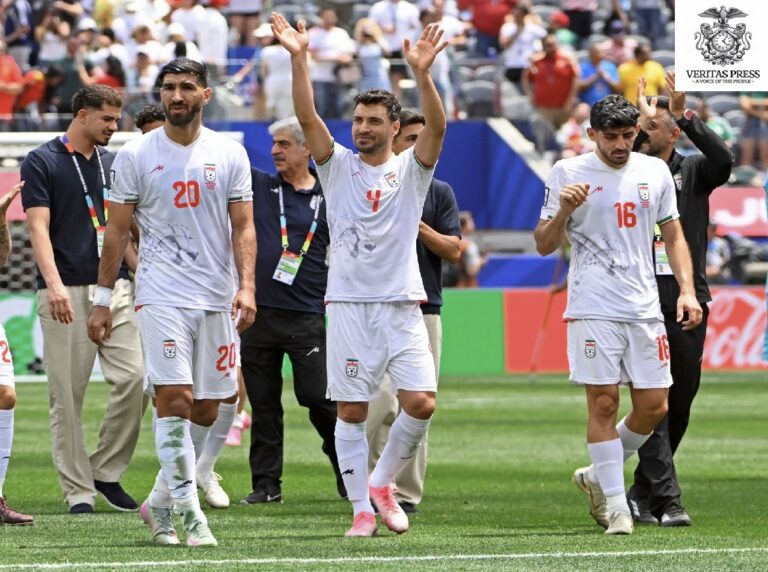
SEATTLE, TEHRAN — The U.S. Department of Homeland Security (DHS) will allow Iran’s national football team to enter the country 48 hours before their critical World Cup match against Egypt on Friday, a modest concession in a tournament where Team Melli’s travel conditions have sparked claims of oppression and competitive disadvantage.