Kamran Faqir is a volunteer investigative journalist and writer committed to exposing hidden truths and amplifying underreported stories. Driven by social justice, he brings sharp insight and fearless truth-telling to independent journalism. NUJ registered.
Original Article Date Published:
Article Date Modified:
15 minutes
Views:408
Listen to this article
Help support our mission, donate today and be the change. Every contribution goes directly toward driving real impact for the cause we believe in.
UPDATE: This Alert Has Been Updated Throughout After The Red Cross Reported That They Had Found The Body Of Amal Khalil Under The Rubble.
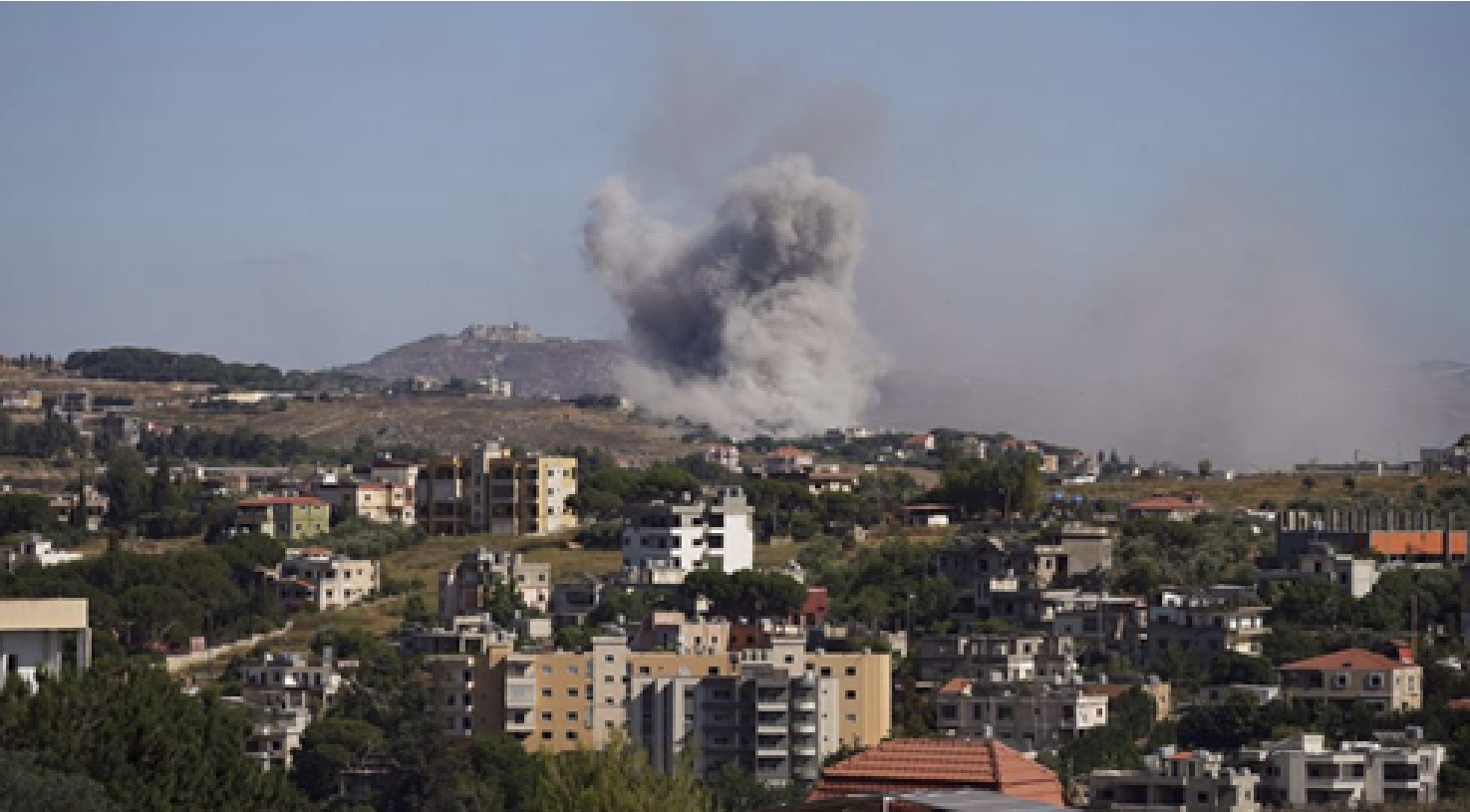
BEIRUT — In the late afternoon of Wednesday, April 22, 2026, Lebanese journalist Amal Khalil, a 43-year-old field correspondent for the daily Al-Akhbar, placed what would be her final phone call. Trapped beneath the crushing weight of concrete and rebar in the southern Lebanese village of al-Tiri, and with the dull thud of ongoing Israeli shelling reverberating above her, she dialled her family and then the Lebanese military. Minutes earlier, an Israeli airstrike had precisely obliterated the home where she had taken shelter from an initial, equally deadly, drone attack. For the next six hours, as the international community watched and as pleas for access were systematically denied, Amal Khalil bled out alone in the darkness. Her death, Lebanese officials, press freedom groups, and United Nations experts conclude, was no accident. It was, by all available evidence, a premeditated execution followed by an act of obstruction that may itself constitute a war crime.
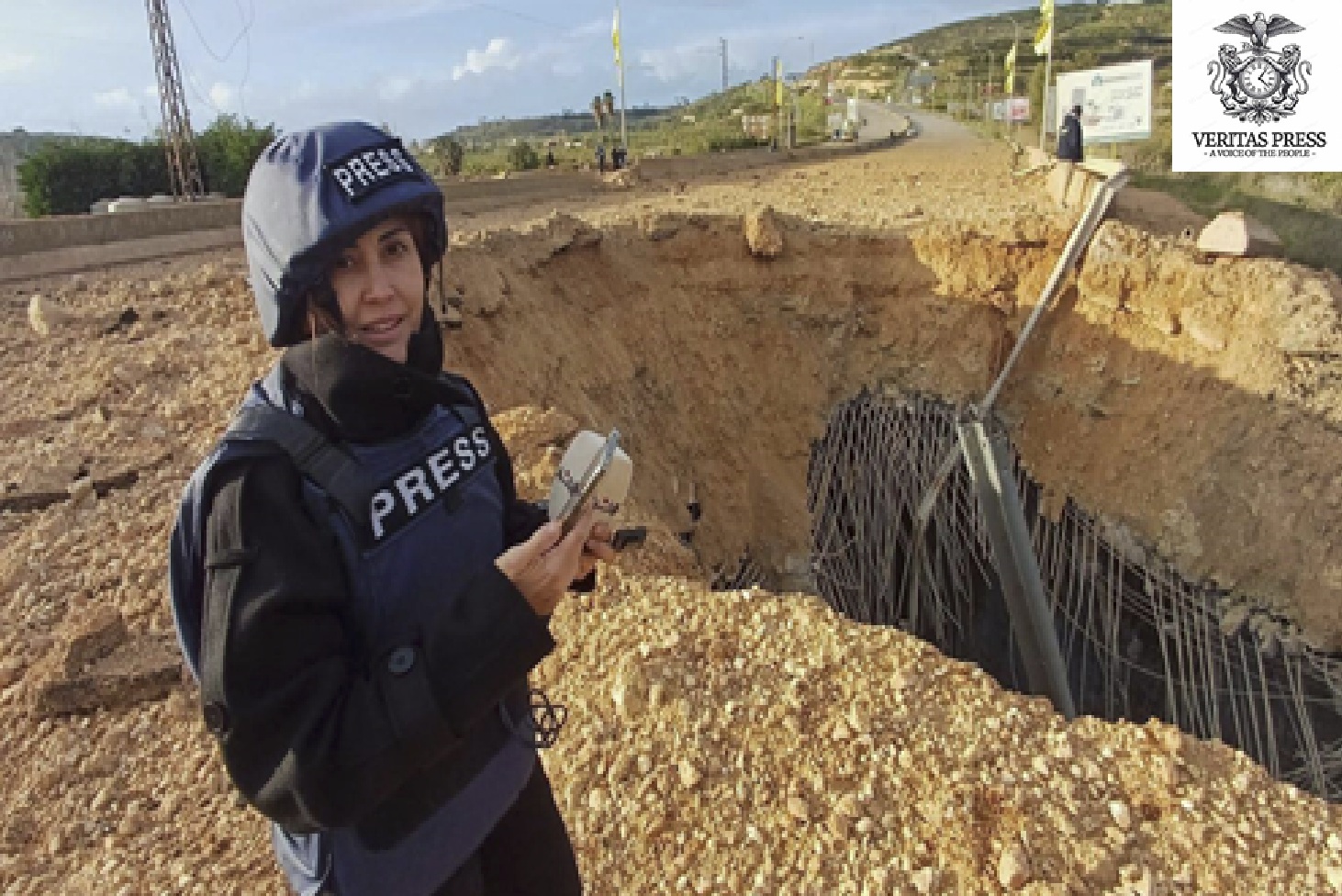
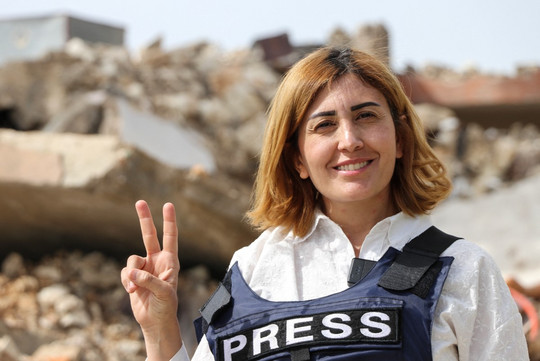
A photograph shows Amal Khalil, a veteran correspondent for the daily newspaper Al-Akhbar, in the southern Lebanese border village of Jebbayn in 2024. An Israeli airstrike killed the Lebanese journalist and wounded another on 22 April 2026. Credit: AFP.
The Sequence Of An Assassination:
Amal Khalil was not a random casualty of war; she was a known entity. A veteran journalist who had covered southern Lebanon since 2006, she was the eyes and ears of her community in a landscape scarred by decades of conflict. On April 22, she was on assignment with freelance photojournalist Zeinab Faraj, documenting the aftermath of Israeli attacks on the town of Bint Jbeil. According to a detailed timeline reconstructed by Hashem al Sayyed Hassan, a correspondent with Hezbollah’s al-Manar network, and cross-referenced with statements from the Union of Journalists of Lebanon (UJL), the attack unfolded not as a single errant explosion, but as a deliberate, multi-stage hunt to kill.
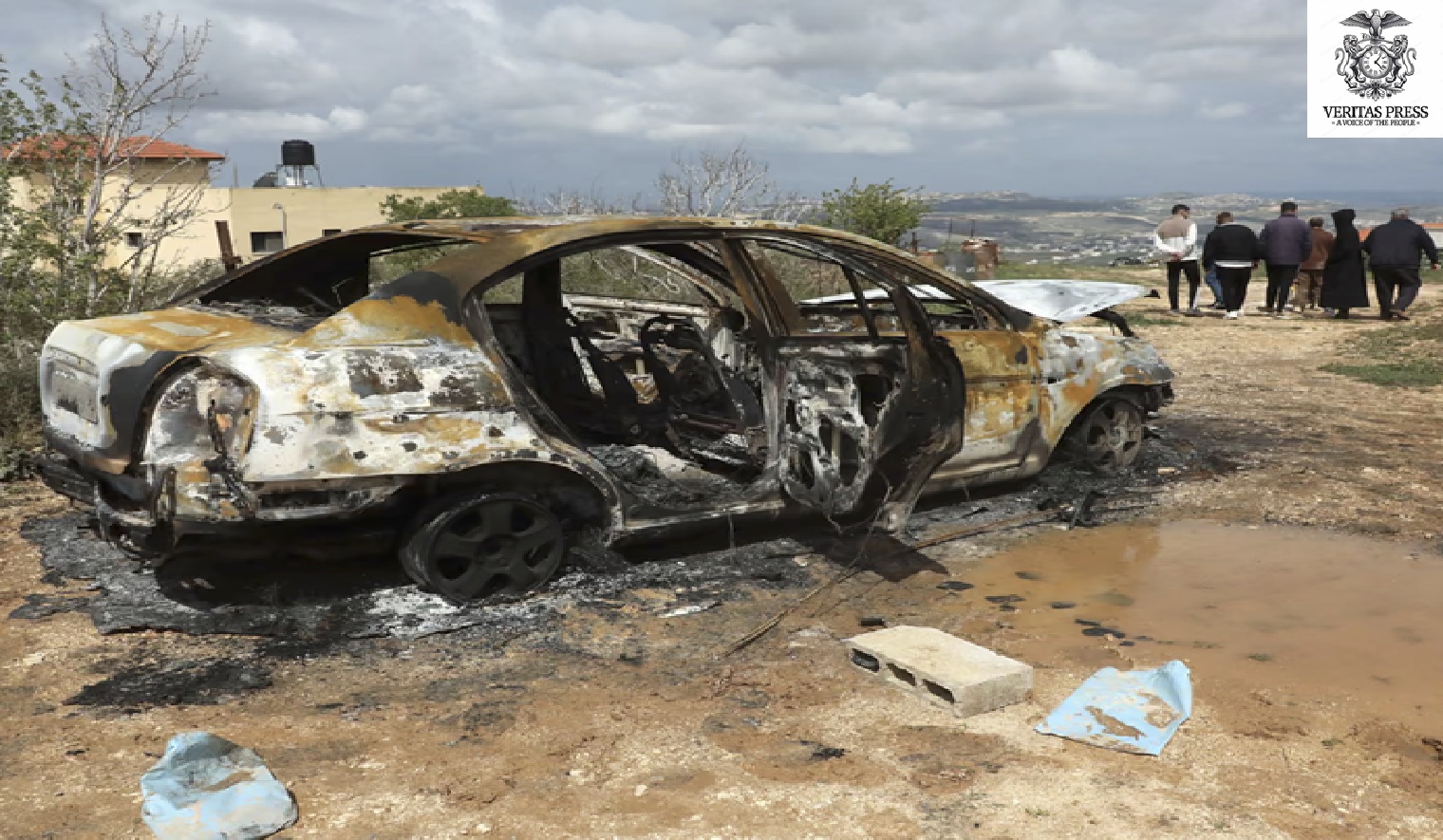
The first strike came from an Israeli drone, which targeted a civilian vehicle travelling on the main road linking al-Tiri and Haddatha. The explosion killed two unidentified men instantly. In the chaos that ensued, Khalil and Faraj fled their now-compromised car, seeking refuge in a nearby house. It was a logical, civilian instinct. Yet, according to the UJL, the same hovering drone that had struck the first vehicle returned to attack their now-empty car, confirming that the journalists were the subjects of active surveillance.
For approximately two hours, the journalists remained trapped, coordinating rescue efforts via phone while the area remained under active Israeli fire. Despite immediate contact with the Lebanese Red Cross and the Lebanese army, clearance to enter the zone was withheld by Israeli forces. Then, at approximately 4:10 p.m., the Israeli military targeted the building where the journalists had taken cover. The strike buried Khalil under the rubble and left Faraj with critical head injuries.
This sequential targeting, a vehicle, a car, a safe house, forms the backbone of the accusation that this was a deliberate assassination. “The repeated strikes on the same location, the targeting of an area where journalists were sheltering, and the obstruction of medical and humanitarian access constitute a grave breach of international humanitarian law,” declared Sara Qudah, the Committee to Protect Journalists’ (CPJ) Regional Director, in a statement to the press. Her words were echoed by the International Federation of Journalists (IFJ), which jointly condemned the “targeted assassination”.
“A Blatant Double Violation”: The Obstruction Of Rescue.
If the first crime was the targeted strike, the second, say Lebanese officials, was the calculated prevention of a rescue. The Lebanese Health Ministry and Civil Defence confirm that while rescuers were eventually able to extract the critically wounded Zeinab Faraj under intense fire, they were forced to retreat before reaching Khalil. The ministry described a harrowing scene in which a clearly marked Lebanese Red Cross ambulance, arriving to treat the wounded, was met not with safe passage, but with a stun grenade and directed gunfire from Israeli forces. “This constitutes a blatant double violation: obstructing the rescue efforts of a citizen known for her civic media activism, and targeting an ambulance clearly marked with the Red Cross emblem,” the ministry stated.
For nearly four hours, Khalil’s colleagues and family, alongside international press freedom organisations like Reporters Without Borders (RSF), sent desperate messages to the Israeli Defense Forces (IDF) pleading for a humanitarian corridor. Clayton Weimer, RSF’s executive director, confirmed his organisation had been in contact with the IDF, stating: “The Red Cross signalled they were unable to get through because of ongoing Israeli bombardment. So that is callous disregard, on top of what appears to be a deliberate and targeted killing of a journalist”.
In interviews conducted by Al-Jadeed TV with the head of the UJL, Elsy Moufarrej, the accusation of a deliberate execution was made bluntly. Moufarrej explicitly blamed the IDF for not only initiating the strike but for ensuring its lethal conclusion by delaying the rescue. “The Israeli army adds to its long and bloody record a new and deliberate war crime that led to the martyrdom of Amal Khalil, who bled to death, after preventing ambulance crews from reaching her for nearly four hours,” Moufarrej told the IFJ.
The IDF, for its part, has issued a blanket denial of any wrongdoing. In a formal statement, the military claimed its troops had identified two vehicles departing from a “military structure used by Hezbollah” in al-Tiri. It asserted that the individuals inside “violated the ceasefire” and “posed an imminent threat” to Israeli forces, prompting a strike on one vehicle and subsequently the “structure from which the individuals had fled”. The IDF insisted it “does not target journalists” and denied preventing rescue teams from accessing the area. However, the military acknowledged the specific reports of journalist casualties, stating only that “details of the incident are under review”. Notably, as of the latest reports, the IDF has not specifically acknowledged Khalil’s death, nor has it addressed the detailed, multi-stage timeline of attacks presented by Lebanese authorities and journalists on the ground.
The Shadow Of 2024: A Threat Fulfilled.
To understand the chilling precision of the April 22 strike, one must rewind to September 2024. At the height of the cross-border conflict ignited after the October 7 attacks, Amal Khalil received a direct death threat on her mobile phone from a number traced to Israel. “We know where you are, and we will reach you when the time comes,” the message read, according to reports from L’Orient Today and the UJL. It chillingly suggested: “I suggest you flee to Qatar or somewhere else if you want to keep your head connected to your shoulders”.
The threat, which included specific details about Khalil’s movements between villages in southern Lebanon, was publicly denounced in September 2024 by the Lebanese Press Editors’ Syndicate. Joseph Al-Qaseefi, the syndicate’s head, formally referred the matter to the International Federation of Journalists, describing it at the time as a “shameless threat” and a harbinger of “what the Zionists are planning against every journalist performing their professional duty”.
The fulfilment of that threat eighteen months later, on April 22, 2026, has sent a chill through Lebanon’s journalistic community. CPJ, in its initial alert, directly linked the 2024 threat to the 2026 attack, noting that it “raises serious concerns of deliberate targeting”. Elsy Moufarrej, speaking on Al Jadeed TV, was unequivocal: the killing was a premeditated assassination, the final act in a narrative that began with a promise of violence delivered directly to the journalist’s phone.
It is this confluence of prior threat and present action that distinguishes the killing of Amal Khalil from an act of collateral damage and frames it within the legal definition of a targeted assassination.
“An Established Approach”: A Systematic Strategy, Not An Accident.
The outrage emanating from Beirut is not confined to this single, fatal strike. Prime Minister Nawaf Salam, speaking on behalf of the Lebanese government, has forcefully articulated what investigators and press freedom advocates have been documenting for months: that the killing of journalists is not an aberration but a strategic practice. “Israel’s targeting of media workers in the south while they carry out their professional duties is no longer isolated incidents, but has become an established approach that we condemn and reject, as do all international laws and conventions,” Salam declared on X (formerly Twitter). He has vowed that Lebanon will “spare no effort in pursuing these crimes before the competent international forums”.
Salam’s assertion is supported by a grim and escalating statistical reality. Khalil’s death marks the ninth journalist killed in Lebanon since the beginning of 2026 alone, a figure that underscores the rapid deterioration of press safety since the conflict reignited in early March. Her killing came less than a month after an Israeli airstrike on March 28 killed three journalists, Fatima Ftouni, Mohammed Ftouni, and Ali Shoeib, in a marked press vehicle in the Jezzine region. In that instance, the IDF accused Shoeib, a veteran Hezbollah-affiliated correspondent, of being a militant operative, a claim it supported with what UN experts later described as a “photoshopped image”. The experts from the United Nations Human Rights Council formally called for an international independent investigation into these killings, arguing that Israel had failed to provide any credible evidence for its claims, representing “another egregious attack on press freedom by Israeli forces”.
The pattern extends well beyond Lebanon’s borders. As documented by the CPJ, Israel was responsible for a staggering two-thirds of all journalist and media worker killings worldwide in 2025. In February 2026, a CPJ special report highlighted that the profession is witnessing the deadliest period for journalists since the organisation began tracking data in 1992, a crisis driven overwhelmingly by the conduct of the Israeli military. Since the start of the Gaza war in 2023, at least 260 journalists have been killed in the enclave alone, in what has been frequently described as an unprecedented and systematic decimation of the Palestinian press corps.
UN experts Irene Khan, Morris Tidball-Binz, and Ben Saul have been particularly scathing in their assessment, stating: “We denounce strongly what has now become a standard, dangerous practice of Israel to target and kill journalists and then claim, without providing any credible evidence, that they were involved with armed groups”. Their analysis points to a culture of impunity, noting that “Israeli officials know this, yet they choose to ignore it – emboldened by impunity for their previous killings of journalists in Lebanon, Gaza and the West Bank”.
This institutionalised impunity forms the dark backdrop against which Amal Khalil’s killing was carried out. The dual nature of the IDF’s response, a procedural announcement of an “under review” status alongside an immediate default accusation that the victims were near a Hezbollah “military structure”, mirrors an increasingly familiar script. To press freedom advocates, it is a strategy designed to kill media workers and kill the story, shrouding the act in a fog of unsubstantiated security claims while delaying and deflecting independent scrutiny.
The Crumbling Ceasefire And The Missing Narrative:
What makes the attack in al-Tiri even more politically explosive is its timing. The strikes occurred under the auspices of a fragile, US-backed 10-day ceasefire between Israel and Lebanon, brokered by the Trump administration, which took effect at midnight on April 16. The agreement was intended to halt weeks of intensified cross-border fighting that had erupted following the coordinated US-Israeli offensive against Iran in late February. Yet, the ink was barely dry on the agreement when violence resumed. By April 22, the day Khalil was killed, Israeli strikes killed seven people across southern Lebanon, marking the highest single-day death toll since the truce was announced.
The ceasefire violations have not been one-sided, with the Israeli military reporting Hezbollah rocket and drone attacks earlier in the week. However, it is within this chaotic, contested security environment that journalists like Amal Khalil are most vulnerable, tasked with documenting the very violations that all parties have an interest in obscuring. Khalil’s recent reporting, according to her employer and local sources, had focused on Israeli demolitions of Lebanese homes in villages now occupied by the IDF as part of an emerging buffer zone—a sensitive and politically damaging storyline for the Israeli military.
It is a story that will now go untold by the journalist who was its primary witness.
Epilogue: The Forensic Imperative.
The body of Amal Khalil was not recovered from the rubble of the house in al-Tiri until shortly before midnight on April 22, at least six hours after the fatal strike that sealed her fate. In the chilling vacuum of that delay, as a wounded colleague was spirited away under fire and a journalist’s life ebbed away beneath tons of debris, a legal and moral threshold was crossed. As Anthony Bellanger, the General Secretary of the International Federation of Journalists, stated in his condemnation, the incident demonstrates that “Israel’s deliberate violence and its systematic killing of journalists in Gaza is being replicated in Lebanon in the face of the international community’s inaction and with total impunity”.
Lebanon’s vow to pursue international legal action, coupled with CPJ’s framing of the rescue obstruction as a potential war crime, places the killing of Amal Khalil squarely in the docket of international public opinion and, potentially, courts of law. To date, however, the mechanisms for accountability remain cripplingly slow, while the pace of killings remains brutally swift.
In the final analysis, the assassination of Amal Khalil was not a tragedy born of fog-of-war confusion. It was the fulfilment of an 18-month-old threat, executed in a series of precise strikes, and compounded by an active obstruction of a rescue, all targeting an individual whose profession was her only weapon. As the conflict grinds on and the death toll of truth-tellers climbs, the ultimate evidence of this war crime may yet lie not in a courtroom, but in the hollowed-out silence of a decimated fourth estate. Amal Khalil’s last story is her own, and it is a damning indictment.
Source: Multiple News Agencies
Submissions:
For The Secure Submission Of Documentation, Testimonies, Or Exclusive Investigative Reports From Any Global Location, Please Utilise The Following Contact Details For Our Investigations Desk: enquiries@veritaspress.co.uk or editor@veritaspress.co.uk
Help Support Our Work:
Popular Information is powered by readers who believe that truth still matters. When just a few more people step up to support this work, it means more lies exposed, more corruption uncovered, and more accountability where it’s long overdue.
Help Protect Independent Journalism, Which Is Currently Under Attack.
If you believe journalism should serve the public, not the powerful, and you’re in a position to help, becoming a DONATOR or a PAID SUBSCRIBER truly makes a difference.
DONATION APPEAL: If You Found This Reporting Valuable, Please Consider Supporting Independent Journalism.
Help Support Our Work – We Know, We Know, We Know …
Seeing these messages is annoying. We know that. (Imagine what it’s like writing them … )
Your support fuels our fearless, truth-driven journalism. In unity, we endeavour to amplify marginalised voices and champion justice, irrespective of geographical location.
But it’s also extremely important. One of Veritas Press’s greatest assets is its reader-funded model.
1. Reader funding means we can cover what we like. We’re not beholden to the political whims of a billionaire owner. We are a small, independent and impartial organisation. No one can tell us what not to say or what not to report.
2. Reader funding means we don’t have to chase clicks and traffic. We’re not desperately seeking your attention for its own sake: we pursue the stories that our editorial team deems important and believe are worthy of your time.
3. Reader Funding: enables us to keep our website and other social media channels open, allowing as many people as possible to access quality journalism from around the world, particularly those in places where the free press is under threat.
We know not everyone can afford to pay for news, but if you’ve been meaning to support us, now’s the time.
Your donation goes a long way. It helps us:
Keep the lights on and sustain our day-to-day operations
Hire new, talented independent reporters
Launch real-time live debates, community-focused shows, and on-the-ground reporting
Cover the issues that matter most to our communities, in real time, with depth and integrity
We have plans to expand our work, but we can’t do it without your support. Every contribution, no matter the size, helps us stay independent and build a truly people-powered media platform.
If you believe in journalism that informs, empowers, and reflects the communities we serve, please donate today.
Kamran Faqir is a volunteer investigative journalist and writer committed to exposing hidden truths and amplifying underreported stories. Driven by social justice, he brings sharp insight and fearless truth-telling to independent journalism. NUJ registered.
SEATTLE, TEHRAN — The U.S. Department of Homeland Security (DHS) will allow Iran’s national football team to enter the country 48 hours before their critical World Cup match against Egypt on Friday, a modest concession in a tournament where Team Melli’s travel conditions have sparked claims of oppression and competitive disadvantage.