





Help support our mission, donate today and be the change. Every contribution goes directly toward driving real impact for the cause we believe in.
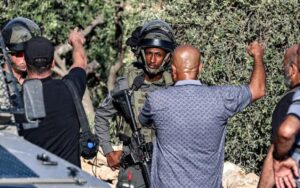
WEST BANK – Israeli forces detained at least 15 Palestinian women during overnight military raids in the Qalqilya governorate of the occupied West Bank, in a campaign that Palestinian organisations and human rights advocates say reflects an escalating strategy of targeting the families of prisoners and slain Palestinians.
The arrests, carried out during late-night raids on homes across the city of Qalqilya and surrounding towns, come amid a sharp surge in Israeli detention operations across the occupied territory since the Gaza war began in October 2023. Rights groups warn that the expanding campaign, now increasingly directed at women, signals a deepening pattern of collective punishment and political repression.
Overnight Raids Across Qalqilya:
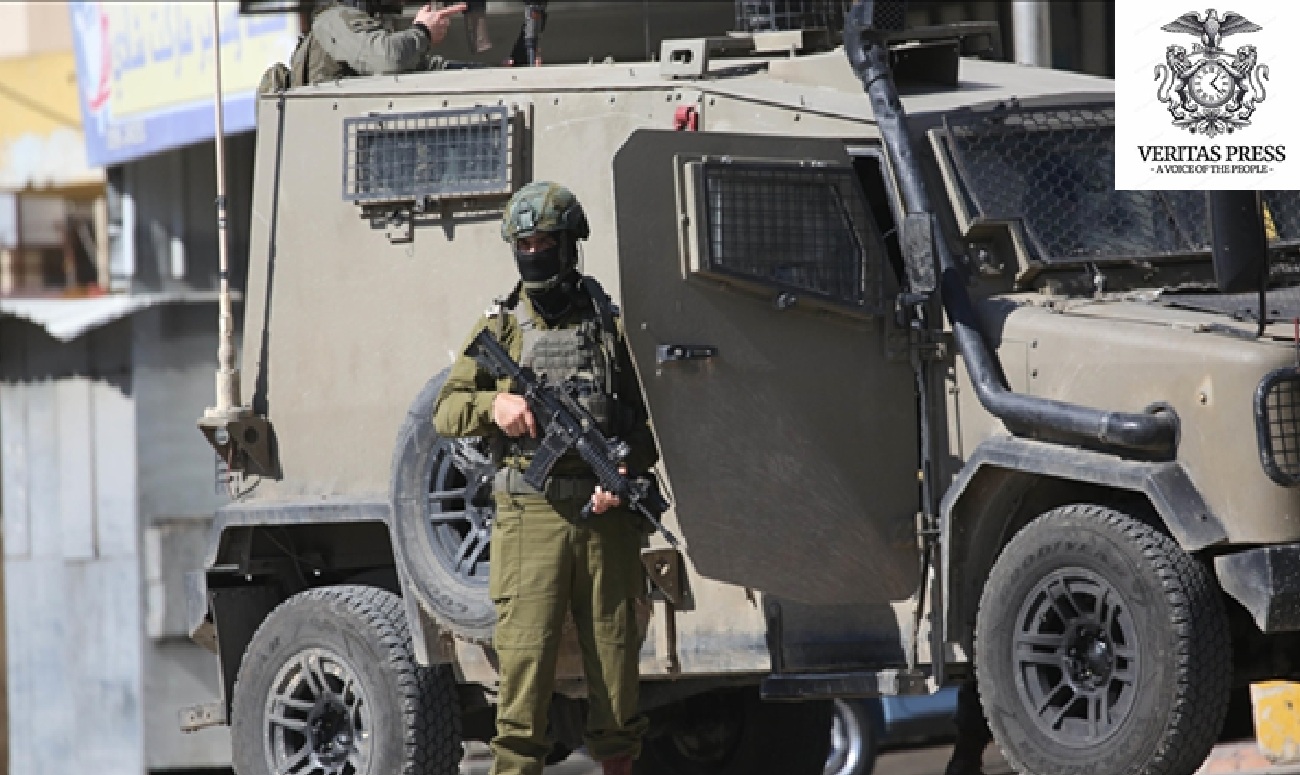
According to the Palestinian Prisoners’ Society (PPS), Israeli troops stormed homes in Qalqilya and nearby towns, including Azzun, Kafr Thulth and Sanniriya, conducting searches and detaining women during the raids.
Local sources told journalists that most of the women detained were wives of released prisoners, wives of current detainees, or mothers of Palestinians killed by Israeli forces, highlighting what Palestinian advocates say is a deliberate strategy to pressure the families of those involved in resistance or political activism.
Two of the women were later released after interrogation, while the others were taken into custody.
In a statement, the Palestinian Prisoners’ Society described the operation as “unprecedented in both scale and the category of those targeted,” noting that the arrests occurred within a single night in one geographic area, an unusual pattern even amid the widespread detention campaigns that have swept the West Bank over the past two years.
“This targeting of women is part of systematic retaliatory arrest campaigns carried out daily by the occupation,” the organisation said.
A Wider Crackdown Across The West Bank:
The Qalqilya arrests form part of a sweeping Israeli military crackdown that has dramatically expanded detention operations throughout the West Bank since the outbreak of the Gaza war.
Israeli forces conduct near-daily raids on Palestinian towns, refugee camps and villages, operations the military says are necessary to detain individuals it considers “wanted.”
Palestinian officials and rights organisations, however, say the raids function as a systematic mechanism of control over the occupied population, often involving mass arrests, property destruction, and violent confrontations with residents.
According to Palestinian authorities and monitoring groups:
- More than 22,000 Palestinians have been detained in the West Bank since October 2023.
- At least 1,132 Palestinians have been killed by Israeli forces or settlers during the same period.
- Over 11,700 people have been injured, many during raids and protests.
The Palestinian Prisoners’ Society says that more than 700 Palestinian women in the West Bank and dozens in Gaza have been detained since the war began, marking a significant rise compared with previous years.
Women Increasingly Targeted By The IOF:
Palestinian rights organisations say the targeting of women, especially relatives of detainees or slain Palestinians, has intensified sharply during the current conflict.
“These arrests are not random,” said Amani Sarahneh, spokesperson for the prisoner rights organisation Addameer Prisoner Support and Human Rights Association.
“Women are increasingly targeted because they are the backbone of Palestinian families and communities. Arresting them places enormous psychological pressure on prisoners and their relatives.”
Most female detainees are reportedly held at Damon Prison in northern Israel, where rights groups say conditions have deteriorated significantly since the war began.
According to testimonies collected by prisoner advocacy organisations, Palestinian women prisoners face:
- Harsh interrogation and psychological pressure
- Strip searches and invasive body inspections
- Denial of medical treatment
- Isolation and solitary confinement
- Severe food shortages and deteriorating hygiene conditions
“The situation inside the prisons has become catastrophic,” Sarahneh said in recent media interviews. “Women detainees report daily humiliation and intimidation by guards.”
Administrative Detention And Social Media Charges:
Many of the women detained since October 2023 have been held under administrative detention, a controversial Israeli policy allowing imprisonment without charge or trial based on secret evidence.
Human rights organisations say the measure, originally inherited from British colonial emergency regulations, has become a central pillar of Israel’s detention regime.
Others face charges of “incitement” related to posts on social media, a broad accusation that critics say criminalises political speech and expressions of solidarity with Palestinians in Gaza.
According to B’Tselem, such prosecutions frequently rely on vague or loosely interpreted statements.
“Social media monitoring has become a major tool for identifying Palestinians for arrest,” the organisation said in a recent report.
As of March 2026, Palestinian prisoner support groups estimate that around 9,500 Palestinians are currently held in Israeli prisons, including:
- Roughly 70–75 women
- Approximately 350+ children
- More than 3,000 administrative detainees are held without charge
Isolation From Lawyers And The Red Cross:
The Palestinian Prisoners’ Society says conditions have worsened dramatically because Israel has severely restricted outside access to prisoners.
Since the outbreak of the Gaza war:
- Many lawyers have been prevented from visiting detainees regularly
- Family visits have been widely suspended
- The International Committee of the Red Cross has reportedly been unable to carry out normal prison visits.
The restrictions, rights groups warn, have created a near-total blackout inside Israeli detention facilities, making it extremely difficult to monitor abuses.
“Without access by lawyers or independent observers, detainees become completely vulnerable,” said a legal researcher at Al-Haq.
“This environment significantly increases the risk of torture and ill-treatment.”
Growing Allegations Of Torture And Abuse:
Concerns over detainee abuse intensified recently after Israeli authorities dropped charges against soldiers accused of sexually assaulting a Palestinian detainee at the Sde Teiman detention facility, a controversial military-run prison for Gaza detainees.
The case sparked outrage among Israeli and international human rights organisations, which warned the decision could reinforce a culture of impunity for abuses committed against Palestinian prisoners.
The Israeli rights group Public Committee Against Torture in Israel condemned the move, stating that accountability for abuse inside detention centres remains rare.
“Investigations into serious allegations of torture are routinely closed without indictments,” the organisation said.
Collective Punishment And Pressure On Families:
Palestinian activists say the Qalqilya raids illustrate how Israeli detention policies increasingly extend beyond individuals suspected of wrongdoing to encompass their families and communities.
“This is collective punishment,” said Rami Abdo, chairman of the Euro-Med Human Rights Monitor.
“When the occupation arrests the wives and mothers of prisoners, it sends a clear message: the punishment will reach the entire family.”
International humanitarian law prohibits collective punishment against civilians in occupied territories, but enforcement mechanisms remain weak.
Occupation Under Legal Scrutiny:
The growing crackdown also unfolds against the backdrop of mounting legal scrutiny of Israel’s rule over the occupied Palestinian territories.
In July 2024, the International Court of Justice issued a landmark advisory opinion declaring Israel’s decades-long occupation of Palestinian territory illegal and calling for the dismantling of settlements in the West Bank and East Jerusalem.
Despite the ruling, settlement expansion and military operations across the West Bank have continued, while arrest rates have surged.
For Palestinians, imprisonment remains one of the most pervasive features of life under occupation.
“Nearly every Palestinian family has experienced detention in some form,” said a Ramallah-based journalist who has covered the prisoner issue for years.
“The prison system is not simply about individuals accused of crimes—it has become one of the main tools used to control Palestinian society.”
“They came in the middle of the night”
Residents of Qalqilya described scenes of fear and chaos during the raids.
“They came in the middle of the night,” said one resident whose neighbour’s wife was detained. “Soldiers surrounded the house, forced the family outside, and searched every room.”
Another resident told local media that children were left terrified as soldiers escorted women away in military vehicles.
“These women are mothers,” the resident said. “What threat do they pose?”
For Palestinian families, the arrests represent yet another layer of uncertainty in a conflict that has already shattered daily life across the West Bank.
As one activist in Qalqilya put it:
“They want to break the spirit of the community. When they cannot silence the prisoners, they go after the mothers and wives.”
Conclusion: Detention As A Tool Of Control.
The overnight arrest of Palestinian women in Qalqilya is not an isolated security operation but part of a wider system of domination that rights groups say has long defined Israel’s rule over the occupied West Bank. By increasingly targeting wives, mothers, and relatives of prisoners or those killed by Israeli occupied forces, Israeli authorities appear to be extending the reach of the detention regime beyond individuals accused of wrongdoing to the social networks that sustain Palestinian political and communal life.
For Palestinian organisations, the pattern reflects what they describe as a deliberate strategy of collective pressure and psychological warfare. Arresting women who often serve as the primary caretakers and organisers within their families and communities sends a message that resistance, or even association with it, will carry consequences that extend far beyond the individual prisoner.
Human rights groups argue that the expanding use of administrative detention, vague “incitement” charges, and sweeping night raids illustrates how the prison system has evolved into a central pillar of Israel’s control apparatus in the occupied territories. The scale of arrests since October 2023, tens of thousands detained across the West Bank, suggests that incarceration is increasingly being used not only as a punitive measure but as a method of political containment and deterrence.
The near-total restrictions on lawyer access, family visits, and monitoring by international bodies such as the Red Cross have further deepened concerns. Without independent oversight, prisoner advocates warn, detainees, particularly women and minors, face heightened risks of abuse, coercive interrogations, and degrading treatment that rarely leads to accountability.
Critics say the impunity surrounding alleged abuse inside Israeli detention centres, alongside the continued expansion of settlement activity and military raids, reinforces a system in which Palestinians remain subject to military law while Israeli settlers in the same territory are governed by civilian courts.
Against this backdrop, the mass arrest of women in Qalqilya reflects more than a single night’s raid. For many Palestinians, it underscores the enduring role of incarceration as a mechanism of control embedded within the broader structure of occupation, one that reaches into homes, families, and entire communities.
As one Palestinian rights advocate in Ramallah remarked, “The prison system is not just about locking people away. It is about shaping life under occupation, who can speak, who can organise, and who lives under constant fear that the next knock on the door will come in the middle of the night.”
Source: Multiple News Agencies
Submissions:
For The Secure Submission Of Documentation, Testimonies, Or Exclusive Investigative Reports From Any Global Location, Please Utilise The Following Contact Details For Our Investigations Desk: enquiries@veritaspress.co.uk or editor@veritaspress.co.uk
Help Support Our Work:
Popular Information is powered by readers who believe that truth still matters. When just a few more people step up to support this work, it means more lies exposed, more corruption uncovered, and more accountability where it’s long overdue.
Help Protect Independent Journalism, Which Is Currently Under Attack.
If you believe journalism should serve the public, not the powerful, and you’re in a position to help, becoming a DONATOR or a PAID SUBSCRIBER truly makes a difference.
DONATION APPEAL: If You Found This Reporting Valuable, Please Consider Supporting Independent Journalism.
Help Support Our Work – We Know, We Know, We Know …
Seeing these messages is annoying. We know that. (Imagine what it’s like writing them … )
Your support fuels our fearless, truth-driven journalism. In unity, we endeavour to amplify marginalised voices and champion justice, irrespective of geographical location.
But it’s also extremely important. One of Veritas Press’s greatest assets is its reader-funded model.
1. Reader funding means we can cover what we like. We’re not beholden to the political whims of a billionaire owner. We are a small, independent and impartial organisation. No one can tell us what not to say or what not to report.
2. Reader funding means we don’t have to chase clicks and traffic. We’re not desperately seeking your attention for its own sake: we pursue the stories that our editorial team deems important and believe are worthy of your time.
3. Reader Funding: enables us to keep our website and other social media channels open, allowing as many people as possible to access quality journalism from around the world, particularly those in places where the free press is under threat.
We know not everyone can afford to pay for news, but if you’ve been meaning to support us, now’s the time.
Your donation goes a long way. It helps us:
- Keep the lights on and sustain our day-to-day operations
- Hire new, talented independent reporters
- Launch real-time live debates, community-focused shows, and on-the-ground reporting
- Cover the issues that matter most to our communities, in real time, with depth and integrity
We have plans to expand our work, but we can’t do it without your support. Every contribution, no matter the size, helps us stay independent and build a truly people-powered media platform.
If you believe in journalism that informs, empowers, and reflects the communities we serve, please donate today.
The Trump administration is preparing a $2.8 billion weapons package for Israel containing 40,000 2,000-pound

Film alleges mass civilian deaths are routinely built into military decisions amid Israel’s genocidal war
The Israeli rights group says violence, displacement, economic strangulation, and settlement expansion form part of

Houthi forces have captured the historic Red Sea port of Mocha and are advancing on
London’s historic sanctions against Israeli settlements mark a watershed moment in UK foreign policy, but
With 95% of Gaza’s population now wholly dependent on aid and more than 90% stripped
India calls for Kashmir and Ladakh to appear only on its official map after a
ISLAMABAD – In the high-stakes political theatre of Pakistan, the battleground has shifted from the
Francesca Albanese says third states have an ICJ-mandated obligation to end Israel’s occupation. But with
As Israeli jets bomb a Syrian air base over alleged Turkish deployment plans, Ankara, Washington