



Help support our mission, donate today and be the change. Every contribution goes directly toward driving real impact for the cause we believe in.
The Deep Penetrator’s Message:
In the predawn hours of March 18, somewhere over the coastline of the Islamic Republic of Iran, U.S. Air Force munitions crews released payloads that have become the signature hammer of Operation Epic Fury. The target: a series of “hardened” Iranian missile sites carved into the cliffs near the Strait of Hormuz. The weapon of choice was the GBU-72 Advanced Penetrator, a 5,000-pound bunker-buster designed to bury itself deep into reinforced concrete before turning enemy positions into rubble.
“Hours ago, U.S. forces successfully employed multiple 5,000-pound deep penetrator munitions on hardened Iranian missile sites along Iran’s coastline near the Strait of Hormuz,” U.S. Central Command (CENTCOM) announced on X. The rationale was as concise as the strike was violent: “The Iranian anti-ship cruise missiles in these sites posed a risk to international shipping in the strait”.
While the Pentagon framed the strike as a tactical necessity to protect global commerce, the detonation of those bunker-busters sent shockwaves far beyond the Persian Gulf, rippling through NATO headquarters in Brussels, the trading floors of global oil markets, and the tense bridges of commercial tankers now idling just beyond the horizon.
This is the state of play in the world’s most critical energy choke point: a conflict defined by massive ordnance, maritime guerrilla tactics, and a Washington establishment discovering that fighting alone is easier than fighting together.
The Strategic Context: A Chokepoint Closed.
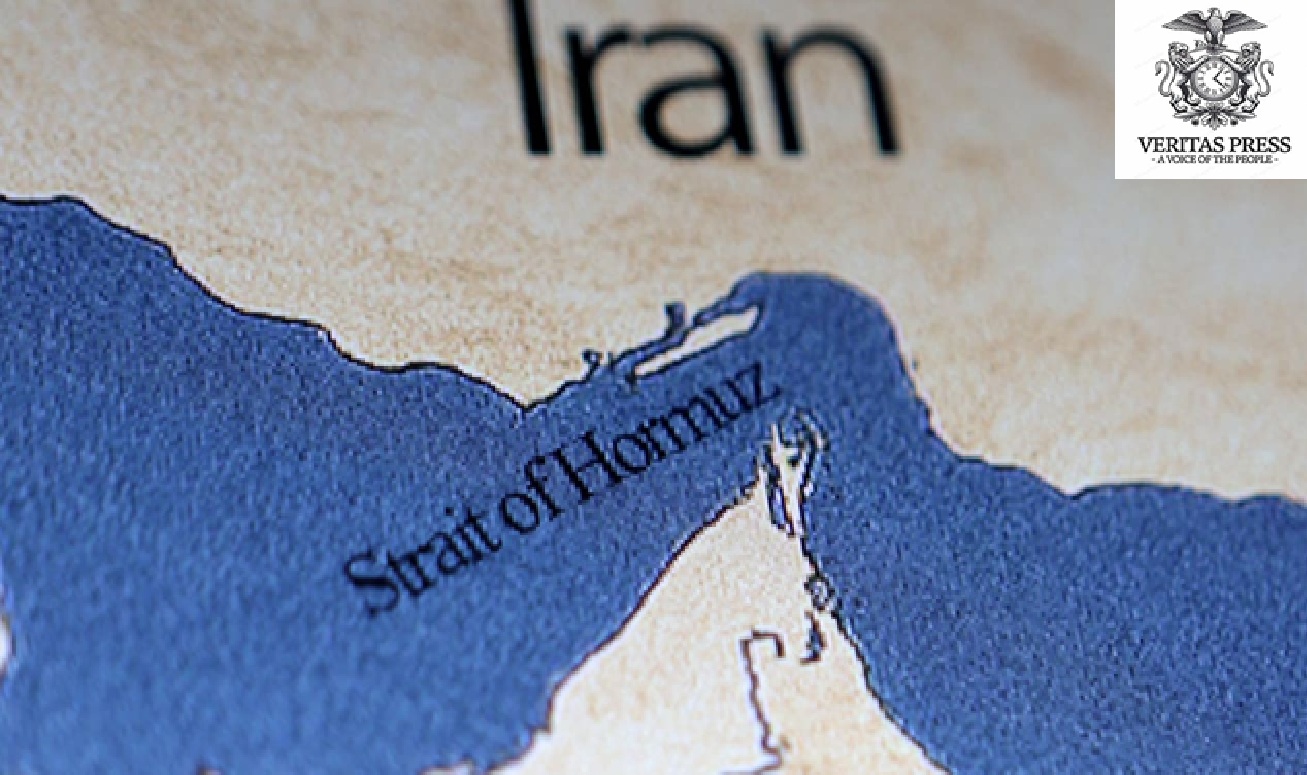
The Strait of Hormuz, connecting the Persian Gulf with the Gulf of Oman, is not just a body of water; it is the circulatory system of the global energy economy. Roughly one-fifth of the world’s total oil consumption, about 20 million barrels per day, flows through its narrow shipping lanes, which are, at their narrowest, just 33 kilometres wide.
That flow has been effectively severed.
Since the joint U.S.-Israeli attacks on Iran began on February 28, a conflict that has already resulted in the death of former Supreme Leader Ayatollah Ali Khamenei and massive retaliatory barrages, the Islamic Revolutionary Guard Corps (IRGC) has made good on its threats. Iranian Parliament Speaker Mohammad-Bagher Ghalibaf declared unequivocally on X this week that the strait “won’t return to its pre-war status”. While Iranian Foreign Minister Abbas Araghchi has attempted to nuance the message, stating the strait remains open to international shipping, excluding vessels belonging to the U.S., Israel, and their allies, the practical effect has been a blockade.
The result has been a maritime ghost town. “This resource superhighway, which normally hosts more than a hundred of the world’s largest oil and liquid natural gas tankers every day, has seen no more than a handful all week,” reported Saša Petricic of CBC News, describing a scene where jagged cliffs overlook empty seas. At least 14 commercial vessels have suffered violent incidents, leaving at least eight mariners dead.
The Strike: Why The GBU-72?
The use of the GBU-72 is a significant escalation in itself. First tested by the Air Force in 2021, the munition is designed specifically for one job: destroying the kinds of targets that give conventional bombs fits. The “hardened Iranian missile sites” targeted were likely coastal defence batteries housing anti-ship cruise missiles, weapons that, along with fast-attack boats and naval mines, form the core of Iran’s asymmetric naval doctrine.
By deploying these 5,000-pound penetrators, the U.S. military is signalling a shift from simply countering Iranian attacks to actively dismantling Iran’s ability to threaten the waterway in the long term. However, an anonymous U.S. official confirmed to CNN that the strikes, while powerful, are part of a broader campaign rather than a silver bullet.
Yet, on the ground, the conflict continues to spiral. In the early hours of Wednesday, security sources reported that a drone strike targeted the U.S. Embassy in Baghdad, Iraq, triggering air defence systems. At least three explosive-laden drones were aimed at a U.S. diplomatic facility near Baghdad International Airport.
The Coalition Conundrum: “This Is Not Europe’s War.”
While the bombs fell on Iran, a different kind of battle was raging in the diplomatic corridors of Washington and Brussels. President Donald Trump, facing rising gasoline prices and a choked supply chain, has been pressing allies to join a naval coalition to escort tankers through the strait. The response has been, to use the President’s own word, “disappointing.”
Trump expressed his frustration openly, telling reporters that Japan, Australia, and South Korea rejected his call, and that he was “disappointed” in NATO’s decision. “I think NATO’s making a very foolish mistake,” Trump said in the Oval Office. He questioned the alliance’s reliability, stating, “I wonder whether or not NATO would ever be there for us. So this was a great test”.
In Europe, the message was met with a blunt rebuke. EU foreign ministers gathered in Brussels to discuss expanding the mandate of the EU’s naval mission, Aspides, to include the Strait of Hormuz. The result was a diplomatic dead end.
“Europe has no interest in an open-ended war,” declared EU top diplomat Kaja Kalla. “This is not Europe’s war, but Europe’s interests are directly at stake”.
The German Defence Minister, Boris Pistorius, was even more pointed, reminding Washington of the conflict’s origins. “The Americans chose this path, together with the Israelis,” Pistorius said, adding that Germany’s primary responsibility was defending NATO territory. “We did not start this war”.
Perhaps the sharpest response came from Luxembourg’s Deputy Prime Minister Xavier Bettel, who stressed his country would not give in to “blackmail” from Washington. “Don’t ask us” to send troops, Bettel told reporters.
Leon Panetta, former U.S. Secretary of Defence, diagnosed the problem as a failure of statecraft. He argued that Trump “never laid the groundwork” to build an alliance against Iran. “Now, in many ways, he’s got a gun to his head because of rising oil prices and the damage that’s being done. The problem is the president’s playing catch-up, and that’s not an easy game to play when you’re in the middle of a war”.
Greg Bagwell, a former Royal Air Force commander, observed that “Trump’s attempt to woo or bully other nations to contribute naval ships is becoming desperate, yet there is little to encourage participation. It’s hard to see why there would be any advantage to acceding to Trump’s request”.
The Military Analysis: “Maritime Guerrilla Warfare.”
Why are allies so hesitant to join the U.S. Fifth Fleet in these waters? The answer lies in the unique and terrifying nature of anti-access/area-denial (A2/AD) warfare as practised by the IRGC.
Naval experts warn that sending large, expensive destroyers into the strait to escort tankers is a gamble with catastrophic odds. Retired Vice-Admiral Mark Norman of the Canadian Navy describes Iran’s strategy as “maritime guerrilla warfare.” The primary threat isn’t a blue-water naval battle; it is the cheap, plentiful, and hard-to-counter mine.
“It actually doesn’t take a lot to wreak havoc in a very tight piece of water like this,” Norman said. Mines can be pre-positioned, programmed to activate upon detecting specific vessel types, or triggered remotely. They are inexpensive for Iran to deploy but potentially ruinous for the U.S. Navy to clear.
The historical precedent is sobering. In 1988, the frigate USS Samuel Roberts hit an Iranian mine in the Persian Gulf. The mine reportedly cost $1,500 to make; the damage to the ship cost $96 million to fix.
“The U.S. is fighting with a limited number of large, expensive vessels,” noted Justin Crump of the risk consultancy Sybilline. Against them, Iran can deploy fast, well-armed speedboats and land-based anti-ship cruise missiles, the very weapons the U.S. is currently bombing. These missiles have already been fired at the USS Abraham Lincoln, though CENTCOM vehemently denied Iranian claims of a successful hit.
Economic Impact: The $200 Barrel.
The blockage is translating directly into economic pain. Oil prices have already jumped more than 40% to above $100 per barrel. A recent report by J.P. Morgan warns that the situation could become critical rapidly; analysts project that oil producers in the Middle East could sustain output for “no more than 25 days” if the strait were completely shut. Saudi Arabia, Iraq, Qatar, and the UAE, alongside Iran itself, are held hostage by this geography.
Iran has predicted that oil will surpass $200 a barrel if the conflict continues. The International Energy Agency has attempted to intervene, recommending the release of 400 million barrels from global strategic reserves, but this is a stopgap measure against a structural crisis.
Conclusion: A Test Of Resolve.
As the smoke clears over the bombed Iranian coastal batteries, the larger questions remain unresolved. President Trump insists that “we don’t need anybody,” while simultaneously pressuring allies to join the fight. Iran, despite losing its Supreme Leader, has shown no signs of capitulation, leveraging its geography as its most powerful weapon.
For now, the Strait of Hormuz remains a militarised zone, a graveyard for global commerce, and the stage for a conflict that tests the limits of American firepower against the resilience of asymmetric warfare.
In Washington, Senator Lindsey Graham (R-S.C.) hammered European allies over their reluctance, threatening “wide and deep” repercussions for alliances. Meanwhile, on Truth Social, Trump mused about letting other nations handle the Strait, writing that if the U.S. finished off the “Iranian Terror State,” it would “get some of our non-responsive ‘Allies’ in gear, and fast”.
Yet as naval historian Sal Mercogliano pointed out, without a diplomatic off-ramp, the military path leads only to more escalation. “Without putting troops on both sides of the Strait of Hormuz and ensuring that you’re able to prevent drones and mine attacks, I just don’t see a military solution”
Source: Multiple News Agencies
For The Secure Submission Of Documentation, Testimonies, Or Exclusive Investigative Reports From Any Global Location, Please Utilise The Following Contact Details For Our Investigations Desk: enquiries@veritaspress.co.uk or editor@veritaspress.co.uk
Help Support Our Work:
Popular Information is powered by readers who believe that truth still matters. When just a few more people step up to support this work, it means more lies exposed, more corruption uncovered, and more accountability where it’s long overdue.
Help Protect Independent Journalism, Which Is Currently Under Attack.
If you believe journalism should serve the public, not the powerful, and you’re in a position to help, becoming a DONATOR or a PAID SUBSCRIBER truly makes a difference.
DONATION APPEAL: If You Found This Reporting Valuable, Please Consider Supporting Independent Journalism.
Help Support Our Work – We Know, We Know, We Know …
Seeing these messages is annoying. We know that. (Imagine what it’s like writing them … )
Your support fuels our fearless, truth-driven journalism. In unity, we endeavour to amplify marginalised voices and champion justice, irrespective of geographical location.
But it’s also extremely important. One of Veritas Press’s greatest assets is its reader-funded model.
1. Reader funding means we can cover what we like. We’re not beholden to the political whims of a billionaire owner. We are a small, independent and impartial organisation. No one can tell us what not to say or what not to report.
2. Reader funding means we don’t have to chase clicks and traffic. We’re not desperately seeking your attention for its own sake: we pursue the stories that our editorial team deems important and believe are worthy of your time.
3. Reader Funding: enables us to keep our website and other social media channels open, allowing as many people as possible to access quality journalism from around the world, particularly those in places where the free press is under threat.
We know not everyone can afford to pay for news, but if you’ve been meaning to support us, now’s the time.
Your donation goes a long way. It helps us:
- Keep the lights on and sustain our day-to-day operations
- Hire new, talented independent reporters
- Launch real-time live debates, community-focused shows, and on-the-ground reporting
- Cover the issues that matter most to our communities, in real time, with depth and integrity
We have plans to expand our work, but we can’t do it without your support. Every contribution, no matter the size, helps us stay independent and build a truly people-powered media platform.
If you believe in journalism that informs, empowers, and reflects the communities we serve, please donate today.
The Trump administration is preparing a $2.8 billion weapons package for Israel containing 40,000 2,000-pound

Film alleges mass civilian deaths are routinely built into military decisions amid Israel’s genocidal war
The Israeli rights group says violence, displacement, economic strangulation, and settlement expansion form part of

Houthi forces have captured the historic Red Sea port of Mocha and are advancing on
London’s historic sanctions against Israeli settlements mark a watershed moment in UK foreign policy, but
With 95% of Gaza’s population now wholly dependent on aid and more than 90% stripped
India calls for Kashmir and Ladakh to appear only on its official map after a
ISLAMABAD – In the high-stakes political theatre of Pakistan, the battleground has shifted from the
Francesca Albanese says third states have an ICJ-mandated obligation to end Israel’s occupation. But with
As Israeli jets bomb a Syrian air base over alleged Turkish deployment plans, Ankara, Washington