

Help support our mission, donate today and be the change. Every contribution goes directly toward driving real impact for the cause we believe in.
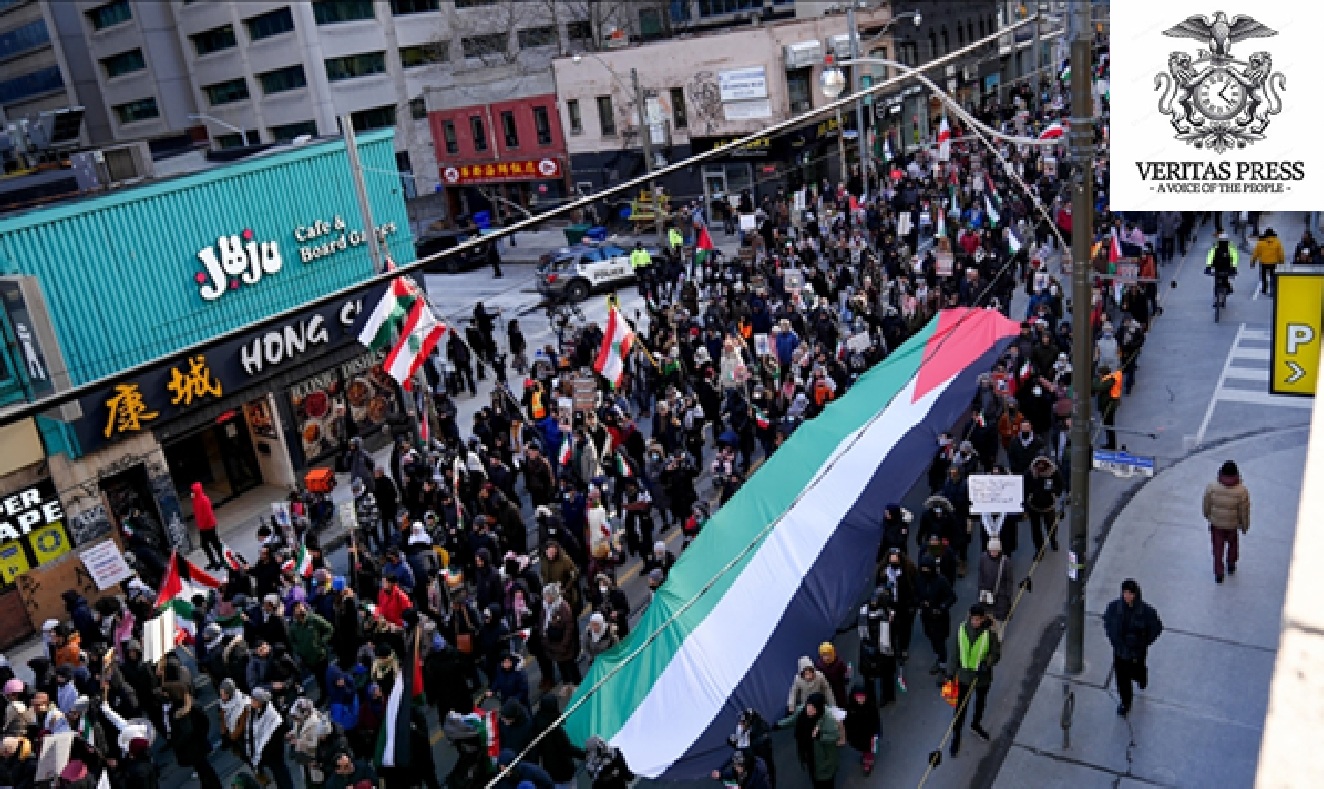
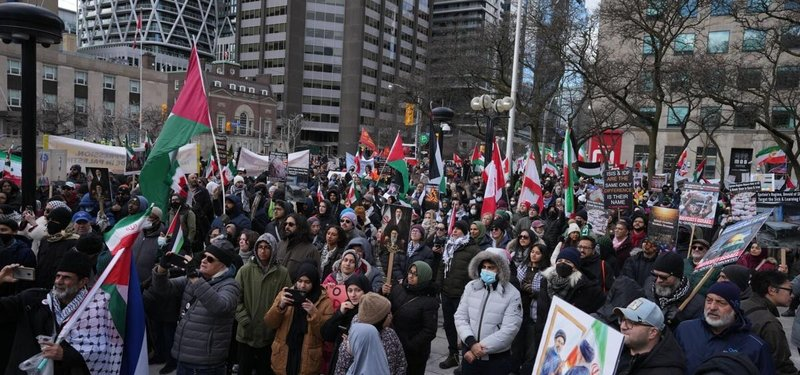
TORONTO — In the shadow of the US Consulate on University Avenue, the air was thick with the rhythmic beat of drums, the flutter of flags, and the unmistakable energy of 4,500 voices chanting in unison. Yet, just hours before the crowd converged on the downtown core Saturday afternoon, the fate of this annual Al-Quds Day rally hung in the balance of a hastily convened video conference in an Ontario courtroom.
In a dramatic rebuke to Premier Doug Ford’s government, Superior Court Justice Robert Centa dismissed an eleventh-hour application for an injunction that would have pre-emptively blocked the demonstration. The ruling was not just a green light for the protest; it was a sharp defence of Charter rights against what civil liberties groups and legal experts are calling a politically motivated overreach.
“The application for an interim interlocutory injunction is dismissed,” Centa ruled just after 2 p.m. “I am not satisfied that the Attorney General of Ontario has met the test for an injunction to prevent all persons from engaging in the Al-Quds Day protest”.
A ‘Breeding Ground’ Or ‘Political Theatre’? The Legal Showdown.
The provincial government’s motion, filed at noon on Saturday, was based on a grave assertion. Premier Ford had taken to social media to label the rally a “breeding ground for hate and antisemitism,” arguing that recent violence, including a shooting at the US Consulate and attacks on three synagogues, necessitated extraordinary measures. “We need to be clear that no one in Canada has the right to incite violence or free licence to intimidate and hate,” Ford posted following the decision, expressing his “extreme disappointment”.
However, in court, the province’s legal footing crumbled. Lawyers for the Attorney General were grilled by the justice and were forced to concede a critical point: there was no evidence that previous Al-Quds Day rallies had ever resulted in criminal charges against demonstrators. This admission undermined the narrative of imminent lawlessness.
Stephen Ellis, legal counsel for the Al-Quds Committee, did not mince words after the hearing. “We expected that (the injunction) wouldn’t succeed because it was an absurd attempt to abrogate our rights to freedom of assembly and freedom of speech,” Ellis told reporters. He dismissed the Premier’s move as “100 per cent politically motivated,” emphasising the rally’s 30-year history in Toronto without incident. “We’ve been doing this for 30 years, so if it ever happens, we’ll take care of it,” he said, addressing concerns about hate speech.
The National Council of Canadian Muslims (NCCM), which intervened in the case, framed the victory as a crucial stand against discriminatory policy. “We were pleased to see the court in this case uphold the importance of charter-protected freedoms by dismissing the application,” the NCCM stated, adding that their intervention aimed “to defend civil liberties of the right to protest and to push back on anti-Palestinian racism.”
Justice Centa’s decision was notable for its reliance on the existing capabilities of law enforcement. He stated there was “insufficient evidence” that police needed a court order to maintain peace. “The court expects the participants not to engage in any criminal or tortious activity during the protest,” he wrote. “The court expects the police to enforce the law. No order of this court is necessary to achieve either of those ends”.
The Scene: A City On Edge.
Despite the legal victory, the atmosphere in Toronto was palpably tense. The recent spike in violence loomed large. Just days earlier, on March 10, two suspects opened fire on the US Consulate with a handgun before fleeing in a stolen white Honda CR-V, a vehicle later recovered by police. That incident, deemed a “national security incident” by the RCMP, followed weekend shootings at two synagogues in North York and Vaughan.
In response, Toronto police mounted a massive security operation. Officers were not only on the ground but also observed from the tops of buildings, a visual testament to the heightened unease. “The rights to assembly and free expression are fundamental here in Canada, but there are laws that must be adhered to, and we will enforce them,” Toronto Police stated on X, alongside a video of their deployment. By the end of the day, only two arrests were reported, one of which was a counter-protester, a statistic that seemed to validate the judge’s trust in police discretion.
Among the thousands was Anna Zalik, a Jewish Canadian professor who dismissed the Premier’s attempt at a ban as “political theatre.” Standing amidst the crowd, she offered a starkly different portrayal of the event. “This is a very important day for the Palestinian people… This is a movement for peace. This is a movement for justice,” Zalik said. She connected her presence to the wider geopolitical storm: “I’m also horrified by the war that the United States and Israel are carrying out against Iran, and the way it’s spiralling out of control”.
Global Context And Local Voices:
The Toronto rally was a microcosm of a much larger wave of mobilisation. Al-Quds Day, established by Ayatollah Khomeini in 1979, has become a fixture on the global protest calendar. This year, it took on added urgency against the backdrop of the ongoing US-Israeli military campaign in Iran, referred to by organisers as a “War Of Aggression”, which has resulted in thousands of casualties since February 28.
In a significant departure from precedent, the British government banned the London march for the first time in 40 years, citing risks of public disorder. This contrast highlighted the distinct legal and political paths taken by the two allies.
In Toronto, the rally’s messaging was updated to reflect the current crisis, with calls for “no war on Iran and Lebanon”. This drew counter-protesters, including Shayan, who declined to give his last name. He stood with Israeli flags, voicing support for the military action. “I’m here to support the beautiful people of Iran… They want regime change. Israel and America are helping the Iranian people,” he asserted, pointing towards the pro-Palestinian crowd.
For others, like Jamal, who feared employment repercussions for his participation, the cause was deeply personal. “The Palestinian cause is something I grew up with,” he said. He called Ford’s attempt to block the protest “crazy,” adding, “I don’t see anything here that’s a threat to national security”.
Critique: A Dangerous Precedent?
Legal experts and activists argue that the Ford government’s failed bid represents a dangerous erosion of democratic norms. By seeking to silence a protest based on its perceived political character rather than evidence of criminal intent, the province may have overplayed its hand.
“The court recognised that you cannot ban a protest simply because you disagree with it or because of the actions of unrelated bad actors,” a legal analyst noted. The acknowledgement by provincial lawyers that there was no history of charges at the event was, as Ellis put it, the “absurd” flaw at the heart of their case.
The Centre for Israel and Jewish Affairs (CIJA) had applauded the injunction bid, labelling the rally a platform for “extremist rhetoric” and “support for terrorist organisations”. Yet, with the event concluded and the promised wave of hate failing to materialise on the scale predicted, questions remain about whether the government’s rhetoric was proportional to the reality on the ground.
Conclusion:
As the crowds dispersed peacefully from the intersection of University and Dundas late Saturday afternoon, the sound of chants faded, leaving behind the echo of a significant legal precedent. Justice Centa’s decision did more than allow a rally to proceed; it reinforced the high bar required to suspend Charter freedoms.
Premier Ford vowed to continue working “to put an end to the hatred and division,” but for now, the courts have affirmed that in Canada, the remedy for offensive speech is more speech, and policing, not prior restraint. The 4,500 who marched, and the thousands more who watched globally, witnessed a robust, if contested, display of that principle in action.
Source: Multiple News Agencies
Submissions:
For The Secure Submission Of Documentation, Testimonies, Or Exclusive Investigative Reports From Any Global Location, Please Utilise The Following Contact Details For Our Investigations Desk: enquiries@veritaspress.co.uk or editor@veritaspress.co.uk
Help Support Our Work:
Popular Information is powered by readers who believe that truth still matters. When just a few more people step up to support this work, it means more lies exposed, more corruption uncovered, and more accountability where it’s long overdue.
Help Protect Independent Journalism, Which Is Currently Under Attack.
If you believe journalism should serve the public, not the powerful, and you’re in a position to help, becoming a DONATOR or a PAID SUBSCRIBER truly makes a difference.
DONATION APPEAL: If You Found This Reporting Valuable, Please Consider Supporting Independent Journalism.
Help Support Our Work – We Know, We Know, We Know …
Seeing these messages is annoying. We know that. (Imagine what it’s like writing them … )
Your support fuels our fearless, truth-driven journalism. In unity, we endeavour to amplify marginalised voices and champion justice, irrespective of geographical location.
But it’s also extremely important. One of Veritas Press’s greatest assets is its reader-funded model.
1. Reader funding means we can cover what we like. We’re not beholden to the political whims of a billionaire owner. We are a small, independent and impartial organisation. No one can tell us what not to say or what not to report.
2. Reader funding means we don’t have to chase clicks and traffic. We’re not desperately seeking your attention for its own sake: we pursue the stories that our editorial team deems important and believe are worthy of your time.
3. Reader Funding: enables us to keep our website and other social media channels open, allowing as many people as possible to access quality journalism from around the world, particularly those in places where the free press is under threat.
We know not everyone can afford to pay for news, but if you’ve been meaning to support us, now’s the time.
Your donation goes a long way. It helps us:
- Keep the lights on and sustain our day-to-day operations
- Hire new, talented independent reporters
- Launch real-time live debates, community-focused shows, and on-the-ground reporting
- Cover the issues that matter most to our communities, in real time, with depth and integrity
We have plans to expand our work, but we can’t do it without your support. Every contribution, no matter the size, helps us stay independent and build a truly people-powered media platform.
If you believe in journalism that informs, empowers, and reflects the communities we serve, please donate today.
The Trump administration is preparing a $2.8 billion weapons package for Israel containing 40,000 2,000-pound
Film alleges mass civilian deaths are routinely built into military decisions amid Israel’s genocidal war
The Israeli rights group says violence, displacement, economic strangulation, and settlement expansion form part of

Houthi forces have captured the historic Red Sea port of Mocha and are advancing on
London’s historic sanctions against Israeli settlements mark a watershed moment in UK foreign policy, but
With 95% of Gaza’s population now wholly dependent on aid and more than 90% stripped
India calls for Kashmir and Ladakh to appear only on its official map after a
ISLAMABAD – In the high-stakes political theatre of Pakistan, the battleground has shifted from the
Francesca Albanese says third states have an ICJ-mandated obligation to end Israel’s occupation. But with
As Israeli jets bomb a Syrian air base over alleged Turkish deployment plans, Ankara, Washington