Kamran Faqir is a volunteer investigative journalist and writer committed to exposing hidden truths and amplifying underreported stories. Driven by social justice, he brings sharp insight and fearless truth-telling to independent journalism. NUJ registered.
Article Date Published:
Article Date Modified:
12 minutes
Views:503
Listen to this article
Help support our mission, donate today and be the change. Every contribution goes directly toward driving real impact for the cause we believe in.
First Deployed In Gaza, Psychological Warfare Tactics Using Recorded Screams Are Spreading Terror In Lebanese Villages, Turning The Instinct To Help Into A Potential Death Sentence.
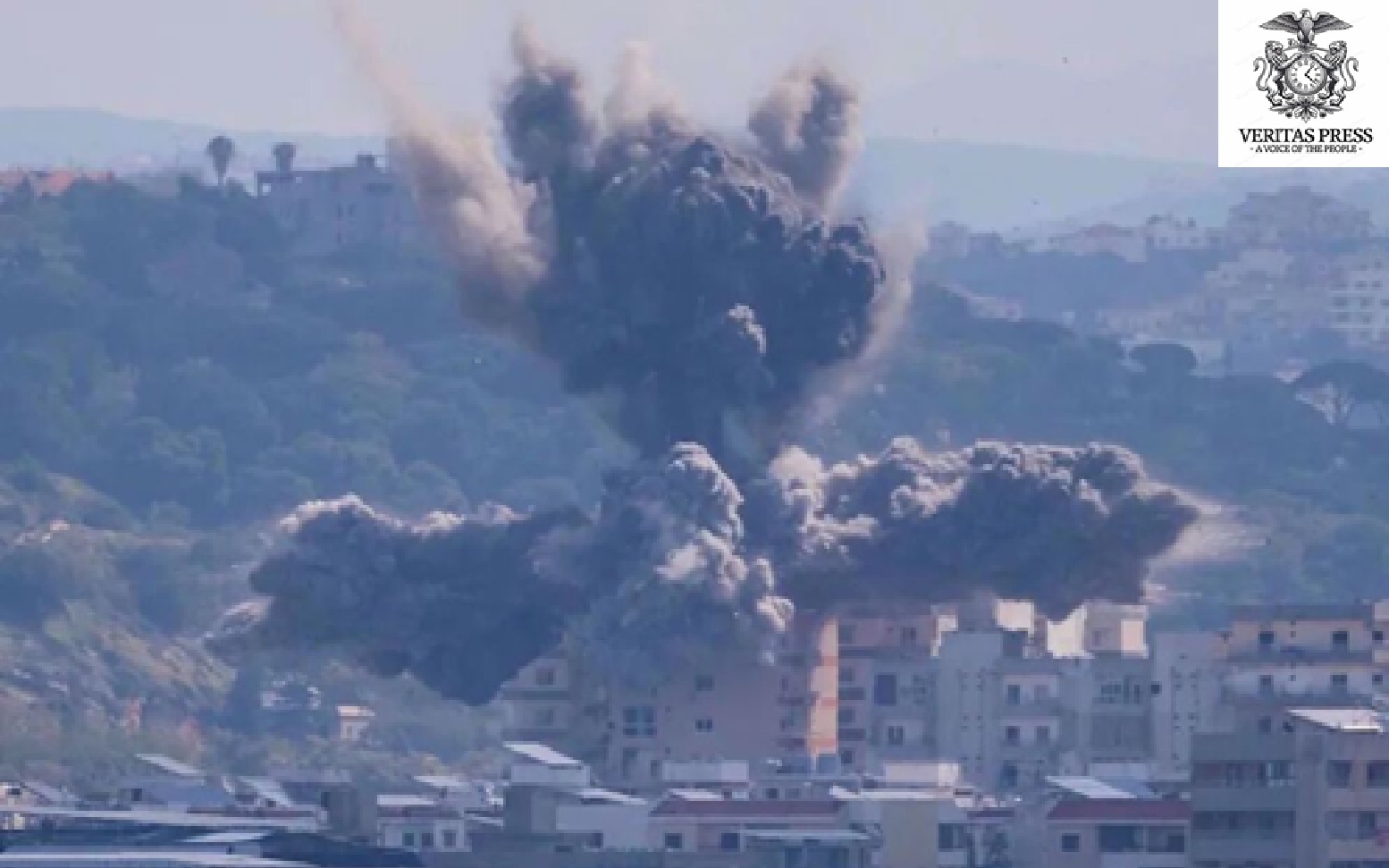
HABBOUSH, SOUTH LEBANON – The night in the southern Lebanese village of Habboush had fallen into the uneasy quiet that survivors of bombardment know too well, the kind punctuated not by silence but by the hum of surveillance drones. Then came the sound that shattered it: a child’s scream, desperate and pleading for help, piercing the darkness somewhere just beyond the olive groves.
Hashem, a paramedic who has refused to abandon his village despite a three-month-old Israeli invasion and daily air strikes, felt his body react before his mind could catch up. “When you hear these voices in the silence of the night, your first instinct is to go outside and see what is happening,” he told Middle East Eye. “That is what happened to me yesterday. But I quickly realised that it had to be coming from the drone, because it was impossible for there to be children in the village at that time, especially around midnight.”
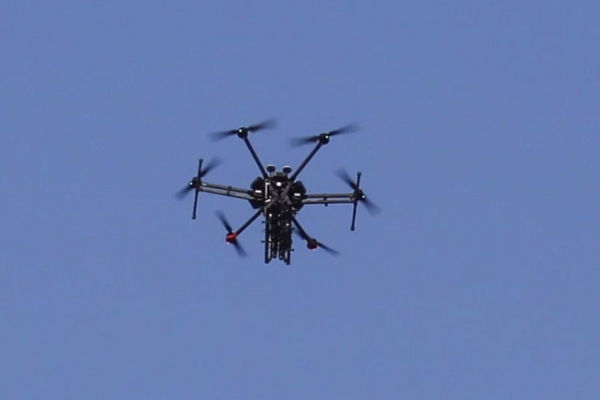
His testimony is not a singular horror but the latest entry in a catalogue of psychological warfare that has migrated, methodically and deliberately, from the ruins of Gaza to the villages of southern Lebanon. Israeli quadcopters, small, agile drones often equipped with weapons and loudspeakers, have been broadcasting recorded sounds of crying children, screaming women, ambulance sirens, even Qur’anic recitations, in what residents, rights groups, and legal experts describe as a systematic campaign to terrorise, entrap, and displace civilians.
A Sonic Landscape Of Terror Transferred From Gaza:
The tactic is an eerie echo. Throughout Israel’s devastating war on Gaza that followed the Hamas-led attack of October 2023, journalists and human rights organisations documented quadcopters deploying identical audio lures. Euro-Med Human Rights Monitor, Al Mezan Centre for Human Rights, and residents across the Strip reported drones emitting the sounds of infants wailing, women shrieking for rescue, and calls of “help us” in Hebrew and Arabic, often at night. In Gaza, some who rushed towards the cries were met by sniper fire or drone-launched munitions. The soundscape had been weaponised, and the most human of impulses, to rescue a child, was turned into a death trap.
Now, as Israel deepens its ground invasion of Lebanon under a ceasefire that exists only on paper, that model is being replicated in the villages of the south. Hashem, the paramedic, catalogues a grim playlist: “Yesterday, it was the sound of children screaming and pleading for help. Before that, they broadcast the sound of an ambulance. Another time it was the Quran. Another time, it was the voice of a woman calling for help. We are living through this almost every day.”
These sonic assaults are not random acts of cruelty. They are part of a deliberate strategy to control the psychological and physical environment of civilians who remain in areas now largely emptied by forced displacement and destruction. “Given that many villages are now empty of civilians, with only resistance fighters remaining in some areas, I think the goal may also be to lure someone out and identify them,” Hashem said. The trap works on two levels: it drains the will of those who stay by subjecting them to relentless psychological torment, and it baits those who might expose themselves, a paramedic, a relative, a journalist, a fighter, into the open.
Targeting Activists By Name:
This sonic warfare is not confined to anonymous cries. The occupation has personalised its intimidation. Tarek Mazaani, founder of the Gathering of the People of the Southern Border Towns, a grassroots movement campaigning for displaced residents’ right to return and for reconstruction, found himself named by an Israeli quadcopter.
On 12 October 2025, during a previous phase of ceasefire violations that preceded the full-scale assault, drones flew over several villages broadcasting warnings demanding residents boycott him, labelling him a Hezbollah affiliate. Mazaani recalled the moment from what had become his third displacement, the shelter in Zawtar al-Sharqiya later destroyed by an air strike. “When the Israeli army did that, I had to leave the house out of concern for the lives of the residents and neighbours in the residential complex where I was staying,” he told MEE. “I felt they could target me after those messages. I left my family and went somewhere else.”
Israeli drones are broadcasting recorded sounds of crying children, distressed women, and emergency sirens over southern Lebanon in a campaign of psychological terror designed to spread fear and lure civilians into the open.
The message was unmistakable: anyone organising for return, advocating for reconstruction, or simply refusing to permanently flee could be marked, surveilled, and socially isolated. For Mazaani, the broadcasts only ceased after international media coverage and statements of solidarity from senior Lebanese officials made his case a public scandal. It was a chilling warning that drones are now not just weapons of war but tools of personal persecution, deployed against civil society in real time.
The Ceasefire That Never Was: A War Timeline
The sonic terror is unfolding against the backdrop of a catastrophic escalation that has reshaped the map of Lebanon since early 2026. Lebanon was drawn into a US-Israeli military offensive that erupted on 18 February 2026. Hezbollah entered the fray on 2 March, launching retaliatory attacks after Israel’s assassination of Iran’s Supreme Leader Ayatollah Ali Khamenei on 28 February, a strike that shattered the region’s security architecture, and in response to Israel’s near-daily violations of the November 2024 ceasefire agreement.
Israeli Prime Minister Benjamin Netanyahu last week ordered the military to expand its “ground manoeuvre in Lebanon”, announcing that troops had advanced beyond the Litani River, some 30 kilometres from the border. “Our forces have crossed the Litani and advanced to controlling positions,” he declared. Hezbollah, on Monday, pronounced the ceasefire void and reasserted its “right to resist Israeli occupation” by all means.
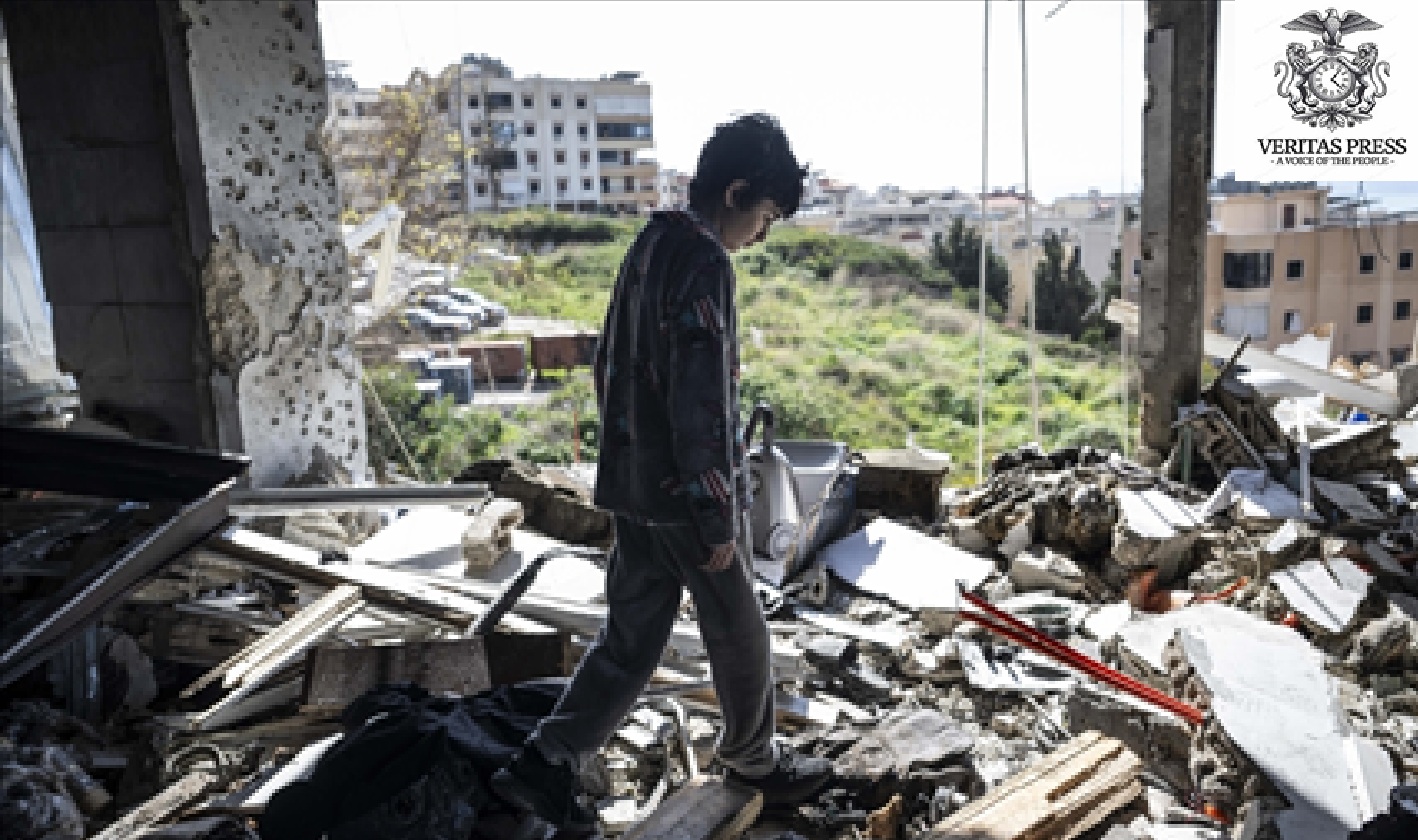
The human toll, as of the latest figures from Lebanon’s Ministry of Public Health, stands at 3,637 killed and 11,188 wounded since 2 March 2026. More than one million people, nearly a fifth of the population, have been displaced. Entire towns have been levelled. The International Rescue Committee (IRC) warns that 94% of the displaced now struggle to meet basic needs for food, water, and shelter. Rick Bartoldus, IRC Lebanon country director, said many returning residents “are finding their homes or entire villages destroyed”, with the health system “on the brink of collapse”.
“Nothing Justifies It”: International Condemnation Meets Impunity.
The drone sound tactic has drawn sharp international condemnation, though critics note a glaring gap between rhetoric and accountability. French President Emmanuel Macron declared that “nothing justifies” the scale of Israel’s assault on Lebanon, a statement that human rights advocates say must now encompass these documented methods of psychological warfare.
Legal experts argue that using recordings of children in distress to lure individuals into an attack may constitute perfidy, the feigning of civilian, non-combatant status to kill or injure, which is prohibited under Article 37 of Additional Protocol I to the Geneva Conventions. “If a combatant lures another person by pretending to be a civilian in distress, especially a child, that is a textbook case of perfidy,” said Dr. Rami Khoury, an international humanitarian law scholar at the American University of Beirut. “Even if the intent is to detain rather than kill, the deception using protected sounds is a flagrant violation of the principle of distinction and the prohibition on spreading terror among the civilian population.”
Amnesty International and Human Rights Watch have, in previous conflicts, documented similar drone tactics in Gaza and called them potential war crimes. The Lebanese Ministry of Foreign Affairs lodged a formal complaint with the UN Security Council on 7 June, citing “mounting evidence of sonic booby-traps designed to exploit humanitarian instincts”. However, with the United States wielding its veto power repeatedly to shield Israel, no international mechanism has halted the practice.
Voices From The Edge:
Mariam Suleiman, a schoolteacher from Aita al-Shaab who fled to Tyre with her three children, told this bureau that the drones followed them even into displacement. “My seven-year-old wakes up at night screaming because he hears a baby crying. We all hear it. It comes from a drone outside the shelter. He thinks we have to go and help. I have to hold him down. He does not understand why I am refusing to save a child. What do I tell him? That the sound is a lie made by a machine to kill us?” She paused. “He has stopped trusting me.”
Local journalists covering the war say they are witnessing the weaponisation of their own craft’s tools. Ali Harb, a freelance videographer in Nabatieh, described an incident on 4 June: “A drone broadcast the sound of a crying infant for seventeen minutes. A man in the next building, an elderly man, went out with a flashlight. We tried to wave him back. The drone fired a warning shot, then another. He survived this time, but he is one of many who cannot resist the call. It is psychological torture.” Harb has been compiling a database of audio recordings from the drones, which he says will serve as evidence for future accountability.
A War Against Instinct Itself:
The architecture of this tactic reveals something more profound than a battlefield innovation: it is an assault on the moral nervous system of a people. By contaminating the sound of a child in distress, the occupation forces civilians to become suspicious of their own empathy. The instinct to rescue, the visceral pull towards a crying infant, becomes a potential vector of death. In the minds of survivors, every future cry, real or recorded, human or drone, will be tinged with doubt. Trust, the invisible glue of community, corrodes under the constant hum of an unmanned aircraft that speaks in the voice of a terrified child.
Hashem, the paramedic, now stands outside his home each night, listening not for patients but for deception. “I was trained to follow the sound of suffering,” he said. “Now the sound of suffering is the bait. What does that make me? If a real child cries tomorrow, I will hesitate. That is what they have done.”
In south Lebanon, where memory of repeated Israeli occupations stretches across generations, the quadcopters are more than military hardware. They are extensions of a vast surveillance and psychological control apparatus that hovers day and night, projecting disembodied voices, stripping communities of the ability to distinguish true from false, and turning the soundscape of life into a minefield. And as the invasion grinds deeper and the Litani River is crossed, the question is no longer whether these tactics will expand, but how a society can rebuild its sanity after being taught that a crying child might be the enemy.
For The Secure Submission Of Documentation, Testimonies, Or Exclusive Investigative Reports From Any Global Location, Please Utilise The Following Contact Details For Our Investigations Desk: enquiries@veritaspress.co.uk or editor@veritaspress.co.uk
Help Support Our Work:
Popular Information is powered by readers who believe that truth still matters. When just a few more people step up to support this work, it means more lies exposed, more corruption uncovered, and more accountability where it’s long overdue.
Help Protect Independent Journalism, Which Is Currently Under Attack.
If you believe journalism should serve the public, not the powerful, and you’re in a position to help, becoming a DONATOR or a PAID SUBSCRIBER truly makes a difference.
DONATION APPEAL: If You Found This Reporting Valuable, Please Consider Supporting Independent Journalism.
Help Support Our Work – We Know, We Know, We Know …
Seeing these messages is annoying. We know that. (Imagine what it’s like writing them … )
Your support fuels our fearless, truth-driven journalism. In unity, we endeavour to amplify marginalised voices and champion justice, irrespective of geographical location.
But it’s also extremely important. One of Veritas Press’s greatest assets is its reader-funded model.
1. Reader funding means we can cover what we like. We’re not beholden to the political whims of a billionaire owner. We are a small, independent and impartial organisation. No one can tell us what not to say or what not to report.
2. Reader funding means we don’t have to chase clicks and traffic. We’re not desperately seeking your attention for its own sake: we pursue the stories that our editorial team deems important and believe are worthy of your time.
3. Reader Funding: enables us to keep our website and other social media channels open, allowing as many people as possible to access quality journalism from around the world, particularly those in places where the free press is under threat.
We know not everyone can afford to pay for news, but if you’ve been meaning to support us, now’s the time.
Your donation goes a long way. It helps us:
Keep the lights on and sustain our day-to-day operations
Hire new, talented independent reporters
Launch real-time live debates, community-focused shows, and on-the-ground reporting
Cover the issues that matter most to our communities, in real time, with depth and integrity
We have plans to expand our work, but we can’t do it without your support. Every contribution, no matter the size, helps us stay independent and build a truly people-powered media platform.
If you believe in journalism that informs, empowers, and reflects the communities we serve, please donate today.
Kamran Faqir is a volunteer investigative journalist and writer committed to exposing hidden truths and amplifying underreported stories. Driven by social justice, he brings sharp insight and fearless truth-telling to independent journalism. NUJ registered.
SEATTLE, TEHRAN — The U.S. Department of Homeland Security (DHS) will allow Iran’s national football team to enter the country 48 hours before their critical World Cup match against Egypt on Friday, a modest concession in a tournament where Team Melli’s travel conditions have sparked claims of oppression and competitive disadvantage.