


Help support our mission, donate today and be the change. Every contribution goes directly toward driving real impact for the cause we believe in.
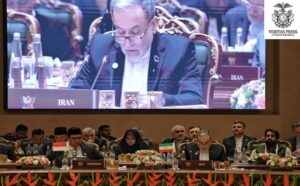
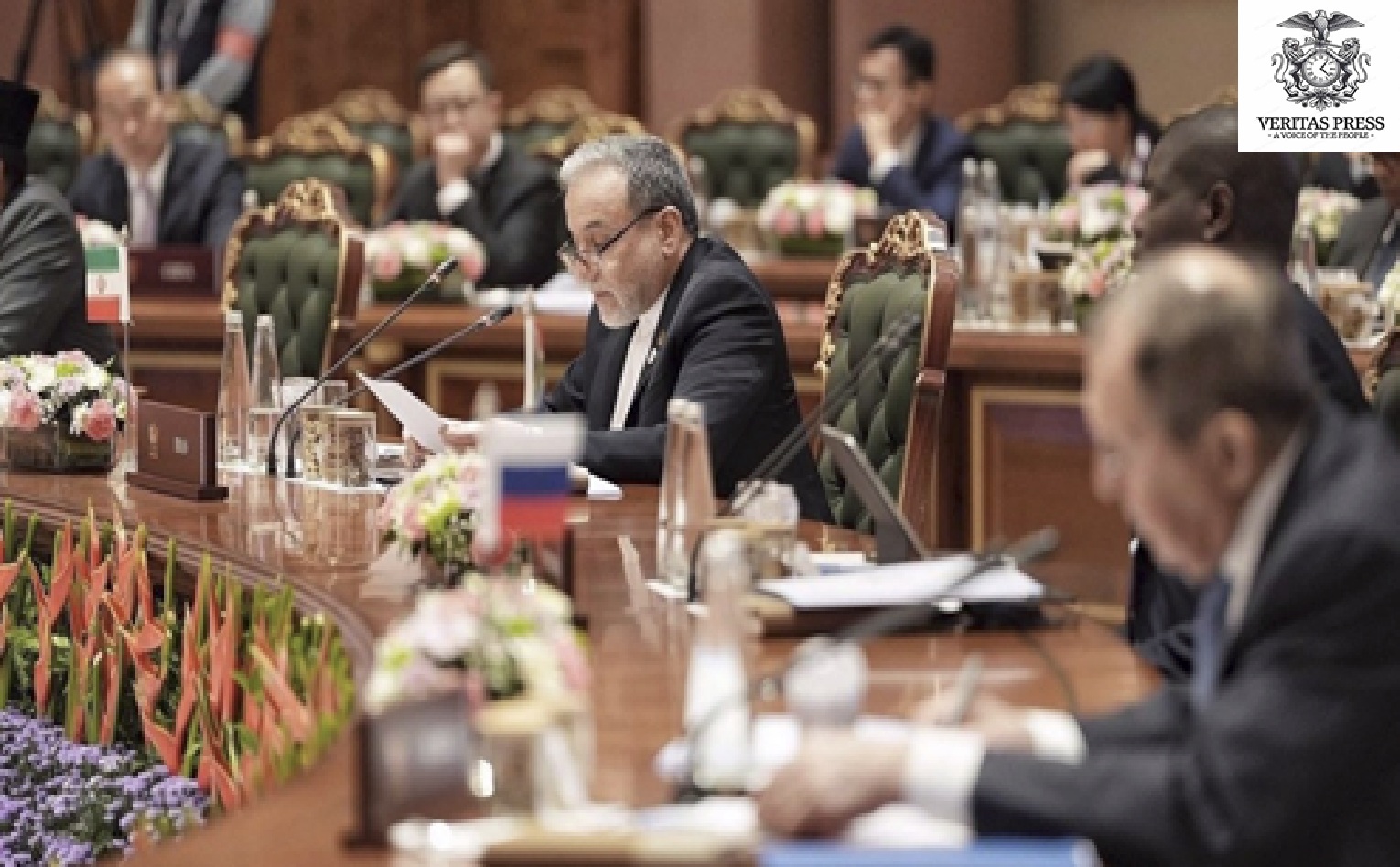
TEHRAN, NEW DELHI – In a cavernous hall at the Hyderabad House, where the colonial-era architecture of Lutyens’ Delhi met the crisp banners of the BRICS 2026 summit, Iranian Foreign Minister Seyyed Abbas Araghchi mounted the podium not just as a diplomat, but as the emissary of a nation at war. His address to the 18th BRICS Foreign Ministers’ Meeting, chaired by India’s External Affairs Minister S. Jaishankar, was more than a diplomatic statement. It was a battle cry cloaked in the language of a new global order, a searing indictment of the United States delivered from a stage the West can no longer afford to ignore.
For an hour, the world’s leading emerging economies listened as Araghchi declared the US “an imperial power in decline” that is “desperately lashing out on its way down.” He framed the conflict that has engulfed his nation since February 28 not as a bilateral crisis, but as the frontline of a global struggle: “The battle Iran has fought is in defence of all of us, of the new world that we are building together.”
But behind the fiery rhetoric, a more complex and precarious reality is unfolding. As the BRICS ministers gathered in New Delhi, the waters of the Persian Gulf remained a tinderbox. A fragile ceasefire, brokered by Pakistan on April 8, hangs by a thread. US naval forces, enforcing what President Donald Trump has called an “illegal blockade” on Iranian vessels, continue to patrol the Strait of Hormuz. And on the streets of Tehran, Bandar Abbas, and Ahvaz, ordinary Iranians are grappling with the devastating human cost of a conflict that has no end in sight.
The Speech: A Wounded Animal’s Roar.
Araghchi’s words were meticulously chosen to resonate with a room full of nations that have themselves chafed under Western sanctions and unilateralism. He presented the recent history of the conflict in stark, unambiguous terms. “My country has, within the span of less than a year, twice been subjected to brutal and unlawful aggression by the United States and Israel,” he declared, referring to the coordinated airstrikes on February 28 that assassinated senior Iranian commanders and, most shockingly, targeted the office of Supreme Leader Ayatollah Seyyed Ali Khamenei, resulting in his death.
“The attacks on my people have been justified with false claims that run counter to the informed assessments of the International Atomic Energy Agency and even America’s own intelligence community,” he added, a pointed reference to the US and Israeli justification of preemptive action against an alleged Iranian nuclear breakout, a narrative debunked in a confidential IAEA report leaked just last week.
The Foreign Minister’s language grew more visceral as he addressed the nature of power itself. “History has shown that Empires in decline will stop at nothing to arrest their inevitable fates. A wounded animal will desperately claw and roar on its way down,” he said, a metaphor that drew a stark line between a predatory West and a resistant Global South.
Yet, the most powerful line was a declaration of unbreakable will: “By now, it ought to be clear that Iran is unbreakable and only emerges stronger and more united when under pressure. While ready to fight with everything we have in defence of our freedom and our soil, we are equally ready to pursue and defend diplomacy. There is no such thing as a military solution to anything related to Iran.”
The War That Reshaped The Gulf:
Araghchi’s speech was not delivered in a vacuum. The world has watched in alarm since February 28, when Operation Iron Dawn, the joint US-Israeli campaign, unleashed a wave of airstrikes across Iran. The initial justification, centred on a disputed intelligence assessment of an imminent nuclear threat, quickly crumbled under international scrutiny. As Araghchi noted, even the US intelligence community’s own pre-war dissent cables, published by The Washington Post in April, revealed deep scepticism about the casus belli.
Iran’s response was swift and multi-front. In the following weeks, the Iranian Armed Forces launched daily volleys of missiles and drones toward Israeli-occupied territories and US military installations across the region. The most globally disruptive action came on March 3, when Iran officially shut down the Strait of Hormuz to all enemy and allied shipping, choking off nearly a fifth of the world’s oil transit. Satellite imagery from Planet Labs, analysed by the Centre for Strategic and International Studies (CSIS), shows the waterway still effectively locked down, with Iranian fast-attack craft and coastal batteries on high alert even as a new, more restrictive Iranian naval control regime took effect last month.
The human toll is staggering. Data compiled by the Iranian Human Rights Centre, operating from exile, estimates that over 12,000 Iranian civilians have been killed since the conflict began, with infrastructure damage exceeding $80 billion. In the port city of Bandar Abbas, the blockade’s ground zero, the air is thick with dust from collapsed buildings and the salt of a dying maritime economy.
“We are not the aggressor in this sordid situation, but the aggrieved,” Araghchi said. On the ground, that sentiment is a lifeline for national morale. “My brother died defending our waters last month,” said Reza, a 24-year-old fisherman-turned-militia-volunteer, in a phone interview from Qeshm Island. “The Americans call us terrorists, but we are protecting our homes. The Foreign Minister is right; we will never bow. We have nothing left to lose but our chains.”
BRICS: A Divided Shield?
Araghchi’s call to action was explicit. He urged BRICS to move beyond declarations and “take concrete action to halt warmongering and to bring an end to the impunity of those violating the UN Charter.” He asked the bloc to “explicitly condemn violations of international law by the United States and Israel, including their illegal aggression against Iran” and to “prevent the politicisation of international institutions.”
However, the BRICS meeting in New Delhi revealed deep fissures. India, the host nation, is walking a diplomatic tightrope. External Affairs Minister Jaishankar, in his opening remarks, stressed “multilateralism, reform of global governance, and the centrality of the UN Charter,” but carefully avoided any direct naming of the US or Israel. India, which enjoys deep strategic ties with both Washington and Tehran, is prioritising its role as a neutral convener. An Indian official, speaking on condition of anonymity, said: “We are not here to build an anti-American bloc. BRICS is about cooperation, not confrontation.”
China and Russia offered the strongest rhetorical support. Russian Foreign Minister Sergey Lavrov, in a bilateral meeting with Araghchi on the sidelines, called the US blockade “a flagrant act of piracy” and promised to raise the issue at the UN Security Council, where Moscow holds the rotating presidency this month. Chinese Foreign Minister Wang Yi reiterated Beijing’s call for a “cessation of hostilities and a return to the JCPOA framework,” though he stopped short of endorsing Iran’s full narrative of a declining empire, reflecting Beijing’s careful calculus of its own complex economic exposure to the US market.
Brazil and South Africa, meanwhile, emphasised humanitarian concerns. “The suffering of the Iranian people, and the catastrophic impact on global food and energy prices, demands an immediate and just peace,” said South Africa’s Minister of International Relations. No BRICS joint statement directly condemned the US by name, a diplomatic win for Washington and a source of private frustration for the Iranian delegation. “We appreciate the solidarity of our brothers, but words are not enough when our children are dying,” a member of Araghchi’s entourage confided to this reporter.
From The Mouths Of The Empire And Its Critics:
The US State Department, in a terse response, dismissed Araghchi’s address as “theatrical propaganda from a regime that continues to fund terrorism and oppress its own people.” A White House National Security Council spokesperson added: “Our operations are lawful self-defence against an imminent threat. The blockade is a proportional measure to restore deterrence.”
Yet, independent legal experts are far from unified. Professor Ardi Imseis, former UN Special Rapporteur, told The Intercept: “The US-Israeli strikes on Iran, particularly the targeting of the Supreme Leader, raise serious questions under the jus ad bellum and international humanitarian law. The blockade, if it prevents essential goods from reaching civilians, could amount to collective punishment, a war crime.”
In Iran, activists paint a complex picture of a society locked in a dual struggle. Narges Mohammadi, the imprisoned Nobel Peace Prize laureate, smuggled out a statement through her family: “The US aggression is a violation of our sovereignty, and we condemn it. But let us not forget that the same language of ‘resistance’ and ‘unbreakable’ people has been used by the regime for decades to crush our demands for freedom. A just peace requires an end to both foreign aggression and domestic tyranny.”
On the streets of Tehran, this duality is palpable. In the weeks following the initial attacks, a wave of nationalist unity swept the country, with unprecedented pro-government rallies. But as the blockade persists and inflation for basic goods surpasses 200%, grumbles of discontent are resurfacing in private gatherings. “Araghchi says we are peace-loving,” said a middle-aged shopkeeper in Tehran’s Grand Bazaar, who gave his name only as Hossein. “I am peace-loving. I want to feed my family. If diplomacy works, why does my son have to be at the front? The leaders, they sacrifice our lives for their ‘historic ideals’ while the empire and the resistance both crush us.”
The Ghosts Of Global Order:
Araghchi’s central metaphor, the “wounded animal” of a declining empire, is a deliberate intellectual manoeuvre, drawing on the cyclical theories of history popular among the Global South’s non-aligned intelligentsia. At the BRICS table, it is a potent currency. The bloc has rapidly expanded from the original five to include Iran, Egypt, the UAE, Saudi Arabia, and Ethiopia, creating a demographic and economic behemoth. The New Development Bank is actively seeking alternatives to the SWIFT system. The vision of a multipolar world, once a “lofty aspiration,” is indeed, as Araghchi said, a fragile reality.
But the fragility is as internal as it is external. The very presence of Saudi Arabia and the UAE, both of whom host US military bases and were targeted by Iranian retaliation in the conflict’s opening weeks, in the same room as Araghchi underscores a fundamental contradiction. The Gulf monarchies, which have privately conveyed to Washington their desire for de-escalation to prevent a regional economic meltdown, listened to the Iranian tirade in stony silence, according to a diplomatic source in the room. They have no desire to become part of a unified anti-American front.
Mohammed al-Shammari, a Saudi political analyst and former advisor to the Foreign Ministry, told Al Arabiya: “Iran’s attempt to frame its proxy and direct conflicts as a battle for the entire Global South is a cynical ploy. The Iranian people are victims, yes, but of the regime’s adventurism. BRICS must not become a platform for Tehran to export its revolutionary ideology under the guise of multipolarity.”
A New World, Forged In Suffering:
As the BRICS meeting moves into its second day, the official agenda, focused on “resilience, innovation, and sustainability”, has been completely overshadowed by the war. The corridors buzz with the question Araghchi’s defiance has placed squarely on the table: Is BRICS prepared to be a principal pillar of a new global order, or is it merely a comfortable club for the aspirational? The answer will be defined not by a single speech, but by the concrete coordination, or lack thereof, that follows.
Araghchi concluded with an almost poetic vision: “We believe that BRICS can, and must, become one of the principal pillars in shaping a more just, balanced, and humane global order; an order in which might can never make right. Nations which stand up for their dignity and independence may endure hardship, but they will never be defeated.”
For the families counting their dead in the rubble of Bushehr and the sailors patrolling the gun-metal waters of Hormuz, that hardship is a daily, searing reality. The “empire in decline” narrative is a powerful mobilising tool, but it is also a mirror that reflects the very imperial logic of might-makes-right that it claims to oppose, a logic of proxy wars, blockades, and unbearable suffering for civilians on all sides. In the suffocating heat of a New Delhi afternoon, the Iranian foreign minister dared the world to choose a side. But as the death toll rises and the blockade holds, the world, and even his own BRICS partners, remain agonisingly, lethally non-committal. The wounded animal, whether it roars in Washington or Tehran, bleeds the same.
Source: Multiple News Agencies
Submissions:
For The Secure Submission Of Documentation, Testimonies, Or Exclusive Investigative Reports From Any Global Location, Please Utilise The Following Contact Details For Our Investigations Desk: enquiries@veritaspress.co.uk or editor@veritaspress.co.uk
Help Support Our Work:
Popular Information is powered by readers who believe that truth still matters. When just a few more people step up to support this work, it means more lies exposed, more corruption uncovered, and more accountability where it’s long overdue.
Help Protect Independent Journalism, Which Is Currently Under Attack.
If you believe journalism should serve the public, not the powerful, and you’re in a position to help, becoming a DONATOR or a PAID SUBSCRIBER truly makes a difference.
DONATION APPEAL: If You Found This Reporting Valuable, Please Consider Supporting Independent Journalism.
Help Support Our Work – We Know, We Know, We Know …
Seeing these messages is annoying. We know that. (Imagine what it’s like writing them … )
Your support fuels our fearless, truth-driven journalism. In unity, we endeavour to amplify marginalised voices and champion justice, irrespective of geographical location.
But it’s also extremely important. One of Veritas Press’s greatest assets is its reader-funded model.
1. Reader funding means we can cover what we like. We’re not beholden to the political whims of a billionaire owner. We are a small, independent and impartial organisation. No one can tell us what not to say or what not to report.
2. Reader funding means we don’t have to chase clicks and traffic. We’re not desperately seeking your attention for its own sake: we pursue the stories that our editorial team deems important and believe are worthy of your time.
3. Reader Funding: enables us to keep our website and other social media channels open, allowing as many people as possible to access quality journalism from around the world, particularly those in places where the free press is under threat.
We know not everyone can afford to pay for news, but if you’ve been meaning to support us, now’s the time.
Your donation goes a long way. It helps us:
- Keep the lights on and sustain our day-to-day operations
- Hire new, talented independent reporters
- Launch real-time live debates, community-focused shows, and on-the-ground reporting
- Cover the issues that matter most to our communities, in real time, with depth and integrity
We have plans to expand our work, but we can’t do it without your support. Every contribution, no matter the size, helps us stay independent and build a truly people-powered media platform.
If you believe in journalism that informs, empowers, and reflects the communities we serve, please donate today.
Donate Today:
GENEVA — A United Nations fact-finding mission has concluded there are “reasonable grounds to believe”
Iran’s GDP is projected to contract by 5.4 to 6.1% in 2026, its worst performance
The Trump administration is preparing a $2.8 billion weapons package for Israel containing 40,000 2,000-pound
Film alleges mass civilian deaths are routinely built into military decisions amid Israel’s genocidal war
The Israeli rights group says violence, displacement, economic strangulation, and settlement expansion form part of

Houthi forces have captured the historic Red Sea port of Mocha and are advancing on
London’s historic sanctions against Israeli settlements mark a watershed moment in UK foreign policy, but
With 95% of Gaza’s population now wholly dependent on aid and more than 90% stripped
India calls for Kashmir and Ladakh to appear only on its official map after a
ISLAMABAD – In the high-stakes political theatre of Pakistan, the battleground has shifted from the