





Drones, Jets And A Warship Join 40-Nation Mission As The

Help support our mission, donate today and be the change. Every contribution goes directly toward driving real impact for the cause we believe in.
An Analysis Of London’s New Hormuz Security Deployment, The Shadow War That Made It Necessary, And Why A Mission Billed As “Credible And Independent” Is Already Raising Hard Questions From Naval Experts, Gulf States, Activists And Shipping Insurers Alike.
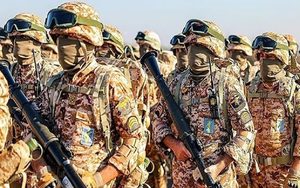
LONDON — On Tuesday morning, British Defence Secretary John Healey appeared via video link before the defence ministers of more than forty nations to announce a muscular new military commitment to the Strait of Hormuz, the narrow chokepoint through which one-fifth of the world’s oil supply normally transits. The package, autonomous mine-hunting systems, Typhoon fighter jets, the air-defence destroyer HMS Dragon, counter-drone specialists, and a £115 million cheque for new technology, was presented as a “defensive, independent and credible” contribution to a multinational mission whose formal activation date remains, in the Ministry of Defence’s own words, subject to “when conditions allow.”
But behind the polished communiqué and the virtual summit’s choreographed unity lies a far more complex, urgent and precarious reality. The United Kingdom is committing significant military assets to a waterway that, by the admission of the United States government’s own Energy Information Administration, now expects to remain “effectively shut” to normal commercial traffic until at least late May 2026, and possibly much longer, as a direct consequence of the spiralling armed confrontation between Iran on one side and the United States and Israel on the other. The mission’s declared defensiveness is being tested before it even begins, raising fundamental questions about escalation risk, maritime law, and the viability of European-led naval operations in a theatre already shaped by years of Red Sea shadow warfare.
A Strait In Flames: The Road To The 40-Nation Summit.
For more than two years, the world’s attention was fixed on the southern Red Sea and the Bab el-Mandeb strait, where Yemen’s Houthi movement, armed and enabled by Iran, launched a sustained campaign of missile and drone attacks on commercial shipping, forcing a rerouting of global trade that cost billions. The European Union responded with EUNAVFOR ASPIDES, a defensive maritime security operation that provided escort and air-defence cover to merchant vessels without joining US-UK offensive strikes on Houthi positions. By early 2026, the Red Sea route was tentatively reopening, insurers were adjusting risk models, and policymakers in Brussels and London breathed a guarded sigh of relief.
Then came the Hormuz crisis.
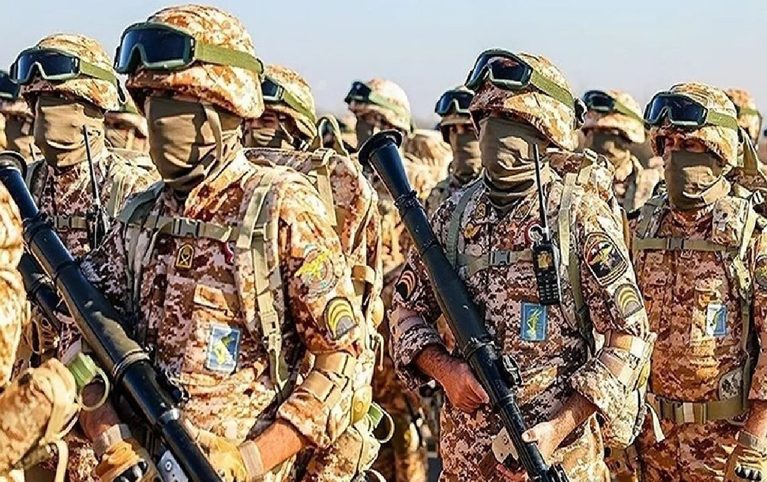
The eruption of open hostilities between Iran and a US-Israeli coalition in late 2025 did not simply reprise the tense standoffs of 2019, when tankers were seized, and limpet mines appeared on hulls. It escalated into a full-spectrum denial of the Strait. Iranian naval forces, Revolutionary Guard Corps speedboats and coastal missile batteries imposed a de facto blockade on the narrow shipping lanes between Oman and Iran. Oil tankers were targeted. Naval mines were laid in deep-water channels. Drone swarms, modelled on tactics refined in Ukraine and the Red Sea, probed coalition warships. Energy prices spiked, Asian economies scrambled for alternative supplies, and the International Energy Agency triggered emergency stock releases for the third time in four years.
It is against this backdrop that Healey on Tuesday spoke of “restoring confidence in commercial shipping” and “strengthening freedom of navigation.” The language was carefully chosen, echoing the formulations used to launch ASPIDES in 2024, but the operational environment is fundamentally different. In the Red Sea, the coalition was protecting ships from non-state actors firing from a war-torn, failed state. In the Strait of Hormuz, the perceived threat emanates from a sovereign state with a capable navy, extensive coastal defences, and a publicly stated belief that the presence of any foreign warship is itself an illegal act of coercion.
“You cannot simply ‘restore confidence’ when the problem is not just mines in the water but the very legality of being there being contested,” said Dr Laleh Khalili, Professor of Gulf Studies at the University of Exeter, in an interview. “If Iran declares these waters closed to anyone supporting the US-led coalition, every Western-flagged destroyer becomes a casus belli in Tehran’s eyes. This is not an exercise in maritime security. This is a war zone with different rules of engagement.”
The British Package: Autonomy, Air Power, And An Unproven “Beehive”.
The UK’s military contribution is both technologically sophisticated and politically calibrated. At its heart is the ambition to keep Royal Navy personnel away from the most lethal threats through autonomous systems.
The £115 million funding package will accelerate the deployment of autonomous mine-hunting systems, including the Royal Navy’s modular “Beehive” launch-and-recovery system, capable of deploying high-speed Kraken drone boats for mine detection, classification, and neutralisation. The Kraken platform, developed in Britain with extensive testing off the Devon and Dorset coasts, is billed as a “sea-bed scanning” solution that can map underwater threats at speed without exposing a mothership to minefields. In theory, this would allow a single mother vessel, the Royal Fleet Auxiliary’s RFA Lyme Bay, already undergoing upgrades for autonomous operations, to clear shipping lanes from a safer stand-off distance.
But naval engineers and former mine-warfare officers caution that the Kraken system has never been tested in a contested environment against modern, intelligently laid naval mines. “Autonomous mine-hunting in a benign seabed off Portland is very different from doing it in the thermal layers and high salinity of the Strait, especially if Iran is actively trying to jam your acoustic or magnetic signatures or is deploying drifting mines that don’t stay put,” said retired Royal Navy Commander Tom Sharpe, now a defence analyst.
The Typhoon fighter jets, already stationed at RAF Akrotiri in Cyprus and at allied bases in the Gulf, will provide air patrols over the strait. Defence sources confirmed to this journalist that the aircraft would operate within the framework of the US-led Combined Forces Air Component Command but would take direction from the multinational Hormuz mission for defensive missions, a careful straddling of alliance structures that mirrors the contortions of the Red Sea era.
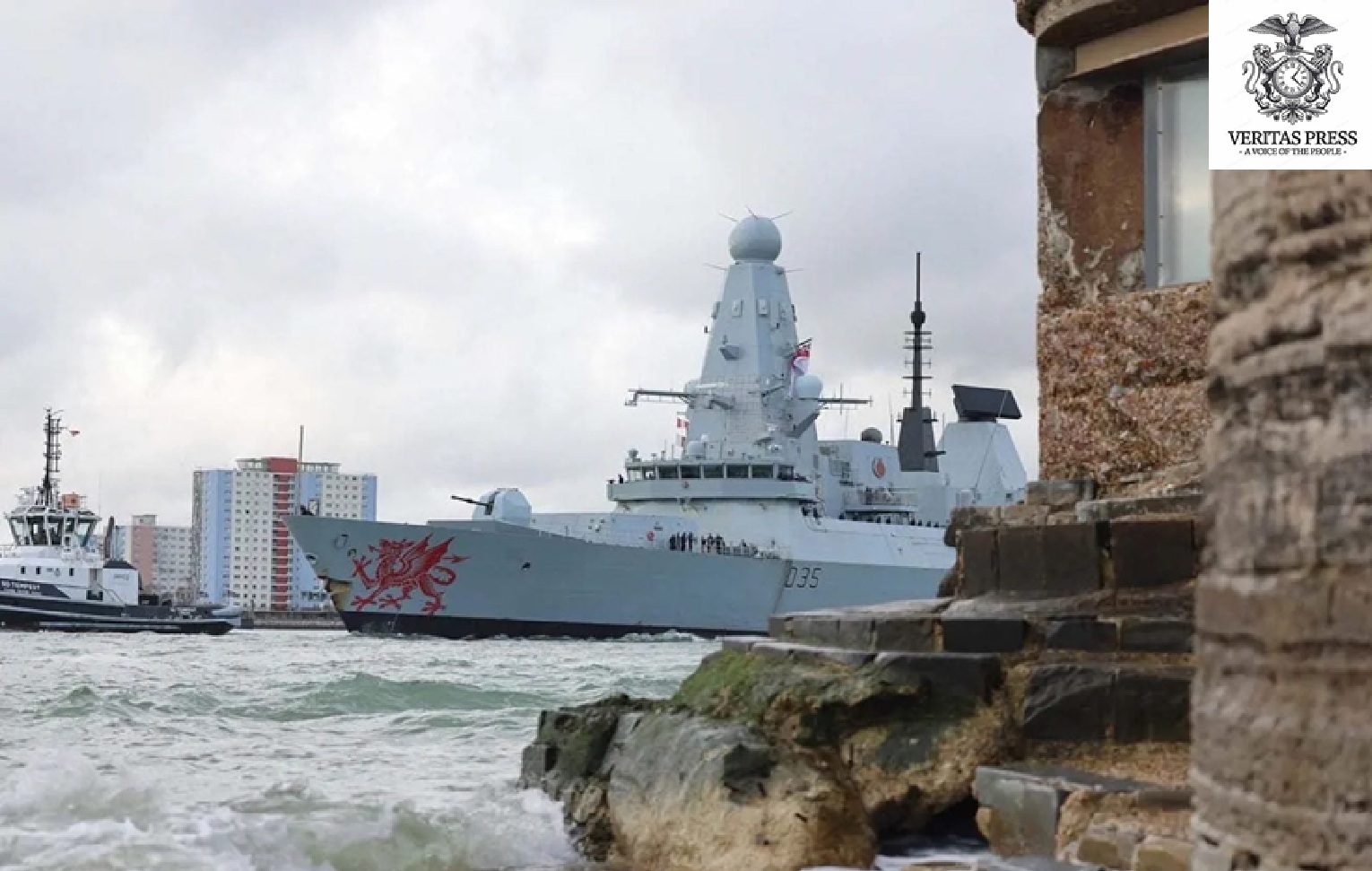
Then there is HMS Dragon, the Type 45 destroyer whose Sea Viper air-defence system has earned the class a reputation as among the most capable anti-air platforms in the world. The ship is already transiting towards the Gulf, having completed what the MoD described as “additional preparations and training.” Dragon will be expected to protect high-value commercial vessels, tankers, LNG carriers, from aerial threats. However, the destroyer’s crew will also face the swarm-boat and mine threats that disabled and nearly sank the Iranian navy’s own largest vessel in a 2020 accident, and which the Houthis exploited repeatedly.
“The complete package is a very British answer to a problem that is inescapably American in its origins,” said Dr Andreas Krieg, a security analyst at King’s College London. “London wants to demonstrate leadership to its European allies and to Washington, while maintaining distance from offensive US operations against Iran. But once a ship is under attack in the Strait, that separation collapses.”
“Defensive, Independent, Credible” And Contested On All Three Counts:
Defence Secretary Healey’s three adjectives, defensive, independent, and credible, have become a rhetorical trinity for the mission. Yet each is being scrutinised by regional powers, international lawyers, and even backbench MPs inside his own Labour Party.
Defensive?
The MoD insists the mission will not conduct offensive strikes against Iran. It will operate under a mandate to protect merchant shipping. But naval commanders confront a dynamic where the distinction between defensive and offensive is blurred by milliseconds. In the Red Sea, ASPIDES escort vessels regularly shot down incoming Houthi drones and missiles heading towards civilian ships. Was that defensive? Certainly. But the Houthis, and many in the region, viewed the mere presence of European navies acting as shields for commercial traffic flowing to Israel and Western economies as a hostile act. In the Strait of Hormuz, where Tehran regards its entire coastal zone as vital defensive space, the presence of HMS Dragon with its Sea Viper system actively scanning for Iranian anti-ship missiles is being described by Revolutionary Guard media as a “provocative occupation of our ancestral waters.”
“The legal framework is untested,” said Andrew Clapham, Professor of International Law at the Graduate Institute in Geneva. “Freedom of navigation is enshrined in UNCLOS, but the strait falls under the regime of transit passage. Even so, a coastal state does not have the right to suspend transit passage. The real question is whether the multinational presence is justified as a collective self-defence under Article 51 of the UN Charter, and that requires there to be an armed attack, which, in this case, Iran argues is being committed against it by the US and Israel, not by itself against shipping.” Legal specialists note that Britain and its allies are essentially asserting the right to use force to keep the strait open, which may itself be a violation of the prohibition on the threat or use of force unless explicitly authorised by the UN Security Council, a body paralysed by great-power rivalries.
Independent?
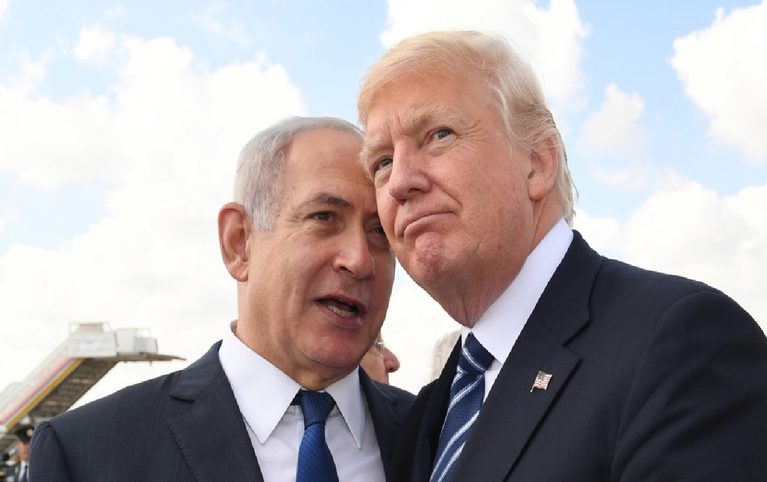
Healey’s assertion of independence is designed to signal that the mission is not a US operation under CENTCOM, a key point for European governments wary of being sucked into Donald Trump’s mercurial strategy of “maximum pressure” on Iran, which administration insiders privately acknowledge has evolved into a protracted blockade operation. The US president has publicly mused about overseeing a “lengthy blockade”, and the Energy Information Administration’s working assumption of an effective closure until at least late May is seen as optimistic by many analysts, who point to the absence of any diplomatic off-ramp.
Yet the independence narrative is undermined by operational realities. The 40-nation coalition relies on American intelligence, satellite surveillance, and logistical and refuelling capabilities. British Typhoons will coordinate with the US Air Command. US naval forces are already present in numbers. A senior Western diplomat involved in discussions, speaking on condition of anonymity, told me: “We can call it independent, but if an American destroyer is under attack and HMS Dragon’s Sea Viper could help, do we really think London will say, ‘Sorry, that’s a US operation, you’re on your own’? Of course not.”
Credible?
Credibility may be the most fragile of the three claims. The 40-member coalition includes several nations whose contributions are, according to mission planners, limited to a single staff officer or a liaison. Regional heavyweight Saudi Arabia, while maintaining back-channel contacts with Iran since their China-brokered détente of 2023, is only participating cautiously. The United Arab Emirates, whose Fujairah port has become an alternative oil export route bypassing the Strait, has been notably muted. Oman, whose territorial waters form the southern shore of the strait’s approaches, has not publicly endorsed the mission, a crucial silence, since Muscat’s cooperation is vital for mine-clearing and search-and-rescue operations.
“If Oman does not provide basing and overflight rights, the entire operation becomes exponentially more difficult,” said Dr Cinzia Bianco, a Gulf specialist at the European Council on Foreign Relations. “Without Muscat’s consent, you’re looking at having to base everything from Bahrain or Qatar, much further away, which reduces time-on-station and increases vulnerability.”
Meanwhile, the UK’s ambition to act as a “leading” power is being weighed against the Royal Navy’s chronic force-generation crisis. The fleet has fewer than 20 major surface combatants, many suffering from propulsion issues that have plagued the Type 45 destroyer class for years. HMS Dragon herself underwent extensive engine upgrades, but deploying her to the Gulf for an extended period means another hull cannot be elsewhere. Defence procurement sources told me that the £115 million for autonomous systems is partially drawn from a fund originally earmarked for North Atlantic submarine-hunting capabilities, a trade-off that raises questions about strategic priorities.
Voices From The Ground: Shippers, Insurers And Activists Weigh In.
The shipping industry is watching the mission with a mix of relief and deep scepticism. Major shipping bodies, BIMCO, the International Chamber of Shipping, and INTERTANKO, have been lobbying hard for state-backed security guarantees. Yet they also fear that a half-formed coalition might actually increase risk by creating a false sense of security, encouraging vessels to re-enter the strait before the threat environment has genuinely changed.
“We welcome any state commitment to protecting seafarers and maintaining freedom of navigation, but we need absolute clarity on the rules of engagement, the operational area, and what happens if a vessel comes under fire despite the military presence,” a senior official at an international shipowners’ association told me, asking not to be named. “The lesson of the Red Sea was that escort missions work, but only if they are thick enough to provide real coverage. A single destroyer and some drone boats do not make a safe corridor.”
Marine war-risk insurance premiums for transits through the Strait of Hormuz have already surged to 6–8% of hull value, effectively rendering most voyages commercially unviable without government backstops. The Lloyd’s Market Association’s Joint War Committee added the entire Persian Gulf to its high-risk list in February 2026, triggering cancellation clauses and further chilling traffic.
Local communities on both sides of the Gulf are bracing for the economic inflation and environmental fallout. In the Omani fishing village of Khasab, perched on the rocky Musandam Peninsula overlooking the strait, fishermen describe watching columns of smoke on the horizon and pulling unexploded ordnance from their nets.
“We have been caught before in the Tanker War of the 1980s,” said Abdullah al-Shehhi, a veteran fisherman in his sixties, referring to the Iran-Iraq conflict that saw both sides target oil tankers. “Our fathers told us the sea would burn, and now my sons are seeing the same fire. The British and the Americans come and go, but the mines stay in our fishing grounds for years.”
On the Iranian side, the coastal city of Bandar Abbas is a hive of Revolutionary Guard activity, but also home to ordinary Iranians already crushed by sanctions, inflation, and now war. One resident, a young woman who asked to be identified only by her first name, Fatemeh, sent a voice message through intermediaries: “We are told this is a holy defence against foreign aggressors, but we see the price. The price is everything, no work, no food, no future. And now a 40-country alliance wants to come with their warships to restore confidence’. Confidence for whom? For the oil market or for the people who live here?”
Anti-war and human rights organisations have been scathing. The UK branch of Stop the War Coalition accused the government of “pretending a warfighting mission is a humanitarian escort operation,” while Campaign Against Arms Trade highlighted that many of the autonomous systems being touted as defensive are manufactured by the same companies, BAE Systems, Thales UK, that profit from arms sales to Gulf monarchies.
“When you call a mission ‘independent and credible’ but it is built on the very military-industrial complex that helped fuel regional tensions, the words ring hollow,” said Symon Hill, a spokesperson for the Fellowship of Reconciliation in the UK. “This is not peacebuilding. This is preservation of oil supply chains dressed in blue helmets.”
The French Dimension And The Ghost Of ASPIDES:
France, the UK’s co-lead in the Hormuz mission, moved its nuclear-powered aircraft carrier Charles de Gaulle from the eastern Mediterranean to the Red Sea on Wednesday, a signal both to Washington and Tehran that Paris is serious about upholding freedom of navigation, but also that it retains an independent strategic voice. French President Marine Le Pen’s government has been straining to balance its alignment with the US-led pressure campaign against Iran with a desire to remain a viable diplomatic interlocutor.
The parallel with ASPIDES is instructive. That EU-led operation was initially hailed as a model for European strategic autonomy, but it was criticised by some military insiders as a “paper fleet” that provided symbolic reassurance without radically altering the threat calculus. The Hormuz mission, with its explicit military assets and faster tempo, risks being compared to ASPIDES and found wanting in terms of long-term staying power.
“The problem is not launching a mission, it’s sustaining it,” said Nick Childs, Senior Fellow for Naval Forces and Maritime Security at the International Institute for Strategic Studies. “The Red Sea operation has been running for over two years, and it has placed enormous demands on European navies that were already struggling with readiness. Extending a similar model into the Strait of Hormuz, in an even hotter conflict environment, is a recipe for overstretch unless there is a clear exit strategy, which at the moment nobody has.”
Latest Developments: May 13, 2026
As this article went to publication, diplomatic and military developments were unfolding fast:
- The US Department of Defence confirmed that two more oil tankers were struck by suspected Iranian sea drones in the Gulf of Oman overnight, with one vessel reportedly in distress and taking on water. The crew was rescued by a passing US supply ship, but the incident further unsettled insurance markets.
- The Brent crude oil benchmark briefly touched $142 per barrel in early Asian trading before settling around $138 — a level not sustained since the 2008 financial crisis. Economists warned that prolonged prices above $130 risk tipping advanced economies into recession.
- Iran’s Foreign Ministry issued a statement condemning the “so-called defensive naval coalition” as a “flagrant violation of international law and a hostile act aimed at starving the Iranian nation through economic warfare.” The statement warned that “any foreign vessel assisting in the blockade of our maritime rights will be considered a legitimate target.” Diplomatic analysts read this as a deliberately broad formulation designed to deter even non-combatant logistical support ships.
- Oman’s Foreign Minister, Sayyid Badr al-Busaidi, called for “urgent de-escalation and direct talks” and repeated Muscat’s longstanding refusal to allow its territory to be used for offensive operations against its neighbour across the strait. The statement conspicuously did not endorse the multinational mission, leaving the coalition’s access to Omani airspace and ports in legal limbo.
- In the UK Parliament, the Labour chair of the Foreign Affairs Committee, Emily Thornberry, asked the government to spell out the mission’s rules of engagement, exit criteria, and what steps would be taken to secure a diplomatic resolution. “We cannot fight our way to a solution in the Strait of Hormuz,” Thornberry said. “Military force may be necessary to protect lives, but it cannot be a substitute for the political framework that alone can guarantee freedom of navigation in the long term.”
Meanwhile, around 200 protesters from Extinction Rebellion and other groups gathered outside the Ministry of Defence in Whitehall, carrying banners reading “No Blood for Oil” and “Defund Climate War.” The protest received minimal media coverage, eclipsed by the drumbeat of war and the drama of financial markets.
The Gap Between Myth And Reality:
What emerges from interviews with officials, analysts, sailors and activists is a picture of a mission whose public relations framing is far more advanced than its operational viability or diplomatic coherence. The United Kingdom professes to “lead” a 40-nation coalition, yet the precise contributions of most participants remain undefined. The mission is “defensive,” yet it will inevitably place British warships within weapons range of a state that views them as belligerents. It is “independent,” yet it leans heavily on US enablers and intelligence. And it is “credible,” yet it lacks the full-throated support of the one Gulf state, Oman, whose geography makes the mission possible.
Behind all this lies an uncomfortable question that few in Whitehall or Western capitals are willing to articulate publicly: Is the objective to keep the strait open for commercial shipping, or is it to sustain a military posture that implicitly accepts a partial blockade while insulating energy markets from the worst price shocks? If the former, the mission may be dangerously under-resourced. If the latter, it is a managed decline dressed up as a resolution.
For the fishermen of Khasab, the activists in London, the oil traders in Singapore, and the families in Bandar Abbas, the difference between these two interpretations is not academic. It will be measured in the number of ships that risk the passage, the price of bread, and the lives lost to a chokepoint that has, once again, become the pivot of a potential world crisis.
As HMS Dragon cuts through the Arabian Sea towards her station, her Sea Viper missile tubes gleaming under the Gulf sun, the truth is that the multinational mission’s fate will be decided not at sea but in Tehran, Washington, and any secret diplomatic channel that might still have a chance to pull the world back from the brink.
The Ministry of Defence responded to detailed questions by reiterating that the mission is “defensive in nature, aimed solely at protecting freedom of navigation and restoring confidence in commercial shipping” and that “operational details remain confidential until the mission becomes active when conditions allow.” A spokesperson declined to comment on the status of basing arrangements with Gulf states.
Source: Multiple News Agencies
Submissions:
For The Secure Submission Of Documentation, Testimonies, Or Exclusive Investigative Reports From Any Global Location, Please Utilise The Following Contact Details For Our Investigations Desk: enquiries@veritaspress.co.uk or editor@veritaspress.co.uk
Help Support Our Work:
Popular Information is powered by readers who believe that truth still matters. When just a few more people step up to support this work, it means more lies exposed, more corruption uncovered, and more accountability where it’s long overdue.
Help Protect Independent Journalism, Which Is Currently Under Attack.
If you believe journalism should serve the public, not the powerful, and you’re in a position to help, becoming a DONATOR or a PAID SUBSCRIBER truly makes a difference.
DONATION APPEAL: If You Found This Reporting Valuable, Please Consider Supporting Independent Journalism.
Help Support Our Work – We Know, We Know, We Know …
Seeing these messages is annoying. We know that. (Imagine what it’s like writing them … )
Your support fuels our fearless, truth-driven journalism. In unity, we endeavour to amplify marginalised voices and champion justice, irrespective of geographical location.
But it’s also extremely important. One of Veritas Press’s greatest assets is its reader-funded model.
1. Reader funding means we can cover what we like. We’re not beholden to the political whims of a billionaire owner. We are a small, independent and impartial organisation. No one can tell us what not to say or what not to report.
2. Reader funding means we don’t have to chase clicks and traffic. We’re not desperately seeking your attention for its own sake: we pursue the stories that our editorial team deems important and believe are worthy of your time.
3. Reader Funding: enables us to keep our website and other social media channels open, allowing as many people as possible to access quality journalism from around the world, particularly those in places where the free press is under threat.
We know not everyone can afford to pay for news, but if you’ve been meaning to support us, now’s the time.
Your donation goes a long way. It helps us:
- Keep the lights on and sustain our day-to-day operations
- Hire new, talented independent reporters
- Launch real-time live debates, community-focused shows, and on-the-ground reporting
- Cover the issues that matter most to our communities, in real time, with depth and integrity
We have plans to expand our work, but we can’t do it without your support. Every contribution, no matter the size, helps us stay independent and build a truly people-powered media platform.
If you believe in journalism that informs, empowers, and reflects the communities we serve, please donate today.
Donate Today.
GENEVA — A United Nations fact-finding mission has concluded there are “reasonable grounds to believe”
Iran’s GDP is projected to contract by 5.4 to 6.1% in 2026, its worst performance
The Trump administration is preparing a $2.8 billion weapons package for Israel containing 40,000 2,000-pound

Film alleges mass civilian deaths are routinely built into military decisions amid Israel’s genocidal war
The Israeli rights group says violence, displacement, economic strangulation, and settlement expansion form part of

Houthi forces have captured the historic Red Sea port of Mocha and are advancing on
London’s historic sanctions against Israeli settlements mark a watershed moment in UK foreign policy, but
With 95% of Gaza’s population now wholly dependent on aid and more than 90% stripped
India calls for Kashmir and Ladakh to appear only on its official map after a
ISLAMABAD – In the high-stakes political theatre of Pakistan, the battleground has shifted from the