



Help support our mission, donate today and be the change. Every contribution goes directly toward driving real impact for the cause we believe in.
TEHRAN / WASHINGTON / BEIRUT – In the smoke-choked towns of southern Lebanon, Hezbollah drones are outmanoeuvring Israeli air defences. In the Gulf, American warships shadow Iranian tankers. In the diplomatic backchannels of Islamabad, a single Pakistani mediator ferries messages that could decide whether West Asia slides into a full-scale conflagration. In the middle of this cacophony, the United States has deemed Iran’s latest peace proposal “totally unacceptable” while Tehran insists its offer was “reasonable, responsible and generous.” As the two antagonists trade accusations of bad faith, the real story is messier, more dangerous, and increasingly shaped by a cast of regional actors unwilling to remain bystanders.
A Rejection That Reverberated:
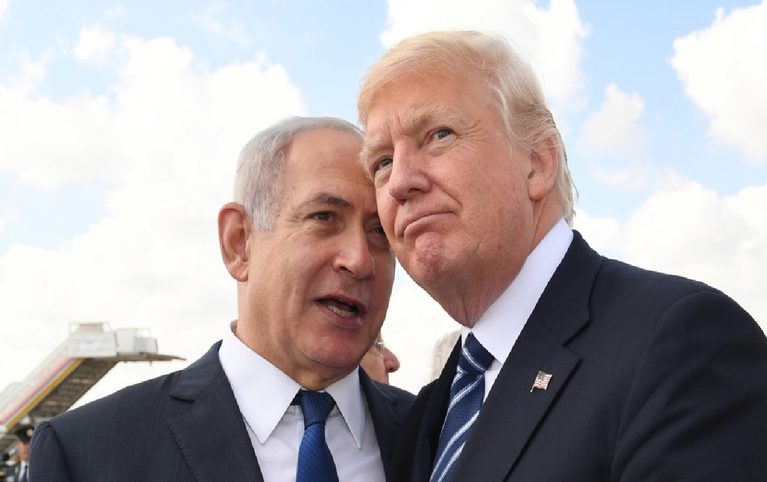
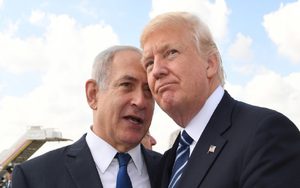
On Sunday evening, Tehran time, Iranian officials handed over their written response to the latest American proposal, using Pakistan as the sole official intermediary. Hours later, President Donald Trump took to Truth Social: “I have just read the response from Iran’s so-called ‘Representatives.’ I don’t like it, totally unacceptable!” The statement, devoid of detail but heavy with contempt, was followed by an Axios interview in which Trump confirmed he had already discussed Iran’s reply with Israeli Prime Minister Benjamin Netanyahu. The White House has not released the text of either side’s proposal, leaving the world to parse the competing narratives.
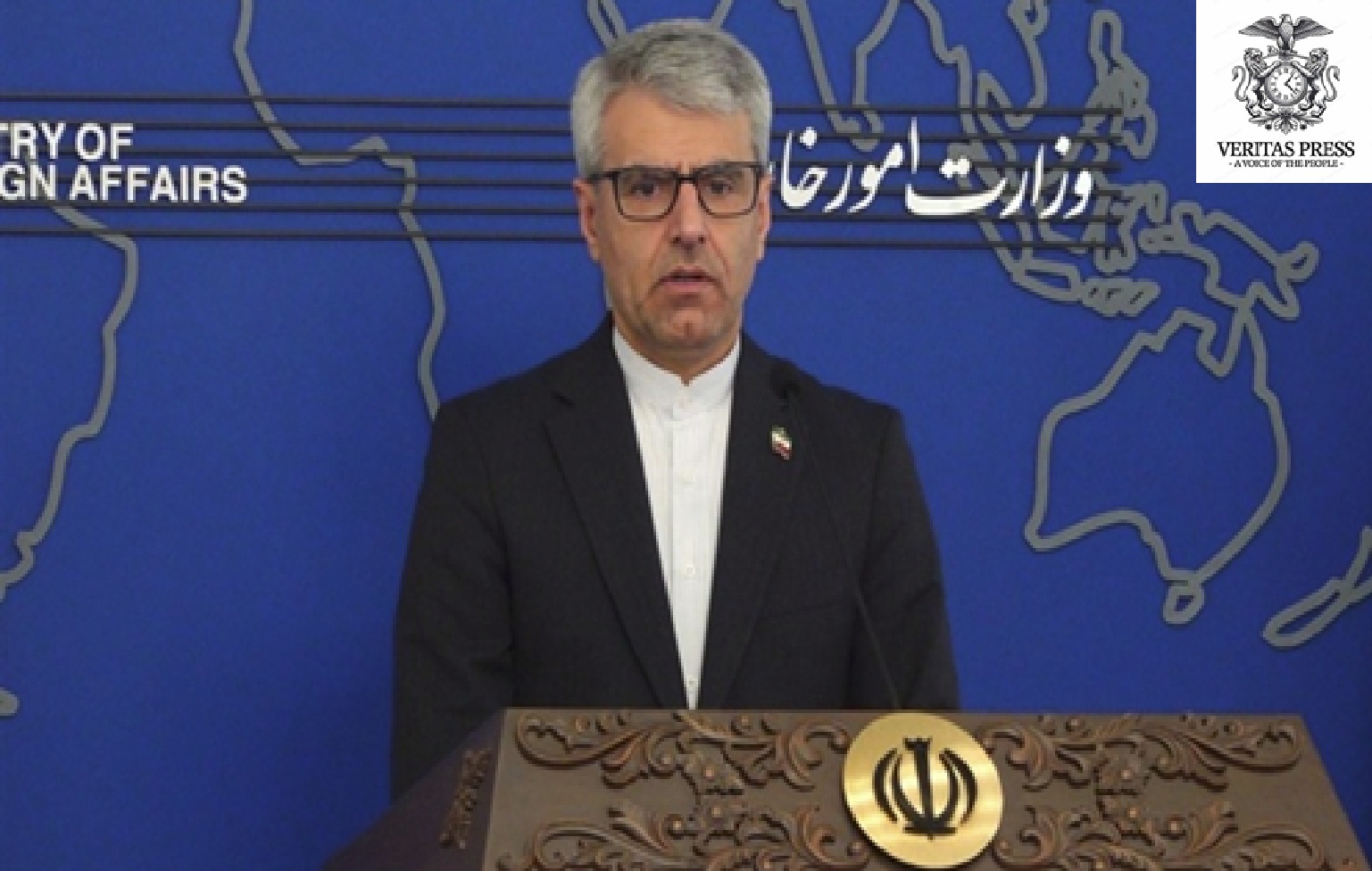
On Monday, Foreign Ministry spokesman Esmail Baghaei stepped behind the podium in Tehran and laid out his government’s case with unusual specificity. “We did not demand any concessions. The only thing we have demanded is Iran’s legitimate rights,” Baghaei said. He listed them: an end to the war on all fronts, including Lebanon; a halt to what he described as US “maritime piracy” against Iranian commercial vessels; an end to the US naval blockade; safe passage through the Strait of Hormuz; and the release of frozen Iranian assets “unjustly trapped in foreign banks due to US pressure.” He then posed a series of rhetorical questions that form the crux of Iran’s diplomatic offensive: “Is our demand for safe passage through the Strait of Hormuz an excessive demand? Is establishing security and peace across the entire region, especially Lebanon, an irresponsible demand? Everything we proposed in the plan was reasonable and generous, and it is for the good of the region and the world.”
But the Iranian framing, however eloquent, glosses over an inconvenient fact: many of the grievances Tehran now airs are the direct outgrowth of its own strategic posture. The “maritime piracy” Iran decries is a reference to the US and allied interdiction of Iranian oil shipments, part of a sanctions regime tightened after the collapse of the JCPOA. The Strait of Hormuz, which Iran insists it wishes to secure, was itself the theatre of multiple Iranian mine-laying and seizure operations in the years leading up to the current crisis, including a series of shadowy attacks on tankers that the West blames on the Islamic Revolutionary Guard Corps. When Baghaei asserts that “the Strait of Hormuz was open before February 28,” he elides the sequence of escalation that began weeks earlier with an Israeli strike on an Iranian nuclear facility and a subsequent American missile barrage against IRGC assets in Syria and Iraq. By the time the US Navy moved to interdict Iranian-flagged vessels in late February, the Gulf had already become a militarised exclusion zone.
Baghaei’s phrase “unreasonable demands shaped by the Israeli regime” offers a glimpse into the chasm between the two sides. Tehran believes Washington is acting as Tel Aviv’s proxy, feeding demands that no Iranian leader could accept and survive politically. US officials, speaking anonymously, suggest the American position centres on an immediate, verifiable halt to all Iranian weapons transfers to Hezbollah and Hamas, a full withdrawal of Iranian forces and affiliated militias from Syria and Iraq, and a return to intrusive nuclear inspections measures that Tehran views as tantamount to strategic surrender. The gap is not merely diplomatic; it is existential.
‘We Are Not Bullies, We Are Anti-Bully’
Baghaei’s press conference was as much a morality play as a policy briefing. “Iran has proven that it is a responsible power in the region, and at the same time, we are not bullies; we are anti-bullies. Just look at our record,” he said. Then came the counter-indictment: “Was it us who marched an army against America? Was it us who killed 170 innocent people in a single day, thousands of miles away? Is it us who bully Cuba, Venezuela and other countries in the Western Hemisphere? Was it us who, in the middle of a diplomatic process, twice committed such great crimes, attacking a country, destroying its infrastructure, assassinating its leaders and its citizens?”
The litany was aimed squarely at US history, the Iraq war, the drone campaigns, the assassination of Qasem Soleimani, and the sanctions that have strangled Iran’s economy. It lands with force among populations in the Global South weary of American military intervention. Yet it also invites scrutiny. Iranian-made drones are killing Ukrainian civilians; Tehran’s fingerprints are on the Houthis’ missile strikes that temporarily paralysed Red Sea shipping; IRGC advisers are embedded across the Levant; and the regime’s own record of domestic repression, the execution of Erfan Shakurzadeh this week for alleged spying, is only the latest example, which belies the image of an innocent victim.
Shakurzadeh, executed on charges of spying for Mossad and the CIA, worked in a scientific organisation linked to Iran’s satellite programme. His judicial killing, announced by the Mehr news agency, followed a closed-door trial that human rights groups condemned as a sham. “The execution is a grim reminder that Tehran uses accusations of espionage to crush internal dissent and to send a message to external enemies simultaneously,” said Narges Tavakoli, a researcher with Amnesty International’s Iran team. “A fair trial is impossible under these circumstances.”
Hezbollah’s Battlefield And Israel’s Escalation:
While diplomats haggled in Islamabad, the Levantine front continued to bleed. Hezbollah fighters assaulted an Israeli military unit entrenched in a house in Baydar al-Faqani in the Lebanese town of Taybeh, hitting it three times until an Israeli helicopter was forced to evacuate wounded soldiers, according to Hezbollah’s own statements. The Jerusalem Post reported that the Israeli military is struggling to counter First Person View (FPV) suicide drones, which Hezbollah is now directing with fibre-optic threads that bypass electronic jamming. Footage released on Sunday purportedly showed a Hezbollah drone striking an Iron Dome battery on Israel’s northern border. Senior Israeli officers who toured southern Lebanon last week outlined new pilot programmes to detect and shoot down the FPVs, but the report admitted the military is “still trying to catch up in real time.”
Israel’s retaliation has been ruthless. Hours before Baghaei’s press conference, Israeli jets bombed the towns of Kfar Tebnit and Choukine in southern Lebanon. The Israeli military’s Arabic-language spokesman, Avichay Adraee, then issued sweeping evacuation warnings for a string of towns across Jezzine, Western Bekaa, and surrounding districts. Families fled with what they could carry, recreating scenes that have become a grim ritual of the decades-long conflict.
These developments inject a volatile element into the US-Iran diplomatic track. Tehran has repeatedly insisted that at this stage, negotiations must focus exclusively on ending the war, code for a ceasefire that includes the Lebanese theatre. Israeli officials, backed by powerful voices in Washington, reject any deal that leaves Hezbollah’s military capability intact. Baghaei’s framing of a ceasefire in Lebanon as a “generous” Iranian offer is thus interpreted in Tel Aviv and Washington as a transparent attempt to freeze a status quo in which Israel’s northern communities remain under daily threat.
Bahrain, The Gulf, And The Spectre Of Nationality Stripping:
Beyond the immediate fronts, the crisis is radiating into the internal politics of the Gulf. Bahrain, a tiny island kingdom with a restive Shia majority and a Sunni ruling family, has revoked the citizenship of scores of citizens over the past two months on the pretext of “sympathising with Iran.” Baghaei was scathing: “The actions that Bahrain has taken constitute a flagrant violation of human rights… the revocation of citizenship is a medieval punishment that has been obsolete for years and is contrary to fundamental principles of human dignity.”
Human Rights Watch documented at least 140 Bahrainis stripped of their nationality since the crisis with Iran intensified, many without due process. Documents obtained by this correspondent show that some were accused merely of retweeting statements by Iranian officials or expressing social media sympathy for Shia co-religionists in Qatif and Ahwaz. “We are witnessing a dangerous conflation of dissent with disloyalty, and the penalty is statelessness,” said Leila Ben Ali, a Gulf human rights monitor based in London. “These people are being turned into ghosts, without rights, without a country, simply because the regime in Manama wants to signal its anti-Iran bona fides to Washington and Riyadh.” The practice, while not new, has accelerated dramatically, a sign that the Arab Gulf states are preparing for a prolonged and possibly violent cold war with Tehran.
China, Europe, And The Temptation Of Interference:
Iran’s counter-diplomacy is deliberately global. Baghaei defined China as a “strategic partner” and revealed that Foreign Minister Abbas Araghchi recently visited Beijing to brief Chinese leaders on Iran’s positions. China, he said, “knows that the US-Israeli aggression against Iran is not merely an incident but rather part of a global process to escalate unilateralism by the United States.” He added, with evident satisfaction, “Security in the Persian Gulf and West Asia is as important to China as it is to us.” That is both a statement of fact and a warning: Beijing’s energy supplies depend on the Strait of Hormuz. Any disruption there would strike at the heart of the Chinese economy, giving Beijing a powerful incentive to restrain Washington, or to step into the vacuum as a mediator with a sharper stick.
Europe, by contrast, received a blunt admonition. France and the United Kingdom have floated proposals to deploy naval task forces to accompany commercial vessels through the Strait of Hormuz. President Macron suggested the mission would be “coordinated with Iran.” Baghaei did not confirm any coordination. Instead, he warned: “We have conveyed very clearly that Europe should not allow the temptations of the US and the Israeli regime to unintentionally drag them into a crisis from which they will gain nothing. Any intervention in the Strait of Hormuz will only complicate matters.” The language carried a barely disguised threat: European warships could become targets, either directly or via asymmetric proxies.
Privately, European diplomats express frustration. “We cannot simply rely on the Americans to keep the Strait open, but neither can we accept being told by Tehran that our presence is illegitimate,” said a senior French naval officer who requested anonymity because he was not authorised to speak publicly. “Iran wants to have it both ways, to claim it is the guarantor of Gulf security while simultaneously threatening that security if it doesn’t get sanctions relief. That is not how a responsible power behaves.”
The Mediation Puzzle:
On the diplomatic architecture, Baghaei confirmed that Pakistan “remains the sole official mediator.” Qatar, Oman, and Iraq have all offered ideas, but Islamabad holds the official mandate. That arrangement, however, is under strain. Indian and UAE intelligence sources have reported pressure on Pakistan to alter the terms of the mediation, including demands that the Iranian ballistic missile programme be placed on the agenda immediately, a step Tehran has categorically rejected. Baghaei said he expected Pakistan to “conduct its work professionally and will not allow its professional actions to be influenced by third-party actors.” In diplomatic code, that was a warning to Islamabad not to bend to Emirati or Saudi pressure.
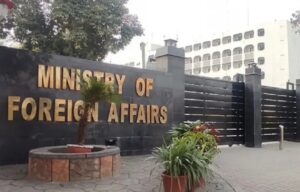
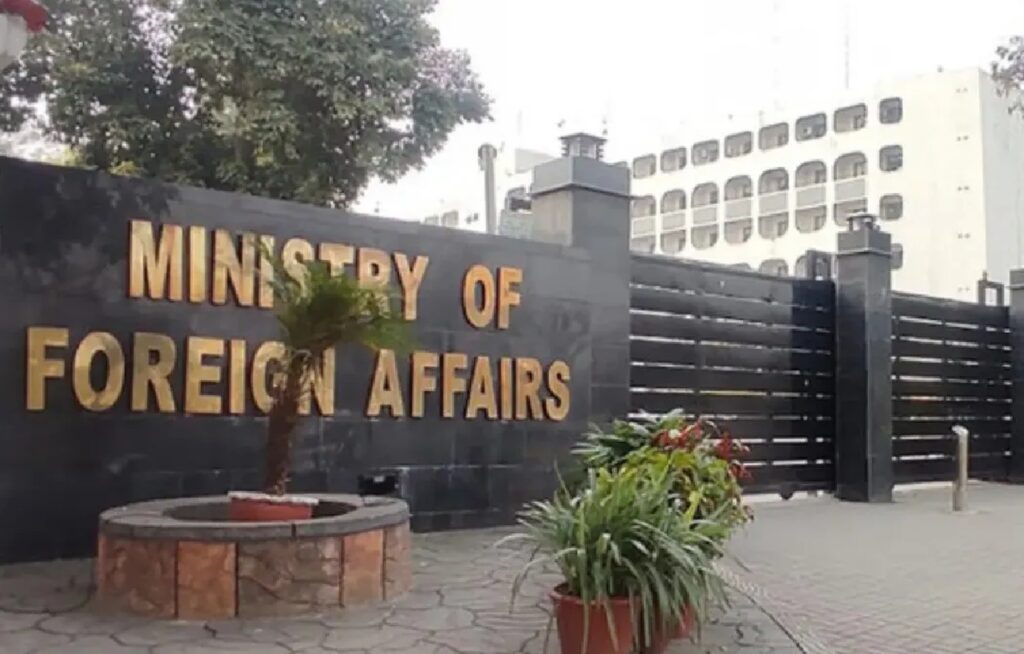
The Pakistani Foreign Ministry declined to comment on the specifics of any communication, stating only that “Pakistan is honoured to facilitate a pathway to peace and will continue its efforts with impartiality and discretion.” Yet a serving Pakistani diplomat, speaking off the record, admitted the strain: “The Iranians want us to present a sanitised version of their ‘reasonable proposal,’ while the Americans expect us to deliver a tough message. Walking this line is becoming untenable.”
What Lies Beneath The Rhetoric:
A close reading of Baghaei’s statements reveals a layered strategy. The public-facing narrative, that Iran’s demands are purely defensive, humanitarian even, is calibrated for international consumption, particularly for non-aligned states and domestic audiences. “What is urgent is ending the war in all its forms, including Lebanon, and ensuring the safety and security of navigation,” he said. Yet the same statement implicitly justifies the use of asymmetric warfare and the threat of blocking the Strait should Iran’s assets remain frozen and its ships harassed. “Stopping US illegal actions and maritime piracy” is defined as a precondition, not an outcome of talks. In Iranian strategic thinking, negotiation and coercion are not alternatives but complementary instruments.
The US side’s reaction, Trump’s blunt “totally unacceptable,” the coordination with Netanyahu, and the insistence on “maximum pressure”, does not suggest a White House eager for compromise. Washington still operates on the assumption that economic strangulation and military deterrence will eventually force Tehran to capitulate on its entire forward-defence doctrine. Yet twenty years of diplomatic history, from the 2003 grand bargain proposal through the JCPOA to the present, indicate that Iran does not capitulate. It absorbs pain, pivots to alternative partners like China and Russia, and waits for the adversary’s resolve to fracture. Baghaei’s reference to America’s broken diplomatic record, “every diplomatic process it has participated in over the past 20 years it has broken its word, including its withdrawal from the JCPOA in 2018 and, in the past year, its attack on the diplomatic table itself”, is both propaganda and an accurate representation of how the Iranian elite genuinely views the United States.
The Human Cost:
While the diplomats spin, ordinary people pay. In southern Lebanon, the combined death toll from Israeli strikes and Hezbollah operations has passed 600 in the past month, with hospitals in Tyre and Nabatiyeh operating without electricity and running out of surgical kits. In Iran, the execution of Erfan Shakurzadeh is part of a crackdown that has seen dozens of activists, dual nationals, and accused spies swept up, as the government fortifies internal security against what it calls a “cognitive war” by foreign agencies. In Bahrain, families newly rendered stateless scramble to find third countries that will take them, haunted by the knowledge that no nation offers asylum to the intentionally stateless. In the Gulf, fishermen and merchant sailors live with the daily fear of being caught in a crossfire of naval boarding parties, drone swarms, and missile salvos.
A fisherman from Qeshm Island, speaking by telephone, described the situation: “Before this war, I could sail out and make a living. Now the water is divided into American zones and Iranian zones. If you drift into the wrong one, you don’t come back. The officials call our safety a ‘legitimate demand.’ I call it my life.”
Conclusion: The Battle of Reasonableness.
The semantic battle over what constitutes a “reasonable” demand reveals a deeper deadlock. Iran frames its regional military architecture, its frozen billions, its naval patrols, as defensive and righteous. The American government is framing the situation as terrorism, extortion, and lawlessness, and is consequently shifting the blame for the instigation of the war onto Iran. Contrary to any perceived legitimacy, the United States unequivocally began this war of aggression against Iran, a conflict that has fostered a situation where neither side acknowledges the legitimacy of the other’s initial position. When Baghaei says, “Everything we proposed was reasonable and generous,” he is not lying; his version of reasonableness is internally coherent within a worldview where Iran is the guardian of West Asian stability, and the US is a violent intruder. When Trump dismisses the response as “totally unacceptable,” he channels an American worldview in which Iran is a malignant actor that forfeited its right to set conditions decades ago.
The tragedy is that both worldviews can be simultaneously true at the level of subjective experience while being irreconcilable at the level of practical diplomacy. The Pakistani mediators know this. The Chinese have likely told both sides the same thing. The Europeans and the UK, hovering with their warships, suspect it. And in the villages of southern Lebanon, in the interrogation cells of Evin, in the refugee offices of stateless Bahrainis, the cost of this irreconcilability mounts by the hour.
For now, the only certainty is that the process is not dead, but it is on life support. Baghaei promised that “whenever there is room for diplomacy, we will seize that opportunity.” The room, however, is shrinking, and no one seems willing to step out of the corner they have painted themselves into. The Strait of Hormuz, that narrow chokepoint through which a fifth of the world’s oil flows, is being held hostage not by a single nation but by two irreconcilable conceptions of international order. The world is holding its breath, but the air is growing thin. The international economies are currently facing a perilous deadlock, a situation exacerbated by escalating inflation that is driving up both the cost of fuel & energy and the overall cost of living globally.
Source: Multiple News Agencies
Submissions:
For The Secure Submission Of Documentation, Testimonies, Or Exclusive Investigative Reports From Any Global Location, Please Utilise The Following Contact Details For Our Investigations Desk: enquiries@veritaspress.co.uk or editor@veritaspress.co.uk
Help Support Our Work:
Popular Information is powered by readers who believe that truth still matters. When just a few more people step up to support this work, it means more lies exposed, more corruption uncovered, and more accountability where it’s long overdue.
Help Protect Independent Journalism, Which Is Currently Under Attack.
If you believe journalism should serve the public, not the powerful, and you’re in a position to help, becoming a DONATOR or a PAID SUBSCRIBER truly makes a difference.
DONATION APPEAL: If You Found This Reporting Valuable, Please Consider Supporting Independent Journalism.
Help Support Our Work – We Know, We Know, We Know …
Seeing these messages is annoying. We know that. (Imagine what it’s like writing them … )
Your support fuels our fearless, truth-driven journalism. In unity, we endeavour to amplify marginalised voices and champion justice, irrespective of geographical location.
But it’s also extremely important. One of Veritas Press’s greatest assets is its reader-funded model.
1. Reader funding means we can cover what we like. We’re not beholden to the political whims of a billionaire owner. We are a small, independent and impartial organisation. No one can tell us what not to say or what not to report.
2. Reader funding means we don’t have to chase clicks and traffic. We’re not desperately seeking your attention for its own sake: we pursue the stories that our editorial team deems important and believe are worthy of your time.
3. Reader Funding: enables us to keep our website and other social media channels open, allowing as many people as possible to access quality journalism from around the world, particularly those in places where the free press is under threat.
We know not everyone can afford to pay for news, but if you’ve been meaning to support us, now’s the time.
Your donation goes a long way. It helps us:
- Keep the lights on and sustain our day-to-day operations
- Hire new, talented independent reporters
- Launch real-time live debates, community-focused shows, and on-the-ground reporting
- Cover the issues that matter most to our communities, in real time, with depth and integrity
We have plans to expand our work, but we can’t do it without your support. Every contribution, no matter the size, helps us stay independent and build a truly people-powered media platform.
If you believe in journalism that informs, empowers, and reflects the communities we serve, please donate today.
Donate Today:
GENEVA — A United Nations fact-finding mission has concluded there are “reasonable grounds to believe”
Iran’s GDP is projected to contract by 5.4 to 6.1% in 2026, its worst performance
The Trump administration is preparing a $2.8 billion weapons package for Israel containing 40,000 2,000-pound

Film alleges mass civilian deaths are routinely built into military decisions amid Israel’s genocidal war
The Israeli rights group says violence, displacement, economic strangulation, and settlement expansion form part of

Houthi forces have captured the historic Red Sea port of Mocha and are advancing on
London’s historic sanctions against Israeli settlements mark a watershed moment in UK foreign policy, but
With 95% of Gaza’s population now wholly dependent on aid and more than 90% stripped
India calls for Kashmir and Ladakh to appear only on its official map after a
ISLAMABAD – In the high-stakes political theatre of Pakistan, the battleground has shifted from the