




Help support our mission, donate today and be the change. Every contribution goes directly toward driving real impact for the cause we believe in.
A deep-dive investigative analysis from the United Nations, the Persian Gulf littoral, and Tehran — May 9, 2026
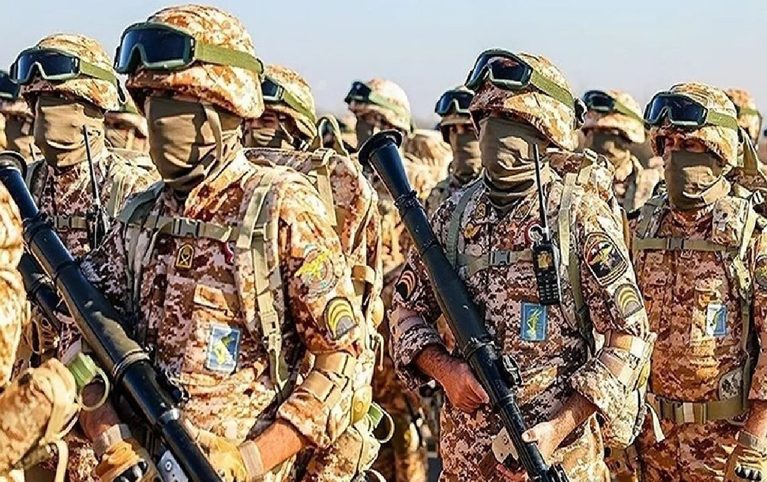
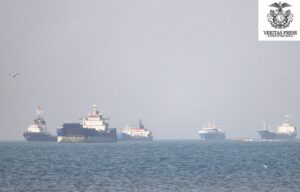
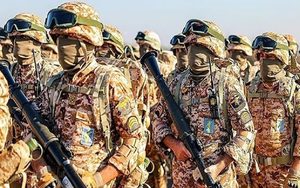
The predawn quiet of the Sea of Oman was shattered again on Friday. According to maritime security sources and local witnesses, a tense standoff unfolded at the mouth of the Strait of Hormuz when Iranian fast-attack craft of the Islamic Revolutionary Guard Corps Navy (IRGCN) intercepted a U.S. guided-missile destroyer that was escorting a Liberian-flagged tanker. Warning shots were reportedly fired into the water, not for the first time since a fragile April 8 ceasefire supposedly halted 40 days of open war between Iran, the United States, and Israel. The incident, which ended without casualties, is the latest pulse in a rapidly escalating confrontation that has transformed the world’s most vital oil chokepoint into the testing ground for a new and dangerous strategic doctrine: what Tehran is openly calling “deterrence through punishing the aggressor.”
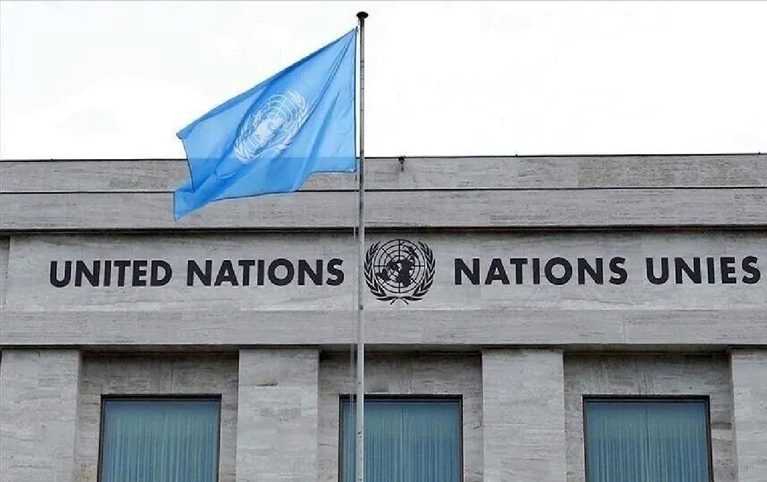
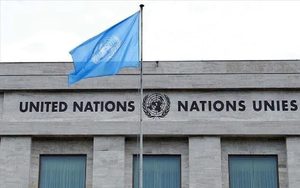
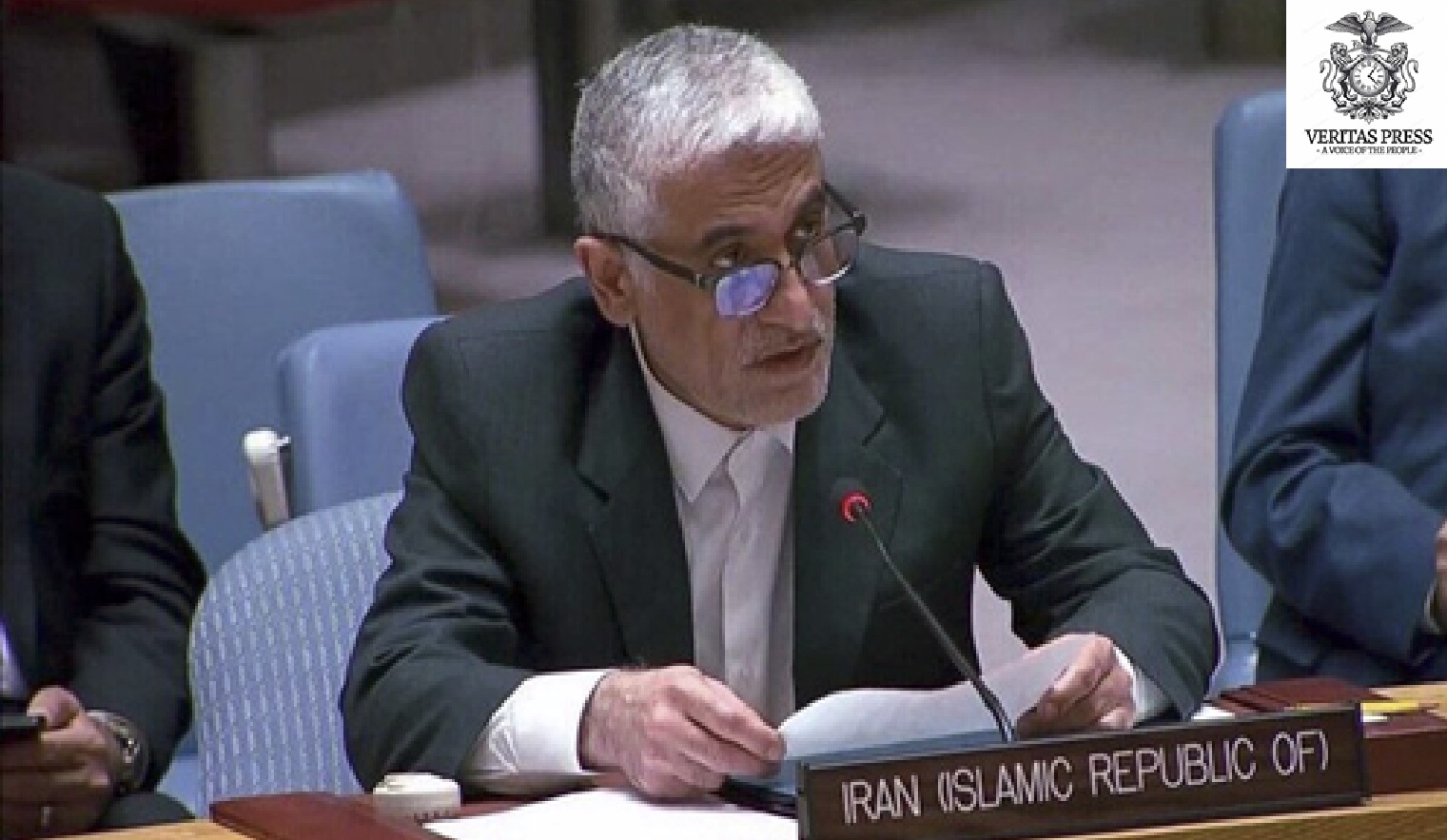
As dawn broke over the United Nations headquarters in New York on Friday, Iran’s ambassador, Amir-Saeid Iravani, was already delivering a blistering letter to Secretary-General António Guterres and the Security Council president. In it, Tehran asserted its “inherent right to self-defence” against what it described as a sustained campaign of American “piracy,” a direct violation of the April 8 ceasefire, and a “blatant breach of Article 2(4) of the UN Charter.” His words landed as an emergency closed-door Council session, requested by Iran, descended into predictable deadlock, with Western and non-aligned members trading accusations while the real action unfolded on the water.
The Ceasefire That Never Was:
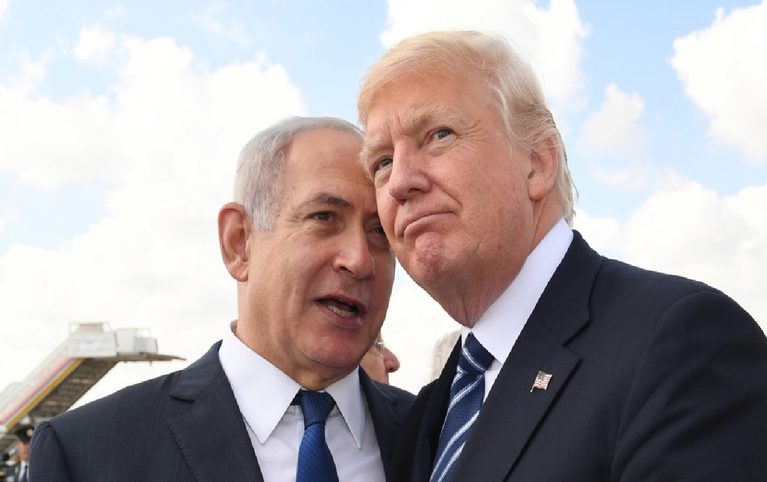
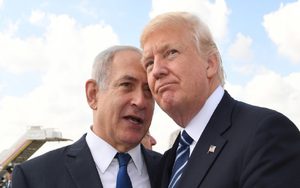
To understand the current crisis, one must rewind to the “Ramadan War,” the 40-day aerial and naval onslaught launched by the United States and Israel in late February 2026 after the collapse of a shadowy period of nuclear diplomacy. The war, which U.S. and Israeli officials framed as a campaign to degrade Iran’s missile and nuclear infrastructure, instead became a grinding stalemate. When President Donald Trump unexpectedly announced a ceasefire on April 8, framing it as a magnanimous pause, he was already, in Iran’s view, laying the groundwork for a new phase of coercion.
Multiple Iranian officials and regional analysts now claim that even as Trump spoke of peace, the Pentagon was preparing to enforce a de facto naval blockade of Iranian ports, targeting commercial oil tankers to strangle the Islamic Republic’s economy. Iravani’s Friday letter cited specific attacks on two Iranian oil tankers near the port of Jask and the Strait of Hormuz, as well as “attacks against several locations in Iran’s coastal areas.” Local fishermen and port workers in Jask, a city clinging to the Makran coast, have confirmed the harrowing details. “We saw the flash from the sea before we heard the jets,” said Ahmad, a 43-year-old fisherman, speaking by phone. “One of the tankers was on fire for hours. The Americans say they are protecting navigation, but they are the ones setting the sea alight.”
The ceasefire’s collapse into maritime shadow boxing has shaken the diplomatic track that Turkey, Pakistan, and others have tried to salvage. In a phone call on Friday between Iranian Foreign Minister Abbas Araqchi and his Turkish counterpart Hakan Fidan, Tehran’s top diplomat delivered a stark message: “Recent provocative U.S. moves in the Persian Gulf and offensive and insulting rhetoric by senior American officials have deepened doubts about the U.S. side’s intentions and commitment to diplomacy.” Araqchi described the American approach as “destructive,” cautioning that it was breeding a profound national mistrust among Iranians. The Turkish readout, unusually candid, reaffirmed Ankara’s support for the diplomatic process but hinted at growing frustration with Washington’s zigzag.
A Narrative War: Iran’s Media Mobilises.
Friday’s Iranian front pages and lead commentaries were not merely reacting; they were scripting a unified narrative of righteous defiance that leaves no room for the internal dissent Western observers had hoped for. A survey of the most influential dailies reveals a regime and a public sphere closing ranks around a hardened strategic posture.
The hardline Kayhan crowed about “disregard for Trump’s plan,” boasting that after the Ramadan War, “not a single vessel passed through the Strait of Hormuz” without Iranian coordination, a claim that, while exaggerated, captures the new reality in which Iran’s IRGCN acts as the choke-point’s gatekeeper. Kayhan’s editorial explicitly framed the standoff as one where “Iran’s response will be regret-inducing and destructive,” and chillingly noted that the closure of the Bab el-Mandeb Strait, the other end of the Red Sea, seen as Israel’s and Europe’s lifeline, now “hangs by a thread, dependent on a single signal.” This was a not-so-veiled reference to the Iran-backed Ansarullah movement in Yemen, which has already demonstrated its capacity to paralyse Red Sea shipping.
The reformist-leaning Shargh offered a more analytical but no less alarmed perspective, headlining its assessment “Project Freedom or a War Trap.” Shargh zeroed in on the contradiction in Washington’s own policy: Trump’s “Project Freedom” purports to guarantee safe passage for neutral shipping, but any American-escorted convoy that does not seek Iranian coordination, the paper argued, is “an active military presence that intensifies Iran’s security concerns.” The risk of “sliding toward an unintended military clash” out of a single miscalculation, Shargh warned, “could trigger a chain of reactions with consequences extending far beyond the region.”
Siasat-e-Rooz, the influential conservative outlet, went for the jugular, caricaturing Trump as a “thief who pretends to be humanitarian.” Its editorial traced the President’s own admission, made during a 2025 press conference, that the United States gains “significant benefits” from seizing ships, and concluded that the new vocabulary of “freedom of navigation” is simply a fig leaf for piracy and extortion. “These invented terms will not last long,” the paper argued, “because the world has become familiar with his violent and criminal nature, especially during the Ramadan War.”
Hamshahri, Tehran’s mass-circulation daily, provided perhaps the most important analytical skeleton. It quoted Hossein Ajorlou, a regional affairs expert, who articulated Iran’s emerging maritime doctrine: “After the 40-day war between Iran and the Zionist regime and the United States, the Strait of Hormuz became an advantage in Iran’s hands, and the Islamic Republic is trying to pursue the concept of ‘deterrence through punishing the aggressor’ using this strait.” Ajorlou explained that Iran’s strategy is now twofold: to neutralize the U.S. policy of naval blockade by demonstrating that no ship moves without Iranian consent, and to extend “the range of punishing the enemy” to control the behavior of third parties, notably the UAE, whose ports have become vital alternative hubs.
Farhikhtegan revealed new details about the backchannel negotiations that have run parallel to the military confrontation. Iran, it reported, has delivered a final offer through Pakistani intermediaries: no nuclear talks while the war, defined broadly to include the blockade, continues. “Contrary to Trump’s claims, not only does Iran have no eagerness for negotiations, but this time, because of the war initiated by the Americans, it has entered the talks from a stronger position and is not willing to return to the pre-negotiation conditions.” The paper assessed that Trump’s bluster about being the victor is “not even slightly close to reality.”
The Missile Equation: “120%, Not 75%”.
Crucially, the diplomatic deadlock is being reinforced by a sharp divergence in military assessments. A leaked U.S. intelligence assessment, widely reported in Western media, had claimed that despite weeks of bombing, Iran still retained about 75% of its pre-war mobile launcher inventory and roughly 70% of its missile stockpiles, a surprise to Pentagon planners who had predicted far greater degradation. On Friday, Foreign Minister Araqchi took to his X account to eviscerate the report, turning the intelligence failure into a propaganda masterstroke.
“The CIA is wrong,” he wrote. “Our missile inventory and launcher capacity are not at 75% compared to Feb 28. The correct figure is 120%. As for our readiness to defend our people: 1,000%.” The statement, while clearly hyperbolic, underscored a substantive truth that independent monitors and Western intelligence officials are now reluctantly conceding: Iran’s underground missile cities, hardened and dispersed, have survived the U.S.-Israeli campaign largely intact. The claim of a 120% figure, one European defence attaché told this reporter on condition of anonymity, “isn’t about counting missiles. It’s Tehran’s way of saying their production capacity outstrips the destruction we can inflict. It’s a nightmare for any naval commander in the Gulf.”
Araqchi’s broader warning was even more pointed: “Every time a diplomatic solution is on the table, the U.S. opts for a reckless military adventure. Is it a crude pressure tactic? Or the result of a spoiler once again duping POTUS into another quagmire? … Iranians never bow to pressure.”
Voices From The Brink: The Human And Environmental Toll.
Behind the rhetoric and the geostrategic chess moves, the human cost is mounting. Fishermen in Hormozgan province, already reeling from years of sanctions, now find themselves on the front line of a cold-hot war. “We haven’t left the harbour in six days,” said Reza, a boat captain from Bandar Abbas, via a secure messaging app. “The IRGC patrols tell us to stay put. On the radio, we hear the Americans warning everyone to keep 12 nautical miles from their convoys. Where exactly are we supposed to fish?”
Environmental activists are raising alarms of a catastrophe in waiting. The Persian Gulf’s ecology, still recovering from the oil slicks of the 1991 Gulf War and the 2020s shipping incidents, could be devastated if a tanker is struck. The Iran-based Green Waves Collective, a grassroots environmental group operating discreetly, issued a statement on Thursday warning that “the Strait of Hormuz is not a poker chip. Any escalation that leads to a major spill will poison the waters on which millions of Iranians, Iraqis, Kuwaitis, and others depend for their livelihoods.” The group noted that two of the attacked Iranian tankers were carrying heavy crude, and that fires at sea had already released visible plumes observed by satellite.
Human rights organisations, meanwhile, are focusing on the plight of the crews. Iravani’s letter explicitly accused U.S. forces of taking Iranian seafarers hostage, calling the acts “piracy.” The International Transport Workers’ Federation (ITF) confirmed on Friday that at least 34 Iranian merchant sailors were being held aboard U.S. auxiliary vessels in an undisclosed location in the Arabian Sea. “These are civilian mariners, not combatants,” said James Findlay, the ITF’s regional coordinator. “Their continued detention without charge or access to consular services is a flagrant violation of international humanitarian law. We call on both sides to separate the fate of innocents from their geopolitical brinkmanship.”
The UN’s Paralysis And The Nuclear Shadow:
At the United Nations, Iran’s request for an unambiguous condemnation has met the usual geopolitical calculus. Russia and China, while not endorsing Tehran’s freedom to manage the Strait by force, have blocked any resolution that would lay blame exclusively at Iran’s feet, pointing instead to the U.S. blockade as the original violation. European members tabled a compromise text calling for a “de-escalation zone” around the Strait, but Ambassador Iravani rejected it as a “mechanism for perpetuating an illegal siege.” A Western diplomat admitted in a moment of rare candour: “We are watching the same cockpit video. One side says the other broke the ceasefire. The neutral shipping industry is caught in the worst possible place. And the Security Council is frozen.”
Adding to the complexity is the nuclear dimension. Araqchi’s hardline that “no nuclear talks while war continues” has effectively reversed the logic that dominated the first Trump administration in 2018, when maximum pressure was meant to force Iran back to the table. Now, with missile readiness at a self-declared 120% and the Strait of Hormuz effectively a calibrated Iranian weapon, it is Washington that finds its leverage hollowed out. Analysts point out that a key objective of the Ramadan War, the dismantling of Iran’s ballistic missile capability, has not only failed but has paradoxically produced a more confident, more entrenched adversary.
Conclusion: A Game Of Chicken With No Off-Ramps.
Friday’s events crystallised a dangerous inflexion point. Iran has articulated a clear doctrine, punishment as deterrence, and is willing to implement it in the confined waters that carry a fifth of the world’s oil consumption. The United States, under a President who has personally admitted the benefits of ship seizure and who abandoned a ceasefire within days, is haemorrhaging credibility with allies and neutrals alike. The media narratives inside Iran show a regime that has successfully marshalled national sentiment against an external “pirate,” leaving little space for the domestic compromise the U.S. claims to seek.
The risk is no longer theoretical. As Shargh warned, a single miscalculation, a warning shot mistaken for an attack, an escort push that goes too far, a hidden limpet mine on a hull, could ignite a chain of events that would make the Ramadan War look like a prelude. And as Iranian and American warships circle each other in the narrows, with civilians below deck and the global economy holding its breath, the only thing both capitals seem to agree on is that the other bears “full responsibility” for the catastrophe that may come. The question now is not whether diplomacy will return, but whether it will arrive before the first true salvo.
Source: Multiple News Agencies
Submissions:
For The Secure Submission Of Documentation, Testimonies, Or Exclusive Investigative Reports From Any Global Location, Please Utilise The Following Contact Details For Our Investigations Desk: enquiries@veritaspress.co.uk or editor@veritaspress.co.uk
Popular Information is powered by readers who believe that truth still matters. When just a few more people step up to support this work, it means more lies exposed, more corruption uncovered, and more accountability where it’s long overdue.
Help Protect Independent Journalism, Which Is Currently Under Attack.
If you believe journalism should serve the public, not the powerful, and you’re in a position to help, becoming a DONATOR or a PAID SUBSCRIBER truly makes a difference.
DONATION APPEAL: If You Found This Reporting Valuable, Please Consider Supporting Independent Journalism.
Help Support Our Work – We Know, We Know, We Know …
Seeing these messages is annoying. We know that. (Imagine what it’s like writing them … )
Your support fuels our fearless, truth-driven journalism. In unity, we endeavour to amplify marginalised voices and champion justice, irrespective of geographical location.
But it’s also extremely important. One of Veritas Press’s greatest assets is its reader-funded model.
1. Reader funding means we can cover what we like. We’re not beholden to the political whims of a billionaire owner. We are a small, independent and impartial organisation. No one can tell us what not to say or what not to report.
2. Reader funding means we don’t have to chase clicks and traffic. We’re not desperately seeking your attention for its own sake: we pursue the stories that our editorial team deems important and believe are worthy of your time.
3. Reader Funding: enables us to keep our website and other social media channels open, allowing as many people as possible to access quality journalism from around the world, particularly those in places where the free press is under threat.
We know not everyone can afford to pay for news, but if you’ve been meaning to support us, now’s the time.
Your donation goes a long way. It helps us:
- Keep the lights on and sustain our day-to-day operations
- Hire new, talented independent reporters
- Launch real-time live debates, community-focused shows, and on-the-ground reporting
- Cover the issues that matter most to our communities, in real time, with depth and integrity
We have plans to expand our work, but we can’t do it without your support. Every contribution, no matter the size, helps us stay independent and build a truly people-powered media platform.
If you believe in journalism that informs, empowers, and reflects the communities we serve, please donate today.
Donate Today.
GENEVA — A United Nations fact-finding mission has concluded there are “reasonable grounds to believe”
Iran’s GDP is projected to contract by 5.4 to 6.1% in 2026, its worst performance
The Trump administration is preparing a $2.8 billion weapons package for Israel containing 40,000 2,000-pound

Film alleges mass civilian deaths are routinely built into military decisions amid Israel’s genocidal war
The Israeli rights group says violence, displacement, economic strangulation, and settlement expansion form part of

Houthi forces have captured the historic Red Sea port of Mocha and are advancing on
London’s historic sanctions against Israeli settlements mark a watershed moment in UK foreign policy, but
With 95% of Gaza’s population now wholly dependent on aid and more than 90% stripped
India calls for Kashmir and Ladakh to appear only on its official map after a
ISLAMABAD – In the high-stakes political theatre of Pakistan, the battleground has shifted from the