





Help support our mission, donate today and be the change. Every contribution goes directly toward driving real impact for the cause we believe in.
A deep-dive investigation into the policy, the politics, and the human cost of the UK’s plan to create a two-decade purgatory for refugees.
LONDON — In the sterile, procedural language of the UK Home Office, they are case numbers in a system demanding “order and control.” But in the stark, clinical notes of their therapists, they are men haunted by the phantom pains of electrodes and the splintering echo of rifle butts. Two Sudanese torture survivors, their identities shielded by court orders for fear of reprisals against families still trapped in a war zone, have become the unlikely vanguard in a landmark legal battle that strikes at the moral and legal heart of the Labour government’s immigration overhaul.
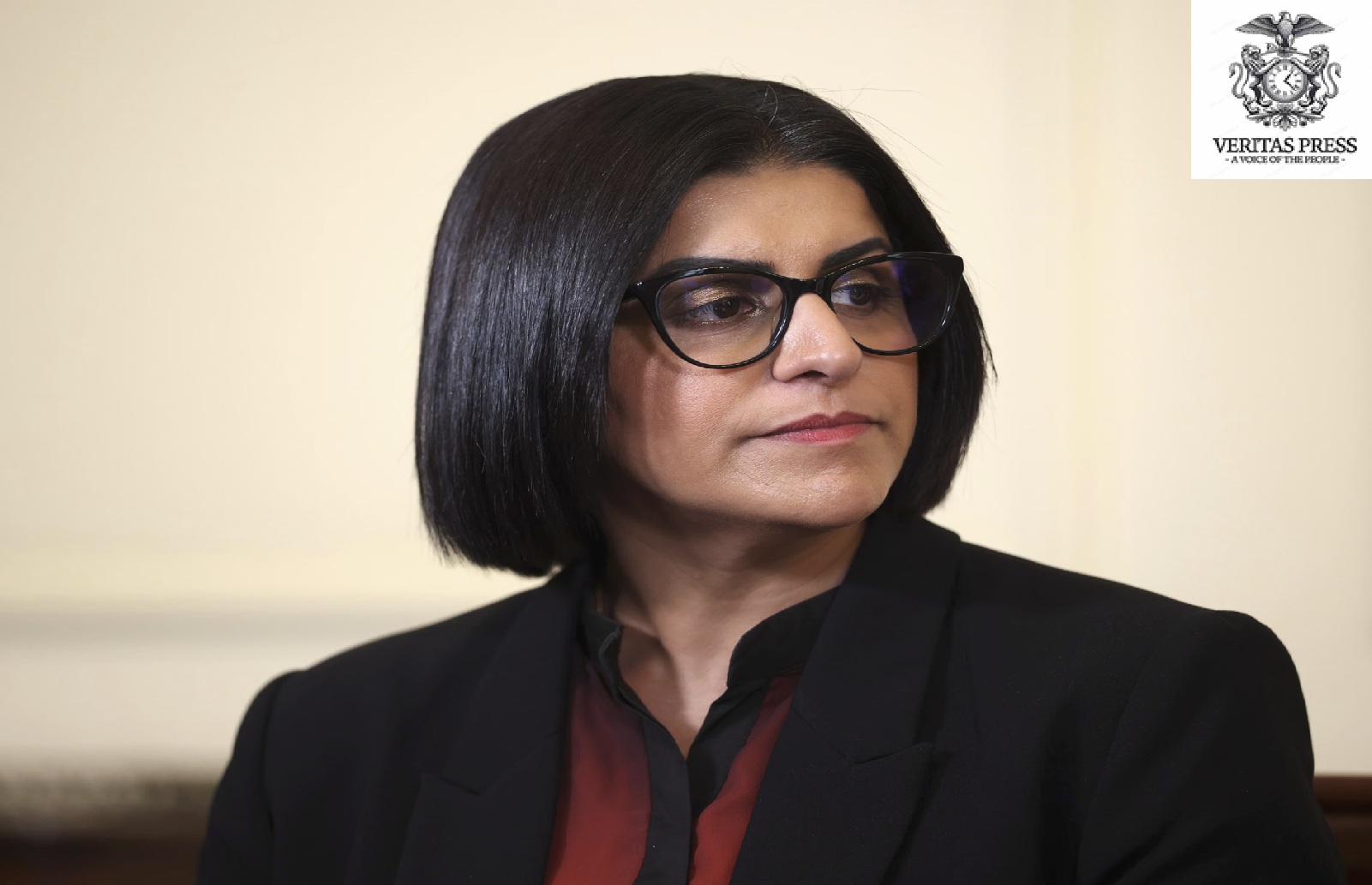
Their challenge, the first of its kind against Home Secretary Shabana Mahmood’s new asylum regime, is not merely a dispute over bureaucratic timeframes. It is a fundamental rejection of a political narrative that has branded even “genuine refugees” as calculating consumers, “asylum shoppers”, scouring a continent for the most attractive benefits package. As the policy hurtles toward potential implementation, this legal showdown threatens to expose a chasm between the government’s deterrence rhetoric and the stark realities of trauma, integration, and international law.
The Architecture Of ‘Permanent Temporality’:
At the core of the controversy is a policy shift that critics describe as the creation of a permanent underclass of the temporarily protected. In November 2025, Mahmood unveiled a white paper designed to “restore order and control” to what she depicted as a broken system. The blueprint’s most seismic change is the slashing of the initial leave to remain for refugees from five years to just 30 months.
This is not a simple administrative tweak; it is an algorithmic re-engineering of a human life. Previously, a refugee could build a foundation, find stability, and apply for indefinite leave to remain, a path to permanent settlement, after five years. Under the new rules, the goalposts recede into a distant, almost unreachable horizon. A refugee will now face a gruelling 20-year journey, punctuated by a mandatory reassessment of their protection needs every 30 months. They will have their fear interrogated by the state, their trauma re-opened, eight times before they are eligible for the safety of permanence.
This legal labyrinth is being erected in parallel with another wall: the right to family reunion. Mahmood’s policy will require refugees to prove they can financially support spouses and children before they are allowed to join them in safety, a demand that lawyers argue consigns vulnerable families to indefinite separation in danger zones, as a traumatised survivor struggles to establish the economic stability of a born citizen.
‘The Home Secretary’s Position Is Flawed And Discriminatory’: The Legal Counter-Offensive.
The two Sudanese men, represented by Manini Menon, a solicitor at the renowned human rights firm Duncan Lewis, have filed a judicial review that dissects the Home Secretary’s logic with surgical precision. Their charge is that the policy is indirectly discriminatory, in violation of the Equality Act 2010, as it will disproportionately impact refugees from specific nationalities who flee protracted, intractable conflicts, such as the civil war that has torn Sudan asunder.
“Our clients have initiated a legal challenge to the new policy to grant only temporary status to refugees, which is a cornerstone of her intended overhaul of the asylum system,” Menon told this publication, her words measured but searing. “The Home Secretary’s position is that her policy will deter small boat arrivals, and will ensure that only people who genuinely need protection will have leave as refugees in the UK. Our clients argue that the Home Secretary’s policy is flawed and discriminatory.”
The legal team’s argument dismantles the deterrence theory at its foundation. They present evidence that refugees do not “shop” based on nuanced post-grant settlement policies of which they are almost certainly unaware. More powerfully, they argue that even if they did, the experience of other nations proves that a temporary protection model is a failed experiment that creates misery without achieving its stated aim of reducing numbers.
The Global Laboratory Of Failure: Lessons Australia And Denmark Tried To Teach.
The UK’s policy is not an act of novel creation; it is a repetition of a discredited script, and the Duncan Lewis legal challenge brings the receipts. The most damning evidence comes from a comparative analysis of Denmark and Australia, jurisdictions that have served as the petri dishes for this very approach.
Denmark, under its famously hard-line Social Democrat-led government, has been a pioneer in creating a hostile environment for refugees, explicitly aiming to make the country unattractive and pursuing a “zero asylum seekers” goal. The Danish model of temporary protection mandated repeated reviews of a refugee’s status, weaponising the fear of return. Yet, a comprehensive review of its system in 2024 exposed the policy’s hollow core: out of thousands of cases reassessed, the state withdrew refugee status from just 48 individuals. The monumental bureaucratic machine had been whirring at full power to produce a statistical rounding error, all while inflicting what mental health professionals describe as a form of institutionalised psychological torment on those living under its shadow.
Similarly, Australia’s decade-long regime of Temporary Protection Visas (TPVs) and Safe Haven Enterprise Visas (SHEVs), which left refugees in a painful, indefinite limbo without a path to permanency, was finally abolished by the Albanese government. The decision was not born of mere compassion but a cold-eyed recognition of social and economic catastrophe. The policy had created a cohort of people denied the stability to plan a life, secure stable housing, begin a career, or heal from trauma. The societal integration and social cohesion that UNHCR champions were actively dismantled. Australia’s retreat from this model was a tacit admission that manufacturing anxiety did not stop the boats, but it did successfully create a marginalised, psychologically shattered population.
The Voice Of The United Nations And The Frontline Healers:
This international evidence forms the bedrock of a rare and stinging rebuke from the United Nations High Commissioner for Refugees (UNHCR), an agency typically restrained in its criticism of host governments. In a formal statement issued in December 2025, the UN refugee agency broke from diplomatic convention to issue a blunt warning.
“UNHCR notes with concern the government’s plans to reduce the duration of leave granted to individuals in need of international protection to 30 months,” the statement declared. “Such a change would place additional administrative and costly burdens on the asylum system, create greater uncertainty for refugees and negatively affect integration and social cohesion.” It went further, stressing that a 30-month cycle is “likely to be detrimental to their sense of security, belonging and stability.”
This high-level critique is amplified by the anguish of those on the clinical frontline. Freedom from Torture, the UK’s leading therapeutic centre for torture survivors, has issued a stark warning that the policy will systematically destroy the fragile recovery process. The two Sudanese claimants’ symptoms, nightmares, flashbacks, and crippling hypervigilance are not just clinical diagnoses; they are trademarks of state-inflicted sadism. To anchor their right to safety to a 30-month clock, advocates and psychologists argue, is to force survivors to perpetually live in their moment of trauma, told by the state that provides them sanctuary that it is already planning for their deportation.
“It is beyond comprehension that the government is choosing to further complicate the asylum process, worsen delays and cause unnecessary harm to so many survivors of torture, including from Sudan. The impact on recovery will be devastating,” Freedom from Torture stated, encapsulating the collision between a punitive policy and trauma-informed care.
The Strategic Context: Sudan And The ‘Asylum Shopper’ Myth.
Mahmood’s November policy paper laid bare the government’s rhetorical strategy, framing even those fleeing clear persecution as strategic actors who “shop their way across the continent.” This characterisation collapses under the weight of its own data, particularly when examined through the lens of Sudan.
The Home Office’s own statistics for 2025 reveal that 96% of Sudanese asylum claims resulted in a grant of protection. This near-universal grant rate is not a sign of a lax system; it is a devastating judicial confirmation of the scale of the humanitarian nightmare engulfing Sudan. In a conflict that has spiralled into mass atrocities, ethnic cleansing, and weaponised famine, individuals are fleeing a clear and present danger, not curating a lifestyle choice. By labelling this 96% as part of a cynical shopping trip, the government is not describing reality; it is, critics argue, constructing a politically convenient fiction to justify the dismantling of the right to asylum.
A Home Office spokesperson, in a statement that echoed the Secretary of State’s framing, insisted on the necessity of the crackdown: “Britain’s asylum system is a relative outlier in Europe. Across the continent, asylum claims are falling, while they have been rising here. We must therefore tackle the incentives that draw people on illegal and unsafe routes, including across the Channel. Protection will always be provided to those who face danger in their own country. However, for those who have travelled here illegally, if they can safely return home, they will have to do so.”
The statement, however, fails to address the core finding of the Danish and Australian precedents: the policy does not deter. It only punishes those who have already arrived. The “incentive” the government seeks to dismantle is, for a torture survivor, the incentive of breathing air free from the threat of a torturer’s return.
The Road Ahead: A Judicial Review With Continental Implications.
This legal challenge lands in a courtroom at a pivotal moment, as governments across Europe and North America accelerate a race to the bottom on refugee rights, outsourcing obligations and erecting legal frameworks designed to repel rather than protect. The case brought by the two Sudanese men is therefore more than a domestic policy dispute; it is a stress test for the principle of non-refoulement and the prohibition on discrimination in a modern, securitised state.
The core question the judges must weigh is whether a government can legally and morally subject a recognised survivor of torture, someone the state has officially acknowledged faces a well-founded fear of persecution, to a two-decade-long, state-administered cycle of anxiety and uncertainty. As the men’s legal team argues, this system is not designed to reassess danger with any meaningful frequency, given that crises like Sudan’s burn for generations. It appears designed, instead, to make life so unbearable that the refugee chooses to leave, or to create a cheap, flexible, and disposable workforce denied the rights of permanent citizenship.
For now, the two men at the centre of this storm wait, grappling with nightmares that are no longer just memories, but a core component of their relationship with the British state. Their victory or defeat will not only determine their own fates but will write the next chapter in the UK’s tumultuous relationship with its most profound humanitarian obligations. The evidence from the global laboratory is in; the question is whether the UK is determined to repeat the experiment, regardless of the human cost.
Source: Multiple News Agencies
Submissions:
For The Secure Submission Of Documentation, Testimonies, Or Exclusive Investigative Reports From Any Global Location, Please Utilise The Following Contact Details For Our Investigations Desk: enquiries@veritaspress.co.uk or editor@veritaspress.co.uk
Help Support Our Work:
Popular Information is powered by readers who believe that truth still matters. When just a few more people step up to support this work, it means more lies exposed, more corruption uncovered, and more accountability where it’s long overdue.
Help Protect Independent Journalism, Which Is Currently Under Attack.
If you believe journalism should serve the public, not the powerful, and you’re in a position to help, becoming a DONATOR or a PAID SUBSCRIBER truly makes a difference.
DONATION APPEAL: If You Found This Reporting Valuable, Please Consider Supporting Independent Journalism.
Help Support Our Work – We Know, We Know, We Know …
Seeing these messages is annoying. We know that. (Imagine what it’s like writing them … )
Your support fuels our fearless, truth-driven journalism. In unity, we endeavour to amplify marginalised voices and champion justice, irrespective of geographical location.
But it’s also extremely important. One of Veritas Press’s greatest assets is its reader-funded model.
1. Reader funding means we can cover what we like. We’re not beholden to the political whims of a billionaire owner. We are a small, independent and impartial organisation. No one can tell us what not to say or what not to report.
2. Reader funding means we don’t have to chase clicks and traffic. We’re not desperately seeking your attention for its own sake: we pursue the stories that our editorial team deems important and believe are worthy of your time.
3. Reader Funding: enables us to keep our website and other social media channels open, allowing as many people as possible to access quality journalism from around the world, particularly those in places where the free press is under threat.
We know not everyone can afford to pay for news, but if you’ve been meaning to support us, now’s the time.
Your donation goes a long way. It helps us:
- Keep the lights on and sustain our day-to-day operations
- Hire new, talented independent reporters
- Launch real-time live debates, community-focused shows, and on-the-ground reporting
- Cover the issues that matter most to our communities, in real time, with depth and integrity
We have plans to expand our work, but we can’t do it without your support. Every contribution, no matter the size, helps us stay independent and build a truly people-powered media platform.
If you believe in journalism that informs, empowers, and reflects the communities we serve, please donate today.
GENEVA — A United Nations fact-finding mission has concluded there are “reasonable grounds to believe”
Iran’s GDP is projected to contract by 5.4 to 6.1% in 2026, its worst performance

The Trump administration is preparing a $2.8 billion weapons package for Israel containing 40,000 2,000-pound

Film alleges mass civilian deaths are routinely built into military decisions amid Israel’s genocidal war
The Israeli rights group says violence, displacement, economic strangulation, and settlement expansion form part of

Houthi forces have captured the historic Red Sea port of Mocha and are advancing on
London’s historic sanctions against Israeli settlements mark a watershed moment in UK foreign policy, but
With 95% of Gaza’s population now wholly dependent on aid and more than 90% stripped
India calls for Kashmir and Ladakh to appear only on its official map after a
ISLAMABAD – In the high-stakes political theatre of Pakistan, the battleground has shifted from the