



Help support our mission, donate today and be the change. Every contribution goes directly toward driving real impact for the cause we believe in.
A pattern of destruction stretching from the South Hebron Hills to East Jerusalem is accelerating, leaving dozens of families homeless and entire communities facing erasure. Behind the bulldozers, residents, rights groups, and international legal experts increasingly invoke the language of forced displacement and ethnic cleansing, a coordinated policy, they argue, deliberately aimed at driving Palestinians from their land.
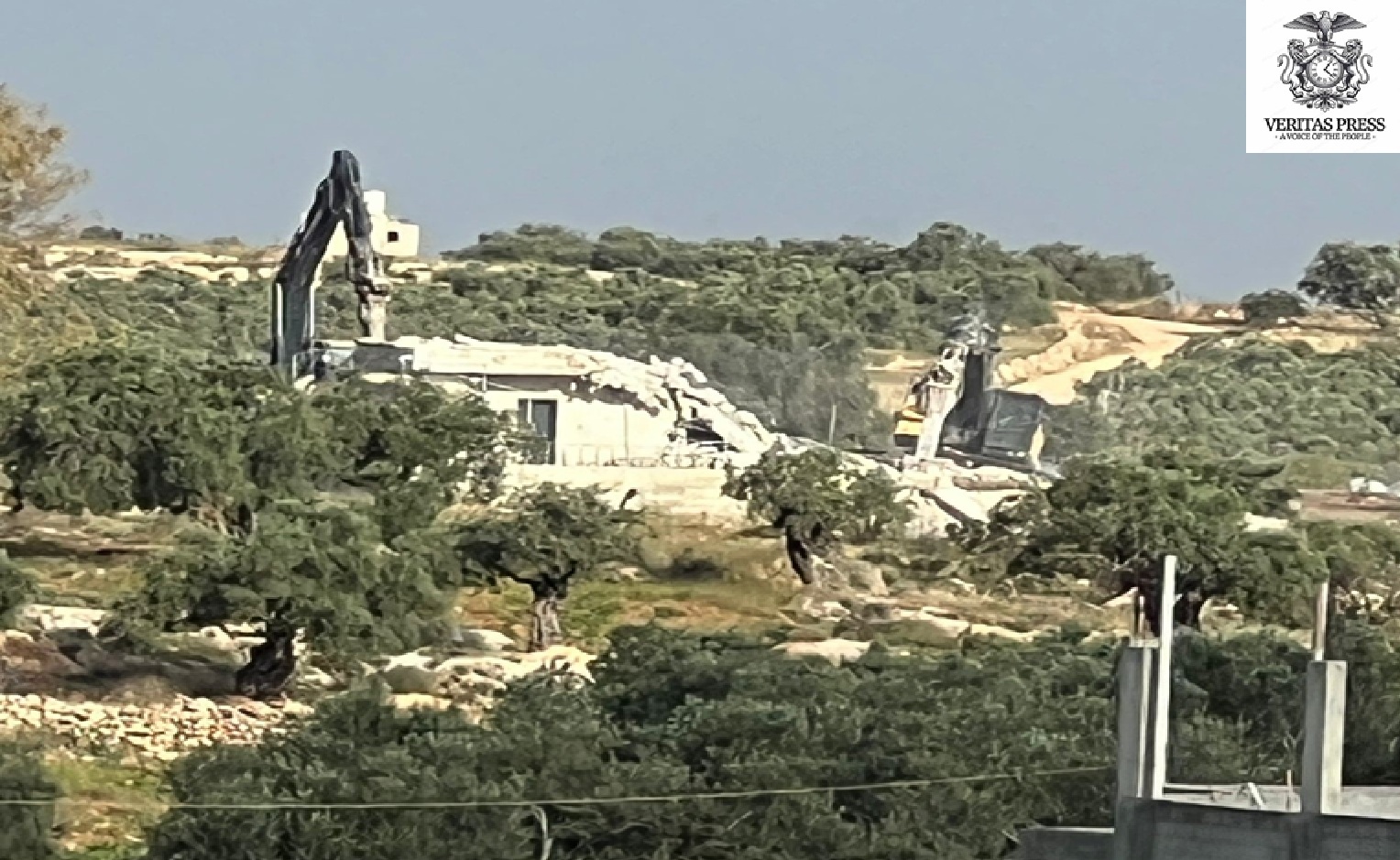
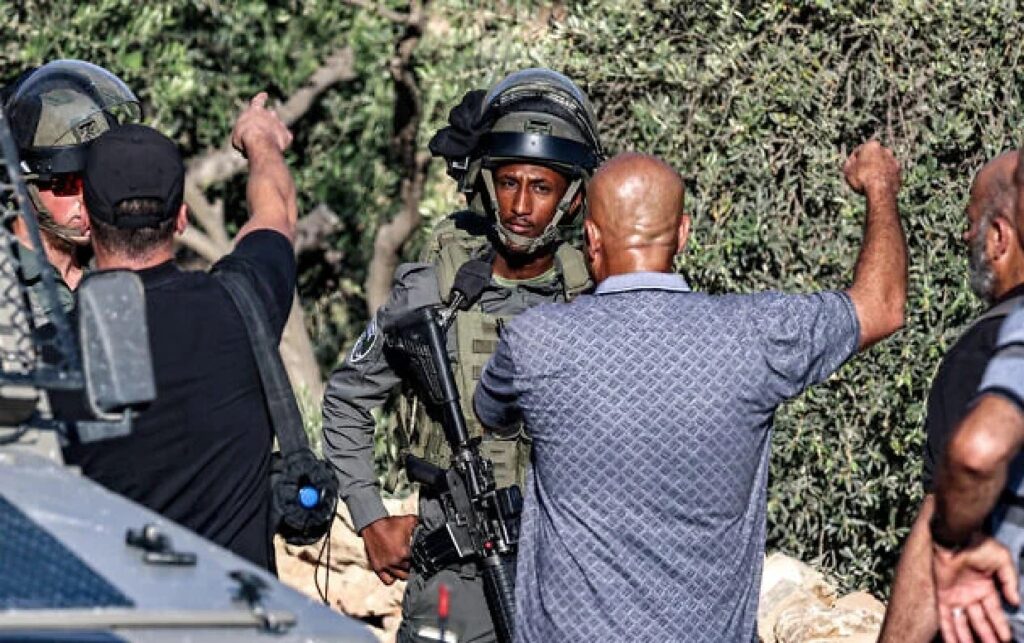
SHUQBA, RAMALLAH – On a spring morning this Wednesday, as the call to prayer faded, the roar of military bulldozers tore through the quiet of Shuqba, a village west of Ramallah. Israeli forces, firing live ammunition at nearby homes, demolished the two-story house of Abdul Halim Thabet, a structure that housed seven family members, along with a swimming pool and a children’s playground. The operation was over in hours. The family was left standing in the rubble, another entry in a ledger of loss that is swelling by the day, and another data point in what a growing chorus of experts is now calling a campaign of forced displacement and, increasingly, ethnic cleansing.
Three days earlier and seventy kilometres south, in the village of Ad-Deerat near Yatta, soldiers uprooted fruit-bearing trees and bulldozed the 300-square-meter home of Radi Al Jabarin and his son Monir, making 15 people homeless in a single morning. “They came without warning, destroyed everything, and left,” said local anti-colonisation activist Osama Makhmara, who documented the attack. “This is not about security. This is about taking land and pushing people out. It is forced displacement, plain and simple.”
Meanwhile, in the Al-Bustan section of Silwan in occupied East Jerusalem, another kind of demolition is underway, a slower, quieter, but no less devastating form of erasure. Here, families are demolishing their own homes with their own hands, using hammers and despair, to avoid the tens of thousands of shekels in fines the Jerusalem Municipality charges if its crews do the work. Human rights lawyers call this “indirect forced displacement, making life so financially and psychologically unbearable that residents become the instrument of their own expulsion. “If we let the municipality demolish our home, we will have to pay tens of thousands of shekels,” Hatem Baydoun, a resident, told *+972 Magazine*. “So we decided to do it ourselves.”
These three episodes, in Ramallah, Hebron, and Jerusalem, are not isolated incidents. They are the latest flashpoints in what Palestinian officials, UN monitors, Israeli human rights groups, and international legal scholars describe as a dramatically escalating campaign of forced displacement that has gathered terrifying momentum since the outbreak of the Gaza war in October 2023, and which increasingly meets the definition of ethnic cleansing. In just the first four months of 2026, according to the Palestinian Authority’s Jerusalem Governorate, Israeli authorities demolished 185 structures in Jerusalem alone. Across the West Bank, the Wall and Settlement Resistance Commission documented 37 demolitions in April, targeting 78 structures, including 37 inhabited homes, 34 agricultural facilities, and five livelihood sources. Another 21 demolition notices were distributed, concentrated in Hebron, Jerusalem, Jenin, and Qalqilya. The message is unambiguous: leave, or we will destroy the roof over your head.
The Legal Framework: From “Coercive Environment” To Ethnic Cleansing.
The term “forced displacement” is not hyperbole; it is a serious violation of international humanitarian law. The Fourth Geneva Convention explicitly prohibits the forcible transfer of protected persons from occupied territory, “regardless of their motive.” The Rome Statute of the International Criminal Court classifies the “deportation or transfer of all or parts of the population of the occupied territory” as a war crime and a crime against humanity when committed as part of a widespread or systematic attack against a civilian population. International tribunals have long established that “ethnic cleansing”, while not a standalone legal term, is a descriptive category for a range of crimes, including forcible transfer, persecution, and extermination, carried out with the intent to render an area ethnically homogeneous.
In a landmark advisory opinion in July 2024, the International Court of Justice found that Israel’s prolonged occupation and annexation of Palestinian territory, including the settlement enterprise, violates the prohibition on the acquisition of territory by force and the Palestinian people’s right to self-determination. The court explicitly called for the evacuation of all settlers and the cessation of all settlement activities. While the opinion did not use the phrase “ethnic cleansing,” it described a system of discrimination, land seizure, and displacement that, in the view of many jurists, meets the threshold.
Since then, the language of ethnic cleansing has gained traction, propelled by the sheer scale of destruction in Gaza and the accelerating crackdown in the West Bank. In March 2026, a confidential UN internal memo, seen by this reporter, warned that “the cumulative impact of house demolitions, settlement expansion, military incursions, and the declared goal of preventing Palestinian demographic presence in strategic areas may amount to ethnic cleansing.” That memo followed a February 2026 report by the Israeli human rights group B’Tselem, which stated bluntly: “Israel is not merely enforcing planning laws; it is carrying out a policy of forced displacement to achieve ethno-religious dominance. The intent is clear: to rid certain areas of their Palestinian inhabitants, and this meets the definition of ethnic cleansing.” B’Tselem’s executive director, Hagai El-Ad, wrote: “When you destroy hundreds of homes, charge victims for the demolition, and offer no alternative, you are not maintaining public order, you are effecting demographic change by force.”
These are not fringe voices. In April 2026, Amnesty International released a briefing titled “Operation Erasure: Forced Displacement and Ethnic Cleansing in the West Bank,” documenting patterns across Area C and East Jerusalem that “point to the systematic removal of Palestinian communities to make way for Israeli settlement expansion and recreational zones.” Agnes Callamard, Secretary General of Amnesty, commented: “The world watches as Israel uses bulldozers, bureaucratic chicanery, and the cover of a war in Gaza to ethnically cleanse parts of the occupied West Bank. This is a crime against humanity, and those ordering and executing these policies must face justice.”
Shuqba: A Playground Reduced To Rubble, And A Family Erased.
In Shuqba, the demolition followed a now-familiar script. Israeli occupation forces, accompanied by military bulldozers, stormed the town and began dismantling the home of Abdul Halim Thabet. Adnan Shalash, head of the village council, told the Palestinian news agency WAFA that soldiers fired live ammunition at residents’ homes during the operation, a show of force that, miraculously, caused no reported injuries this time, but terrorised an entire community. “They had notified Thabet several days before,” Shalash said, “but what could he do? Where would he go? This is forced displacement; they want us gone so settlers can take over.”
Shalash, whose voice was shaking with anger rather than grief, drew a direct line between this single demolition and the broader strategy. “Look at the map. Shuqba is surrounded by settlements. Every year, they take a little more, and then they demolish a home like this to send a message: you have no future here. It is ethnic cleaning, slow but sure. They make life impossible and call it ‘law enforcement.’ The world is silent, so the bulldozers come again and again.”
The two-story house was more than a shelter; it was a life built over years, with a playground for children and a pool to escape the summer heat. Now, it is debris. The seven family members displaced are seeking refuge with relatives, their future as uncertain as the land they once owned. But the pool and the playground also symbolise something else: a deliberate attempt by Palestinians to create a normal, dignified life under occupation, an attempt that Israeli policy seems determined to shatter. As one local teacher told me, “They hate to see a Palestinian swimming pool. It shows we are human, that we are staying. So they crush it.”
South Hebron Hills: A Systematic Unravelling, From Firing Zones To Forcible Transfer.
Less than a week before the Shuqba operation, the village of ad-Deerat in the South Hebron Hills was the scene of a similar assault. Radi Al Jabarin and his son Monir watched as their 300-square-meter home, which housed 15 family members, was flattened. Soldiers then turned their attention to the surrounding land, uprooting fruit trees and bulldozing agricultural plots – destroying not just a present home but a future livelihood.
Osama Makhmara, who has spent years documenting Israeli military and settler activity in the area, links this demolition to a wider offensive and explicitly uses the language of ethnic cleansing. “This is forced displacement,” he said. “When you target all the homes of a community, destroy their fields, cut their water, and label their land a ‘military firing zone,’ the only possible outcome is that people will leave. The goal is to cleanse this area of Palestinians, to empty the South Hebron Hills for settlement expansion. They want the land without the people, that’s ethnic cleansing.”
Makhmara pointed to the creation of Firing Zone 918, a live-fire training area declared by Israel in the 1980s but increasingly enforced since the early 2000s, as a prime example. “They didn’t just wake up one day and decide to demolish homes. This is part of a master plan. First, they declare the area a closed military zone. Then they deny building permits. Then they demolish. Then they evict. Then they issue more demolition orders. Step by step, they break the community until only rubble remains.”
The UN Office for the Coordination of Humanitarian Affairs (OCHA) has documented a steady rise in demolitions across the Hebron district since the start of the year. In its latest assessments, OCHA warns that the destruction of homes and agricultural structures is creating what it calls a “coercive environment”, a bureaucratic euphemism for forced displacement. The Wall and Settlement Resistance Commission echoes this finding, noting that demolitions and settler attacks have increased significantly near expanding colonies and outposts, further hemming in Palestinian families and severing access to grazing areas and farmland. A European Union diplomatic cable from February 2026, leaked to the press, noted that “Israel is applying a strategy of forcible transfer and de facto annexation, risking the crime of ethnic cleansing under international law.” The cable’s blunt language reflects a hardening diplomatic assessment.
Al-Bustan, Silwan: A Biblical Theme Park On The Ruins Of An Ethically Cleansed Community.
Perhaps nowhere is the strategic logic of Israel’s ethnic cleansing campaign more starkly exposed than in Al-Bustan, a neighbourhood in the Silwan area of occupied East Jerusalem. Here, the threat is not a military notice or a closed-military-zone designation; it is a municipal plan to transform a densely populated residential area into a biblical theme park. The plan, which has been in legal limbo for two decades, is now being enforced with breathtaking speed, and its target is an entire community of 1,500 people.
The numbers are staggering. According to local activist Fakhri Abu Diab, more than 50 homes in Al-Bustan, roughly half the community, have been demolished since October 7, 2023. Israeli authorities “became more violent,” he told *+972 Magazine*. “They come in the middle of the night and serve you [a demolition order].” Abu Diab’s own home was demolished by the municipality in February 2024, forcing him into debt that he is still paying off in instalments. He described the process as “ethnic cleansing by other means.” “They want to erase us from our land, to replace our homes with a park for Israeli tourists. If that’s not ethnic cleansing, what is?”
Testimonies from residents add a searing human dimension to the legal jargon. Omar Abu Rajab, a 60-year-old resident who recently received a demolition order for the apartment he shared with his wife, said: “I am still paying penalties from a previous home they demolished years ago. I am sick, and I work four hours a day, but I can’t keep up with all these costs. There’s nothing else I can do. It’s cheaper to do it ourselves.” His grandchildren skipped school to help tear down the walls with their own hammers, a searing image of a community being made to erase itself. He and his wife now cram into a small apartment with his brother’s family. “It’s not just about losing a building; it’s about losing our history, our neighbourhood, our place in the city. They want a Jerusalem without us.”
Two doors down, Mohammad Qwaider, 60, faces the same impossible choice. He lives in a six-unit family building with his bedridden 97-year-old mother, Yusra. After being forced to demolish a third-floor apartment that housed one of his sons, the municipality has now ordered him to demolish the entire structure, citing a lack of permits, permits that were never attainable. “They can demolish it, and I will clear the rubble and put a tent there to live in. The land is more important than the structure on it.” His wife, Manal, put it simply: “We don’t sleep at night. We have no alternative to this house or this land. We have nothing else but this place.”
Self-demolition, Abu Diab argues, inflicts “double the suffering” on Palestinians and is a characteristic tool of forced displacement. “It is a sort of psychological war against the families. We become the tool by which the municipality executes its plans. They don’t want the world to see them destroying our homes, so they make us do it ourselves. It is a way to erase us without leaving their fingerprints. That’s forced displacement at its most cynical.” Yet he acknowledges the raw fear that drives families to take hammers to their own walls. “People are trying to minimise the harm, but they are participating in their own ethnic cleansing. The system leaves no choice.”
The Jerusalem Municipality, in a statement to *+972*, said the planned biblical theme park “is being constructed for the benefit of all city residents” and that Al-Bustan’s houses were built illegally. “This area was never zoned for residential use, and the Jerusalem Municipality is now working to build a park in an area that suffers from a severe shortage of open public spaces.” The municipality claims it tried “for years to find a solution for the residents that would also include a residential alternative, but they did not express any serious interest in reaching a resolution.”
This defence collapses under scrutiny. As multiple human rights organisations have documented for decades, Israel makes it virtually impossible for Palestinians in East Jerusalem to obtain building permits. The zoning plans overwhelmingly allocate land for Jewish neighbourhoods and public spaces, while Palestinian areas are left with limited, often non-existent, approved residential zones. “There are no permits,” Abu Rajab said, distilling a byzantine system of structural discrimination into three words. Aviv Tatarsky, a researcher with the Israeli non-profit Ir Amim, explained: “It is impossible for residents to get permits. So Israel can call all the homes in this whole part of Silwan illegal.” He continued: “The authorities have a strong political motive. It is not about building laws; this is a matter of policy, [aiming] to change Silwan from a Palestinian neighbourhood into a Jewish settlement. When you have a policy that makes it impossible for a group to live in an area legally, and then you systematically demolish their homes to make way for a park or settlement, that’s forced displacement. And when it’s done with the intent to change the ethnic character of an area, it meets the definition of ethnic cleansing.”
A Coordinated Policy Of Demographic Re-Engineering:
What connects the rubble in Shuqba, ad-Deerat, and Al-Bustan is not merely the violence of bulldozers but the political architecture that deploys them. In the West Bank, Israeli military orders designate large swaths of land as firing zones, closed military areas, or state land, while settlers backed by the state seize hilltops and expand outposts. Demolitions targeting homes and agricultural structures serve to sever Palestinians from their economic foundations and atomise communities, making organised resistance and normal life impossible. In East Jerusalem, the tool is municipal planning, but the objective is the same: to alter the demographic and geographic reality, consolidating Israeli control over the entire “Old City Basin” and its surroundings.
Tatarsky frames the Al-Bustan campaign within this larger project. “They are using all kinds of methods,” he said, listing not only home demolitions but also the expansion of tourist attractions and national parks, much of it on church-owned land such as the Mount of Olives. “The biblical theme park is not a benign public amenity but an instrument of dispossession, transforming a living Palestinian community into a curated landscape for visitors, a Judaisation of space that depends on the physical removal of Palestinians. That’s a textbook case of ethnic cleansing: the forced removal of an ethnic group to change the character of a territory.”
The escalation since October 7, 2023, is unmistakable. “After October 7, the international community either doesn’t care or it is focusing on Gaza,” said Tatarsky. “The bottom line is that the international community is not stopping the Israeli government, so they are emboldened to accelerate forced displacement.” Abu Diab observed that Israeli authorities “became more violent” after that date, seizing the political cover of war to advance long-standing plans under the radar. In the first four months of 2026, figures from the PA Jerusalem Governorate show that out of 40 homes demolished in Jerusalem in April alone, 17 were self-demolished by their inhabitants, a grim metric of how the psychological war of forced displacement is being won.
The Wall and Settlement Resistance Commission has compiled a growing database that supports the ethnic cleansing thesis. In its April report, the commission noted that 91% of demolition operations in the past six months occurred in areas already designated for settlement expansion or within the path of the Separation Barrier. “The correlation is too strong to be coincidental,” said Suhail Khalilieh, a senior researcher at the commission, in a recent interview. “We are seeing the systematic removal of Palestinian families to create territorial contiguity for settlements and to sever Palestinian communities from their land. This is part of a deliberate demographic engineering policy. The term ethnic cleansing is accurate: it’s about removing one ethnic group to replace it with another.”
A 2025 study by the Hebrew University’s Minerva Centre for Human Rights, authored by legal scholar Dr. Yael Berda, concluded that Israel’s permit denial rate for Palestinians in Area C and East Jerusalem exceeds 98% for residential construction, while settlement building is fast-tracked. “The differential treatment based on ethnicity, combined with systematic demolition and the absence of accessible legal remedies, constitutes a policy of forced displacement that violates the prohibition on population transfer,” the study states. While stopping short of the term “ethnic cleansing” in its executive summary, an accompanying commentary by Berda noted that “the policy displays the hallmarks of what international tribunals have previously recognized as ethnic cleansing, insofar as it aims to alter the ethnic composition of a territory through means that include indirect coercion, destruction of civilian property, and the creation of intolerable living conditions.”
Israeli officials reject the characterisation fiercely. A government spokesperson, responding to the B’Tselem report, said: “Israel enforces building and planning laws equally across all communities and demolishes illegal structures regardless of the ethnicity of the owner. The use of the term ‘ethnic cleansing’ is a blood libel and a cynical abuse of the Holocaust’s memory. These demolitions are administrative, not political.” The Israeli military has similarly insisted that demolitions in Area C are “enforcement actions against illegal construction in violation of standing law,” and that military necessity sometimes requires the clearance of land for security purposes. Yet these statements consistently fail to explain why the planning regime is structured to make legal Palestinian construction virtually impossible or why the overwhelming majority of enforcement targets Palestinians, while illegal settler outposts are often retroactively legalised.
“We Will Not Leave”: The Fight To Remain.
In Al-Bustan, the landscape is now a patchwork of rubble and ghostly remnants. In one destroyed apartment, a refrigerator still stands on the collapsed floor, a surreal monument to interrupted domesticity. Underneath it, someone has scrawled a message on the wall: “We are staying here. We will not leave.”
This stubbornness, this refusal to be erased, echoes across the West Bank. In Ad-Deerat, residents speak not of moving away but of rebuilding on the same soil, even as Israeli military zones creep closer. In Shuqba, Abdul Halim Thabet’s neighbours talk of bringing tents if necessary. Mohammad Qwaider in Al-Bustan is ready to clear the rubble and erect a tent above his bedridden mother rather than surrender his land. These acts of sumud, steadfastness, are the front line of a quiet resistance against forced displacement. But they are increasingly fragile.
“International law is on our side, but international law doesn’t stop a bulldozer at dawn,” said Makhmara. “We need more than words. We need action, sanctions, accountability, and pressure. Without it, the ethnic cleansing will continue, house by house, village by village.”
The demolitions documented in April, 37 in total across the West Bank, are not an anomaly but a trajectory. The distribution of 21 new demolition notices, heavily concentrated in Hebron and Jerusalem, signals that the machinery of displacement is well-oiled and relentless. OCHA’s description of a “coercive environment” is clinical but accurate: a calculated mix of legal harassment, financial punishment, military violence, and bureaucratic obstruction designed to make life so unlivable that departure feels like the only option. It is, as the B’Tselem report put it, “bureaucratic ethnic cleansing, orderly, legalistic, incremental, and all the more insidious for it.”
The strategic silence of the international community, as Tatarsky points out, acts as an enabler. When the world looks away, when diplomatic pressure dissipates in the shadow of the Gaza war, the bulldozers move faster. The families of Al-Bustan, who once relied on international attention to hold back the demolitions, now find themselves alone, their homes reduced to self-inflicted ruins to avoid bankruptcy. In the South Hebron Hills, European-funded structures are demolished with impunity, and donor governments lodge protests that Israeli authorities file away. The gap between diplomatic statements and effective action has never been wider.
For now, the writing remains on the wall. In Arabic, it says: Baqeen huna. Lan narhal. We are staying here. We will not leave. The question is whether those words will outlast the walls themselves, and whether the international community will recognise, before it is too late, that what is happening here is not a planning dispute but a slow-motion crime in plain sight.
Source: Multiple News Agencies
Submissions:
For The Secure Submission Of Documentation, Testimonies, Or Exclusive Investigative Reports From Any Global Location, Please Utilise The Following Contact Details For Our Investigations Desk: enquiries@veritaspress.co.uk or editor@veritaspress.co.uk
Help Support Our Work:
Popular Information is powered by readers who believe that truth still matters. When just a few more people step up to support this work, it means more lies exposed, more corruption uncovered, and more accountability where it’s long overdue.
Help Protect Independent Journalism, Which Is Currently Under Attack.
If you believe journalism should serve the public, not the powerful, and you’re in a position to help, becoming a DONATOR or a PAID SUBSCRIBER truly makes a difference.
DONATION APPEAL: If You Found This Reporting Valuable, Please Consider Supporting Independent Journalism.
Help Support Our Work – We Know, We Know, We Know …
Seeing these messages is annoying. We know that. (Imagine what it’s like writing them … )
Your support fuels our fearless, truth-driven journalism. In unity, we endeavour to amplify marginalised voices and champion justice, irrespective of geographical location.
But it’s also extremely important. One of Veritas Press’s greatest assets is its reader-funded model.
1. Reader funding means we can cover what we like. We’re not beholden to the political whims of a billionaire owner. We are a small, independent and impartial organisation. No one can tell us what not to say or what not to report.
2. Reader funding means we don’t have to chase clicks and traffic. We’re not desperately seeking your attention for its own sake: we pursue the stories that our editorial team deems important and believe are worthy of your time.
3. Reader Funding: enables us to keep our website and other social media channels open, allowing as many people as possible to access quality journalism from around the world, particularly those in places where the free press is under threat.
We know not everyone can afford to pay for news, but if you’ve been meaning to support us, now’s the time.
Your donation goes a long way. It helps us:
- Keep the lights on and sustain our day-to-day operations
- Hire new, talented independent reporters
- Launch real-time live debates, community-focused shows, and on-the-ground reporting
- Cover the issues that matter most to our communities, in real time, with depth and integrity
We have plans to expand our work, but we can’t do it without your support. Every contribution, no matter the size, helps us stay independent and build a truly people-powered media platform.
If you believe in journalism that informs, empowers, and reflects the communities we serve, please donate today.
GENEVA — A United Nations fact-finding mission has concluded there are “reasonable grounds to believe”
Iran’s GDP is projected to contract by 5.4 to 6.1% in 2026, its worst performance
The Trump administration is preparing a $2.8 billion weapons package for Israel containing 40,000 2,000-pound

Film alleges mass civilian deaths are routinely built into military decisions amid Israel’s genocidal war
The Israeli rights group says violence, displacement, economic strangulation, and settlement expansion form part of

Houthi forces have captured the historic Red Sea port of Mocha and are advancing on
London’s historic sanctions against Israeli settlements mark a watershed moment in UK foreign policy, but
With 95% of Gaza’s population now wholly dependent on aid and more than 90% stripped
India calls for Kashmir and Ladakh to appear only on its official map after a
ISLAMABAD – In the high-stakes political theatre of Pakistan, the battleground has shifted from the