Kamran Faqir is a volunteer investigative journalist and writer committed to exposing hidden truths and amplifying underreported stories. Driven by social justice, he brings sharp insight and fearless truth-telling to independent journalism. NUJ registered.
Original Article Date Published:
Article Date Modified:
14 minutes
Views:403
Listen to this article
Help support our mission, donate today and be the change. Every contribution goes directly toward driving real impact for the cause we believe in.
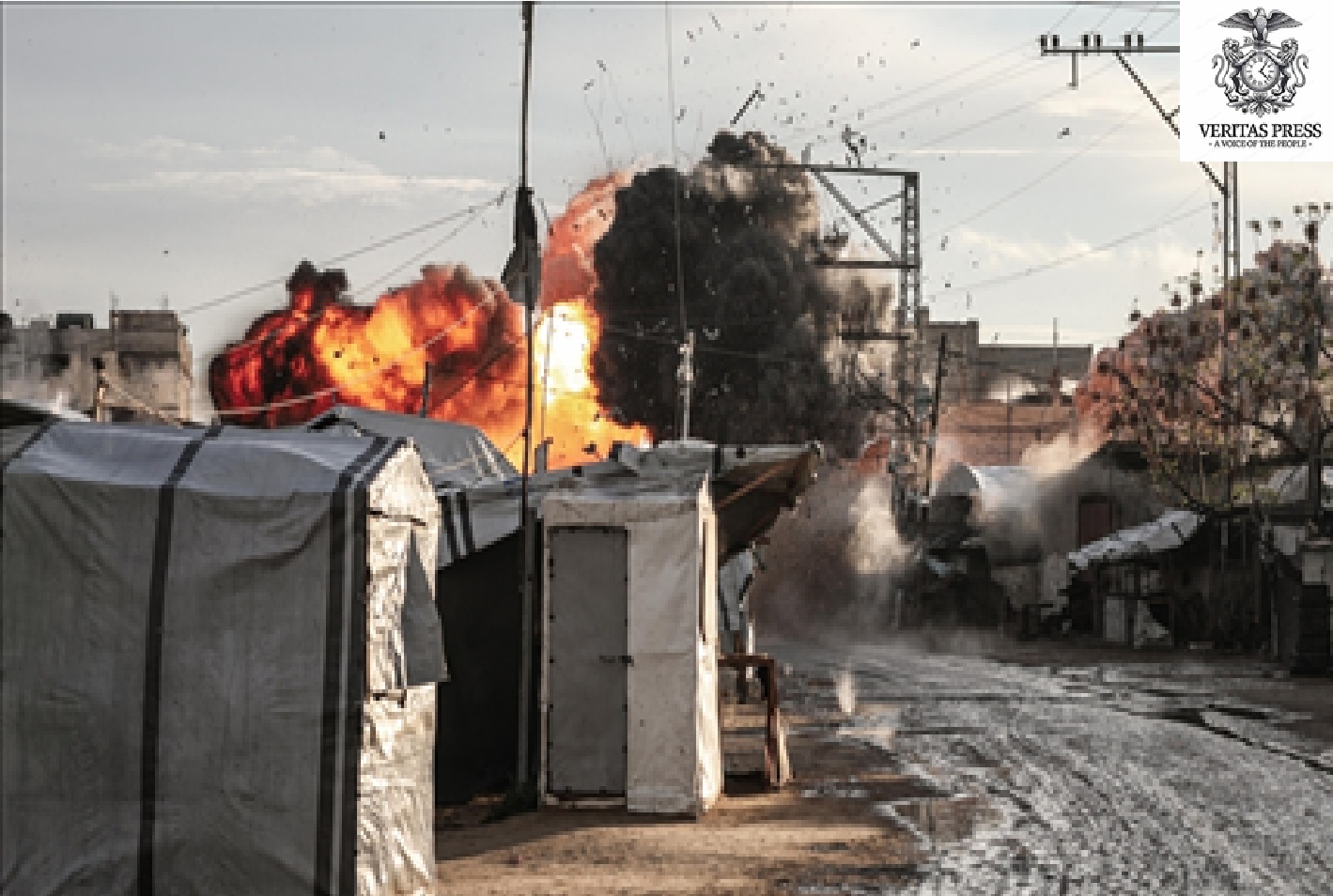
GAZA STRIP — In a pattern that has become both commonplace and invisible to much of the world, Israeli forces killed at least six Palestinians across the Gaza Strip over the past 24 hours, including a paramedic and a nine-year-old boy, as the so-called “ceasefire” in effect since October 2025 continues to be violated with near-daily attacks that have now claimed over 823 lives, according to health authorities.
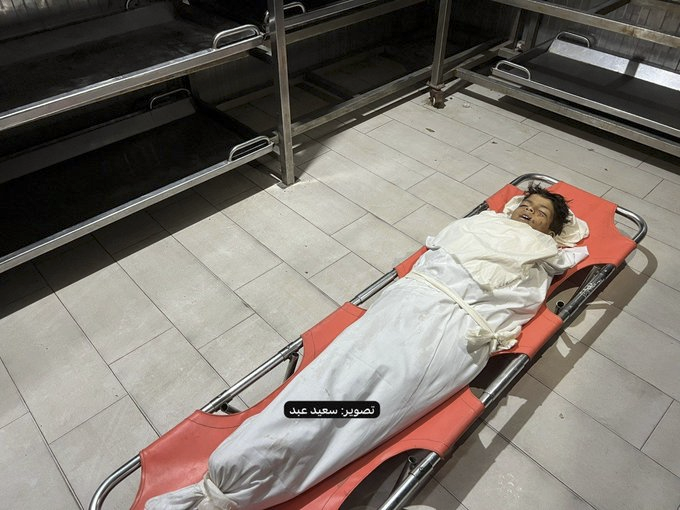
The Palestinian Health Ministry confirmed Wednesday that five Palestinians were killed and seven others injured in Israeli attacks over the preceding 24 hours. Among the dead were paramedic Ibrahim Saqr, targeted by an airstrike near Al-Tuwam Square northwest of Gaza City in the early hours of Wednesday morning, and nine-year-old Adel Al-Najjar, killed Tuesday by an Israeli drone strike east of Khan Younis as he collected cardboard for his family’s cooking fire — a grim metric of how the blockade has reduced childhood to a struggle for basic survival.
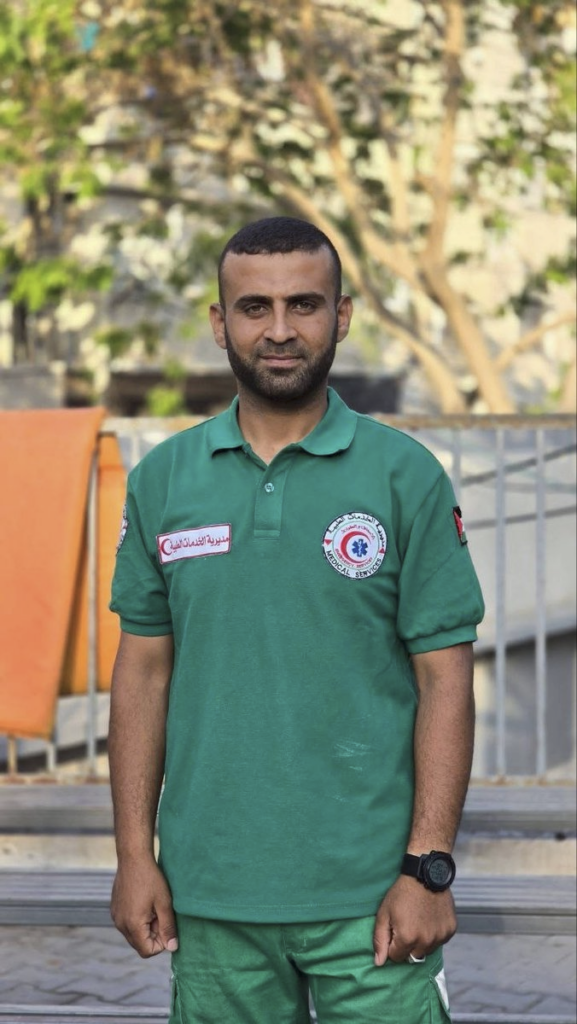
Paramedic Ibrahim Saqr was killed after an Israeli airstrike targeted him near the Al-Tuwam Square in northern Gaza Strip.
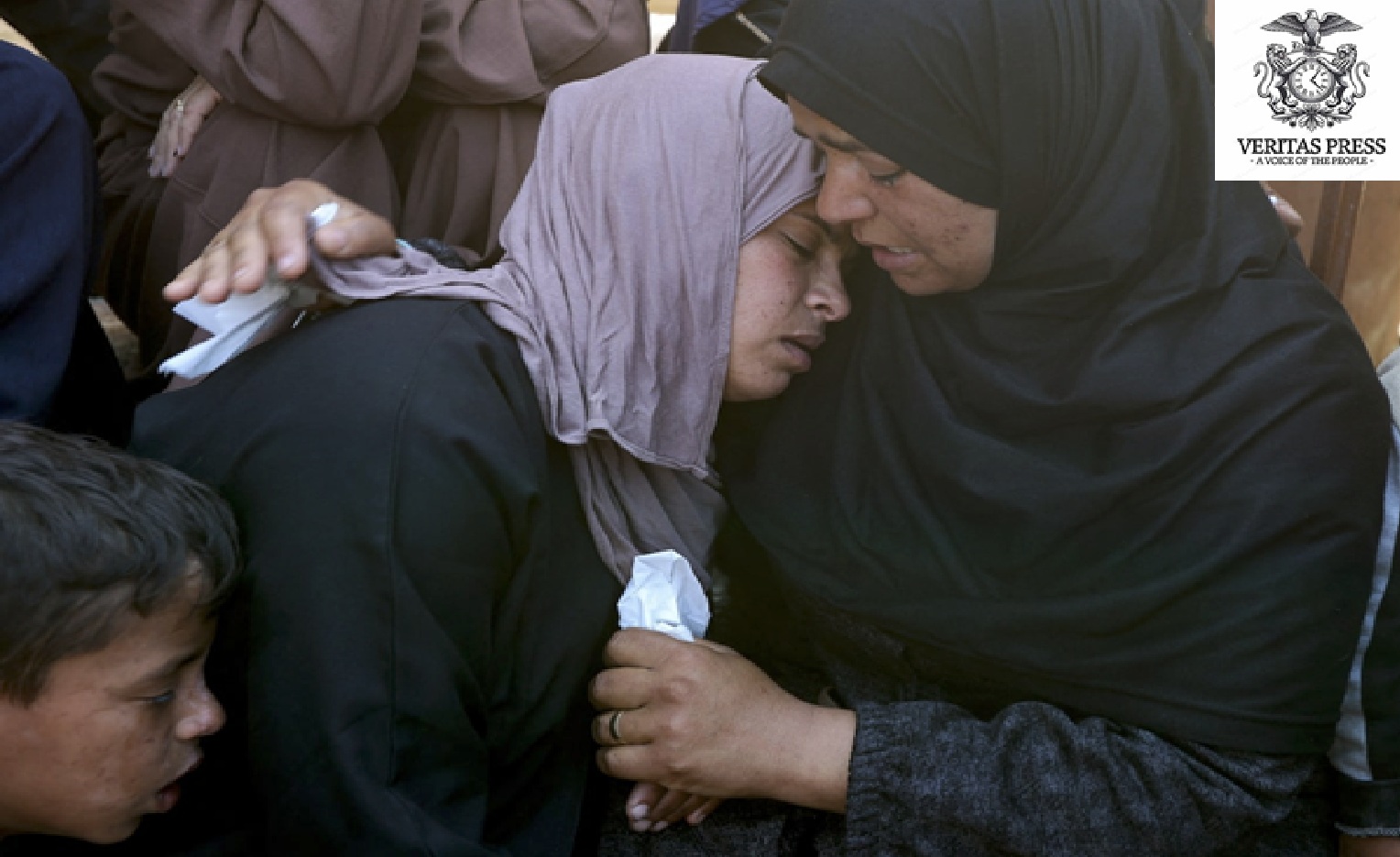
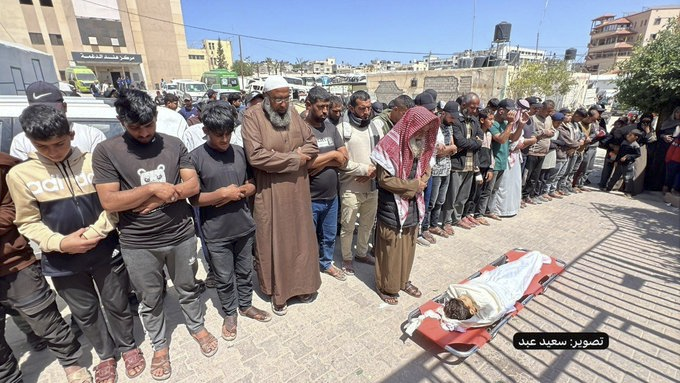
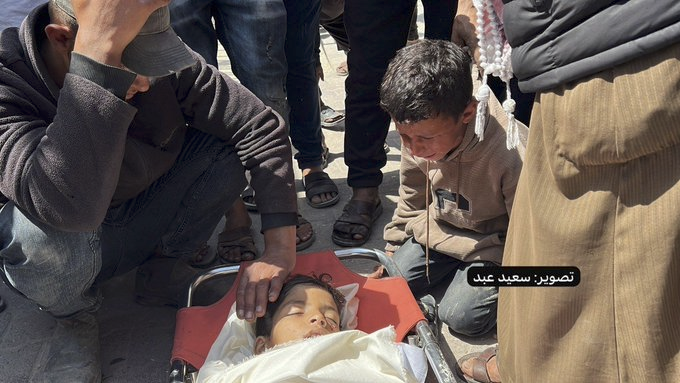
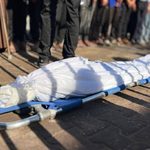
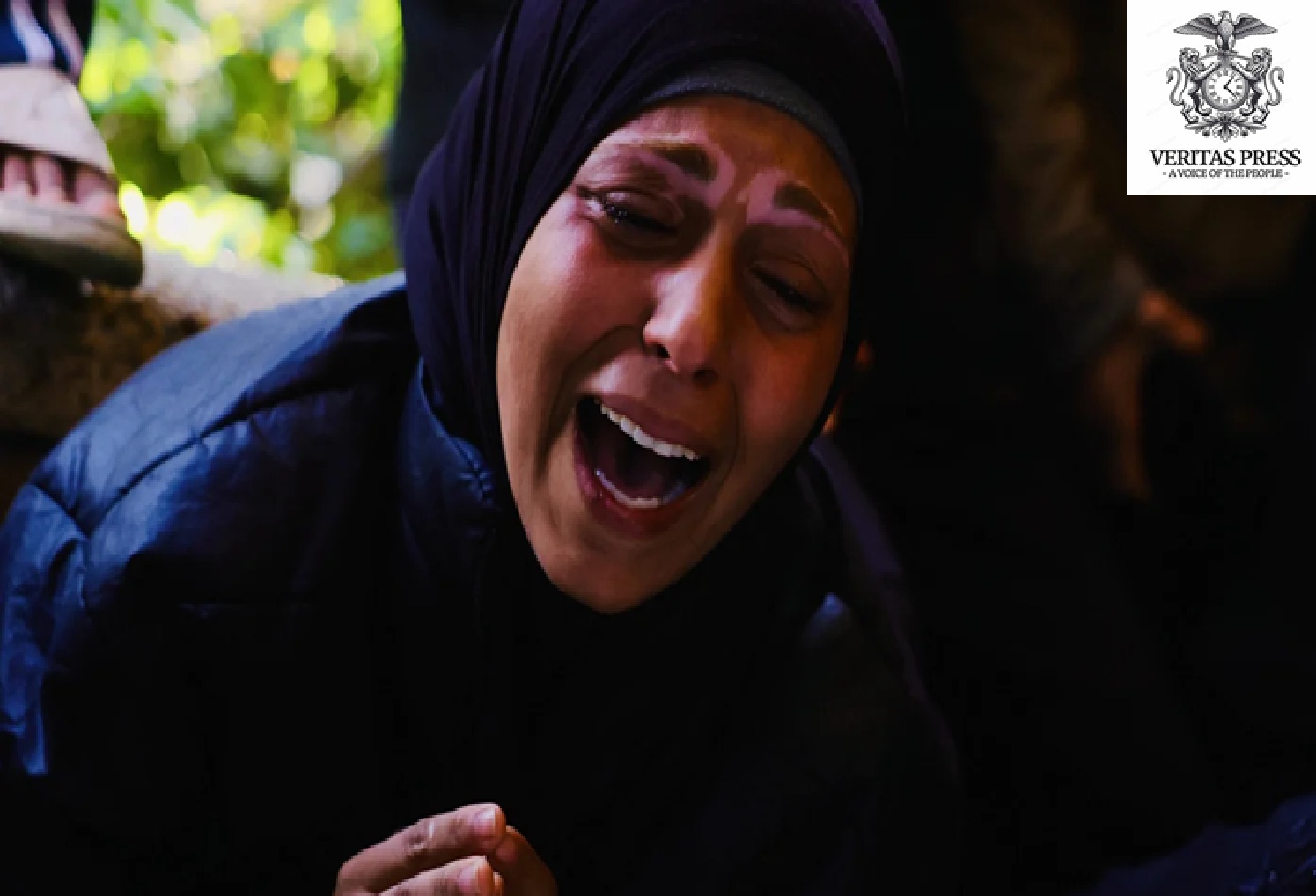
“We don’t have gas. We collect cardboard to bake, they want to eat; they want to drink,” said Sabreen Al-Najjar, a relative of the slain boy, her words capturing the cruel intersection of military violence and humanitarian siege that defines life in Gaza today. At Nasser Hospital’s morgue, relatives gathered to bid farewell to the small, white-shrouded body of Adel. Women wept beside his body, lying on a medical stretcher on the floor, and men held a special prayer before carrying him to the cemetery for burial.
The killings are not isolated incidents but part of what United Nations High Commissioner for Human Rights Volker Türk has condemned as “an unrelenting pattern of killings” that “reflects continuing disregard for Palestinian lives enabled by sweeping impunity”. Speaking on April 10, Türk noted that Israeli forces had killed at least 32 Palestinians since the beginning of April alone, bringing the total number of Palestinians killed since the ceasefire came into effect on October 10, 2025, to 738 at that time. A mere 19 days later, that figure has climbed past 823, underscoring both the daily brutality and the international community’s failure to halt it.
“For the past 10 days, Palestinians are still being killed and injured in what is left of their homes, shelters and tents of displaced families, on the streets, in vehicles, at a medical facility and a classroom,” Türk said, cataloguing the locations where Palestinians have been killed as if to emphasise that no place in Gaza is safe.
The paramedic killed on Wednesday, Ibrahim Saqr, was the latest in a long line of medical personnel targeted during this conflict. Medical sources confirmed he was killed in an Israeli airstrike near the Al-Tuwam junction, northwest of Gaza City. His death follows mounting evidence of systematic attacks on healthcare workers. According to the UN Human Rights Office, 589 aid workers have been killed in Gaza since October 7, 2023, including 397 UN staff and team members.
In perhaps the most shocking recent incident, an Israeli investigation into the killings of 15 Palestinian medics, eight Red Crescent personnel, six Civil Defence workers, and one UN staffer in Rafah on March 23 blamed a chain of “professional failures,” leading to the sacking of a deputy commander. However, a video that later emerged appeared to contradict the military’s account, forcing Israel to partially walk back its narrative. The footage, according to reports, exposed what appeared to be the intentional execution of rescue workers by Israeli units. As the Al Mezan Centre for Human Rights noted in a statement earlier this month, “The targeting of medical personnel is not an aberration but a feature of Israel’s military doctrine in Gaza, one designed to make the Strip uninhabitable by destroying the very infrastructure of life.”
Adding to the toll on first responders, the World Health Organization reported on April 7 that a marked WHO vehicle was hit on Gaza’s main north-south route, the Salah al-Din road, killing staff member Magdi Aslan, 54. The attack on clearly marked humanitarian vehicles raised urgent questions about the safety of aid workers operating in Gaza.
The killing of nine-year-old Adel Al-Najjar, meanwhile, is emblematic of a war that has been defined by its disproportionate impact on children. Save the Children International reported in September 2025 that more than 20,000 children had been killed by Israeli forces in two years of what the organisation has joined others in labelling a genocidal war. Seven months later, that figure has only grown.
Mourners perform funeral prayer for 9-year-old child, Adel Lafi Al-Najjar, who was killed this morning in an Israeli airstrike east of Khan Younis in the southern Gaza Strip.
“At least two children a day have been killed or injured in the six months since the ceasefire for Gaza was agreed,” said Inger Ashing, CEO of Save the Children International, in a damning assessment released on April 9. “This is not peace for children in Gaza. The ceasefire agreement has not translated into meaningful protection for children or created conditions for recovery.”
A humanitarian scorecard released by five leading organisations, including the Danish Refugee Council, Norwegian Refugee Council, Oxfam, Refugees International, and Save the Children, rated the ceasefire’s performance across four areas and found it failing in three. Perhaps most damningly, the groups found that “ceasefire and civilian protection”, the category in which the agreement had been closest to success, was still rated only two points out of four, in a “fragile” state. “Sustained bombardment” may have halted, but targeted killings, drone strikes, and demolitions have continued unabated.
“There is no accountability for those who kill Palestinian children,” a Save the Children spokesperson told Common Dreams earlier this month. “Every statistic is a life. Every life is a universe of possibility extinguished.”
The context for Adel Al-Najjar’s death is critical to understanding its deeper tragedy. The boy was collecting cardboard that his family uses for cooking because Israel has cut electricity to Gaza since the war began in October 2023, a decision made on the night of October 7, 2023, to halt direct supply of electricity as well as fuel needed to operate the enclave’s only power station. To this day, Israel continues to block the supply of electricity, other than a single line to one water desalination facility, and prohibits the entry of fuel for the power station. Palestinians and humanitarian organisations have also reported severe restrictions on the entry of cooking gas and fuel.
“We don’t have gas. We collect cardboard to bake, they want to eat; they want to drink,” Sabreen Al-Najjar repeated, her words a testament to the grinding deprivation that has become normalised in Gaza.
The cooking gas crisis has worsened unprecedentedly, according to government sources, with each family receiving only 8 kilograms every two months, a quantity vastly insufficient for basic needs. Cooking gas now costs 80 shekels (25.92) for an 8kg cylinder, meaning that a family may spend over 200 per month just to secure cooking gas. The result is that children like Adel are sent out to scavenge for combustible materials in areas that Israel has deemed, with shifting and poorly marked boundaries, to be lethal zones.
The water situation is equally dire. “I stand for long hours in line and cannot fill water on my own, so I rely on others to secure my daily needs,” Shaima Abu Jamos, 28, a visually impaired woman in Khan Younis, told Anadolu Agency this week. Twelve-year-old Abdullah Safi, forced to leave school to search for water, said: “We no longer go to school. We spend our days filling water. We come from far away and wait for long hours, and sometimes we don’t get enough.”
Alaa al-Din al-Batta, deputy head of the Union of Gaza Municipalities and mayor of Khan Younis, warned that the sector faces a “real water disaster” due to the destruction of about 95% of water sources. “Maintenance efforts, despite continuing for more than two years, have succeeded in rehabilitating only about 30% of the infrastructure due to the ban on importing pipes and essential equipment and the continued blockade,” Al-Batta told Anadolu. “No water pipes, spare parts or generators have entered the Gaza Strip for a long time, leading to an unprecedented deterioration in municipalities’ ability to operate wells and desalination plants.”
Israel has not implemented its obligations under the ceasefire agreement in place since October 10, 2025, including provisions to allow the entry of machinery, equipment, and tools needed by municipalities and civil defence, worsening the situation for the population.
The ceasefire agreement, brokered by the Trump administration and signed in a ceremony in Egypt on October 13, 2025, was hailed as a potential end to over two years of devastating war. The 20-point plan envisioned an end to hostilities, the lifting of the blockade on all aid, the release of captives and prisoners, and the phased withdrawal of Israeli forces to a “yellow line” demarcation. However, from its earliest days, the agreement has been violated by Israel with near-daily attacks.
According to an analysis by Al Jazeera in November 2025, just one month into the ceasefire, Israel had already violated the agreement at least 393 times through attacks by air, artillery, and direct shootings. The Government Media Office in Gaza documented that Israel shot at civilians 113 times, raided residential areas beyond the yellow line 17 times, bombed and shelled Gaza 174 times, and demolished people’s properties on 85 occasions in that first month alone.
Since then, the violations have multiplied. Israel has committed over 2,400 violations, according to Gaza’s government media office. The pace has not slowed; from April 8 to April 24 alone, the Israeli army killed 249 Palestinians and wounded 212 others. On April 26, a new wave of Israeli strikes killed four Palestinians, and on April 27, a Palestinian was killed and another injured by Israeli army fire. Satellite imagery and on-the-ground reporting confirm that Israeli forces have continued demolishing homes and residential buildings in areas under their control east of the Zeitoun neighbourhood, southeast of Gaza City, amid ongoing artillery shelling and gunfire.
The total death toll since October 7, 2023, currently stands at 72,585 martyrs and 172,370 wounded, according to the Palestinian Ministry of Health’s daily statistical report. An additional 761 bodies have been recovered from under the rubble, with many more remaining trapped and unreachable by rescue and civil defence teams. The Ministry of Health has repeatedly emphasised that a large number of victims remain under destroyed buildings and in streets that emergency teams cannot access due to the blockade on equipment and ongoing military operations.
Field reports from journalists working inside Gaza, despite Israel’s blanket ban on independent international media access, have documented attacks on civilian gatherings that appear to pose no apparent threat. On April 25, a video circulating on social media captured the moment an Israeli strike targeted a gathering in Gaza City, killing two police officers who were sitting and posed no apparent threat. The targeting of police officers, who are considered civilians under international humanitarian law when not actively participating in hostilities, underscores the expansive definition of “militant” that Israel appears to apply.
Israeli military sources, meanwhile, have offered varying justifications for strikes that kill civilians. Regarding the strike in Khan Younis that killed Adel Al-Najjar, the Israeli military claimed it “targeted a person it said had posed a threat to Israeli troops by approaching the yellow line”. The yellow line, a demarcation route that bisects the Strip and leaves the population living in less than 50% of Gaza’s territory, has become a de facto death zone where any approach, even unknowingly, poses an immediate threat to residents’ lives. As UN rights chief Türk noted, Israeli forces have killed more than 700 Palestinians due to their proximity to this “poorly marked and shifting yellow line,” injuring more than 2,000 others over the past six months.
The international response to these ongoing violations has been characterised by what critics describe as ritualistic condemnation without consequence. The Organisation of Islamic Cooperation (OIC) has called on the UN Security Council to move beyond the ceasefire towards a full end to Israeli occupation, noting that “Israeli violations had intensified” with “greater intensity and brutality” alongside the recent decision by Israel to approve new colonial settlements throughout Palestinian territory. Yet the Security Council has failed to take any meaningful action, with the United States wielding its veto power to shield Israel from accountability.
As the world’s attention has shifted to other crises, including the war between the United States and Iran that erupted in February 2026, Gaza has receded from headlines even as the killing continues. “Six months later, UN Human Rights Chief Volker Türk said that the ‘unrelenting pattern of killings reflects continuing disregard for Palestinian lives…'”. Noted one humanitarian aid worker who requested anonymity because they are not authorised to speak to the media: “The world seems to have absorbed a certain level of Palestinian death as acceptable background noise. The ceasefire was supposed to change that. It hasn’t.”
On Wednesday morning, as paramedic Ibrahim Saqr’s body was transported to Al-Shifa Hospital in Gaza City, another woman was injured by Israeli gunfire in Beit Lahia. Meanwhile, the Israeli army demolished homes and residential buildings east of the Zeitoun neighbourhood amid artillery shelling and gunfire, while Israeli artillery shelled areas east of Deir al-Balah in central Gaza, and Israeli naval forces targeted the coast of Khan Younis with shells and gunfire. The attacks continued throughout the day, across multiple fronts, a reminder that for those trapped in the Strip, there is no safe zone, no sanctuary, no ceasefire.
“Isn’t it shameful what is happening to us? Isn’t it shameful that we bury our children every day, right in front of us?” asked Suhaib Al-Najjar, another relative of nine-year-old Adel, at the Nasser Hospital morgue. “I swear to God, our hearts are breaking for these children.”
His question, directed at a world that has largely moved on, hangs in the air, unanswered.
Source: Multiple News Agencies
Submissions:
For The Secure Submission Of Documentation, Testimonies, Or Exclusive Investigative Reports From Any Global Location, Please Utilise The Following Contact Details For Our Investigations Desk: enquiries@veritaspress.co.uk or editor@veritaspress.co.uk
Help Support Our Work:
Popular Information is powered by readers who believe that truth still matters. When just a few more people step up to support this work, it means more lies exposed, more corruption uncovered, and more accountability where it’s long overdue.
Help Protect Independent Journalism, Which Is Currently Under Attack.
If you believe journalism should serve the public, not the powerful, and you’re in a position to help, becoming a DONATOR or a PAID SUBSCRIBER truly makes a difference.
DONATION APPEAL: If You Found This Reporting Valuable, Please Consider Supporting Independent Journalism.
Help Support Our Work – We Know, We Know, We Know …
Seeing these messages is annoying. We know that. (Imagine what it’s like writing them … )
Your support fuels our fearless, truth-driven journalism. In unity, we endeavour to amplify marginalised voices and champion justice, irrespective of geographical location.
But it’s also extremely important. One of Veritas Press’s greatest assets is its reader-funded model.
1. Reader funding means we can cover what we like. We’re not beholden to the political whims of a billionaire owner. We are a small, independent and impartial organisation. No one can tell us what not to say or what not to report.
2. Reader funding means we don’t have to chase clicks and traffic. We’re not desperately seeking your attention for its own sake: we pursue the stories that our editorial team deems important and believe are worthy of your time.
3. Reader Funding: enables us to keep our website and other social media channels open, allowing as many people as possible to access quality journalism from around the world, particularly those in places where the free press is under threat.
We know not everyone can afford to pay for news, but if you’ve been meaning to support us, now’s the time.
Your donation goes a long way. It helps us:
Keep the lights on and sustain our day-to-day operations
Hire new, talented independent reporters
Launch real-time live debates, community-focused shows, and on-the-ground reporting
Cover the issues that matter most to our communities, in real time, with depth and integrity
We have plans to expand our work, but we can’t do it without your support. Every contribution, no matter the size, helps us stay independent and build a truly people-powered media platform.
If you believe in journalism that informs, empowers, and reflects the communities we serve, please donate today.
Kamran Faqir is a volunteer investigative journalist and writer committed to exposing hidden truths and amplifying underreported stories. Driven by social justice, he brings sharp insight and fearless truth-telling to independent journalism. NUJ registered.
SEATTLE, TEHRAN — The U.S. Department of Homeland Security (DHS) will allow Iran’s national football team to enter the country 48 hours before their critical World Cup match against Egypt on Friday, a modest concession in a tournament where Team Melli’s travel conditions have sparked claims of oppression and competitive disadvantage.