CHINA: A Financial Stranglehold On Shandong’s Shore: How America’s Sanctions War On Chinese “Teapots” Is Straining Global Trade And The Rules-Based Order.
CHINA: A Financial Stranglehold On Shandong’s Shore: How America’s Sanctions War On Chinese “Teapots” Is Straining Global Trade And The Rules-Based Order.
Kamran Faqir is a volunteer investigative journalist and writer committed to exposing hidden truths and amplifying underreported stories. Driven by social justice, he brings sharp insight and fearless truth-telling to independent journalism. NUJ registered.
Original Article Date Published:
Article Date Modified:
11 minutes
Views:366
Listen to this article
Help support our mission, donate today and be the change. Every contribution goes directly toward driving real impact for the cause we believe in.
DALIAN/BEIJING — The vessel-tracking screens at the world’s commodity desks are painting a picture of a global oil trade in convulsions. On April 24, 2026, the U.S. Treasury Department escalated its “Economic Fury” campaign against Iran by blacklisting one of China’s largest private industrial conglomerates, Hengli Petrochemical (Dalian) Refinery Co., along with a sprawling network of nearly 40 shipping firms and their tankers. The move is not an isolated regulatory footnote. It is the most aggressive shot yet in a financial war that has moved from the high seas of the Strait of Hormuz to the refining towers of China’s northeastern rust belt, threatening to unstitch the global energy trade.
This investigation, based on satellite data, corporate filings, official statements, and interviews with analysts and activists, reveals a U.S. strategy that is simultaneously squeezing Iranian revenue and testing the resilience of China’s “teapot” refining ecosystem, a sector that has quietly become the primary conduit for over 80% of Iran’s seaborne oil exports.
The Hengli Case: A Corporate Denial And A Treasury Dossier.
On Sunday, April 26, Hengli Petrochemical issued a forceful denial to the Shenzhen Stock Exchange to counter the U.S. allegations. “Hengli has never engaged in any trade with Iran,” the company declared, insisting that “all its crude oil suppliers guaranteed that the origins of the crude oil supplied do not fall within the scope of U.S. sanctions”. The firm further stated it has sufficient crude inventories to meet processing needs for more than three months, pledged to “strive to lift relevant restrictions,” and over the past year, the company’s shares have declined significantly, reflecting broader market anxieties.
However, the U.S. Treasury’s evidentiary claims leave little room for ambiguity. OFAC asserts that since at least 2023, vessels now identified as part of Iran’s clandestine “shadow fleet” have delivered over 5 million barrels of Iranian crude to Hengli’s facility. The Treasury described the refinery as “one of Tehran’s most valued customers,” implicating it in generating “hundreds of millions of dollars” for the Iranian military apparatus.
“In authorising General License V, we are offering a structured wind-down, but this is a financial moat,” a senior Treasury official told reporters. The license temporarily permits the conclusion of specific transactions to avoid immediate market chaos, but the longer-term message is clear: any entity involved in the Iranian value chain will become radioactive to the dollar system.
Anatomy Of A Teapot: The Sanctions-Evasion Ecosystem.
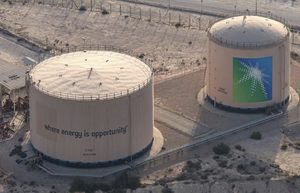
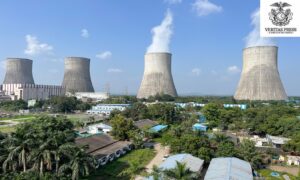
To understand why Dalian was targeted, one must understand the “teapots.” These primarily Shandong-based, privately-owned refineries earned their nickname from their squat, pot-like distillation towers. Unlike the state-owned behemoths such as Sinopec and PetroChina, the teapots operate with minimal exposure to the U.S. financial system, making them historically “immune to the full effect of U.S. sanctions,” as sanctions experts have long observed.
The numbers speak to their staggering power. Teapots account for roughly a quarter of China’s total refinery capacity and process up to 90% of Iran’s exported crude, capitalising on steep discounts on sanctioned barrels.
Yet, the immunity is eroding. “The rationale for targeting Hengli is to send a shockwave through the boardrooms of the twenty other major teapots,” says Dr. Muyu Xu, a senior crude oil analyst at Kpler, in an interview. “It’s a corporate decapitation strategy.” While the targeted sanctions on earlier teapots like Shandong Shengxing Chemical on April 16 created logistical hurdles, such as selling products under different names, the blacklisting of a giant like Hengli turns a compliance headache into an existential corporate crisis.
Geopolitical Crosswinds: Blockades, Missiles, And “Sincerity”.
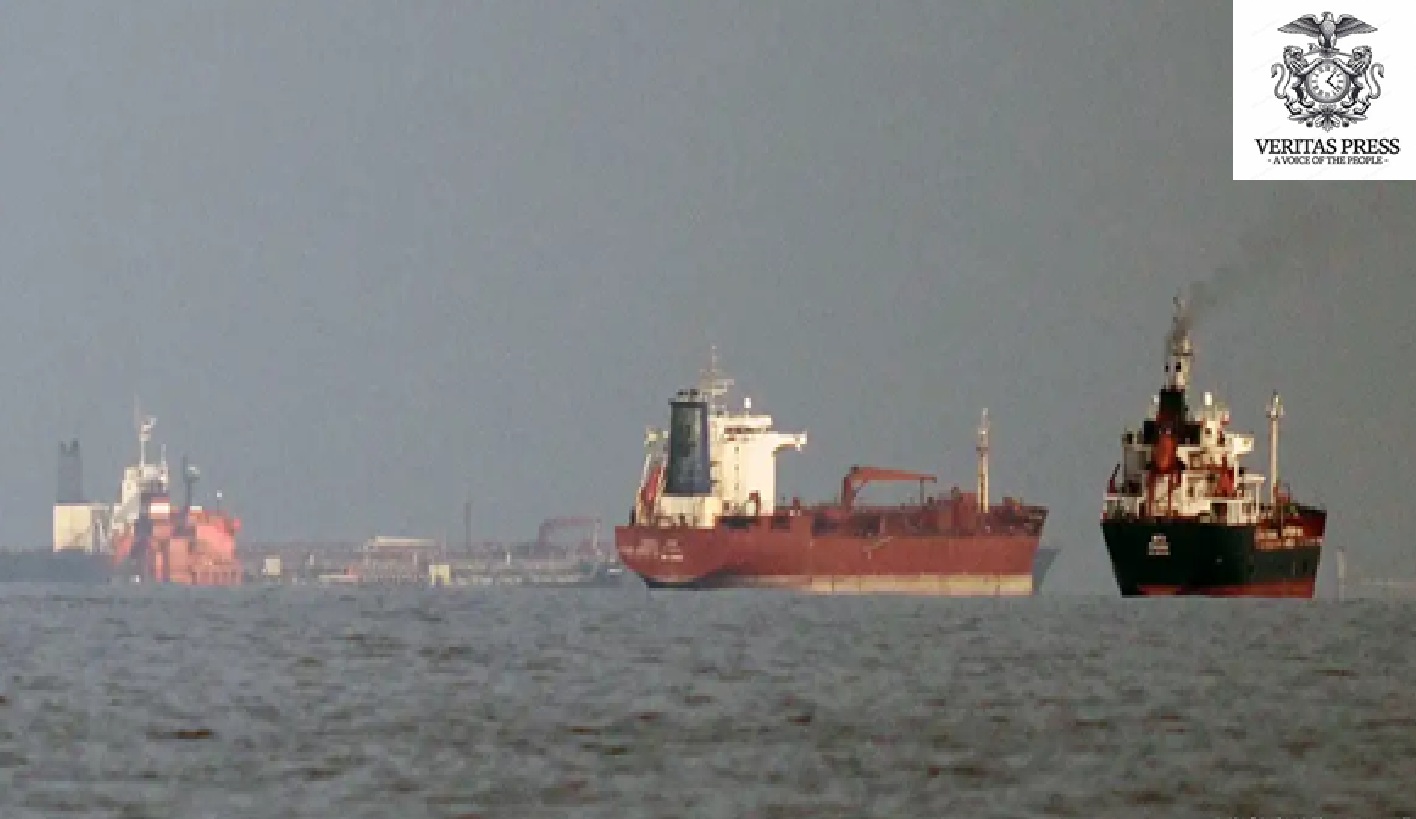
The sanctions are happening against a backdrop of a precarious strategic environment. The U.S. Navy has enforced a full maritime blockade of Iranian ports since April 13, intercepting and turning away vessels of all nations heading to or from Iran. As of April 24, U.S. forces have turned back 34 ships, though reports suggest some tankers continue to slip through, playing a high-stakes game of cat and mouse across the Arabian Sea. In the Strait of Hormuz, through which one-quarter of the world’s seaborne oil passes, a U.S. destroyer even fired on a cargo vessel attempting to breach the cordon, underscoring the extreme volatility of the situation.
Peace talks in Islamabad, mediated by Pakistan, have collapsed, with Tehran demanding the lifting of the blockade and Washington insisting on the total dismantlement of Iran’s nuclear infrastructure. U.S. President Donald Trump has claimed any new deal would be “far better” than the JCPOA abandoned by his administration in 2018, while Iranian lead negotiator Mohammad Baqer Qalibaf declared Tehran will not accept talks “under the shadow of threats”.
The tit-for-tat escalation has sent crude oil prices soaring, hovering near $110 a barrel, with analysts warning of a potential spike to $150 or even $200 if Hormuz is significantly disrupted, intensifying the pain for import-dependent economies.
The Nuclear Dimension And Beijing’s Legal Offensive:
Beijing’s response to the sanctions is deeply intertwined with its criticism of U.S. military actions. In its latest report to the Non-Proliferation Treaty (NPT) review conference, published on April 20, China explicitly blamed Washington’s withdrawal from the JCPOA as the “root cause” of the current diplomatic impasse.
Censuring the joint U.S.-Israeli strikes on Iranian nuclear facilities in June 2025 and February 2026 as a “heavy blow” to the NPT regime, Beijing demanded the U.S. “fulfil its special and primary responsibility in nuclear disarmament and rectify its acts of attacking peaceful nuclear facilities in non-nuclear-weapon states”. This legal framework forms the basis for China’s diplomatic volley: that it is not China violating an international consensus, but rather that the U.S. is undermining the very non-proliferation architecture it claims to enforce.
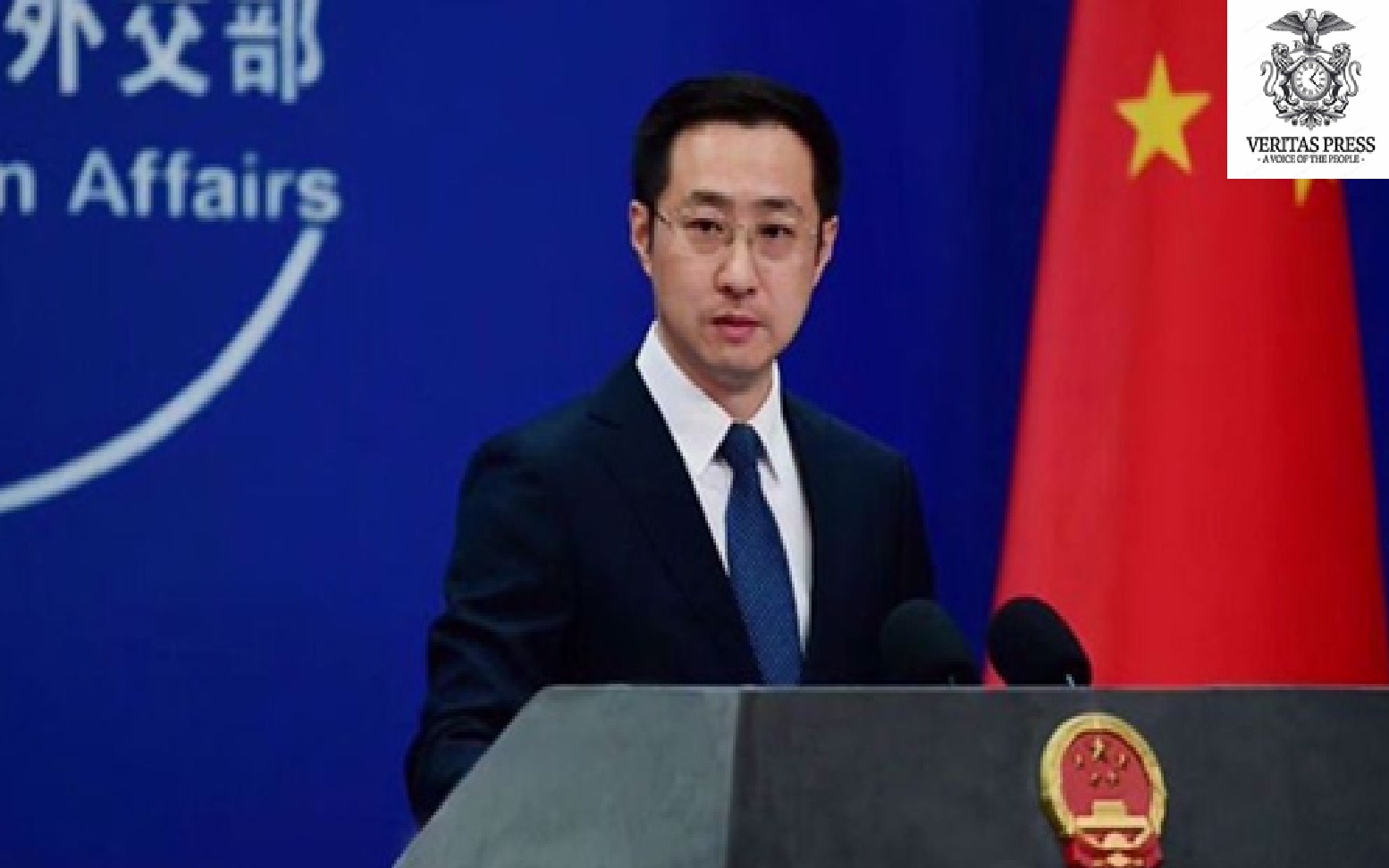
“We always oppose unilateral sanctions that have no basis in international law,” Foreign Ministry Spokesperson Lin Jian stated on April 27. “China urges the US to abandon the wrong practice of abusive sanctions and long-arm jurisdiction”.
The Banking Front: “Operation Economic Fury”.
While sanctions on teapots are disruptive, the siege truly tightened on April 15 when Treasury Secretary Scott Bessent issued a direct warning to the global financial system. “If you are buying Iranian oil, if Iranian money is sitting in your banks, we are now willing to apply secondary sanctions,” he stated in a White House press briefing. Bessent confirmed the Treasury has sent letters to two Chinese banks, threatening to cut them off from the U.S. financial system, a measure that could potentially force them out of the global dollar-clearing system entirely.
China’s Foreign Ministry condemned the threat as “illegal unilateral sanctions without authorisation of the United Nations Security Council”. This escalates the conflict from a physical shipping issue to a digital financial war. “The secondary sanctions threat is the nuclear option,” notes a Beijing-based financial analyst who spoke on condition of anonymity. “China can tolerate losing a few refineries. It cannot tolerate losing major banks to U.S. blacklists.”
Human And Industrial Fallout In The Rust Belt:
Beyond high-level diplomacy, the impact is being felt on the ground. In Shandong, teapot operators are experiencing squeezed margins not only from sanctions but also from the war premium that has made discounted Iranian crude more expensive. This means some teapots are losing money on every barrel refined, leading to involuntary shutdowns and job losses in a region already facing economic headwinds from tepid domestic demand.
The environmental dimension adds another layer of complexity. A 2024 report by Iran International noted that China had been planning to phase out less-efficient teapots due to their “significant environmental impact,” converting a large portion of crude into pollutants like fuel oil. Sanctions, counterintuitively, may accelerate this environmental agenda. By forcing financial decoupling, Washington is doing what Beijing’s environmental regulators have struggled to do: shutting down the most polluting, marginalised refining capacity.
Conclusion: A System Rewired.
The U.S. has rebranded its “maximum pressure” campaign as “Economic Fury,” a strategy of total financial warfare. Over 1,000 Iran-related persons, vessels, and aircraft have been sanctioned since February 2025 alone. The U.S. is not just trying to stop a bomb; it is trying to permanently rewire global trade in its image, forcing a binary choice on corporations and countries alike: trade with Iran, or trade with the dollar.
China has chosen to frame its defiance not as a defence of Tehran, but as a defence of the United Nations Charter. In a world deeply divided, this framing may resonate across the Global South. With oil trading desks now braced for a $200-per-barrel scenario, the Hengli sanctions represent a critical escalation. The “teapots” of Shandong are now the subject of a global conflict, and their fate, like the oil tankers trying to evade U.S. destroyers in the Arabian Sea, is profoundly uncertain.
Timeline & Key Facts:
June 2025: Joint U.S.-Israeli strikes hit Iranian nuclear and military sites.
February 28, 2026: Second wave of U.S.-Israeli strikes on Iran occurs just as a new nuclear agreement nears finalisation.
April 13, 2026: U.S. Navy begins a full maritime blockade of Iranian ports.
April 15, 2026: Treasury Secretary Bessent warns of secondary sanctions on Chinese banks facilitating Iranian oil payments.
April 20, 2026: China submits its NPT report, calling the U.S. withdrawal from the JCPOA the “root cause” of the nuclear standoff.
April 21, 2026: Trump claims a new deal will be “far better” than the JCPOA.
April 24, 2026: OFAC sanctions Hengli Petrochemical (Dalian) Refinery and approximately 40 shipping companies and vessels. General License V issued for the wind-down of transactions.
April 26, 2026: Hengli Petrochemical denies any trade with Iran in a stock exchange filing.
April 27, 2026: China’s Foreign Ministry condemns “abusive sanctions” and vows to protect Chinese interests.
Key Figure: Hengli’s Dalian facility processes roughly 400,000 barrels per day, making it China’s second-largest independent refinery. Since February 2025, OFAC has sanctioned over 1,000 Iran-related persons, vessels, and aircraft.
Source: Multiple News Agencies
Submissions:
For The Secure Submission Of Documentation, Testimonies, Or Exclusive Investigative Reports From Any Global Location, Please Utilise The Following Contact Details For Our Investigations Desk: enquiries@veritaspress.co.uk or editor@veritaspress.co.uk
Help Support Our Work:
Popular Information is powered by readers who believe that truth still matters. When just a few more people step up to support this work, it means more lies exposed, more corruption uncovered, and more accountability where it’s long overdue.
Help Protect Independent Journalism, Which Is Currently Under Attack.
If you believe journalism should serve the public, not the powerful, and you’re in a position to help, becoming a DONATOR or a PAID SUBSCRIBER truly makes a difference.
DONATION APPEAL: If You Found This Reporting Valuable, Please Consider Supporting Independent Journalism.
Help Support Our Work – We Know, We Know, We Know …
Seeing these messages is annoying. We know that. (Imagine what it’s like writing them … )
Your support fuels our fearless, truth-driven journalism. In unity, we endeavour to amplify marginalised voices and champion justice, irrespective of geographical location.
But it’s also extremely important. One of Veritas Press’s greatest assets is its reader-funded model.
1. Reader funding means we can cover what we like. We’re not beholden to the political whims of a billionaire owner. We are a small, independent and impartial organisation. No one can tell us what not to say or what not to report.
2. Reader funding means we don’t have to chase clicks and traffic. We’re not desperately seeking your attention for its own sake: we pursue the stories that our editorial team deems important and believe are worthy of your time.
3. Reader Funding: enables us to keep our website and other social media channels open, allowing as many people as possible to access quality journalism from around the world, particularly those in places where the free press is under threat.
We know not everyone can afford to pay for news, but if you’ve been meaning to support us, now’s the time.
Your donation goes a long way. It helps us:
Keep the lights on and sustain our day-to-day operations
Hire new, talented independent reporters
Launch real-time live debates, community-focused shows, and on-the-ground reporting
Cover the issues that matter most to our communities, in real time, with depth and integrity
We have plans to expand our work, but we can’t do it without your support. Every contribution, no matter the size, helps us stay independent and build a truly people-powered media platform.
If you believe in journalism that informs, empowers, and reflects the communities we serve, please donate today.
Kamran Faqir is a volunteer investigative journalist and writer committed to exposing hidden truths and amplifying underreported stories. Driven by social justice, he brings sharp insight and fearless truth-telling to independent journalism. NUJ registered.
SEATTLE, TEHRAN — The U.S. Department of Homeland Security (DHS) will allow Iran’s national football team to enter the country 48 hours before their critical World Cup match against Egypt on Friday, a modest concession in a tournament where Team Melli’s travel conditions have sparked claims of oppression and competitive disadvantage.