Kamran Faqir is a volunteer investigative journalist and writer committed to exposing hidden truths and amplifying underreported stories. Driven by social justice, he brings sharp insight and fearless truth-telling to independent journalism. NUJ registered.
Original Article Date Published:
Article Date Modified:
22 minutes
Views:468
Listen to this article
Help support our mission, donate today and be the change. Every contribution goes directly toward driving real impact for the cause we believe in.
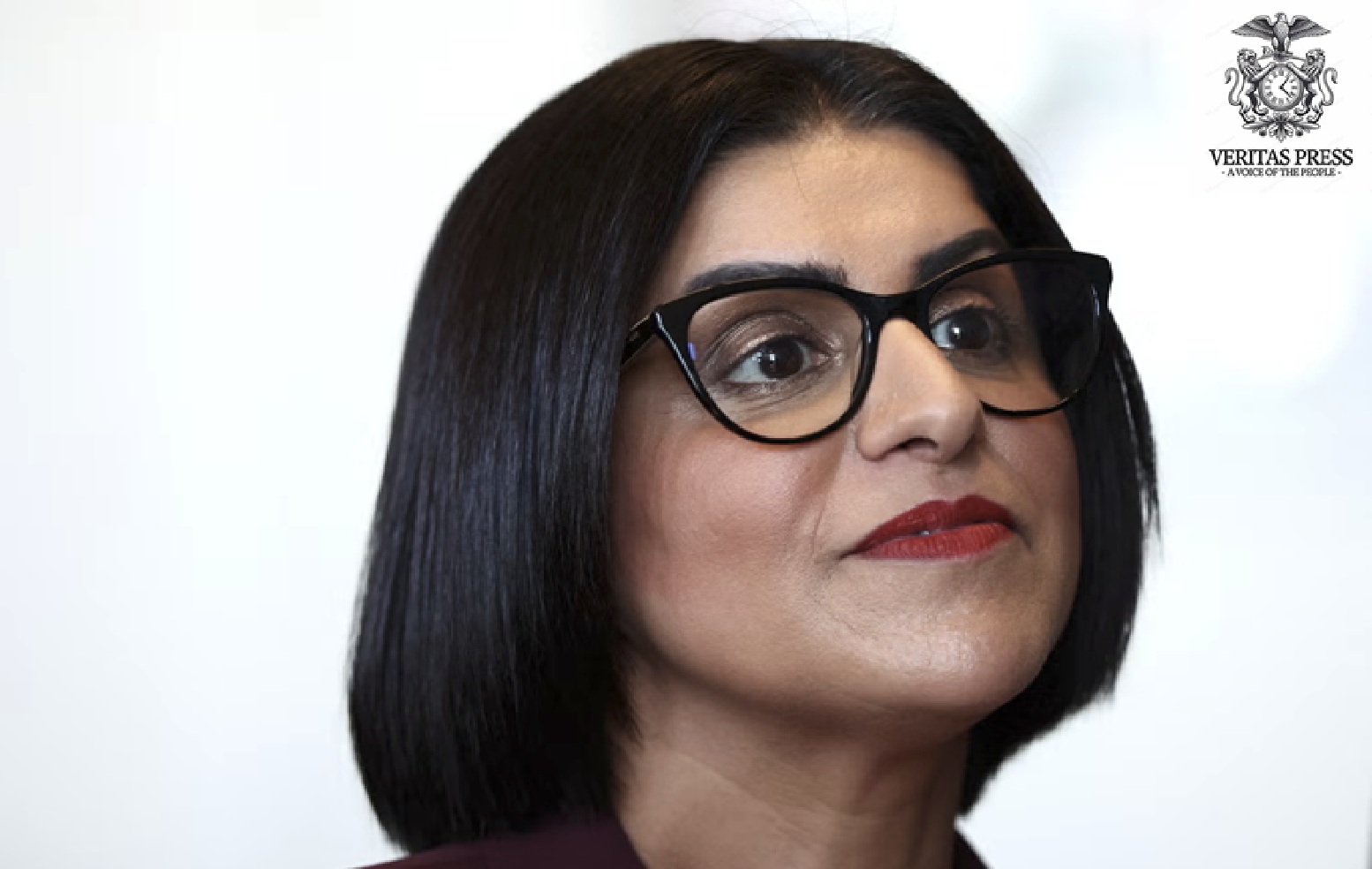
LONDON, UK – In the spring of 2026, the United Kingdom’s Home Secretary, Shabana Mahmood, stood before reporters in the French port city of Dunkirk and declined to rule out what would constitute one of the most morally contentious policy reversals in modern British asylum history: the forced return of rejected Afghan asylum seekers to a Taliban-controlled Afghanistan. “I’m not ruling it in or out,” she said, her words carrying the weight of a government caught between domestic political pressure and the foundational principles of international humanitarian law. What followed has been a cascade of revelations, secret talks, a frozen resettlement system, plummeting asylum grant rates, and a European-wide scramble to normalise relations with a regime the United Nations has branded a perpetrator of “gender apartheid”. This investigation examines how Britain arrived at this precipice, what it reveals about the erosion of asylum protections, and the human cost of policies increasingly shaped by deterrence rather than refuge.
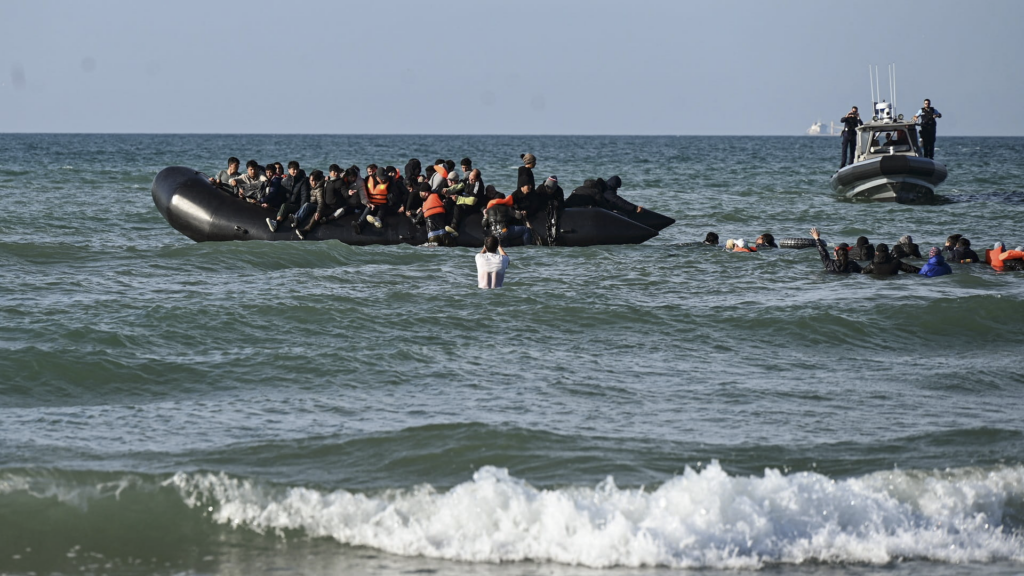
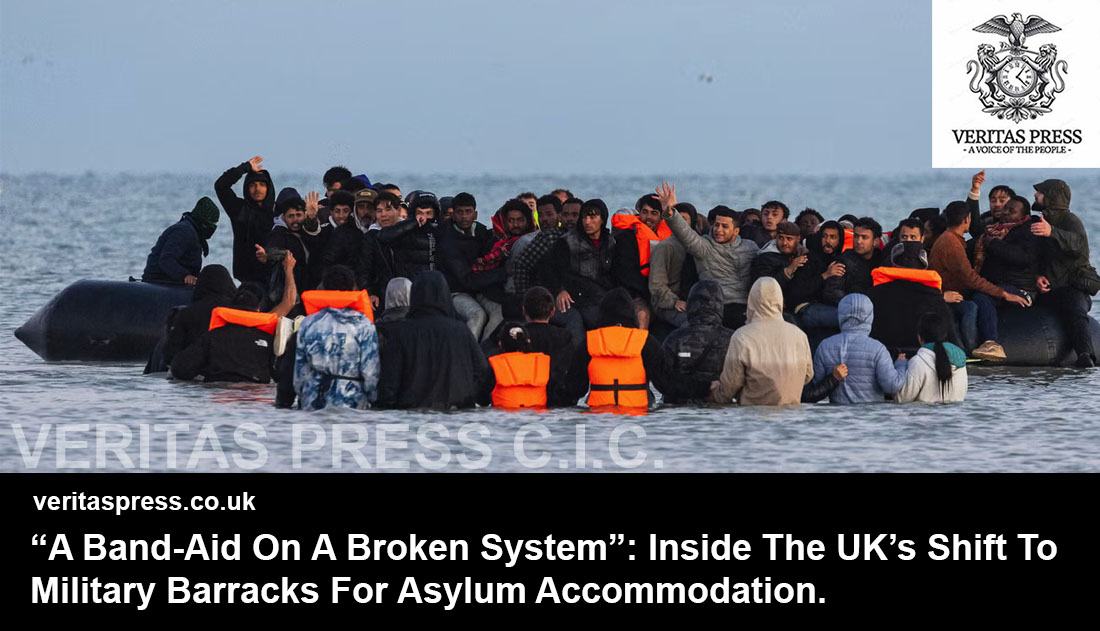
Migrants swim to board a smugglers’ boat in order to attempt crossing the English channel off the beach of Audresselles, northern France on October 25, 2024. – Two people died while attempting to cross the Channel from northern France to Britain early October 23, 2024, French authorities said, adding that around 50 people more had been rescued from a sinking boat. (Photo by Bernard BARRON / AFP)
The Scene-Setter: From Sanctuary To Deportation.
The timeline is stark. Until August 2021, Britain was a partner in the NATO mission that sought to build a democratic Afghanistan. When Kabul fell to the Taliban on 15 August 2021, the UK joined Western allies in a chaotic airlift, evacuating thousands of Afghans who had worked alongside British forces. In the years that followed, special resettlement schemes, the Afghan Relocations and Assistance Policy (ARAP) and the Afghan Citizens Resettlement Scheme (ACRS), brought nearly 40,000 Afghans to safety in the UK. The asylum grant rate for Afghan nationals soared to 98% in 2022, reflecting a clear official acknowledgement of the danger posed by Taliban rule.
Fast forward to April 2026, and the landscape has been transformed utterly. On Thursday, 24 April, Mahmood confirmed that “discussions are happening in government” about engaging with the Taliban on returns. The same day, a Taliban spokesman told the Daily Telegraph that discussions with Britain had already begun. Mofti Abdul Matin Ghane, a spokesman for Afghanistan’s interior ministry, elaborated: “There are discussions about it, and we welcome all. We are in talks with the British Government about it, and their delegations come to Kabul sometimes; we are talking and engaging with them. And they will come again soon”.
This is not happening in isolation. The European Union is preparing to host Taliban representatives in Brussels for technical talks on returns before the summer of 2026, with Sweden leading the initiative and Belgium playing an active coordinating role. Germany has already deported more than 100 convicted criminals to Afghanistan under direct agreements with the Taliban, including 20 on a single flight in February 2026. The Dutch, Austrian, and Belgian governments have all participated in exploratory missions to Kabul. More than 20 EU member states have reportedly expressed interest in beginning returns.
Britain, Mahmood insisted, is simply “monitoring very closely what is happening in terms of other countries”. But the distinction between monitoring and participating has grown increasingly thin.
The Moral Contradiction: Gender Apartheid And “Graveyard For Human Rights”.
The policy shift is unfolding against a backdrop of conditions in Afghanistan that, according to every credible human rights body, have deteriorated dramatically. In March 2026, the UN Secretary-General’s latest report on Afghanistan documented a regime that “maintained effective control over the national territory” while enforcing policies that “restrict the rights of women and girls”. Girls remain barred from education beyond the sixth grade. Women face sweeping restrictions on university study, employment, public services, and freedom of movement. The report catalogued corporal punishment, public executions, arbitrary arrests, and systematic repression of media and civil society.
Richard Bennett, the UN Special Rapporteur on the situation in Afghanistan, went further in April 2026, telling the UN Human Rights Council that the Taliban’s actions could constitute the crime against humanity of “gender persecution” and that “grave, systematic and institutionalised discrimination against women and girls is at the heart of Taliban ideology and rule, which also gives rise to concerns that they may be responsible for gender apartheid”. Shaharzad Akbar, head of the Rawadari rights group and former head of the Afghanistan Independent Human Rights Commission, delivered a searing indictment: “Taliban have turned Afghanistan to a mass graveyard of Afghan women and girls’ ambitions, dreams and potential”.
In July 2025, the International Criminal Court issued arrest warrants for senior Taliban leaders for the crime against humanity of gender persecution. In October 2025, the UN Human Rights Council adopted a landmark resolution creating an independent mechanism to investigate past and ongoing rights abuses in Afghanistan.
Human Rights Watch, in its World Report 2026, documented the Taliban’s imposition of “new draconian laws that further restrict women’s freedom of movement and access to public spaces” and the arbitrary detention of people for alleged infractions of “morality” laws. The organisation’s conclusion was unequivocal: “No country should forcibly return Afghans who could face persecution or threats to their lives”.
It is against this documented reality, a regime that the UK government itself has condemned for “the systematic erosion of women’s and girls’ rights”, that the Home Secretary is now contemplating forced returns.
The contradiction has not gone unnoticed. The Gender Action for Peace and Security (GAPS) Network, in a statement endorsed by UNA-UK, observed: “WPS [Women, Peace and Security] commitments do not stop at borders. Afghan women and girls are being denied education at home, and now the UK has decided to ban them from studying here”.
Wendy Chamberlain, Liberal Democrat MP and chair of the All-Party Parliamentary Group for Afghan women and girls, called the growing refusal to grant asylum to Afghan women “indefensibly cruel”, adding: “Women in Afghanistan are enduring one of the most oppressive regimes in the world, a regime that is systematically removing them from daily life”.
The European Domino Effect:
The UK’s drift toward engagement with the Taliban cannot be understood in isolation. It is part of a broader European realignment driven by the electoral rise of right-wing populist parties and mounting domestic pressure to reduce migration numbers.
Germany has been the trailblazer. Under Interior Minister Alexander Dobrindt, Berlin has deported Afghan criminals through a direct agreement with the Taliban that “creates a reliable basis for direct and permanent deportations to Afghanistan”. Dobrindt framed the policy in unapologetic terms: “Our society has an interest in ensuring that criminals leave our country. That is why we are acting consistently and expanding deportations step by step”.
Belgium’s Asylum and Migration Minister Anneleen Van Bossuyt confirmed her country’s active involvement in EU-level discussions, while acknowledging the legal constraints: “Afghans who were not granted protection or residence must return whenever possible, but there must always be an assessment under Article 3 of the European Convention on Human Rights”, a reference to the prohibition on torture and inhuman or degrading treatment.
Swedish Migration Minister Johan Forssell has stressed that the proposed EU-Taliban talks will be “technical” and informal, and “do not imply political recognition”. But critics argue this is a distinction without a difference. Groen MP Matti Vandemaele told the Belgian parliament that engaging with the Taliban “normalises and legitimises that regime”.
The UK is watching closely and following. Mahmood’s language, “monitoring very closely,” “not ruling it in or out”, mirrors the careful diplomatic positioning of other European governments. The £662 million deal she signed with France on 24 April 2026, which includes funding for a detention centre in France targeting arrivals from ten countries, including Afghanistan, is part of the same broader architecture: an attempt to externalise borders and create return pathways to countries previously considered too dangerous.
The Legal And Constitutional Barriers:
The UK currently cannot lawfully deport failed Afghan asylum seekers to Afghanistan. The reason is straightforward: Britain does not recognise the Taliban as the legitimate government of Afghanistan, and without diplomatic recognition, there is no legal framework for forced returns. Rejected Afghans who do not leave voluntarily remain in the UK in a legal limbo, unable to work, unable to access full state support, and unable to be removed.
This is precisely the outcome that Mahmood’s government now frames as a “pull factor” encouraging further Channel crossings. Ministers believe the inability to deport creates a perverse incentive: why not attempt the dangerous journey if, even after rejection, you will not be sent back?
But legal scholars and human rights lawyers warn that any attempt to restart deportations would face formidable legal challenges. The principle of non-refoulement, the cornerstone of international refugee law, enshrined in the 1951 Refugee Convention and the European Convention on Human Rights, prohibits states from returning any person to a territory where they face a real risk of persecution, torture, or inhuman treatment.
The UNHCR has maintained an unequivocal non-return advisory for Afghanistan since 2021, stating clearly that “no part of Afghanistan can be considered safe” and that all Afghan asylum seekers should be considered for international protection. This advisory remains in force as of early 2026.
In January 2026, the UNHCR published detailed observations on the UK’s proposed asylum reforms, welcoming the government’s “express commitment to the principle of non-refoulement” but warning that several proposed changes “risk undermining integration, social cohesion and long-term solutions”.
The European Court of Human Rights has handed down its first judgment concerning an Afghan asylum seeker since the Taliban takeover, ruling that the return of a Hazara Afghan national would breach Article 3 of the European Convention. A comprehensive 2026 risk assessment by legal experts concluded that “Afghanistan return risk in 2026 remains at the highest possible level for virtually all categories of returnees. The Taliban control the entire territory, no effective state protection exists, and documented evidence confirms that returnees face screening, detention, and serious harm upon arrival”.
The assessment is particularly stark for categories of returnees that would inevitably include many failed asylum seekers: former government and military personnel face “the highest risk upon return,” with the Taliban maintaining “kill lists” and using seized biometric databases to identify individuals at checkpoints. UNAMA has documented over 800 cases of extrajudicial killings and enforced disappearances of former government employees since August 2021. Women face “severe persecution upon return due to the Taliban’s comprehensive system of gender restrictions”.
Yet the Home Office’s internal guidance has shifted. Updated guidance now concludes that Taliban authorities are “unlikely to take a significant interest in most returnees”, a finding that underpins the dramatic fall in asylum grant rates from 98% to 34%.
A Court of Appeal judgment in February 2026, Safi v Secretary of State, illustrated what happens when the government fails to properly contest expert evidence about the risks in Afghanistan. The court upheld a tribunal decision blocking the deportation of an Afghan national with severe mental health problems, finding that the Home Secretary “did not seek to challenge” the expert evidence presented. The case suggests that any mass returns programme would face a barrage of individual legal challenges, each requiring the government to prove that the return would not breach the individual’s human rights, a process that could take years and cost millions.
The Collapsing Asylum And Resettlement System:
The contemplation of returns to Afghanistan is the logical endpoint of a broader, systematic dismantling of protections for Afghan nationals that has accelerated under the Labour government.
The Grant Rate Collapse: Analysis by Amnesty International UK, published on 14 April 2026, revealed that the grant rate for Afghan asylum claims has fallen from 96% to 34% since Labour took office, lower than before the Taliban returned to power, when approval rates were between 45% and 62%. In 2025 alone, 370 Afghan women were refused asylum. The overall asylum grant rate across all nationalities has fallen from 76% in 2022 to 42% in 2025.
Steve Smith, chief executive of Care4Calais, identified the core paradox: “Only a few short years ago, the significant risk the Taliban regime posed to individuals was duly recognised with an asylum grant rate for Afghans of almost 100 per cent. But the UK government has clearly changed their position, and I should suggest it has changed not because the Taliban’s threat has reduced, but rather because Afghan nationals were the nationality most likely to cross the Channel in pursuit of sanctuary in the UK”.
Gunes Kalkan, head of campaigns at Safe Passage International, called it “unfathomable” that the government was refusing Afghan women sanctuary: “Abandoning persecuted women and girls to life-risking journeys, instead of offering them safe routes, and then denying them protection is an unforgivable failing”.
The Visa Ban: In March 2026, Mahmood announced the suspension of all student and work visas for nationals from Afghanistan, Cameroon, Myanmar, and Sudan, an “emergency brake” she justified by citing widespread visa abuse. Government data revealed that 39% of the 100,000 asylum seekers in 2025 had arrived in the UK legally before claiming asylum. For Afghans specifically, between 2021 and September 2025, 95% of work visa holders claimed asylum.
But the ban has been devastating for Afghans with legitimate claims. Maiwand Ahmadi Martindale, a 19-year-old Afghan refugee brought to the UK under ARAP in 2024, told The i Paper: “They are insulting Afghans, calling us bad people, saying we should be sent back. It’s really painful to hear… When the British Army was in Afghanistan, we had a lot of respect for Great Britain, but now we feel like we’ve been betrayed. You work with someone, you trust them, and then after they just abandon you, and don’t listen to you”. His brothers remain in Afghanistan, denied entry under ARAP because they were over 18, “still living in fear of the Taliban regime”.
Temporary Protection Status: From 2 March 2026, refugee status in the UK became temporary rather than permanent. Refugees must now re-establish their need for protection every 30 months, and those granted asylum face a 20-year wait for permanent settlement, up from the previous five years. The Refugee Council’s Director of External Affairs, Imran Hussain, responded: “Reducing refugee status from five years to two and a half will not fix the asylum system”.
The Frozen Resettlement Schemes: The ARAP and ACRS programmes, the very schemes designed to honour Britain’s debt to its Afghan allies, were closed to new applications in July 2025. The closure came just before a judge lifted an unprecedented MoD superinjunction used to hide a catastrophic data breach affecting up to 27,278 applicants. The breach, which occurred in 2022 but was concealed until 2025, involved an Excel spreadsheet containing the personal details of Afghan applicants being shared on social media, effectively handing the Taliban a target list.
The consequences continue to unfold. At a High Court hearing on 22 April 2026, Tim Owen KC told the judge that “on the face of it, it appears there is a freeze on relocations from Afghanistan”. Claimants FRY and BNM1, their identities protected for safety reasons, are challenging the MoD over delays to their evacuation, with Owen describing a “complete information black hole” surrounding their cases.
Defence Secretary John Healey had pledged in July 2025: “When this nation makes a promise, we should keep it”. Yet campaigners say hundreds of Afghans who supported British efforts “live in real danger of reprisals from the Taliban” while they wait. As of December 2025, only 3,383 people had arrived in the UK under the ARR scheme established to rescue those endangered by the data breach.
Voices From Afghanistan And The Diaspora:
For Afghans caught in this policy vortex, the human reality is acute.
An Afghan women’s activist coalition published an open letter to EU leaders on 23 April 2026, warning that proposed “technical talks” with the Taliban were “not a neutral administrative step but a deliberate political act.” The letter stated: “This engagement constitutes normalisation. And for Afghan women, it is a betrayal”. The activists argued that for many Afghans, return would mean exposure to “repression and systemic rights violations” and described the EU’s moves as “a short-term political calculation with potentially long-term consequences for global security”.
The letter called on the EU to cancel talks, reaffirm commitments to Afghan women, halt deportations, and consult directly with Afghan women’s organisations.
In UK immigration tribunals, the human cost plays out case by case. In one Upper Tribunal case from March 2026, an Afghan appellant argued he would be at risk of persecution due to his “Westernisation”, his adoption of Western values, appearance, and behaviour during his long absence from Afghanistan. The tribunal heard expert evidence that “it is the Taliban’s aim to purify Afghan society and a person perceived as westernised due to their behaviour and appearance is likely to be targeted”.
Another case, reported by the Morning Star, concerns an Afghan asylum seeker who the Home Office has allegedly tried to deport despite two court orders demanding his return to Britain. He “fears he will be beheaded by the Taliban” because he worked in construction for the Afghan government and US companies.
These are not isolated cases. They represent the human reality behind the statistics: 6,360 Afghan small boat arrivals in the year to June 2025; a grant rate that has collapsed from near-certainty to a coin toss; and thousands living in legal limbo without the right to work or plan their futures.
The Political Calculus:
The political forces driving this shift are unmistakable. Reform UK, led by Nigel Farage, has surged in opinion polls, with immigration at the centre of its platform. Farage has openly declared he would “strike direct deals with countries including Afghanistan to take back migrants – even if that means engaging with the Taliban”. He has claimed the Taliban “have said that they will accept people back from us to Afghanistan” and called for the immediate deportation of an Afghan convicted rapist, saying: “As Prime Minister, I would send this monster back to Afghanistan immediately… And yes, my government would talk to the Taliban, if necessary”.
The Labour government, facing the electoral threat from Reform, has responded by adopting increasingly hardline measures of its own. Mahmood has introduced a “one in, one out” deal with France, deported 561 people under the arrangement, extended the settlement waiting period to 20 years, suspended Afghan visas, and made refugee status temporary. Nearly 60,000 “illegal migrants and foreign criminals” have been removed or deported since the election.
But the political calculation is complicated by rebellion within Labour’s own ranks. More than 100 Labour MPs are reportedly opposing elements of Starmer’s asylum overhaul, raising “fresh questions about whether Keir Starmer’s overhaul of the asylum and settlement system will survive intact”. Labour MP Stella Creasy has condemned the reforms as “performative cruelty”.
The £662 million France deal signed by Mahmood, which ties British funding to French performance in stopping crossings, is designed to demonstrate action. But critics note that Channel crossings, while down 36% year-on-year in early 2026, remain at historically high levels, and the deal does nothing to address the root causes driving Afghans to make the journey.
What The Taliban Says:
The Taliban’s public position has been notably cooperative and strategically shrewd. Mofti Abdul Matin Ghane, the interior ministry spokesman, has explicitly ruled out any conditions on accepting deportees: “It’s very clear they want to send Afghans back to their homeland. And this is their home. If Britain or any other country wants to send Afghans, we will take and welcome them – there is nothing about recognition or anything else”.
Asked directly whether the Taliban would expect payment, formal recognition, or any other concession, Ghane replied: “No, nothing”.
This unconditional welcome should be understood for what it is: a diplomatic coup for a regime desperate for international legitimacy. Every European government that engages in deportation talks, however “technical” or “informal” they are framed, provides the Taliban with the recognition by instalment that it craves. The very act of negotiating returns implies that Afghanistan under Taliban rule is a normal state with which normal diplomatic business can be conducted. It is not.
The Taliban’s willingness to accept deportees also raises the question of what happens to those returnees upon arrival. A 2026 return risk assessment documents that returnees face “screening, detention, and serious harm upon arrival”. The Taliban maintain biometric databases seized from the former government and use them at border crossings to identify individuals with links to the previous regime or foreign forces. The amnesty declared in August 2021 has been systematically violated, with UNAMA documenting over 800 extrajudicial killings of former government employees.
Conclusion: The Choice.
Britain stands at a crossroads that is as much about national identity as it is about migration policy. On one side lies the path of engagement with the Taliban, a path that may deliver deportations and political relief in the short term, but at the cost of legitimising a regime that has systematically erased women from public life, conducted extrajudicial killings, and created what the UN describes as “gender apartheid.” This path would almost certainly face years of legal challenges, cost millions in litigation, and result in the deportation of vulnerable individuals to a country where credible evidence shows they face serious harm.
On the other side lies the path of principled refusal, maintaining the position that Afghanistan under Taliban rule is not safe for returns, while investing in fair and efficient asylum processing, safe and legal routes for those fleeing persecution, and robust support for Afghan refugees who have already arrived.
The evidence gathered in this investigation points overwhelmingly in one direction. The UN’s non-return advisory remains in force. Human Rights Watch, Amnesty International, the UNHCR, and a coalition of Afghan women’s organisations have all warned against returns. The Home Office’s own country guidance, until recently, reflected this reality.
What has changed is not the conditions in Afghanistan; they have worsened, but the political weather in Westminster. The question now is whether the UK government will allow electoral calculations to override its legal obligations, its humanitarian commitments, and the promises it made to the Afghans who stood alongside British forces.
Shabana Mahmood says she is “not ruling it in or out.” But the direction of travel is unmistakable. And for the thousands of Afghans watching from hotel rooms, asylum accommodation, and hiding places in Kabul and Pakistan, the consequences of that journey will be measured not in political points but in lives.
Source: Multiple News Agencies
Submissions:
For The Secure Submission Of Documentation, Testimonies, Or Exclusive Investigative Reports From Any Global Location, Please Utilise The Following Contact Details For Our Investigations Desk: enquiries@veritaspress.co.uk or editor@veritaspress.co.uk
Help Support Our Work:
Popular Information is powered by readers who believe that truth still matters. When just a few more people step up to support this work, it means more lies exposed, more corruption uncovered, and more accountability where it’s long overdue.
Help Protect Independent Journalism, Which Is Currently Under Attack.
If you believe journalism should serve the public, not the powerful, and you’re in a position to help, becoming a DONATOR or a PAID SUBSCRIBER truly makes a difference.
DONATION APPEAL: If You Found This Reporting Valuable, Please Consider Supporting Independent Journalism.
Help Support Our Work – We Know, We Know, We Know …
Seeing these messages is annoying. We know that. (Imagine what it’s like writing them … )
Your support fuels our fearless, truth-driven journalism. In unity, we endeavour to amplify marginalised voices and champion justice, irrespective of geographical location.
But it’s also extremely important. One of Veritas Press’s greatest assets is its reader-funded model.
1. Reader funding means we can cover what we like. We’re not beholden to the political whims of a billionaire owner. We are a small, independent and impartial organisation. No one can tell us what not to say or what not to report.
2. Reader funding means we don’t have to chase clicks and traffic. We’re not desperately seeking your attention for its own sake: we pursue the stories that our editorial team deems important and believe are worthy of your time.
3. Reader Funding: enables us to keep our website and other social media channels open, allowing as many people as possible to access quality journalism from around the world, particularly those in places where the free press is under threat.
We know not everyone can afford to pay for news, but if you’ve been meaning to support us, now’s the time.
Your donation goes a long way. It helps us:
Keep the lights on and sustain our day-to-day operations
Hire new, talented independent reporters
Launch real-time live debates, community-focused shows, and on-the-ground reporting
Cover the issues that matter most to our communities, in real time, with depth and integrity
We have plans to expand our work, but we can’t do it without your support. Every contribution, no matter the size, helps us stay independent and build a truly people-powered media platform.
If you believe in journalism that informs, empowers, and reflects the communities we serve, please donate today.
Kamran Faqir is a volunteer investigative journalist and writer committed to exposing hidden truths and amplifying underreported stories. Driven by social justice, he brings sharp insight and fearless truth-telling to independent journalism. NUJ registered.
SEATTLE, TEHRAN — The U.S. Department of Homeland Security (DHS) will allow Iran’s national football team to enter the country 48 hours before their critical World Cup match against Egypt on Friday, a modest concession in a tournament where Team Melli’s travel conditions have sparked claims of oppression and competitive disadvantage.






























siigfp
riux6m
r8r4rp