

Help support our mission, donate today and be the change. Every contribution goes directly toward driving real impact for the cause we believe in.
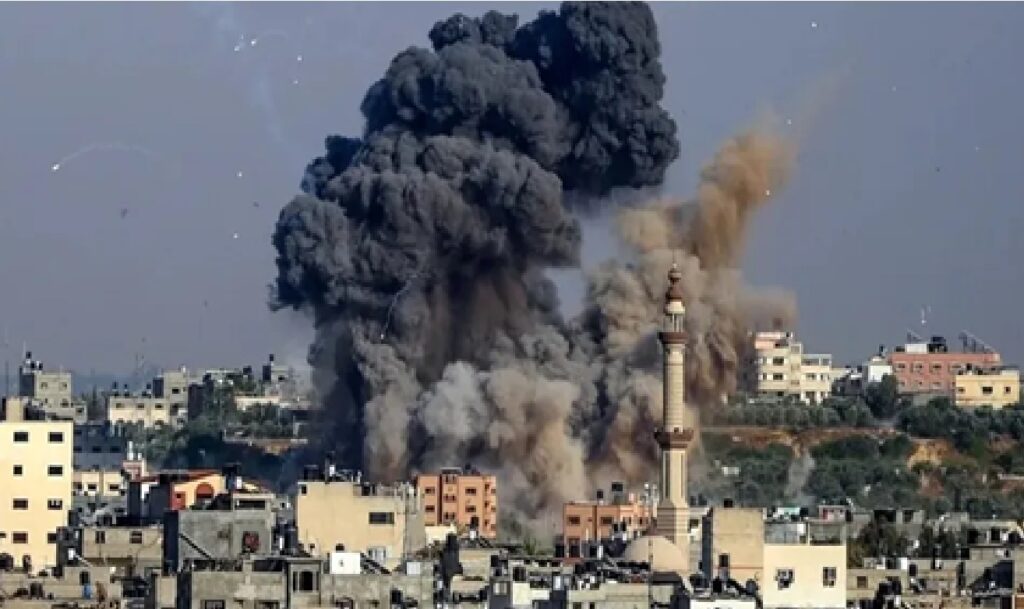
TEHRAN, AYIA NAPA, LONDON — As the embers of the most devastating Middle Eastern conflict in a generation still smoulder beneath an unstable ceasefire, the geopolitical plates are shifting with a speed and ferocity that has caught even seasoned analysts off guard. The 40-day US-Israeli military onslaught against Iran, which began on February 28, was intended to decapitate the Islamic Republic and redraw the regional order by force. Instead, it has detonated a chain reaction of unintended consequences: exposing a fractured and flailing Atlantic alliance, handing Iran unprecedented strategic leverage over global energy arteries, and forcing a reluctant European Union to contemplate a future entirely divorced from its American protector.
The “Unified Iran” Narrative: Propaganda Or Ground Reality?
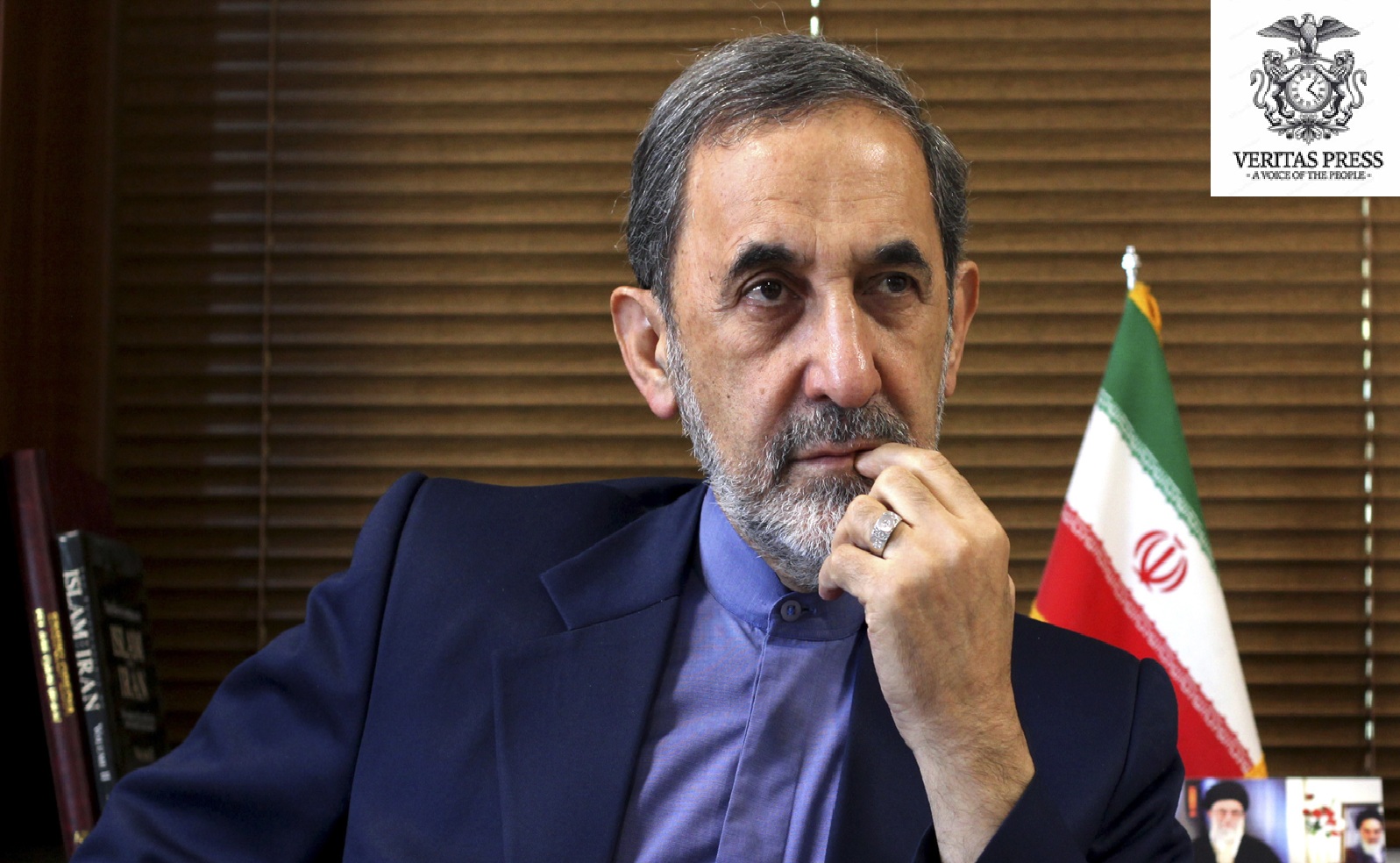
As the world’s attention was fixed on the EU summit in Cyprus this Thursday, a single, poetic tweet from Ali Akbar Velayati, the veteran senior advisor to Iran’s Supreme Leader, captured the psychological chasm separating Tehran from its adversaries. “The whole world is a body, and Iran is the heart,” Velayati wrote.
On the surface, the statement is quintessential revolutionary rhetoric. Yet, coming from a figure who has navigated Iran’s foreign policy for four decades, it was a calculated dart aimed at the Achilles’ heel of the Western coalition. Velayati was responding directly to US President Donald Trump’s claim that the ceasefire extension was possible “based on the fact that the government of Iran is seriously fractured, not unexpectedly so”.
Velayati pivoted immediately to the turmoil in the West. He pointed not to Tehran’s internal struggles but to an internal Pentagon email, leaked earlier this week, that proposed revisiting the US position on Britain’s claim to the Falkland Islands (Malvinas) as punishment for the UK’s refusal to join the Iran war. “Washington speaks of internal disputes in Iran,” Velayati countered, “but the tension with London over the Malvinas Islands, and Europe’s warnings of the need for independence from the United States, reveal a deep fracture in the front of its traditional allies”.
Is Iran truly unified? The assassination of Grand Ayatollah Ali Khamenei in the opening US-Israeli salvo was a seismic shock to the system. His son, Mojtaba Hosseini Khamenei, has succeeded him but has yet to make a public appearance, fueling speculation about his health and the stability of the transition. However, contrary to Western hopes that the strike would trigger a collapse of the clerical establishment, the war appears to have galvanised a siege mentality. The IRGC Intelligence Organisation announced this week that it had foiled “anti-Revolution cells” in Kurdistan and Kermanshah provinces, suggesting a ruthless internal consolidation is underway. As Velayati frames it, Tehran stands monolithic against the “Hebrew-Arab-American front,” a narrative that, while self-serving, finds resonance in a populace rallying against a foreign invader.
The Strait Of Hormuz: The World’s Economic Pulse At Iran’s Fingertips
If the bombing of Tehran was the spark, the Strait of Hormuz is the firestorm that followed, and it is one entirely of Iran’s making. The waterway, through which roughly one-fifth of the world’s oil supplies pass, has become Tehran’s primary battlefield. On Thursday, the Central Bank of Iran confirmed it had received the first-ever transit tolls from merchant ships seeking passage. Industry sources report charges of up to US$2 million per vessel.
This development is a direct repudiation of EU foreign policy chief Kaja Kallas, who had demanded that transit remain “open and free of charge,” warning that any “pay-for-passage scheme” would set a “dangerous precedent for global maritime routes”.
Iranian Foreign Ministry spokesperson Esmaeil Baghaei’s response was brutal and unapologetic. “Spare the sermons; Europe’s chronic failure to practice what it preaches has turned its ‘international law’ talk into peak hypocrisy,” Baghaei fired back. In a longer social media post, he mocked: “Oh, that ‘international law’?! The one that the EU dusts off to lecture others while quietly green-lighting a U.S.-Israeli war of aggression, and looking the other way on atrocities against Iranians?!”
International lawyer and foreign policy analyst Reza Nasri provided the legal scaffolding for Iran’s position in a widely circulated analysis. Nasri argues that Western insistence on “unconditional access” ignores the central reality: the Strait was weaponised as a launchpad for an “existential armed attack” against Iran. He frames Iran’s restrictions as a “proportionate exercise of self-defence under Article 51 of the UN Charter,” noting that the dense network of US military bases in Bahrain, Qatar, the UAE, Saudi Arabia, and Kuwait transforms the Strait from a neutral corridor into an extension of a hostile military perimeter.
Iranian President Masoud Pezeshkian further hardened the stance, telling local media: “Trump says Iran cannot make use of its nuclear rights, but doesn’t say for what crime. Who is he to deprive a nation of its rights?” Meanwhile, the US maintains a naval blockade of Iranian ports, a mirror-image pressure tactic that has left global shipping in a chokehold and oil prices above $120 per barrel.
Costa’s Cyprus Warning: A Shattered Transatlantic Alliance.
The most dramatic tectonic shift, however, is occurring within the alliance that launched the attack. At the EU summit in Ayia Napa, Cyprus, on Thursday, European Council President António Costa delivered a closed-door warning that left diplomats shaken. According to multiple sources cited by Bloomberg, Costa told leaders that the EU “could collapse if it chooses to dance to US President Donald Trump’s tune”.
Costa’s message was stark: Washington’s interests no longer align with Europe’s. As examples of the growing divergence, he cited the US operation in Venezuela, the US-Israeli war on Iran, which many European capitals view as a reckless violation of international law, and Trump’s transactional approach to the Ukraine conflict.
In the Cypriot resort town, the ghost haunting the summit was unmistakably Donald Trump. “As usual, all the topics we discuss are related to the U.S and its actions, like it or not,” one EU diplomat told Politico, speaking on condition of anonymity. Behind closed doors, Costa warned that leaders “can’t avoid facing the reality that U.S. interests are no longer in line with the EU’s,” urging the bloc to develop an independent approach to protecting its own interests.
The fractures are no longer limited to diplomatic rhetoric. An internal Pentagon email, confirmed by a US official to Reuters, outlined options to punish NATO allies who refused to support the Iran operation. These included suspending Spain from the alliance and revisiting the US position on Britain’s claim to the Falklands. Spain, along with Italy and France, had denied US aircraft permission to use their bases or airspace for the assault on Tehran. Spanish Prime Minister Pedro Sánchez was among the few European leaders to explicitly condemn the US-Israeli attack as a breach of international law.
Speaking in Cyprus on Friday, Sánchez projected calm defiance. “We do not work off emails. We work off official documents and government positions,” he said, before adding with a studied nonchalance that has become a hallmark of the new European defiance: “Spain is a reliable member within NATO… As a result, I am absolutely not worried”. A NATO official later confirmed that no treaty mechanism exists to suspend a member state from the alliance.
Italian Prime Minister Giorgia Meloni, while more measured, struck a similar chord: “We must work to strengthen NATO’s European pillar… which must clearly complement the American one”. EU foreign policy chief Kaja Kallas expressed visible frustration at the US criticism, noting that the UK and France are already leading efforts to secure trade flows through the Strait of Hormuz once a settlement is reached.
The Malvinas Gambit: A Colonial Wound Reopened.
Perhaps no element of the unfolding fracture is as symbolically charged as the sudden reemergence of the Falklands/Malvinas dispute. The leaked Pentagon memo’s suggestion that the US might review its support for Britain’s sovereignty over the islands, as retaliation for Prime Minister Keir Starmer’s refusal to join the war, has detonated a political bomb in London and Buenos Aires alike.
The Falklands have long been a neuralgic point in British national identity, a remnant of imperial reach sustained by the self-determination of a tiny population and the memory of a 1982 war that cost 255 British and 649 Argentine lives. The US has historically maintained a position of formal neutrality while offering de facto diplomatic and intelligence support to the UK, assistance that, in the words of former US Assistant Defence Secretary Richard Perle, was so critical that “Britain would probably have lost the war without American assistance”.
Now, that decades-old understanding is being weaponised in a dispute over a different war entirely. A spokesperson for Starmer responded with unmistakable firmness: “We could not be clearer about the UK’s position on the Falkland Islands. It is longstanding, it is unchanged. Sovereignty rests with the UK and the islands’ right to self-determination is paramount”.
Argentina, sensing a historic opening, moved swiftly. Foreign Minister Pablo Quirno reasserted the country’s willingness to resume bilateral negotiations for a “peaceful and definitive solution,” characterising the current status as a “colonial situation”. “By history, by right, and by conviction: the Malvinas are Argentine,” Quirno declared.
The BBC’s Joe Inwood, reporting from the Falklands, noted that the geopolitical waves from the Iran war have now literally reached the shores of this remote archipelago. Ed Power of the Royal United Services Institute (RUSI) warned that a US policy shift could be “pretty significant,” potentially encouraging other nations to follow suit and triggering new interventions at the UN.
The Ceasefire Treadmill And The Spectre Of Escalation:
Beneath all the diplomatic manoeuvring, the war itself remains a smouldering powder keg. The ceasefire, initially brokered on April 8 and now indefinitely extended by Trump, is more of a tactical pause than a genuine cessation. Israeli Defence Minister Israel Katz made this explicit on Thursday, declaring that Israel was “prepared to resume the war against Iran” and awaiting a “green light from the United States” to “return Iran to the Dark Age and the Stone Age by destroying key energy and electricity facilities and dismantling its national economic infrastructure”.
Iran, for its part, has compiled a target list based on reciprocity: if the US strikes energy infrastructure, Iran will hit power plants in Israel and Gulf allies; if the naval blockade continues, Tehran will close the Bab el-Mandeb Strait and mine the Strait of Hormuz. According to Iranian figures, 3,375 Iranians perished in the 40 days of US-Israeli attacks.
The Islamabad negotiations, mediated by Pakistan, remain in limbo. The US insists on a 15-point plan centred on Iran’s complete nuclear rollback and free Hormuz passage; Iran counters with a 10-point plan demanding US troop withdrawal, sanctions relief, and security guarantees. Neither side trusts the other enough to bridge the chasm, and the extension of the ceasefire without a fixed endpoint leaves the region suspended between a fragile peace and a catastrophic escalation.
Analysis: The Geopolitical Aftershocks Of A Flawed War.
The US-Israeli war of February 2026 was conceived as a decapitation strike, a swift, overwhelming assault intended to eliminate Iran’s leadership and nuclear infrastructure, shatter its military capacity, and compel total capitulation. Instead, it has achieved the precise opposite. It has unified Iran’s fractured political landscape around a narrative of resistance, handed Tehran effective control over the global economy’s most critical maritime chokepoint, and triggered the most acute transatlantic crisis since the Suez debacle of 1956.
The EU’s Cyprus summit represents a potential inflexion point. The activation of Article 42.7, the EU’s mutual defence clause, is now under serious operational discussion, a step that would have been unthinkable before the war exposed the extent of European vulnerability to American adventurism. Cypriot President Nikos Christodoulides framed the imperative bluntly: “What we need is to give substance to Article 42.7… We need to have an operational plan”. The summit’s agenda included not just geopolitical discussions but practical simulations of how the EU could defend itself without US backing, and how to operationalise the mutual defence clause amid growing fears that NATO’s Article 5 guarantee can no longer be counted upon.
European Commission President Ursula von der Leyen has called for an expansion of the EU’s Aspides naval mission from mere protection to “sophisticated joint maritime coordination,” signalling a broader ambition for European strategic autonomy in defence matters. The summit also explored deepening economic, trade, and political partnerships with Jordan, Egypt, Syria, and Gulf nations, a recognition that Europe’s security is inextricably linked to that of the Middle East.
The United States, meanwhile, finds itself increasingly isolated even among its traditional allies. The Pentagon’s punitive email, floated as a trial balloon or a genuine threat, has backfired spectacularly. Rather than cowing European capitals into submission, it has accelerated their search for strategic independence. German, French, and Italian opposition to the war has hardened, and even historically Atlanticist figures like NATO Secretary General Mark Rutte have been forced to acknowledge the growing divergence.
The war’s economic toll is mounting: Brent crude surging past $120 per barrel, European stock markets plunging by over 10%, and the United Nations warning that 45 million additional people are being pushed toward acute hunger. The Strait of Hormuz standoff, with its tolls, blockades, and threatened mining, has become the 21st century’s most dangerous game of economic chicken.
For Iran, the calculus is both cynical and strategically brilliant. By weaponising the Strait without fully closing it, offering passage for a fee, Tehran has created a revenue stream, demonstrated its indispensability to global energy security, and driven a wedge straight through the heart of the Western alliance. As Dr. Saied Reza Ameli, an Iranian analyst, wrote in the Tehran Times this week, Iran has elevated itself “from a regional player to a pivotal global actor, one capable of dictating the pulse of the world economy at will”.
The crisis is far from resolution. Peace talks in Islamabad remain stalled. The ceasefire has no expiration date, but neither does it have a clear path to permanence. Israeli Defence Minister Katz’s apocalyptic threats of returning Iran “to the Stone Age” are matched by Iran’s grim reciprocity. The EU is scrambling to design a post-American security architecture even as its member states debate whether such a thing is politically or financially feasible.
Ali Akbar Velayati’s poetic claim, that Now, a united Iran has stood against the Hebrew-Arab-American front, he emphasised, adding, “The whole world is the body, and Iran is the heart.” But as the US and its fraying European allies survey the wreckage of a war they did not all choose, and a peace they cannot collectively enforce, the metaphor cuts uncomfortably close to the bone. The heart of the global economic system is beating, for now, at the pleasure of Tehran. And the body politic of the West, once the unchallenged arbiter of international order, is convulsing with a deep and possibly irreparable fracture.
Source: Multiple News Agencies
Submissions:
For The Secure Submission Of Documentation, Testimonies, Or Exclusive Investigative Reports From Any Global Location, Please Utilise The Following Contact Details For Our Investigations Desk: enquiries@veritaspress.co.uk or editor@veritaspress.co.uk
Help Support Our Work:
Popular Information is powered by readers who believe that truth still matters. When just a few more people step up to support this work, it means more lies exposed, more corruption uncovered, and more accountability where it’s long overdue.
Help Protect Independent Journalism, Which Is Currently Under Attack.
If you believe journalism should serve the public, not the powerful, and you’re in a position to help, becoming a DONATOR or a PAID SUBSCRIBER truly makes a difference.
DONATION APPEAL: If You Found This Reporting Valuable, Please Consider Supporting Independent Journalism.
Help Support Our Work – We Know, We Know, We Know …
Seeing these messages is annoying. We know that. (Imagine what it’s like writing them … )
Your support fuels our fearless, truth-driven journalism. In unity, we endeavour to amplify marginalised voices and champion justice, irrespective of geographical location.
But it’s also extremely important. One of Veritas Press’s greatest assets is its reader-funded model.
1. Reader funding means we can cover what we like. We’re not beholden to the political whims of a billionaire owner. We are a small, independent and impartial organisation. No one can tell us what not to say or what not to report.
2. Reader funding means we don’t have to chase clicks and traffic. We’re not desperately seeking your attention for its own sake: we pursue the stories that our editorial team deems important and believe are worthy of your time.
3. Reader Funding: enables us to keep our website and other social media channels open, allowing as many people as possible to access quality journalism from around the world, particularly those in places where the free press is under threat.
We know not everyone can afford to pay for news, but if you’ve been meaning to support us, now’s the time.
Your donation goes a long way. It helps us:
- Keep the lights on and sustain our day-to-day operations
- Hire new, talented independent reporters
- Launch real-time live debates, community-focused shows, and on-the-ground reporting
- Cover the issues that matter most to our communities, in real time, with depth and integrity
We have plans to expand our work, but we can’t do it without your support. Every contribution, no matter the size, helps us stay independent and build a truly people-powered media platform.
If you believe in journalism that informs, empowers, and reflects the communities we serve, please donate today.

Houthi forces have captured the historic Red Sea port of Mocha and are advancing on
London’s historic sanctions against Israeli settlements mark a watershed moment in UK foreign policy, but
With 95% of Gaza’s population now wholly dependent on aid and more than 90% stripped
India calls for Kashmir and Ladakh to appear only on its official map after a
ISLAMABAD – In the high-stakes political theatre of Pakistan, the battleground has shifted from the
Francesca Albanese says third states have an ICJ-mandated obligation to end Israel’s occupation. But with
As Israeli jets bomb a Syrian air base over alleged Turkish deployment plans, Ankara, Washington
QUSRA, OCCUPIED WEST BANK – In the rugged hills south of Nablus, a slow-motion displacement
Beneath the wreath-laying and “plunder” rhetoric lies a contest for Iraq’s logistical arteries and post-war
As mediators push for ceasefire extensions, airstrikes on police infrastructure reveal a strategic campaign to