











Help support our mission, donate today and be the change. Every contribution goes directly toward driving real impact for the cause we believe in.
More than half a decade after COVID-19 first reshaped global society, a new variant dubbed “Cicada” is emerging from the shadows. BA.3.2, a heavily mutated descendant of Omicron, has been detected in at least 25 U.S. states and 23 countries as of March 2026. Carrying an astonishing 70 to 75 genetic changes in its spike protein, roughly double that of recent dominant strains, this variant challenges the immunological defences built by current vaccines. Yet as this new threat spreads, America’s public health surveillance infrastructure has eroded, vaccination rates have stagnated, and a weary populace has largely moved on. This investigative report examines the origins, risks, and implications of BA.3.2, weaving together expert analysis, official statements, local perspectives, and a critical assessment of whether the nation is prepared for what comes next.
Part One: The Cicada Emerges.
A Variant Born In Silence
The story of BA.3.2 begins not with alarm bells, but with silence. First identified in a respiratory sample collected in South Africa on November 22, 2024, the variant initially appeared as little more than a footnote in genomic surveillance databases. Its ancestor, BA.3, had briefly circulated in early 2022 before being outcompeted and seemingly disappearing. But BA.3 never truly vanished.
“BA.3.2 spent its first few years ‘underground’ before re-emerging as a potential major variant,” explains T. Ryan Gregory, PhD, a professor of evolutionary biology at the University of Guelph, who coined the “Cicada” nickname. The name evokes the periodical insects that remain dormant beneath the soil for years before emerging en masse, a fitting metaphor for a variant that simmered unnoticed while the world looked away.
For much of 2025, BA.3.2 remained overshadowed by dominant variants like XFG (nicknamed “Stratus”) and NB.1.8.1 (“Nimbus”), which together accounted for the majority of global cases. But beneath the surface, something was changing. In September 2025, BA.3.2 began its ascent, first in Europe, then gradually across North America.
The First American Arrival:
The variant reached U.S. shores on June 27, 2025, detected through the CDC’s Traveller-Based Genomic Surveillance program in a passenger arriving at San Francisco International Airport from the Netherlands. For the next six months, BA.3.2 remained a traveller’s curiosity, detected in isolated cases but not yet taking hold.
That changed in early 2026. The first clinical patient case was reported on January 5, 2026. By February, wastewater surveillance had detected the variant in 132 locations across 25 states. And by March, the CDC reported that BA.3.2 accounted for approximately 3.7% of wastewater samples nationally, with concentrations reaching 30% of sequenced cases in Denmark, Germany, and the Netherlands.
“The variant has been detected in 25 states,” confirms a CDC report published March 19, 2026, listing California, New York, Texas, Florida, Illinois, and twenty others. But experts caution that the true footprint may be wider. “There are still a lot of unknown questions about how prevalent it is in the U.S., because surveillance has been reduced a lot,” warns Dr. Adolfo García-Sastre, director of the Global Health and Emerging Pathogens Institute at Mt. Sinai.
Part Two: The Science Of Escape.
A Stranger To The Immune System
What makes BA.3.2 different is not merely the quantity of its mutations, but their location and effect. The spike protein, the viral key that unlocks human cells and the primary target of vaccine-induced antibodies, has undergone between 70 and 75 changes compared to currently circulating JN.1-lineage strains.
“Think of it like showing up to your 25th high school reunion and seeing people who have put on weight, dyed their hair and started wearing tinted contacts,” writes Dr. [Author Name], a pulmonary and critical care physician, in The Conversation. “You will recognise them, but it might take longer. Had you seen them every month or so for those 25 years, you would recognise them right away.”
The immune system faces a similar challenge. Current COVID-19 vaccines were formulated to target the JN.1 lineage, which has dominated since January 2024. But BA.3.2 is, immunologically speaking, almost a stranger. Laboratory studies cited by the CDC indicate that the variant “effectively escaped COVID-19 antibodies due to its spike protein changes”.
“Monitorizar la propagación de BA.3.2 proporciona información valiosa sobre el potencial de esta nueva línea de SARS-CoV-2 para evadir la inmunidad de una infección o vacunación previa,” the CDC wrote in its Morbidity and Mortality Weekly Report .
The Omicron Connection:
BA.3.2 traces its lineage to the Omicron variant that emerged in late 2021, but it has evolved significantly beyond its ancestor. The World Health Organization, which classified BA.3.2 as a “variant under monitoring” (VUM) in December 2025, notes that the variant carries a specific set of genetic features that distinguish it from other circulating strains :
BA.3.2 genetic features (relative to index): P9L, R21T, P26L, A67V, H69-, V70-, T95I, I101T, C136-, N137-, D138-, P139-, F140-, L141-, G142-, V143-, Y144-, Y145-, H146-, K147-, F157S, N164K, S172F, K187T, N211-, L212I, A243-, L244-, P251S, I326V, G339Y, A348P, S371F, S373P, S375F, R403K, D405N, R408S, K417N, A435S, N440R, V445A, G446D, L452W, N460K, S477N, T478N, E484K, G496S, Q498R, N501Y , K529N, E554D, E583D, D614G, H625R, N641K, V642G, E654K, H655Y , N679R, P681R, A688D, S704L, N764K, K795T, D796Y , A852K, S939F, Q954H, N969K, P1162R, D1184E
Source: WHO tracking system, as of February 23, 2026
This laundry list of mutations, many of which are known to affect antibody binding, explains why scientists are paying attention. But mutations alone don’t tell the whole story.
A Curious Trade-Off:
Here is where the narrative becomes more complex, and, paradoxically, reassuring. While BA.3.2 appears skilled at evading immune detection, preliminary evidence suggests it may have sacrificed some ability to infect cells efficiently.
“What’s interesting, however, is some of these mutations may actually make the virus bind less well to our cells,” explains Dr. Dana Mazo, an infectious diseases physician at NYU Langone Health. “So yes, our immune system may not recognise it, but it also doesn’t recognise us as well.”
This evolutionary trade-off, immune escape at the cost of reduced infectivity, may explain why BA.3.2 has not yet outcompeted other variants despite its impressive mutation count. As of March 2026, XFG remains the dominant strain nationally at 53% of samples, followed by LF.7 at 10.3%, with Cicada trailing at approximately 3.7%.
“If it had really special advantages, we’d probably have seen it take off and dominate globally relatively quickly,” notes Andrew Pekosz, PhD, a virologist at the Johns Hopkins Bloomberg School of Public Health. “We didn’t see that, but it’s not going away, so it’s something to keep an eye on”.
Part Three: Assessing The Danger.
Severity: No Evidence Of Increased Danger
For Americans who have endured five years of pandemic whiplash, the most pressing question is simple: Will this variant make me sicker?
The consensus among experts is reassuring. “There’s no sign so far that BA.3.2 is any more dangerous or causes more severe disease than the variants that were circulating in the winter of 2025-26.”
Dr. Robert Hopkins Jr., medical director of the National Foundation for Infectious Diseases, concurs: “I haven’t seen any data to indicate that Cicada is more severe than other circulating variants”.
The WHO has assessed the public health risk posed by BA.3.2 as “low” compared to currently circulating Omicron sub-variants. Vietnam’s Ministry of Health, echoing this assessment, notes that “the WHO assesses the public health risk posed by BA.3.2 as low compared to currently circulating Omicron sub-variants”.
This aligns with a broader pattern: successive Omicron descendants have generally caused less severe illness than earlier variants like Delta, particularly among vaccinated populations. The virus appears to be settling into a pattern more akin to seasonal respiratory illnesses, though with important caveats.
The Persistent Threat Of Long COVID:
Even if acute illness remains mild, the risk of long COVID persists. While the incidence has declined since the pandemic’s early years, it has not disappeared.
Data indicates that long COVID “still occurs in about 3 in 100 cases”. For a virus that continues to infect millions annually, this represents a substantial burden of chronic illness, one that remains poorly understood and inadequately treated.
Who Remains Vulnerable?
The calculus of risk has shifted dramatically since 2020. For healthy, vaccinated individuals, BA.3.2 likely poses a modest threat, an unpleasant week of symptoms, but rarely hospitalisation or death. But for vulnerable populations, the equation differs.
“People with chronic health conditions…can experience severe illness from a COVID-19 infection.” These populations include:
- Adults over 65
- Individuals with weakened immune systems
- Those with chronic lung disease, heart disease, or diabetes
- Pregnant women
- Residents of long-term care facilities
“Las bajas tasas de vacunación y el escaso o ningún esfuerzo de salud pública para detener las infecciones y la propagación por COVID nos dejan vulnerables,” Hopkins told USA Today . Low vaccination rates and minimal public health efforts leave us vulnerable, a statement that cuts to the heart of America’s current predicament.
Part Four: The Surveillance Gap.
A System In Retreat
Perhaps the most alarming aspect of the BA.3.2 story is not the variant itself, but what its detection, or near non-detection, reveals about the erosion of pandemic preparedness.
Wastewater monitoring, described by experts as “one of the best early methods of detecting strain shift,” has seen declining participation since 2022. The number of states submitting wastewater data to the CDC has fallen precipitously from its peak. Budgets have been cut, programs shuttered, and a public exhausted by years of crisis has little appetite for continued vigilance.
Dr. García-Sastre’s warning bears repeating: “There are still a lot of unknown questions about how prevalent it is in the U.S., because surveillance has been reduced a lot”.
The implications are stark. BA.3.2 circulated undetected for months, possibly years, before its emergence. How many other variants are simmering beneath the surface, unseen by a surveillance system operating on a shoestring?
A Patchwork Response:
The CDC’s variant proportion tracker, a critical tool for understanding which strains are gaining ground, does not yet include BA.3.2 due to insufficient data. This is not because the variant is unimportant, but because the infrastructure to track it has been dismantled.
“Wastewater monitoring is one of the best early methods of detecting strain shift, though the number of states submitting wastewater data to the CDC has declined since around 2022, after the height of the pandemic.”
What remains is a patchwork: some states maintain robust surveillance, others have all but abandoned it. The 25 states where BA.3.2 has been detected are likely those with better monitoring, not necessarily those with the highest prevalence. The true spread of the variant remains unknown.
Part Five: The Vaccine Question.
A Mismatched Defense
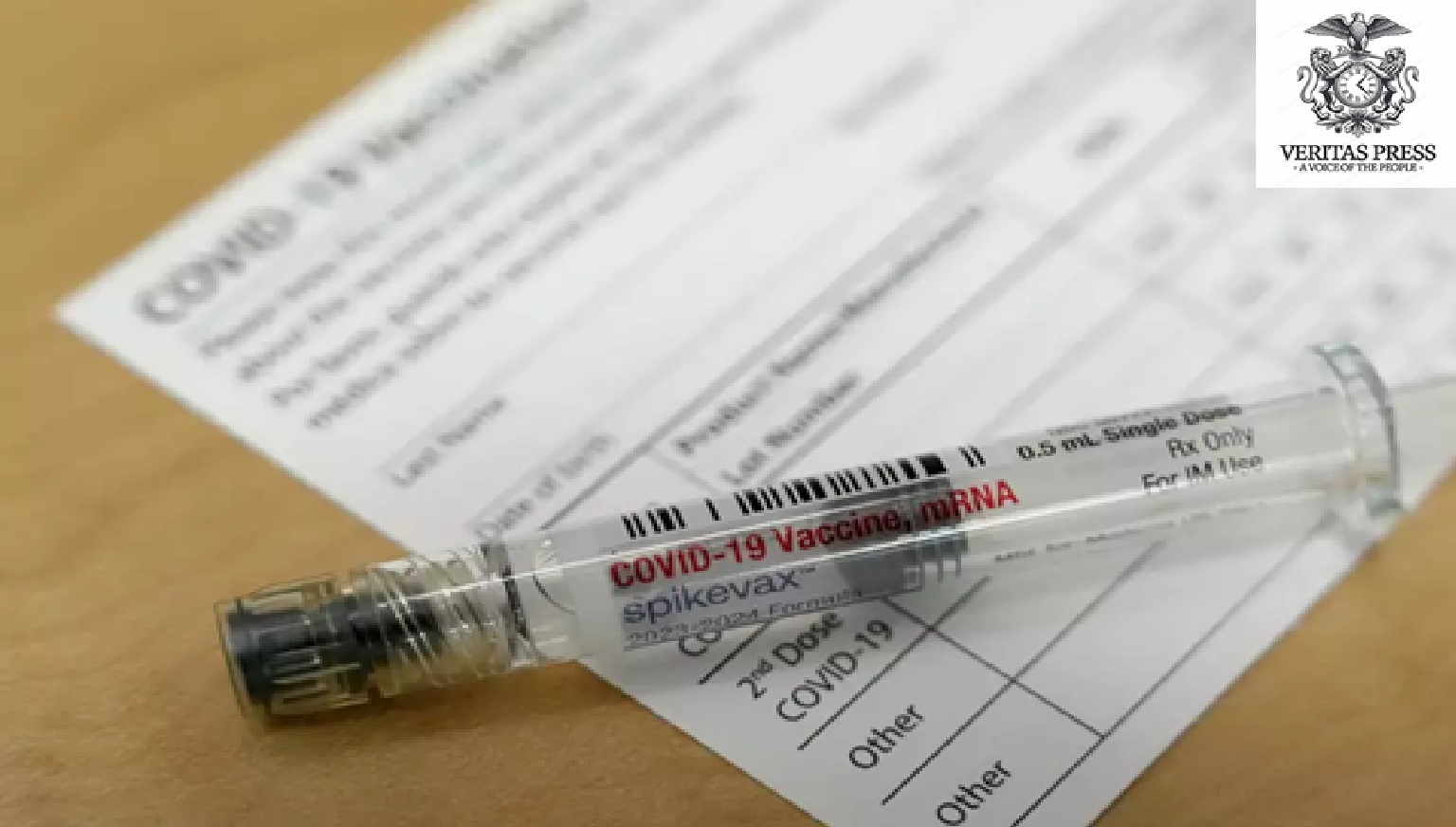
The 2025-2026 COVID-19 vaccines were designed to target the JN.1 lineage, which has dominated since early 2024. BA.3.2, with its 70-75 spike protein mutations, was not part of that calculation.
Lab studies cited by the CDC indicate that current vaccines are less effective against BA.3.2 . “The number of mutations of the JN.1 virus makes it less likely that current vaccines are highly effective against Cicada, but we need more data to better answer this question,” Hopkins says.
This does not mean vaccines are useless. Far from it. Even a mismatched vaccine provides critical protection against severe disease, hospitalisation, and death. The immune system is not a monolith; it has multiple layers of defence, including T-cells that recognise viral components beyond the spike protein.
“Vaccination is still going to help limit cases,” Pekosz emphasises.
The Case For Continued Vaccination:
Dr. Donald Milton, a respiratory virus expert at the University of Maryland, puts it plainly: Vaccines “will still probably protect against severe illness. That still makes them worth taking”.
Dr. García-Sastre echoes this: “It’s not completely clear how effective the current vaccine will be, but it likely still has some effectiveness”.
The WHO similarly notes that current COVID vaccines “are expected to continue providing protection against severe disease”.
Yet public uptake has plummeted. COVID-19 now causes an estimated 300-500 deaths per week in the United States, a figure that, while dramatically lower than peak pandemic levels, remains substantial. Most of these deaths are preventable with vaccination.
The Path Forward: Updated Vaccines.
The good news is that vaccines can be updated. “One beauty of this vaccine is that we can update it every year,” says Dr. Mazo.
Scientists typically reformulate vaccines in the summer, targeting strains expected to circulate in the fall and winter. Dr. William Schaffner, an infectious disease expert at Vanderbilt University Medical Centre, suggests that “the COVID-19 vaccine being developed for this fall may include protection for the new ‘Cicada’ variant”.
But this creates a timing problem. BA.3.2 is spreading now, in the spring of 2026. An updated vaccine, if approved, would likely not be available until the autumn. In the meantime, the existing vaccine, however imperfect, remains the best available defence.
For high-risk individuals, Schaffner suggests considering a second shot: “older Americans and people with chronic health issues may want to consider a second shot…people in high-risk groups could consider getting their second shots in late spring to protect against the summer surge”.
Part Six: Symptoms And Detection.
What To Watch For
The symptoms of BA.3.2 appear largely indistinguishable from other circulating variants. According to the CDC and multiple expert sources, common symptoms include :
| Symptom Category | Specific Symptoms |
| Upper respiratory | Runny or stuffy nose, sore throat, congestion, sneezing |
| Systemic | Headache, fatigue, fever or chills, body aches |
| Respiratory | Cough, shortness of breath (less common) |
| Neurological | Loss of smell or taste (less common than earlier variants) |
| Gastrointestinal | Nausea, diarrhoea, vomiting (reported in some cases) |
Some patients have reported a particularly severe sore throat, described as “razor blade throat”. Skin rashes and night sweats have also been noted in a minority of cases.
The duration of illness typically ranges from several days to two weeks, with most mild cases resolving with supportive care: rest, hydration, and over-the-counter medications to manage fever and discomfort.
Testing Still Works:
For Americans wondering whether their stockpiled home tests will detect BA.3.2, the answer is reassuring. “The tests are designed to detect parts of the virus that don’t change quickly,” Milton explains. “So, your home test kits will still work”.
As always, check expiration dates before use. The FDA has extended expiration dates for many tests, but expired tests may produce inaccurate results.
Antiviral treatments, including Paxlovid, remain effective against BA.3.2, according to Dr. García-Sastre: “The new variant is still sensitive to COVID antiviral drugs that we have been developing, so at least those will work”.
Part Seven: Voices From The Ground.
The Local Perspective
To understand how BA.3.2 is affecting communities, this report reached out to residents in states where the variant has been detected.
In Fort Collins, Colorado, one of the detection sites, local resident and mother of two, Sarah Jenkins (name changed for privacy), expressed frustration at the news. “I thought we were done with this,” she told us. “My kids have missed so much school over the years. I can’t take any more time off work. I just can’t.”
Her sentiment reflects a broader national exhaustion. Five years into the pandemic, the collective will to maintain precautions has largely evaporated. Mask-wearing, once ubiquitous, is now rare. Social distancing is a memory. For many Americans, COVID-19 has become an accepted risk, like influenza or the common cold, rather than an emergency demanding behavioural change.
But public health officials warn that this normalisation carries costs, particularly for vulnerable populations. “The person sitting next to you might have a condition, such as cancer or chronic lung disease, that puts them at risk for severe infection.”
In New York City, where BA.3.2 has been detected in wastewater, immunocompromised resident Marcus Thompson described his continued vigilance. “I still mask indoors. I still avoid crowded places. Most people look at me like I’m crazy now, but I can’t afford to get sick. My immune system won’t handle it.”
Thompson’s isolation, both physical and social, illustrates the hidden toll of the pandemic’s “end.” For many high-risk individuals, the danger has never passed, even as the world has moved on.
Official Responses:
Local health departments have responded to BA.3.2 with measured concern. In a statement to this publication, a spokesperson for the California Department of Public Health noted that “we are monitoring BA.3.2 through our wastewater surveillance network and genomic sequencing program. While we have detected the variant at low levels, we have not seen associated increases in hospitalisations or deaths.”
Similarly, the New York State Department of Health advised residents to “stay up to date on recommended vaccinations, stay home when sick, and consider masking in high-risk settings,” but stopped short of issuing new mandates or recommendations.
The muted response reflects a broader shift in public health strategy: from emergency response to endemic management. But critics argue that this shift has occurred prematurely, leaving the nation vulnerable to resurgent waves.
Part Eight: Investigative Critique, Where Did We Go Wrong?
The Failure Of Long-Term Planning
The emergence of BA.3.2 should not have caught anyone by surprise. Virologists have long warned that SARS-CoV-2 would continue to evolve, generating new variants with unpredictable characteristics. The only uncertainty was timing.
And yet, when BA.3.2 arrived, it found a nation largely unprepared. Surveillance systems had been dismantled. Vaccination campaigns had stalled. Public health messaging had gone silent.
“The continued emergence of variants like BA.3.2 highlights the ongoing evolution of SARS-CoV-2 and the need for sustained surveillance,” notes an NDTV analysis.
But sustained surveillance requires sustained funding and sustained political will. Both have been in short supply.
The Politicalization Of Public Health:
America’s pandemic response has been hamstrung by political polarisation from the beginning. Mask mandates, vaccine requirements, and school closures became cultural flashpoints, eroding trust in public health institutions.
The aftermath has been equally damaging. In many states, legislatures have passed laws restricting the authority of health officials to implement future pandemic measures. Funding for surveillance and vaccination programs has been slashed. The CDC, once the gold standard for infectious disease tracking, has seen its authority and budget diminished.
Dr. Hopkins’ warning, “low vaccination rates and little to no public health effort to stop infections and spread leave us vulnerable, is as much a political statement as a medical one.
The Global Dimension:
BA.3.2 was first detected in South Africa, a familiar pattern. Throughout the pandemic, African nations have served as early warning systems for new variants, identifying Beta, Omicron, and now BA.3.2. Yet these same nations have received little support for surveillance infrastructure, vaccine access, or treatment.
The WHO has documented BA.3.2 in at least 23 countries, but the true global spread is almost certainly wider. Many nations lack the genomic sequencing capacity to identify new variants promptly. The variant could be circulating undetected across large swaths of Asia, Africa, and Latin America.
Global health equity is not merely a moral imperative; it is a practical necessity. A variant that emerges anywhere is a threat everywhere. Until the world invests in genuine global surveillance and response capacity, the cycle of emergence, spread, and reaction will continue indefinitely.
Part Nine: Looking Ahead, Scenarios For Summer 2026.
What Comes Next?
Public health experts are divided on BA.3.2’s trajectory. Several scenarios are possible:
Scenario 1: Fizzle. The variant’s reduced cell binding limits its spread. It continues to circulate at low levels but never achieves dominance. Other variants, XFG, LF.7, or yet-unidentified strains, remain predominant.
Scenario 2: Gradual Rise. BA.3.2 slowly increases its share of cases over months, eventually becoming co-dominant with existing variants. This scenario would likely produce a modest summer wave but no overwhelming surge.
Scenario 3: Summer Surge. The variant’s immune evasion properties, combined with waning population immunity and seasonal factors, trigger a significant wave of infections. Hospitalisations rise, particularly among unvaccinated and vulnerable populations.
Scenario 4: Further Mutation. BA.3.2 acquires additional mutations that enhance its infectivity or virulence. A new subvariant, BA.3.2.1 or BA.3.2.2, emerges with more concerning properties.
Dr. Pekosz leans toward Scenario 2: “It may evolve to be a bit better at spreading or causing disease, but we just don’t know. It’s unlikely that BA.3.2 will cause a wave as large or severe as the ones seen very early in the pandemic”.
Dr. Hopkins is more cautious: “It’s possible we could see Cicada become the dominant strain in the U.S., but that’s far from certain”.
Preparedness Recommendations
Regardless of BA.3.2’s trajectory, experts agree on several preparedness measures:
For individuals:
- Stay current on recommended vaccinations
- Test if symptomatic and stay home when sick
- Consider masking in crowded indoor settings, especially if high-risk
- Improve home ventilation
- Have a plan for accessing antivirals if infected
For policymakers:
- Restore and sustain wastewater surveillance funding
- Maintain genomic sequencing capacity
- Support rapid vaccine reformulation processes
- Develop clear, non-partisan public health messaging
- Invest in global surveillance infrastructure
For healthcare systems:
- Maintain capacity for surge response
- Ensure equitable access to antivirals and vaccines
- Continue long COVID research and treatment programs
Part Ten: Practical Guidance For Readers.
Protecting Yourself And Others
The guidance provides four straightforward steps that are considered to be just as applicable in the year 2026 as they were back in the year 2020:
- Wash your hands after using the bathroom, before preparing food or eating, and after contact with sick individuals. Hand-washing decreases respiratory infection risk by 16% to 21%.
- Stay home when unwell—not just to recover, but to protect others. The person beside you on public transit or in the office may have a condition that puts them at severe risk.
- Get outside when possible. Reducing time in crowded, enclosed spaces reduces exposure.
- Consult a trusted clinician if you have concerns about your specific risk profile due to health conditions.
A Note On Vaccination Timing:
For those who have not received a COVID-19 vaccine in the past six to twelve months, Dr. García-Sastre suggests “it may be worth talking to your doctor about whether a booster is right for you”.
The current vaccine formulation will remain available until fall 2026, when an updated version may include BA.3.2 protection.
Staying Informed:
The CDC continues to track BA.3.2 through its variant surveillance programs, though data is increasingly limited. WastewaterSCAN, a Stanford University-run program, provides more frequent updates on detections across participating communities.
Readers are encouraged to consult these sources directly rather than relying on social media or anecdotal reports.
Conclusion: Learning To Live With The Unknown.
The story of BA.3.2 is not a story of panic. It is a story of vigilance, of a virus that continues to evolve and a society that has largely stopped watching.
“Cicada” has not triggered a catastrophic wave. It has not overwhelmed hospitals. It has not brought society to a halt. And based on current evidence, it likely will not.
But the variant’s emergence carries a warning: the pandemic is not over. It has simply entered a new phase, one characterised by uncertainty, gradual evolution, and the ever-present possibility of surprises.
“We need to be cautious but not panicked,” says Dr. Mazo. That balanced approach, neither complacent nor hysterical, represents the path forward.
The Cicada has emerged from underground. Whether it will sing through the summer or fade back into silence remains to be seen. But one thing is certain: the virus is still watching, even when we look away.
Source: Multiple News Agencies
Submissions:
For The Secure Submission Of Documentation, Testimonies, Or Exclusive Investigative Reports From Any Global Location, Please Utilise The Following Contact Details For Our Investigations Desk: enquiries@veritaspress.co.uk or editor@veritaspress.co.uk
Help Support Our Work:
Popular Information is powered by readers who believe that truth still matters. When just a few more people step up to support this work, it means more lies exposed, more corruption uncovered, and more accountability where it’s long overdue.
Help Protect Independent Journalism, Which Is Currently Under Attack.
If you believe journalism should serve the public, not the powerful, and you’re in a position to help, becoming a DONATOR or a PAID SUBSCRIBER truly makes a difference.
DONATION APPEAL: If You Found This Reporting Valuable, Please Consider Supporting Independent Journalism.
Help Support Our Work – We Know, We Know, We Know …
Seeing these messages is annoying. We know that. (Imagine what it’s like writing them … )
Your support fuels our fearless, truth-driven journalism. In unity, we endeavour to amplify marginalised voices and champion justice, irrespective of geographical location.
But it’s also extremely important. One of Veritas Press’s greatest assets is its reader-funded model.
1. Reader funding means we can cover what we like. We’re not beholden to the political whims of a billionaire owner. We are a small, independent and impartial organisation. No one can tell us what not to say or what not to report.
2. Reader funding means we don’t have to chase clicks and traffic. We’re not desperately seeking your attention for its own sake: we pursue the stories that our editorial team deems important and believe are worthy of your time.
3. Reader Funding: enables us to keep our website and other social media channels open, allowing as many people as possible to access quality journalism from around the world, particularly those in places where the free press is under threat.
We know not everyone can afford to pay for news, but if you’ve been meaning to support us, now’s the time.
Your donation goes a long way. It helps us:
- Keep the lights on and sustain our day-to-day operations
- Hire new, talented independent reporters
- Launch real-time live debates, community-focused shows, and on-the-ground reporting
- Cover the issues that matter most to our communities, in real time, with depth and integrity
We have plans to expand our work, but we can’t do it without your support. Every contribution, no matter the size, helps us stay independent and build a truly people-powered media platform.
If you believe in journalism that informs, empowers, and reflects the communities we serve, please donate today.
GENEVA — A United Nations fact-finding mission has concluded there are “reasonable grounds to believe”

Iran’s GDP is projected to contract by 5.4 to 6.1% in 2026, its worst performance

The Trump administration is preparing a $2.8 billion weapons package for Israel containing 40,000 2,000-pound

Film alleges mass civilian deaths are routinely built into military decisions amid Israel’s genocidal war

The Israeli rights group says violence, displacement, economic strangulation, and settlement expansion form part of

Houthi forces have captured the historic Red Sea port of Mocha and are advancing on

London’s historic sanctions against Israeli settlements mark a watershed moment in UK foreign policy, but
With 95% of Gaza’s population now wholly dependent on aid and more than 90% stripped

India calls for Kashmir and Ladakh to appear only on its official map after a

ISLAMABAD – In the high-stakes political theatre of Pakistan, the battleground has shifted from the