


Help support our mission, donate today and be the change. Every contribution goes directly toward driving real impact for the cause we believe in.
TEHRAN, IRAN – One month into a conflict that has already claimed more than 4,500 lives, reshaped global energy markets, and exposed the limits of American military power in the Middle East, a singular truth has emerged from the diplomatic wreckage: Iran, not Washington or Tel Aviv, will determine how and when this war ends.
This is not bravado from Tehran. It is a cold strategic calculation grounded in battlefield realities, economic leverage, and a deep, perhaps irreparable, distrust of American intentions. As the Trump administration extends a ten-day pause on strikes against Iranian energy sites while simultaneously dispatching thousands of additional ground troops to the region, the contradictions in U.S. policy have become so glaring that even America’s traditional allies are questioning Washington’s endgame.
The Five Conditions: Iran’s Counteroffensive On Paper.
On March 25, a senior Iranian political-security official delivered what amounted to a diplomatic counter-punch of extraordinary clarity. Speaking to state broadcaster Press TV, the official outlined five non-negotiable conditions for ending the war that the United States and Israel launched on February 28 with the assassination of Supreme Leader Ayatollah Seyyed Ali Khamenei.
The conditions are:
- A complete halt to “aggression and assassinations” by the United States and Israel
- Concrete, verifiable mechanisms ensuring the war cannot be reimposed and the removal of all US military bases from the region.
- Guaranteed war damages and reparations, with clearly defined payment structures
- The end of the war across all fronts for all resistance groups throughout the region
- International recognition of Iran’s sovereign authority over the Strait of Hormuz
The official added a pointed coda that captured Tehran’s hardened posture: “The end of the war will occur when Iran decides it should end, not when Trump envisions its conclusion”.
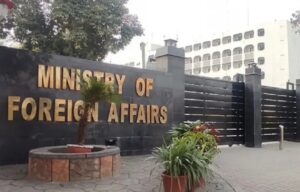
These demands represent a fundamental rejection of the 15-point peace framework that the United States reportedly transmitted through Pakistani intermediaries. According to reports from Islamabad, the American proposal, which has not been made public in full, included demands for Iran to dismantle its nuclear facilities at Natanz, Isfahan, and Fordo, transfer its enriched uranium stockpiles to the International Atomic Energy Agency, end support for regional allied groups, and open the Strait of Hormuz as a “free maritime zone”.
In exchange, Washington offered a complete lifting of sanctions, support for Iran’s civilian nuclear program at Bushehr, and the removal of “snapback” sanctions mechanisms.
The Credibility Chasm:
The gap between the two negotiating positions is not merely wide; it is qualitatively unbridgeable, given what Iranian officials describe as America’s “bankruptcy of integrity ” (credibility). The phrase appeared repeatedly in Tehran’s diplomatic communications this week, reflecting a scepticism that has hardened into existential certainty.
Foreign Minister Abbas Araghchi articulated this distrust in granular detail during a phone call with his Turkish counterpart Hakan Fidan on March 28. “The core issue lies in the U.S. contradictory behaviours and unreasonable demands,” Araghchi said, according to a statement from his ministry. He noted that such “contradictory behaviours and remarks are very suspicious and have increased pessimism about Washington’s deception”.
Fidan’s response was telling. The Turkish foreign minister acknowledged that Iran’s distrust is “understandable”, a significant admission from a NATO member state, noting that Tehran was targeted twice during negotiation processes. The reference was unmistakable: the February 28 strikes that killed Khamenei came just days after the conclusion of a second round of indirect nuclear talks in Geneva.
For Iranian decision-makers, the timing was not coincidental. A senior official told Press TV that the United States had “no genuine intention to engage in meaningful dialogue” in either the spring or winter 2025 negotiation rounds, characterising both as deceptive preludes to military aggression.
The Human Toll: Beyond Battlefield Metrics.
While diplomats trade accusations, the war’s human cost continues to mount with sickening regularity. According to the U.S.-based Human Rights Activists News Agency (HRANA), at least 3,291 Iranians have been killed since February 28, including 1,455 civilians. Of those, 217 were children.
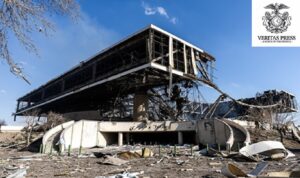
The most visceral symbol of this toll emerged on the war’s first day. On February 28, an American strike hit the Shajareh Tayyebeh Elementary School in Minab, a city in southern Iran. The attack killed more than 175 students and teachers, a figure that has made the school bombing a rallying cry for Iran’s retaliation campaign.
Speaking to the United Nations Human Rights Council on March 27, Araghchi described the attack as a “calculated, phased assault” and a “war crime and a crime against humanity.” UN rights chief Volker Turk, while not attributing blame, expressed “visceral horror” at the bombing and called for “justice for the terrible harm done”.
The cultural devastation has been equally profound. Ahmad Alavi, head of the Tehran city council’s cultural heritage committee, reported that at least 120 museums, historical buildings, and cultural sites across Iran have sustained “serious structural damage” from U.S. and Israeli strikes. These include the UNESCO-listed Golestan Palace, Saadabad Palace, the Marble Palace, and Teymourtash house, known as the War Museum .
Regional casualties compound the picture. Lebanon’s Ministry of Health reports 1,116 fatalities since early March. Iraq has lost at least 81 people, mostly members of the Hashed al-Shaabi (Popular Mobilisation Forces). Israel has reported 18 deaths. The United States has lost 13 service members, including six in a refuelling aircraft crash over Iraq.
The Strait As A Strategic Weapon
Central to Iran’s negotiating leverage, and the core of its fifth condition, is the Strait of Hormuz, the 21-mile-wide waterway through which approximately 20% of the world’s oil and natural gas normally passes.
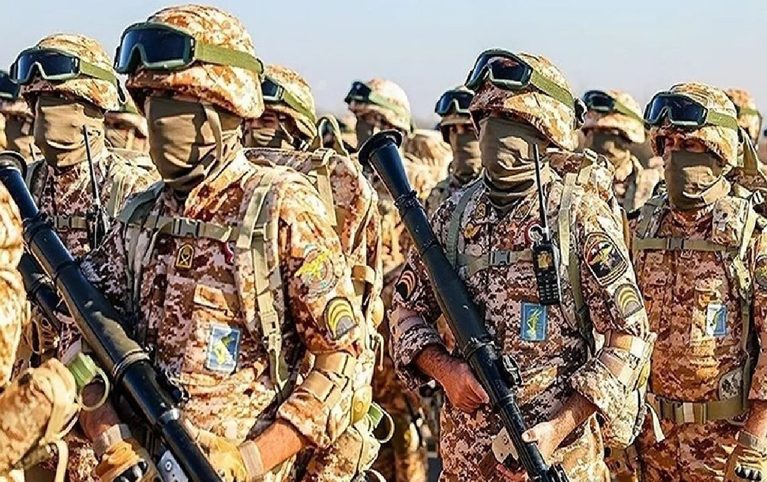
Since early March, the strait has been effectively closed. Iranian Revolutionary Guard Corps (IRGC) naval forces have turned back multiple container ships of various nationalities, and the IRGC has formally prohibited shipping “to and from ports of allies and supporters of the Israeli-American enemies”.
The economic consequences have cascaded across the globe. South Korea has launched an emergency economic response. Japan has begun tapping state-owned oil reserves. The Philippines declared a “national energy emergency,” warning that it has only 40 to 45 days of petroleum supply remaining.
In Ghana, where this correspondent filed portions of this report, fuel prices are projected to rise to between GH₵17 and GH₵18 per litre by early April. Bank of Ghana Governor Johnson Asiama warned that the conflict poses a “fresh threat” to the country’s inflation targets.
The disruption extends far beyond energy. According to BBC Verify, the price of fertilisers, helium, petrochemicals, and sulfur, all critical inputs for global agriculture, semiconductor manufacturing, pharmaceuticals, and battery production, has spiked as shipments through the strait have collapsed from more than 100 vessels per day to just a handful.
The Kiel Institute has warned that a prolonged closure could push up global wheat prices by 4.2% and fruit and vegetable prices by 5.2%, with the most severe impacts in Zambia (31%), Sri Lanka (15%), Taiwan (12%), and Pakistan (11%).
Russia’s Opportunistic Calculus:
In a development with significant geopolitical implications, Russia has signalled its readiness to capitalise on the supply disruptions. Kirill Dmitriev, Vladimir Putin’s special envoy, said Moscow is “well positioned” to increase production of fertilisers and other commodities to fill the gap left by Gulf exports.
This presents a strategic dilemma for Washington: the same sanctions regime designed to isolate Russia economically may now inadvertently strengthen Moscow’s hand as it positions itself as a reliable supplier to markets disrupted by America’s war.
The Battlefield Calculus:
Despite the Trump administration’s stated desire for a negotiated end to the conflict, U.S. military deployments tell a different story. On March 26, the Pentagon confirmed the deployment of elements of the 82nd Airborne Division headquarters and the 1st Brigade Combat Team of the 10th Mountain Division to the Middle East.
The composition of these units reveals their intended purpose. The 82nd Airborne is trained to parachute or helicopter into target areas and seize them, a capability that could be used to take Kharg Island or other critical Iranian territory. The 1st Brigade Combat Team is fully equipped for sustained “full spectrum” operations.
These deployments come alongside reports that the United States is weighing sending up to 10,000 additional troops to the region, a significant boost to Washington’s military footprint despite President Trump’s insistence that peace talks are underway.
Regional Fractures:
The war has exposed deep divisions within the Gulf Cooperation Council (GCC). On March 26, GCC Secretary-General Jasem Al Budaiwi warned that Iranian attacks on Gulf countries and the closure of the Strait of Hormuz have “crossed all red lines” and pose an “immediate and long-term threat to international stability”.
Budaiwi’s statement reflected growing frustration among Gulf Arab states caught between their security dependence on the United States and their economic vulnerability to disruptions in the strait. “What is representing a threat today will grow up in the future, and the chains must be protected,” he said, calling the situation an “international responsibility”.
Yet Iran has shown no hesitation in targeting Gulf states hosting U.S. military assets. On March 27, Kuwait’s main commercial port at Shuwaikh was damaged in a drone attack, an escalation that prompted Kuwaiti authorities to issue a formal condemnation but stopped short of military retaliation.
Turkey, meanwhile, has positioned itself as a potential mediator. During his phone call with Araghchi, Fidan reiterated Ankara’s “willingness to play a constructive mediating role” and noted that Turkey had been engaged in consultations with regional officials to reduce tensions.
But Turkish mediation faces significant hurdles. Iran’s distrust of U.S. intentions extends to the intermediaries Washington has chosen. According to reports, Iran has specifically rejected President Trump’s special envoy Steve Witkoff and Trump’s son-in-law Jared Kushner as acceptable interlocutors, accusing both of “treachery”, a term that translates to “perfidy” or “breach of trust”.
The Pakistan Factor:
The United States’ reliance on Pakistan as an intermediary has drawn particular scrutiny. As one commentator noted in The Indian Express, “America’s biggest failure is turning to Pakistan, a rentier state known for its own lawlessness, for mediation”.
This assessment reflects a broader scepticism about Islamabad’s ability to bridge the gap between Washington and Tehran. While Pakistan has historical ties to both countries, its own internal instability and regional rivalries with Iran limit its credibility as an honest broker.
The choice of Pakistan may also reflect Washington’s isolation on the conflict. Major European powers, including the United Kingdom, France, Germany, Spain, and Italy, have refused to join the war effort. Poland, the Czech Republic, Bosnia and Herzegovina, and Albania have remained passive supporters at best.
G7 Divisions:
The divisions within the Western alliance were on full display at the March 27 G7 Foreign Ministers meeting in France. U.S. Secretary of State Marco Rubio arrived seeking support for America’s strategy, but European allies pressed for clarity on Washington’s endgame.
British Foreign Minister Yvette Cooper struck a notably different tone from Washington, urging a “swift resolution” to the conflict while accusing Iran of “holding the global economy hostage” through the strait closure. The British position implicitly criticised both Tehran’s tactics and Washington’s failure to achieve a rapid conclusion to a war that has now entered its second month.
The Nuclear Dimension:
Beneath the immediate crisis lies the unresolved question of Iran’s nuclear program. The American 15-point plan reportedly demanded that Iran “stop uranium enrichment within its territory,” transfer its enriched uranium stockpiles to the IAEA, and dismantle major nuclear sites at Natanz, Isfahan, and Fordo.
Yet Iran’s nuclear capability has proven more resilient than American planners anticipated. As one analyst noted, despite claims after last year’s missile attacks that Iran’s nuclear program had been “completely destroyed,” the U.S. now says that the “removal of all the highly enriched uranium” would be a demand for ending the war, suggesting that stockpiles remain safely concealed and Iran’s nuclear capability is far from finished.
IAEA Director General Rafael Grossi has expressed “deep concern” following reports of strikes near Iran’s Bushehr nuclear power plant, warning that any damage to the facility could trigger a “major radiological accident” with consequences far beyond Iran’s borders.
The April 6 Deadline:
The immediate diplomatic horizon is defined by President Trump’s April 6 deadline for Iran to reopen the Strait of Hormuz. On March 26, Trump announced a ten-day extension to the original deadline, claiming that Iran had “asked for seven” days and he had countered with ten.
Trump’s characterisation of the extension was characteristically unvarnished. “I don’t care” about making a deal, he remarked, insisting the burden of proof for peace lies with the Iranian leadership. Yet the extension also revealed a recognition that the conflict had not proceeded according to Washington’s timeline.
The same day, Trump revealed that Iran had allowed ten oil tankers to pass through the strait as a “present” to the United States, a gesture the president interpreted as evidence that Tehran is “real and solid”. Iranian state media did not confirm the passage, and the IRGC has maintained that the strait remains closed to all shipping to and from U.S. and Israeli allies.
Iran’s New Leadership:
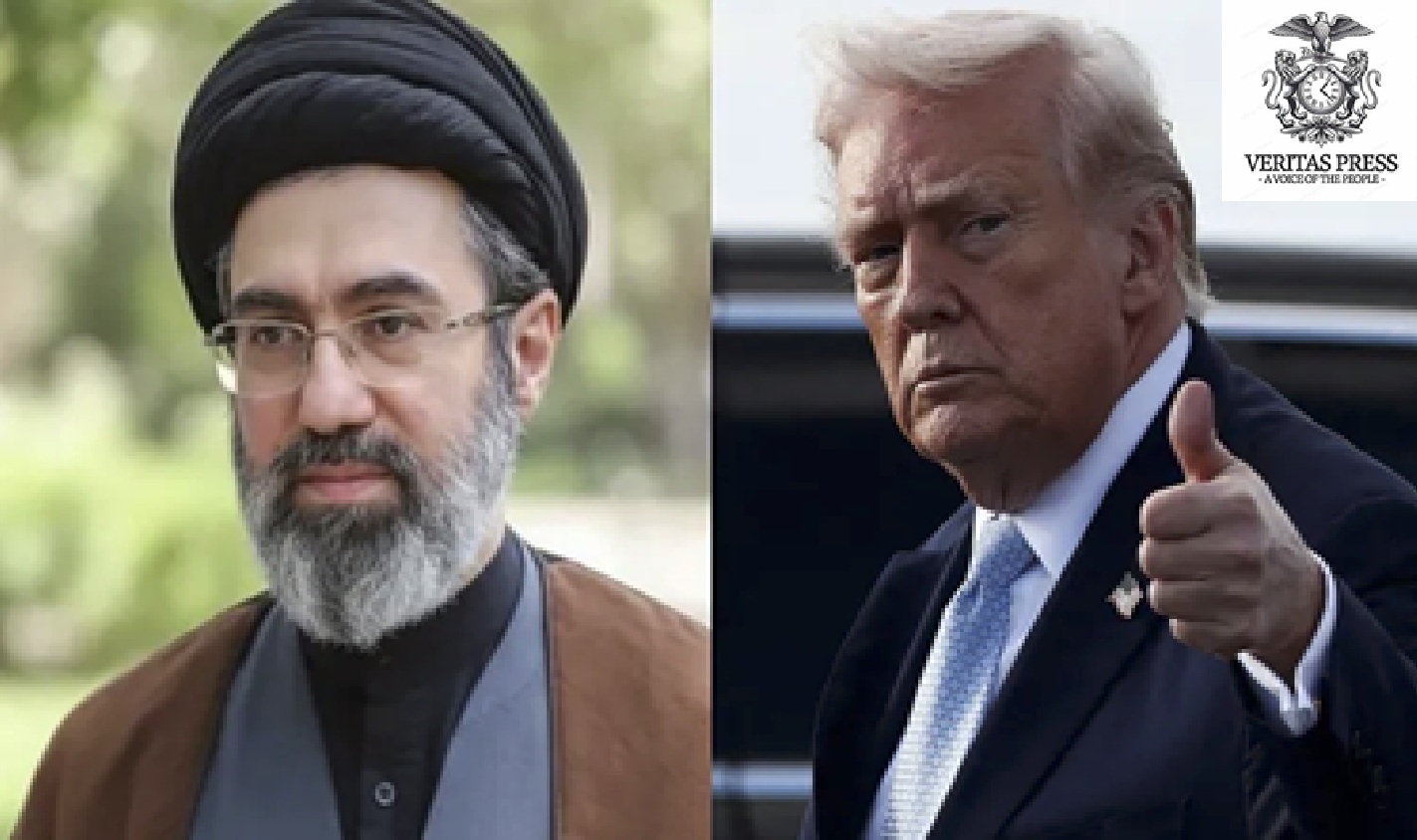
The conflict has also reshaped Iran’s internal political landscape. Mojtaba Khamenei, the son of the assassinated supreme leader, has assumed his father’s position under circumstances that would test any political system. Trump has sought to exploit the transition, claiming during a televised interview that the CIA had briefed him on the new leader’s sexuality, remarks widely condemned as an attempt to destabilise the new leadership.
Yet the transition has proceeded with surprising stability. President Masoud Pezeshkian has emerged as a steady voice, warning on March 28 that Iran will retaliate “strongly” against any attack on its infrastructure and economic centres. “We have said many times that Iran doesn’t carry out preemptive attacks, but we will retaliate strongly if our infrastructure or economic centres are targeted,” Pezeshkian posted on social media.
The Strategic Assessment:
What explains Iran’s willingness to hold firm in the face of a sustained American and Israeli bombing campaign? The answer lies in a strategic calculation articulated by U.S. and Iranian analysts alike.
As the Carnegie Endowment’s Karim Sajadpour noted, “Iran doesn’t lose if it doesn’t lose, and America doesn’t win if it doesn’t win.” In asymmetric warfare, survival constitutes victory, and Iran has survived a month of sustained bombardment while maintaining its ability to strike back and impose costs through the Strait closure.
Nate Swanson, former White House National Security Council official for Iran affairs, offered a blunter assessment: Iranian leaders have concluded that they can “outlast” the United States and its regional allies in a long-term conflict. The war of attrition favours the side with greater tolerance for casualties and economic pain, and on both measures, Iran believes it holds the advantage.
This assessment is reinforced by the limited nature of international support for the U.S. campaign. As the G7 divisions demonstrate, even America’s closest allies have declined to join the war effort. The absence of a broad coalition limits Washington’s ability to sustain the conflict indefinitely.
Conclusion: The Inevitability Of Iranian Terms?
As the war enters its second month, the strategic trajectory points toward an uncomfortable conclusion for the Trump administration: Iran’s conditions for ending the conflict, far from being excessive, may ultimately prove to be the framework for any sustainable peace.
The five conditions, an end to aggression, verifiable guarantees, reparations, a comprehensive regional ceasefire, and recognition of Iranian sovereignty over the strait, represent a coherent vision of post-war order that addresses Iran’s core security concerns. The American 15-point plan, by contrast, reads like a surrender document drafted before the conflict began, disconnected from the realities of a battlefield that has not produced American victory.
Whether the Trump administration can adjust to this reality remains uncertain. The ten-day pause in strikes against Iranian energy sites offers a brief window for diplomacy, but the continued deployment of ground troops suggests that Washington is preparing for a prolonged conflict rather than a negotiated settlement.
One thing is clear: the war will end when Iran decides it should end. As the official told Press TV, “Iran will end the war when it decides to do so and when its own conditions are met”. For a nation that has survived a month of American and Israeli bombardment, assassinated its supreme leader, and still holds the world’s economy hostage through the Strait of Hormuz, that is not bravado. It is a statement of strategic fact.
Source: Multiple News Agencies
Submissions:
For The Secure Submission Of Documentation, Testimonies, Or Exclusive Investigative Reports From Any Global Location, Please Utilise The Following Contact Details For Our Investigations Desk: enquiries@veritaspress.co.uk or editor@veritaspress.co.uk
Help Support Our Work:
Popular Information is powered by readers who believe that truth still matters. When just a few more people step up to support this work, it means more lies exposed, more corruption uncovered, and more accountability where it’s long overdue.
Help Protect Independent Journalism, Which Is Currently Under Attack.
If you believe journalism should serve the public, not the powerful, and you’re in a position to help, becoming a DONATOR or a PAID SUBSCRIBER truly makes a difference.
DONATION APPEAL: If You Found This Reporting Valuable, Please Consider Supporting Independent Journalism.
Help Support Our Work – We Know, We Know, We Know …
Seeing these messages is annoying. We know that. (Imagine what it’s like writing them … )
Your support fuels our fearless, truth-driven journalism. In unity, we endeavour to amplify marginalised voices and champion justice, irrespective of geographical location.
But it’s also extremely important. One of Veritas Press’s greatest assets is its reader-funded model.
1. Reader funding means we can cover what we like. We’re not beholden to the political whims of a billionaire owner. We are a small, independent and impartial organisation. No one can tell us what not to say or what not to report.
2. Reader funding means we don’t have to chase clicks and traffic. We’re not desperately seeking your attention for its own sake: we pursue the stories that our editorial team deems important and believe are worthy of your time.
3. Reader Funding: enables us to keep our website and other social media channels open, allowing as many people as possible to access quality journalism from around the world, particularly those in places where the free press is under threat.
We know not everyone can afford to pay for news, but if you’ve been meaning to support us, now’s the time.
Your donation goes a long way. It helps us:
- Keep the lights on and sustain our day-to-day operations
- Hire new, talented independent reporters
- Launch real-time live debates, community-focused shows, and on-the-ground reporting
- Cover the issues that matter most to our communities, in real time, with depth and integrity
We have plans to expand our work, but we can’t do it without your support. Every contribution, no matter the size, helps us stay independent and build a truly people-powered media platform.
If you believe in journalism that informs, empowers, and reflects the communities we serve, please donate today.
GENEVA — A United Nations fact-finding mission has concluded there are “reasonable grounds to believe”
Iran’s GDP is projected to contract by 5.4 to 6.1% in 2026, its worst performance
The Trump administration is preparing a $2.8 billion weapons package for Israel containing 40,000 2,000-pound

Film alleges mass civilian deaths are routinely built into military decisions amid Israel’s genocidal war
The Israeli rights group says violence, displacement, economic strangulation, and settlement expansion form part of

Houthi forces have captured the historic Red Sea port of Mocha and are advancing on
London’s historic sanctions against Israeli settlements mark a watershed moment in UK foreign policy, but
With 95% of Gaza’s population now wholly dependent on aid and more than 90% stripped
India calls for Kashmir and Ladakh to appear only on its official map after a
ISLAMABAD – In the high-stakes political theatre of Pakistan, the battleground has shifted from the