


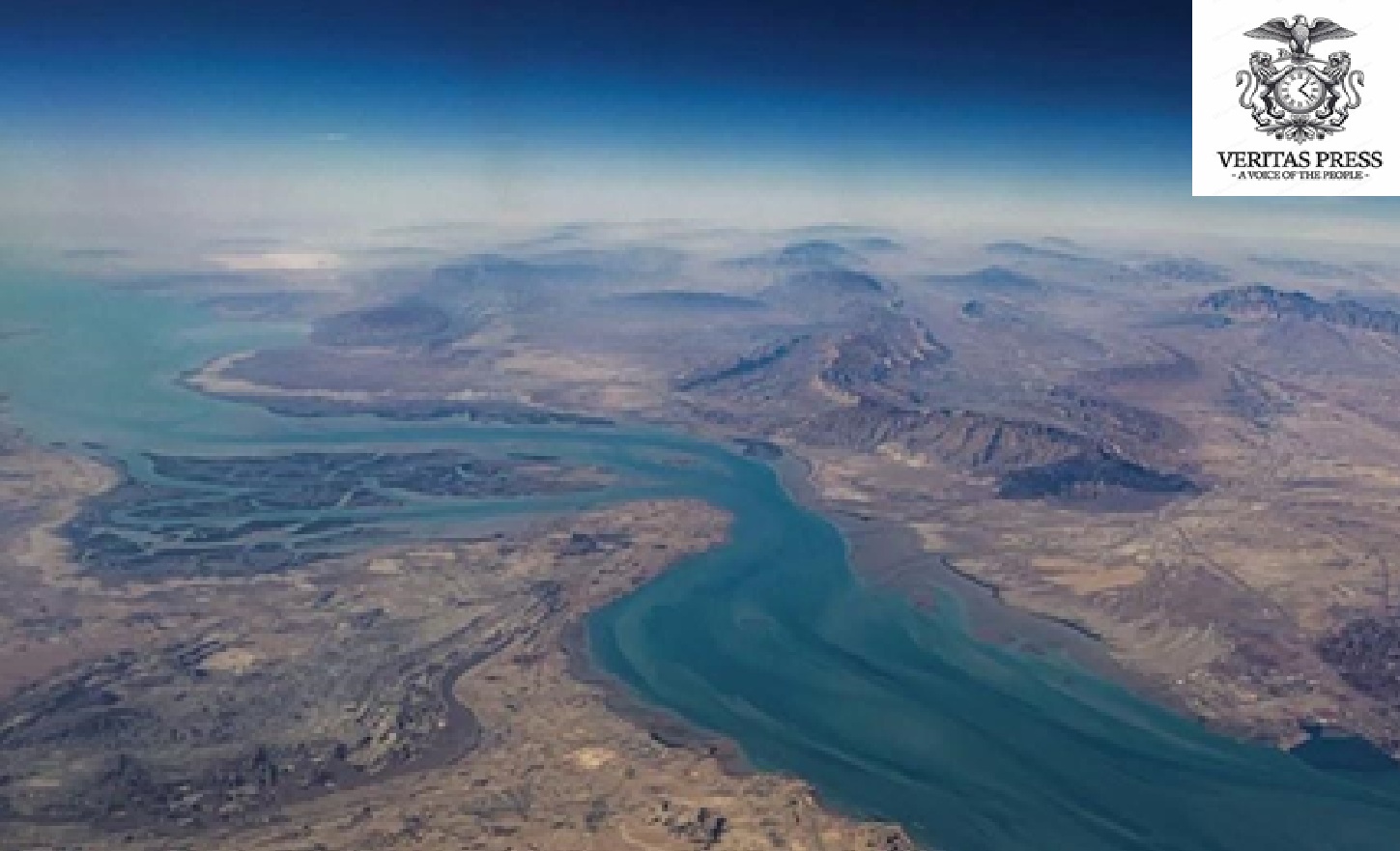

SEOUL / TEHRAN — In a packed press conference at the Iranian Embassy in Seoul’s Yongsan district on March 26, Ambassador Saeed Koozechi delivered a carefully calibrated message that encapsulated the excruciating dilemma facing South Korea and other energy-dependent nations: Iranian vessels can traverse the Strait of Hormuz, but only on Tehran’s terms.
“There are no problems with the vessels,” Koozechi said through an interpreter, referring to the 26 South Korean ships and approximately 180 crew members currently stranded in the strategic waterway. “But in order for them to pass through, you need coordination, prior consultations with the Iranian military and government.”
The ambassador’s words, while outwardly conciliatory, mask a far more complex geopolitical reality. South Korea, which procures nearly 55% of its energy supplies from Gulf states through this narrow chokepoint, finds itself caught between Iranian demands for deference and American pressure for military intervention, with $144 billion in annual energy imports hanging in the balance.
This investigation examines the competing narratives surrounding the Hormuz crisis, the diplomatic war of words between Seoul and Tehran, and the profound economic and strategic stakes for a nation that once ranked as Iran’s fifth-largest trading partner before sanctions strained bilateral relations.
The Envoy’s Announcement: Coordination, Not Blockade.
Ambassador Koozechi’s March 26 press conference marked the first time Iran had publicly applied the “non-hostile” designation to South Korea since Tehran communicated its maritime restrictions to the International Maritime Organisation earlier that week.
“Korea is categorised as a non-hostile nation,” Koozechi stated, adding that Iran appreciated Seoul’s refusal to join what he described as “agreements proposed by the United States”.
The designation carries profound practical implications. According to a letter Iran sent to the International Maritime Organisation on March 22, the Strait of Hormuz “remains open to navigation but not to ships from the United States, Israel, or states that Iran considers aggressors”. The document, obtained by Russia’s TASS news agency, specified that “vessels, equipment and any assets belonging to the aggressor parties, namely the United States and the Israeli regime, as well as other participants in the aggression, have no right to non-hostile passage”.
South Korea’s inclusion in the “non-hostile” category represents a diplomatic victory for Seoul’s cautious approach, one that has so far resisted U.S. President Donald Trump’s calls, issued via social media on March 14, for allied nations to deploy warships to the strait. But the ambassador made clear that the designation comes with strings attached.
“Any entity that serves the interests of the U.S. and Israel will face Iranian sanctions,” Koozechi warned. “It is not justified for U.S. companies to operate freely in the Persian Gulf while Iranian civilians, factories and hospitals are being brutally attacked”.
The Diplomatic Dispute: What Was Said, And What Wasn’t.
At the heart of the current impasse lies a fundamental disagreement between Seoul and Tehran over what transpired during a March 23 phone call between South Korean Foreign Minister Cho Hyun and his Iranian counterpart, Abbas Araghchi.
According to Ambassador Koozechi, the Iranian side formally requested detailed information on South Korean vessels seeking passage through the strait. “Iran is acting in good faith and is willing to allow South Korean ships to transit the Strait of Hormuz, but the process will depend on receiving the relevant information and the vessels’ list. Once they are provided, we will consider it,” he told reporters.
Seoul’s foreign ministry offers a starkly different account. “Our understanding is that the mention of vessel information was solely in the context of safety measures in the event of a humanitarian issue,” Ministry Spokesperson Park Il said at a briefing following the ambassador’s press conference. “The Iranian ambassador’s remarks appear to be quite out of context”.
A ministry official went further, telling reporters that “we have not negotiated with Iran on the passage of vessels,” and that Seoul had received no formal request for vessel details, nor had it provided any such information. The official characterised Tehran’s inquiry as a “request for cooperation on safety measures in the event of a humanitarian situation on the anchored vessels”, a formulation notably different from the ambassador’s framing.
This discrepancy reflects deeper tensions. According to a source familiar with the matter who spoke to Yonhap News, there is no immediate crisis for the 26 Korean ships currently anchored near the strait, as each vessel carries between 30 and 45 days’ worth of supplies. But the disagreement over what was actually discussed suggests a fundamental divergence in how the two sides view the nature of their engagement.
The Military Context: The Killing Of Admiral Tangsiri.
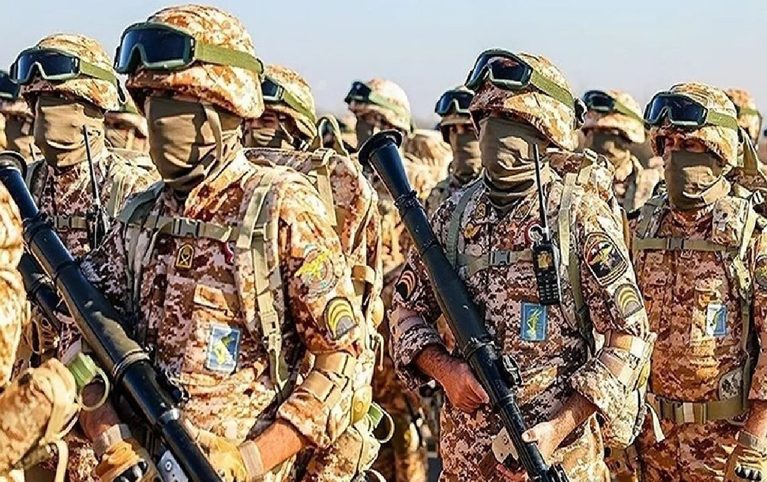
Against this diplomatic backdrop, the military situation continues to escalate. On March 26, the same day as Koozechi’s press conference, Israel claimed responsibility for killing Alireza Tangsiri, the commander of Iran’s naval forces and the architect of the Hormuz blockade.
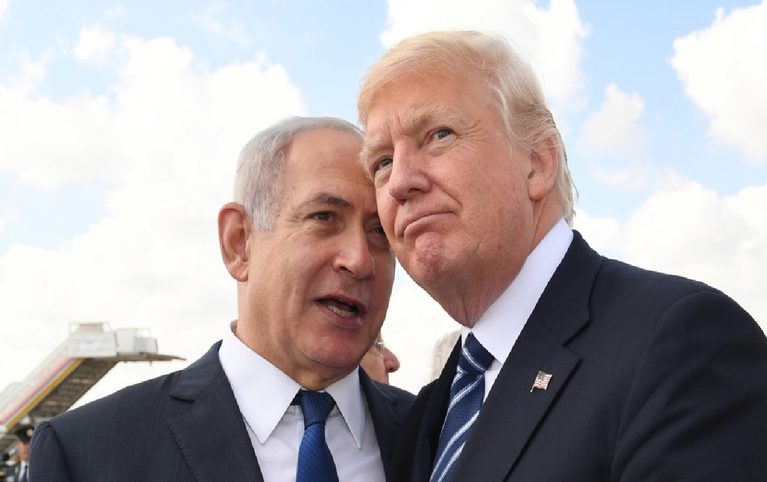
The Times of Israel reported that Tangsiri was killed in an airstrike in the port city of Bandar Abbas, with Israeli Prime Minister Benjamin Netanyahu having ordered stepped-up attacks on Iranian military targets ahead of a possible ceasefire announcement.
Tangsiri’s death, while significant, may not immediately alter Iran’s control over the strait. Iranian Foreign Minister Abbas Araghchi, in comments to Al Jazeera following the earlier killing of Supreme Leader Ayatollah Ali Khamenei on the war’s first day, emphasised that Iran’s command structure is “institution and not individual-based, meaning there are multiple back-ups and succession plans in place”.
“I do not know why the Americans and the Israelis still have not understood this point: The Islamic Republic of Iran has a strong political structure with established political, economic, and social institutions,” Araghchi said, referencing the “mosaic defence” doctrine developed by Iranian strategist Mohd Jafari.
The killing of Tangsiri nevertheless represents a significant blow. The naval commander had been responsible for enforcing the blockade that had disrupted tanker traffic by an estimated 95%, sending benchmark Brent crude prices soaring above $100 per barrel.
Iran’s Maritime Strategy: A Complex Web Of Designations.
Iran’s approach to the Hormuz crisis is neither a blanket blockade nor unrestricted passage. Rather, Tehran has constructed a nuanced system of designations and restrictions that reflects its strategic priorities.
According to the March 22 letter to the International Maritime Organisation, Tehran has established a clear framework: vessels from countries not considered hostile may transit with prior coordination, while those affiliated with the “aggressor parties” have no right to passage. A statement attributed to Foreign Minister Araghchi and circulated by Iran’s diplomatic mission in Mumbai specified that “friendly nations including China, Russia, India, Iraq, and Pakistan” have been granted passage.
South Korea’s placement in the “non-hostile” category is precarious and conditional. Ambassador Koozechi explicitly linked Seoul’s status to its refusal to join U.S.-led initiatives. “We hope the South Korean government will not participate in the agreement proposed by the U.S. as it has done so far,” he said.
When asked whether South Korea’s level of cooperation with the Trump administration could affect its status, Koozechi avoided a direct answer, a diplomatic evasion that suggests the designation could be revoked if Seoul shifts its stance. This ambiguity gives Iran leverage over South Korean policy at a moment when Washington is actively seeking allied naval contributions.
The ambassador also warned that South Korean ships with commercial ties to U.S. or Israeli interests could face restrictions. “Imposing restrictions on them is only natural,” he said. “Blocking their activities and enforcing economic restrictions is Iran’s right to self-defence”.
The Economic Stakes: $144 Billion And 55% Of Energy
For South Korea, the Hormuz crisis is not merely a diplomatic challenge but an existential economic threat. The country procures nearly 55% of its energy supplies from Gulf states, all of which must transit the Strait of Hormuz.
South Korea’s energy import bill for 2024 reached approximately $144 billion, a figure that could rise dramatically if the blockade persists and oil prices continue to climb. Brent crude, which traded below $70 per barrel before the war began on February 28, has surged above $100 and briefly reached $104 in morning trading on March 26 before settling.
The vulnerability is not South Korea’s alone. India, the world’s third-largest energy consumer, relies on Gulf nations for approximately 40% of its crude imports, all shipped via Hormuz. Harvard professor and former IMF Chief Economist Gita Gopinath warned this week that sustained oil price increases could shave up to one percentage point off India’s GDP growth.
China, another major energy importer, has also been affected. Tehran’s statement on “friendly nations” explicitly mentioned China and Russia, both permanent members of the UN Security Council with veto power, suggesting that Iran is carefully calibrating its restrictions to avoid alienating powerful potential allies.
The Humanitarian Dimension: A War Of Images.
Ambassador Koozechi’s press conference began with an unusual feature: a photo exhibition and documentary screening highlighting the impact of U.S.-Israeli attacks on Iran. Reporters were shown images of destroyed buildings and footage of children killed in an airstrike on an elementary school in Minab, along with scenes of grieving families.
The presentation represented a deliberate framing strategy. By juxtaposing images of Iranian civilian casualties with requests for South Korean cooperation, the ambassador sought to redefine the terms of the diplomatic debate.
“South Korean media, unfortunately, focuses only on the results and relatively less on why this situation occurred,” Koozechi said. “South Korea seems to only worry about supply chain instability and rising oil prices”.
He continued: “Iran is defending itself and its people, and the damage Iran is currently suffering is over 100 times greater than the concerns of South Korean citizens. Patience is needed to resolve the issue”.
The remarks highlight a fundamental asymmetry in how the crisis is perceived. For Seoul, the primary concern is economic stability and the safety of its citizens. For Tehran, the crisis is a matter of national survival, a framing that the ambassador used to justify restrictions that would otherwise appear economically destructive.
The Geopolitical Chessboard: U.S. Pressure And South Korean Hesitation.
The diplomatic manoeuvring over Hormuz extends far beyond bilateral relations between Seoul and Tehran. At the heart of the crisis lies the role of the United States, which has been pressing allies to contribute to military operations in the strait.
President Trump took to social media on March 14, calling on specific nations, including South Korea, to send warships to the waterway. The administration has cited intelligence indicating that Iranian forces have been laying naval mines in the strait, arguing that international naval escorts are necessary to ensure safe passage.
But South Korean government sources suggest that Seoul is deeply reluctant to comply. “The momentum for mobilising military assets is currently very low,” a government source told reporters, noting that even Japan, following recent summit talks, has signalled it will not deploy forces during the active conflict phase. “Hardly any country is willing to commit military assets at this stage”.
The alternatives under discussion reflect this hesitancy. Rather than deploying warships, South Korea is considering sending minesweepers or contributing to a coalition fund for mine-clearing operations, lower-profile options that may allow Seoul to demonstrate support for the U.S. without triggering Iranian retaliation.
Ambassador Koozechi has warned against any military involvement. Escorting vessels from outside the region could “cost other people their lives,” he said, suggesting that the United States, reluctant to acknowledge defeat, appeared to be “drawing other nations” into its strategy.
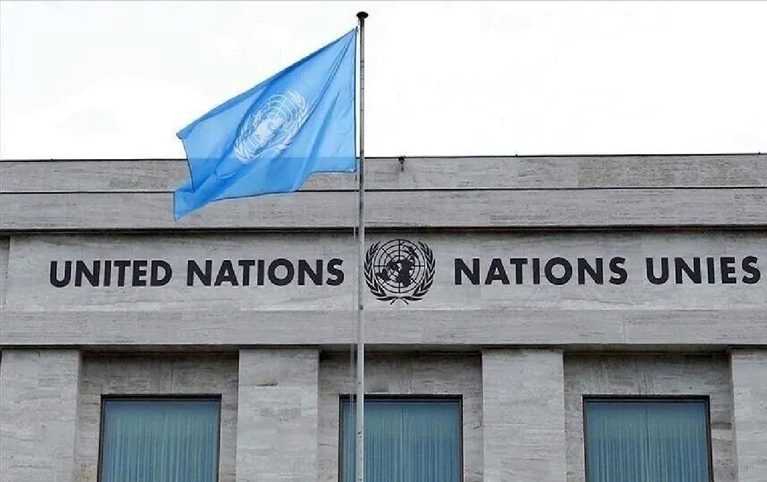
The Diplomatic Landscape: Competing Initiatives At The UN.
As the crisis deepens, diplomatic efforts are intensifying at the United Nations. Bahrain has put forward a draft Security Council resolution that would authorise countries to use “all necessary means”, language widely understood to permit military force, to protect commercial shipping in and around the strait.
The resolution, backed by other Gulf Arab states and the United States, would be placed under Chapter VII of the UN Charter, which allows the Security Council to authorise actions ranging from sanctions to military intervention. But diplomats say there is little prospect of adoption, as Iran’s allies Russia and China hold veto power on the 15-member body.
France has circulated a separate, more conciliatory draft resolution that makes no mention of Iran. French President Emmanuel Macron has said he supports a UN framework for any action in the strait but has refused to participate in immediate operations, insisting that international efforts could only proceed once hostilities calm and with Iran’s consent.
The divergent approaches reflect broader disagreements among Western nations about how to respond to the crisis. While the United States and its Gulf allies favour a robust military response, European powers appear more cautious, preferring diplomatic engagement.
The Nuclear Dimension: Ceasefire Talks And Their Limits.
Amid the military escalation, diplomatic efforts to end the war continue. President Trump claimed this week that the U.S. is in talks with Iran to end the conflict, even as Iranian missiles and drones targeted Israel and Gulf Arab states.
Trump initially set a deadline of late Monday, Washington time, for Iran to reopen the strait or face attacks on its power plants. He subsequently extended the deadline by five days, a move that briefly drove down oil prices and boosted global stock markets.
But Iran has denied that any talks are occurring. “No negotiations have been held with the US,” Iranian parliament Speaker Mohammad Bagher Qalibaf posted on X, adding that “fake news is used to manipulate the financial and oil markets”.
Ambassador Koozechi was similarly dismissive when asked about potential negotiations. “We do not want a ceasefire,” he said. “The conditions proposed by President Trump are utterly unacceptable and submissive. We cannot accept demands to abandon peaceful nuclear activities, which are not for military purposes”.
The rejection suggests that a negotiated end to the conflict remains distant, despite U.S. overtures. Iran’s leaders remain wary of Washington’s motives, in part because Tehran was in negotiations with the U.S. before the surprise attack that started the war on February 28.
Analysis: South Korea’s Impossible Choice.
For South Korea, the Hormuz crisis presents an excruciating strategic dilemma. The country’s energy security depends on access to the strait, yet the two powers capable of ensuring that access, the United States and Iran, are at war.
Aligning with the U.S. could trigger Iranian retaliation, jeopardising not only the 26 stranded vessels but also South Korea’s broader economic interests in the region. Iran’s ability to target shipping, demonstrated repeatedly over the past month, means that any South Korean military involvement would carry immediate and tangible risks.
Yet aligning with Iran carries its own dangers. The United States remains South Korea’s primary security ally, with approximately 28,500 U.S. troops stationed on the peninsula to deter North Korean aggression. Washington’s patience with allied hesitation may not be infinite.
The “non-hostile” designation offered by Iran provides temporary breathing room but is explicitly conditional on Seoul’s continued refusal to join U.S.-led initiatives. As Ambassador Koozechi made clear, any shift in policy could result in South Korea being reclassified as a hostile nation, with all the maritime restrictions that entail.
South Korea’s current approach, engaging diplomatically with Tehran while resisting U.S. pressure for military intervention, reflects an attempt to navigate this impossible terrain. But the crisis shows no signs of abating, and the window for such delicate manoeuvring may be closing.
Conclusion: A Crisis Without Clear Resolution.
The Strait of Hormuz crisis, now nearly a month old, has exposed the vulnerabilities of the global energy system and the limits of international diplomacy in a region defined by great power competition.
For South Korea, the immediate challenges are manageable. The stranded vessels carry sufficient supplies to sustain their crews for another month, and diplomatic channels remain open with Tehran. But the underlying strategic dilemma of how to maintain energy security while avoiding entanglement in a conflict between its primary ally and a regional power will not be resolved quickly.
Ambassador Koozechi’s press conference, with its mix of diplomatic overtures and stark warnings, encapsulated the terms of Iran’s engagement: cooperation is possible, but only on Tehran’s terms. The accompanying photo exhibition, showing the human cost of the conflict, served as a reminder that for Iran, the stakes are existential.
Whether South Korea can maintain its precarious balancing act, preserving its “non-hostile” status while avoiding U.S. retaliation for insufficient support, remains to be seen. What is clear is that the crisis has fundamentally altered the calculus of energy security for nations around the world, with consequences that will long outlast the current conflict.
As Foreign Minister Cho Hyun told his Iranian counterpart during their March 23 phone call, the situation is affecting not only the region but also global security and the global economy. With 20% of the world’s oil transiting the strait daily, the crisis is far more than a bilateral dispute between Seoul and Tehran; it is a test of the resilience of the global order itself.
Source: Multiple News Agencies
Submissions:
For The Secure Submission Of Documentation, Testimonies, Or Exclusive Investigative Reports From Any Global Location, Please Utilise The Following Contact Details For Our Investigations Desk: enquiries@veritaspress.co.uk or editor@veritaspress.co.uk
Help Support Our Work:
Popular Information is powered by readers who believe that truth still matters. When just a few more people step up to support this work, it means more lies exposed, more corruption uncovered, and more accountability where it’s long overdue.
Help Protect Independent Journalism, Which Is Currently Under Attack.
If you believe journalism should serve the public, not the powerful, and you’re in a position to help, becoming a DONATOR or a PAID SUBSCRIBER truly makes a difference.
DONATION APPEAL: If You Found This Reporting Valuable, Please Consider Supporting Independent Journalism.
Help Support Our Work – We Know, We Know, We Know …
Seeing these messages is annoying. We know that. (Imagine what it’s like writing them … )
Your support fuels our fearless, truth-driven journalism. In unity, we endeavour to amplify marginalised voices and champion justice, irrespective of geographical location.
But it’s also extremely important. One of Veritas Press’s greatest assets is its reader-funded model.
1. Reader funding means we can cover what we like. We’re not beholden to the political whims of a billionaire owner. We are a small, independent and impartial organisation. No one can tell us what not to say or what not to report.
2. Reader funding means we don’t have to chase clicks and traffic. We’re not desperately seeking your attention for its own sake: we pursue the stories that our editorial team deems important and believe are worthy of your time.
3. Reader Funding: enables us to keep our website and other social media channels open, allowing as many people as possible to access quality journalism from around the world, particularly those in places where the free press is under threat.
We know not everyone can afford to pay for news, but if you’ve been meaning to support us, now’s the time.
Your donation goes a long way. It helps us:
- Keep the lights on and sustain our day-to-day operations
- Hire new, talented independent reporters
- Launch real-time live debates, community-focused shows, and on-the-ground reporting
- Cover the issues that matter most to our communities, in real time, with depth and integrity
We have plans to expand our work, but we can’t do it without your support. Every contribution, no matter the size, helps us stay independent and build a truly people-powered media platform.
If you believe in journalism that informs, empowers, and reflects the communities we serve, please donate today.
GENEVA — A United Nations fact-finding mission has concluded there are “reasonable grounds to believe”
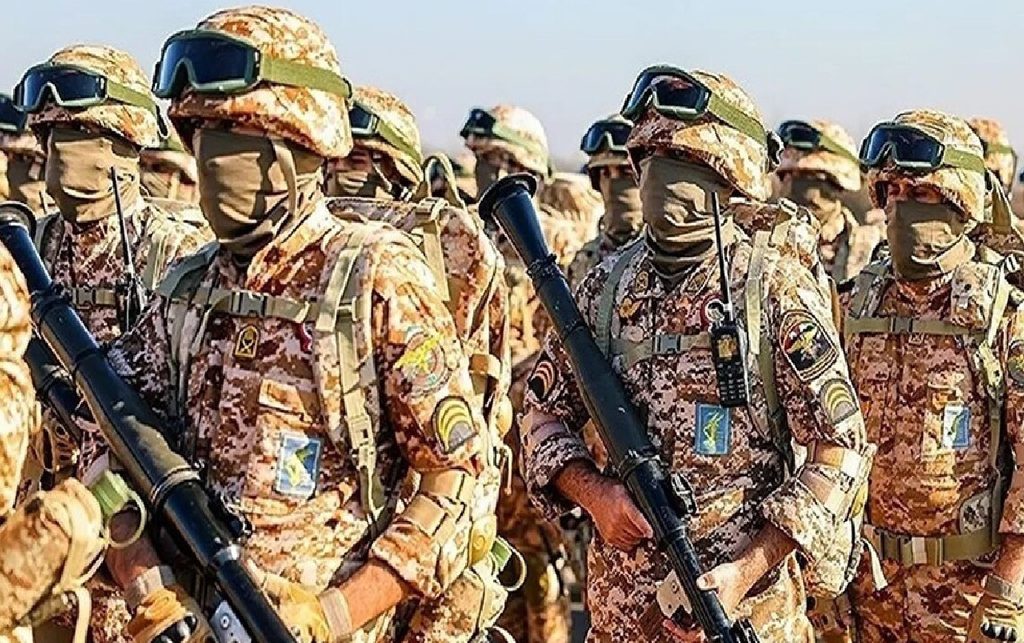
Iran’s GDP is projected to contract by 5.4 to 6.1% in 2026, its worst performance
The Trump administration is preparing a $2.8 billion weapons package for Israel containing 40,000 2,000-pound

Film alleges mass civilian deaths are routinely built into military decisions amid Israel’s genocidal war
The Israeli rights group says violence, displacement, economic strangulation, and settlement expansion form part of

Houthi forces have captured the historic Red Sea port of Mocha and are advancing on
London’s historic sanctions against Israeli settlements mark a watershed moment in UK foreign policy, but
With 95% of Gaza’s population now wholly dependent on aid and more than 90% stripped
India calls for Kashmir and Ladakh to appear only on its official map after a
ISLAMABAD – In the high-stakes political theatre of Pakistan, the battleground has shifted from the