



Help support our mission, donate today and be the change. Every contribution goes directly toward driving real impact for the cause we believe in.
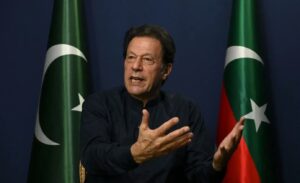
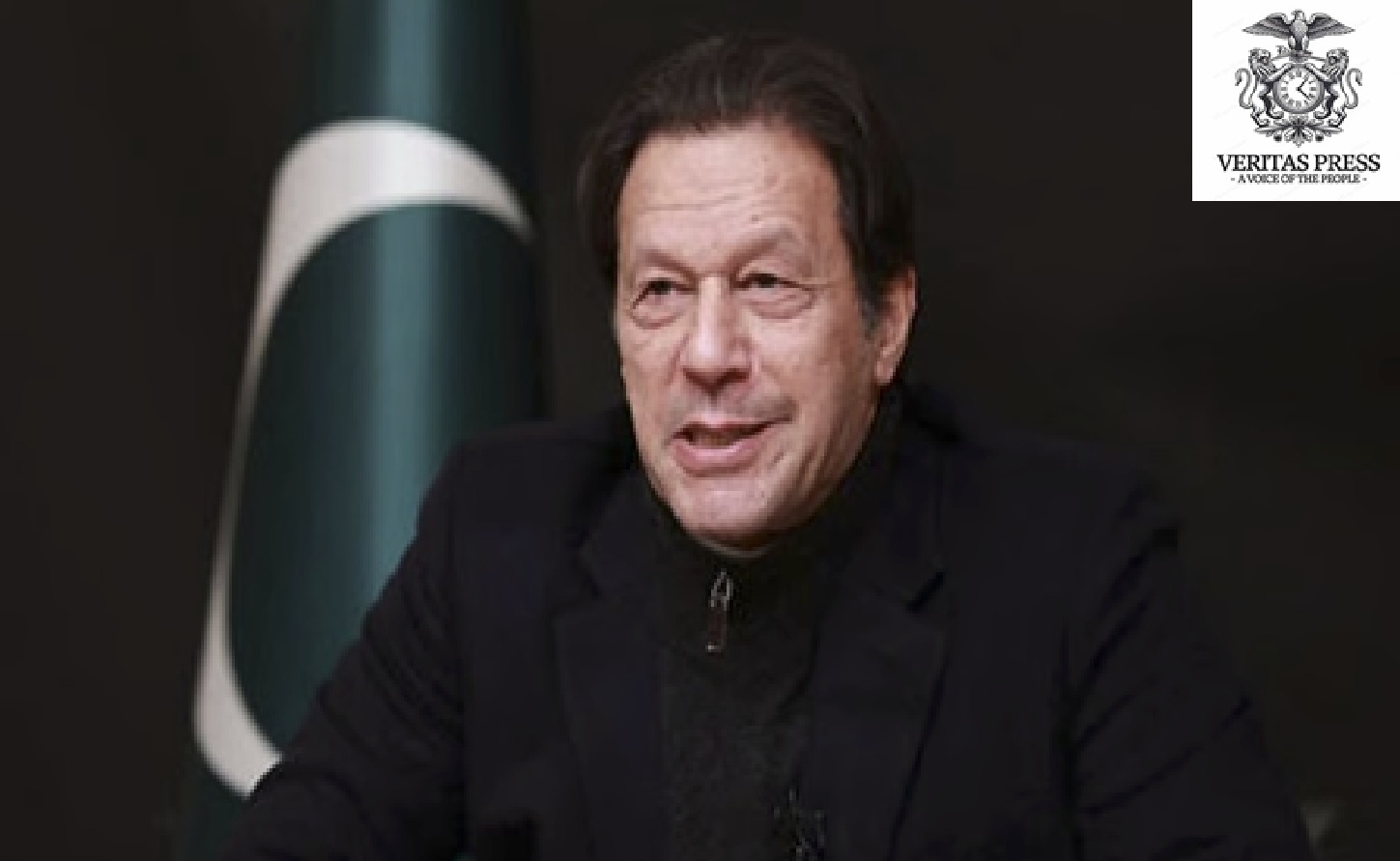
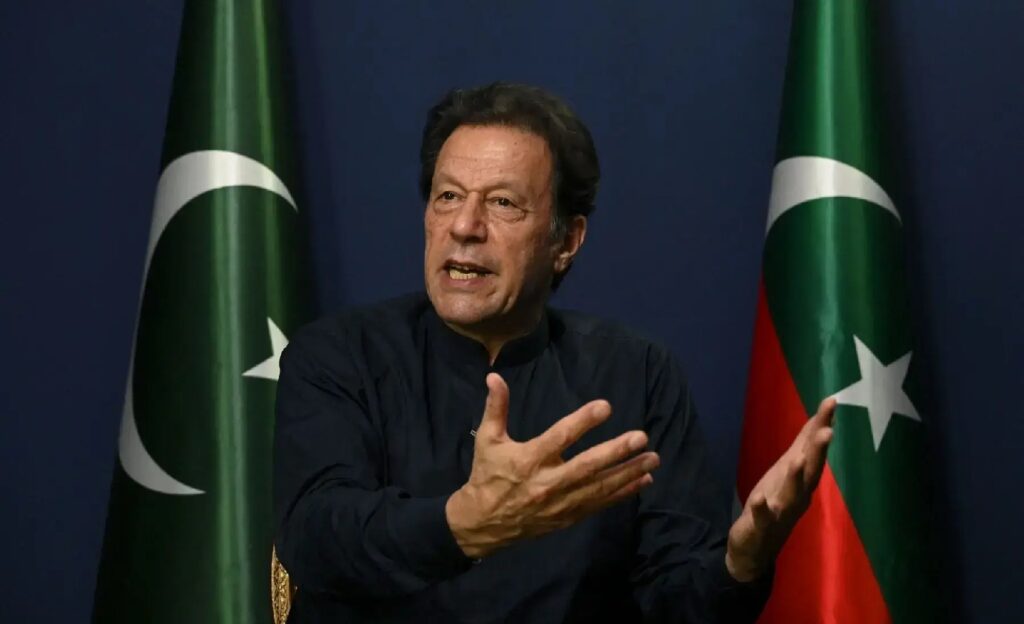
Pakistan’s imprisoned former prime minister Imran Khan has issued one of his most forceful denunciations yet of the country’s judicial system, accusing senior judges of “selling their souls for personal privileges” and enabling what he describes as a coordinated campaign to eliminate him politically.
The remarks, delivered during an Eid phone call with his sons and later published on his official social media account, reflect not only Khan’s personal grievances but also a deepening constitutional crisis in Pakistan, one that critics say exposes the erosion of judicial independence under the shadow of the military establishment.
“The judges in this country should be ashamed of themselves. Time and again, we have gone to the judiciary, but they have sold their integrity for personal gain,” Khan said.
“Justice Denied”: A Broader Indictment Of Pakistan’s Courts.
Khan’s comments go beyond rhetoric. They form part of a sustained narrative by his party, Pakistan Tehreek-e-Insaf (PTI), which alleges that the judiciary has become complicit in what it calls a “hybrid regime”, a system where civilian institutions operate under the influence of Pakistan’s powerful military and outside actors.
Legal analysts and rights observers say such accusations, once confined to political speeches, are now increasingly echoed in civil society discourse.
A senior Islamabad-based constitutional lawyer, speaking to local media, noted:
“The concern is no longer just about individual cases. It is about patterns, selective accountability, expedited trials for opposition figures, and procedural irregularities that raise serious questions about due process.”
Human rights organisations, including Amnesty International and Human Rights Watch, have previously raised alarms over the use of legal mechanisms in Pakistan to suppress dissent, warning of a shrinking democratic space and the increasing weaponisation of accountability institutions.
The Al-Qadir Trust Case: Accountability Or Political Weapon?
At the centre of Khan’s incarceration is the controversial Al-Qadir Trust case, in which he and his wife, Bushra Bibi, were convicted in January 2025.
Khan was sentenced to 14 years in prison, while Bushra Bibi received a seven-year sentence. Prosecutors allege the couple facilitated illegal financial benefits worth 50 billion rupees (£140 million) to a property developer in exchange for land linked to a charitable trust.
Khan and PTI have categorically rejected the charges, framing them as politically motivated.
“This is not accountability, this is elimination,” a senior PTI leader told journalists. “Every case follows the same pattern: arrest, media trial, judicial endorsement.”
Independent observers note that Khan faces a cascade of legal challenges, many filed after his removal from office in 2022, a period marked by intensifying tensions between him and Pakistan’s military leadership.
Allegations Of Pressure Through Family And Prison Conditions:
In his latest message, Khan suggested that authorities are attempting to break him psychologically by targeting his family, a claim that, if substantiated, raises serious human rights concerns.
He drew particular attention to the treatment of his wife:
“She spends 24 hours a day in isolation, except for 30 minutes with me per week, and even that is often denied.”
Khan described the treatment as “un-Islamic,” arguing that targeting women and family members violates both religious and legal principles.
Prison rights advocates in Pakistan have long criticised conditions in facilities such as Adiala Jail in Rawalpindi, citing overcrowding, restricted access to legal counsel, and a lack of transparency.
A local rights activist working on prison reform stated:
“Solitary confinement, especially prolonged, can amount to psychological torture. If these claims are accurate, they warrant immediate independent investigation.”
The Military Question: The Unspoken Power Centre.
While Khan did not explicitly name Pakistan’s military, his remarks strongly implied its involvement, consistent with his long-standing accusations against the establishment.
Pakistan’s military, led by Asim Munir, has repeatedly denied interfering in politics. However, analysts argue that the country’s history, marked by coups and indirect influence, makes such denials difficult to assess at face value.
A political analyst in Lahore told regional media:
“The judiciary does not operate in a vacuum. The real question is whether it can act independently when the stakes involve the military’s strategic interests.”
Khan’s fallout with the military, once seen as a key pillar of his rise to power, has transformed him into one of its most vocal critics, further intensifying the confrontation.
Sons’ Visit Controversy And Consular Protection Dispute:
The political drama has extended to Khan’s family abroad. His sons have publicly expressed their desire to visit Pakistan but claim they are unable to do so due to visa complications.
Information Minister Atta Tarar dismissed these concerns, suggesting they could travel using Pakistan’s National Identity Card for Overseas Pakistanis (NICOP).
However, Khan’s former wife, Jemima Goldsmith, strongly rejected the proposal:
“They are being asked to enter Pakistan without British consular protection, that is not a risk I am willing to take.”
The dispute highlights broader concerns about legal protections, dual nationality, and the politicisation of family access in high-profile cases.
May 9 Cases And Expanding Legal Net:
Beyond corruption charges, Khan remains entangled in multiple cases under Pakistan’s Anti-Terrorism Act, linked to the May 9, 2023, protests that erupted following his arrest.
The unrest saw attacks on military-linked installations, an unprecedented development that the state has since used to justify a sweeping crackdown on PTI supporters.
Thousands of party workers were detained, with military courts controversially authorised to try civilians, a move sharply criticised by legal experts and rights organisations.
“The use of anti-terror laws against political protesters sets a dangerous precedent,” said a Karachi-based legal scholar. “It blurs the line between dissent and terrorism.”
A Polarised Nation And The Future Of Democracy:
Despite his imprisonment, Khan remains Pakistan’s most polarising and influential political figure. His supporters continue to mobilise domestically and internationally, framing his detention as emblematic of a broader democratic backslide.
Journalists and observers note that Pakistan’s political landscape is now defined by three overlapping crises:
- Judicial credibility under strain
- Expanding military influence in civilian affairs
- Intensifying repression of opposition voices
A senior Pakistani journalist summarised the situation starkly:
“This is no longer just about Imran Khan. It is about whether Pakistan’s institutions can function independently, or whether they have become instruments of power.”
Conclusion: A Judiciary On Trial, A State Under Question.
What is unfolding in Pakistan is no longer merely a legal battle surrounding Imran Khan; it is a profound stress test of the country’s entire constitutional order.
Khan’s incendiary accusation that judges are “selling their souls” may be dismissed by his opponents as political theatre. But the deeper issue it exposes cannot be so easily brushed aside: a growing perception, shared by lawyers, journalists, and rights groups alike, that the judiciary is no longer seen as an independent arbiter, but as a participant, whether willingly or under pressure, in a broader project of political engineering. For many critics, the current political system is compromised and heavily corrupt, with institutional checks and balances increasingly hollowed out.
Khan’s latest outburst is more than a personal attack; it is a direct challenge to the legitimacy of Pakistan’s judicial system and its role within the country’s power structure. Whether his claims are substantiated or dismissed, the implications are profound.
The pattern is difficult to ignore. The rapid succession of cases against Khan since his ouster, the harsh sentencing in the Al-Qadir Trust case, the expansion of anti-terror charges against political protesters, and the reported restrictions on family access all point toward a system that appears less concerned with due process than with control. For critics, this is not accountability; it is containment.
At stake is not only the fate of a former prime minister, but the credibility of Pakistan’s courts, the boundaries of military influence, and the future trajectory of its fragile democracy. At the centre of these concerns lies the enduring, often opaque influence of Pakistan’s military establishment. Despite repeated denials, the shadow of the security apparatus looms large over civilian institutions, raising uncomfortable questions about whether courts can truly function independently when political outcomes intersect with strategic interests.
Equally troubling is the human dimension of the crisis. The alleged treatment of Bushra Bibi, prolonged isolation, and the politicisation of family access are not just side stories; they are indicators of how power is exercised beyond the courtroom. If family members can be leveraged as pressure points, it signals a system where the boundaries between law, coercion, and punishment have dangerously blurred.
As legal battles continue and political tensions deepen, the central question remains unresolved: can justice in Pakistan operate independently, or has it become, as critics increasingly argue, an instrument within a compromised system, shaped by power rather than governed by law?
Can Justice In Pakistan Operate Independently, Or Has It Become, As Critics Allege, Another Arena Of Political Control?
Source: Multiple News Agencies
Submissions:
For The Secure Submission Of Documentation, Testimonies, Or Exclusive Investigative Reports From Any Global Location, Please Utilise The Following Contact Details For Our Investigations Desk: enquiries@veritaspress.co.uk or editor@veritaspress.co.uk
Help Support Our Work:
Popular Information is powered by readers who believe that truth still matters. When just a few more people step up to support this work, it means more lies exposed, more corruption uncovered, and more accountability where it’s long overdue.
Help Protect Independent Journalism, Which Is Currently Under Attack.
If you believe journalism should serve the public, not the powerful, and you’re in a position to help, becoming a DONATOR or a PAID SUBSCRIBER truly makes a difference.
DONATION APPEAL: If You Found This Reporting Valuable, Please Consider Supporting Independent Journalism.
Help Support Our Work – We Know, We Know, We Know …
Seeing these messages is annoying. We know that. (Imagine what it’s like writing them … )
Your support fuels our fearless, truth-driven journalism. In unity, we endeavour to amplify marginalised voices and champion justice, irrespective of geographical location.
But it’s also extremely important. One of Veritas Press’s greatest assets is its reader-funded model.
1. Reader funding means we can cover what we like. We’re not beholden to the political whims of a billionaire owner. We are a small, independent and impartial organisation. No one can tell us what not to say or what not to report.
2. Reader funding means we don’t have to chase clicks and traffic. We’re not desperately seeking your attention for its own sake: we pursue the stories that our editorial team deems important and believe are worthy of your time.
3. Reader Funding: enables us to keep our website and other social media channels open, allowing as many people as possible to access quality journalism from around the world, particularly those in places where the free press is under threat.
We know not everyone can afford to pay for news, but if you’ve been meaning to support us, now’s the time.
Your donation goes a long way. It helps us:
- Keep the lights on and sustain our day-to-day operations
- Hire new, talented independent reporters
- Launch real-time live debates, community-focused shows, and on-the-ground reporting
- Cover the issues that matter most to our communities, in real time, with depth and integrity
We have plans to expand our work, but we can’t do it without your support. Every contribution, no matter the size, helps us stay independent and build a truly people-powered media platform.
If you believe in journalism that informs, empowers, and reflects the communities we serve, please donate today.
GENEVA — A United Nations fact-finding mission has concluded there are “reasonable grounds to believe”
Iran’s GDP is projected to contract by 5.4 to 6.1% in 2026, its worst performance
The Trump administration is preparing a $2.8 billion weapons package for Israel containing 40,000 2,000-pound

Film alleges mass civilian deaths are routinely built into military decisions amid Israel’s genocidal war
The Israeli rights group says violence, displacement, economic strangulation, and settlement expansion form part of

Houthi forces have captured the historic Red Sea port of Mocha and are advancing on
London’s historic sanctions against Israeli settlements mark a watershed moment in UK foreign policy, but
With 95% of Gaza’s population now wholly dependent on aid and more than 90% stripped
India calls for Kashmir and Ladakh to appear only on its official map after a
ISLAMABAD – In the high-stakes political theatre of Pakistan, the battleground has shifted from the