




Help support our mission, donate today and be the change. Every contribution goes directly toward driving real impact for the cause we believe in.
A SPECIAL INVESTIGATIVE REPORT:
On the outskirts of Nabatieh, where the Mediterranean breezes once carried the scent of olive groves and wild thyme, the landscape now smells of pulverised concrete, diesel smoke, and something more unsettling, the calculated erasure of a region. Between the towns of Zawtar al-Sharqiyah and Zawtar al-Gharbiyah, a home that had stood for generations was reduced to a crater shortly after midnight between Tuesday and Wednesday. Two people died inside. The Lebanese National News Agency reported the building was “completely levelled.”
They were not soldiers. They were not Hezbollah commanders. They were people whose only crime was residing in southern Lebanon at a moment when Israel had decided that geography itself must be rewritten.
I. The Numbers Behind The Erasure:
As of March 26, 2026, the Lebanese Ministry of Health reports that Israeli attacks have killed at least 1,072 people and wounded 2,966 others since the cross-border escalation began on March 2. But these numbers, stark as they are, obscure a more disturbing reality: this is not collateral damage. This is architecture.
On Wednesday alone, a coordinated wave of Israeli strikes across southern Lebanon killed nine people and wounded 47 others, according to Lebanese media reports. The targeting was methodical:
- Habboush, Nabatieh: Three killed, 18 injured in a single raid
- Al-Alam roundabout, Tyre: Twenty-four wounded
- Mieh Mieh Palestinian refugee camp: Two killed, four injured
- Adloun, Sidon: Four killed, one injured
“These were not military targets,” said Hassan Faqih, a civil defence volunteer in Tyre who arrived at the al-Alam roundabout minutes after the strike. “I pulled a child from under a concrete block. His mother was still holding his hand. You tell me what military objective serves.”
The Israeli military, when reached for comment on the civilian casualties, reiterated its position that it targets “terrorist infrastructure” and accuses Hezbollah of operating within civilian areas. But a pattern emerging from the past three weeks of bombardment suggests something more systematic than counterterrorism.
II. The Bridges: Severing Lebanon’s Arteries.
On Monday, Israeli warplanes destroyed the Qaqaiya Bridge over the Litani River, one of five main bridges linking the southern region to the rest of Lebanon. Three of those five bridges are now destroyed.
The strategic logic is unmistakable. Speaking from southern Lebanon, Al Jazeera correspondent Zeina Khodr observed: “The Israeli military has been destroying infrastructure across southern Lebanon, including fuel stations, bridges and health centres. It seems to be part of a strategy to depopulate the whole southern region.”
The Dalafa Bridge, which connected Hasbaya and the western Bekaa to Jezzine, was struck at dawn on Tuesday and destroyed. Fuel stations along the Rashidiya road, in Burghaliya, and on the Nabatieh–Shoukin road have been systematically targeted. The message is being delivered in concrete and steel: if you live south of the Litani, you will either leave or be cut off from the outside world.
For Ahmad Shouman, a 58-year-old farmer from the village of Kfar Rumman, the destruction of the bridges means he can no longer reach his brother in Beirut, where he had hoped to shelter his family. “They are not just killing us,” he told this reporter in a phone interview, his voice breaking. “They are making sure we cannot run.”
III. The Ground Incursion: Halta And The New Border.
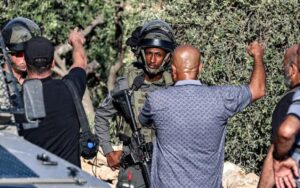
Just after midnight on Tuesday, an Israeli infantry unit entered the town of Halta in the Arqoub region. According to the Lebanese National News Agency, soldiers raided a house, opened fire on its occupants, killing at least one person, injuring several others, and abducting four civilians.
This was not a missile strike from an F-35 at 30,000 feet. This was boots on the ground Israeli soldiers entering a Lebanese town, killing, wounding, and taking captives. It represents a significant escalation in a ground invasion that began in early March but now appears to be deepening.
“We heard the helicopters first, then the sound of vehicles,” said Layla Mikati, a resident of a neighbouring village who fled after hearing gunfire. “When we looked from the hills in the morning, we saw Israeli soldiers in the streets of Halta. They were not just passing through. They were there to stay.”
The Israeli military’s spokesman, Brigadier General Effie Defrin, addressed the operations in a televised briefing on Tuesday, stating that the military was operating “according to an unchanged plan” in both Iran and Lebanon, regardless of any ongoing diplomatic efforts. “We are acting, and will continue to act… to deepen the damage and remove existential threats,” Defrin said. “We are striking both in Iran and in Lebanon.”
The language is telling: “deepen the damage” is not the vocabulary of self-defence. It is the vocabulary of annihilation.
IV. The Smotrich Doctrine: Making The Litani The Border.
If the military operations on the ground suggest a strategy, the words of Israel’s far-right finance minister, Bezalel Smotrich, articulate its political objective with chilling clarity.
In an Israeli radio interview on Monday, Smotrich declared that the bombardment of Lebanon “needs to end with a different reality entirely,” including a “change of Israel’s borders.” He elaborated: “I say here definitively … in every room and in every discussion, too: The new Israeli border must be the Litani.”
The Litani River flows approximately 30 kilometres (19 miles) north of the current Israel-Lebanon border. Smotrich is not speaking metaphorically. He is calling for the annexation of one-fifth of Lebanon’s territory, a land grab that would displace hundreds of thousands of Lebanese and Palestinian residents.
Smotrich’s comments were not dismissed as the ramblings of a fringe extremist. He is a minister in the Israeli government, responsible for the country’s finances, and his statements reflect a current of thinking that has gained significant traction within Israel’s governing coalition.
When asked about Smotrich’s remarks, a spokesperson for the Israeli prime minister’s office declined to comment directly, instead referring questions to the military’s statement about operating according to an “unchanged plan.”
But the plan, as it unfolds, appears to be executing precisely what Smotrich is articulating: the systematic destruction of infrastructure south of the Litani, the forced displacement of its population, and the establishment of a permanent military presence that will effectively redraw the map.
V. The Humanitarian Catastrophe:
The United Nations has been tracking the human cost with growing alarm. Stephane Dujarric, spokesman for UN Secretary-General Antonio Guterres, told reporters on Monday that the conflict has pushed more than 1.2 million people to flee their homes.
To put that number in perspective: it represents approximately one in every five people across Lebanon. In southern Lebanon, the proportion is far higher.
“More than 130,000 people, including some 46,000 children, are currently sheltering in more than 600 collective sites nationwide, most of which are already at full capacity,” Dujarric said.
These are not refugees in the traditional sense; they are internally displaced persons (IDPs) who have been forced from their homes but remain inside Lebanon’s borders. They are sleeping in schools, in community centres, in mosques and churches, and increasingly, in the open air.
“The collective sites are overwhelmed,” said Maya El-Hachem, a field coordinator for the Lebanese Red Cross in Beirut. “We are seeing families of eight, nine, ten people sharing a single classroom. There is not enough water, not enough food, not enough medicine. And every day, more people arrive.”
The World Health Organization has documented at least 64 attacks on healthcare facilities since the escalation began, resulting in 51 deaths and 91 injuries among health workers and patients. These attacks, the WHO noted in an internal briefing obtained by this reporter, have forced at least 12 hospitals and 35 primary health centres in southern Lebanon to suspend operations.
“The targeting of health care is not incidental,” said Dr. Michel Khalil, an emergency physician who was working at a hospital in Nabatieh when it was struck two weeks ago. “They hit the generator first, then the emergency room entrance. That is not a mistake. That is knowledge.”
VI. The International Law Dimension: War Crimes And Accountability.
Amnesty International issued a stark warning last week, urging Israel to halt its attacks on Lebanese healthcare workers, emphasising that they are “specifically protected under international law.”
But the legal violations extend far beyond attacks on medical facilities. The systematic destruction of civilian infrastructure, bridges, fuel stations, and residential buildings raises serious questions about compliance with the Geneva Conventions, which prohibit the destruction of civilian property unless rendered necessary by military operations.
“These attacks are not just disproportionate; they appear to be indiscriminate,” said Lama Fakih, director of Human Rights Watch’s Middle East and North Africa division, in a statement released Tuesday. “The Israeli military is striking targets that have no apparent military value, displacing entire communities, and using tactics that suggest a policy of collective punishment against the civilian population of southern Lebanon.”
Collective punishment is a war crime under Article 33 of the Fourth Geneva Convention. So is the wanton destruction of property not justified by military necessity?
The United Nations has not yet formally designated Israel’s actions as war crimes, but a growing chorus of human rights organisations and legal experts is making the case. In a confidential memo circulating among UN humanitarian agencies, one official wrote: “The pattern of infrastructure destruction, combined with forced displacement orders for entire regions and the rhetoric of Israeli officials calling for annexation, meets the threshold for grave breaches of international humanitarian law.”
VII. The Hezbollah Factor: A War Within A War.
The Lebanese armed group Hezbollah has not been a passive observer in this conflict. Since March 2, when Hezbollah launched rockets toward Israeli territory in what it described as retaliation for the US-Israeli offensive on Iran, the group has continued to fire into northern Israel and clash with Israeli troops on the ground in Lebanon.
Hezbollah’s involvement has provided Israel with a casus belli, a justification for its attacks that it has used to deflect criticism of civilian casualties.
But Lebanese officials and residents of southern Lebanon are increasingly questioning whether Hezbollah’s actions are serving the interests of the Lebanese people or the group’s own political and military agenda.
“We are caught between two fires,” said Samir Halabi, a retired schoolteacher from Bint Jbeil who now lives in a collective shelter in Beirut. “Hezbollah started this when they fired on Israel after Iran was attacked. But we had nothing to do with that. We did not ask for this war. And now we are paying for it with our homes and our children’s lives.”
A Hezbollah spokesman, reached for comment, insisted that the group’s actions were defensive and that it was “protecting Lebanon from Israeli aggression.” But even some of Hezbollah’s traditional supporters have expressed frustration with the group’s decision to escalate the conflict at a time when Lebanon was already in the grip of a crippling economic crisis.
“This is not the war Lebanon needed,” said Ghassan Sadek, a political analyst based in Beirut. “Hezbollah made a calculation that by linking itself to Iran’s war, it would demonstrate its commitment to the axis of resistance. But it has done so at the cost of Lebanese sovereignty and Lebanese lives. And now Israel is using Hezbollah’s presence as a pretext for something far larger than retaliation, a territorial expansion.”
VIII. The Diplomatic Failure: Talks Amid Bombings.
As the bombs have fallen, diplomatic efforts have continued, or at least, the word “efforts” has been used to describe conversations that have produced no results.
The Israeli military’s spokesman, Brigadier General Effie Defrin, was asked on Tuesday about the possibility of a diplomatic process to end the war. His response was telling: “Regarding this or that agreement, we are currently operating according to an unchanged plan.”
The message could not be clearer: Israel sees no reason to negotiate while its military objectives remain unachieved.
The United States, which has provided military and diplomatic support to Israel throughout the conflict, has called for a ceasefire but has not applied meaningful pressure on its ally to halt operations. A senior State Department official, speaking on condition of anonymity, told this reporter that the administration was “deeply concerned” about civilian casualties but reiterated its support for “Israel’s right to defend itself against Iranian-backed terrorism.”
The official did not address Smotrich’s calls for annexation or the destruction of Lebanese infrastructure.
IX. The Wider War: Iran, The US, And Regional Conflagration.
Any understanding of the current conflict in Lebanon must be situated within the broader war that began on February 28, when the United States and Israel launched a joint offensive on Iran. That offensive, which Tehran has said killed over 1,340 people, has drawn in not just Iran and Israel but also Jordan, Iraq, and Gulf countries.
Iran has retaliated with drone and missile strikes targeting Israel, as well as what it describes as “US military assets” in Jordan, Iraq, and Gulf states. The region is now effectively at war on multiple fronts.
Lebanon, already fragile from years of economic collapse and political paralysis, has become a secondary theatre, but a critical one. Hezbollah’s involvement has tied Lebanon’s fate to Iran’s, and Israel’s response has turned much of southern Lebanon into a battlefield.
“Lebanon is being punished for Iran’s actions, and for Hezbollah’s decision to align itself with Tehran,” said a European diplomat based in Beirut, speaking on condition of anonymity. “But the punishment is being inflicted on Lebanese civilians, not on Hezbollah’s leadership or Iran’s Revolutionary Guard. That is the tragedy, and that is by design.”
X. Voices From The Ground: “They Want Us To Leave”
In Tyre, where the al-Alam roundabout remains a cratered wound in the city’s centre, residents speak of a campaign of psychological warfare as much as physical destruction.
“They have been dropping leaflets for weeks,” said Nadia Saab, 43, a mother of three who fled her home in the outskirts of Tyre. “They say, ‘Leave or you will die.’ But where are we supposed to go? We have no money, no relatives in Beirut, and no one who can take us. So we stay, and we wait for the next strike.”
The Israeli military has issued a series of forced displacement orders for all of southern Lebanon, as well as the southern suburbs of Beirut, areas with significant Hezbollah presence. The orders, delivered via leaflets, text messages, and radio broadcasts, have created a climate of terror that has propelled the mass exodus of more than 1.2 million people.
But for those who remain, the question is increasingly existential. “They want us to leave because they want our land,” said Ali Hammoud, 67, a farmer from the village of Kfarkela, which has been subjected to repeated artillery shelling. “This is not about Hezbollah. This is about the Litani. They have said it themselves.”
XI. Media And Information War:
The information environment surrounding the conflict has become a battlefield in its own right. Lebanese media, including the National News Agency and outlets like Al Jazeera, have provided extensive coverage of civilian casualties and infrastructure destruction. Israeli media have focused on Hezbollah’s rocket attacks and Israel’s security concerns.
But the disparity in access is stark. International journalists have been restricted from entering southern Lebanon independently, with the Israeli military controlling access from the south and the Lebanese government struggling to ensure safety for reporters. As a result, much of the reporting from the most heavily bombarded areas has come from local journalists, many of whom are themselves displaced.
“There is a fog of war, but there is also a deliberate effort to control the narrative,” said Rami Rizk, a Lebanese journalist who has been reporting from the south. “The Israelis want the world to see this as a war between Israel and Hezbollah. But what is happening on the ground is something else entirely. It is a war on the people of southern Lebanon.”
XII. Analysis: What Israel Is Trying To Achieve.
When the history of this conflict is written, scholars may look back on March 2026 as a turning point, not just in the Israel-Lebanon relationship, but in the concept of border warfare in the 21st century.
What Israel appears to be executing is not a counterterrorism operation or a punitive response to Hezbollah’s rocket attacks. It is a program of territorial annexation through depopulation and infrastructure destruction.
The pattern is unmistakable:
- Systematic targeting of bridges and roads to isolate southern Lebanon
- Destruction of fuel stations and healthcare facilities to make the region uninhabitable
- Ground incursions to establish a permanent military presence
- Forced displacement orders to clear the population
- Political rhetoric from senior officials declaring the Litani the “new Israeli border”
This is not speculation. It is the open declaration of Israeli government ministers and the observable pattern of Israeli military operations.
“It is ethnic cleansing,” said Omar Shabli, a professor of international law at the American University of Beirut, using a term that carries heavy legal and historical weight. “When you destroy the infrastructure that allows people to live, when you cut off their access to food and medicine, when you bomb their homes and tell them to leave, and when you make clear that your intention is to take their land, that is ethnic cleansing. There is no other word for it.”
XIII. The Lebanese Government’s Impotence:
The Lebanese government has been largely absent from the response to the crisis, a reflection of a state that has been crippled by years of political dysfunction, economic collapse, and the outsized power of Hezbollah.
Prime Minister Najib Mikati has issued statements condemning Israeli aggression and calling for international intervention, but his government lacks the capacity, and, critics say, the will, to mount a meaningful response.
“The government is paralysed,” said a Lebanese political source who spoke on condition of anonymity. “It cannot confront Hezbollah, because Hezbollah is more powerful than the state. It cannot negotiate with Israel, because there is no diplomatic relationship. And it cannot protect its own citizens, because the army is outmatched and outgunned. So the government issues statements, and the people die.”
XIV. The International Response: Condemnation Without Consequence.
The United Nations Security Council has held multiple emergency sessions on the crisis, but has been unable to agree on a resolution. Russia and China have called for an immediate ceasefire and condemnation of Israeli actions, while the United States has blocked language critical of its ally.
“The international community has failed Lebanon,” said UNRWA spokesperson Juliette Touma in a press briefing on Tuesday. “We are seeing the systematic destruction of a region, the displacement of over a million people, and the world is watching without acting.”
Humanitarian organisations have warned that the situation is spiralling beyond their capacity to respond. The World Food Programme has reported that food supplies in southern Lebanon are running critically low, with markets empty and supply chains severed by the destruction of roads and bridges.
“We are at the brink of a humanitarian catastrophe that will make the previous crises look small,” said a senior WFP official who requested anonymity. “If the bridges are not repaired, if the attacks continue, people will starve. It’s that simple.”
XV. The Long Shadow Of History
For those who have lived through Lebanon’s previous wars, the 1975-1990 civil war, the 1982 Israeli invasion, the 2006 war, the current conflict carries echoes of past traumas. But it also carries something new: a declared intention to change borders, not just influence behaviour.
In 2006, after 34 days of war, Israel withdrew from southern Lebanon behind the Blue Line established by the United Nations. This time, Smotrich and others are making clear that withdrawal is not the plan.
“There is a difference between 2006 and now,” said Hilal Khashan, a professor of political science at the American University of Beirut. “In 2006, Israel was trying to degrade Hezbollah’s capabilities. Now, there is a faction within the Israeli government that wants to annex territory. That changes everything.”
XVI. Conclusion: What Comes Next.
As Israeli attacks continue and the ground invasion deepens, southern Lebanon faces an uncertain and terrifying future. The bridges are down. The hospitals are closing. The people are fleeing, or dying.
The Israeli military says it will continue to operate according to an “unchanged plan.” Hezbollah says it will continue to fight. The United States calls for a ceasefire but provides the weapons that make the war possible. The United Nations watches and issues statements.
And in the towns and villages of southern Lebanon, families gather what they can carry and join the exodus north, joining more than a million others who have already left. They do not know when, or if, they will return.
“The land has been in my family for 200 years,” said Ali Hammoud, the farmer from Kfarkela, as he prepared to leave his home. “I have the deeds. I have the olive trees my grandfather planted. But I am leaving because if I stay, they will kill me, and then the land will be theirs anyway.”
He paused, looking back at the hills where his ancestors had lived for generations.
“I will come back,” he said. “But I do not know what I will find.”
Source: Multiple News Agencies
Submissions:
For The Secure Submission Of Documentation, Testimonies, Or Exclusive Investigative Reports From Any Global Location, Please Utilise The Following Contact Details For Our Investigations Desk: enquiries@veritaspress.co.uk or editor@veritaspress.co.uk
Help Support Our Work:
Popular Information is powered by readers who believe that truth still matters. When just a few more people step up to support this work, it means more lies exposed, more corruption uncovered, and more accountability where it’s long overdue.
Help Protect Independent Journalism, Which Is Currently Under Attack.
If you believe journalism should serve the public, not the powerful, and you’re in a position to help, becoming a DONATOR or a PAID SUBSCRIBER truly makes a difference.
DONATION APPEAL: If You Found This Reporting Valuable, Please Consider Supporting Independent Journalism.
Help Support Our Work – We Know, We Know, We Know …
Seeing these messages is annoying. We know that. (Imagine what it’s like writing them … )
Your support fuels our fearless, truth-driven journalism. In unity, we endeavour to amplify marginalised voices and champion justice, irrespective of geographical location.
But it’s also extremely important. One of Veritas Press’s greatest assets is its reader-funded model.
1. Reader funding means we can cover what we like. We’re not beholden to the political whims of a billionaire owner. We are a small, independent and impartial organisation. No one can tell us what not to say or what not to report.
2. Reader funding means we don’t have to chase clicks and traffic. We’re not desperately seeking your attention for its own sake: we pursue the stories that our editorial team deems important and believe are worthy of your time.
3. Reader Funding: enables us to keep our website and other social media channels open, allowing as many people as possible to access quality journalism from around the world, particularly those in places where the free press is under threat.
We know not everyone can afford to pay for news, but if you’ve been meaning to support us, now’s the time.
Your donation goes a long way. It helps us:
- Keep the lights on and sustain our day-to-day operations
- Hire new, talented independent reporters
- Launch real-time live debates, community-focused shows, and on-the-ground reporting
- Cover the issues that matter most to our communities, in real time, with depth and integrity
We have plans to expand our work, but we can’t do it without your support. Every contribution, no matter the size, helps us stay independent and build a truly people-powered media platform.
If you believe in journalism that informs, empowers, and reflects the communities we serve, please donate today.
GENEVA — A United Nations fact-finding mission has concluded there are “reasonable grounds to believe”
Iran’s GDP is projected to contract by 5.4 to 6.1% in 2026, its worst performance
The Trump administration is preparing a $2.8 billion weapons package for Israel containing 40,000 2,000-pound

Film alleges mass civilian deaths are routinely built into military decisions amid Israel’s genocidal war
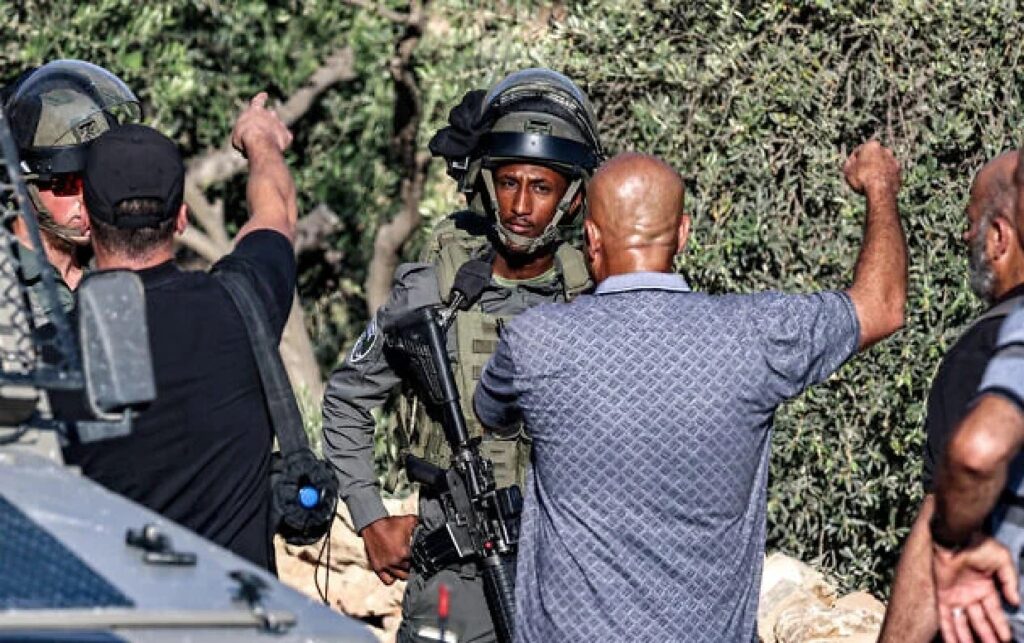
The Israeli rights group says violence, displacement, economic strangulation, and settlement expansion form part of

Houthi forces have captured the historic Red Sea port of Mocha and are advancing on
London’s historic sanctions against Israeli settlements mark a watershed moment in UK foreign policy, but
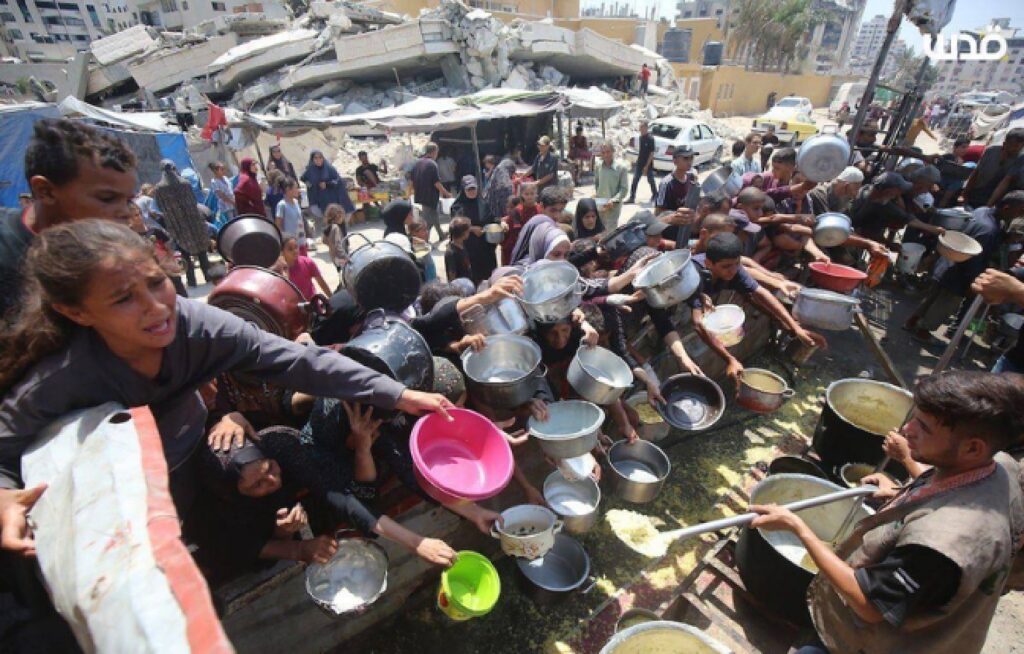
With 95% of Gaza’s population now wholly dependent on aid and more than 90% stripped
India calls for Kashmir and Ladakh to appear only on its official map after a
ISLAMABAD – In the high-stakes political theatre of Pakistan, the battleground has shifted from the