



Help support our mission, donate today and be the change. Every contribution goes directly toward driving real impact for the cause we believe in.
A Doctor’s Disappearance Into The Legal Void:
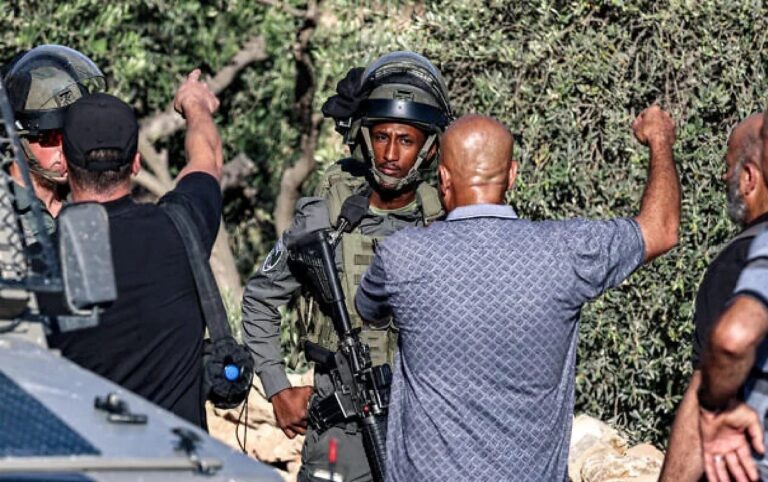
On December 27, 2024, Israeli occupation forces raided Kamal Adwan Hospital in northern Gaza, one of the last partially functioning medical facilities in a territory where the healthcare system had been systematically dismantled over fifteen months of military operations. They detained Dr. Hussam Abu Safiya, the hospital’s director, a paediatrician and neonatologist who had repeatedly refused evacuation orders, choosing instead to remain with his patients amid catastrophic shortages of fuel, electricity, medicines, and staff.
Nearly four months later, Dr. Abu Safiya remains in Israeli detention. No formal charges have been brought against him. No evidence has been publicly presented to substantiate the vague allegations that he posed a “security threat.” He has been held under Israel’s “unlawful combatant” law, a legal framework that permits indefinite detention without charge or trial, originally enacted in 2002 and increasingly deployed against Palestinians from Gaza.
On March 25, 2025, two United Nations special rapporteurs, Tlaleng Mofokeng, Special Rapporteur on the right to physical and mental health, and Ben Saul, Special Rapporteur on the protection of human rights while countering terrorism, issued an urgent statement that should have reverberated through every foreign ministry with influence over Israel. Their conclusion was stark: Dr. Abu Safiya has been “subjected to torture and other cruel and degrading treatment,” his health condition “remains dire,” and he has been “systematically denied critical medical examination and treatment” to such an extent that “his life, health, and wellbeing have been gravely endangered.”
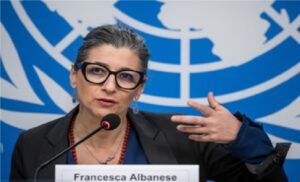
This is not merely the story of one doctor. It is a window into a broader system, one that UN Special Rapporteur Francesca Albanese has now characterised as a “state doctrine” of torture, a system that has transformed Israeli prisons into “instruments of genocide.”
The Man Who Would Not Leave: Dr. Abu Safiya’s Final Days At Kamal Adwan.
Dr. Hussam Abu Safiya was not a political figure. He was a paediatrician and neonatologist who specialised in the care of premature infants, arguably the most vulnerable patients in any healthcare system. As director of Kamal Adwan Hospital in Beit Lahiya, he oversaw one of the last functioning medical facilities in northern Gaza during the most intense phase of Israel’s military campaign.
Throughout late 2024, as Israeli occupation forces encircled and repeatedly besieged northern Gaza, Abu Safiya became a voice of last resort. He issued repeated warnings through international media and humanitarian channels about the catastrophic shortages his hospital faced: no fuel to run generators, no electricity to power incubators, no medicines to treat the wounded, no staff to care for the sick. He documented the deaths of patients, including premature infants, who perished when incubators failed due to a lack of power.
When evacuation orders came, Abu Safiya refused. He was not alone. Across Gaza, medical personnel made similar choices, operating under the principle that abandoning patients constituted an abdication of their ethical obligations. For Abu Safiya, the calculus was simple: to leave would be to condemn his patients to death.
When Israeli forces entered Kamal Adwan on December 27, they found a hospital that had become a refuge for the displaced, the wounded, and the dying. According to witness accounts and reports from medical aid organisations, Israeli soldiers destroyed parts of the facility, forcibly removed staff and patients, and detained Abu Safiya. The hospital, already barely functional, ceased operations entirely.
Gheed Qassem, Abu Safiya’s attorney, later described his detention to Agence France-Presse. After his arrest, he was held for two weeks at the Sde Teiman military base in the Negev desert, a facility that has become infamous for its treatment of Palestinian detainees. There, according to Qassem, he was subjected to “beatings, mistreatment and torture” during interrogations. He was later transferred to Ofer Prison in the occupied West Bank, where he spent 25 days in a cramped cell facing further questioning.
His case has been classified as “confidential,” a designation that bars his legal team from accessing key documents, a procedural manoeuvre that effectively renders his detention invisible to judicial oversight.
The Legal Framework: “Unlawful Combatant” As A License For Indefinite Detention.
Dr. Abu Safiya is a civilian medical practitioner. Under the Fourth Geneva Convention, medical personnel are protected persons who “shall not be compelled to do any work other than that required for the humanitarian duties” of their profession. They are entitled to protection in all circumstances.
Yet Abu Safiya is being held under Israel’s “unlawful combatant” law, Incarceration of Unlawful Combatants Law, 5762-2002, a legal framework that was designed to circumvent the protections of international humanitarian law. The law allows for the indefinite detention without charge or trial of anyone deemed a “member of a hostile force,” a category so broadly defined as to be virtually limitless.
The UN experts’ statement was unambiguous on this point: Abu Safiya’s detention appears “flagrantly arbitrary” and inconsistent with international legal standards, including the Mandela Rules, which require detainees to have access to adequate healthcare.
What makes this particularly egregious is the absence of any public evidence. Israeli authorities have neither presented charges nor disclosed any intelligence that would justify detaining a civilian doctor who spent his career treating children. The classification of his case as “confidential” means that even his own lawyers cannot review the basis for his detention, a violation of fundamental principles of due process that would be intolerable in any legal system claiming to uphold the rule of law.
The “unlawful combatant” designation has been used with increasing frequency since October 2023. It applies to Palestinians from Gaza almost exclusively, creating a two-tier system of detention: Palestinians from the West Bank are generally processed through military courts (themselves deeply flawed), while Gazans are held in a legal black hole, without charge, without trial, without end.
Torture As State Doctrine: The Albanese Report.
On the same day that Mofokeng and Saul issued their statement on Abu Safiya, UN Special Rapporteur Francesca Albanese released a devastating report to the UN Human Rights Council that contextualised his case within a system she described as “calculated cruelty.”
“Since the onset of the genocide, the Israeli prison system has degenerated into a laboratory of calculated cruelty,” Albanese said. “What once operated in the shadows is now practised openly: a regime of organised humiliation, pain and degradation, sanctioned at the highest political levels.”
Her report documents a system that has institutionalised torture, collective punishment, and manifestly dehumanising conditions of detention, policies she directly attributes to senior Israeli officials, including Minister of National Security Itamar Ben-Gvir.
The statistics are staggering. Since October 2023, more than 18,500 Palestinians have been detained across the occupied Palestinian territory, including at least 1,500 children. Thousands remain in detention without charge or trial. Many have been forcibly disappeared. Nearly 100 detainees have died in custody.
The methods of abuse documented by Albanese’s report are almost beyond comprehension: rape with bottles, metal rods and knives; starvation; breaking of bones and teeth; burning; being spat upon; being attacked and urinated upon by dogs. This is not the language of hyperbole; it is the language of sworn testimony and medical documentation.
In 2025, the UN Committee against Torture denounced what it called “a de facto State policy of organised and widespread torture and ill-treatment … that has gravely intensified since 7 October 2023.”
Albanese’s framing is crucial: this is not a matter of rogue actors or isolated incidents. “A system that has long been used to dominate, degrade and break Palestinians has evolved and hardened into state doctrine,” she said. “It is defended by politicians, rationalised by legal institutions, sanitised by media narrative and tolerated by governments that continue to arm and shield Israel.”
The Targeting Of Healthcare: A Systematic Campaign.
Dr. Abu Safiya’s case is not anomalous. It is part of a documented pattern: the systematic targeting of Palestinian healthcare workers since October 2023.
According to the World Health Organization, more than 930 attacks on the healthcare sector have been recorded since October 2023. All 36 hospitals in Gaza have suffered damage from Israeli attacks, and only half are partially functional. Medical Aid for Palestinians (MAP) reported that at least 1,722 medical workers were killed between October 2023 and October 2025, an average of more than two killed every day.
Hundreds more have been detained, often without charge, and subjected to the same conditions as Abu Safiya. They include:
- Dr. Muhammad Abu Salmiya, director of Al-Shifa Hospital, was detained for seven months without charge before being released in July 2024 under circumstances that suggested his detention had been entirely without legal basis.
- Dr. Ahmed Kahlout, head of the emergency department at Kamal Adwan, was detained in the same December raid as Abu Safiya.
- Dr. Khaled Al-Serr, a plastic surgeon at Al-Shifa, whose whereabouts remain unknown after his detention in March 2024.
The pattern is unmistakable. Medical personnel, who under international law enjoy special protections, have been systematically detained, interrogated under torture, and held without charge. The cumulative effect has been the collapse of Gaza’s healthcare system, a collapse that has occurred not by accident but by design.
As Amnesty International stated regarding Abu Safiya’s detention, it is “a reflection of Israel’s systematic targeting of Palestinian health workers and the decimation of the healthcare system in Gaza in order to inflict conditions of life calculated to bring about the physical destruction of Palestinians.”
“His Health Remains Dire”: The Medical Neglect Of A Doctor.
The UN experts’ statement highlighted a specific and particularly cruel dimension of Abu Safiya’s detention: the systematic denial of medical care.
“He has been systematically denied critical medical examination and treatment, and deprived of essential care to such an extent that his life, health, and wellbeing have been gravely endangered,” Mofokeng and Saul said.
According to reports from his lawyer and rights organisations, Abu Safiya suffers from high blood pressure and cardiac issues. He has lost substantial weight during his detention. He has been held in prolonged isolation, a technique recognised under international law as a form of torture when applied for extended periods.
The denial of medical care to detainees is not merely neglect; it is a violation of the most basic obligations of detaining authorities. The Mandela Rules, cited by the UN experts, explicitly require that detainees have access to adequate healthcare. Israel, as the detaining authority, bears legal responsibility for Abu Safiya’s physical well-being.
Gheed Qassem, Abu Safiya’s attorney, described his condition after a March 19 visit to Ofer Prison: “He is suffering greatly. He is exhausted from the torture, the pressure and the humiliation he has endured to force him to confess to acts he did not commit.”
The phrase “to force him to confess to acts he did not commit” is telling. It suggests that the purpose of Abu Safiya’s mistreatment is not merely punitive but instrumental, an attempt to extract false confessions that could retroactively justify his detention.
The Prison System As An Instrument Of Genocide.
Albanese’s report connects the treatment of detainees like Abu Safiya to the broader context of Israel’s military campaign in Gaza. “Torture does to the individual what genocide does to a people,” she said. “It destroys the conditions of life and human dignity. It reduces human beings to objects of abuse.”
This framing is critical. The systematic torture of Palestinian detainees is not a separate issue from the military operations in Gaza; it is part of the same continuum. The same state apparatus that has killed more than 48,000 Palestinians in Gaza (as of conservative estimates, with many thousands more buried beneath rubble and uncounted) is the apparatus that holds Dr. Abu Safiya without charge, denies him medical care, and subjects him to torture.
The concept of “torturous environment” that Albanese develops in her report extends beyond prison walls. “In Gaza, the West Bank and East Jerusalem, Palestinians are subjected to a continuum of suffering,” she said. “There is no refuge. No sanctuary. No safe place to exist.”
For medical personnel like Abu Safiya, this continuum is particularly acute. They have been targeted in their hospitals, supposedly protected spaces, and then targeted again in detention. The safe havens that international law provides for healthcare workers have been systematically nullified.
The International Response: Words Without Consequences.
The UN experts’ statement concluded with an appeal to the international community: “Israel must release Dr. Abu Safiya and all health care workers, and ensure they have access to appropriate medical care.”
They specifically urged countries “with influence on Israel” to take action “to ensure prevention, recourse and justice.”
The question that hangs over such appeals is obvious: what influence, and what action? The United States, Israel’s principal military and diplomatic backer, has consistently shielded Israel from consequences at the UN Security Council, while continuing to provide the weapons used in Gaza and the West Bank. European governments have issued condemnations but maintained arms sales and trade agreements.
Albanese’s report was pointed in its assessment of this dynamic: the system of torture is “tolerated by governments that continue to arm and shield Israel.” Inaction, she implies, is not neutrality but complicity.
There have been some developments. The International Criminal Court has issued arrest warrants for Prime Minister Benjamin Netanyahu and former Defence Minister Yoav Gallant for alleged war crimes. But those warrants have been met with defiance from Israel and threats of sanctions from the United States.
For Dr. Abu Safiya, these distant legal proceedings offer no immediate relief. His detention orders are renewed every few weeks. His health continues to deteriorate. His case, like those of thousands of other Palestinian detainees, remains in a legal limbo that shows no signs of resolution.
Voices Of Resistance: The Campaign For Abu Safiya’s Release.
Despite the bleakness of his situation, Dr. Abu Safiya has not been forgotten. A global campaign for his release has emerged, led by medical associations, human rights organisations, and grassroots solidarity networks.
The Palestinian Medical Relief Society has issued repeated statements calling for his immediate release. The World Health Organization has raised his case in closed-door briefings. Medical Aid for Palestinians has made his detention a focal point of its advocacy, emphasising the broader implications for the protection of healthcare workers in conflict zones.
Within Gaza, his absence is felt acutely. Colleagues who worked alongside him at Kamal Adwan describe a man who was known for his dedication to his patients, his refusal to abandon them even when his own safety was at risk. “He stayed because that’s what doctors do,” one former colleague told Al Jazeera. “He believed in the oath he took.”
The Israeli military, when asked for comment by AFP, did not respond. Its standard position on cases like Abu Safiya’s is that it acts in accordance with international law and that detainees are held only when there is “substantial intelligence” indicating a security threat. But the classification of his case as “confidential” means that even his lawyers cannot challenge that assertion.
Beyond One Doctor: The Broader Crisis Of Palestinian Detainees.
Abu Safiya’s case is one of thousands. According to prisoners’ organisations, approximately 9,200 Palestinians are currently held in Israeli detention, many without trial. This figure does not include Palestinian prisoners from Gaza, who are estimated to be in the thousands and whose detention status is often unknown.
The conditions described in the Albanese report, torture, starvation, medical neglect, and prolonged solitary confinement, are not exceptions but the norm. In 2025, the UN Committee against Torture documented a system of “organised and widespread torture” that has become “a de facto State policy.”
The International Committee of the Red Cross, which has a mandate to visit detainees and ensure humane treatment, has faced systematic obstruction in accessing Palestinian detainees from Gaza. The Israeli government has restricted ICRC visits, citing “security concerns”, a justification that has been widely criticised as an attempt to conceal conditions from international scrutiny.
For families of detainees, the uncertainty is devastating. They do not know where their loved ones are being held, whether they are alive or dead, or whether they are receiving medical care. The Israeli military does not provide information about detainees from Gaza, leaving families in a state of perpetual anguish.
Conclusion: What Is To Be Done?
The case of Dr. Hussam Abu Safiya is a test. It tests the credibility of the international legal order, the willingness of states with influence over Israel to use that influence, and the capacity of human rights mechanisms to protect individuals from state violence.
The UN experts’ statement was unequivocal: “Israel must release Dr. Abu Safiya and all health care workers, and ensure they have access to appropriate medical care.” But statements, however authoritative, are not enforcement mechanisms. The question is whether the international community will move beyond words to action.
Albanese’s report offered a clear path forward: member states must meet their legal obligations to prevent and punish genocide, torture, and other serious violations of international law, including by investigating and issuing arrest warrants for those responsible. She specifically named Itamar Ben-Gvir, Bezalel Smotrich, and Israel Katz, officials whose policies have institutionalised the system of torture she described.
For Dr. Abu Safiya, time is running out. The UN experts warned that his life and well-being have been “gravely endangered.” Each day that passes without intervention is a day in which his health deteriorates further, his isolation deepens, and the possibility of his release recedes.
The international community faces a choice. It can continue to issue statements of concern while providing the diplomatic cover and military support that enable the system of detention and torture to continue. Or it can act, through sanctions, through arms embargoes, through diplomatic pressure, through the International Criminal Court, to secure the release of Abu Safiya and the thousands of other Palestinians held without charge.
“The law itself will be stripped of meaning,” Albanese warned, “if the international community continues to tolerate such acts when inflicted on Palestinians.”
Dr. Hussam Abu Safiya is a doctor. He treated children. He stayed with his patients when staying meant risking his own life. He did not commit any act that would justify his detention, his torture, or the medical neglect that now endangers his life.
His release is not a favour to be granted; it is a legal obligation that Israel has flagrantly violated. The question is whether anyone will enforce it.
Source: Multiple News Agencies
Submissions:
For The Secure Submission Of Documentation, Testimonies, Or Exclusive Investigative Reports From Any Global Location, Please Utilise The Following Contact Details For Our Investigations Desk: enquiries@veritaspress.co.uk or editor@veritaspress.co.uk
Help Support Our Work:
Popular Information is powered by readers who believe that truth still matters. When just a few more people step up to support this work, it means more lies exposed, more corruption uncovered, and more accountability where it’s long overdue.
Help Protect Independent Journalism, Which Is Currently Under Attack.
If you believe journalism should serve the public, not the powerful, and you’re in a position to help, becoming a DONATOR or a PAID SUBSCRIBER truly makes a difference.
DONATION APPEAL: If You Found This Reporting Valuable, Please Consider Supporting Independent Journalism.
Help Support Our Work – We Know, We Know, We Know …
Seeing these messages is annoying. We know that. (Imagine what it’s like writing them … )
Your support fuels our fearless, truth-driven journalism. In unity, we endeavour to amplify marginalised voices and champion justice, irrespective of geographical location.
But it’s also extremely important. One of Veritas Press’s greatest assets is its reader-funded model.
1. Reader funding means we can cover what we like. We’re not beholden to the political whims of a billionaire owner. We are a small, independent and impartial organisation. No one can tell us what not to say or what not to report.
2. Reader funding means we don’t have to chase clicks and traffic. We’re not desperately seeking your attention for its own sake: we pursue the stories that our editorial team deems important and believe are worthy of your time.
3. Reader Funding: enables us to keep our website and other social media channels open, allowing as many people as possible to access quality journalism from around the world, particularly those in places where the free press is under threat.
We know not everyone can afford to pay for news, but if you’ve been meaning to support us, now’s the time.
Your donation goes a long way. It helps us:
- Keep the lights on and sustain our day-to-day operations
- Hire new, talented independent reporters
- Launch real-time live debates, community-focused shows, and on-the-ground reporting
- Cover the issues that matter most to our communities, in real time, with depth and integrity
We have plans to expand our work, but we can’t do it without your support. Every contribution, no matter the size, helps us stay independent and build a truly people-powered media platform.
If you believe in journalism that informs, empowers, and reflects the communities we serve, please donate today.
GENEVA — A United Nations fact-finding mission has concluded there are “reasonable grounds to believe”
Iran’s GDP is projected to contract by 5.4 to 6.1% in 2026, its worst performance
The Trump administration is preparing a $2.8 billion weapons package for Israel containing 40,000 2,000-pound

Film alleges mass civilian deaths are routinely built into military decisions amid Israel’s genocidal war
The Israeli rights group says violence, displacement, economic strangulation, and settlement expansion form part of

Houthi forces have captured the historic Red Sea port of Mocha and are advancing on
London’s historic sanctions against Israeli settlements mark a watershed moment in UK foreign policy, but
With 95% of Gaza’s population now wholly dependent on aid and more than 90% stripped
India calls for Kashmir and Ladakh to appear only on its official map after a
ISLAMABAD – In the high-stakes political theatre of Pakistan, the battleground has shifted from the