


Help support our mission, donate today and be the change. Every contribution goes directly toward driving real impact for the cause we believe in.
The historic Christian presence in Palestine, dating back to the earliest centuries of Christianity, is facing what church leaders, human rights advocates, and local clergy increasingly describe as an existential threat, driven by a convergence of illegal Israeli settler violence, state-backed policies, and systematic restrictions on daily life.
From the embattled Christian village of Taybeh to the shrinking congregations of Bethlehem and Jerusalem, Palestinian Christians warn that what is unfolding is not a series of isolated incidents, but a coherent process of displacement and demographic transformation.
“Aggressions Are Multiplying”: Church Leaders Sound The Alarm.
Auxiliary Bishop William Shomali has issued one of the starkest warnings yet.
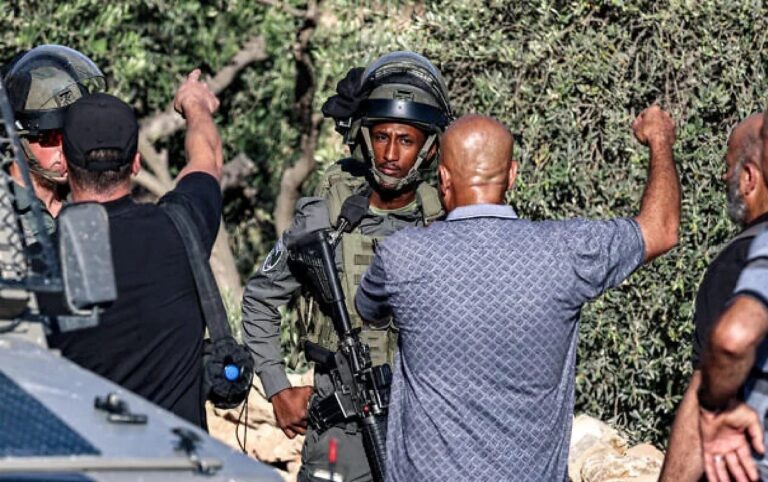
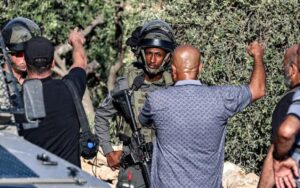
“The aggressions against Christians in the West Bank are multiplying,” he said, describing a pattern of land seizures, intimidation, and daily violence targeting Christian communities.
Shomali pointed to repeated attacks in Taybeh, the last entirely Christian Palestinian town, as well as incursions into Birzeit and Beit Sahour, where settlers have:
- Burned cars
- Threatened families in their homes
- Seized agricultural land
- Raised Israeli flags on privately owned property
“So slowly, slowly, the land of Palestine… is becoming less and less Palestinian and more and more settlers’ land,” he warned.
His testimony aligns with an urgent appeal issued by the Palestinian Presidential Higher Committee for Church Affairs, which described settler attacks as “systematic” and carried out under Israeli military protection with total impunity.
A Pattern, Not Incidents: Data Exposes Scale Of Violence.
Palestinian officials and monitoring bodies paint a stark statistical picture:
- 4,723 settler attacks recorded across the West Bank in 2025
- Over 1,100 Palestinians have been killed and 11,500 injured since October 2023
- Approximately 770,000 settlers are now living in illegal settlements and outposts
Entire Christian communities, particularly in Ramallah and Bethlehem governorates, have become frontline zones of settler expansion.
In Taybeh, Father Bashar Fawadleh describes a reality of “constant uncertainty, fear and pressure”, where violence has become routine rather than exceptional.
Recent incidents include:
- Arson attacks on civilian vehicles near the village cemetery
- Night-time raids by extremist settler groups such as the “Hilltop Youth”
- Racist graffiti and property destruction
- Illegal grazing of settler livestock, damaging crops
“Even when nothing happens, people expect something will,” Fawadleh said, capturing the psychological toll of persistent threat.
Olive Trees Uprooted, Livelihoods Destroyed:
Beyond direct violence, settlers are systematically targeting Palestinian agricultural life, a cornerstone of both economic survival and cultural identity.
Recent data shows:
- 1,245 olive trees destroyed or poisoned in recent months
- 300 trees uprooted in a single day in Ramallah-area attacks
- 349 incidents of property vandalism and theft
In rural communities, including Christian villages, farmers report being:
- Assaulted while tending land
- Prevented from accessing fields
- Driven away by armed settlers
These acts, widely documented by rights groups, are seen by legal experts as violations of the Fourth Geneva Convention, which prohibits the destruction of civilian property and forcible transfer under occupation.
“A Coercive Environment”: Christians Pushed To Leave.
For human rights lawyer Dalia Qumsieh, the issue goes beyond violence to the broader system sustaining it.
“The occupying power creates such a coercive environment that people are forced to leave,” she said, warning of a “significant threat of extinction” for Palestinian Christians.
Christians now number roughly 45,000 in the West Bank, just 1.5% of the population, a sharp decline from previous decades.
This decline is being accelerated by:
- Intensified checkpoints and permit regimes
- Revocation of movement permissions
- Home demolitions and land confiscation
- Economic strangulation
“Minorities are hit in an aggravated manner,” Qumsieh noted, pointing to the disproportionate vulnerability of Christian communities.
Faith Under Siege: Restrictions On Worship And Movement.
Religious life itself, central to Palestinian Christian identity, is increasingly constrained.
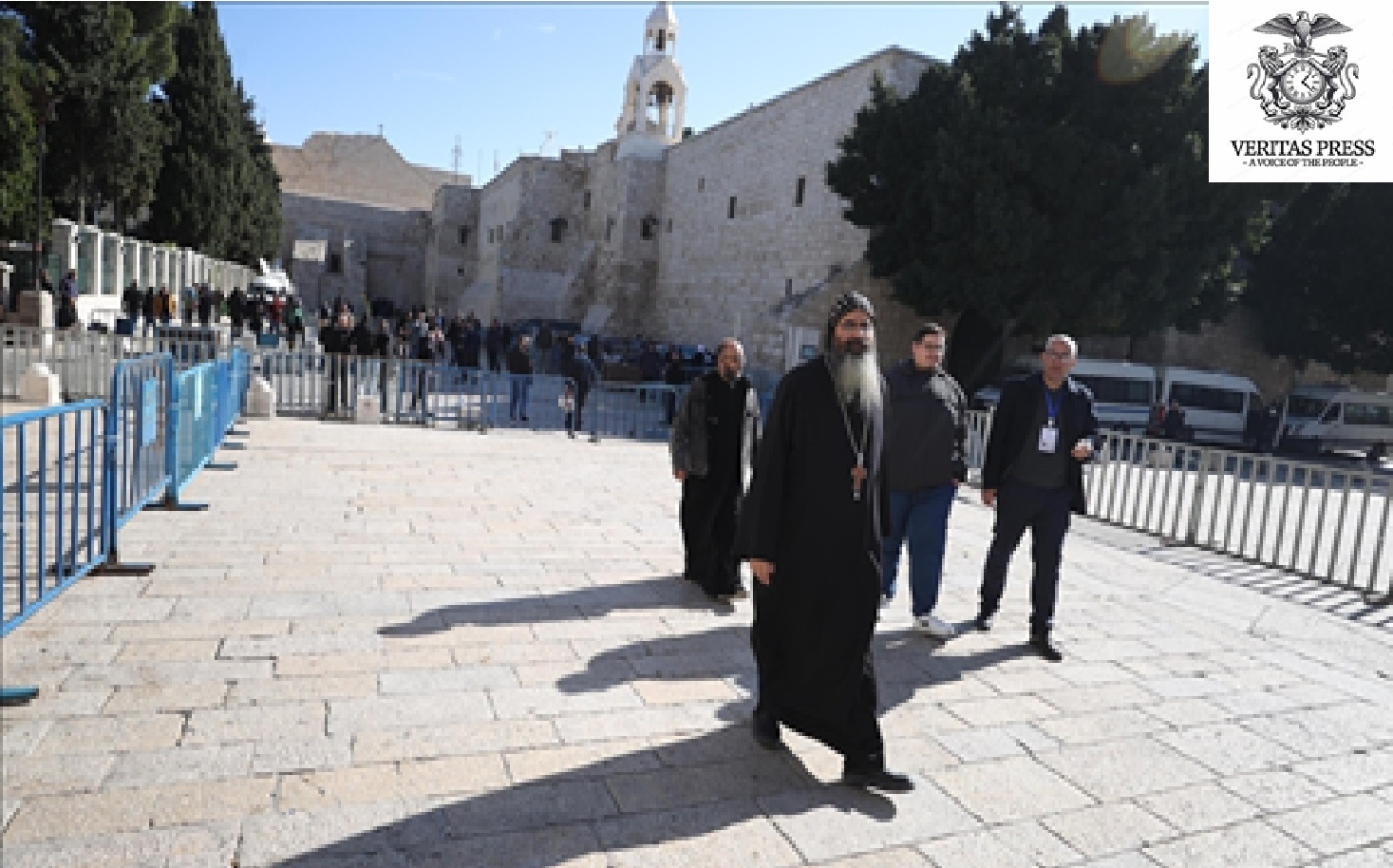
Reverend Munther Isaac describes a reality where even clergy must seek military permission to worship.
“We are approaching Lent with anxiety and fear… we are beginning to think there may be no Christian presence in Palestine,” he said.
Key restrictions include:
- Severe limits on access to Jerusalem’s holy sites
- Permit systems controlling entry to churches
- Checkpoints isolating Bethlehem and other Christian towns
- Caps on worshippers at major religious events
“A church that holds 10,000 is limited to 1,500,” Isaac said, referring to Easter celebrations at the Church of the Holy Sepulchre.
He rejects Israeli claims of security necessity:
“This is not about safety, it is about control.”
Education Targeted: “Permits Of Humiliation.”
Christian institutions are also under pressure.
Investigations reveal:
- 230+ Christian teachers denied access to Jerusalem schools
- Repeated school closures and strikes
- Restrictions on curricula and licensing
- Raids and arrests affecting educational institutions
School administrators describe Israeli permits as “permits of humiliation”, disrupting entire academic systems and threatening the future of Christian education in the city.
Political Dimension: Silencing Palestinian Christian Voices.
Beyond physical and institutional pressure, church leaders warn of political efforts to marginalise Palestinian Christian leadership.
A recent unified statement by Jerusalem church leaders rejecting Christian Zionism triggered backlash from Mike Huckabee, highlighting tensions between local churches and international political actors.
Church officials say:
- Alternative “pro-Zionist Christian voices” are being promoted
- Historic churches are being bypassed
- Palestinian Christian advocacy is being delegitimised
This, they argue, is part of a broader attempt to erase the political and moral voice of Palestinian Christians.
State Policy And Settler Violence: A Single System?
While Israel frequently frames settler violence as isolated extremism, Palestinian officials and analysts argue it is inseparable from state policy.
Recent Israeli government decisions include:
- Expanding settlement construction
- Allowing Israeli purchase of West Bank land
- Transferring planning authority from Palestinian municipalities to Israeli control
Finance Minister Bezalel Smotrich made the objective explicit:
“We will never establish a Palestinian state here.”
Critics say such policies:
- Enable settler expansion
- Legalise land seizures
- Entrench a system of de facto annexation
The United Nations and international legal bodies have repeatedly affirmed that settlements are illegal, while the International Court of Justice ruled in 2024 that Israel’s occupation itself is unlawful.
Yet enforcement remains absent.
Heritage Under Threat: Erasing History And Identity.
Control over archaeological and religious sites is becoming another battleground.
In Sebastia near Nablus, home to ruins sacred to Christians and Muslims, Israeli authorities have:
- Restricted Palestinian access
- Advanced plans to assert control over heritage sites
Jesuit scholar David Neuhaus described this as:
“A strategic attempt to erase the ties that Christian and Muslim Palestinians have to their land.”
A Climate Of Fear Is Driving An Exodus:
Across the West Bank, clergy report a consistent pattern:
- Elderly Christians remain
- Younger generations are leaving
“We stayed… but we don’t think our children will,” Reverend Isaac said.
In Taybeh alone, families have already fled following settler attacks, choosing safety over ancestral ties.
The result is a slow demographic collapse, driven not by a single event but by cumulative pressure.
International Response: Words Without Action.
Despite repeated condemnations:
- The United Nations warns of collapsing prospects for a two-state solution
- The European Union calls settlement expansion “a step in the wrong direction”
- Regional states denounce annexation measures
Yet on the ground, violence and expansion continue unabated.
Even diplomatic visits, including by US officials and senior church figures, have failed to halt attacks in places like Taybeh.
Conclusion: A System Of Erasure Targeting All Palestinians.
What is unfolding across the occupied West Bank is not simply a deterioration of security or a spike in extremist settler violence; it is the visible outcome of a structured system that fuses state policy, military control, and ideological expansionism into a single project of displacement.
The testimonies of clergy, the data from Palestinian institutions, and the findings of international observers converge on a central reality: settler violence functions less as an anomaly and more as an informal arm of territorial consolidation. It operates in tandem with official measures, land reclassification, permit restrictions, planning authority transfers, and movement controls, that together produce what legal experts describe as a “coercive environment” designed to make Palestinian presence unsustainable.
In this system, accountability is not merely absent; it is structurally obstructed. Attacks are rarely prosecuted. Land seizures are retroactively legalised. Military protection is routinely extended to those carrying out assaults, not those subjected to them. The result is a landscape where impunity is not failure, but policy.
However, to isolate the crisis as one affecting only Christians would be to misunderstand its full scope. The evidence increasingly indicates that Palestinian Christians are facing an intensified expression of a broader reality confronting all Palestinians, regardless of religion or denomination. The same mechanisms deployed against Christian villages in Taybeh, Birzeit, and Beit Sahour are also being used across Muslim communities throughout the West Bank, Gaza and beyond.
What emerges is a wider pattern: a system aimed at fragmenting, displacing, and ultimately erasing Palestinian presence in its entirety.
Palestinian Christians, as a small and historically rooted community, are among the most visibly endangered, compressed from multiple directions at once:
- Physically, through settler attacks and land confiscation
- Institutionally, through restrictions on education, worship, and movement
- Politically, through efforts to marginalise their leadership
- Demographically, through conditions that force emigration
Yet these pressures mirror those experienced across Palestinian society more broadly, pointing to a comprehensive policy framework that many analysts, activists, and legal scholars argue amounts to ethnic cleansing through incremental means.
This framework is characterised by:
- Encirclement and siege-like conditions, imposed through checkpoints, closures, and permit regimes
- Territorial fragmentation isolates communities from one another
- Systematic displacement, via demolitions, land seizures, and settler expansion
- Erasure of identity, targeting cultural, religious, and historical ties to the land
As Munther Isaac warned, these policies are not merely restrictive; they are transformative, reshaping the land’s demographic and cultural fabric.
The warnings of figures like William Shomali are therefore not confined to one community. When he speaks of the land becoming “less and less Palestinian,” he is describing a trajectory that extends beyond Christians to the Palestinian people as a whole.
At the same time, the international response, anchored in statements of concern but devoid of enforcement, has created a permissive environment in which these dynamics accelerate. Despite rulings by the International Court of Justice and repeated affirmations by the United Nations that settlements are illegal, there are no material consequences for continued expansion or violence. This gap between legal consensus and political action has effectively normalised a reality that international law explicitly prohibits.
The implications are profound. What is being tested, and thus far sustained, is a model in which a population can be gradually displaced, its land absorbed, and its identity eroded under prolonged occupation, without decisive international intervention.
In this context, the question is no longer whether Palestinian Christians, or Palestinians more broadly, are under threat. The evidence overwhelmingly confirms that they are. The more urgent question is whether the current trajectory, marked by unchecked settler violence, deepening annexation, siege-like restrictions, and systemic displacement, is being allowed to culminate in the removal of an entire people from their land.
Because if present conditions persist, the outcome will not be sudden or dramatic. It will be incremental, almost imperceptible from a distance, until the absence is complete.
And by then, what will have been lost is not only a community, but a living people, with diverse faiths and identities, whose continuous presence spans millennia, erased not by accident, but through a sustained process of dispossession and displacement.
Source: Multiple News Agencies
Submissions:
For The Secure Submission Of Documentation, Testimonies, Or Exclusive Investigative Reports From Any Global Location, Please Utilise The Following Contact Details For Our Investigations Desk: enquiries@veritaspress.co.uk or editor@veritaspress.co.uk
Help Support Our Work:
Popular Information is powered by readers who believe that truth still matters. When just a few more people step up to support this work, it means more lies exposed, more corruption uncovered, and more accountability where it’s long overdue.
Help Protect Independent Journalism, Which Is Currently Under Attack.
If you believe journalism should serve the public, not the powerful, and you’re in a position to help, becoming a DONATOR or a PAID SUBSCRIBER truly makes a difference.
DONATION APPEAL: If You Found This Reporting Valuable, Please Consider Supporting Independent Journalism.
Help Support Our Work – We Know, We Know, We Know …
Seeing these messages is annoying. We know that. (Imagine what it’s like writing them … )
Your support fuels our fearless, truth-driven journalism. In unity, we endeavour to amplify marginalised voices and champion justice, irrespective of geographical location.
But it’s also extremely important. One of Veritas Press’s greatest assets is its reader-funded model.
1. Reader funding means we can cover what we like. We’re not beholden to the political whims of a billionaire owner. We are a small, independent and impartial organisation. No one can tell us what not to say or what not to report.
2. Reader funding means we don’t have to chase clicks and traffic. We’re not desperately seeking your attention for its own sake: we pursue the stories that our editorial team deems important and believe are worthy of your time.
3. Reader Funding: enables us to keep our website and other social media channels open, allowing as many people as possible to access quality journalism from around the world, particularly those in places where the free press is under threat.
We know not everyone can afford to pay for news, but if you’ve been meaning to support us, now’s the time.
Your donation goes a long way. It helps us:
- Keep the lights on and sustain our day-to-day operations
- Hire new, talented independent reporters
- Launch real-time live debates, community-focused shows, and on-the-ground reporting
- Cover the issues that matter most to our communities, in real time, with depth and integrity
We have plans to expand our work, but we can’t do it without your support. Every contribution, no matter the size, helps us stay independent and build a truly people-powered media platform.
If you believe in journalism that informs, empowers, and reflects the communities we serve, please donate today.
GENEVA — A United Nations fact-finding mission has concluded there are “reasonable grounds to believe”
Iran’s GDP is projected to contract by 5.4 to 6.1% in 2026, its worst performance
The Trump administration is preparing a $2.8 billion weapons package for Israel containing 40,000 2,000-pound

Film alleges mass civilian deaths are routinely built into military decisions amid Israel’s genocidal war
The Israeli rights group says violence, displacement, economic strangulation, and settlement expansion form part of

Houthi forces have captured the historic Red Sea port of Mocha and are advancing on
London’s historic sanctions against Israeli settlements mark a watershed moment in UK foreign policy, but
With 95% of Gaza’s population now wholly dependent on aid and more than 90% stripped
India calls for Kashmir and Ladakh to appear only on its official map after a
ISLAMABAD – In the high-stakes political theatre of Pakistan, the battleground has shifted from the