



Help support our mission, donate today and be the change. Every contribution goes directly toward driving real impact for the cause we believe in.
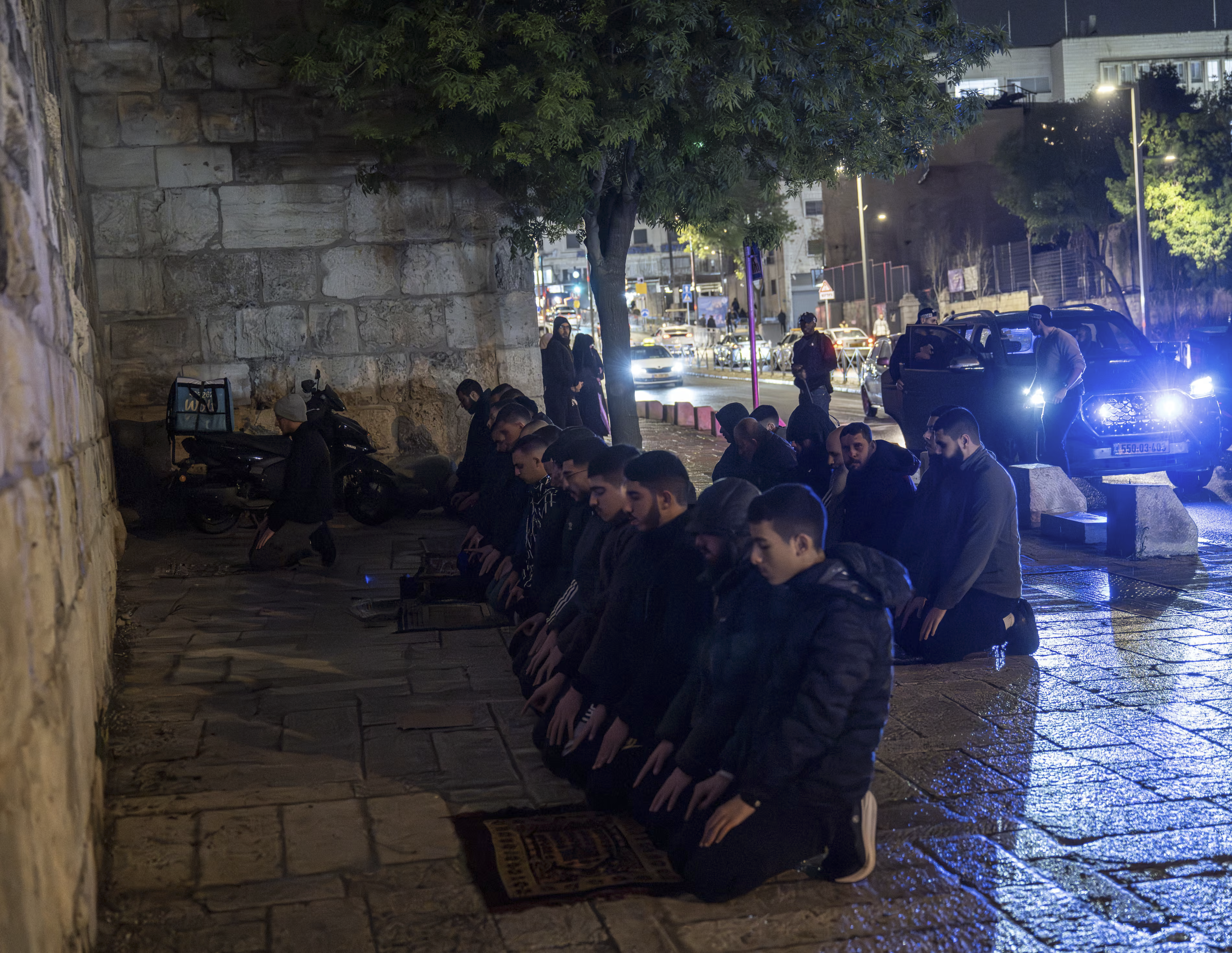
JERUSALEM – For the first time since the aftermath of the Six-Day War, the courtyards of Al-Aqsa Mosque fell silent on Eid al-Fitr.
No mass prayers. No echoing takbirs. No tens of thousands gathered in one of Islam’s holiest sites.
Instead, barricades, tear gas, and rows of Israeli police defined what many Palestinians and observers have described as one of the most consequential and alarming developments in Jerusalem’s religious and political landscape in decades.
A Historic Rupture Under The Shadow Of War:
Israeli authorities sealed off the Old City of Jerusalem and barred access to Al-Aqsa Mosque throughout the final days of Ramadan and into Eid, citing security concerns linked to the ongoing war with Iran.
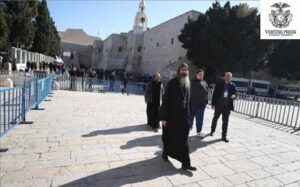
The closure, lasting nearly three weeks, also extended to the Church of the Holy Sepulchre and the Western Wall, with nationwide restrictions limiting public gatherings.
Israeli officials framed the move as necessary amid missile threats and heightened regional escalation following joint U.S.-Israeli strikes on Iran beginning February 28. Shrapnel from intercepted Iranian missiles even landed roughly 400 metres from Al-Aqsa’s compound days before Eid, reinforcing official claims of a volatile security environment.
But for Palestinians, the explanation has been met with deep scepticism.
“This is not just about security,” said Jerusalem-based cleric Sheikh Ikrima Sabri.
“This is an arbitrary and unjustified measure… a blatant violation of freedom of worship and international norms.”
Sabri stressed that Eid prayers had never ceased at Al-Aqsa since 1967, until now, calling the closure unprecedented in both scale and symbolism.
Street Prayers, Tear Gas, And Arrests:
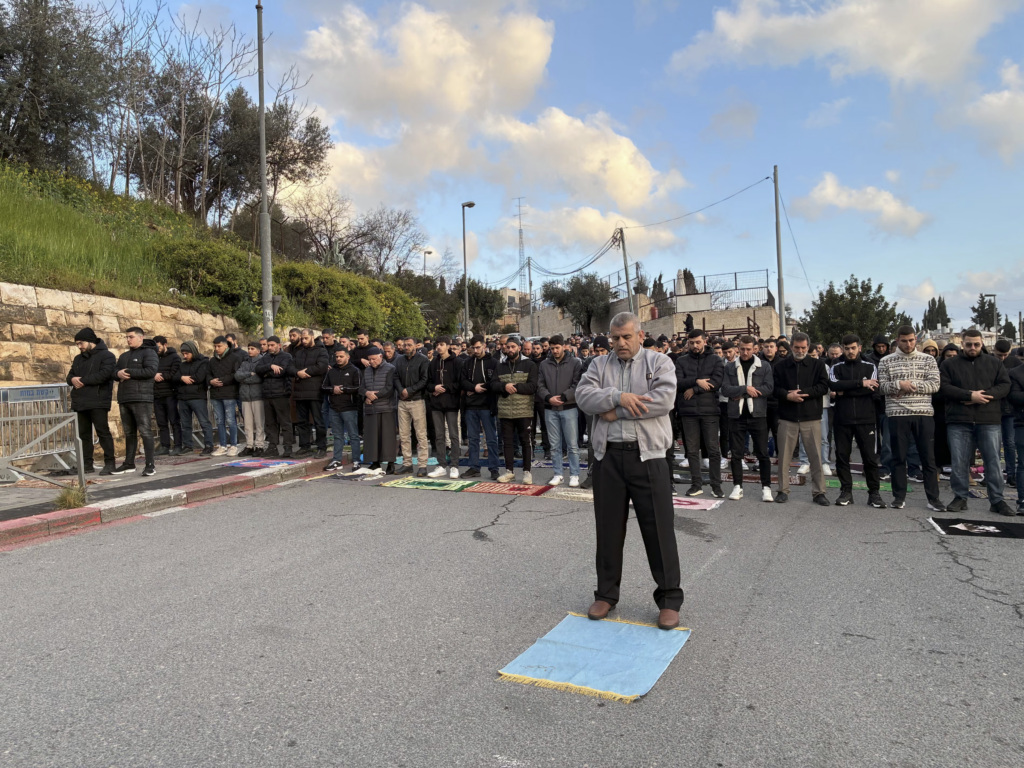
From the early hours of Eid morning, hundreds of Palestinian worshippers gathered at the gates of the Old City, particularly near Bab al-Sahira (Herod’s Gate) and Bab al-Asbat, carrying prayer mats and chanting “Allahu akbar.”
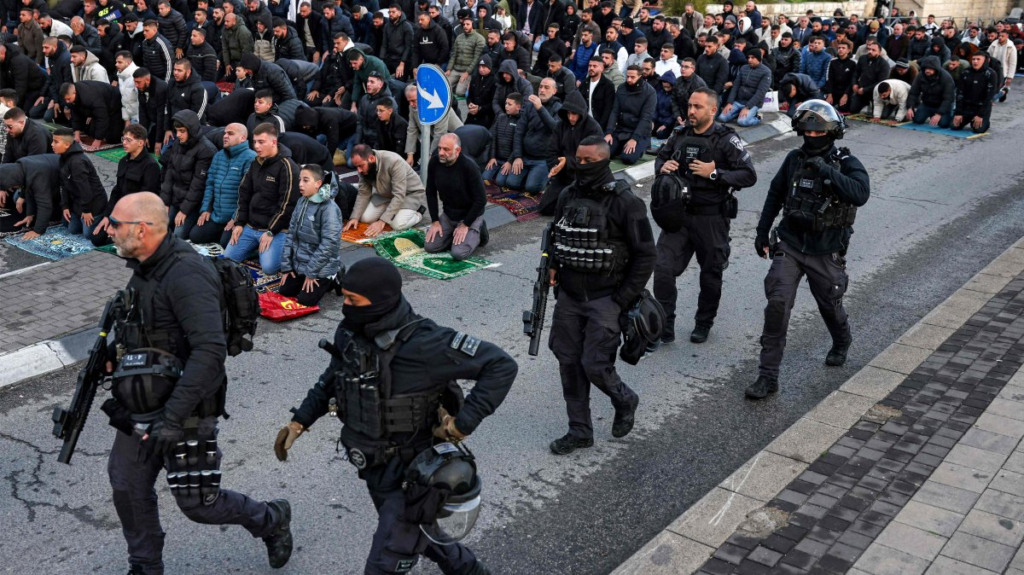
Denied entry, many attempted to pray in the streets.
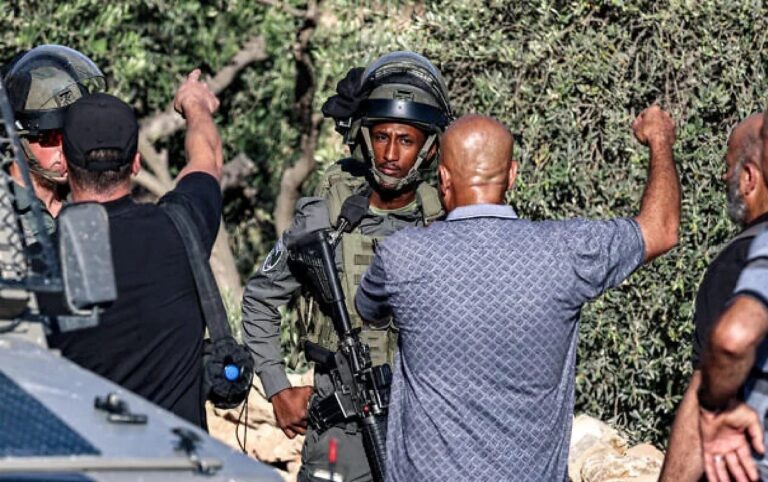
Israeli police responded with force.
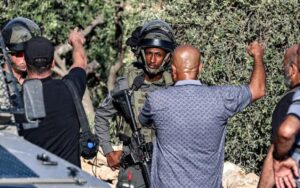
Witnesses and journalists reported the use of stun grenades, tear gas, batons, and physical assaults to disperse crowds. At least several individuals were detained, including a young man arrested on Salah al-Din Street and local imam Sheikh Fadi al-Jabrini during a pre-dawn raid.
Photojournalist accounts described worshippers being pushed back repeatedly as they tried to reach the closest possible point to the mosque.
“When Palestinians tried to approach, they were met with stun grenades and forced back,” said journalist Latifeh Abdellatif.
“Even residents of the Old City struggled to access their own homes.”
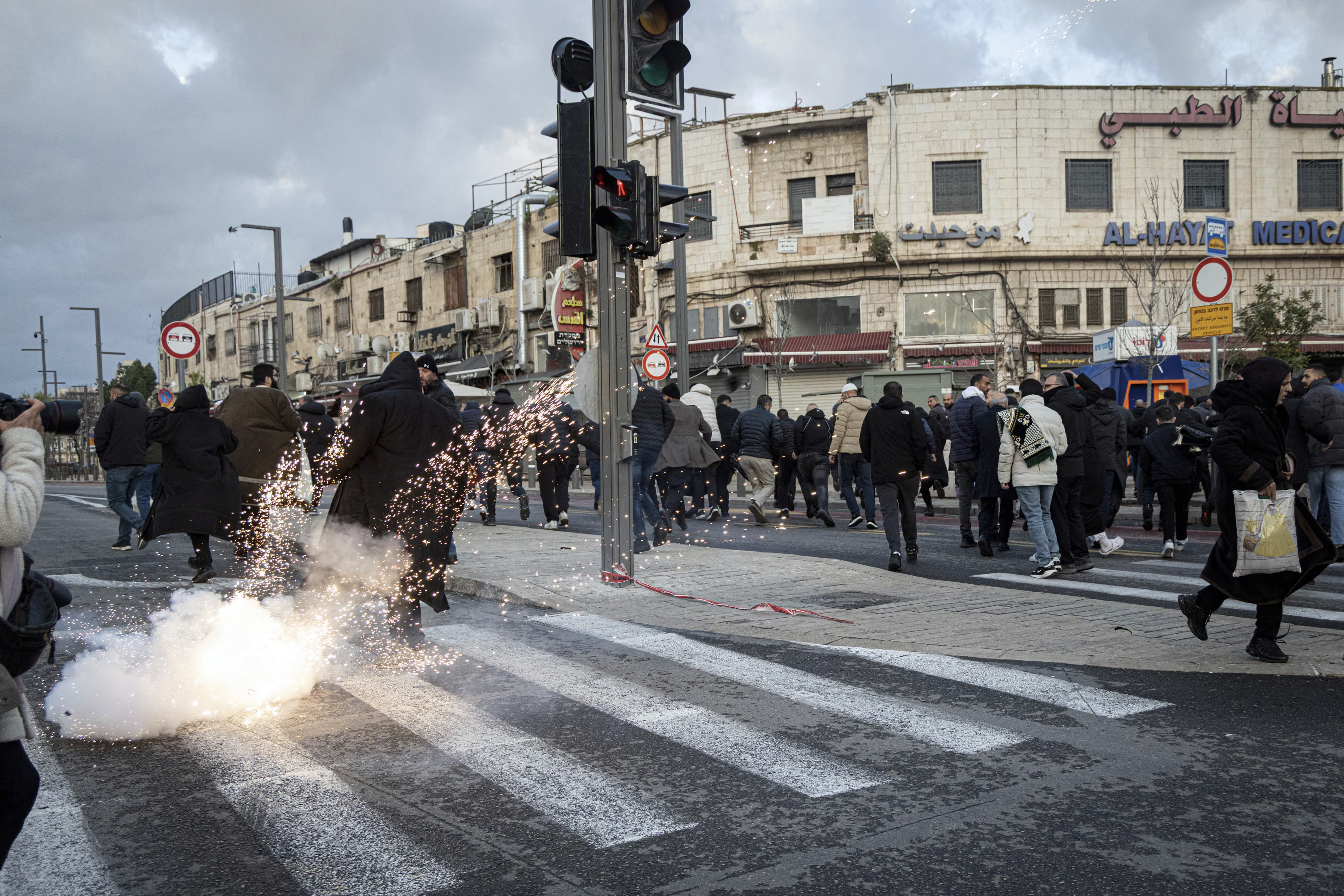
A small group eventually managed to pray near Herod’s Gate after a brief easing of restrictions. An imam, standing on a makeshift platform, delivered a short sermon:
“Pray and remain steadfast. May God grant victory to the oppressed.”
But the gathering, just hundreds, stood in stark contrast to the tens of thousands who typically fill Al-Aqsa’s courtyards on Eid.
“A Catastrophic Situation”: Voices From The Ground.
Across Jerusalem, the emotional toll was unmistakable.
Wajdi Mohammed Shweiki, a Palestinian resident in his 60s, described the moment bluntly:
“Today, Al-Aqsa has been taken from us. It’s a sad and painful Ramadan… a catastrophic situation for Palestinians and Muslims everywhere.”
Another worshipper, Zeyad Mona, said:
“Eid without Al-Aqsa feels like a broken heart.”
Hazen Bulbul, who has prayed at the mosque since childhood, warned of long-term implications:
“This may be the first time, but probably not the last. Israeli interference has been escalating.”
The Old City itself reflected that grief. Streets usually filled with Ramadan markets, lights, and families were eerily quiet, described by multiple reporters as a “ghost town.”
Local businesses, largely shut under restrictions, faced severe economic strain. Shopkeepers said they were barred from opening except for essential services, compounding months of financial hardship.
A Broader Pattern? Allegations Of Strategic Control.
Palestinian officials and analysts argue the closure cannot be viewed in isolation.
The Jerusalem Governorate called it:
“An unprecedented escalation… and a blatant violation of the historical and legal status quo.”
Researcher Ziyad Ibhais described the shutdown as:
“A calculated act of war… aimed at isolating Al-Aqsa during its most significant religious period.”
He noted that restrictions during Ramadan went far beyond Eid, including:
- Banning Friday prayers
- Blocking Laylat al-Qadr observances
- Preventing i‘tikaf (spiritual retreat in the last 10 days)
“This is the longest closure since Jerusalem’s liberation from the Crusaders,” Ibhais added.
Meanwhile, Palestinian leaders and analysts increasingly link these measures to a broader Israeli strategy to reshape control over the site, known to Muslims as Haram al-Sharif and to Jews as the Temple Mount.
There are growing fears of a trajectory similar to the Ibrahimi Mosque in Hebron, where a once-unified site was partitioned after the 1994 massacre, effectively dividing Muslim and Jewish worship spaces.
International Condemnation Mounts:
The closure has triggered strong reactions across the Muslim world and beyond.
The Organisation of Islamic Cooperation, the Arab League, and the African Union Commission issued a joint condemnation, calling the move:
“A grave violation of the historical and legal status quo… and a provocation to Muslims worldwide.”
They warned the restrictions could:
- Escalate regional tensions
- Undermine religious freedoms
- Threatens broader international stability
The statement placed “full responsibility” on Israel as the occupying power.
War With Iran, Or Pretext?
Israeli authorities maintain that the restrictions are tied directly to wartime conditions.
Since late February, missile exchanges between Israel and Iran have led to:
- Emergency measures nationwide
- Strict caps on public gatherings
- Heightened security around sensitive sites
The interception of Iranian missiles over Jerusalem, and falling debris near the Old City, has been cited as evidence of real risk.
However, critics argue that security concerns are being leveraged to accelerate long-standing political objectives.
Khalil Assali of Al-Quds University described the situation as:
“A catastrophe for Palestinians… when young people try to pray, they are chased and kicked out.”
For many, the timing, during Ramadan and Eid, appears particularly significant.
Beyond Jerusalem: A Region In Crisis.
The closure of Al-Aqsa unfolded against a wider backdrop of conflict and humanitarian crisis.
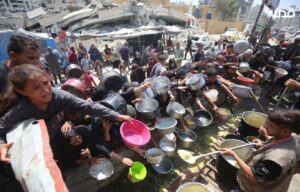
In the Gaza Strip, Eid arrived amid devastation, displacement, and ongoing airstrikes.
Displaced mother Sadeeqa Omar described the moment:
“The joy of Eid is incomplete… some have lost homes, others family members.”
Despite limited aid entering through Rafah, many families marked Eid with minimal food, makeshift celebrations, and continued fear.
A Turning Point for Jerusalem?
For decades, the fragile “status quo” arrangement at Al-Aqsa allowed Muslim worship under Islamic Waqf administration, even after Israel’s occupation of East Jerusalem in 1967.
This year’s events have shaken that foundation.
The absence of Eid prayers at Al-Aqsa is not just a one-day disruption—it is being widely interpreted as a potential turning point.
A precedent has been set.
And in a city where religion, sovereignty, and identity are inseparable, that precedent carries profound consequences.
As one Jerusalem resident put it:
“This is not just about missing a prayer. It’s about what comes next.”
Conclusion: A Precedent Set Under Fire.
What unfolded at Al-Aqsa Mosque this Eid cannot be dismissed as a temporary wartime anomaly. Framed by Israeli authorities as an emergency response to the escalating conflict with Iran, the full closure of Islam’s third holiest site during the most sacred period of the Muslim calendar marks a rupture that carries long-term political and legal implications.
For Palestinians, the issue is not whether missile debris fell near Jerusalem, but why such a moment was used to impose the most sweeping restrictions on worship at the site since the Six-Day War. The pattern is what alarms observers: a convergence of war, security doctrine, and longstanding ambitions around sovereignty over the compound.
Over the past year, intensifying after October 2023, restrictions on access, arrests of religious figures, and increasing incursions by Israeli settlers have already strained the fragile “status quo” arrangement governing the site. The Eid closure now appears, to many analysts and officials, less like an exception and more like an acceleration.
“This is how realities are reshaped,” one Jerusalem-based analyst warned. “Not in one declaration, but through cumulative acts that normalise what was once unthinkable.”
The concern, increasingly echoed by Palestinian authorities and international organisations, is that wartime exceptionalism is being operationalised into peacetime precedent. If a full closure of Al-Aqsa can be justified once under security grounds, it raises the question of when, and under what future pretexts, it could happen again.
This is particularly significant given historical parallels. At the Ibrahimi Mosque, temporary security measures following the 1994 massacre evolved into a permanent spatial and administrative division of the site. For many Palestinians, Al-Aqsa now sits at the edge of a similar trajectory, one in which access, control, and ultimately sovereignty are incrementally redefined.
International condemnation, from the Organisation of Islamic Cooperation, the Arab League, and others, has framed the closure as a violation of international law and religious freedom. Yet such statements, Palestinians argue, have historically failed to halt changes on the ground.
The deeper issue exposed this Eid is not only about access to a, but about who ultimately governs sacred space in a city where religion and power are inseparable.
In that sense, the silence that replaced the Eid takbirs at Al-Aqsa was not merely symbolic; it was diagnostic. It revealed how quickly a decades-old arrangement can be suspended, how fragile legal and religious protections have become under conditions of war, and how contested Jerusalem’s future remains.
If this moment passes without meaningful accountability or reversal, it risks establishing something far more enduring than a missed prayer:
a new baseline in which the closure of Al-Aqsa, once unthinkable, becomes administratively possible, politically defensible, and dangerously repeatable.
A further layer to this crisis, often downplayed in official narratives, is the extent to which Israeli political rhetoric itself has contributed to the escalation. While authorities continue to frame the closure of Al-Aqsa Mosque as a defensible wartime security measure, critics point to repeated statements from members of Benjamin Netanyahu’s cabinet that frame the broader conflict in explicitly ideological and religious terms. Far-right ministers have openly invoked notions of biblical entitlement, encouraged expanded Jewish prayer at the site, and in some cases described the war in language resembling a civilisational or “holy” struggle. For Palestinian officials, analysts, and rights groups, this rhetoric is not incidental; it is seen as incitement that fuels provocation on the ground, particularly at one of the most sensitive religious flashpoints in the world. In this reading, the closure of Al-Aqsa is not merely a reactive security policy, but part of a wider political environment in which escalation is both anticipated and, at times, actively stoked, raising serious concerns that actions taken under the banner of security are in fact deepening a trajectory toward religious confrontation rather than containment.
If the closure of Al-Aqsa Mosque during Eid can be justified today under the pretext of war and security, what will prevent it from becoming the new norm tomorrow, and who, if anyone, will draw the line before a political conflict irreversibly transforms into a religious one?
Source: Multiple News Agencies
Submissions:
For The Secure Submission Of Documentation, Testimonies, Or Exclusive Investigative Reports From Any Global Location, Please Utilise The Following Contact Details For Our Investigations Desk: enquiries@veritaspress.co.uk or editor@veritaspress.co.uk
Help Support Our Work:
Popular Information is powered by readers who believe that truth still matters. When just a few more people step up to support this work, it means more lies exposed, more corruption uncovered, and more accountability where it’s long overdue.
Help Protect Independent Journalism, Which Is Currently Under Attack.
If you believe journalism should serve the public, not the powerful, and you’re in a position to help, becoming a DONATOR or a PAID SUBSCRIBER truly makes a difference.
DONATION APPEAL: If You Found This Reporting Valuable, Please Consider Supporting Independent Journalism.
Help Support Our Work – We Know, We Know, We Know …
Seeing these messages is annoying. We know that. (Imagine what it’s like writing them … )
Your support fuels our fearless, truth-driven journalism. In unity, we endeavour to amplify marginalised voices and champion justice, irrespective of geographical location.
But it’s also extremely important. One of Veritas Press’s greatest assets is its reader-funded model.
1. Reader funding means we can cover what we like. We’re not beholden to the political whims of a billionaire owner. We are a small, independent and impartial organisation. No one can tell us what not to say or what not to report.
2. Reader funding means we don’t have to chase clicks and traffic. We’re not desperately seeking your attention for its own sake: we pursue the stories that our editorial team deems important and believe are worthy of your time.
3. Reader Funding: enables us to keep our website and other social media channels open, allowing as many people as possible to access quality journalism from around the world, particularly those in places where the free press is under threat.
We know not everyone can afford to pay for news, but if you’ve been meaning to support us, now’s the time.
Your donation goes a long way. It helps us:
- Keep the lights on and sustain our day-to-day operations
- Hire new, talented independent reporters
- Launch real-time live debates, community-focused shows, and on-the-ground reporting
- Cover the issues that matter most to our communities, in real time, with depth and integrity
We have plans to expand our work, but we can’t do it without your support. Every contribution, no matter the size, helps us stay independent and build a truly people-powered media platform.
If you believe in journalism that informs, empowers, and reflects the communities we serve, please donate today.
GENEVA — A United Nations fact-finding mission has concluded there are “reasonable grounds to believe”
Iran’s GDP is projected to contract by 5.4 to 6.1% in 2026, its worst performance
The Trump administration is preparing a $2.8 billion weapons package for Israel containing 40,000 2,000-pound
Film alleges mass civilian deaths are routinely built into military decisions amid Israel’s genocidal war
The Israeli rights group says violence, displacement, economic strangulation, and settlement expansion form part of

Houthi forces have captured the historic Red Sea port of Mocha and are advancing on
London’s historic sanctions against Israeli settlements mark a watershed moment in UK foreign policy, but
With 95% of Gaza’s population now wholly dependent on aid and more than 90% stripped
India calls for Kashmir and Ladakh to appear only on its official map after a
ISLAMABAD – In the high-stakes political theatre of Pakistan, the battleground has shifted from the