







Help support our mission, donate today and be the change. Every contribution goes directly toward driving real impact for the cause we believe in.
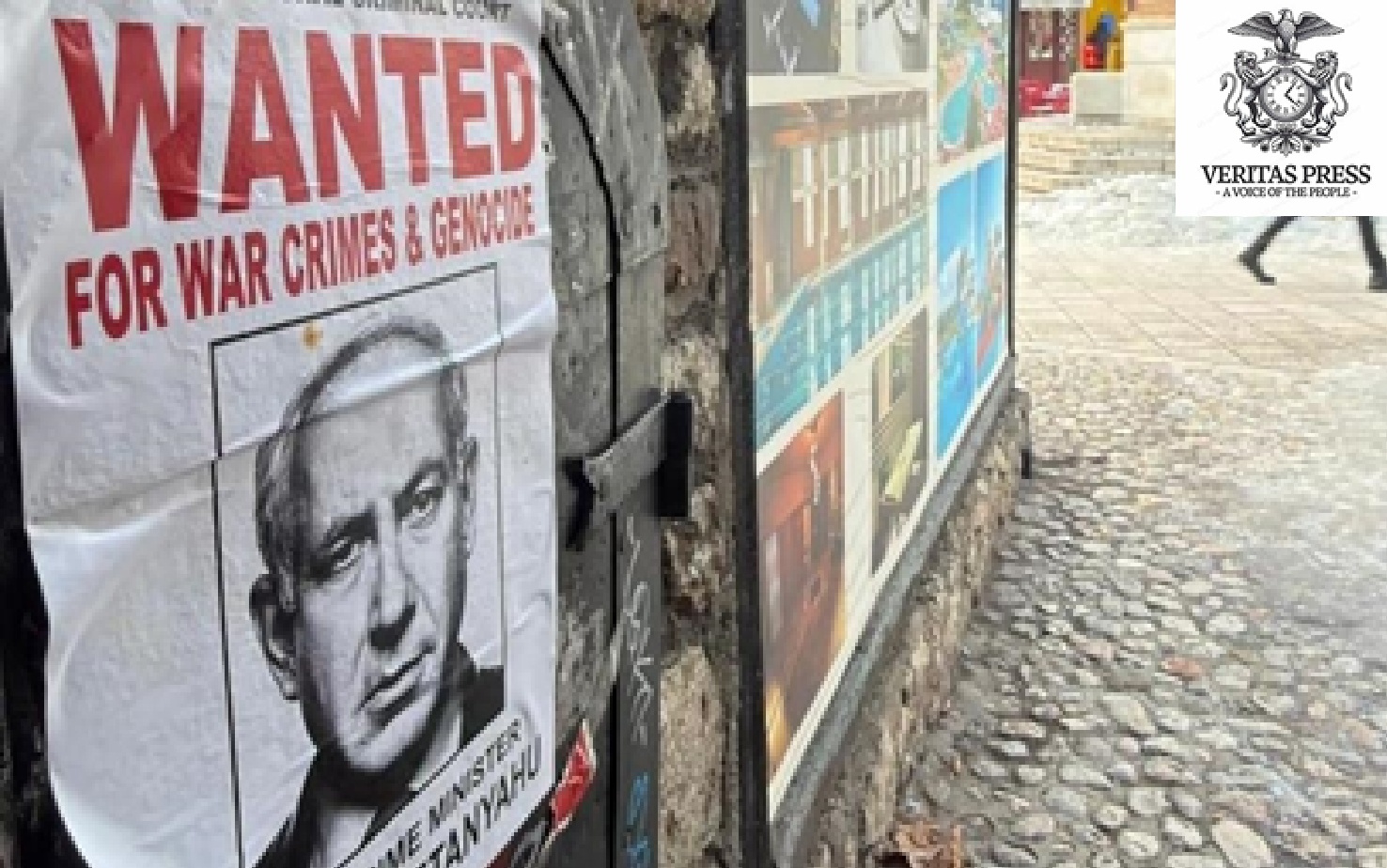
HUNGARY – As Benjamin Netanyahu prepares to travel to Hungary this weekend, a mounting legal and political confrontation is unfolding, one that cuts to the heart of international justice, European Union credibility, and the continued impunity surrounding Israel’s war in Gaza.
On Friday, Human Rights Watch issued an urgent call for Hungarian authorities to arrest Netanyahu upon arrival, citing binding obligations under the International Criminal Court. The visit, timed just weeks before Hungary’s April 12 national elections and tied to Netanyahu’s expected appearance at the Conservative Political Action Conference, has ignited fierce criticism from legal experts, activists, and human rights groups.
ICC Warrant And Legal Obligations Ignored:
The ICC issued arrest warrants on November 21, 2024, for Netanyahu and former Israeli Defence Minister Yoav Gallant over alleged war crimes and crimes against humanity in Gaza dating back to October 2023.
Under the Rome Statute, all member states, including Hungary, are legally obligated to detain individuals subject to ICC warrants if they enter their territory.
“Despite its move to leave the ICC, Hungary is still a member country and is still obligated to arrest and surrender individuals wanted by the court,” said Alice Autin, international justice researcher at Human Rights Watch.
Her warning was stark:
“By flouting this obligation, for the second time in less than a year, Hungary would further entrench impunity for serious crimes in Palestine and once again betray victims who have been denied justice for far too long.”
Netanyahu remains a fugitive under ICC jurisdiction. Yet this is not the first test Hungary has failed.
When Netanyahu visited Budapest in April 2025, Prime Minister Viktor Orbán refused to act on the warrant. In July, ICC judges formally ruled that Hungary had violated its legal obligations, referring the matter to the court’s Assembly of States Parties, though no meaningful enforcement action followed.
Hungary’s ICC Exit: Legal Shield Or Political Signal?
Budapest’s defiance has since escalated. In June 2025, Hungary formally notified the United Nations of its intention to withdraw from the ICC, a move set to take effect on June 2, 2026.
Legal scholars across Europe have stressed that this withdrawal does not absolve Hungary of its current obligations. Until the exit is finalised, the country remains bound by the Rome Statute.
Hungarian civil society groups and international legal experts have condemned the withdrawal as a calculated effort to shield political allies and weaken international accountability mechanisms.
“This is not just about one visit,” said a Budapest-based legal analyst quoted in regional media. “It signals a broader rejection of international law when it becomes politically inconvenient.”
EU Paralysis And The Rule Of Law Crisis:
The controversy has also exposed deep fractures within the European Union.
Despite years of documented democratic backsliding under Orbán, including restrictions on judicial independence, media freedom, and civil society, the EU has struggled to enforce meaningful consequences.
In 2018, the European Parliament triggered Article 7 proceedings over Hungary’s erosion of rule-of-law standards. Yet, eight years on, the process remains stalled.
Human Rights Watch argues that the bloc’s inaction is now enabling international law violations beyond Europe’s borders.
“Orbán’s government is about to roll out the red carpet again for Netanyahu, when it is obligated to arrest him,” Autin said.
“Silence and persistent inaction from the EU risks sending a dangerous message of acquiescence.”
European Commission officials stated in 2025 that they were “analysing” Hungary’s ICC withdrawal in light of EU law. No concrete measures have since been announced.
Diplomats speaking to European media outlets describe growing frustration behind closed doors, with some warning that failure to act could irreparably damage the EU’s credibility on human rights.
The War In Gaza: Ongoing Violence Despite ‘Truce’.
The legal standoff comes against the backdrop of continued devastation in Gaza.
According to Gaza’s Health Ministry, Israel’s military campaign, launched in October 2024 and widely described by rights groups as genocidal, has killed more than 100,000 Palestinians and injured over 377,000. Approximately 90% of the enclave’s civilian infrastructure has been destroyed, with reconstruction costs estimated at $70 billion by the United Nations.
Even after a nominal truce in October 2025, Israeli forces have continued daily strikes. At least 677 Palestinians have been killed and more than 1,800 injured since the ceasefire, according to local health officials.
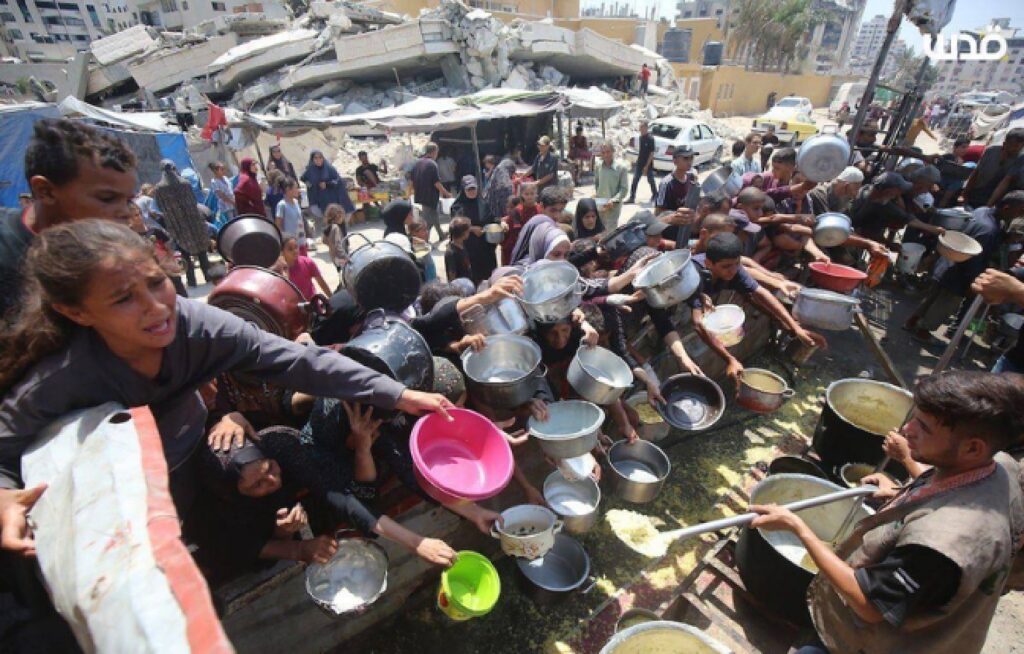
Doctors and aid workers inside Gaza describe an unrelenting humanitarian collapse.
A physician at Al-Shifa Hospital told regional media:
“We are operating in conditions that no longer resemble a health system. Patients die not only from bombs, but from hunger, infection, and the absence of medicine.”
Humanitarian organisations, including Human Rights Watch, have documented severe restrictions on aid entering the territory, leading to acute shortages of food, water, medical supplies, and reconstruction materials.
Regional Escalation: Lebanon And Iran.
Netanyahu’s planned visit also coincides with a widening regional conflict.
In early March 2026, Israeli forces intensified operations in southern Lebanon, issuing mass evacuation orders across large areas, including Beirut’s southern suburbs. Human rights observers warn these actions may constitute forced displacement, a war crime under international law.
Simultaneously, Israel, alongside the United States, has launched extensive airstrikes on Iran, triggering retaliatory attacks across Israel and parts of the Gulf. Analysts describe the situation as the most volatile regional escalation in years.
“These overlapping conflicts make accountability even more urgent,” said a Middle East analyst cited by international media. “Instead, what we are seeing is the normalisation of impunity.”
Voices From Civil Society And Victims:
Palestinian rights groups have reacted angrily to Hungary’s stance.
A Gaza-based human rights advocate, speaking to journalists, said:
“Every time a country welcomes Netanyahu instead of arresting him, it tells us that Palestinian lives do not matter under international law.”
European activists have also mobilised ahead of the visit, planning protests in Budapest demanding compliance with the ICC warrant.
Meanwhile, international legal organisations warn that failure to enforce ICC warrants risks undermining the entire system of global justice established after World War II.
“If powerful states can ignore the court without consequences,” said one international law expert, “then the ICC becomes symbolic rather than functional.”
A Defining Test For International Justice:
Netanyahu’s arrival in Hungary now represents more than a diplomatic visit, it is a litmus test.
For Hungary, it is a question of whether political alliances will override binding legal commitments.
For the European Union, it is a test of whether its proclaimed values carry enforceable weight.
And for the ICC, it is a moment that could define its credibility in prosecuting powerful state actors.
As the visit begins, one reality is clear: the gap between international law and political reality is widening, and for victims in Gaza and beyond, justice remains elusive.
Conclusion: The Collapse Of Accountability In Plain Sight.
What is unfolding in Hungary is not a diplomatic oversight or a legal grey area; it is a deliberate, political dismantling of international justice in real time.
By welcoming Benjamin Netanyahu, a sitting leader indicted by the International Criminal Court, Viktor Orbán is not merely ignoring a legal obligation; he is actively participating in the erosion of a system designed to prosecute the gravest crimes known to humanity. The legal argument is unambiguous: Hungary remains bound by the Rome Statute until its withdrawal takes effect. The refusal to act is therefore not procedural; it is ideological.
But the deeper failure extends far beyond Budapest.
The paralysis of the European Union reveals a bloc unwilling, or unable, to enforce its own foundational principles when confronted with political defiance from within. Years of inaction over Hungary’s rule-of-law violations have culminated in this moment: a member state openly defying international law while facing no meaningful consequences. The message is unmistakable, compliance is optional, and accountability is selective.
For Palestinians, this is not an abstract legal debate. It is a lived reality.
As bombs continue to fall on Gaza, as families remain buried under rubble, and as survivors navigate starvation and displacement, the spectacle of a wanted leader being received with honours in a European capital underscores a brutal truth: international justice is being applied not based on law, but on power.
Human rights organisations, legal scholars, and activists have long warned of this trajectory. When arrest warrants are ignored, when court rulings are unenforced, and when political alliances shield alleged perpetrators, the entire architecture of international law begins to fracture. The ICC, already constrained by its reliance on state cooperation, now faces a credibility crisis that strikes at its core legitimacy.
This moment will be remembered not only for what Hungary did, but for what others failed to do.
If EU states, ICC members, and global powers continue to tolerate such open defiance, they risk normalising a world in which international law exists only on paper, and justice is reserved for the powerless. The precedent being set is dangerous: that even in the face of alleged war crimes and crimes against humanity, political protection can outweigh legal obligation.
In that sense, Netanyahu’s visit is not just a diplomatic event; it is a stress test of the international system itself.
And so far, that system is failing.
Source: Multiple News Agencies
Submissions:
For The Secure Submission Of Documentation, Testimonies, Or Exclusive Investigative Reports From Any Global Location, Please Utilise The Following Contact Details For Our Investigations Desk: enquiries@veritaspress.co.uk or editor@veritaspress.co.uk
Help Support Our Work:
Popular Information is powered by readers who believe that truth still matters. When just a few more people step up to support this work, it means more lies exposed, more corruption uncovered, and more accountability where it’s long overdue.
Help Protect Independent Journalism, Which Is Currently Under Attack.
If you believe journalism should serve the public, not the powerful, and you’re in a position to help, becoming a DONATOR or a PAID SUBSCRIBER truly makes a difference.
DONATION APPEAL: If You Found This Reporting Valuable, Please Consider Supporting Independent Journalism.
Help Support Our Work – We Know, We Know, We Know …
Seeing these messages is annoying. We know that. (Imagine what it’s like writing them … )
Your support fuels our fearless, truth-driven journalism. In unity, we endeavour to amplify marginalised voices and champion justice, irrespective of geographical location.
But it’s also extremely important. One of Veritas Press’s greatest assets is its reader-funded model.
1. Reader funding means we can cover what we like. We’re not beholden to the political whims of a billionaire owner. We are a small, independent and impartial organisation. No one can tell us what not to say or what not to report.
2. Reader funding means we don’t have to chase clicks and traffic. We’re not desperately seeking your attention for its own sake: we pursue the stories that our editorial team deems important and believe are worthy of your time.
3. Reader Funding: enables us to keep our website and other social media channels open, allowing as many people as possible to access quality journalism from around the world, particularly those in places where the free press is under threat.
We know not everyone can afford to pay for news, but if you’ve been meaning to support us, now’s the time.
Your donation goes a long way. It helps us:
- Keep the lights on and sustain our day-to-day operations
- Hire new, talented independent reporters
- Launch real-time live debates, community-focused shows, and on-the-ground reporting
- Cover the issues that matter most to our communities, in real time, with depth and integrity
We have plans to expand our work, but we can’t do it without your support. Every contribution, no matter the size, helps us stay independent and build a truly people-powered media platform.
If you believe in journalism that informs, empowers, and reflects the communities we serve, please donate today.
GENEVA — A United Nations fact-finding mission has concluded there are “reasonable grounds to believe”
Iran’s GDP is projected to contract by 5.4 to 6.1% in 2026, its worst performance

The Trump administration is preparing a $2.8 billion weapons package for Israel containing 40,000 2,000-pound

Film alleges mass civilian deaths are routinely built into military decisions amid Israel’s genocidal war

The Israeli rights group says violence, displacement, economic strangulation, and settlement expansion form part of

Houthi forces have captured the historic Red Sea port of Mocha and are advancing on
London’s historic sanctions against Israeli settlements mark a watershed moment in UK foreign policy, but
With 95% of Gaza’s population now wholly dependent on aid and more than 90% stripped
India calls for Kashmir and Ladakh to appear only on its official map after a
ISLAMABAD – In the high-stakes political theatre of Pakistan, the battleground has shifted from the