









Help support our mission, donate today and be the change. Every contribution goes directly toward driving real impact for the cause we believe in.
Analysis: Behind the headlines of US-led defence partnerships lies a calculated strategy to shift weapons production closer to Asia’s flashpoints, with profound implications for regional stability, sovereignty, and the global balance of power.
A Quiet Revolution In Defence Manufacturing:
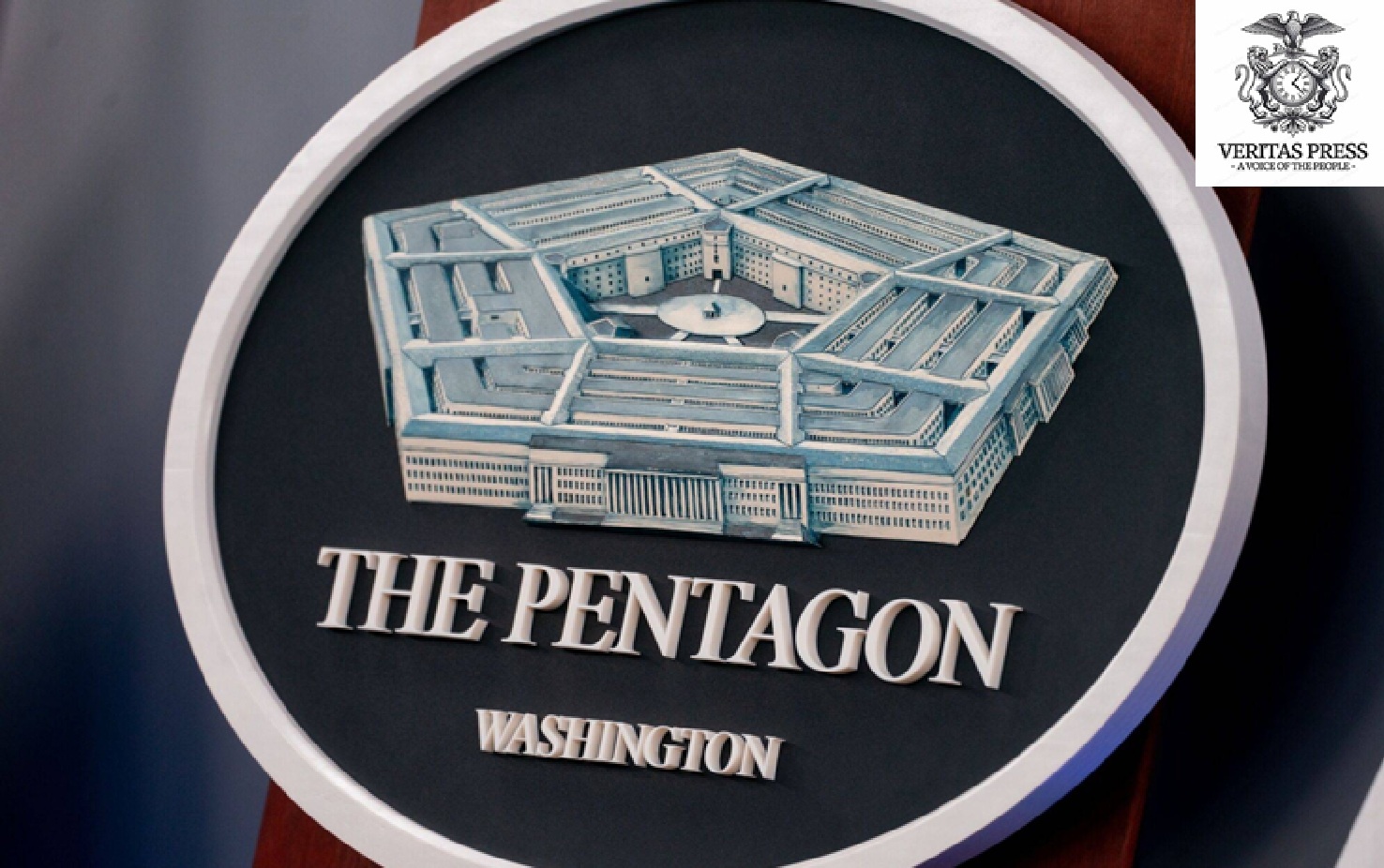
On March 20, 2026, the Pentagon quietly announced what amounts to a fundamental restructuring of how the United States and its allies will arm themselves in the Indo-Pacific. The Partnership for Indo-Pacific Industrial Resilience (PIPIR), a US-led coalition of 16 nations, has agreed to launch a new missile motor production program with Japan, push forward a region-wide drone cooperation effort, and explore establishing an ammunition production line in the Philippines.
On its face, this appears to be a logistical exercise: shortening supply chains, reducing dependency on distant manufacturing hubs, and building “industrial resilience.” But beneath the bureaucratic language of the Pentagon’s joint statement lies something far more consequential, a deliberate, multi-layered strategy to preposition the industrial capacity for sustained conflict in the Western Pacific.
“This is not simply about efficiency or cost savings,” says Dr. Chen Wei, a regional security analyst at the S. Rajaratnam School of International Studies in Singapore (speaking in a recent interview). “What PIPIR represents is a bet that the next major conflict will be decided not just by the weapons on hand at the outbreak of hostilities, but by the ability to replenish, repair, and out-produce an adversary over time.”
The Pentagon’s announcement follows a virtual meeting on March 18, where PIPIR welcomed two new members, Thailand and the United Kingdom, bringing total membership to 16 countries spanning both the Indo-Pacific and Europe. The expansion signals a growing recognition among US allies that the industrial base for conventional warfare is no longer a distant, stateside concern but a forward-deployed imperative.
What Pipir Announced: The Three Pillars.
1. Solid Rocket Motors: Japan Takes the Lead
The centrepiece of the new agreements is a program to produce solid rocket motors, the propulsion systems used in missiles, guided bombs, and rocket artillery, with Japan as the lead nation. Solid rocket motors are the “engines” of modern precision warfare, and their production has long been concentrated in the United States and a handful of European countries.
Japan’s role in this initiative is particularly significant. Tokyo has been steadily dismantling its post-World War II restrictions on defence production and exports. In December 2022, the Kishida administration announced a historic defence buildup, pledging to double defence spending to 2% of GDP by 2027. The PIPIR solid rocket motor program represents the industrial realisation of that strategic shift.
“Japan is not just buying missiles anymore, it is becoming a production hub for the entire alliance,” notes Yuki Tanaka, a research fellow at the Hiroshima Peace Institute (in a commentary published in January 2026). “This transforms Japan from a consumer of American security guarantees into a critical node in the alliance’s war-fighting infrastructure.”
The move also reflects lessons learned from the Ukraine war, where Russian missile strikes exposed vulnerabilities in just-in-time supply chains and the limits of Western production capacity. US and European factories struggled to ramp up production of artillery shells and guided munitions to meet Ukrainian demand. PIPIR’s forward-deployed production strategy is, in many ways, a hedge against a similar scenario in the Pacific.
2. Drone Standardisation and Regional Production
On drones, PIPIR members agreed to “develop common standards and shared supply chains for small military drones across the region, including work on batteries and small motors that power them”. The group also agreed to “explore building drones together across a range of military uses”.
This initiative addresses a critical vulnerability: the dominance of Chinese manufacturers in the global drone supply chain. Chinese companies like DJI control an estimated 70-80% of the global commercial drone market, and components from Chinese suppliers are ubiquitous even in many military-grade systems.
A senior defence industry executive, speaking on condition of anonymity, told this reporter: “If you open up most small drones on the market today, you will find Chinese batteries, Chinese motors, Chinese flight controllers. The Pentagon realised that in a conflict with China, those supply chains could be severed overnight. The PIPIR drone initiative is about creating a China-free supply chain for the alliance.”
The focus on “common standards” is also revealing. Historically, US allies have operated incompatible drone systems, complicating joint operations. By developing shared standards, PIPIR aims to create an ecosystem where drones, components, and software can flow freely among member nations, a military-industrial equivalent of the EU’s single market.
3. Philippines: A New Ammunition Production Hub
Perhaps the most geopolitically charged element of the announcement involves the Philippines. PIPIR members said they would “look into the Philippines hosting a new facility to load, assemble, and package 30mm cannon rounds”, ammunition widely used by military aircraft and ground vehicles.
The selection of the Philippines is no accident. Manila has become the frontline of US-China strategic competition, with the Enhanced Defence Cooperation Agreement (EDCA) granting US forces access to nine Philippine military bases. Locating ammunition production in the Philippines ties American and Filipino defence industrial capacity together in ways that are difficult to unravel.
For the Philippines, the initiative represents both an opportunity and a risk. On one hand, it promises investment and technology transfer to the country’s long-neglected defence industrial base. The Philippine Government Arsenal in Bataan, established in 1957 and operating on a 370-hectare defence industrial estate, has struggled for decades with underfunding and outdated equipment. A 2010 modernisation bill proposing a ₱6.3 billion four-phase upgrade remains pending in Congress to this day.
On the other hand, hosting a US-backed ammunition facility transforms the Philippines from a treaty ally into a military-industrial node, a distinction that could make it a target in any major conflict. “We welcome the investment and the recognition of our strategic importance,” said Congressman Albert Garcia of Bataan, a long-time advocate of arsenal modernisation (speaking to local media in March 2026). “But we must ensure that this serves Philippine national interests, not just those of our allies.”
The Bigger Picture: PIPIR As Geostrategic Architecture.
To understand the significance of these announcements, one must zoom out and consider PIPIR’s broader trajectory. Launched in May 2024 by the US Department of Defence, PIPIR was initially framed as a technical initiative to “reduce supply chain risks and help allies produce and maintain military equipment closer to where it might be needed”.
But in less than two years, it has grown into something far more ambitious. With 16 members spanning the Indo-Pacific and Europe, PIPIR now constitutes the largest US-led defence industrial partnership in the region, and it is explicitly designed to counterbalance China’s industrial and military might.
According to a US Department of Defence fact sheet released in June 2025, PIPIR aims to create a “$500 billion defence industrial base by 2030” through localised production, shared supply chains, and reduced reliance on manufacturing outside the alliance. The same document noted that PIPIR projects include a P-8 radar repair hub in Australia, standardised small drone production, and expanded maintenance capabilities across the region.
The integration with AUKUS, the trilateral security pact between Australia, the UK, and the US, is particularly striking. AUKUS Pillar I involves the development of nuclear-powered submarines for Australia, a project with a $40 billion price tag. AUKUS Pillar II focuses on advanced technologies, including artificial intelligence, quantum computing, and hypersonics.
Together, AUKUS and PIPIR represent complementary layers of the same strategic architecture: AUKUS provides the high-end, long-term technological edge, while PIPIR builds the day-to-day industrial capacity to sustain conventional warfare. “AUKUS is the sword; PIPIR is the supply chain that keeps it sharp,” one Pentagon official reportedly remarked during a background briefing earlier this year.
The Taiwan Factor: An Advisory Role With Strategic Weight.
One of the most sensitive elements of the PIPIR framework is Taiwan’s participation. A Taiwanese news outlet reported that Taiwan attended the March 18 meeting as an “advisor,” and a Pentagon official confirmed that “Taiwan’s defence industrial base plays a key role in the Indo-Pacific region”.
The official declined to identify Taiwan’s representatives, citing operational security concerns. But the very fact of Taiwan’s inclusion, even in a non-member advisory capacity, is politically explosive. China considers Taiwan a breakaway province and has repeatedly warned that any official cooperation between Taiwan and foreign governments violates the One-China principle.
Beijing’s reaction to PIPIR’s expansion will likely be swift. In previous instances of US-Taiwan defence cooperation, China has responded with military exercises, diplomatic pressure, and economic measures targeting countries perceived as facilitating the relationship. The inclusion of Thailand and the United Kingdom as new members, both countries with significant economic ties to China, suggests that PIPIR members are prepared to absorb those costs.
“Taiwan’s role in PIPIR, however formal or informal, crosses a line for Beijing,” says Li Ming, a professor of international relations at Fudan University in Shanghai (in an interview published March 22). “The United States is building a parallel defence industrial structure that explicitly includes Taiwan. This is not just about supply chains; it is about preparing for conflict over Taiwan itself.”
Critical Analysis: Beyond “Industrial Resilience.”
The Unspoken Logic: Conflict Preparedness
For all the talk of “industrial resilience” and “supply chain diversification,” the strategic logic of PIPIR is unmistakable: the United States and its allies are preparing for the possibility of a major conflict in the Western Pacific, and they are moving to ensure that conflict can be sustained.
In traditional military thinking, the outcome of a conflict is determined by three factors: the forces available at the outset, the ability to reinforce those forces, and the industrial capacity to replace losses. PIPIR addresses the third factor, and does so in a way that acknowledges that a Pacific conflict would not resemble the wars in Iraq and Afghanistan, where the United States enjoyed uncontested supply lines and unchallenged industrial supremacy.
“If there is a conflict with China, it will be a war of attrition,” notes Michael O’Hanlon, a defence analyst at the Brookings Institution (in a January 2026 podcast). “The side that can produce more missiles, more drones, more ammunition, and repair its ships and aircraft faster will have a decisive advantage. PIPIR is about making sure that advantage, if it comes to war, belongs to the US and its allies.”
The Risk Of Prepositioning:
But the forward deployment of defence industrial capacity carries risks that the Pentagon’s statements do not acknowledge. Prepositioning production lines, repair facilities, and ammunition stockpiles in frontline states like the Philippines and Japan makes those facilities targets. In any conflict, these sites would be high-priority objectives for an adversary seeking to degrade the alliance’s ability to sustain operations.
Moreover, the presence of foreign military-industrial facilities on sovereign territory raises questions of legal jurisdiction, operational control, and political accountability. If a missile motor factory in Japan or an ammunition plant in the Philippines becomes a source of escalation, who decides when and how to respond? The PIPIR framework, as publicly disclosed, offers no answers to these questions.
The Economic Dimensions: Corporate Interests And Public Costs.
The defence industry’s response to PIPIR has been enthusiastic. According to an investment analysis published in July 2025, defence contractors, including Raytheon, Lockheed Martin, BAE Systems, and General Dynamics, are positioned to benefit substantially from PIPIR and AUKUS contracts. The same analysis projects the Indo-Pacific defence market could reach $1 trillion by 2040.
Critics argue that PIPIR represents a form of militarised industrial policy that prioritises corporate profits over genuine security needs. “These are not just weapons systems; they are long-term revenue streams for defence contractors,” says Marites Vitug, editor-at-large of Rappler, a Philippine news organisation known for its investigative journalism (in a recent column). “When we talk about hosting ammunition plants and drone factories, we should be asking: who profits, who pays, and what happens to these facilities when the crisis passes?”
Local Voices: What Filipinos, Japanese, And Thais Think.
Official statements from PIPIR members emphasise unity and shared purpose. But local reactions in host countries are more complex.
In the Philippines, the prospect of hosting a 30mm ammunition facility has generated debate. MGen Jonathan C. Martir (Ret.), The Director of the Government Arsenal has publicly expressed support for modernisation and foreign partnerships, noting that the Arsenal “is envisioned to be a centre for defence industries to meet domestic requirements and supply the world market”. But others voice concerns about sovereignty and entrapment.
“I am not against modernisation, but we must ask: is this for the Philippines’ defence, or is this for America’s war plans?” asked Representative France Castro of the Makabayan bloc during a March 19 congressional hearing (as reported by local media). “If these facilities are built, they become permanent. They lock us into a posture that may not serve our long-term interests.”
In Japan, public opinion has shifted significantly since the Kishida government’s defence buildup began. A Nikkei poll conducted in February 2026 found that 54% of Japanese respondents supported strengthening the Self-Defence Forces, while 38% expressed concern that Japan was becoming too entangled in US-led military structures. The PIPIR solid rocket motor program, which involves direct industrial collaboration with US defence contractors, is likely to intensify that debate.
Thailand’s inclusion as a new member is particularly noteworthy. Historically, Thailand has pursued a “bamboo diplomacy” approach, balancing between China and the United States. Joining PIPIR suggests a tilt toward Washington that could complicate Bangkok’s relationship with Beijing. “Thailand knows that aligning too closely with any great power carries risks,” says Thitinan Pongsudhirak, a political scientist at Chulalongkorn University (in a March 21 interview with the Bangkok Post). “PIPIR membership suggests the calculation has shifted, but the balancing act will continue.”
China’s Response: Condemnation And Countermeasures.
Unsurprisingly, Beijing has reacted with sharp criticism to PIPIR’s expansion. While official statements from the Chinese Ministry of Foreign Affairs have not specifically addressed the March 18 announcements, the pattern of past responses is clear.
In September 2025, following the announcement of expanded AUKUS cooperation, a Chinese Foreign Ministry spokesperson stated: “The US-led military blocs in the Asia-Pacific are creating division and confrontation, undermining regional stability. The so-called ‘industrial resilience’ is just a pretext for building a military machine aimed at containing China.”
More significantly, China has begun developing its own defence industrial partnerships as a counterweight. The Belt and Road Initiative has increasingly included defence industrial components, with Chinese companies establishing production facilities in Pakistan, Cambodia, and other partner nations. China’s defence white papers have emphasised the importance of “independent and controllable” supply chains, a phrase that echoes PIPIR’s rhetoric.
The risk, analysts warn, is an accelerating arms race in the Indo-Pacific, where both sides move to lock in allies, pre-position industrial capacity, and create self-reinforcing cycles of suspicion and militarisation.
“We are witnessing the industrial preparation for a conflict that everyone claims to want to avoid,” says Dr. Lina Gong, a researcher at the Stockholm International Peace Research Institute (SIPRI), which tracks global arms transfers. “The danger is that these industrial commitments create their own momentum. Once the factories are built, the supply chains established, and the alliances formalised, the cost of not fighting becomes harder to justify.”
The View From Europe: Why The UK Joined.
The United Kingdom’s entry into PIPIR, alongside Thailand, is a significant development. It signals that European allies are willing to commit industrial capacity to the Indo-Pacific theatre, moving beyond declaratory policy to concrete resource allocation.
The UK’s defence industrial base is already stretched by its commitments to Ukraine and its own modernisation programs. Joining PIPIR suggests that London sees the Indo-Pacific as the decisive theatre of 21st-century strategic competition. “The UK is a European power, but its security is tied to the global order,” UK Defence Secretary John Healey stated during a visit to Singapore in February 2026 (as reported by the Financial Times). “A stable Indo-Pacific is essential to British security. PIPIR is how we translate that recognition into action.”
The UK’s participation also opens the door for greater integration between PIPIR and NATO’s defence industrial initiatives. While NATO remains focused on the European theatre, the overlap in membership, the US, UK, Germany, Italy, and others belong to both, creates opportunities for technology transfer, production sharing, and common standards across theatres.
A New Type Of Alliance: The Industrialisation Of Geopolitics.
PIPIR represents a new model of alliance: not a traditional military pact focused on collective defence, but an industrial coalition designed to out-produce and out-sustain an adversary. It is, in many ways, the geopolitical equivalent of the industrial mobilisation that preceded World War II.
But there are crucial differences. In the 1930s and 1940s, industrial mobilisation was a response to an existential threat that was already visible. Today, PIPIR is being built in anticipation of a threat, and in doing so, it may help create the very conflict it seeks to deter.
“The paradox of military preparedness is that it can become self-fulfilling,” writes Barry Posen, a political scientist at MIT, in his 2024 book Restraint: A New Foundation for US Grand Strategy. “When one side builds up its forces and industrial capacity, the other side sees a threat and responds in kind. The resulting spiral can make conflict more likely, not less.”
This critique is not lost on PIPIR’s architects. In a March 18 background briefing, a senior Pentagon official insisted that the initiative is “defensive in nature” and “designed to deter conflict by demonstrating resilience.” The official noted that the United States has not increased its force posture in the region but has instead focused on “sustainment and survivability.”
Yet for China, the distinction between “offensive” and “defensive” industrial capacity may be immaterial. A forward-deployed missile motor factory in Japan or an ammunition plant in the Philippines looks, from Beijing’s perspective, like infrastructure for a war of attrition, and therefore like infrastructure that must be neutralised if war comes.
The Path Forward: Risks And Opportunities.
As PIPIR moves from announcement to implementation, several questions will determine its impact on regional stability:
First, how will host nations manage the sovereignty implications of foreign defence facilities on their territory? The Philippines, Japan, Thailand, and others will need to establish clear frameworks for operational control, legal jurisdiction, and decision-making authority over facilities built under PIPIR auspices. Without such frameworks, these countries risk being drawn into conflicts they did not choose.
Second, can PIPIR be designed in ways that avoid the worst aspects of an arms race? Transparency about production capacities, confidence-building measures between rival alliances, and diplomatic channels for de-escalation will be essential. So far, PIPIR has operated with little public scrutiny, a fact that critics say increases, rather than decreases, the risk of miscalculation.
Third, what role will China play in shaping PIPIR’s trajectory? Beijing’s response, whether through counter-building, diplomatic pressure, or coercive measures, will significantly influence whether PIPIR stabilises or destabilises the region. A measured Chinese response that focuses on economic competition rather than military confrontation could lower tensions. A bellicose response that treats PIPIR as an act of war preparation would likely accelerate the very spiral both sides claim to want to avoid.
Finally, can the United States and its allies manage the economic costs of PIPIR without sacrificing domestic priorities? Defence industrial base expansion is expensive, and the demands of Ukraine, Israel, and Taiwan have already strained US production capacity. PIPIR’s reliance on allies to share costs and host facilities is, in part, a recognition that the United States cannot sustain a prolonged conflict in the Pacific alone.
Conclusion: A Strategic Crossroads.
The PIPIR announcements of March 2026 represent a significant milestone in the transformation of the Indo-Pacific strategic landscape. The United States and its allies have moved beyond the traditional model of forward-deployed forces to forward-deployed industrial capacity, a shift that fundamentally alters the nature of the alliance and the risks it entails.
For Japan, the solid rocket motor program represents the culmination of a decade-long transformation from a pacifist state to a defence industrial power. For the Philippines, the prospect of a 30mm ammunition line offers modernisation and economic investment, but also the risks of entrapment and target acquisition. For Thailand, joining PIPIR signals a tilt in the great power competition that has long defined Southeast Asian diplomacy. For Taiwan, advisory participation underscores its centrality to US strategic planning and the dangers that accompany that centrality.
And for China, PIPIR confirms what Beijing has long suspected: that the United States is not merely containing Chinese power but building the industrial infrastructure to fight and win a prolonged conflict in China’s own neighbourhood.
The question now is whether this infrastructure deters conflict or precipitates it. The architects of PIPIR insist they are building resilience to avoid war. But history suggests that the line between preparing for war and making war inevitable is thin, easily crossed, and rarely recognised until it is too late.
As the factories rise in Bataan and the production lines spin up in Japan, as drone standards are harmonised across 16 countries and supply chains are rerouted around China, the Indo-Pacific edges closer to a future that few claim to want but many seem to be preparing for. Whether that future can be avoided will depend not on industrial capacity, but on the wisdom of those who wield it.
Source: Multiple News Agencies
Submissions:
For The Secure Submission Of Documentation, Testimonies, Or Exclusive Investigative Reports From Any Global Location, Please Utilise The Following Contact Details For Our Investigations Desk: enquiries@veritaspress.co.uk or editor@veritaspress.co.uk
Help Support Our Works:
Popular Information is powered by readers who believe that truth still matters. When just a few more people step up to support this work, it means more lies exposed, more corruption uncovered, and more accountability where it’s long overdue.
Help Protect Independent Journalism, Which Is Currently Under Attack.
If you believe journalism should serve the public, not the powerful, and you’re in a position to help, becoming a DONATOR or a PAID SUBSCRIBER truly makes a difference.
DONATION APPEAL: If You Found This Reporting Valuable, Please Consider Supporting Independent Journalism.
Help Support Our Work – We Know, We Know, We Know …
Seeing these messages is annoying. We know that. (Imagine what it’s like writing them … )
Your support fuels our fearless, truth-driven journalism. In unity, we endeavour to amplify marginalised voices and champion justice, irrespective of geographical location.
But it’s also extremely important. One of Veritas Press’s greatest assets is its reader-funded model.
1. Reader funding means we can cover what we like. We’re not beholden to the political whims of a billionaire owner. We are a small, independent and impartial organisation. No one can tell us what not to say or what not to report.
2. Reader funding means we don’t have to chase clicks and traffic. We’re not desperately seeking your attention for its own sake: we pursue the stories that our editorial team deems important and believe are worthy of your time.
3. Reader Funding: enables us to keep our website and other social media channels open, allowing as many people as possible to access quality journalism from around the world, particularly those in places where the free press is under threat.
We know not everyone can afford to pay for news, but if you’ve been meaning to support us, now’s the time.
Your donation goes a long way. It helps us:
- Keep the lights on and sustain our day-to-day operations
- Hire new, talented independent reporters
- Launch real-time live debates, community-focused shows, and on-the-ground reporting
- Cover the issues that matter most to our communities, in real time, with depth and integrity
We have plans to expand our work, but we can’t do it without your support. Every contribution, no matter the size, helps us stay independent and build a truly people-powered media platform.
If you believe in journalism that informs, empowers, and reflects the communities we serve, please donate today.

GENEVA — A United Nations fact-finding mission has concluded there are “reasonable grounds to believe”
Iran’s GDP is projected to contract by 5.4 to 6.1% in 2026, its worst performance

The Trump administration is preparing a $2.8 billion weapons package for Israel containing 40,000 2,000-pound

Film alleges mass civilian deaths are routinely built into military decisions amid Israel’s genocidal war

The Israeli rights group says violence, displacement, economic strangulation, and settlement expansion form part of

Houthi forces have captured the historic Red Sea port of Mocha and are advancing on

London’s historic sanctions against Israeli settlements mark a watershed moment in UK foreign policy, but
With 95% of Gaza’s population now wholly dependent on aid and more than 90% stripped
India calls for Kashmir and Ladakh to appear only on its official map after a

ISLAMABAD – In the high-stakes political theatre of Pakistan, the battleground has shifted from the