






Help support our mission, donate today and be the change. Every contribution goes directly toward driving real impact for the cause we believe in.
WASHINGTON / ISLAMABAD — A fresh warning by US Director of National Intelligence Tulsi Gabbard has placed Pakistan among a small group of states allegedly developing missile capabilities that could one day threaten the American homeland, a claim that has triggered sharp pushback from diplomats, analysts, and nuclear policy experts who argue it reflects more politics than reality.
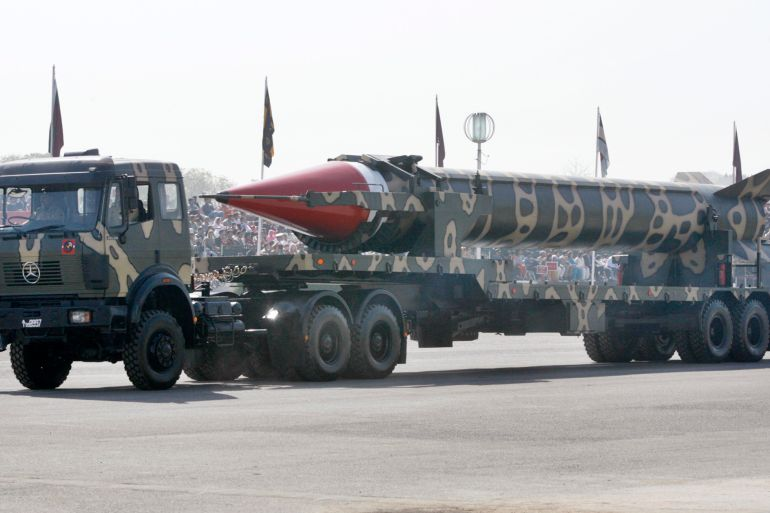
Presenting the 2026 Annual Threat Assessment before the US Senate Intelligence Committee, Gabbard grouped Pakistan alongside China, Russia, Iran, and North Korea, asserting that all five countries are advancing missile delivery systems capable of carrying nuclear and conventional payloads “that put our homeland within range.”
“Pakistan’s long-range ballistic missile development potentially could include intercontinental ballistic missiles (ICBMs) with the range capable of striking the homeland,” Gabbard told lawmakers.
Yet, beneath the headline warning lies a far more contested picture, one that exposes contradictions in US threat assessments, regional deterrence dynamics, and Washington’s broader strategic priorities in South Asia.
A Threat Projection, Not A Present Capability:
A closer reading of the US intelligence report reveals that Pakistan’s alleged threat is speculative and forward-looking, rather than based on existing capability.
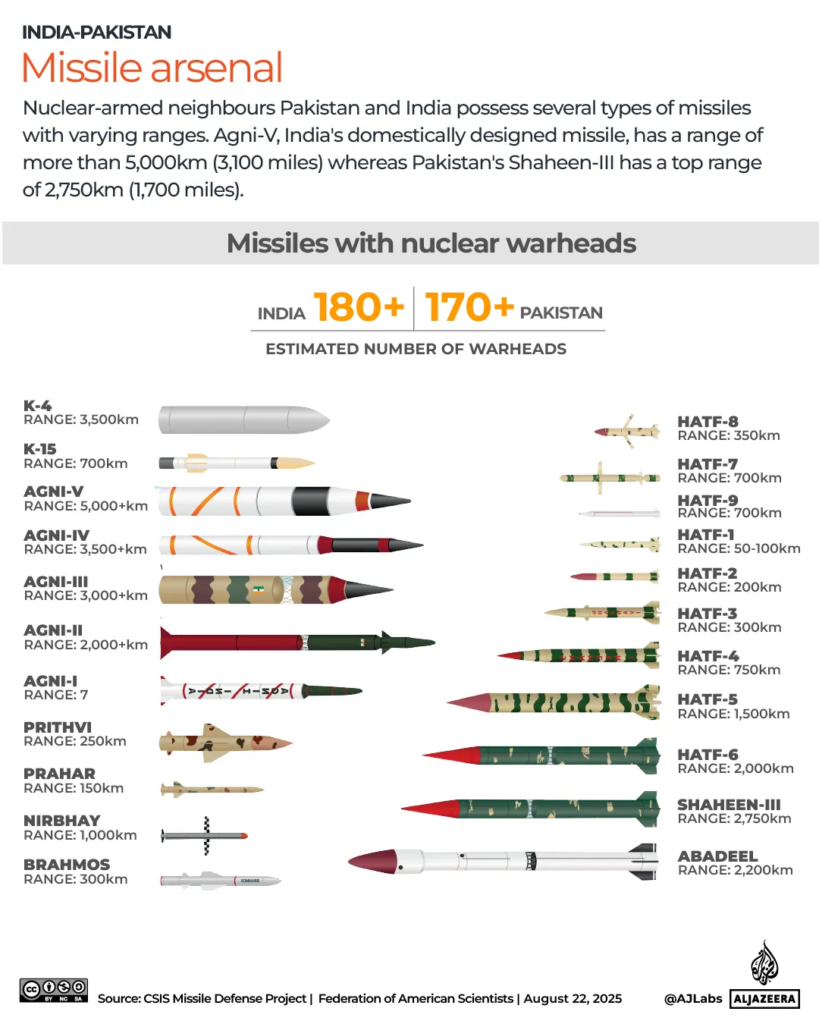
At present, Pakistan’s most advanced operational missile, the Shaheen-III, has a range of approximately 2,750km, sufficient to cover all of India, but nowhere near the 11,000+ km distance required to strike the United States.
By contrast, only a handful of countries, including the US, Russia, China, France, and the United Kingdom, currently possess operational ICBMs capable of such reach.
Even US officials have previously acknowledged this gap. In 2024, American intelligence assessments suggested Pakistan’s ability to develop long-range systems capable of reaching beyond South Asia remained “several years to a decade away.”
Despite this, Washington has continued to escalate its rhetoric. In December 2024, the US imposed sanctions on Pakistan’s National Development Complex and affiliated firms, accusing them of supporting long-range missile development.
Former US Deputy National Security Adviser Jon Finer warned at the time:
“If these trends continue, Pakistan will have the capability to strike targets well beyond South Asia, including in the United States.”
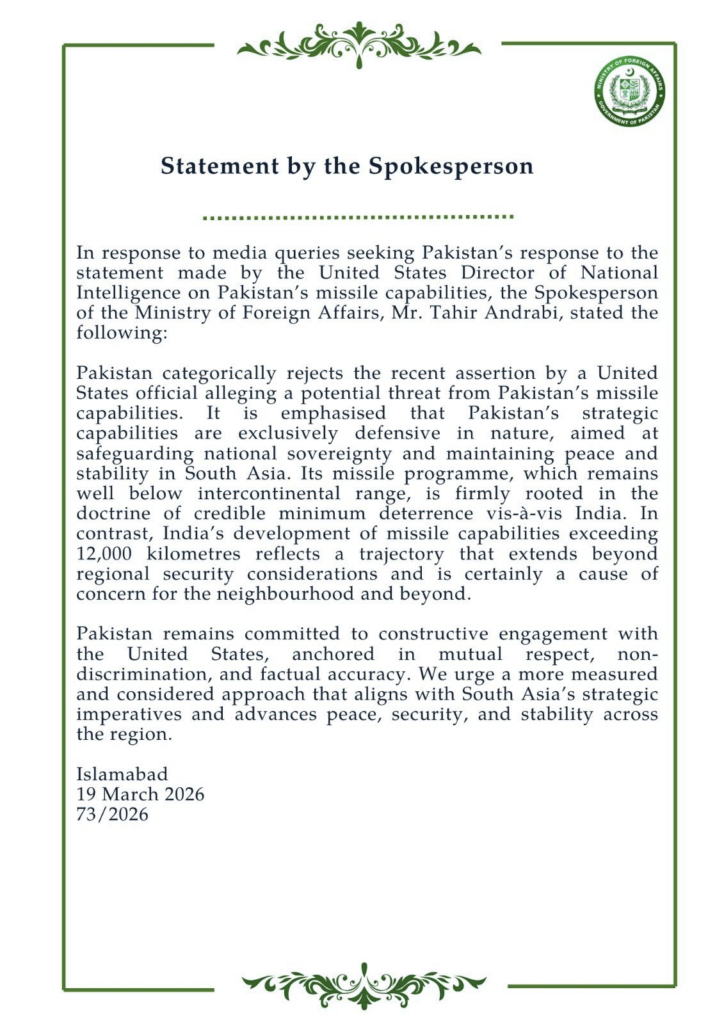
Pakistan Pushes Back: “Not Grounded In Strategic Reality.”
Pakistani officials and analysts have rejected Gabbard’s latest remarks as misleading and politically motivated.
Former foreign minister Jalil Abbas Jilani dismissed the claim outright:
“The assertion that the US homeland is within range of Pakistan’s nuclear or conventional missiles is not grounded in strategic reality. Pakistan’s nuclear doctrine is India-specific.”
Echoing this, former High Commissioner to India Abdul Basit called the assessment “self-serving and groundless,” accusing Washington of perpetuating biased narratives.
Security expert Brigadier (retired) Tughral Yamin told the media:
“Pakistan’s deterrence, both conventional and nuclear, is meant against India. Even with India, Pakistan seeks peace on honourable terms.”
The India Factor: The Missing Piece In US Assessments.
A central criticism of the US report is what analysts describe as a selective framing of threats, particularly its limited focus on India’s expanding missile capabilities and intended aggression.
India has already tested the Agni-V, with a range exceeding 5,000km, and is actively developing the Agni-VI, reportedly capable of reaching up to 12,000km, well within intercontinental range.
Turkish analyst Shaqeq-ud-Din questioned the imbalance:
“The classification of threats appears selective. Comparable scrutiny is not applied uniformly, especially regarding India’s expanding capabilities with external support.”
This perceived double standard is reinforced by Washington’s deepening defence partnership with New Delhi, including advanced technology transfers, even as it sanctions Pakistani entities.
Strategic Intent Vs Worst-Case Speculation:
At the heart of the debate is a fundamental question: What is Pakistan’s actual strategic intent?
US analysts Vipin Narang and Pranay Vaddi have suggested that Pakistan may be pursuing longer-range missiles not for India, but to deter potential US intervention in a future South Asian conflict.
But Pakistani scholars strongly dispute this interpretation.
Nuclear security expert Rabia Akhtar argues that US intelligence assessments often rely on “worst-case speculation” rather than grounded regional analysis:
“Pakistan’s deterrence posture is India-centric. Folding it into a US homeland threat narrative is misleading. There is no evidence that Pakistan is designing missiles to target beyond India’s strategic space.”
She added:
“A more serious conversation would engage with the regional logic that drives nuclear decision-making in South Asia, rather than projecting global ambitions onto Pakistan.”
South Asia: A Persistent Nuclear Flashpoint.
While the US report’s global framing is contested, its warning about South Asia remains widely acknowledged.
The assessment identifies India-Pakistan relations as an “enduring security challenge”, warning that the region remains at risk of escalation, particularly following crises such as the Pahalgam attack, which triggered a brief but dangerous military confrontation in 2025.
“Conditions exist for terrorist actors to continue to create catalysts for crises,” the report states.
Despite noting that neither country seeks full-scale war, the report underscores how quickly tensions can spiral between two nuclear-armed states.
Beyond India: Pakistan’s Expanding Security Pressures.
The report also highlights rising instability along Pakistan’s western border with Afghanistan.
US intelligence notes increasing tensions between Islamabad and the Taliban, driven by cross-border militant activity and growing frustration within Pakistan’s military leadership.
Pakistan’s army chief has warned that:
“Lasting peace requires the Taliban to sever ties with militants targeting Pakistan.”
However, the Taliban government has denied harbouring such groups, calling instead for dialogue, a disconnect that continues to fuel sporadic clashes.
A Broader Missile Arms Race:
Gabbard’s warning comes amid a rapidly expanding global missile landscape.
The US intelligence community projects that global missile inventories could surge from roughly 3,000 today to more than 16,000 by 2035, driven by advances in:
- Hypersonic weapons
- Precision-guided systems
- Dual-capable (nuclear and conventional) delivery platforms
This proliferation, analysts warn, is less about individual countries like Pakistan and more about a systemic global arms race.
US scholar Michael Kugelman cautioned against overstating Pakistan’s role:
“Pakistan wasn’t singled out exclusively; it was called out alongside several countries. This reflects broader proliferation concerns rather than a specific imminent threat.”
The Politics Behind The Narrative:
Critics argue that the framing of Pakistan as a potential threat to the US homeland must also be understood within a larger geopolitical context.
Over the past year, US-Pakistan relations have undergone a tentative reset, particularly after Washington’s claimed role in de-escalating the 2025 India-Pakistan crisis.
Former President Donald Trump has repeatedly highlighted his administration’s mediation efforts and has publicly praised Pakistan’s military leadership, including hosting Army Chief Field Marshal Asim Munir at the White House.
At the same time, Pakistan has gained renewed strategic relevance due to:
- Its ties with the Gulf states
- Its role as a potential intermediary with Iran
- Regional instability linked to conflicts in the Middle East
This dual dynamic, engagement on one hand, securitised suspicion on the other, reflects a long-standing contradiction in US policy toward Pakistan.
Conclusion: Threat Inflation Or Strategic Signal?
The inclusion of Pakistan in the US’s top-tier missile threat category raises critical questions about how intelligence assessments are constructed and to what end.
While Pakistan is undeniably modernising its missile arsenal, there is little evidence to support claims of an imminent or even medium-term capability to strike the United States.
Instead, analysts suggest the narrative may serve broader purposes:
- Justifying missile defence expansion
- Reinforcing non-proliferation pressure
- Signalling deterrence expectations to emerging powers
As Rabia Akhtar puts it:
“This is less about what Pakistan is doing, and more about how the US chooses to interpret and project future threats.”
In an era of accelerating global militarisation, the danger may not lie solely in missile capabilities, but in how they are politicised, exaggerated, and woven into strategic narratives that risk deepening global insecurity.
Source: Multiple News Agencies
Submissions:
For The Secure Submission Of Documentation, Testimonies, Or Exclusive Investigative Reports From Any Global Location, Please Utilise The Following Contact Details For Our Investigations Desk: enquiries@veritaspress.co.uk or editor@veritaspress.co.uk
Help Support Our Work:
Popular Information is powered by readers who believe that truth still matters. When just a few more people step up to support this work, it means more lies exposed, more corruption uncovered, and more accountability where it’s long overdue.
Help Protect Independent Journalism, Which Is Currently Under Attack.
If you believe journalism should serve the public, not the powerful, and you’re in a position to help, becoming a DONATOR or a PAID SUBSCRIBER truly makes a difference.
DONATION APPEAL: If You Found This Reporting Valuable, Please Consider Supporting Independent Journalism.
Help Support Our Work – We Know, We Know, We Know …
Seeing these messages is annoying. We know that. (Imagine what it’s like writing them … )
Your support fuels our fearless, truth-driven journalism. In unity, we endeavour to amplify marginalised voices and champion justice, irrespective of geographical location.
But it’s also extremely important. One of Veritas Press’s greatest assets is its reader-funded model.
1. Reader funding means we can cover what we like. We’re not beholden to the political whims of a billionaire owner. We are a small, independent and impartial organisation. No one can tell us what not to say or what not to report.
2. Reader funding means we don’t have to chase clicks and traffic. We’re not desperately seeking your attention for its own sake: we pursue the stories that our editorial team deems important and believe are worthy of your time.
3. Reader Funding: enables us to keep our website and other social media channels open, allowing as many people as possible to access quality journalism from around the world, particularly those in places where the free press is under threat.
We know not everyone can afford to pay for news, but if you’ve been meaning to support us, now’s the time.
Your donation goes a long way. It helps us:
- Keep the lights on and sustain our day-to-day operations
- Hire new, talented independent reporters
- Launch real-time live debates, community-focused shows, and on-the-ground reporting
- Cover the issues that matter most to our communities, in real time, with depth and integrity
We have plans to expand our work, but we can’t do it without your support. Every contribution, no matter the size, helps us stay independent and build a truly people-powered media platform.
If you believe in journalism that informs, empowers, and reflects the communities we serve, please donate today.
GENEVA — A United Nations fact-finding mission has concluded there are “reasonable grounds to believe”
Iran’s GDP is projected to contract by 5.4 to 6.1% in 2026, its worst performance
The Trump administration is preparing a $2.8 billion weapons package for Israel containing 40,000 2,000-pound

Film alleges mass civilian deaths are routinely built into military decisions amid Israel’s genocidal war

The Israeli rights group says violence, displacement, economic strangulation, and settlement expansion form part of

Houthi forces have captured the historic Red Sea port of Mocha and are advancing on
London’s historic sanctions against Israeli settlements mark a watershed moment in UK foreign policy, but
With 95% of Gaza’s population now wholly dependent on aid and more than 90% stripped
India calls for Kashmir and Ladakh to appear only on its official map after a
ISLAMABAD – In the high-stakes political theatre of Pakistan, the battleground has shifted from the