


Help support our mission, donate today and be the change. Every contribution goes directly toward driving real impact for the cause we believe in.
TEHRAN — In the firmament of the Islamic Republic of Iran’s leadership, few figures have embodied its intellectual depth and institutional resilience as profoundly as Dr. Ali Larijani. A philosopher by training and a strategist by practice, Larijani’s five-decade career spanned the military, media, legislature, and the highest echelons of national security. His life was a testament to the Islamic Revolution’s synthesis of religious scholarship and political modernity, a narrative that concluded, as many in his ideological universe believe it was destined to, in martyrdom.
Larijani was killed in an Israeli airstrike in Tehran on March 17, 2026, a targeted assassination that came just eighteen days after the martyrdom of the Leader of the Islamic Revolution, Ayatollah Seyyed Ali Khamenei. His death, along with that of his son Morteza, aide Alireza Bayat, and several colleagues, marks not an end, but a profound escalation in a conflict that has redefined the Middle East.
The Architect Of The Regime: A Profile In Power.
Born in 1958 into a family of religious scholars in the Iraqi holy city of Najaf, Ali Larijani was the son of Ayatollah Mirza Hashem Amoli, a cleric who had sought refuge from the Pahlavi regime’s secularism. This intersection of exile and scholarship forged Larijani’s early consciousness. Returning to Iran in 1961, he grew up immersed in the intellectual traditions of Shia Islam.
His academic trajectory, however, was unique. A graduate in mathematics and computer science from the prestigious Sharif University of Technology, he was steered toward philosophy by the revolutionary thinker Martyr Ayatollah Morteza Motahhari, who would later become his father-in-law. Larijani earned a doctorate in Western philosophy from the University of Tehran, with a dissertation on Immanuel Kant. This rare fusion of technical and philosophical training equipped him to frame Iran’s political challenges within broader civilizational and moral contexts, a trait that distinguished him from many of his contemporaries.
His career began in the cauldron of the Iran-Iraq war within the Islamic Revolution Guard Corps (IRGC), where he served for a decade, rising to deputy commander. This period ingrained in him the principles of national sovereignty, resilience, and strategic self-reliance. Later, as head of the Islamic Republic of Iran Broadcasting (IRIB) from 1994 to 2004, he managed one of the country’s largest cultural institutions, demonstrating administrative acumen.
However, it was his role as the secretary of the Supreme National Security Council (SNSC) and chief nuclear negotiator under President Mahmoud Ahmadinejad that brought him to the world’s attention. From 2005 to 2007, Larijani was the face of Iran’s diplomacy, articulating the country’s right to peaceful nuclear technology. His negotiating style, described by former EU foreign policy chief Federica Mogherini as that of “a sophisticated and highly intellectual negotiator who understands the cost of isolation better than anyone in the Iranian establishment”, was a blend of firmness and pragmatism. He famously dismissed Western demands to abandon enrichment as an offer to exchange “pearls for candy”.
After a brief departure from the SNSC due to policy differences with Ahmadinejad, Larijani’s political weight was reaffirmed when he became Speaker of Parliament (Majlis) in 2008, a position he held for an unprecedented twelve years. During this tenure, he was a key facilitator of the 2015 Joint Comprehensive Plan of Action (JCPOA), navigating its legislative approval with a pragmatism that earned him a reputation as a bridge between hardline and reformist factions. “He was the ultimate insider,” noted David Khalfa of the Atlantic Middle East Forum. “The Leader gave the orders, but Larijani was the executor, the man who ensured the survival of the regime through its most complex policy manoeuvres”.
In 2020, he was appointed as a senior adviser to the Leader, Ayatollah Khamenei. Following the February 28 martyrdom of the Leader, Larijani was reappointed as SNSC secretary by President Masoud Pezeshkian in August 2025, tasked with steering the country’s war response. President Pezeshkian, in his condolence message, mourned the loss of a man whose decades of “dedicated and courageous service” in cultural, political, and national security fields elevated him to the “level of martyrdom.”
The New Leader’s Vow: “They Will Soon Pay.”
The assassination has galvanised Iran’s leadership, with the new Leader of the Islamic Revolution, Ayatollah Mojtaba Khamenei, issuing a stark and unequivocal response. In a message filled with both grief and resolve, he described Larijani as “a learned, farsighted, intelligent, and committed individual” whose nearly five decades of service had made him a “distinguished figure.”
Echoing the foundational logic of the revolution, Ayatollah Khamenei framed the assassination not as a strategic loss but as a testament to Larijani’s importance and the enemies’ hatred. “Undoubtedly, the assassination of such a figure shows his prominence and the hatred of the enemies of Islam against him,” he stated. “The enemies of Islam must know that the shedding of these bloods will only make the foundations of the Islamic system stronger.”
In a direct and menacing vow that resonated across the region, the Leader concluded: “Of course, every blood has a price that the criminal murderers must pay it soon”. This was reinforced by a subsequent statement on social media platform X, where he declared that the “criminal murderers of these martyrs will soon have to pay.”
Institutional Resilience And The Logic Of Martyrdom:
The assassination of Larijani, following that of Ayatollah Khamenei, has tested the central thesis of the “decapitation” strategy employed by the US and Israel. Yet, the Iranian response has been one of defiant institutional continuity. Foreign Minister Abbas Araghchi dismissed the notion that such killings could destabilise the Islamic Republic.
“I do not know why the Americans and the Israelis still have not understood this point,” Araghchi told Al Jazeera. “The Islamic Republic of Iran has a strong political structure with established political, economic, and social institutions. The presence or absence of a single individual does not affect this structure… We have not had anyone more important than the leader himself. And even the leader was martyred. Yet the system continued to work and immediately provided a replacement”.
This resilience is rooted in what can be termed the “politics of martyrdom,” a philosophical and literary force deeply embedded in Iran’s revolutionary Shia identity. It is a tradition that traces its lineage to Imam Hussein, whose maxim, “I see death as nothing but happiness, and life with the oppressors as nothing but misery”, inverts conventional strategic logic. Death is not an end, but a generator of political consciousness and moral indictment.
As one regional observer noted, “Ali Larijani was killed while he was not in hiding. This is a regime which processes martyrdom as a strategy of maintaining control. The person who comes after him, the popular support for him, and for the regime, grows”. In this cosmology, the assassination of leaders like Larijani reconstitutes the system symbolically, sacralizing authority and multiplying it through loss. The response has been immediate: the IRGC launched the 61st wave of Operation True Promise 4, firing Khorramshahr-4 missiles at targets in Tel Aviv under the slogan “Ya Aba Abdillah al-Hussein,” reportedly hitting over 100 targets.
A Strategic Turning Point: The Failure Of “Decapitation.”
The assassination of Ali Larijani occurs at a critical juncture, revealing potential fractures in the US-Israeli war aims. While the initial strikes on February 28 appeared coordinated, analysts point to a growing divergence between Washington and Tel Aviv.
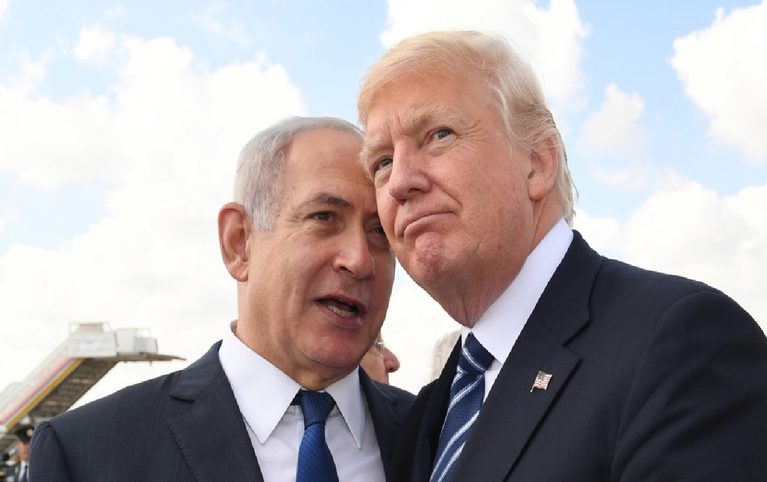
Jack Clayton, a US foreign policy analyst, noted that “there is a lack of a clear objective, lack of an exit strategy” from the US side. While Israeli Prime Minister Benjamin Netanyahu has long sought the collapse of the Iranian regime, a goal requiring extensive US involvement, President Donald Trump’s objectives have appeared more fluid, oscillating between dismantling nuclear programs, destroying missile systems, and vaguely encouraging regime change. “The Israelis would prefer to extend the conflict for as long as possible,” said UK-based analyst Ahron Bregman, while “Trump will soon seek a way to end this war, especially as oil prices continue to rise”.
This strategic dissonance is compounded by a profound legal and moral isolation. According to a high-ranking Iranian official who spoke to the press, the new Leader has already rejected overtures for de-escalation transmitted through intermediaries. Ayatollah Mojtaba Khamenei reportedly told a foreign policy meeting that “now is not the time to talk about peace,” insisting that the aggressors must first “admit defeat and pay compensation”.
The Erosion Of International Law: Impunity As Policy.
Beyond the battlefield, the killing of Ali Larijani represents a watershed moment for the post-1945 international legal order. Legal experts have widely condemned the US-Israeli strikes as a violation of Article 2(4) of the UN Charter, which prohibits the threat or use of force against the territorial integrity of any state.
The strikes, which have targeted not only political leaders but also civilian infrastructure, including hospitals, schools, and even a girls’ school in Minab, constitute, under a consistent reading of international law, acts of aggression and war crimes. Foreign Minister Araghchi strongly criticised the “dual and hypocritical approach” of European countries, stating that any support for the US and Israel equates to complicity in their crimes.
Yet, the response from international institutions has been notably muted. The UN Security Council remains paralysed, and the International Criminal Court has refrained from investigating. As a detailed analysis on the legal platform Just Security argued, the lack of widespread condemnation from Western states is not a reflection of a desire to reform international law, but a stark display of power: “They clearly appear to have violated the law because they think it should not apply to them”.
This impunity sends an unambiguous message to Tehran and other independent states: sovereignty is conditional. The international system, constructed to protect the powerful, operates through a “state of exception” where legality is suspended for non-Western states. For Iran, this confirms that survival depends not on appeals to international bodies, but on strategic autonomy, military deterrence, and the internal cohesion derived from the very culture of martyrdom the strikes seek to destroy.
Conclusion: The Legacy Of A Strategist.
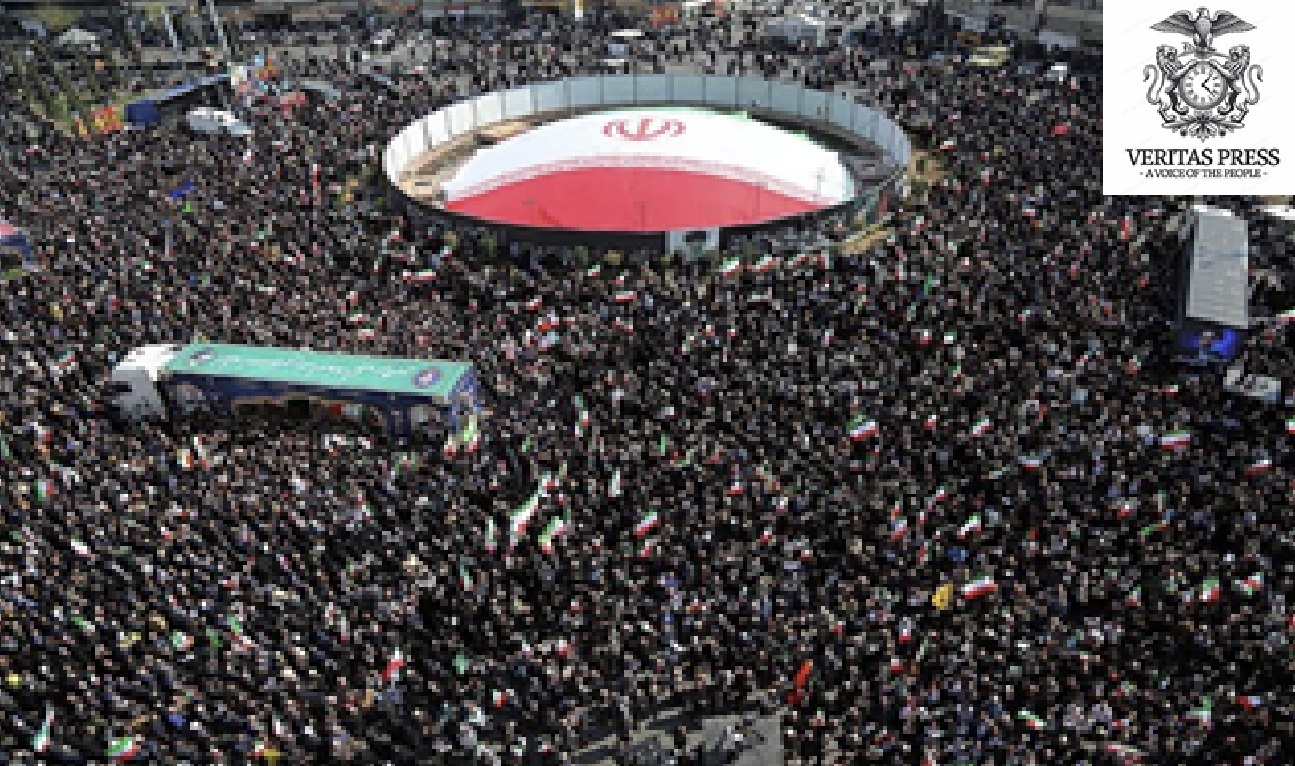
Ali Larijani’s funeral in Tehran was attended by a massive crowd of mourners, a visual affirmation of the nation’s resolve. He was buried alongside other martyrs of the recent aggression, including the commander of the Basij, Major General Gholam Reza Soleimani, and dozens of Iranian Navy sailors killed in a US attack off the coast of Sri Lanka.
Larijani’s legacy is that of a philosopher who navigated the hard realities of power. He was a man who understood that in the revolutionary Shia context, the martyr is neither a victim nor a tragic hero, but an agent of transformation. His final act—his death at the hands of the “criminal American regime and its illegitimate child, the Zionist regime”—has, in the eyes of his nation and leadership, sealed his place in a constellation of martyrs whose blood guarantees the vitality and continuity of the Islamic Republic. As Ayatollah Mojtaba Khamenei vowed, the price for that blood will soon be demanded.
Source: Multiple News Agencies
Submissions:
For The Secure Submission Of Documentation, Testimonies, Or Exclusive Investigative Reports From Any Global Location, Please Utilise The Following Contact Details For Our Investigations Desk: enquiries@veritaspress.co.uk or editor@veritaspress.co.uk
Help Support Our Work:
Popular Information is powered by readers who believe that truth still matters. When just a few more people step up to support this work, it means more lies exposed, more corruption uncovered, and more accountability where it’s long overdue.
Help Protect Independent Journalism, Which Is Currently Under Attack.
If you believe journalism should serve the public, not the powerful, and you’re in a position to help, becoming a DONATOR or a PAID SUBSCRIBER truly makes a difference.
DONATION APPEAL: If You Found This Reporting Valuable, Please Consider Supporting Independent Journalism.
Help Support Our Work – We Know, We Know, We Know …
Seeing these messages is annoying. We know that. (Imagine what it’s like writing them … )
Your support fuels our fearless, truth-driven journalism. In unity, we endeavour to amplify marginalised voices and champion justice, irrespective of geographical location.
But it’s also extremely important. One of Veritas Press’s greatest assets is its reader-funded model.
1. Reader funding means we can cover what we like. We’re not beholden to the political whims of a billionaire owner. We are a small, independent and impartial organisation. No one can tell us what not to say or what not to report.
2. Reader funding means we don’t have to chase clicks and traffic. We’re not desperately seeking your attention for its own sake: we pursue the stories that our editorial team deems important and believe are worthy of your time.
3. Reader Funding: enables us to keep our website and other social media channels open, allowing as many people as possible to access quality journalism from around the world, particularly those in places where the free press is under threat.
We know not everyone can afford to pay for news, but if you’ve been meaning to support us, now’s the time.
Your donation goes a long way. It helps us:
- Keep the lights on and sustain our day-to-day operations
- Hire new, talented independent reporters
- Launch real-time live debates, community-focused shows, and on-the-ground reporting
- Cover the issues that matter most to our communities, in real time, with depth and integrity
We have plans to expand our work, but we can’t do it without your support. Every contribution, no matter the size, helps us stay independent and build a truly people-powered media platform.
If you believe in journalism that informs, empowers, and reflects the communities we serve, please donate today.
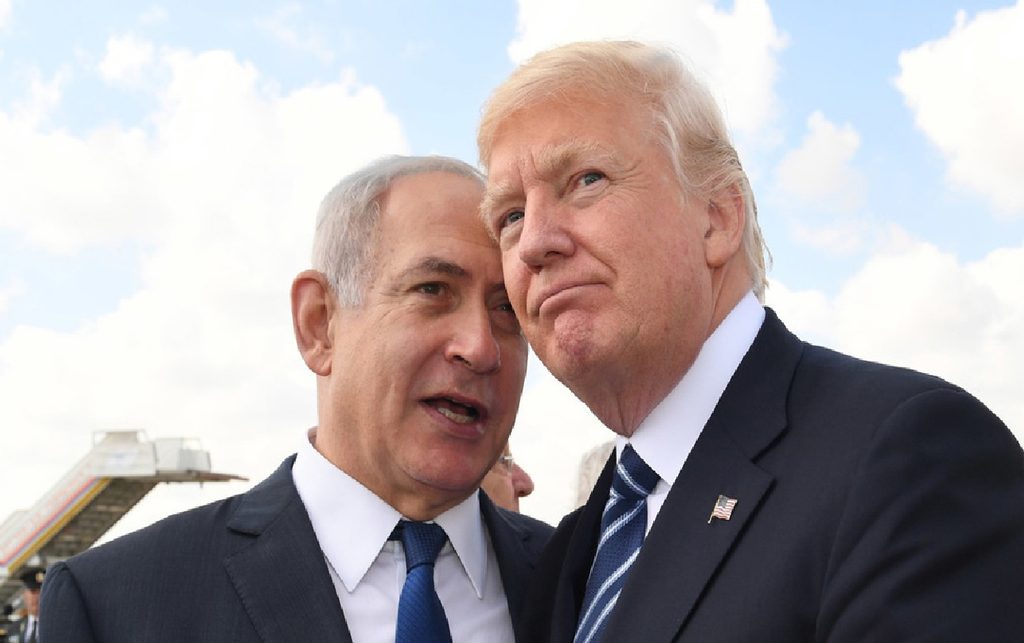
The Trump administration is preparing a $2.8 billion weapons package for Israel containing 40,000 2,000-pound
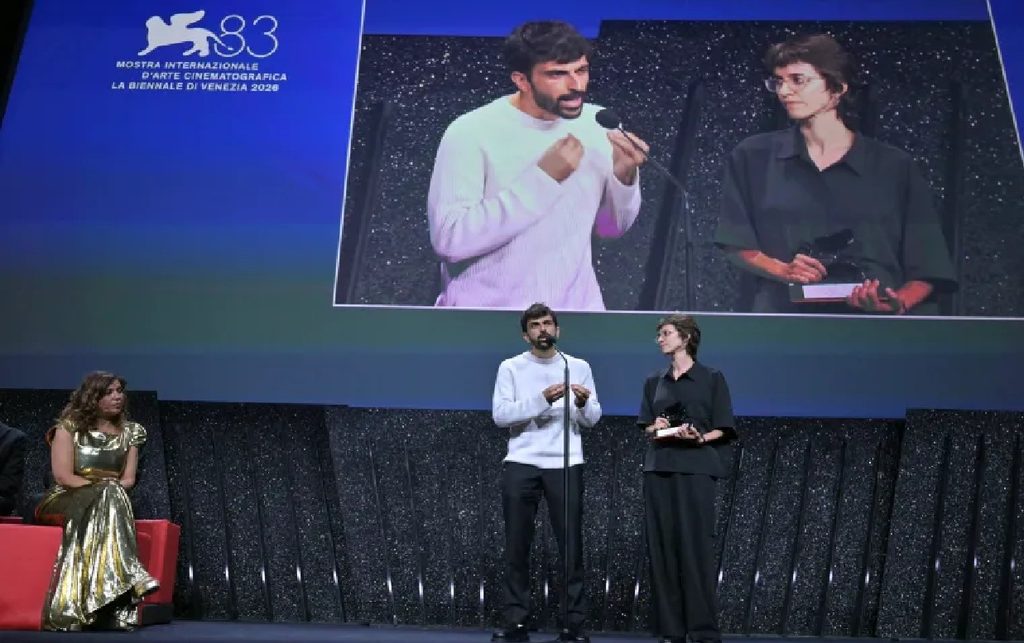
Film alleges mass civilian deaths are routinely built into military decisions amid Israel’s genocidal war
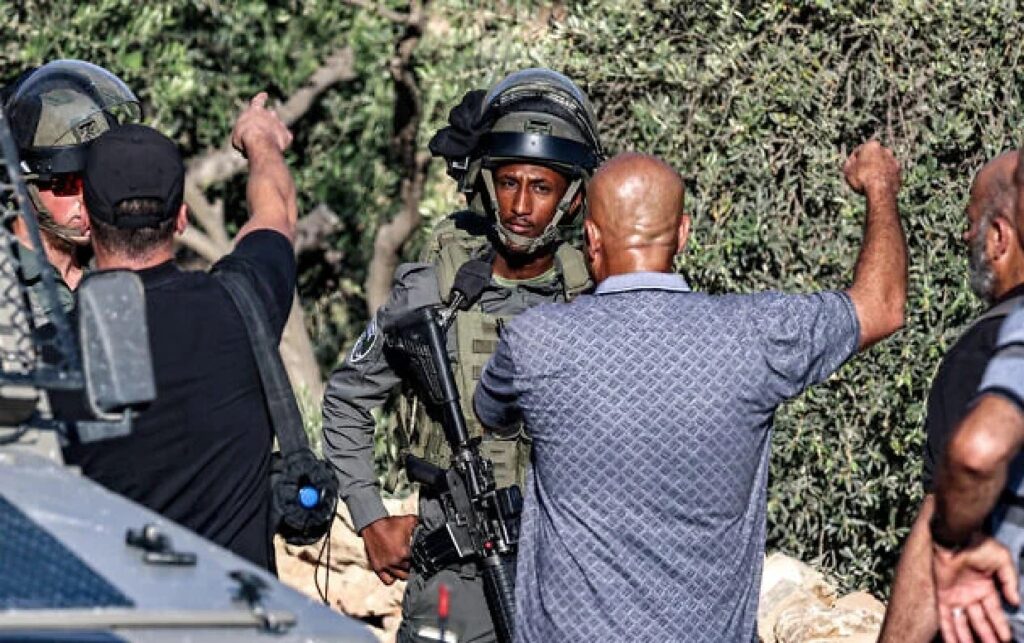
The Israeli rights group says violence, displacement, economic strangulation, and settlement expansion form part of

Houthi forces have captured the historic Red Sea port of Mocha and are advancing on
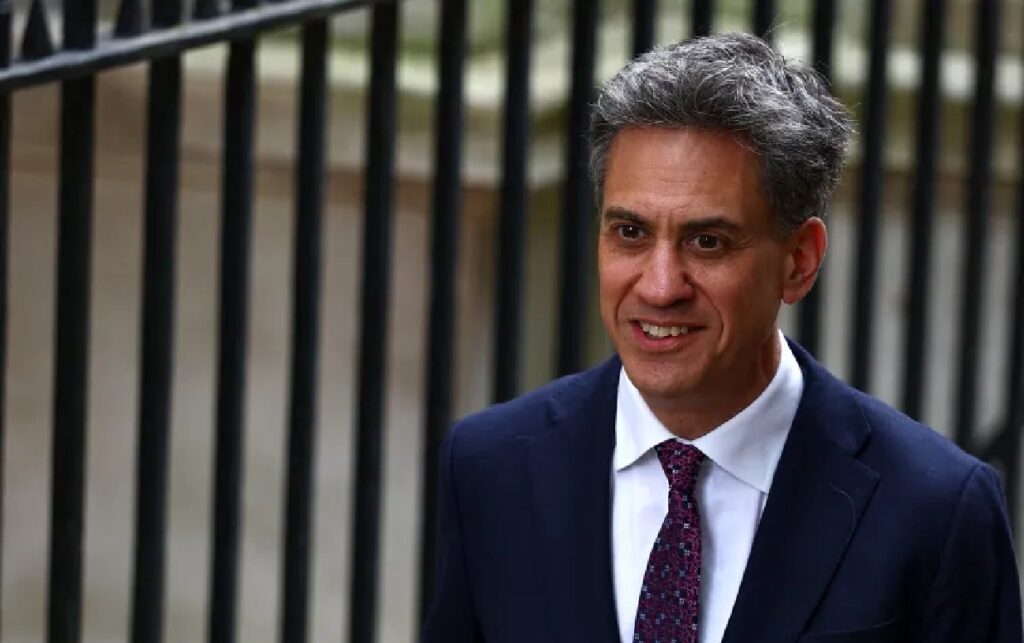
London’s historic sanctions against Israeli settlements mark a watershed moment in UK foreign policy, but
With 95% of Gaza’s population now wholly dependent on aid and more than 90% stripped
India calls for Kashmir and Ladakh to appear only on its official map after a
ISLAMABAD – In the high-stakes political theatre of Pakistan, the battleground has shifted from the
Francesca Albanese says third states have an ICJ-mandated obligation to end Israel’s occupation. But with
As Israeli jets bomb a Syrian air base over alleged Turkish deployment plans, Ankara, Washington