Kamran Faqir is a volunteer investigative journalist and writer committed to exposing hidden truths and amplifying underreported stories. Driven by social justice, he brings sharp insight and fearless truth-telling to independent journalism. NUJ registered.
Original Article Date Published:
Article Date Modified:
17 minutes
Views:339
Listen to this article
Help support our mission, donate today and be the change. Every contribution goes directly toward driving real impact for the cause we believe in.
The World Is Holding Its Breath:
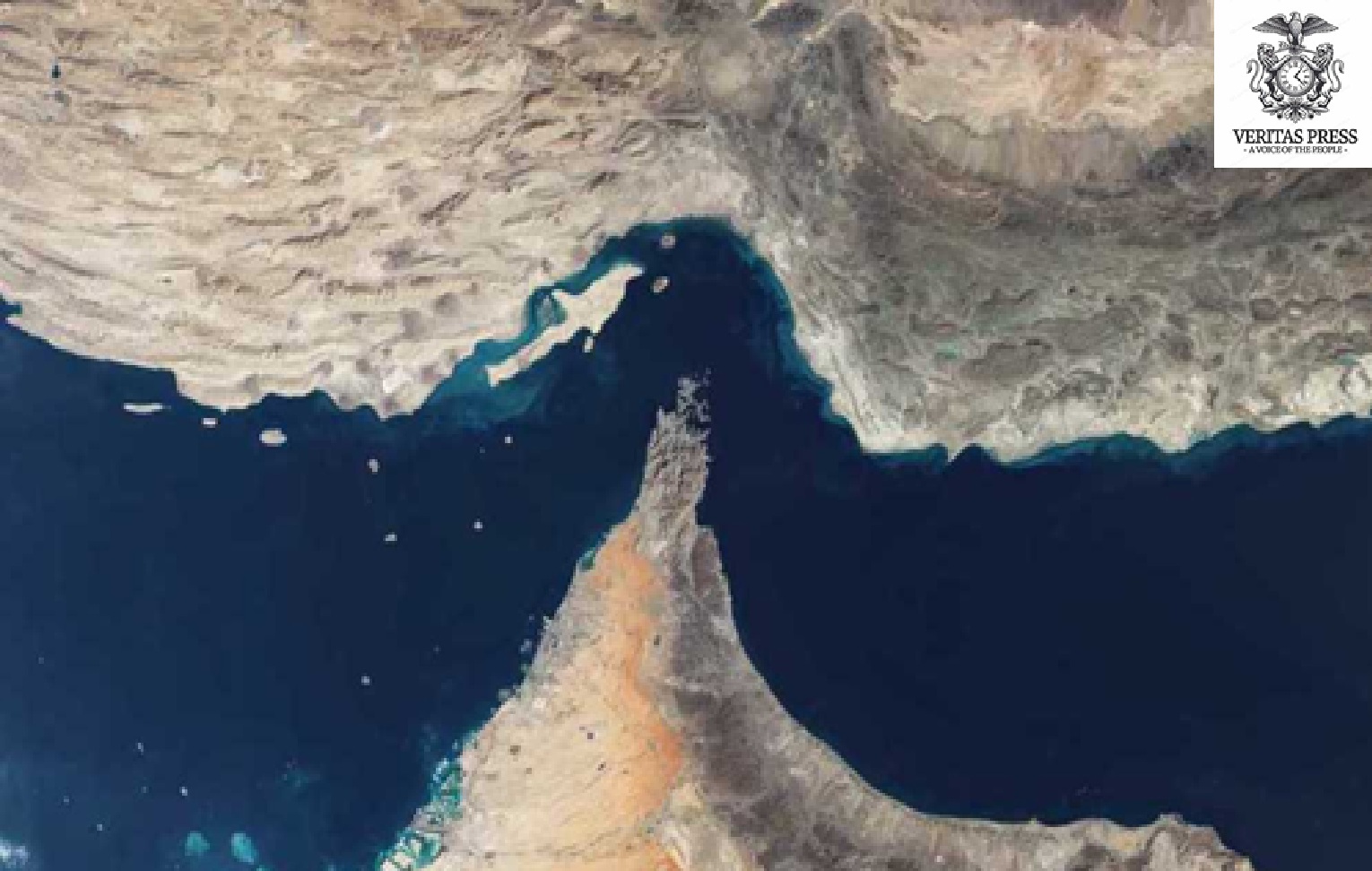
WASHINGTON, TEL-AVIV – As the US-Israeli war on Iran barrels into its third week, the global economy is caught in a high-stakes chokehold. At the centre of the crisis lies the Strait of Hormuz, the narrow maritime corridor between the Persian Gulf and the Gulf of Oman through which nearly one-fifth of the world’s oil once flowed each day.
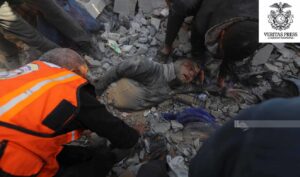
Now the passage is effectively under Iranian control following a wave of US-Israeli strikes that killed more than a thousand Iranian civilians and triggered Tehran’s sweeping retaliation across the region.
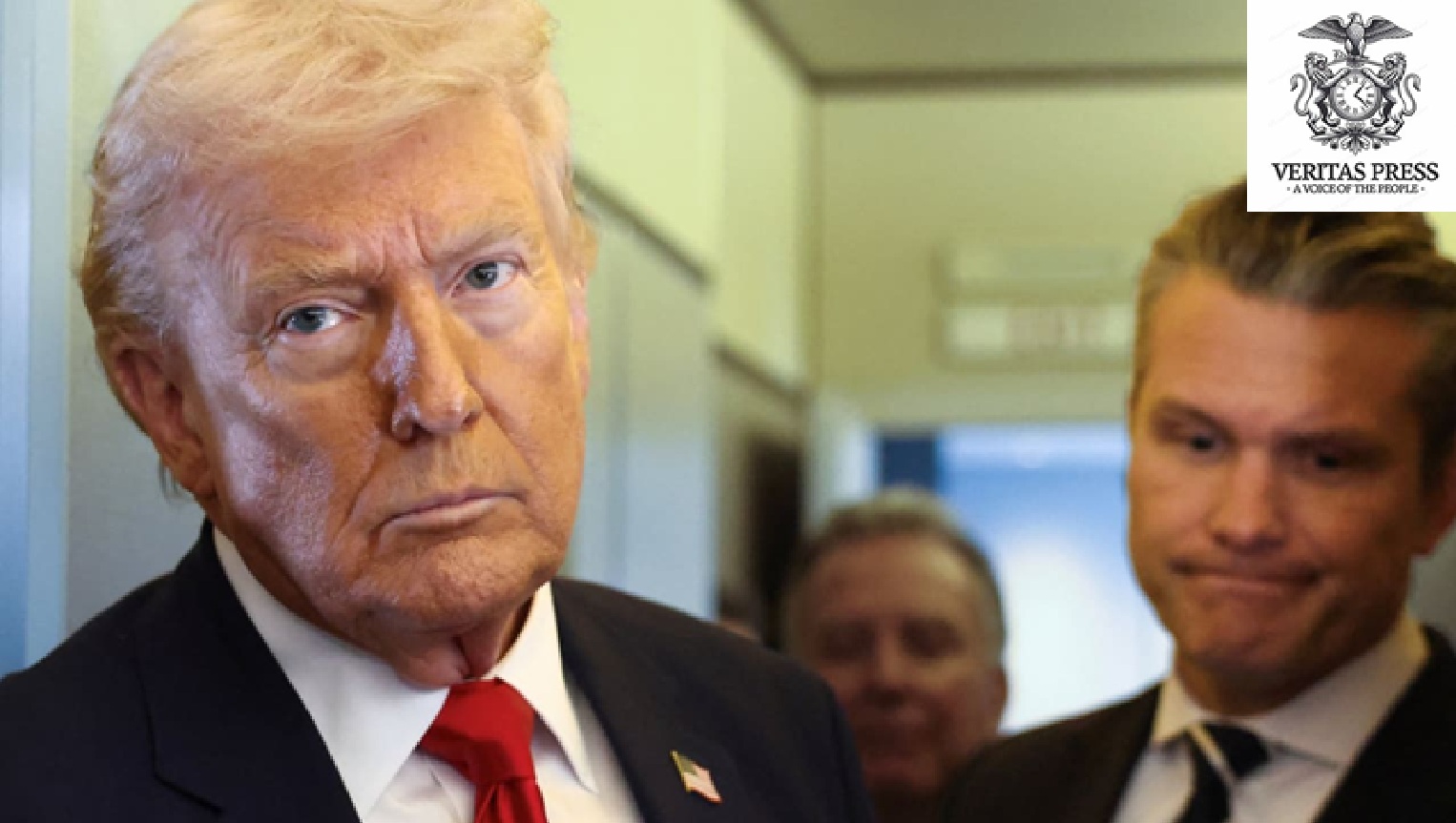
The military standoff at sea, however, is increasingly overshadowed by a political rupture on land. US President Donald Trump has issued an ultimatum to allies and rivals alike: help Washington reopen the strait or face consequences for the global alliance system built after World War II.
“It’s only appropriate that people who are the beneficiaries of the Strait will help to make sure that nothing bad happens there,” Trump told the Financial Times, warning that refusal would be “very bad for the future of NATO.”
The demand has been met with a wall of caution, and in some cases outright rejection, exposing the limits of American coercive diplomacy and raising profound questions about the future of the transatlantic alliance.
A War Reshaping Global Geopolitics:
The crisis erupted after the United States and Israel launched a coordinated strike campaign against Iran on 28 February, targeting military facilities and political leadership across the country.
Among those killed was Iran’s Supreme Leader Ayatollah Ali Khamenei, whose death triggered a sweeping retaliation by Tehran and its regional allies.
Since then, the war has expanded rapidly. Israeli jets have struck Tehran, Shiraz and Tabriz, while Iran has launched missile and drone attacks on Israel and US-aligned states hosting American bases.
The Israeli military said Monday it had launched a “wide-scale wave of strikes targeting infrastructure” across Iran.
“We want to make sure that they are as weak as possible, this regime,” Israeli military spokesperson Lt Col Nadav Shoshani told reporters. “We are degrading all parts of their security establishment.”
At the same time, Iran has expanded attacks across the Gulf region.
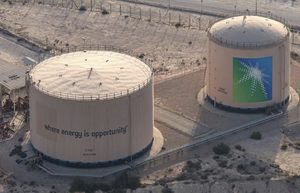
Drone strikes have targeted Saudi Arabia and the United Arab Emirates, forcing Dubai International Airport to suspend operations briefly after a fuel tank was struck.
A missile strike in Abu Dhabi killed a Palestinian civilian when debris struck a vehicle, according to Emirati authorities.
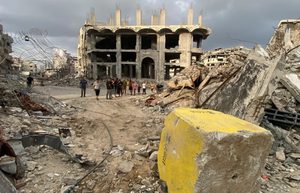
The war has also spilled into Lebanon, where Israeli operations and cross-border fighting have killed more than 800 people and displaced hundreds of thousands.
Human rights organisations estimate that more than 1,300 Iranian civilians have been killed since the conflict began, with millions displaced internally.
The strategic chokepoint: Hormuz.
The Strait of Hormuz has long been considered the most critical energy artery on Earth.
Before the war, roughly 20 million barrels of oil per day passed through the corridor, about one-fifth of global supply, along with major shipments of liquefied natural gas and fertilisers.
Since the start of the conflict, shipping traffic has collapsed.
Iran’s Revolutionary Guard has threatened to mine the waterway and attack vessels linked to the United States and Israel. At least 16 tankers have reportedly been attacked since late February.
Oil prices have surged above $106 per barrel, sending shockwaves through global energy markets.
Yet despite the crisis, Tehran has not imposed a complete blockade.
Iranian Foreign Minister Abbas Araghchi says the strait is closed only to ships linked to Iran’s enemies.
“The Strait is under control,” Araghchi said. “It is closed only to vessels of the aggressors.”
This selective strategy appears deliberate.
Iran’s Calculated Strategy: Divide And Rule.
Rather than shutting down shipping entirely, Iran has allowed selected vessels to pass through the strait after negotiations.
The strategy appears aimed at isolating the United States diplomatically while demonstrating Tehran’s ability to control the global energy lifeline.
The Pakistan-flagged tanker Karachi became the first non-Iranian vessel to transit the strait while broadcasting its tracking signal, according to maritime monitor MarineTraffic.
Shipping data showed the tanker carrying crude from Abu Dhabi successfully passed through the corridor before reaching waters off Oman.
Iranian officials publicly thanked Pakistan for its solidarity.
Meanwhile:
India confirmed that two LPG tankers received safe passage
Turkey reportedly negotiated the release of one of its ships
China is in talks with Tehran to secure transit for its carriers
Diplomats say the approach is designed to build international pressure on Washington.
“Iran is demonstrating that dialogue with Tehran, not military escalation, is the path to stability,” one Middle East analyst told regional media.
Trump’s Coalition Push Meets Resistance:
Trump’s response has been to demand an international naval coalition to reopen the waterway.
He has called on the United Kingdom, France, Japan, South Korea, China and others to send warships to escort tankers through the strait.
Yet the response has been overwhelmingly cautious.
European leaders appear deeply reluctant to be dragged into a war they did not authorise.
“This is not our war,” Germany’s Defence Minister Boris Pistorius said bluntly.
“What does Donald Trump expect a handful of European frigates to do in the Strait of Hormuz that the powerful US Navy cannot do?”
Germany’s Foreign Minister Johann Wadephul also dismissed the idea of expanding the EU’s maritime mission.
“Will we soon be an active part of this conflict? No,” he said.
Italy’s Foreign Minister Antonio Tajani stressed diplomacy instead.
“Diplomacy needs to prevail,” Tajani said, ruling out any expansion of naval operations.
Greece has likewise rejected involvement. Government spokesperson Pavlos Marinakis confirmed Athens would not participate in military operations there.
Luxembourg’s deputy prime minister, Xavier Bettel, went even further.
“We will not give in to blackmail,” Bettel said.
“With satellites and communications, we can help, but don’t ask us with troops and machines.”
Britain Walking A Diplomatic Tightrope:
The United Kingdom has tried to strike a careful balance between alliance solidarity and political caution.
Prime Minister Keir Starmer acknowledged holding a “good discussion” with Trump about the strait but insisted Britain would not be drawn into a wider war.
“We will not be drawn into the wider conflict,” Starmer told reporters.
Downing Street is reportedly considering sending minesweeping drones rather than warships, a move analysts say is designed to show cooperation without direct military escalation.
Work and Pensions Secretary Pat McFadden described the crisis as fundamentally a US-Israeli conflict.
“This is not a NATO war,” McFadden said. “It is US-Israeli action.”
Oil Shock Rattles Global Economy:
Trump’s frantic diplomacy is driven largely by economic fears.
Behind closed doors, the White House is facing intense pressure from energy executives worried about prolonged disruption.
According to the Wall Street Journal, the heads of ExxonMobil, Chevron and ConocoPhillips warned the administration that the energy crisis could worsen significantly.
Exxon CEO Darren Woods warned that speculators could push prices even higher, potentially triggering a global supply crunch.
Chevron chief Mike Wirth and ConocoPhillips CEO Ryan Lance reportedly echoed those concerns.
Their message was stark: reopening the Strait of Hormuz may be the only realistic way to stabilise markets.
The administration is now scrambling for alternatives.
Officials are reportedly considering:
Releasing large volumes from the US strategic petroleum reserves
Easing sanctions on Russian oil
Re-opening energy deals with Venezuela
Encouraging US companies to reinvest in Venezuela’s oil sector
Energy analysts say these measures highlight the failure of the military strategy.
“None of these options can replace the volume that normally moves through Hormuz,” one senior oil trader told Bloomberg.
Information Warfare And Propaganda:
Alongside the military confrontation, the war has triggered an intense propaganda battle.
Iranian state media recently released a surreal AI-generated video depicting Trump and Israeli Prime Minister Benjamin Netanyahu as Lego-style figures taking orders from a demonic figure.
The video references the controversial destruction of the Shajareh Tayyebeh girls’ elementary school in the Iranian city of Minab.
Iranian authorities say the attack killed 175 people, including 151 children.
Tehran blames the United States and Israel.
Trump denied responsibility, telling reporters he believed Iran itself carried out the strike.
“They are very inaccurate with their munitions,” Trump said. “We think it was done by Iran.”
Iranian President Masoud Pezeshkian rejected the claim.
“This crime will never be erased from the historical memory of our nation,” he said.
A Widening Regional Conflict:
The war is increasingly spilling across the Middle East.
Iranian drones have struck Gulf infrastructure and targeted US-aligned military facilities.
One attack hit a British RAF base in Cyprus after the UK allowed American forces to use the installation.
Military analysts say further escalation could draw additional countries into the conflict.
“The biggest risk is if there are UK casualties,” said former British Army officer and NATO analyst Patrick Bury.
“That could dramatically change the political calculation.”
Professor Anand Menon of King’s College London believes the crisis is already reshaping global alliances.
“If Trump continues to threaten Europeans while starting wars, many will conclude the US cannot be trusted as a security partner,” he said.
A Fractured Alliance System:
Trump’s warning that NATO could face a “very bad future” if allies refuse to help reopen the Strait of Hormuz may prove prophetic, but not in the way he intended.
The refusal of Germany, Italy, Greece, Luxembourg and the UK to commit warships reflects a deeper shift.
European leaders increasingly view the conflict as an American war rather than a shared Western mission.
The result is an unprecedented moment of strategic divergence.
As diplomats gather in Brussels to discuss the crisis, one European official summarised the mood bluntly:
“This is not our war. We will not be dragged into it.”
For Trump, who built his political identity around “America First,” the irony is stark.
Washington launched a war it cannot economically sustain alone, demanded help from allies who feel no ownership over the conflict, and inadvertently empowered Iran to become the gatekeeper of the world’s most vital energy corridor.
As oil prices creep toward $110 a barrel and global tensions continue to rise, the Strait of Hormuz has become more than a strategic chokepoint.
It is now the narrow passage through which the post-World War II international order is sailing toward an uncertain and fractured future.
Conclusion: War, Resources, And The Return Of Imperial Power.
What is unfolding around the Strait of Hormuz is no longer simply a maritime security crisis or even a regional confrontation. It represents a profound geopolitical rupture that is exposing the limits of American power, deepening fractures within Western alliances, and raising fundamental questions about the motivations driving the US-Israeli military campaign against Iran.
At its core, many analysts, diplomats and political observers increasingly describe the conflict as an act of aggression against a sovereign state, one that risks reshaping the political and economic order of the Middle East for decades to come.
President Donald Trump has framed the crisis as a test of loyalty, pressing allies to participate in naval operations to reopen the Strait of Hormuz. Yet the response from Europe, Asia and much of the Global South suggests a different question is being asked behind closed doors: why should other nations fight to enforce a war they did not authorise and whose consequences they will inevitably share?
For decades, Washington has justified its global military architecture by portraying itself as the guarantor of international stability and free trade. Yet the present crisis reveals a stark contradiction. The same power now demanding a coalition to secure maritime trade routes is widely viewed as the actor whose escalation helped trigger the confrontation that now threatens them.
European governments have not always expressed this openly, but their actions speak volumes. Germany, Italy, Greece, Luxembourg and even Britain, Washington’s closest strategic ally, have so far declined to commit warships. Their hesitation reflects more than caution; it signals a profound unease about the legitimacy and long-term implications of the conflict.
Privately, diplomats acknowledge that joining such an operation could effectively turn European states into co-belligerents in a war many legal scholars argue lacks clear international authorisation.
Beyond questions of legality, however, lies a deeper geopolitical critique. Across the Middle East and much of the Global South, commentators increasingly frame the conflict within a broader historical pattern: the persistence of neo-colonial power politics in which external powers intervene militarily to reshape regional orders in ways that serve their strategic and economic interests.
Within this framework, critics argue the war risks functioning as a modern divide-and-rule strategy, fragmenting regional power structures while enabling external actors to consolidate influence over some of the world’s most valuable resources, including oil, natural gas and critical minerals.
The Middle East sits atop vast reserves that remain central to the global economy. Control over these resources has historically shaped foreign intervention in the region, from colonial mandates after the First World War to the geopolitical rivalries of the Cold War and beyond.
Today, critics say, the same logic persists in new forms. The expansion of military operations risks creating conditions in which US- and Israeli-aligned corporations gain privileged access to energy infrastructure, reconstruction contracts and resource extraction across a destabilised region. At the same time, the expansion of military alliances and forward operating bases across the Gulf could entrench an even deeper Western military presence, further embedding strategic control over key trade corridors and energy routes.
For many observers, these dynamics evoke the legacy of colonial and crusader-style policies historically imposed by Western powers in the region: interventions framed in the language of security or civilizational mission while ultimately reinforcing geopolitical control and economic dominance.
Such policies have often relied on the same mechanisms now visible in the current crisis: military build-ups, the cultivation of regional rivalries, and the constant invocation of existential threats to justify extraordinary security measures. The consequence can be a political environment in which fear is weaponised, dissent is marginalised, and civil liberties are curtailed in the name of stability.
At the same time, critics argue that the conflict also reflects the long-term strategic ambitions of both the United States and Israel to consolidate and expand their geopolitical influence. Washington has long pursued global military dominance through alliances, bases and economic leverage. But in recent decades, Israel has also sought to transform itself from a regional military power into a far more influential global actor, leveraging advanced weapons industries, intelligence networks, cyber capabilities and strategic partnerships across Europe, Asia and Africa.
Within this perspective, the current confrontation with Iran is not only about immediate security concerns. It is also about reshaping the balance of power in the Middle East in ways that cement Israeli military supremacy while reinforcing the broader strategic architecture of US global power.
For Iran, however, the strategic calculus has been markedly different. Rather than imposing a total blockade, Tehran has pursued a calibrated strategy, restricting vessels linked to its adversaries while allowing ships from neutral countries to pass.
By selectively controlling access through one of the world’s most vital maritime chokepoints, Iran has transformed the Strait of Hormuz into a geopolitical pressure lever rather than a purely military battlefield.
In doing so, Tehran has demonstrated that geographic leverage can sometimes offset overwhelming military superiority.
Meanwhile, the economic shockwaves are already rippling across the global economy. Oil prices have surged, supply chains are under strain, and the United States itself is reportedly exploring extraordinary measures, from releasing strategic reserves to reconsidering sanctions regimes on other oil-producing states.
These developments highlight a striking paradox. A war framed as necessary to contain Iran has instead amplified Tehran’s strategic leverage over global energy markets.
Perhaps most significantly, the crisis is accelerating a broader geopolitical transformation that has been unfolding for years. Nations across Europe, Asia and the Global South are increasingly reluctant to align automatically with American military initiatives.
China is engaging Iran diplomatically to secure shipping routes. Regional powers are hedging their positions rather than committing to rigid alliances. Even long-standing Western partners are drawing limits around their involvement.
The result is a gradual but unmistakable erosion of the US-led international order that has defined global politics since 1945.
Trump’s warning that NATO could face a “very bad future” if allies refuse to support the operation in the Strait of Hormuz may ultimately prove accurate, but not because Europe declined to fight.
Rather, it is because the war itself has exposed the widening gap between American military power and the political legitimacy required to sustain global leadership.
The Strait of Hormuz is more than a narrow maritime passage for oil tankers. It has become a geopolitical fault line where competing visions of the international order are colliding, between unilateral intervention and multilateral restraint, between imperial legacy and sovereign autonomy, between a fading unipolar system and an emerging multipolar world.
And as alliances strain, economies tremble, and the Middle East edges closer to wider conflict, one reality is becoming increasingly difficult to ignore:
This war is not only reshaping the region.
It is forcing the world to confront the enduring shadow of empire, and the uncertain future of the global order built upon it.
Source: Multiple News Agencies
Submissions:
For The Secure Submission Of Documentation, Testimonies, Or Exclusive Investigative Reports From Any Global Location, Please Utilise The Following Contact Details For Our Investigations Desk: enquiries@veritaspress.co.uk or editor@veritaspress.co.uk
Help Support Our Work:
Popular Information is powered by readers who believe that truth still matters. When just a few more people step up to support this work, it means more lies exposed, more corruption uncovered, and more accountability where it’s long overdue.
Help Protect Independent Journalism, Which Is Currently Under Attack.
If you believe journalism should serve the public, not the powerful, and you’re in a position to help, becoming a DONATOR or a PAID SUBSCRIBER truly makes a difference.
DONATION APPEAL: If You Found This Reporting Valuable, Please Consider Supporting Independent Journalism.
Help Support Our Work – We Know, We Know, We Know …
Seeing these messages is annoying. We know that. (Imagine what it’s like writing them … )
Your support fuels our fearless, truth-driven journalism. In unity, we endeavour to amplify marginalised voices and champion justice, irrespective of geographical location.
But it’s also extremely important. One of Veritas Press’s greatest assets is its reader-funded model.
1. Reader funding means we can cover what we like. We’re not beholden to the political whims of a billionaire owner. We are a small, independent and impartial organisation. No one can tell us what not to say or what not to report.
2. Reader funding means we don’t have to chase clicks and traffic. We’re not desperately seeking your attention for its own sake: we pursue the stories that our editorial team deems important and believe are worthy of your time.
3. Reader Funding: enables us to keep our website and other social media channels open, allowing as many people as possible to access quality journalism from around the world, particularly those in places where the free press is under threat.
We know not everyone can afford to pay for news, but if you’ve been meaning to support us, now’s the time.
Your donation goes a long way. It helps us:
Keep the lights on and sustain our day-to-day operations
Hire new, talented independent reporters
Launch real-time live debates, community-focused shows, and on-the-ground reporting
Cover the issues that matter most to our communities, in real time, with depth and integrity
We have plans to expand our work, but we can’t do it without your support. Every contribution, no matter the size, helps us stay independent and build a truly people-powered media platform.
If you believe in journalism that informs, empowers, and reflects the communities we serve, please donate today.
Kamran Faqir is a volunteer investigative journalist and writer committed to exposing hidden truths and amplifying underreported stories. Driven by social justice, he brings sharp insight and fearless truth-telling to independent journalism. NUJ registered.
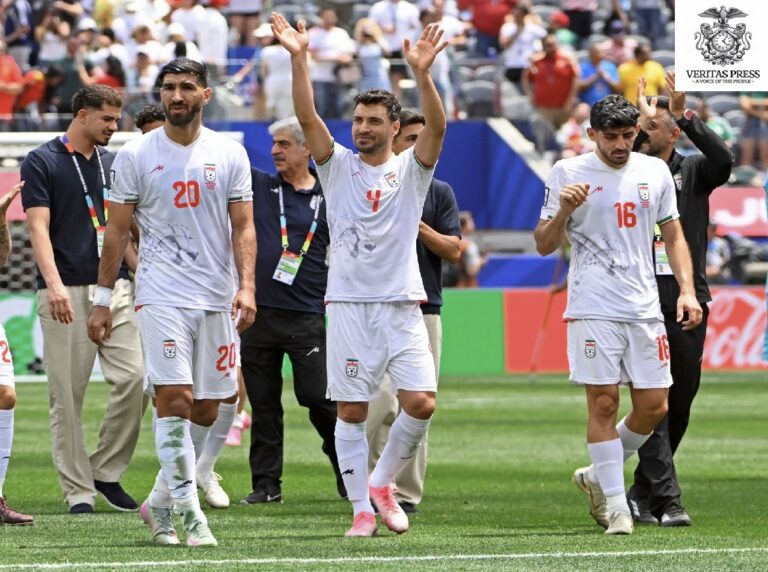
SEATTLE, TEHRAN — The U.S. Department of Homeland Security (DHS) will allow Iran’s national football team to enter the country 48 hours before their critical World Cup match against Egypt on Friday, a modest concession in a tournament where Team Melli’s travel conditions have sparked claims of oppression and competitive disadvantage.