




Help support our mission, donate today and be the change. Every contribution goes directly toward driving real impact for the cause we believe in.
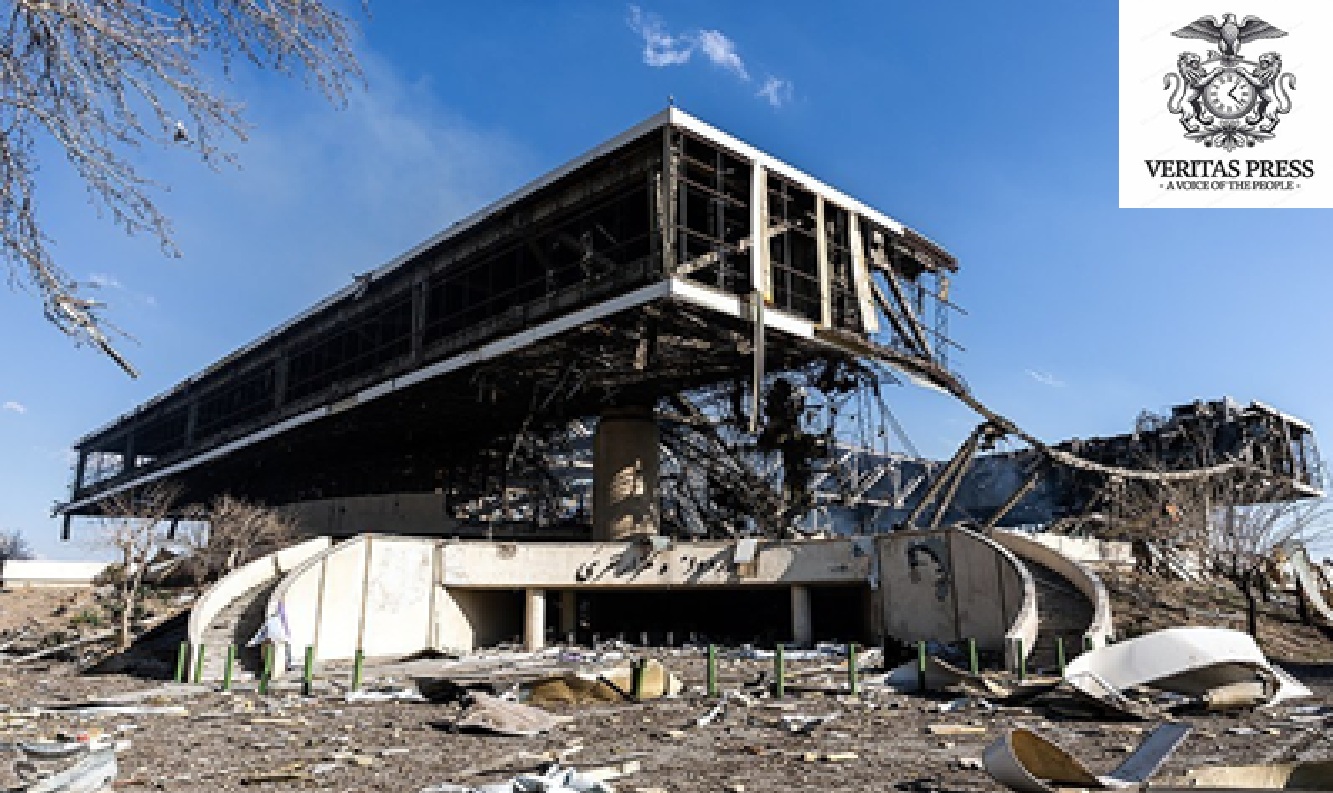
TEHRAN — The juxtaposition could not be more stark. In Tehran, the 12,000-seat indoor volleyball stadium at the iconic Azadi Sports Complex lies in ruins, reduced to twisted metal and concrete dust by US-Israeli airstrikes. Across the Atlantic, in Washington D.C., FIFA President Gianni Infantino emerges from a meeting with President Donald Trump, relaying a message that the “Iranian team is, of course, welcome to compete” in the 2026 World Cup.
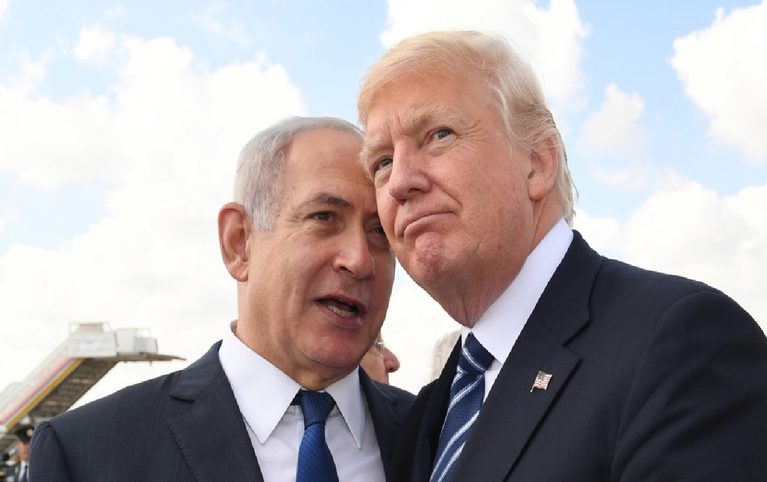
For the Iranian people, this is not diplomacy; it is a macabre contradiction. As the US and Israel wage a coordinated military campaign on Iranian soil, killing over 1,300 civilians according to Tehran’s latest count, Washington extends a “welcome” hand to its athletes. This is the reality of the 2026 World Cup qualification crisis: a sovereign nation’s participation is being publicly dangled by a hostile president who, just days later, warns that team not to come for the sake of “their own life and safety”.
The Trump Tightrope: “Welcome, But Don’t Come”
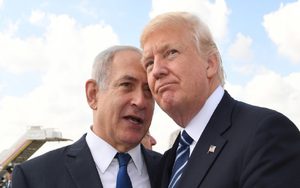
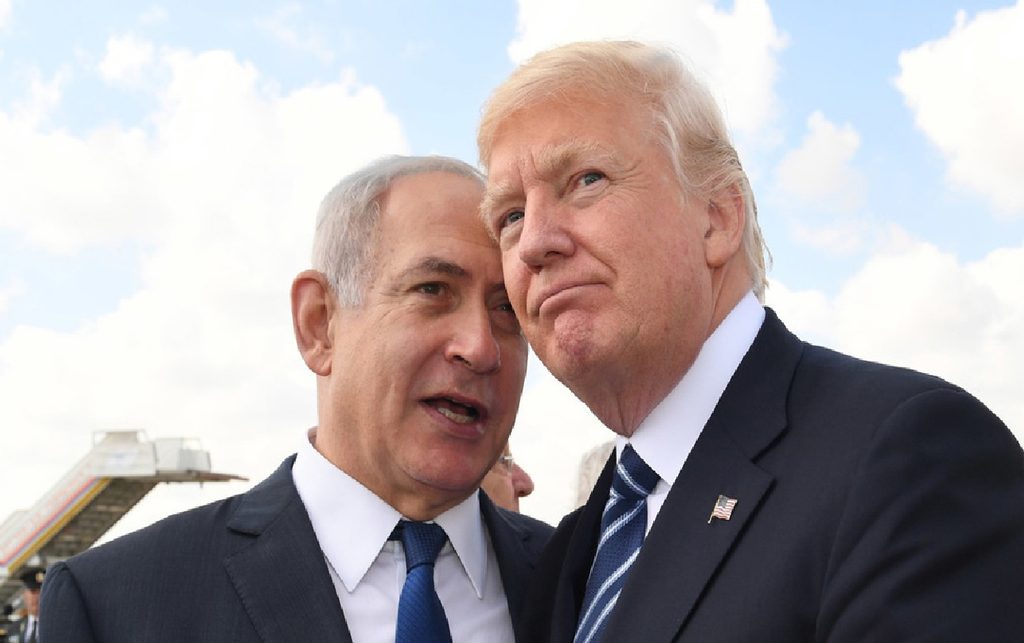
The sequence of statements from the US administration reveals a profound schizophrenia regarding Iran’s place in the tournament. On March 10, following a meeting with Infantino, Trump assured the FIFA chief that Iran was welcome. The White House confirmed the meeting, and Infantino took to Instagram to frame the World Cup as a uniting force in a divided world.
Yet, just 48 hours later, the tone shifted dramatically. In a post on his Truth Social platform, Trump wrote: “The Iranian National Soccer Team is welcome to The World Cup, but I really don’t believe it is appropriate that they be there, for their own life and safety”.
It was a threat dressed as concern. By questioning the safety of a delegation from a nation whose military is actively bombing, Trump effectively told Iran: We will destroy your infrastructure and kill your people, but feel free to come play ball.
The Iranian national team’s response was swift and devastating in its critique. In a statement on their official Instagram page, they flipped the narrative entirely. “Certainly, no one can exclude Iran’s national team from the World Cup; the only country that could be excluded is one that merely carries the title of ‘host’ yet lacks the ability to provide security for the teams participating in this global event,” the statement read.
Team Melli, as the team is known, did not beg for entry. Instead, they questioned the legitimacy of the United States as a host, pointing out that a nation that cannot guarantee safety for its guests has forfeited its right to hold the event.
“Under No Circumstances”: The Official Boycott
While the players expressed a desire to compete, the political reality in Tehran has overruled them. The tipping point was not just the airstrikes, but the assassination of the country’s leadership.
On March 11, Iran’s Sports Minister, Ahmad Donyamali, appeared on state television to deliver a definitive verdict. “Considering that this corrupt regime [the US] has assassinated our leader, under no circumstances can we participate in the World Cup,” Donyamali stated.
The reference to the assassination pertains to the death of Supreme Leader Ayatollah Ali Khamenei, who was killed in the initial wave of US-Israeli strikes on February 28. His son, Mojtaba Khamenei, has since been appointed as the new leader, vowing continued resistance. For the Iranian government, sending a team to the United States, the nation responsible for the death of its highest authority, would be an unforgivable political and religious betrayal.
Mehdi Taj, the president of the Iranian Football Federation, had already signalled this outcome days earlier, asking rhetorically, “Who in their right mind would send their national team to a place like this?”
The Rubble Of Resistance: The Destruction Of Sport
To understand Iran’s fury, one must look at the physical destruction of its sporting pride. The original article mentioned the damage to Azadi, but the scale is far larger and more personal.
According to a report presented to the UN by Iran’s ambassador, Amir Saeid Iravani, the US-Israeli campaign has deliberately targeted civilian infrastructure, including sports facilities. The numbers are staggering: as of March 10, over 9,600 civilian sites have been destroyed, including 65 schools and numerous sports complexes.
The human cost within the sporting community is even more tragic. In Lamerd city, Fars Province, a missile struck a sports hall during a training session. Reports indicate that more than 18 female volleyball players were killed, and nearly 100 others were injured. These were not soldiers; they were athletes. Among the dead are internationally recognised medal winners in wrestling, judo, and taekwondo, the very ambassadors of Iranian soft power.
This has transformed the conflict. It is no longer about geopolitical manoeuvring; it is about the destruction of Iranian youth and culture. The Besat Sports Complex in southern Tehran, the National Judo Team Training Camp, and the Cycling Federation headquarters have all been levelled.
A Call To The World: War Crimes And The UN
In response, Iran has taken its case to the international community. Amir Saeid Iravani has submitted documentation to the UN Security Council, arguing that the targeting of schools, hospitals, and sports facilities constitutes war crimes.
“The attacks were deliberately and indiscriminately targeting civilians and civilian infrastructure. They show no respect for international law and no restraint in committing these crimes,” Iravani stated.
The Iranian Red Crescent has corroborated these claims, documenting the destruction of 13 of its own buildings and the devastating impact on urban populations. The IFRC has noted the particular vulnerability of children and athletes, highlighting the attack on the girls’ school in Minab that killed over 100 students.
FIFA’s Impossible Position
The world football governing body now finds itself in an unprecedented political quagmire. FIFA President Gianni Infantino has staked his reputation on the World Cup as a tool for unity, but his meetings with Trump have done little to resolve the crisis.
With Iran’s official boycott now in effect, FIFA must activate emergency protocols. According to South Korean outlet OSEN, the most likely replacement for Iran in Group G will come from the Asian Football Confederation (AFC), with Iraq or the United Arab Emirates being the primary candidates to fill the void.
However, the question remains: how can FIFA sanction a tournament in a country that is actively at war with a qualified participant? The Iranian team’s statement lingers in the air: the host nation “lacks the ability to provide security”.
Conclusion: The Stadiums Are Empty, The Spirit Stands
As the countdown to the World Cup continues, Iran’s stadiums stand silent, not just because of the boycott, but because they are destroyed. The Azadi Sports Complex, whose name means “Freedom,” once echoed with the roars of millions. Today, it echoes with the sound of rubble shifting in the wind.
Trump’s threat to the Iranian football team was meant to intimidate. Instead, it has clarified the stakes. For Iran, this is not about a game. It is about survival. It is about mourning athletes killed in training and children killed in classrooms.
The world may not see Team Melli on the pitches of Los Angeles and Seattle this summer. But as their statement made clear, they will not be excluded by a foreign president. They are excluding themselves from a host they deem unfit, a powerful act of defiance against what they call the “US-Israeli war machine.”
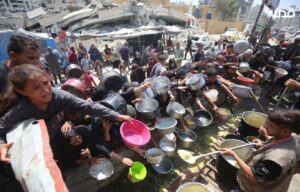
This deliberate erasure of sporting life is not an isolated phenomenon limited to Iran. It follows a documented pattern established by the Israeli regime in Gaza and the Occupied Palestinian Territories, where the destruction of the sporting sector has been systematic and comprehensive. According to the Palestinian Olympic Committee, Israel’s military campaign has killed at least 1,007 Palestinian athletes and sports workers, including 45 women, while destroying or damaging 265 sports facilities across Gaza. Of these, 184 facilities have been completely obliterated, and 81 others have partially damaged stadiums, training centres, basketball and volleyball courts, swimming pools, and Gaza’s only athletics track. The iconic Yarmouk Stadium, once a symbol of Palestinian football, now lies in ruins, its pitch repurposed as a shelter for families displaced from their homes. In the West Bank, the threat is more insidious but no less real: the Aida refugee camp’s football pitch, used by over 200 children, faces imminent demolition by Israeli authorities who deny permits while simultaneously approving vast illegal settlements. The message is identical to what Iran now faces: a concerted effort to deny youth their right to sport, to crush spaces of community and hope, and to systematically dismantle the infrastructure of normal life. Yet, as in Iran, the response is defiance. In Gaza, young Palestinians clear rubble from destroyed homes to create makeshift pitches, playing barefoot on sandy fields to reclaim a fragment of normalcy. “Playing football shows that we are still here,” says 16-year-old Othman Harara, a goalkeeper who lost a hand when his home collapsed. From Tehran’s ruined Azadi to Gaza’s bombed-out Yarmouk, the stadiums lie empty, but the spirit they were meant to crush refuses to be entombed in the rubble.
Source: Multiple News Agencies
Submissions:
For The Secure Submission Of Documentation, Testimonies, Or Exclusive Investigative Reports From Any Global Location, Please Utilise The Following Contact Details For Our Investigations Desk: enquiries@veritaspress.co.uk or editor@veritaspress.co.uk
Help Support Our Work:
Popular Information is powered by readers who believe that truth still matters. When just a few more people step up to support this work, it means more lies exposed, more corruption uncovered, and more accountability where it’s long overdue.
Help Protect Independent Journalism, Which Is Currently Under Attack.
If you believe journalism should serve the public, not the powerful, and you’re in a position to help, becoming a DONATOR or a PAID SUBSCRIBER truly makes a difference.
DONATION APPEAL: If You Found This Reporting Valuable, Please Consider Supporting Independent Journalism.
Help Support Our Work – We Know, We Know, We Know …
Seeing these messages is annoying. We know that. (Imagine what it’s like writing them … )
Your support fuels our fearless, truth-driven journalism. In unity, we endeavour to amplify marginalised voices and champion justice, irrespective of geographical location.
But it’s also extremely important. One of Veritas Press’s greatest assets is its reader-funded model.
1. Reader funding means we can cover what we like. We’re not beholden to the political whims of a billionaire owner. We are a small, independent and impartial organisation. No one can tell us what not to say or what not to report.
2. Reader funding means we don’t have to chase clicks and traffic. We’re not desperately seeking your attention for its own sake: we pursue the stories that our editorial team deems important and believe are worthy of your time.
3. Reader Funding: enables us to keep our website and other social media channels open, allowing as many people as possible to access quality journalism from around the world, particularly those in places where the free press is under threat.
We know not everyone can afford to pay for news, but if you’ve been meaning to support us, now’s the time.
Your donation goes a long way. It helps us:
- Keep the lights on and sustain our day-to-day operations
- Hire new, talented independent reporters
- Launch real-time live debates, community-focused shows, and on-the-ground reporting
- Cover the issues that matter most to our communities, in real time, with depth and integrity
We have plans to expand our work, but we can’t do it without your support. Every contribution, no matter the size, helps us stay independent and build a truly people-powered media platform.
If you believe in journalism that informs, empowers, and reflects the communities we serve, please donate today.
The Trump administration is preparing a $2.8 billion weapons package for Israel containing 40,000 2,000-pound
Film alleges mass civilian deaths are routinely built into military decisions amid Israel’s genocidal war
The Israeli rights group says violence, displacement, economic strangulation, and settlement expansion form part of

Houthi forces have captured the historic Red Sea port of Mocha and are advancing on
London’s historic sanctions against Israeli settlements mark a watershed moment in UK foreign policy, but
With 95% of Gaza’s population now wholly dependent on aid and more than 90% stripped
India calls for Kashmir and Ladakh to appear only on its official map after a
ISLAMABAD – In the high-stakes political theatre of Pakistan, the battleground has shifted from the
Francesca Albanese says third states have an ICJ-mandated obligation to end Israel’s occupation. But with
As Israeli jets bomb a Syrian air base over alleged Turkish deployment plans, Ankara, Washington