Kamran Faqir is a volunteer investigative journalist and writer committed to exposing hidden truths and amplifying underreported stories. Driven by social justice, he brings sharp insight and fearless truth-telling to independent journalism. NUJ registered.
Original Article Date Published:
Article Date Modified:
10 minutes
Views:408
Listen to this article
Help support our mission, donate today and be the change. Every contribution goes directly toward driving real impact for the cause we believe in.
As the Middle East conflict enters its second week, triggering the largest energy supply disruption since the 1970s oil crisis, France has drawn a firm line in the sand. In a stark warning to opposition parties and labour unions clamouring for relief at the pump, Banque de France Governor François Villeroy de Galhau declared on Wednesday that the state “has no more money” for new fuel subsidies. With diesel prices surging past €2 per litre and the strategic Strait of Hormuz rendered impassable, Paris is choosing fiscal discipline over short-term social cushioning. However, a deeper investigation reveals a high-stakes gamble: by refusing to intervene, the government is betting that long-term energy independence can withstand the immediate risk of a cost-of-living revolt and a potential stagflationary shock to the eurozone’s second-largest economy.
The Crisis Context, A Waterway On Fire:
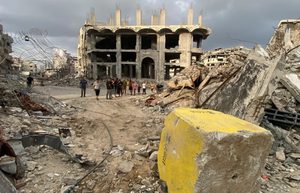
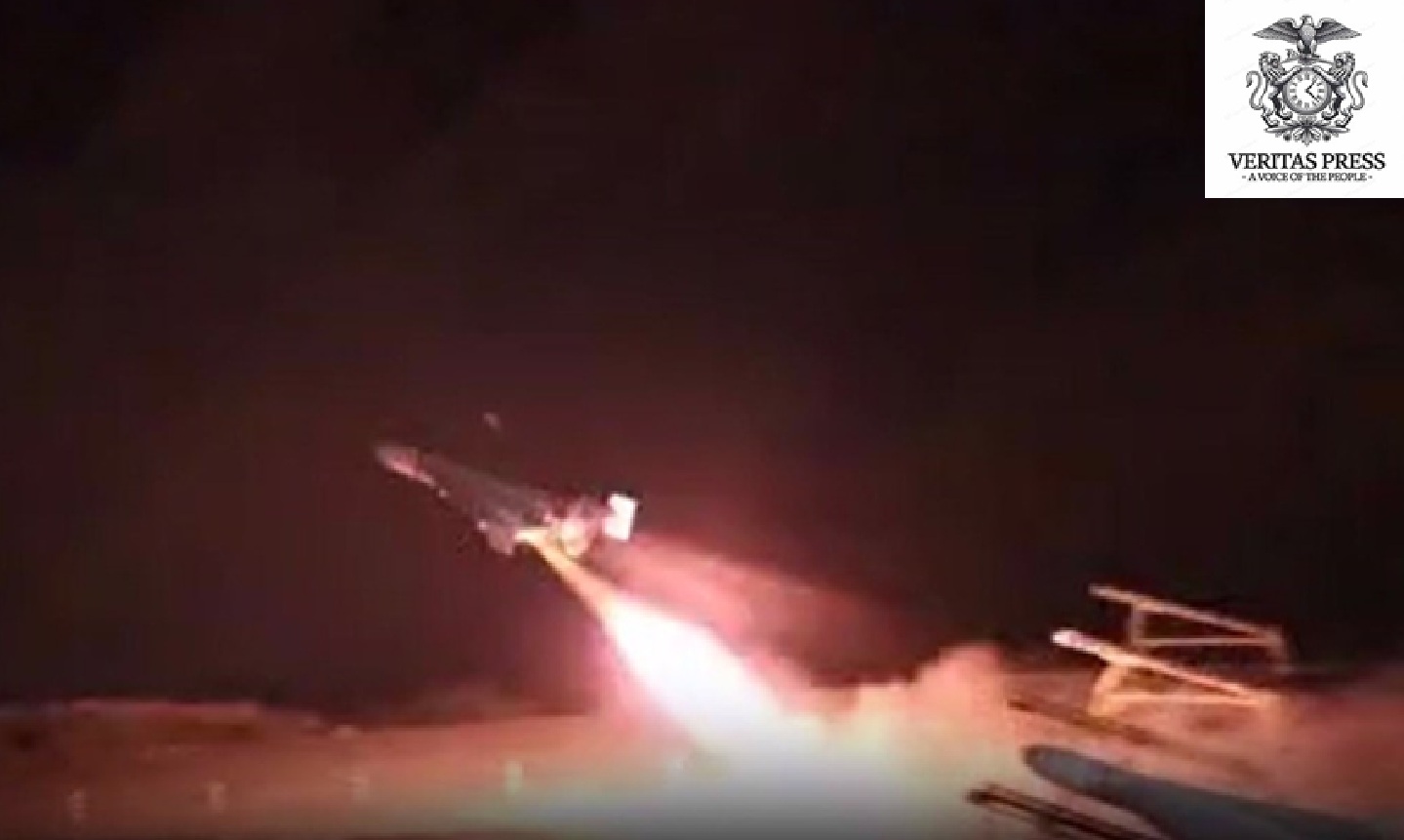
The immediate catalyst for the price surge is the escalating war between US-Israeli forces and Iran. Following the joint strikes on Iran on February 28, which resulted in the death of Supreme Leader Ayatollah Ali Khamenei and over 1,200 others, Tehran has effectively militarised the Strait of Hormuz.
The Logistics Of Chaos:
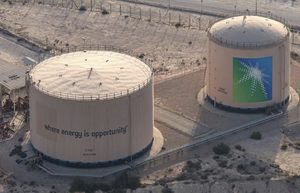
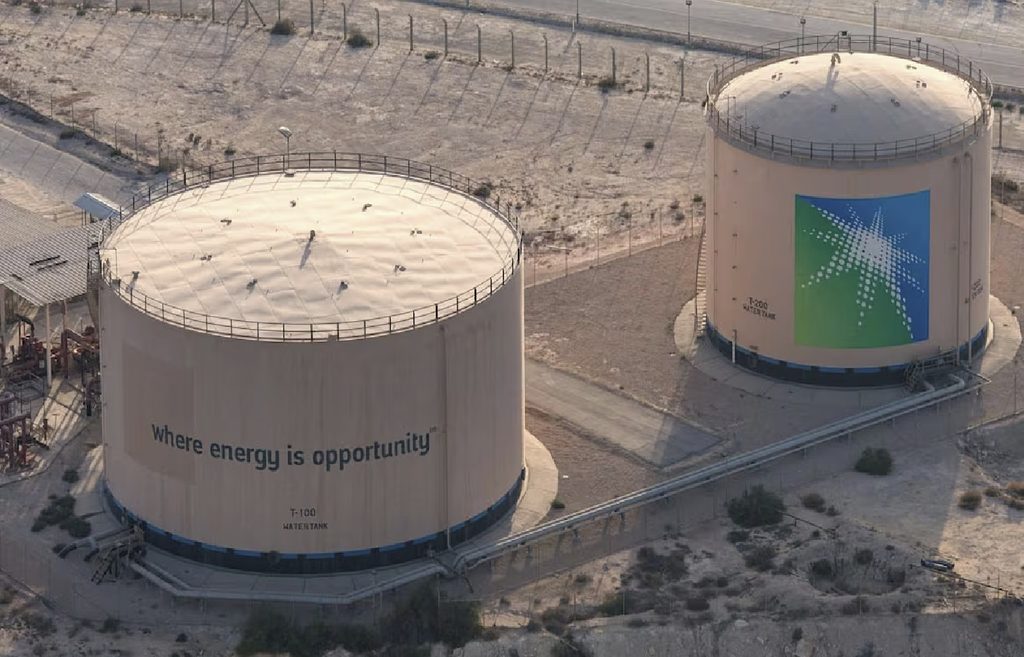
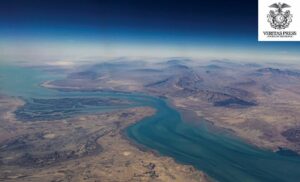
Since March 1, the Strait, a chokepoint through which approximately 20 million barrels of oil (roughly 20% of global consumption) and 20% of the world’s liquefied natural gas (LNG) trade normally passes, has been largely closed. Qatar, the world’s top LNG exporter, has declared force majeure, halting production amid Iranian drone threats. Saudi Arabia’s Ras Tanura refinery and export terminal have been shut due to attacks, while Iraq’s oil output has plummeted by nearly 60%.
The result has been a violent spike in energy costs. Global benchmark Brent crude briefly topped $100 per barrel this week, a level not seen since the onset of the Ukraine war in 2022. In France, this translated to a 16% increase in diesel prices in a matter of weeks, hitting the €2/L threshold that historically acts as a political tinderbox.
The Fiscal Ultimatum, “Nous N’avons Plus D’argent”:
It is against this backdrop of “tangible operational disruption” (as described by JP Morgan analysts) that Villeroy de Galhau made his intervention on RTL radio.
The Governor’s Warning “We have no more money,” Villeroy de Galhau stated flatly, dismissing calls for tax cuts, fuel vouchers, or price caps. He framed the argument not just in terms of balancing the books, but in terms of the cost of debt. “The risk is further deepening the deficits and paying even more for our mortgages and business loans,” he warned, pointing to France’s already strained public finances.
Official data underscores the severity of the constraint. The 2026 budget, finalised just last month after a gruelling parliamentary battle, targets a public deficit of 5%. While an improvement on 2025’s 5.4%, it remains far above the EU’s 3% limit. Crucially, France’s public debt has ballooned to 117.4% of GDP, amounting to €34.8 trillion. Any unplanned subsidy, which cost billions during the 2022-2023 energy crisis, would spook bond markets and increase borrowing costs for households and businesses, precisely the “vicious cycle” Villeroy de Galhau aims to avoid.
Government Alignment The executive branch appears united behind this austere stance. Government spokeswoman Maud Bregeon confirmed that subsidies are “not being considered,” while Prime Minister Sébastien Lecornu has ordered the DGCCRF (anti-fraud authorities) to conduct 500 inspections at gas stations between March 9-11 to police potential profiteering, a move designed to show action without spending public money.
The Economic Crosshairs, Growth Vs. Inflation:
The central bank’s refusal to intervene comes as it revises its economic outlook downward due to the very conflict driving the price hikes.
Revised Projections The Bank of France now projects first-quarter GDP growth of just 0.2% to 0.3%, with full-year 2026 growth hovering around a sluggish 1%. This marks a downgrade from pre-conflict expectations, driven by “the uncertain international climate and persistent geopolitical and trade tensions,” as noted in the Bank’s February business survey.
While the bank had previously hoped inflation would settle at 1.3% in 2026, the energy shock is reigniting price pressures. Professor Thierry Bros of Sciences Po University warned that Europe cannot repeat the “€4.6 trillion” subsidy spree of 2022, cautioning that if gas prices exceed specific thresholds, “some European factories may be forced to shut down and relocate production to the United States”.
Investigative Critique, The Contradictions Of Austerity:
While the “no money” argument is fiscally honest, a deeper investigation reveals several fault lines in the government’s position.
1. The €651 Billion Ghost of Crises Past The French position stands in stark contrast to the bloc’s recent history. According to data from Brussels-based think tank Bruegel, European governments allocated €651 billion between September 2021 and January 2023 to shield consumers from energy costs. Germany alone earmarked €158 billion. Villeroy de Galhau’s statement is effectively an admission that the fiscal firepower of the state is exhausted. But critics ask: if the money was there for untargeted VAT cuts during the Ukraine war, why is it absent now? The answer lies in the shift from crisis management to structural debt consolidation, a shift that leaves low-income households, who spend a far higher proportion of their income on energy, exposed.
2. The “Energy Transition” Paradox Villeroy de Galhau advocates for “energy independence and investment in the energy transition” as the only sustainable solution. However, environmental activists and opposition lawmakers point out the irony. An amendment to the 2026 budget, proposed by deputies including M. Olive, warned that removing tax advantages for biofuels like E85 and B100 fuels produced locally in France would be “environmentally counterproductive,” pushing consumers toward more polluting options and “putting in great difficulty the agricultural operations that produce the raw materials”.
If the government refuses to subsidise fossil fuels but simultaneously allows taxes on domestic biofuels to rise, it creates a policy pincer movement that squeezes the very middle class it claims to protect, all while import dependency remains high.
3. The European Disconnect While France preaches austerity, the European Commission is scrambling for alternatives. In Strasbourg on March 10, the Commission unveiled its “Energy for Citizens” package. Commissioner Dan Jørgensen noted that “too many families are struggling to pay their bills,” recommending that member states reduce taxes on electricity to save households an average of €200 per year. Furthermore, Eurogroup ministers are actively discussing the release of strategic oil reserves to counter the price spike—a market intervention that Villeroy de Galhau seems to oppose at the national level but may be forced to accept at the EU level.
Voices From The Ground:
The political debate in Paris feels distant from the daily reality of French motorists and businesses.
The Hauliers For the transport sector, the pain is immediate. The B100 biodiesel, used by nearly 20,000 heavy goods vehicles, is facing a fiscal squeeze just as diesel prices soar. A spokesperson for the Fédération Nationale des Transports Routiers (FNTR) (implied sentiment) might argue that the government’s refusal to act is effectively a tax on French logistics, making them uncompetitive against foreign rivals whose governments are still capping prices.
The Commuters In rural and peri-urban France, where public transport is a mirage, the €2 per litre threshold is a psychological breaking point. “It’s simple,” said one commuter outside a petrol station in Seine-et-Marne to the local press. “Between the mortgage and the car, the car loses. But if I can’t drive, I can’t work.” This is the social time bomb the government is ignoring: the risk of “working poverty” tied to mobility costs.
The Refiners TotalEnergies, while remaining quiet publicly, is facing a logistical nightmare. With the Strait of Hormuz closed, alternative supply routes are longer and more expensive. The company is heavily invested in LNG, and the Qatari force majeure directly impacts its portfolio.
Broader Implications, The Global Stagflation Warning:
France’s problems are a microcosm of a global dilemma. In Asia, which sources 60% of its crude from the Middle East, refineries in India and China are cutting runs, and Thailand has suspended fuel exports. In the UK, Chancellor Rachel Reeves has expressed willingness to support a release of global oil reserves, warning the conflict “could push up inflation”.
In the United States, the average gasoline price has jumped 34 cents in a week to $3.32, posing a “major risk” for President Donald Trump heading into the midterm elections, as noted by analyst Mark Malek.
If the Strait remains closed for a prolonged period, the world faces a dichotomous recovery: energy-rich nations (like the US and Russia) may benefit from high prices, while energy-poor manufacturing hubs (Europe, Japan, South Korea) face industrial collapse.
Conclusion:
François Villeroy de Galhau’s declaration that France has “no more money” is a pivotal moment in European economic governance. It signals the end of the “whatever it costs” era and the beginning of a harsh adjustment to fiscal reality. By rejecting fuel subsidies, the French government is placing a massive bet that the conflict in the Middle East will be brief and that the 2026 growth forecast of 1% is resilient enough to absorb the shock.
If the war drags on and the Strait of Hormuz remains closed, however, the decision not to intervene may be remembered not as fiscal prudence but as a catastrophic failure to protect the European single market from external coercion. For now, the French people are left to pay the price at the pump, while the government watches from the sidelines, citing an empty treasury.
Source: Multiple News Agencies
Submission:
For The Secure Submission Of Documentation, Testimonies, Or Exclusive Investigative Reports From Any Global Location, Please Utilise The Following Contact Details For Our Investigations Desk: enquiries@veritaspress.co.uk or editor@veritaspress.co.uk
Help Support Our Work:
Popular Information is powered by readers who believe that truth still matters. When just a few more people step up to support this work, it means more lies exposed, more corruption uncovered, and more accountability where it’s long overdue.
Help Protect Independent Journalism, Which Is Currently Under Attack.
If you believe journalism should serve the public, not the powerful, and you’re in a position to help, becoming a DONATOR or a PAID SUBSCRIBER truly makes a difference.
DONATION APPEAL: If You Found This Reporting Valuable, Please Consider Supporting Independent Journalism.
Help Support Our Work – We Know, We Know, We Know …
Seeing these messages is annoying. We know that. (Imagine what it’s like writing them … )
Your support fuels our fearless, truth-driven journalism. In unity, we endeavour to amplify marginalised voices and champion justice, irrespective of geographical location.
But it’s also extremely important. One of Veritas Press’s greatest assets is its reader-funded model.
1. Reader funding means we can cover what we like. We’re not beholden to the political whims of a billionaire owner. We are a small, independent and impartial organisation. No one can tell us what not to say or what not to report.
2. Reader funding means we don’t have to chase clicks and traffic. We’re not desperately seeking your attention for its own sake: we pursue the stories that our editorial team deems important and believe are worthy of your time.
3. Reader Funding: enables us to keep our website and other social media channels open, allowing as many people as possible to access quality journalism from around the world, particularly those in places where the free press is under threat.
We know not everyone can afford to pay for news, but if you’ve been meaning to support us, now’s the time.
Your donation goes a long way. It helps us:
Keep the lights on and sustain our day-to-day operations
Hire new, talented independent reporters
Launch real-time live debates, community-focused shows, and on-the-ground reporting
Cover the issues that matter most to our communities, in real time, with depth and integrity
We have plans to expand our work, but we can’t do it without your support. Every contribution, no matter the size, helps us stay independent and build a truly people-powered media platform.
If you believe in journalism that informs, empowers, and reflects the communities we serve, please donate today.
Kamran Faqir is a volunteer investigative journalist and writer committed to exposing hidden truths and amplifying underreported stories. Driven by social justice, he brings sharp insight and fearless truth-telling to independent journalism. NUJ registered.
SEATTLE, TEHRAN — The U.S. Department of Homeland Security (DHS) will allow Iran’s national football team to enter the country 48 hours before their critical World Cup match against Egypt on Friday, a modest concession in a tournament where Team Melli’s travel conditions have sparked claims of oppression and competitive disadvantage.