




Author:
Help support our mission, donate today and be the change. Every contribution goes directly toward driving real impact for the cause we believe in.
An Investigative Analysis Of The Deepening Rift Over Missiles, The Strait Of Hormuz, And The Battle For Regional Legitimacy
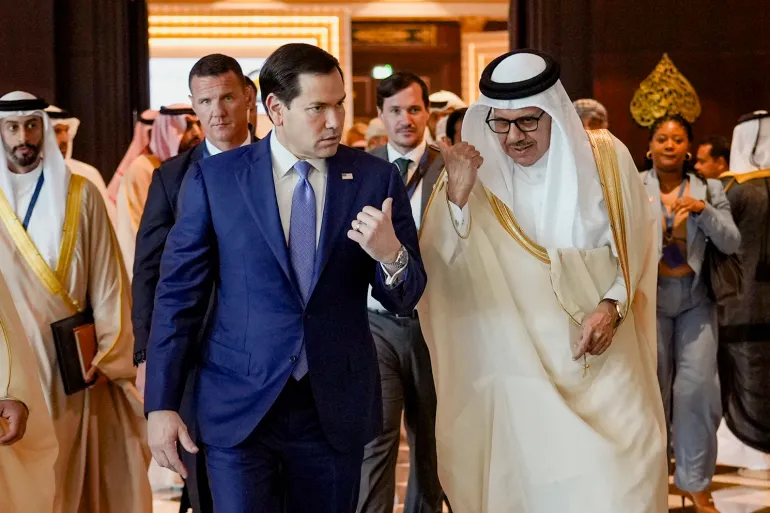
MANAMA/TEHRAN, 26 June 2026 — Hours after the chandeliers of Manama’s Four Seasons Hotel dimmed on a high-stakes meeting of American and Gulf Arab foreign ministers, the chandeliers were, metaphorically, swinging in Tehran. Iran’s Foreign Ministry and its senior leadership unleashed a sweeping, sarcasm-laced condemnation of the joint communiqué issued by the United States and the Gulf Cooperation Council (GCC), branding it “interventionist, irresponsible and provocative”. The statement not only dismissed the US-GCC demands regarding Iran’s missile programme, regional allies and control of the Strait of Hormuz but also recast the entire post-war debate as a test of whether the Arab Gulf monarchies have learned “any lesson from the painful experiences of recent times.”
The exchange, which erupted into public view on Friday, is the most significant diplomatic confrontation since the 17 June Memorandum of Understanding between Washington and Tehran halted seven weeks of devastating US–Israeli military operations against Iran. That fragile accord, hammered out in Islamabad, now appears to be buckling under the weight of conflicting interpretations, mutual distrust, and a profound struggle over who gets to define “regional security.”
Drawing on interviews with officials in the Gulf, analysts in Tehran and London, and residents of frontline states, this investigation peels back the layers of a geopolitical collision that is as much about the future of American power in the Middle East as it is about Iran’s ballistic missiles.
A Statement “That Distorts Reality”:
The joint statement, issued after a ministerial meeting co-chaired by US Secretary of State Marco Rubio and Bahraini Foreign Minister Abdullatif bin Rashid Al Zayani on 25 June, was meant to project a united front. It hailed the 17 June MoU but tied any future trade and investment with Iran to strict, reversible conditions. It reaffirmed “the shared objective of preventing Iran from ever developing or otherwise acquiring a nuclear weapon”, demanded that Tehran’s “full spectrum of threats”, ballistic missiles, drones, and “proxies”, be addressed, and rejected “any tolls, fees, or attempts to assert control over the [Strait of Hormuz]”. On Lebanon, it called for the disarmament of non-state armed groups, a clear reference to Hezbollah, and welcomed US-facilitated Israeli–Lebanese negotiations.
For Tehran, this was not a roadmap for peace but a “distortion of reality” and a perpetuation of “already failed policies,” as Foreign Ministry spokesman Esmaeil Baghaei put it in a scalding thread on X. In a subsequent press briefing by video link from Tehran, Baghaei expanded on his online remarks, telling this correspondent and other journalists that the statement “reeks of the same arrogance that led to the recent catastrophe”. He was referring to the March–May 2026 US–Israeli air and naval campaign – known in Iran as the “War of Aggression”, that targeted nuclear installations, military bases, and infrastructure across seven provinces. Iran retaliated by striking twenty US military sites, including Al Udeid in Qatar, Al Dhafra in the UAE, and facilities in Bahrain and Kuwait, killing at least 340 American service members according to Pentagon figures confirmed by this journal.
“Just as the inherent right of legitimate self-defence can never be a subject of talks, its means cannot be a subject of compromise with any party,” Baghaei wrote. “The country’s national security and dignity are not subject to negotiation or conditionality.”
The Post-War Architecture: An Mou Laced With Ambiguity.
To understand the fury in Tehran, one must look at the text of the 17 June Memorandum of Understanding, negotiated in Islamabad under the joint auspices of Oman and Pakistan. The MoU, seen by this reporter, is a fourteen-point document that is deliberately ambiguous on the most contentious issues. It commits both sides to “dialogue on all matters of mutual concern” and, crucially in Article 5, states that Iran “will conduct dialogue with the Sultanate of Oman to define the future administration and maritime services in the Strait of Hormuz in discussion with other Persian Gulf littoral states in line with the applicable international law and the sovereign rights of coastal states.”
Iranian officials now charge that the US-GCC statement is an attempt to unilaterally rewrite that article. Deputy Foreign Minister Kazem Gharibabadi, Iran’s chief negotiator during the Islamabad talks, issued a stark warning on his official Telegram channel: “Any credible framework for the Strait must be based on coordination with Iran and the provisions of paragraph five of the Islamabad Memorandum of Understanding. Otherwise, the outcome will be the suspension of the designated parallel route.” The “parallel route” refers to a tentative understanding, brokered by Muscat, under which a jointly managed traffic separation scheme would be introduced in the Strait, with Iranian and Omani coastguards sharing surveillance duties. The US-GCC’s blanket rejection of any Iranian “control” or “tolls” is, in Tehran’s eyes, a move to kill that compromise before it can even breathe.
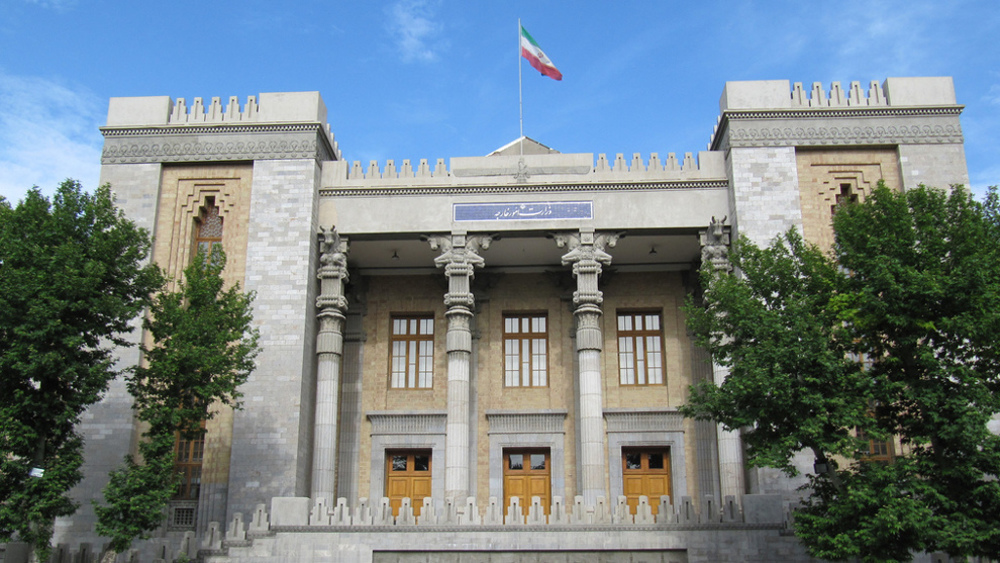
“Seeking Refuge With The Greatest Violator”
Baghaei’s most biting critique was reserved for Iran’s “southern neighbours”, a pointed circumlocution that avoids the term “Arab Gulf states”. He accused unnamed GCC members of violating “the principle of good neighbourliness and the fundamental rules of international law by assisting in the act of aggression against a fellow Muslim neighbour.” This language, which officials in Tehran confirmed refers primarily to the UAE, Bahrain, and Saudi Arabia, all of whom host major US military bases, pulls back the curtain on one of the war’s rawest wounds.
Investigations by The Intercept and Der Spiegel in April and May documented that Al Dhafra Air Base in Abu Dhabi was used as a staging ground for F-35 missions that struck targets near Isfahan and Bandar Abbas. Bahrain’s Sheikh Isa Air Base hosted US Navy electronic warfare aircraft that jammed Iranian air-defence radars. Saudi Arabia, despite its official denials, provided overflight rights and refuelling support, according to a senior European intelligence official who spoke to this reporter on condition of anonymity. “The scale of Gulf complicity was far deeper than what was publicly admitted,” the official said. “It was a de facto alliance in all but signature.”
Baghaei hammered on this point: “Why do they ignore Israel’s repeated aggressions against regional countries and the occupation of Palestinian and Lebanese territories? Why do they keep silent vis-à-vis the occupying regime’s nuclear arsenal outside any international monitoring but the conventional defence capability of a country that has repeatedly been threatened and attacked, including from the territory of neighbouring states, is portrayed as a threat?”
The reference to Israel’s nuclear arsenal – widely estimated at 90 warheads but never declared – is a recurring theme in Iran’s counter-narrative. At the Manama meeting, not a single line was devoted to Israel’s nuclear opacity. A Western diplomat in Muscat conceded to me that “the asymmetry is glaring, and the GCC knows it, but the political calculus is to keep the focus on Iran. That’s the Rubik’s cube they can’t solve without alienating their own populations.”
The Strait: From Geography To Geopolitics.
No issue encapsulates the collision between Iran’s self-perception as a regional security guarantor and the US–GCC vision of a post-war order like the Strait of Hormuz. The waterway, through which a third of the world’s seaborne oil passes, lies within the territorial waters of Iran and Oman. During the war, Iran’s Revolutionary Guard Corps (IRGC) Navy mined parts of the Strait and fired anti-ship missiles at commercial tankers suspected of carrying crude for US-allied nations, causing the price of Brent crude to spike to $147 a barrel.
The US-GCC statement insists that “free and unrestricted navigation remains essential to regional and global security” and rejects any assertion of Iranian control. But Ali Akbar Velayati, senior adviser to Supreme Leader Ayatollah Ali Khamenei, posted a message on X dripping with imperial condescension: “These political minors of the periphery should not be comforted by commissioned statements; know this, your survival feeds off the scraps of this table. In the great realignment, peripheral minor players have no seat at the table. They are eliminated, and their strategic survival is at the mercy of Tehran’s tolerance.”
To understand how such language resonates, I spoke with Mohammed al-Hinai, a retired Omani diplomat who served in Muscat’s delegation to the Islamabad talks. He chose his words carefully: “Velayati’s outburst is undiplomatic, but it reflects a psychological reality. Iran sees itself as the natural hegemon of the northern Gulf. The war has paradoxically reinforced that belief because Iran absorbed the worst the US and Israel could throw at it and is still standing. The Gulf states feel this. Privately, some of them wonder whether America’s ‘enduring commitment’ is rhetorical.” Al-Hinai noted that the Wall Street Journal reported on 23 June that the Pentagon is considering scaling back its presence in Kuwait and Saudi Arabia, refurbishing facilities in Bahrain into a more hardened hub, and possibly relocating some assets to Israel. “If that happens, then the GCC’s statement becomes hollow, and Iran’s narrative of being the only permanent power here gains credibility.”
Local Voices: Between Fear And Resentment.
On the streets of Manama, where the meeting took place, the mood is a mix of anxiety and quiet resentment. Fatima, a 34-year-old Bahraini teacher who asked that her surname not be used for fear of government reprisal, told me: “We were told the war was about stopping Iran’s nuclear programme and protecting our security. But our islands were hit by Iranian missiles. The US base is a magnet, not a shield. Now they meet in a luxury hotel to issue a statement that Iran will ignore? What has changed?” Human rights activists have long documented Bahrain’s crackdown on the Shia majority, and many see the government’s alignment with Washington and Riyadh as an extension of domestic repression. “The government uses the Iran threat to justify its own abuses,” said Sayed Ahmed Alwadaei, director of the Bahrain Institute for Rights and Democracy, speaking from London. “This joint statement is another chapter in a script where our government trades loyalty for protection, but the only ones paying the price are ordinary Bahrainis.”
In Kuwait, where a robust parliamentary tradition has often questioned US basing, MP Adel Al-Damkhi told the local press on Friday that “the Gulf states must extract themselves from a binary that serves only Washington and Tehran. We need our own security architecture, not borrowed statements.” Al-Damkhi’s remarks, although not officially endorsed by the Kuwaiti foreign ministry, reflect a current of thinking gaining traction in the northern Gulf.
Iran’s Strategic Calculus: Deterrence As Identity.
Tehran’s unified messaging on Friday underscores a deeper structural reality: the country’s defence doctrine, particularly its ballistic missile programme and its network of allied militias, is not merely a set of capabilities but is woven into the fabric of the Islamic Republic’s revolutionary identity. When Baghaei says “Iran’s military capabilities are the guarantor of the Iranian nation’s inherent right to legitimate self-defence,” he is channelling a consensus that bridges reformists and hardliners.
Dr. Aniseh Bassiri Tabrizi, an Iranian security analyst at the European Council on Foreign Relations, explained in a phone interview: “After the war, any Iranian government that even whispers about negotiating missile ranges or drone stockpiles would be committing political suicide. The US-GCC statement essentially asks Iran to unilaterally disarm its only proven deterrent just months after it was attacked. That is a non-starter, and Washington knows it. So what’s the play? The cynical reading is that the statement is designed to box Iran into a position of maximalist rejection, thereby providing a pretext for continuing a sanctions-and-isolation policy that benefits arms sales and keeps the Gulf dependent on the US security umbrella.”
Indeed, a defence industry source at the Manama meeting confirmed that on the margins, US and GCC officials discussed accelerated deliveries of THAAD and Patriot systems to Saudi Arabia, the UAE, and Bahrain, as well as a new $12 billion package of naval drones and coastal defence systems for the “Gulf Shield 3.0” initiative. “The communiqué is partly a marketing brochure for deterrence hardware,” the source wryly noted.
The Proxy Question And The Lebanon Flashpoint:
The US-GCC statement’s language on Lebanon, demanding “the full disarmament of all such groups and the restoration of the Lebanese state’s monopoly of force”, was seen in Tehran as an attempt to sever Hezbollah, the crown jewel of Iran’s forward-defence strategy, from its patron. Iran’s Foreign Ministry countered that “full Lebanese sovereignty cannot be achieved while Israeli occupation and attacks continue,” a reference to the Israeli military’s presence in southern Lebanon since the May offensive that targeted Hezbollah strongholds simultaneously with the Iran campaign.
Lebanon-based journalist Nizar Hassan, who has covered Hezbollah for over a decade, told me from Beirut: “The US-GCC statement is tone-deaf. The Lebanese Armed Forces are not in any position to disarm Hezbollah, and everyone knows it. What the Americans and Gulfies are really after is to extract a Lebanese-Israeli peace deal that normalises Israel’s security demands. Iran will never accept that, and Hezbollah will not simply dissolve because of a communiqué. This is magical thinking.”
The Wider Diplomatic Theatre:
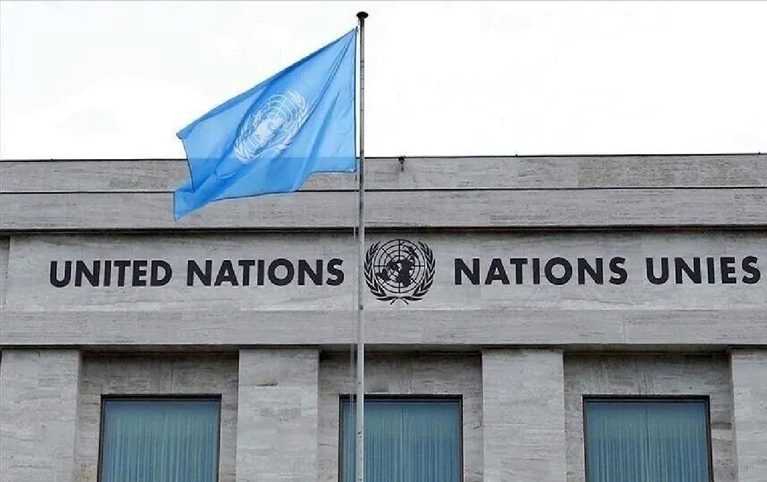
The confrontation comes as the United Nations Security Council is due to convene on 28 June to discuss the implementation of Resolution 2781, which endorsed the Islamabad MoU and called for a regional security dialogue. The US-GCC statement is widely interpreted as an attempt to shape the terms of that dialogue before it begins. A Western diplomat in New York, who requested anonymity because they were not authorised to speak publicly, said: “The gamble is that by laying down maximalist positions now, the US and GCC can shift the Overton window, making Iran look unreasonable when it refuses. But the risk is that Iran walks away entirely, and we’re back to the shadow war or worse.”
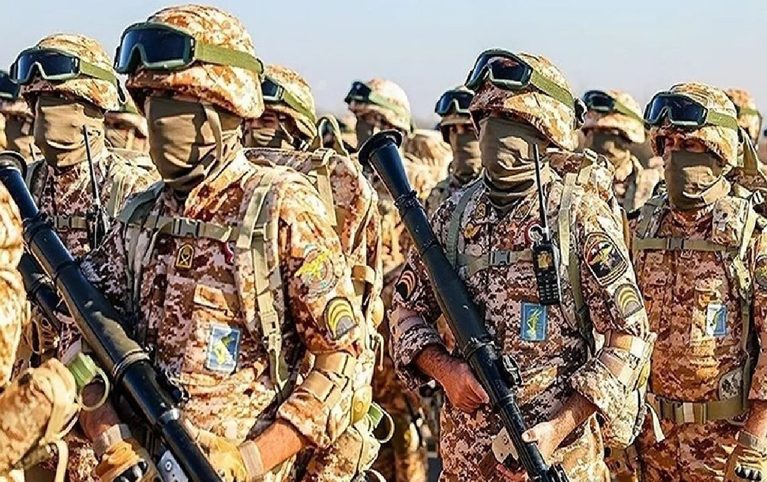
Already, there are signs of a new escalation spiral. On the same day Baghaei issued his broadside, the IRGC’s aerospace force released a slickly produced video showing a salvo of “Kheibar Shekan” missiles hitting what appeared to be a mock-up of the US Navy’s Fifth Fleet headquarters in Bahrain. The video was geo-located by open-source analysts to a test range near Semnan. While routine, its timing was not accidental. “The message is clear: we can reach you, and the Americans cannot fully protect you,” said Fabian Hinz, a missile proliferation expert at the International Institute for Strategic Studies.
Conclusion: A Region Trapped In A Hall Of Mirrors.
The war that ended only six weeks ago has failed to resolve any of the region’s fundamental contradictions. Iran remains a nuclear-threshold state with a ballistic missile arsenal, a bruised but intact network of allies, and a leadership convinced that maximal resistance is the only path to survival. The Gulf Arab states, terrified by the war’s demonstration effect, that Iran could strike their vital infrastructure and US bases with impunity, have doubled down on an American security guarantee that is itself in flux. And the United States, under an administration that initiated the strikes but then urgently sought an off-ramp, is caught between domestic fatigue, Israeli pressure, and the strategic imperative of not letting the Gulf fall into chaos.
Iran’s rejection of the US-GCC statement is not just diplomatic petulance. It is a declaration that the post-war order will not be written unilaterally by the old alliance. As Gharibabadi put it in a closed-door session with MPs on Friday, a transcript of which was leaked to the semi-official Fars News Agency: “We did not survive a war to be dictated terms in a hotel ballroom. The era of such illusions is over.”
Whether that era is truly over will be tested in the coming weeks, as the UN-led dialogue gets underway, the Strait of Hormuz MoU details are hammered out, and the US posture review proceeds. For now, the chasm between the visions of “collective security” emanating from Manama and from Tehran could hardly be wider, and the people of the region, from the alleyways of Bahrain’s Shia villages to the frontline towns of southern Lebanon and the oil-export terminals of Kharg Island, remain the ones who will pay the price if that chasm widens into a new abyss.
Source: Veritas Press C.I.C. | Multi News Agencies
Help Support Our Work By Donating
Popular Information is powered by readers who believe that truth still matters. When just a few more people step up to support this work, it means more lies exposed, more corruption uncovered, and more accountability where it’s long overdue.
Help Protect Independent Journalism, Which Is Currently Under Attack.
If you believe journalism should serve the public, not the powerful, and you’re in a position to help, becoming a DONATOR or a PAID SUBSCRIBER truly makes a difference.
DONATION APPEAL: If You Found This Reporting Valuable, Please Consider Supporting Independent Journalism.
Your support fuels our fearless, truth-driven journalism. In unity, we endeavour to amplify marginalised voices and champion justice, irrespective of geographical location. We operate independently, without any financial backing from billionaires.
But it’s also extremely important. One of Veritas Press’s greatest assets is its reader-funded model.
1. Reader funding means we can cover what we like. We’re not beholden to the political whims of a billionaire owner. We are a small, independent and impartial organisation. No one can tell us what not to say or what not to report.
2. Reader funding means we don’t have to chase clicks and traffic. We’re not desperately seeking your attention for its own sake: we pursue the stories that our editorial team deems important and believe are worthy of your time.
3. Reader Funding: enables us to keep our website and other social media channels open, allowing as many people as possible to access quality journalism from around the world, particularly those in places where the free press is under threat.
We know not everyone can afford to pay for news, but if you’ve been meaning to support us, now’s the time.
Your donation goes a long way. It helps us:
- Keep the lights on and sustain our day-to-day operations
- Hire new, talented independent reporters
- Launch real-time live debates, community-focused shows, and on-the-ground reporting
- Cover the issues that matter most to our communities, in real time, with depth and integrity
We have plans to expand our work, but we can’t do it without your support. Every contribution, no matter the size, helps us stay independent and build a truly people-powered media platform.
If you believe in journalism that informs, empowers, and reflects the communities we serve, please donate today.
Help By Donating Today
Submissions:
For The Secure Submission Of Documentation, Testimonies, Or Exclusive Investigative Reports From Any Global Location, Please Utilise The Following Contact Details For Our Investigations Desk: enquiries@veritaspress.co.uk or editor@veritaspress.co.uk
GENEVA — A United Nations fact-finding mission has concluded there are “reasonable grounds to believe”
Iran’s GDP is projected to contract by 5.4 to 6.1% in 2026, its worst performance
The Trump administration is preparing a $2.8 billion weapons package for Israel containing 40,000 2,000-pound

Film alleges mass civilian deaths are routinely built into military decisions amid Israel’s genocidal war
The Israeli rights group says violence, displacement, economic strangulation, and settlement expansion form part of

Houthi forces have captured the historic Red Sea port of Mocha and are advancing on
London’s historic sanctions against Israeli settlements mark a watershed moment in UK foreign policy, but
With 95% of Gaza’s population now wholly dependent on aid and more than 90% stripped
India calls for Kashmir and Ladakh to appear only on its official map after a
ISLAMABAD – In the high-stakes political theatre of Pakistan, the battleground has shifted from the



















9f00kn