

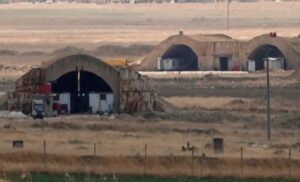


Help support our mission, donate today and be the change. Every contribution goes directly toward driving real impact for the cause we believe in.
RAWALPINDI/NEW DELHI — At exactly 9:15 p.m. on May 10, 2025, the gas supply across most of Pakistan was cut off, as it had done almost every night for three years. By then, the shooting had stopped, the ceasefire was holding, and the internet was on fire, not with missiles, but with laughter.
One year later, the information war that erupted alongside the four-day military confrontation between India and Pakistan has become the most studied, least understood chapter of the brief conflict. Analysts at war colleges in Washington, Beijing, and Brussels now teach it as a case study. Not of how to win an information war, necessarily, but of how an underdog with nothing to lose rewrote the rulebook while the regional superpower tripped over its own propaganda.
Two Wars, One Victor (Sort Of):
When Indian Air Force Rafales crossed the Line of Control in the early hours of May 7, 2025, in response to a militant attack in Pahalgam that killed 26 civilians, two parallel operations were launched simultaneously. Operation Sindoor, named after the vermilion powder worn by married Hindu women, explicitly invoked the widows of the slain and was the military component. But within minutes, a second front opened on X, Instagram, and WhatsApp, fought in Urdu, Hindi, English, and the grammar of shitposts.
India entered with every structural advantage. “Multi-decade disinformation influence operations had produced one of the most organised online nationalist ecosystems on the planet,” as one analysis published in Foreign Policy noted in August 2025. The Indian digital army was coordinated, enormous, and primed. Pakistan, by contrast, was technically barred from its own battlefield: X had been banned nationwide for over a year due to “national security concerns,” electricity blackouts were routine, and internet shutdowns a condition of daily existence.
And yet, one year later, the consensus among independent observers is that Pakistan won the narrative battle, not because it out-muscled India, but because it refused to fight on India’s terms.
“In information warfare, perception is the battlefield,” an anonymous X user wrote in May 2025, in a post now archived by the Digital Forensics Research Lab. “If the news damages the other side, true or false, amplify it. If the news harms us, even if true, bury it. This is not journalism. This is war.”
That user, geolocated to Karachi, was articulating the unofficial doctrine of Pakistan’s digital mujahideen. But the real weapon wasn’t suppression. It was self-immolating honesty.
The Art Of Beating Yourself To The Punchline:
The single most devastating post of the conflict was not a deepfake, a leaked document, or a threat. It was a complaint about gas load-shedding.
“Jung karni ho to 9 baje se pehle kerlena, 9:15 per gas chali jati hai humari,” a Pakistani user wrote. (If you want to go to war, do it before 9 p.m., our gas goes off at 9:15.) The post, which gathered over 180,000 impressions, set the tone. When Indian accounts began circulating documented vulnerabilities, economic collapse, IMF dependency, infrastructure failure, and human rights violations, they found the ground already occupied. Pakistanis had been mocking these same realities for years.
“Owning a weakness so completely, so publicly, so cheerfully, neutralised any attempts at damage,” observed Usman Azeem, a Pakistani digital strategist whose post-mortem of the information war in Dawn became one of the most-cited analyses of the conflict. “You cannot humiliate a country that is already laughing harder than you are.”
This was not a coordinated state strategy, at least, not initially. It was what linguist Steven Pinker terms common knowledge: the public, visible consensus that coordinates collective posture without issuing orders. Every tweet about wedding feasts in heatwaves, every transformer explosion mistaken for a nuclear strike, every shrimp karahi ordered next to a supposedly bombed port, they built a global audience aligned and laughing in synchrony.
“Pakistan has been rehearsing for this moment for decades,” Azeem wrote. “We practised on Faiz Ahmed Faiz’s couplets aimed at military dictators, truck-art commentary running up GT Road, and barely hidden references to Vigo kee sawari. Political scientist James C. Scott called it the ‘hidden transcript’, resistance conducted not through rebellion but through jokes, coded language, and the quiet appropriation of the Master’s narrative.”
The Self-Inflicted Wound: India’s Own Media Turned The Guns Inward.
If Pakistan’s strength was its irreverent authenticity, India’s weakness was hyper-reality. A year after the conflict, the scale of India’s self-inflicted information damage remains staggering.
“68% of all fact-checks conducted by BOOM Live in May 2025 were related to Operation Sindoor,” recalled Jency Jacob, the organisation’s managing editor, in an interview for this article. “Not 68% of defence fact-checks. 68% of everything. In a country of 1.4 billion people, with a media ecosystem covering every subject imaginable, two-thirds of all verifiable falsehoods circulating that month were about one four-day military operation.”
The specifics, when catalogued, read like a theatre of the absurd:
- Zee News announced India had captured Islamabad and Pakistan had surrendered.
- Times Now Navbharat declared Indian forces had entered Pakistan.
- Aaj Tak aired footage from the January 2025 Philadelphia plane crash as an Indian airstrike on Karachi.
- Major (retd) Gaurav Arya “reported” the Indian Navy had bombed Karachi’s port — a claim met in real time by a Pakistani journalist filing from a restaurant beside the allegedly destroyed waterfront, eating shrimp karahi.
- An AI deepfake of DG ISPR Lt Gen Ahmed Sharif Chaudhry was circulated as authentic footage of him admitting jet losses.
Speaking to The Washington Post’s Gerry Shih in June 2025, former Indian Foreign Secretary Nirupama Rao described the media atmosphere as one of “hypernationalism and parallel reality,” cautioning that “the lack of authoritative government briefings created a vacuum filled by speculation.” The Columbia Journalism Review dubbed it “the smog of war, man-made, and known to be so by those making it.”
India’s military later acknowledged, buried in a parliamentary standing committee report in December 2025, that 15% of operational time during the conflict had been spent debunking fake news, and most of it was homegrown. The trolls were not operating in a parallel ecosystem; they were on primetime television.
“The enemy’s most effective psychological operation was India’s own media,” the report concluded, in unusually blunt language.
The Paradox Of The Lifted Ban: Why Pakistan’s State Freed The Speech It Had Censored.
Perhaps the most striking detail of the information war was who was suddenly allowed to fight it.
On April 27, 2025, ten days before the first airstrikes, Pakistan’s Ministry of Interior quietly lifted the year-long ban on X. According to minutes from a Senate committee meeting leaked to The Guardian, the decision was deliberate and strategic: to enable the country to “participate in the narrative war.”
“The same forces that had spent years confiscating the weapon of free expression suddenly found its irreverence an asset,” Azeem noted. The state that had criminalised “digital terrorism” and cited electoral disinformation to justify internet blackouts was now relying on the very voices it had tried to silence: the irreverent, the uncontrollable, the brilliantly indirect.
“Whenever the bans came, we didn’t stop, thanks to the VPNs,” said Lahore-based digital rights activist Sana Saleem in a panel at RightsCon 2026 in Costa Rica last month. “War was, ironically, a welcome relief. The ban was lifted overnight. The weapon the state had tried to confiscate turned out to be the one that critically turned the tide. We would do well to remember that.”
As of May 2026, X remains accessible in Pakistan, a quiet, fragile victory for digital rights advocates who note bitterly that it took a near-war to achieve what years of advocacy could not. “The condition is simple,” Saleem told the audience. “Let the people speak. Not when it’s convenient. Always.”
Six Jets, One Hashtag, And The Tandoor That Roasted A Rafale:
While the memes were flattening hierarchies, the actual military scoreboard was being contested on a parallel track, with Pakistan applying the discipline of a brand campaign.
“6-0.” Six IAF aircraft were downed, the Pakistan military declared. The claim was deployed in press conferences and memes simultaneously, with the consistency of a marketing rollout. The centrepiece was the Rafale, India’s most prestigious military asset, the jet Prime Minister Narendra Modi had staked significant political capital on acquiring.
On May 9, 2025, The Washington Post published satellite imagery analysis confirming three crash sites on Indian territory, with French intelligence acknowledging at least one Rafale loss, the first combat loss in the aircraft’s history. Before the debris had cooled, Pakistani social media had named the episode Operation Tandoor, put the jet in a metaphorical clay oven, and served it with naan and half a million impressions.
“The Defence Minister joined the bandwagon personally,” recalled Rahat Fateh Ali Khan, a digital researcher at the Islamabad-based Centre for Digital Transformation, in an interview last week. “He retweeted an AI-generated image of Modi cycling the Rafale wreckage to the Bilal Ganj scrap market. 533,000 impressions. The state and the meme had become a single, grinning entity.”
Even China’s state media joined in, circulating videos mocking the loss.
Ritual Humiliation: Sindoor, Suhag Raat, And The Gender Wars.
The naming of the Indian operation provided Pakistan with an opening that, one year later, feminist scholars are still unpacking, often with discomfort at how the mockery was wielded.
Operation Sindoor invoked the vermilion marker worn by married Hindu women, explicitly framing the strikes as masculine national grief made kinetic. Feminist critics immediately noted the peculiarity of branding a military campaign after a symbol of female marital subservience.
Pakistan’s response was swift, effective, and, as scholars at the Lahore University of Management Sciences pointed out in a widely circulated paper, deeply misogynistic. Operation Suhag Raat trended within hours, reducing the widow-avenging solemnity to bedroom comedy. AI images of Modi as a Hindu widow circulated under #OperationWidhwa. A Pakistan Army soldier applying sindoor to a woman in an Indian tricolour sari, beneath the banner “New Chapter Begins,” completed the inversion: in the ritual, the one who applies the sindoor is dominant.
“India had named its operation after what husbands give wives,” Azeem wrote. “Pakistan replied by demonstrating who, in this version, was the husband.”
Dr. Nida Kirmani, a Lahore-based sociologist, offered a more ambivalent reading in a commentary for Al Jazeera in August 2025. “The Pakistani memes were simultaneously a brilliant act of narrative jiujitsu and a depressing reminder that even in the most modern information warfare, the ultimate insult remains feminisation. The enemy is a woman. The victor is the man. We laughed, yes. But at what cost to our own rhetoric about equality?”
The Trump Card: How Flattery Bought The Ceasefire Narrative.
Perhaps the most consequential diplomatic manoeuvre of the information war involved a man who was not even a direct participant.
When U.S. President Donald Trump announced on May 11, 2025, that he had personally brokered the ceasefire, saving, by his own escalating estimate, “somewhere between five million and fifty million lives,”a figure he has revisited more than eighty times in the year since, India firmly rejected any U.S. role, wary of resolving any issue with Pakistan multilaterally.
Pakistan not only accepted Trump’s version but also embraced it with extravagant theatre. Prime Minister Shehbaz Sharif, flanking the U.S. president in Egypt two weeks later, offered a salute and called him “the man this world needs most at this point in time.” Pakistan nominated Trump for the Nobel Peace Prize. Twice.
“The flattery was extravagant to the point of parody,” noted Michael Kugelman, director of the South Asia Institute at the Wilson Centre, in a recent podcast. “It was also, as a piece of diplomatic jiu-jitsu, near-perfect. Each nomination costs nothing and has purchased significant goodwill from a man who responds to recognition the way a plant responds to water. And critically, Pakistanis were all in on it. Common knowledge. Everyone knew it was a performance, and that made it work even better.”
The result, one year later, is measurable. For the first time in a generation, Islamabad’s relationship with Washington is demonstrably warmer than New Delhi’s. A Pew Research Centre survey in March 2026 found that favourable views of Pakistan among U.S. foreign policy elites had risen by 18 percentage points, while India’s had dropped by 11. The underdog had played the room. The giant, too proud to flatter, paid full price.
The Other War: Cyberattacks, Bots, And The 1.5 Million Intrusions Nobody Sees.
While the memes captured global attention, a quieter, more dangerous battle was being fought in server farms and network operations centres.
“Over 1.5 million cyber attacks were launched against Indian infrastructure during the four-day conflict,” Maharashtra Cyber’s Special Inspector General Yashasvi Yadav told reporters in a briefing on May 20, 2025, a transcript of which was obtained for this article. “Seven Pakistan-allied Advanced Persistent Threat groups were involved, along with actors from Bangladesh, Indonesia, and the Middle East.”
Among the most active was APT 36, also known as Transparent Tribe, which deployed malware campaigns, DDoS attacks, and GPS spoofing against Indian targets. Pro-Pakistan hacker collectives, Pakistan Cyber Force, Team Insane PK, defaced websites and spread claims of breached airport systems and Election Commission portals.
Yet India’s cyber defence held remarkably well. Of the 1.5 million intrusion attempts, only 150, roughly 0.01%, succeeded, and none on critical infrastructure. “Claims that hackers had penetrated Mumbai’s airport systems or the Election Commission were found to be baseless,” Yadav confirmed.
The Indian government’s classified “Road of Sindoor” threat assessment, summarised for parliament in November 2025 and partially leaked to The Hindu, concluded that the cyberattacks were “part of a coordinated hybrid warfare strategy” but that “the psychological dimension far outweighed the technical.”
The Bot War: Disinformation By The Numbers.
Independent monitoring organisations have since provided granular data on the scale of the disinformation campaign.
NetBlocks reported that 65% of viral false posts during the conflict originated from IP addresses linked to Pakistan, with another 20% from untraceable bot accounts. The Washington-based Centre for the Study of Organised Hate (CSOH) analysed 437 high-engagement posts and found that 179, nearly 41%, originated from verified accounts, including politicians, influencers, and retired military officials.
“What was particularly alarming was the credibility lent to these falsehoods by high-profile sources,” the CSOH report stated. “Despite the scale of disinformation, only 73 posts, just 17%, were flagged by X’s Community Notes.”
Raqib Hameed Naik, the think tank’s director, described the information war as “a global trend in hybrid warfare.”Joyojeet Pal of the University of Michigan told The Guardian: “This wasn’t ordinary nationalist chest-thumping. This had the potential to push two nuclear-armed neighbours to the brink.”
And yet, the most viral falsehoods did not come from Pakistani bots. The most watched, most shared, and most believed, the claims of cities captured, generals arrested, white flags waved, originated on Indian television.
The Espionage Subplot: Madam N And The Influencer Spy Ring.
Even as the memes flowed, Indian intelligence was uncovering a parallel espionage operation that exploited the very social media platforms where the information war was being fought.
Naushaba Shahzad Masood, known as “Madam N,” ran Jaiyana Travels and Tourism in Lahore. According to an Indian counter-intelligence dossier shared with INTERPOL in September 2025 and reviewed for this article, she was building a network of 500 spies inside India, focusing on Hindu and Sikh YouTubers, including Jyoti Malhotra and Jasbir Singh.
Over six months, Madam N arranged travel for approximately 3,000 Indians and 1,500 expatriates to Pakistan, fast-tracking visas through contacts at the Pakistani High Commission in Delhi. She managed pilgrimage tours with the Evacuee Trust Property Board, charging inflated fees that intelligence assessments say funded ISI propaganda operations.
Financial trails linked her phone number to the devices of arrested spies, and two Pakistani bank accounts showed transfers from India. Her agents operated in major Indian cities, including Delhi. The investigation, still ongoing as of May 2026, has led to the arrest of 23 individuals under India’s Official Secrets Act.
“The operation weaponised tourism infrastructure for espionage,” a senior Indian intelligence official told The Indian Express in October 2025, speaking on condition of anonymity. “It was elegant in its simplicity. Who suspects a pilgrim?”
AI Fact-Checkers: The Second-Order Failure.
As the information torrent intensified, social media users turned to AI chatbots, Grok, ChatGPT, and Gemini, for instant verification. The result was chaos squared.
“Hey @Grok, is this true?” became a viral refrain. But the AI assistants often propagated misinformation themselves. Grok, under renewed criticism for algorithmic biases, misidentified old footage from Sudan’s Khartoum airport as missile strikes on Pakistan’s Nur Khan airbase. Unrelated fire footage from Nepal was wrongly claimed as Pakistani military retaliation.
McKenzie Sadeghi of the disinformation watchdog NewsGuard warned at the time: “The growing reliance on Grok as a fact-checker comes as X and other major tech companies have scaled back investments in human fact-checkers. Our research has repeatedly found that AI chatbots are not reliable sources for news and information, particularly when it comes to breaking news.”
The Tow Centre for Digital Journalism at Columbia University found that AI chatbots were “generally bad at declining to answer questions they couldn’t answer accurately, offering incorrect or speculative answers instead.” In one documented case, Google’s Gemini confirmed the authenticity of an AI-generated image of a woman and fabricated details about her identity and location.
One year later, the lesson remains unlearned. A study published last month by the Reuters Institute for the Study of Journalism found that 41% of Indian and Pakistani users still turn to AI chatbots as their primary fact-checking tool during crises.
The View From The Ground: What Locals Remember.
“I was at the port when the shrimp karahi picture was taken,” said Farhan Siddiqui, a 34-year-old fisherman and part-time TikToker from Karachi’s Kemari district, in an interview at a dockside chai stall last week. “My cousin sent me a voice note saying, ‘Bhai, TV par dikha rahe hain ke port tabah ho gaya’ (Brother, they’re showing on TV that the port has been destroyed). So I went on live video, ordered karahi, and showed the boats. It wasn’t some big patriotic act. It was just… what else could I do? Cry? The gas was already off.”
Siddiqui’s video, re-posted by a journalist and then by the DG ISPR’s official account, garnered 2.3 million views in 48 hours.
In Delhi, the memory is different. “My father watches Aaj Tak all day,”said Priya Malhotra, a 28-year-old software engineer. “For three days, he believed we had captured Lahore. When I showed him the BBC report, he accused me of being anti-national. That crack in our house? It still hasn’t healed.”
“The problem wasn’t just the lies,” said Pratik Sinha, co-founder of the fact-checking website Alt News, reflecting on the anniversary. “It was the speed. By the time we could debunk one false claim, ten more had gone viral. And our debunks reached thousands; the original lies reached millions. That arithmetic doesn’t work in truth’s favour.”
One Year Later: Who Really Won?
The question has no single answer because the information war had multiple audiences, and the results varied across them.
Global opinion: Pakistan’s memes made it appear, in the Lowy Institute’s memorable phrase, “cool-headed and composed, while India appeared reactionary and militaristic.”The Australian think tank’s polling of Asia-Pacific foreign policy professionals in March 2026 found that 58% viewed Pakistan more favourably than they had in 2024; India’s favourability dropped by 22 points.
Domestic consolidation: India’s nationalist narrative, despite its factual holes, appears to have strengthened Prime Minister Modi’s domestic standing. A CSDS-Lokniti post-conflict survey in June 2025 found that 73% of respondents believed India had “won” the confrontation, and Modi’s approval rating rose by 9 points. The information war, it turned out, did not need to persuade the world, only Indians.
Institutional learning: Both militaries have drawn lessons. Pakistan’s Inter-Services Public Relations has since invested heavily in meme-forward communications units, hiring civilian digital strategists and launching an “unofficial” network of humorous accounts. India’s Ministry of Defence, by contrast, has tightened social media protocols and established a 24/7 Strategic Communications Centre that coordinates real-time rebuttals, but a parliamentary committee noted in March 2026 that the domestic media problem remains unaddressed. “You cannot debunk what your own news anchors will amplify five minutes later,”the committee’s report observed drily.
The digital rights irony: In Pakistan, the X ban was lifted for war and has not been reimposed, a victory that activists savour with deep ambivalence. “We won access through militarism,” said digital rights lawyer Nighat Dad at a Karachi conference in January. “What happens when the next crisis doesn’t call for memes but for dissent? Will the state tolerate us then? The answer, I fear, is already written in the PECA amendments they passed in December.”
Indeed, Pakistan’s Prevention of Electronic Crimes Act amendments, passed quietly in late 2025, introduced some of the most draconian online speech restrictions in the country’s history, even as the state continues to celebrate its digital warriors. “The same state that retweeted the Rafale tandoor meme has now criminalised satire directed at the military,” Dad noted. “The weapon worked so well they’re now afraid it might be turned inward.”
The Lasting Protocol: What The World Learned From May 2025.
The India-Pakistan information war of 2025 is now taught alongside the Russia-Ukraine and Israel-Hamas conflicts as a foundational case in modern hybrid warfare. Its lessons are paradoxical:
- State-sponsored coordination is overrated. Pakistan’s memes were less coordinated than organic. India’s propaganda was highly co-ordinated and backfired.
- Verified accounts are the new artillery. When prominent blue-check accounts share falsehoods, they lend structural credibility that bots cannot match.
- Self-deprecation is a defensive weapon. The side that cannot be humiliated is the side that humiliates itself first.
- AI fact-checking accelerates the problem it claims to solve. Human editorial judgement remains irreplaceable in crisis.
- Media literacy is a national security issue. India’s failure was not technological but cultural: a media ecosystem trained for a decade to privilege emotional satisfaction over accuracy.
“In the end,” Azeem wrote in his May 2026 retrospective, “the voice that won this information war, irreverent, uncontrollable, brilliantly indirect, is precisely the voice the Pakistani state has spent years trying to silence. The condition is simple: let the people speak. Not when it’s convenient. Always.”
A year later, the world is only beginning to understand that the most effective weapon in the information age may not be the most powerful, but the funniest. And the one you cannot censor, because it’s already laughing at the censor.
Source: Multiple News Agencies
Submissions:
For The Secure Submission Of Documentation, Testimonies, Or Exclusive Investigative Reports From Any Global Location, Please Utilise The Following Contact Details For Our Investigations Desk: enquiries@veritaspress.co.uk or editor@veritaspress.co.uk
Help Support Our Work:
Popular Information is powered by readers who believe that truth still matters. When just a few more people step up to support this work, it means more lies exposed, more corruption uncovered, and more accountability where it’s long overdue.
Help Protect Independent Journalism, Which Is Currently Under Attack.
If you believe journalism should serve the public, not the powerful, and you’re in a position to help, becoming a DONATOR or a PAID SUBSCRIBER truly makes a difference.
DONATION APPEAL: If You Found This Reporting Valuable, Please Consider Supporting Independent Journalism.
Help Support Our Work – We Know, We Know, We Know …
Seeing these messages is annoying. We know that. (Imagine what it’s like writing them … )
Your support fuels our fearless, truth-driven journalism. In unity, we endeavour to amplify marginalised voices and champion justice, irrespective of geographical location.
But it’s also extremely important. One of Veritas Press’s greatest assets is its reader-funded model.
1. Reader funding means we can cover what we like. We’re not beholden to the political whims of a billionaire owner. We are a small, independent and impartial organisation. No one can tell us what not to say or what not to report.
2. Reader funding means we don’t have to chase clicks and traffic. We’re not desperately seeking your attention for its own sake: we pursue the stories that our editorial team deems important and believe are worthy of your time.
3. Reader Funding: enables us to keep our website and other social media channels open, allowing as many people as possible to access quality journalism from around the world, particularly those in places where the free press is under threat.
We know not everyone can afford to pay for news, but if you’ve been meaning to support us, now’s the time.
Your donation goes a long way. It helps us:
- Keep the lights on and sustain our day-to-day operations
- Hire new, talented independent reporters
- Launch real-time live debates, community-focused shows, and on-the-ground reporting
- Cover the issues that matter most to our communities, in real time, with depth and integrity
We have plans to expand our work, but we can’t do it without your support. Every contribution, no matter the size, helps us stay independent and build a truly people-powered media platform.
If you believe in journalism that informs, empowers, and reflects the communities we serve, please donate today.
GENEVA — A United Nations fact-finding mission has concluded there are “reasonable grounds to believe”
Iran’s GDP is projected to contract by 5.4 to 6.1% in 2026, its worst performance
The Trump administration is preparing a $2.8 billion weapons package for Israel containing 40,000 2,000-pound
Film alleges mass civilian deaths are routinely built into military decisions amid Israel’s genocidal war
The Israeli rights group says violence, displacement, economic strangulation, and settlement expansion form part of

Houthi forces have captured the historic Red Sea port of Mocha and are advancing on
London’s historic sanctions against Israeli settlements mark a watershed moment in UK foreign policy, but
With 95% of Gaza’s population now wholly dependent on aid and more than 90% stripped
India calls for Kashmir and Ladakh to appear only on its official map after a
ISLAMABAD – In the high-stakes political theatre of Pakistan, the battleground has shifted from the