


Help support our mission, donate today and be the change. Every contribution goes directly toward driving real impact for the cause we believe in.
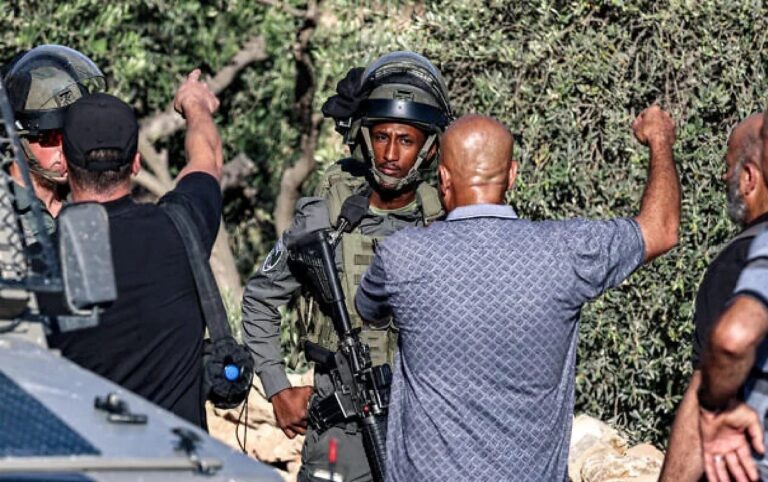
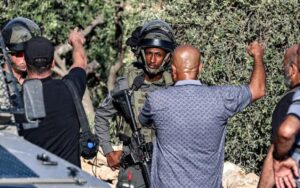
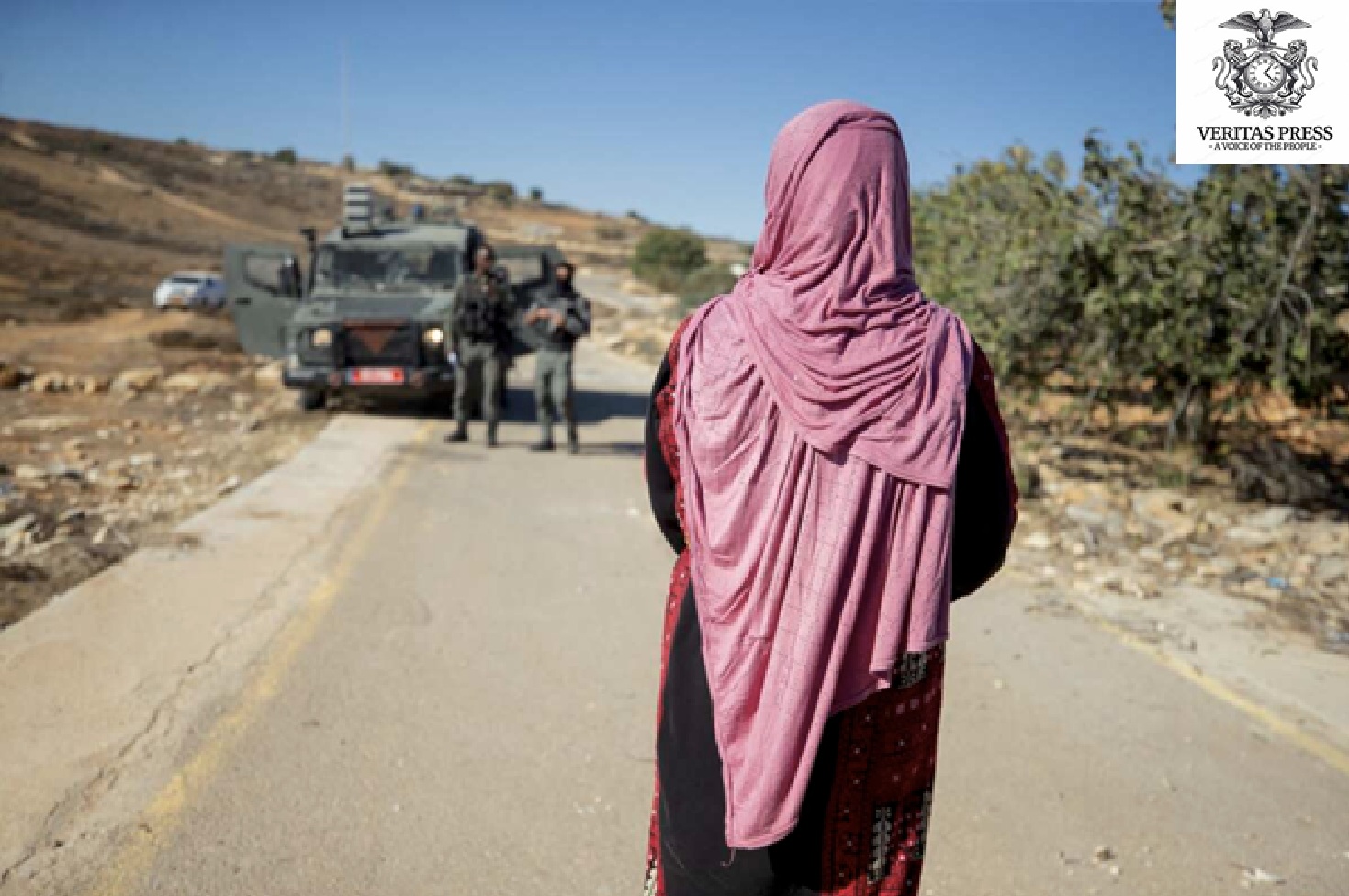
OCCUPIED WEST BANK — For generations, Palestinian families in the rugged hills of the Jordan Valley and South Hebron have endured the grinding, everyday realities of military occupation: the checkpoints, the land confiscations, the home demolitions. But a chilling new threshold has been crossed. According to a landmark new report, Israeli soldiers and settlers are now systematically employing gender-based violence, including sexual assault, forced nudity, and humiliation, as a calculated tool to shatter communities and drive Palestinians from their ancestral lands.
The report, titled “Sexual Violence and Forcible Transfer in the West Bank: How the Exploitation of Gender Dynamics Drives Displacement,” was released this week by the West Bank Protection Consortium (WBPC), a group of international humanitarian organisations led by the Norwegian Refugee Council (NRC). It presents a harrowing body of evidence: at least 16 documented cases of conflict-related sexual violence attributed to Israeli soldiers and settlers in the past three years, a figure that experts warn is likely a tiny fraction of the reality due to the immense stigma and fear survivors face.
The findings, based on 83 in-depth interviews across 10 communities, paint a portrait of a coercive environment where sexual terror is not incidental, but central to a strategy of forcible transfer.
The Tipping Point: When ‘Chronic Fear’ Becomes ‘Unbearable’.
The report’s most damning finding is that for more than 70% of displaced households, it was not the loss of a home or land that finally drove them out but the threat of sexual violence against their women and children. This threat operates on multiple levels: the immediate physical assault, the pervasive fear it instils, and the devastating, long-term social fallout.
“Participants described sexualised harassment as the moment when fear shifted from chronic to unbearable. They spoke of watching women and girls endure humiliation and of calculating what might happen next,” the report states. This “calculation” often leads to desperate, life-altering decisions made not out of choice, but under extreme duress.
One woman, her identity protected, recounted the terror of a home invasion by two female Israeli soldiers accompanied by settlers. She was ordered to strip and subjected to a painful internal search. “She described being instructed to open her legs in a way that caused pain, and she described derogatory comments and touching of intimate areas,” the report documents.
The cruelty extends far beyond physical searches. Incidents include Israeli soldiers and settlers exposing their genitals to minors, urinating on detainees, stalking women as they attempt to use latrines, and threatening rape. In one especially brutal case from October 2023, settlers and soldiers stripped, handcuffed, and beat Palestinians from the village of Wadi as-Seeq, urinated on them, and attempted to rape one man with a broom handle, then distributed humiliating photographs publicly.
More recently, in March 2026, the world witnessed the horror of Qusai Abu al-Kebash, a 29-year-old from Khirbet Humsa. Masked settlers, armed with knives and sticks, raided his community, stripped him, beat him, and bound his genitals with a zip tie before dragging him naked in front of his family, including his young children. “I thought they were going to kill me,” he told Reuters, a sentiment that encapsulates the raw terror that now defines life for countless Palestinians in Area C.
A Weapon That Targets The Fabric Of Society:
What makes sexual violence a uniquely powerful tool for displacement is its ability to penetrate the most intimate spaces and fracture the very core of Palestinian society: the family. The report highlights how this tactic targets women and children to force the relocation of entire households.
Kifaya Khraim, advocacy unit manager at the Ramallah-based Women’s Centre for Legal Aid and Counselling (WCLAC), has been documenting this grim reality. Her team has found cases of forced penetration during searches, soldiers exposing themselves to girls at checkpoints, and the public mockery of menstruating girls, all acts designed to humiliate and terrorise.
The consequences, Khraim explains, are profound. “Girls aren’t going to school, and you see early, forced marriages. These are minors, but we know their mothers and fathers are trying to protect them by sending them out of the area,” she said in a statement that underscores the impossible choices families are forced to make. The WBPC report confirms that at least six families have arranged weddings for girls as young as 15 or 16 in a desperate bid to shield them from further abuse.
“Women lose their jobs because they can’t get to work because of the sexual violence, and then decide to stay at home,” Khraim added.
This is a pattern of what the report terms “gendered coping strategies.” Fearing what might happen when they are away, men restrict women’s movement. Families separate, sending women and children to relatives in perceived safer areas, a partial transfer that often precedes full displacement. As one resident of Ras Ein al-Auja told researchers, it was the relentless harassment of his wife, daughters, and daughter-in-law by settlers who would watch and whistle at them while he was at work that finally made staying impossible. “I was terrified that something bad might happen to my family,” he said.
The Architecture Of Impunity:
This weaponisation of sexual violence does not happen in a vacuum. It thrives within a meticulously constructed “architecture of impunity,” a term used by human rights experts to describe the systemic failure, and outright refusal, of Israeli authorities to hold perpetrators accountable.
Crucially, the WBPC report notes that the sexualised attacks frequently occur in the presence of Israeli forces, who fail to intervene to stop the violence or conduct effective investigations afterwards. This sends a clear and chilling signal to both Palestinians and settlers that such crimes are tacitly permitted.
“Sexualised violence is a tool in this larger realm of violence,” Allegra Pacheco, Chief of Party for the West Bank Protection Consortium and a lead author of the report, told The New Arab. “It’s not a pattern of a one‑off type of case. It’s continuous. This violence goes on and on until the community – basically, until most of them – end up leaving.”
The most staggering recent example of this impunity came in March 2026, when Israel’s Military Advocate General, Maj.-Gen. Itay Ofir formally withdrew criminal charges against five IDF reservists from the Force 100 unit who had been accused of the brutal rape and abuse of a Palestinian detainee at the notorious Sde Teiman detention centre. The assault, which occurred in July 2024, was captured on video that showed soldiers forming a human shield around the victim as he was stabbed in the rectum with a sharp object, causing a ruptured bowel and broken ribs.
Despite this overwhelming evidence, the military cited “procedural difficulties regarding the transfer of information” that undermined the soldiers’ “right to a fair trial,” and noted that the victim, a Gazan civilian who had never been charged with a crime, was no longer in the country to testify.
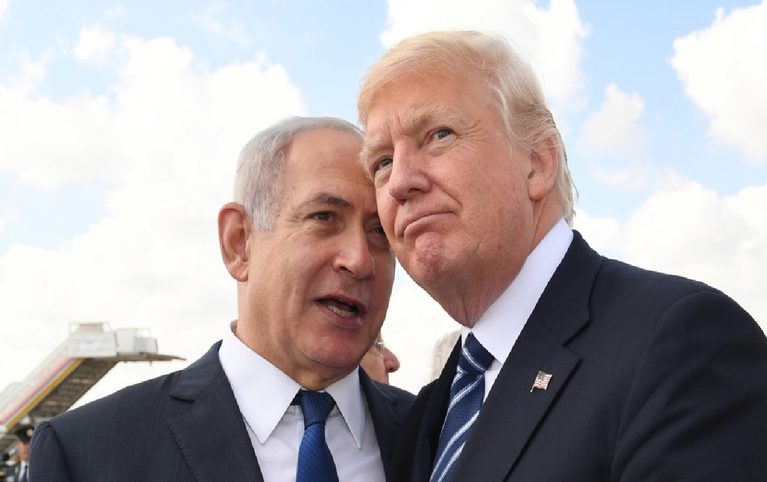
Senior Israeli officials celebrated the decision. Prime Minister Benjamin Netanyahu praised the move, stating, “It is unacceptable that it took so long to close a case that was conducted in a criminal manner against IDF fighters who are confronting the worst of our enemies… The State of Israel must pursue its enemies, not its heroic fighters.”
Milena Ansari, head of the occupied Palestinian territory department at Physicians for Human Rights – Israel, offered a stark assessment of the message this sends. “Israeli officials are effectively green-lighting the use of sexual violence when they decide not to prosecute the most high-profile case, which is extremely well documented,” Ansari said. “There is a culture of accepting sexualised assault against Palestinians. There was a discussion in the Knesset about whether or not it is OK to rape a Palestinian. Even the prime minister didn’t say that Israel opposes raping detainees.”
This culture of impunity is not limited to the military. For settlers, the likelihood of facing justice for violence against Palestinians is virtually non-existent. Human rights organisations report that around 93% of investigations into settler attacks are closed without charges. The sheer scale of the problem led former Israeli Prime Minister Ehud Olmert to issue a stark warning in an interview with The Guardian, calling for the International Criminal Court to intervene to save Palestinians from “Jewish terrorists.”
A Broader, Systematic Campaign:
The sexual violence documented by the WBPC is the sharpest point of a much larger spear. It is the latest, most brutal escalation in a long-standing and increasingly aggressive campaign to empty Area C of the West Bank, the roughly 60% of the territory under full Israeli military and administrative control.
The numbers tell a clear story of accelerating displacement. According to the UN Office for the Coordination of Humanitarian Affairs (OCHA), more than 2,500 Palestinians, including over 1,100 children, have been displaced across the West Bank so far in 2026. Settler violence and access restrictions are the primary drivers, accounting for 75% of these displacements. By late March 2026, the number of people displaced due to settler attacks alone had already surpassed the total for the entirety of 2025.
This occurs alongside other coercive measures: home demolitions, land confiscations, and the denial of building permits, which collectively create what many communities describe as an “unliveable” environment. The WBPC report found that 84% of households surveyed had experienced settler violence as part of this broader matrix of systemic coercion.
A March 2025 report from the UN Independent International Commission of Inquiry on the Occupied Palestinian Territory concluded that sexual and gender-based violence has been increasingly used by Israeli security forces as “a method of war” since October 7, 2023. The Commission found that acts of “forced public stripping and nudity, sexual harassment including threats of rape, as well as sexual assault” had become “standard operating procedure,” and that more severe forms of violence were “committed either under explicit orders or with implicit encouragement by Israel’s top civilian and military leadership.”
‘No Genuine Choice But To Flee’: The Legal Case For Forcible Transfer.
The WBPC report is not merely a catalogue of atrocities; it is a meticulously constructed legal argument that these actions constitute the war crime of forcible transfer.
Under international humanitarian law, forcible transfer does not require physical force. As the report clearly states, “It occurs when coercive conditions leave civilians with no genuine choice but to flee.” The evidence that sexualised violence creates precisely those conditions is now overwhelming.
The report places these findings in the context of the International Court of Justice’s (ICJ) historic 2024 advisory opinion, which concluded that Israel’s decades-long occupation and annexation of Palestinian territory are unlawful. The opinion reaffirmed that all states have an obligation not to recognise the illegal situation and must cooperate to bring it to an end. The WBPC argues that the patterns of sexual violence documented in its report are a direct component of this unlawful situation, triggering the international community’s legal obligations to act.
The report also notes that the documented patterns reflect several warning signs identified in the United Nations Framework of Analysis for Atrocity Crimes, including discrimination targeting a civilian population, tolerance of violence by non-state actors, and the absence of effective accountability.
The Unravelling Of Israeli Justice On The World Stage:
The dismissal of the Sde Teiman rape case has had a profound impact on Israel’s standing before international courts, effectively dismantling one of its core legal defences. As legal analysts have pointed out, at the heart of Israel’s defence against genocide charges at the ICJ was the claim that the country possesses a “robust and independent” legal system capable of addressing any transgressions. The events surrounding the Sde Teiman case have rendered this argument hollow.
The sequence of events is damning. After the leaked video of the rape emerged, Israel’s top military lawyer, Maj. Gen. Yifat Tomer-Yerushalmi was forced to resign in October 2025 after she was accused of being the source of the leak, an effort she said was intended to counter “false propaganda” from right-wing politicians who were defending the soldiers. In response, Defence Minister Israel Katz called the leaked video a “blood libel” against Israeli troops. Her replacement, Maj.-Gen. Itay Ofir, then withdrew the charges against the soldiers just months later, a decision that was widely seen as bowing to immense political pressure.
This episode, as one legal commentator noted, exposes the “moral squalor” of a system that prioritises the protection of “heroic warriors” over accountability for the documented rape of a civilian.
The Silence Of The State And The Cries From The Ground:
For its part, the Israeli government has consistently rejected such allegations. When the UN Secretary-General sent a letter to Israel’s ambassador in August 2025 warning that the UN had “credible information” of sexual violence against detainees, Ambassador Danny Danon dismissed the claims as “steeped in biased publications.”. Prime Minister Netanyahu has branded the UN Human Rights Council an “anti-Israel circus.”.
The Israel Defence Forces did not respond to questions about the allegations of sexual abuse by soldiers documented in the WBPC report.
Yet on the ground, the voices of Palestinians cut through this official denial. One man, explaining why his family finally fled, told researchers: “This was the last incident that happened before we left. It was the straw that broke the camel’s back. This method is what forced us to leave our land in exchange for protecting the women.”
Another account from the report observes a new and terrifying reality: “There used to be an unwritten rule that women and children were off-limits. That completely does not exist anymore.”
These are not just stories of violence; they are testimonies to the calculated, brutal undoing of a society’s will to remain on its land. As the WBPC’s Allegra Pacheco concluded, “This is how communities are emptied: not in a single moment, but through repeated attacks, fear inside the home, and pressure that makes ordinary life impossible.” The world is now faced with the question of whether it will recognise this as the war crime of forcible transfer, and whether it has the will to act.
Source: Multiple News Agencies
Submissions:
For The Secure Submission Of Documentation, Testimonies, Or Exclusive Investigative Reports From Any Global Location, Please Utilise The Following Contact Details For Our Investigations Desk: enquiries@veritaspress.co.uk or editor@veritaspress.co.uk
Help Support Our Work:
Popular Information is powered by readers who believe that truth still matters. When just a few more people step up to support this work, it means more lies exposed, more corruption uncovered, and more accountability where it’s long overdue.
Help Protect Independent Journalism, Which Is Currently Under Attack.
If you believe journalism should serve the public, not the powerful, and you’re in a position to help, becoming a DONATOR or a PAID SUBSCRIBER truly makes a difference.
DONATION APPEAL: If You Found This Reporting Valuable, Please Consider Supporting Independent Journalism.
Help Support Our Work – We Know, We Know, We Know …
Seeing these messages is annoying. We know that. (Imagine what it’s like writing them … )
Your support fuels our fearless, truth-driven journalism. In unity, we endeavour to amplify marginalised voices and champion justice, irrespective of geographical location.
But it’s also extremely important. One of Veritas Press’s greatest assets is its reader-funded model.
1. Reader funding means we can cover what we like. We’re not beholden to the political whims of a billionaire owner. We are a small, independent and impartial organisation. No one can tell us what not to say or what not to report.
2. Reader funding means we don’t have to chase clicks and traffic. We’re not desperately seeking your attention for its own sake: we pursue the stories that our editorial team deems important and believe are worthy of your time.
3. Reader Funding: enables us to keep our website and other social media channels open, allowing as many people as possible to access quality journalism from around the world, particularly those in places where the free press is under threat.
We know not everyone can afford to pay for news, but if you’ve been meaning to support us, now’s the time.
Your donation goes a long way. It helps us:
- Keep the lights on and sustain our day-to-day operations
- Hire new, talented independent reporters
- Launch real-time live debates, community-focused shows, and on-the-ground reporting
- Cover the issues that matter most to our communities, in real time, with depth and integrity
We have plans to expand our work, but we can’t do it without your support. Every contribution, no matter the size, helps us stay independent and build a truly people-powered media platform.
If you believe in journalism that informs, empowers, and reflects the communities we serve, please donate today.
GENEVA — A United Nations fact-finding mission has concluded there are “reasonable grounds to believe”
Iran’s GDP is projected to contract by 5.4 to 6.1% in 2026, its worst performance
The Trump administration is preparing a $2.8 billion weapons package for Israel containing 40,000 2,000-pound

Film alleges mass civilian deaths are routinely built into military decisions amid Israel’s genocidal war
The Israeli rights group says violence, displacement, economic strangulation, and settlement expansion form part of

Houthi forces have captured the historic Red Sea port of Mocha and are advancing on
London’s historic sanctions against Israeli settlements mark a watershed moment in UK foreign policy, but
With 95% of Gaza’s population now wholly dependent on aid and more than 90% stripped
India calls for Kashmir and Ladakh to appear only on its official map after a
ISLAMABAD – In the high-stakes political theatre of Pakistan, the battleground has shifted from the