Kamran Faqir is a volunteer investigative journalist and writer committed to exposing hidden truths and amplifying underreported stories. Driven by social justice, he brings sharp insight and fearless truth-telling to independent journalism. NUJ registered.
Original Article Date Published:
Article Date Modified:
12 minutes
Views:333
Listen to this article
Help support our mission, donate today and be the change. Every contribution goes directly toward driving real impact for the cause we believe in.
Chancellor says Iran crisis is ‘not our war, but it is pushing up bills for families and businesses’
LONDON, UK – The conflict ignited by the US-Israeli strikes on Iran on 28 February 2026 was, for many in the UK, a distant crisis. It was a war of geopolitical manoeuvring and regional power plays, a conflict that Chancellor Rachel Reeves would later declare “Not Our War”. Yet seven weeks on, the shockwaves from the Strait of Hormuz are no longer a matter of foreign policy. They are now being measured in pence per litre at the petrol pump, in the rising cost of a weekly shop, and in the chilling projections for winter energy bills. The Office for National Statistics (ONS) delivered the first hard evidence of this economic contagion on Wednesday, revealing that the Consumer Prices Index (CPI) had accelerated to 3.3% in March.
This figure, up from 3% in February, is more than a statistical uptick. It represents the first tangible blow from a war that threatens to unravel the government’s core economic narrative, that it had brought stability and would ease the cost-of-living crisis. The data, and the stark warnings that accompany it, expose a fundamental vulnerability in the UK economy: its profound and painful exposure to a global energy market now held hostage by a single, contested waterway.
The Strait’s Stranglehold: How A Global Crisis Became A Local Reckoning.
To understand the 3.3% figure, one must look 3,500 miles away to the Strait of Hormuz. This narrow passage, through which roughly a fifth of the world’s oil normally transits, has become the central battleground of the US-Iran conflict. Following the February strikes, Tehran effectively closed the strait, a move it has since weaponised with brutal efficiency, reopening and re-closing it as a lever in fraught, and so far unsuccessful, peace negotiations.
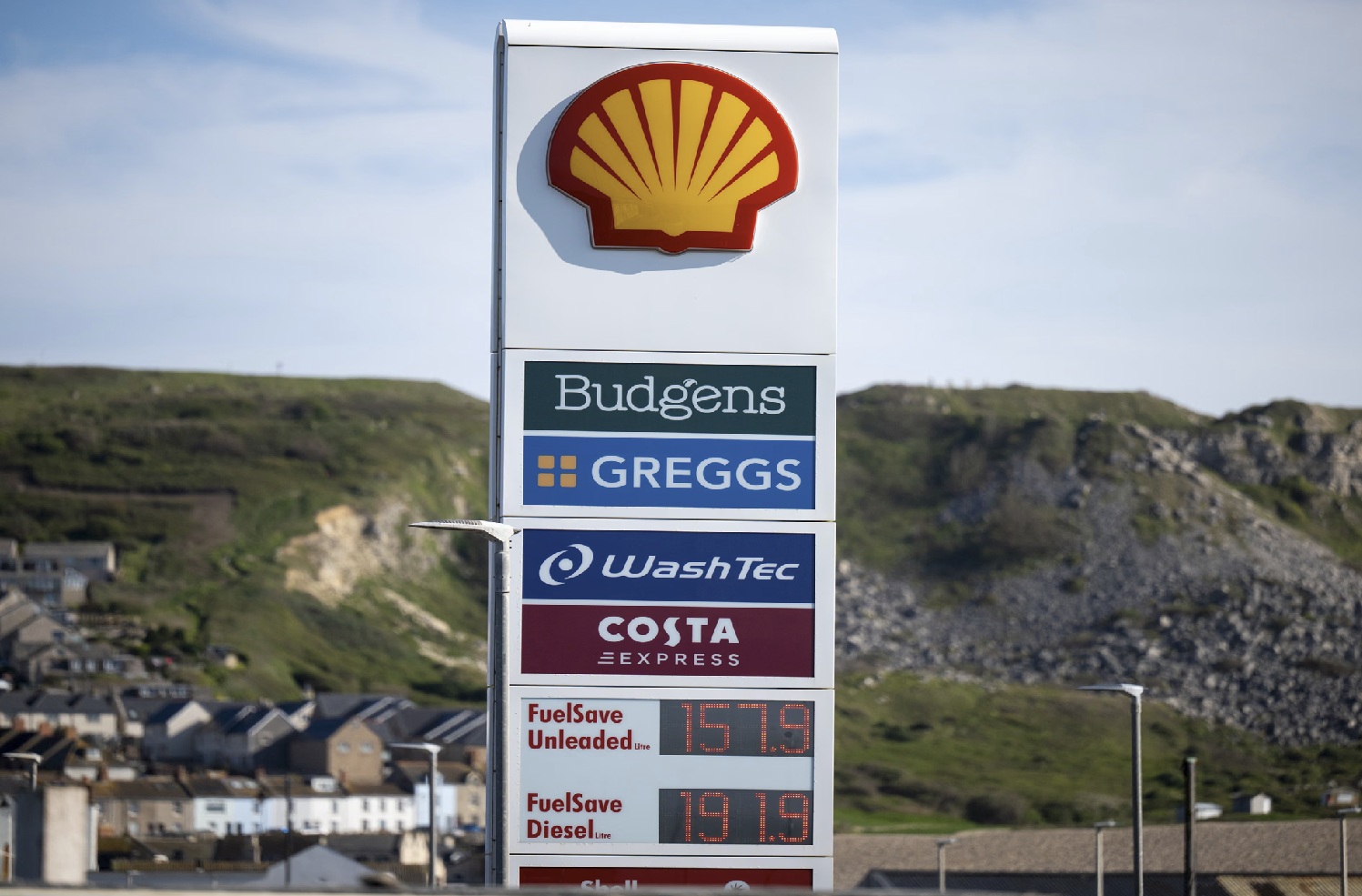
The immediate and most visceral impact for British consumers has been felt at the fuel pumps. RAC data from 16 April showed the average price of petrol had surged to 158.1p per litre, a 25p increase since the war began, while diesel soared by 49p to an eye-watering 191.2p. ONS Chief Economist Grant Fitzner noted that motor fuels saw their “largest increase for over three years”. The pain, however, is not confined to the forecourt. Producer input prices, a key indicator of future consumer inflation, rose by a staggering 4.4% in March, driven by higher crude oil and petrol costs. This is the upstream pressure that will, in the coming months, cascade through supply chains, inflating the price of everything from food to manufactured goods.
Reeves’s Dilemma: A £16 Billion Shadow Over The Treasury.
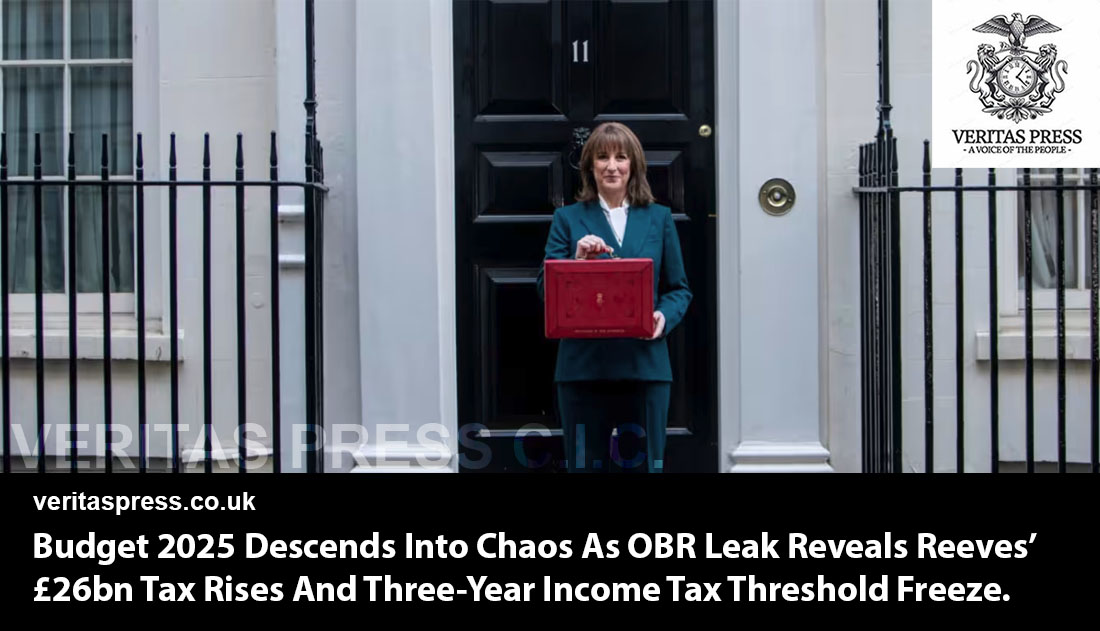
The inflation spike has landed a direct blow on Chancellor Rachel Reeves, for whom cutting the cost of living was a foundational pledge. Her response, that this is “not our war” but it is “pushing up bills”, is a politically necessary attempt to deflect blame while acknowledging the pain. Pointing to pre-war measures such as the £117 cut to energy bills and the fuel duty freeze, Reeves insists her economic plan has “put us in a stronger position” to weather the storm.
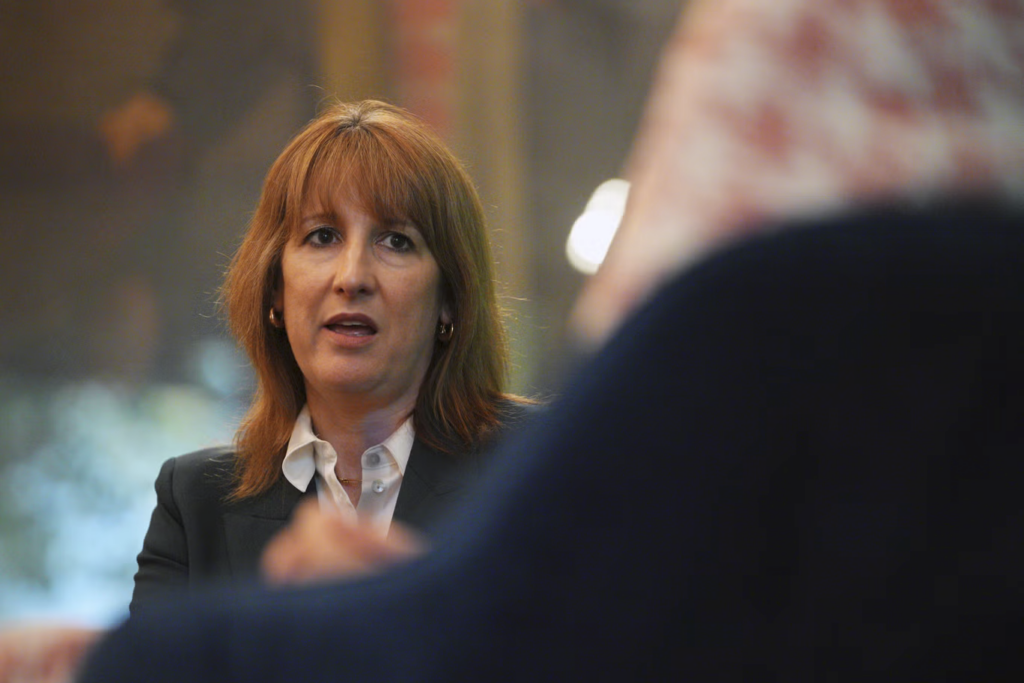
The chancellor faces yet another blow after inflation rose 3.3 per cent in the year to March
However, a new, deeply troubling analysis from the Resolution Foundation suggests this position is far more precarious than the government’s rhetoric implies. The think tank’s modelling indicates that a “severe but plausible” escalation of the conflict could wipe out £16 billion a year from the public finances by 2029-30, eradicating three-quarters of the fiscal headroom that Reeves carefully constructed in her Autumn Budget. For the average household, the foundation projects a £480 hit to finances this year alone, with real incomes now expected to decline by 0.6%, a sharp reversal from the previously forecast 0.9% growth.
This financial squeeze is not an abstract threat. It is already manifesting in the charitable and emergency sectors. The Wales Air Ambulance Service has warned that rising fuel costs could add an extra £45,000 a month to its operating expenses, forcing it to launch a public appeal. Midlands Air Ambulance has seen its fuel costs double. These are the essential, life-saving services that are now being starved of resources, not by NHS cuts, but by a war 3,500 miles away.
A Nation Braced For A Second Shock: The Looming Winter Of Discontent.
While the March inflation figure is a stark warning, it is the outlook for the coming months that is truly alarming. The UK’s energy price cap, set at £1,641 before the conflict, is due for revision in July. Analysts now forecast it will leap to nearly £2,000 a year for a typical household, with some predictions reaching £2,100 or even £2,500. This would represent a second, and potentially more devastating, economic shock, arriving just as the country heads into the winter months.
The burden will not be shared equally. For the estimated 1.5 million UK households, predominantly in rural areas, that rely on domestic heating oil, the crisis is already acute and largely unprotected by the energy price cap. As Simon Francis, a member of the UK’s End Fuel Poverty Coalition, told Xinhua: “In less than half a month, the cost of filling a heating oil tank has doubled”. The government has responded with a £53 million emergency fund for heating oil customers, a sum that experts at Liverpool John Moores University warn is “insufficient” and merely a short-term band-aid over a deep, systemic wound. Caroline Abrahams, head of the charity “Age UK,” highlighted the devastating impact on the elderly, many of whom had already cut back on heating this winter even before the latest price surges.
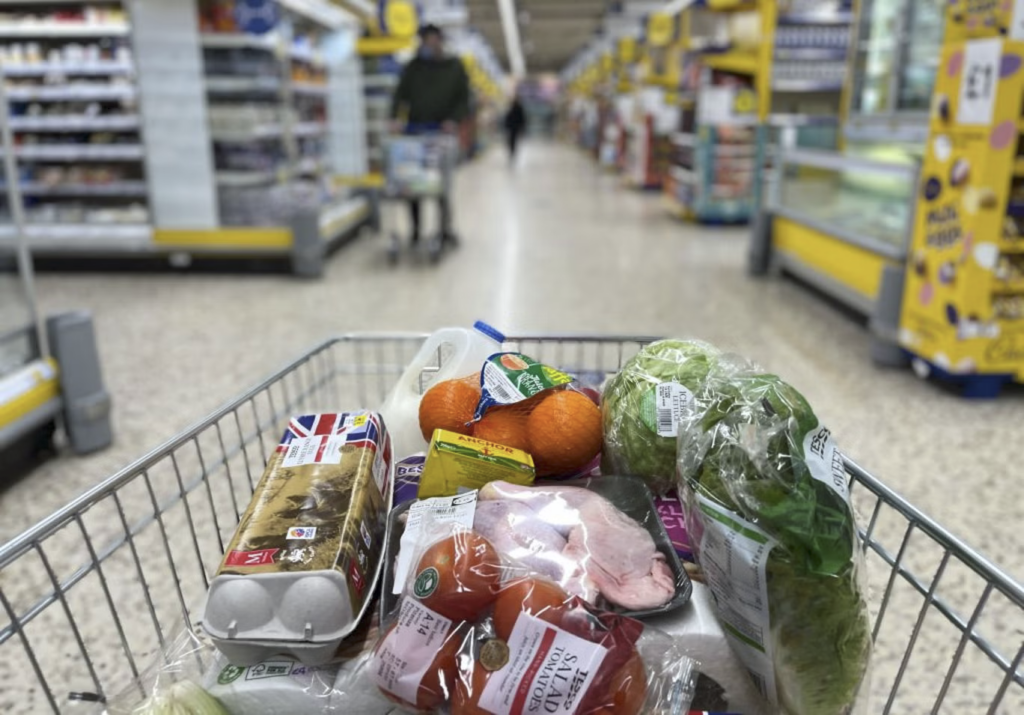
Food prices, including chocolate and fish, have all contributed to rising inflation, experts say. AFP/Getty
The fallout is rippling across the entire economy. In the hospitality sector, UKHospitality chair Kate Nicholls warned that businesses are “highly exposed” and “cannot be expected to pick up the bill,” warning of inevitable “price rises at the till” and further driving inflation. Independent pubs are bracing for “devastating” energy costs, while two-thirds of hospitality firms are planning job cuts. A survey revealed businesses cut jobs at the fastest rate in 2026 throughout March, with high street retailers and hospitality the worst affected. In agriculture, the story is equally grim. Farmers are grappling with a 40% surge in fertiliser costs and a 100% increase in red diesel prices, costs they warn will inevitably be passed on to consumers, fuelling a food inflation spike. The Food and Drink Federation has predicted food inflation could hit 9% by December as the Hormuz closure hits global fertiliser supplies.
The Bank of England’s Impossible Equation:
For the Bank of England, the war has presented a near-impossible policy dilemma. Before the conflict, the central bank was widely expected to cut interest rates as inflation cooled toward the 2% target. Now, that path has been obliterated. Governor Andrew Bailey has cautioned that markets are “getting ahead of themselves” by pricing in rate hikes, and a Reuters poll of 62 economists found a majority expect the Bank to hold rates steady through the rest of 2026. A 53% majority of economists now see Bank Rate unchanged at 3.75% for the rest of the year, with only 14 expecting at least one hike. The reason is the spectre of “stagflation”, a toxic combination of slow growth, high inflation, and rising unemployment that would be exacerbated by raising borrowing costs. The IMF has already downgraded UK growth to 0.8% for 2026, the sharpest markdown of any G7 nation. Raising rates to fight imported inflation would risk plunging the economy into a deep recession. Doing nothing, however, risks allowing inflation expectations to become unanchored, requiring even more painful action later. As Michael Saunders, a former MPC member, noted: “The cost of keeping rates too low and then having to catch up would be really high.”
A Failure Of Foresight: The Unlearned Lessons Of 2022.
The most damning critique of the government’s response is not that it is failing to mitigate the crisis, but that it failed to adequately prepare for it. The 2022 energy shock, triggered by Russia’s invasion of Ukraine, should have been a clarion call to accelerate the UK’s transition to energy independence. Yet, two and a half years on, the nation finds itself once again at the mercy of a single, volatile chokepoint. The UK’s heavy reliance on imported gas and oil, coupled with a housing stock that is among the least energy-efficient in Europe, means that any global supply shock is amplified into a national economic crisis.
Ed Miliband, the Energy Secretary, has seized the moment to argue that “clean energy is now the only route to financial security” and has pledged to “double down” on the green energy mission. While this long-term vision is essential, it offers little solace to a family choosing between heating and eating next winter. The government’s immediate interventions, the £117 energy bill cut and the heating oil fund, are politically expedient but economically marginal against the scale of the looming price cap rise. The Resolution Foundation’s call for a targeted “social tariff” to protect the poorest households has gone unanswered, while the political imperative to offer universal, but unfunded, support risks pushing interest rates even higher. The think tank warned that borrowing £20 billion for additional universal support would push up mortgage rates by 0.4 percentage points.
The Political Reckoning: A Crisis Not Of Our Making, But A Response We Control.
As the ceasefire between the US and Iran remains fragile and negotiations falter, the outlook is grim. The Bank of England has indicated that the full inflationary impact of the war has yet to be felt, and many economists warn the headline rate could breach 4% by autumn. The Resolution Foundation’s “severe but plausible” scenario is not science fiction; it is a realistic projection of what happens when a global supply shock collides with a brittle, energy-dependent economy.
The government’s central defence, that “this is not our war”, is both true and wholly inadequate. While the UK did not start the conflict in the Middle East, it has, through decades of failed energy and housing policy, ensured that its citizens would bear a disproportionate share of the economic pain. The crisis is a brutal indictment of a political class that has consistently prioritised short-term fiscal fixes over long-term national resilience. As Unite General Secretary Sharon Graham warned, “Workers must not pay the price yet again, for a crisis not of their making”. The question now is not whether the war will make Britain poorer; it already is, but whether the government can finally learn the lessons of this crisis before the next one arrives, and whether it has the political courage to implement the deep, structural reforms needed to protect its citizens from the economic fallout of a world it cannot control.
Source: Multiple News Agencies
Submissions:
For The Secure Submission Of Documentation, Testimonies, Or Exclusive Investigative Reports From Any Global Location, Please Utilise The Following Contact Details For Our Investigations Desk: enquiries@veritaspress.co.uk or editor@veritaspress.co.uk
Help Support Our Work:
Popular Information is powered by readers who believe that truth still matters. When just a few more people step up to support this work, it means more lies exposed, more corruption uncovered, and more accountability where it’s long overdue.
Help Protect Independent Journalism, Which Is Currently Under Attack.
If you believe journalism should serve the public, not the powerful, and you’re in a position to help, becoming a DONATOR or a PAID SUBSCRIBER truly makes a difference.
DONATION APPEAL: If You Found This Reporting Valuable, Please Consider Supporting Independent Journalism.
Help Support Our Work – We Know, We Know, We Know …
Seeing these messages is annoying. We know that. (Imagine what it’s like writing them … )
Your support fuels our fearless, truth-driven journalism. In unity, we endeavour to amplify marginalised voices and champion justice, irrespective of geographical location.
But it’s also extremely important. One of Veritas Press’s greatest assets is its reader-funded model.
1. Reader funding means we can cover what we like. We’re not beholden to the political whims of a billionaire owner. We are a small, independent and impartial organisation. No one can tell us what not to say or what not to report.
2. Reader funding means we don’t have to chase clicks and traffic. We’re not desperately seeking your attention for its own sake: we pursue the stories that our editorial team deems important and believe are worthy of your time.
3. Reader Funding: enables us to keep our website and other social media channels open, allowing as many people as possible to access quality journalism from around the world, particularly those in places where the free press is under threat.
We know not everyone can afford to pay for news, but if you’ve been meaning to support us, now’s the time.
Your donation goes a long way. It helps us:
Keep the lights on and sustain our day-to-day operations
Hire new, talented independent reporters
Launch real-time live debates, community-focused shows, and on-the-ground reporting
Cover the issues that matter most to our communities, in real time, with depth and integrity
We have plans to expand our work, but we can’t do it without your support. Every contribution, no matter the size, helps us stay independent and build a truly people-powered media platform.
If you believe in journalism that informs, empowers, and reflects the communities we serve, please donate today.
Kamran Faqir is a volunteer investigative journalist and writer committed to exposing hidden truths and amplifying underreported stories. Driven by social justice, he brings sharp insight and fearless truth-telling to independent journalism. NUJ registered.
SEATTLE, TEHRAN — The U.S. Department of Homeland Security (DHS) will allow Iran’s national football team to enter the country 48 hours before their critical World Cup match against Egypt on Friday, a modest concession in a tournament where Team Melli’s travel conditions have sparked claims of oppression and competitive disadvantage.