

Help support our mission, donate today and be the change. Every contribution goes directly toward driving real impact for the cause we believe in.
I. The Unravelling Of A Regional Order
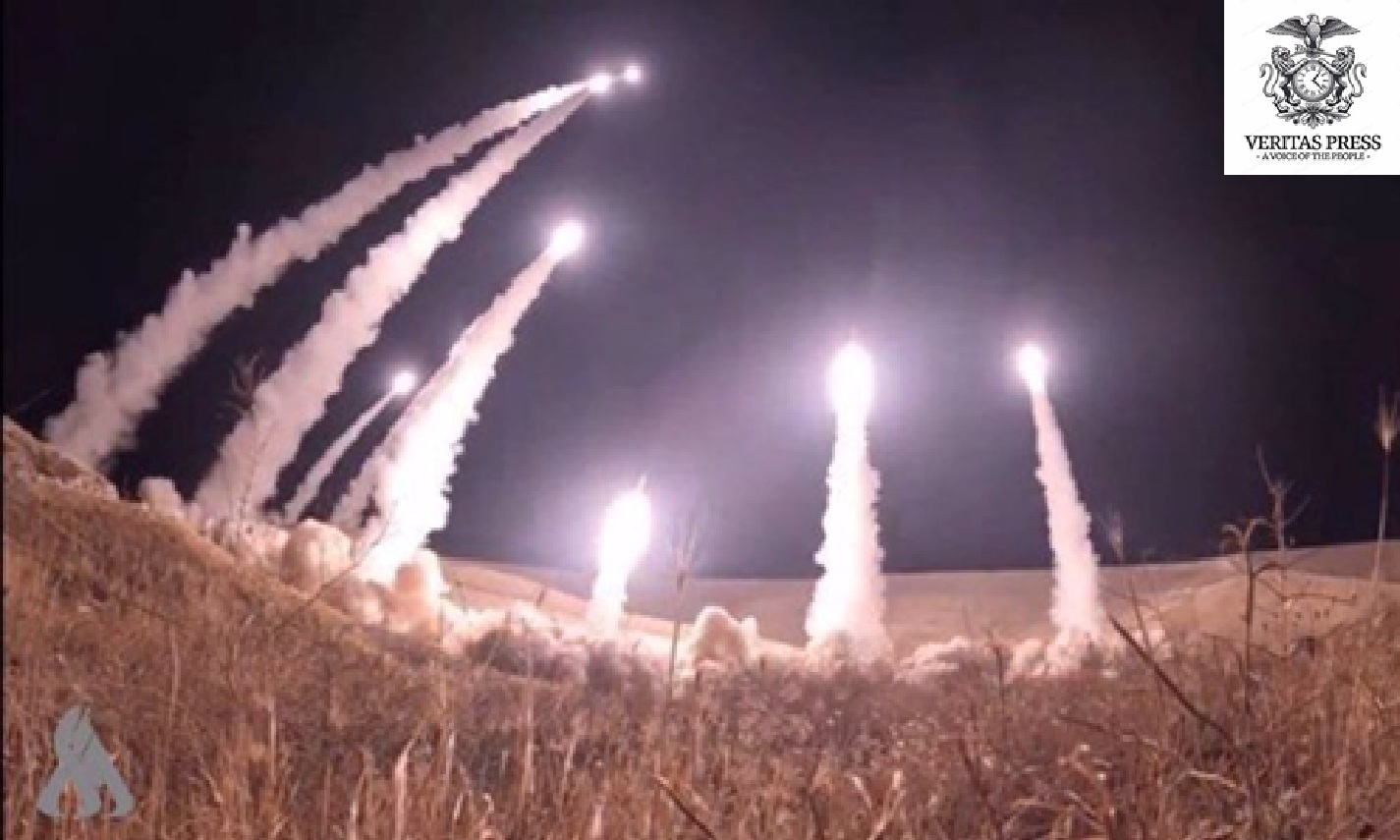
TEHRAN – In the pre-dawn hours of March 27, 2026, the Islamic Revolution Guards Corps (IRGC) announced the execution of what it designated as the 83rd wave of Operation True Promise 4, a sustained, multi-front retaliatory campaign that has fundamentally altered the strategic landscape of West Asia. The strikes, targeting American and Israeli military installations across the region with what Tehran describes as “advanced missiles and drones,” represent not merely a military escalation but a profound reconfiguration of power dynamics that have defined the region for decades.
What began as a devastating US-Israeli joint military campaign following the February 28 assassination of Iran’s Supreme Leader, Ayatollah Seyyed Ali Khamenei, has evolved into a protracted conflict that has seen Iranian forces and their regional allies inflict what they characterise as “pounding, heavy blows” on American and Israeli strategic infrastructure. The operation’s name, True Promise, carries deliberate theological and political weight, invoking the Islamic Republic’s long-standing narrative of eventual victory over its adversaries.
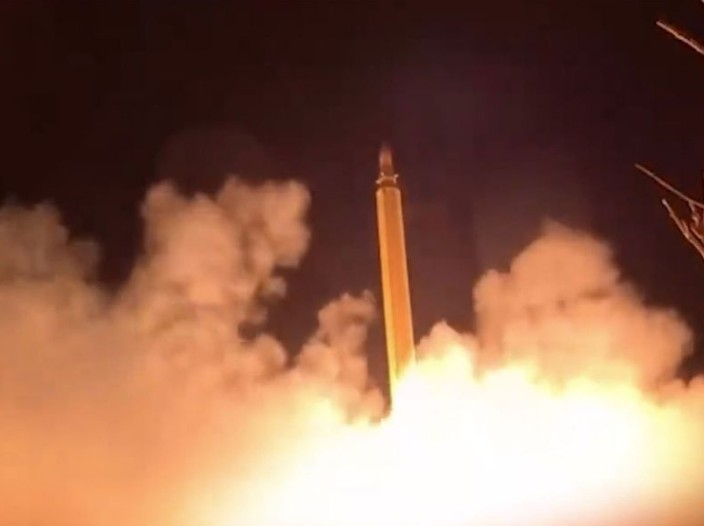
This investigative report examines the claims, counter-claims, and geopolitical ramifications of Operation True Promise 4, scrutinising official narratives against available evidence, analysing the strategic calculations of all parties involved, and assessing the human and regional consequences of a conflict that shows no signs of abating.
II. THE CATALYST: February 28 And The Assassination Of Ayatollah Khamenei
The current cycle of violence traces directly to February 28, 2026, a date that Iranian officials describe with language reserved for national trauma. On that day, a coordinated US-Israeli military operation targeted Tehran and several other Iranian cities, resulting in the death of Ayatollah Seyyed Ali Khamenei, who had served as Supreme Leader since 1989 and innocent civilians.
According to Iranian state media, the attacks also killed “some top-ranking military commanders” and “over 170 schoolchildren in Minab”, a detail that, if verified, would represent one of the deadliest single incidents involving civilians in recent regional conflicts. The IRGC’s official statements consistently frame the subsequent retaliatory operations as a direct response to this “unprovoked act of aggression,” a narrative that has been echoed across the Iranian political spectrum.
The international community’s response to the assassination remains fractured. Western governments, while rarely commenting openly on intelligence operations, have largely maintained that Iran’s nuclear program and regional activities necessitated a robust response. Meanwhile, Russia and China have called for restraint without explicitly condemning the US-Israeli action.
Dr. Reza Marashi, former director of research at the National Iranian American Council and currently a visiting scholar at the University of Tehran’s Faculty of World Studies, offers context: *”The assassination of a sitting head of state, particularly one with Khamenei’s institutional authority, represented a fundamental break with the unwritten rules of engagement that had governed US-Iran tensions since the 1979 revolution. Regardless of one’s view of the Islamic Republic, the strategic implications are staggering. Washington effectively signalled that no red line, including the sanctity of a nation’s leadership, would constrain its military actions.”*
III. OPERATION TRUE PROMISE 4: Claims, Targets, And Military Capabilities
A. The Scale And Scope Of Iranian Strikes
According to statements released by the IRGC’s Public Relations division, the 83 waves of Operation True Promise 4 have systematically targeted American and Israeli military assets across the region. The latest strikes, announced on March 27, focused on:
- Storage tanks and oil depot in Ashdod — a major Israeli port city
- Military personnel site in the Modi’in settlement
- US military information exchange centre (location unspecified in official statements)
- American military bases at Al-Dhafra and Al-Udeiri (United Arab Emirates)
- Maintenance and storage hangars at Ali Al-Salem Air Base (Kuwait)
- Fuel tanks and Patriot missile system repair hangar at Sheikh Isa Base (Bahrain)
The geographic distribution of these claimed targets is significant. They span multiple Gulf Cooperation Council (GCC) states, the UAE, Kuwait, and Bahrain, indicating either Iranian strike capabilities extending across the Persian Gulf or the presence of US military infrastructure within close proximity to Iranian territorial waters.
The IRGC’s statement emphasised the use of “a combination of advanced weaponry, including long-range and medium-range systems, solid and liquid fuel missiles, precision-strike and multi-warhead capabilities, as well as suicide and loitering drones.” This represents a notable evolution from Iran’s previous military engagements, which typically relied on proxy forces or limited ballistic missile barrages.
Earlier waves of the operation reportedly struck over 70 sites in the occupied Palestinian territories, including Ben Gurion Airbase, Rafael defence industries facilities, Haifa port, Dimona, and Khedera. The Iranian Navy also claimed to have shot down a US F-18 fighter jet over Chabahar, which it described as “the fourth confirmed US fighter kill by Iran’s domestically developed systems.”
B. Assessing Iranian Military Claims
Independent verification of these claims presents significant challenges. The Iranian government has imposed strict restrictions on foreign journalists, and the US Department of Defence has declined to comment on specific operational details, citing “ongoing military operations.”
However, open-source intelligence analysts have identified patterns consistent with some of Iran’s assertions. Satellite imagery obtained by independent monitoring groups shows damage to infrastructure at several Gulf military facilities in recent weeks, though attribution remains contested.
Michael Knights, a senior fellow at The Washington Institute for Near East Policy who specialises in Gulf security, offers a measured assessment: *”Iran has clearly demonstrated an expanded strike envelope. The sheer volume of ordnance employed, over 80 waves of attacks in less than a month, suggests either a massive pre-existing stockpile or, more likely, an ongoing resupply channel that remains operational despite international sanctions. What we’re seeing is a test of the limits of both US air defence systems and the willingness of Gulf states to host American forces under sustained bombardment.”*
The IRGC’s claim of 2,500 Israeli casualties “dead or wounded” following multiple waves of strikes represents a figure that, if accurate, would constitute one of the most costly military engagements for Israel since the 1973 Yom Kippur War. Israeli authorities have released only limited casualty information, citing operational security, but have acknowledged “losses” and called up reserve units.
IV. THE HUMAN SHIELD CONTROVERSY: A Critical Examination
A. The Irgc’s Warning To Civilians
Perhaps the most legally and ethically significant development in Operation True Promise 4 has been the IRGC’s repeated warnings to civilians in Gulf states to distance themselves from US military personnel and facilities. On March 27, the IRGC issued a statement addressing the “noble people of the West Asia region,” declaring:
“The cowardly American and Zionist forces, who lack the courage and ability to defend their military bases, are attempting to use innocent people as human shields out of fear of the fire from Islamic fighters by leveraging civilian facilities.”
The statement continued: “Since it is our duty to eliminate the terrorist forces of the US and the usurping (Zionist) regime, who recklessly kill Iranian civilians and assassinate individuals, wherever we find them, we recommend that you urgently leave the locations of the American forces to avoid any harm coming to you.”
This warning was reinforced by Iran’s Foreign Minister Seyed Abbas Araghchi, who posted on the social media platform X: “From the outset of this war, US soldiers fled military bases in GCC to hide in hotels and offices. They use GCC citizens as a human shield.”
B. The US Response And Independent Verification
The characterisation of US forces using civilian infrastructure as “human shields” represents a serious allegation under international humanitarian law. The Geneva Conventions explicitly prohibit using civilians to shield military objectives from attack.
Brigadier General Abolfazl Shekarchi, the spokesperson for the Iranian armed forces, amplified this claim in remarks on March 26, stating that US personnel are “now forced to abandon military bases and take refuge in civilian hotels”, a move he condemned as “an attempt by the US to use civilian structures for military cover.”
“The Americans, who once relied on their military bases to establish a presence, are now hiding in hotels and relying on the civilian areas of our region as a protective shield,” Shekarchi said. “This marks a humiliating retreat and an admission of their inability to defend themselves.”
On-the-ground reporting from Gulf states presents a more complex picture. A journalist based in Dubai, speaking on condition of anonymity due to security concerns, told this reporter: “There’s no question that some US military personnel have relocated to commercial hotels in the Emirates. But the picture is more nuanced than either side presents. Some of these relocations appear to be operational dispersal, a standard military tactic to avoid presenting concentrated targets. Others may genuinely be using civilian areas as cover, but proving intent is extraordinarily difficult.”
Human rights organisations have expressed concern about the implications of both US military practices and Iranian targeting policies.
Sarah Leah Whitson, executive director of Democracy for the Arab World Now (DAWN), stated: “Both parties to this conflict bear responsibilities under international law. The United States must ensure its forces are not improperly using civilian infrastructure. Iran, in turn, must ensure that its targeting, even against military objectives, complies with principles of distinction and proportionality. The IRGC’s warnings to civilians, while unusual, do not absolve it of the obligation to verify targets and minimise civilian harm.”
V. THE STRAIT OF HORMUZ: Chokepoint Confrontation
A. Closure And The Naval Dimension
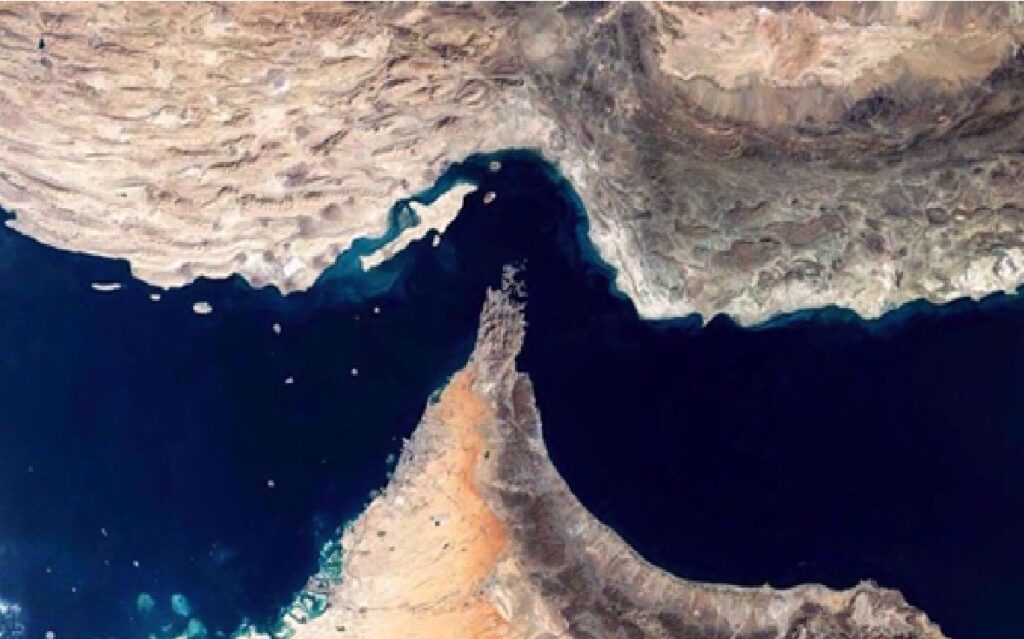
In a parallel development with profound economic implications, the IRGC Navy announced on March 27 that the Strait of Hormuz, the world’s most critical oil transit chokepoint, is now closed to vessels “from and to the ports of countries allied with and supporting the United States and Israel.”
According to a statement published on Sepah News, the IRGC’s official news outlet, naval forces had already turned back “three container ships with different nationalities that were approaching the corridor only for the authorised vessels’ passage.”
The statement explicitly challenged US President Donald Trump’s recent claim that “Iran had agreed to let 10 oil tankers pass through the Strait of Hormuz.” The IRGC characterised Trump’s statement as “lies,” warning that “any transit will face severe consequences.”
B. Economic And Strategic Implications
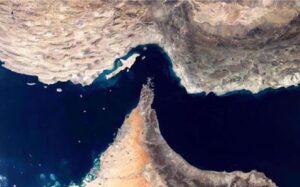
The closure of the Strait of Hormuz represents a dramatic escalation with immediate global economic ramifications. Approximately 20% of the world’s petroleum passes through this narrow waterway between Oman and Iran. A sustained closure would trigger oil price shocks and threaten energy security for major importers, particularly in Asia.
Oil markets reacted swiftly to the news. Brent crude futures surged 12% in early trading, crossing $130 per barrel, levels not seen since the initial Russian invasion of Ukraine in 2022. The International Energy Agency issued a statement expressing “grave concern” and announced it was “monitoring the situation closely.”
For Gulf states, the closure presents an existential threat. Kuwait, Qatar, Bahrain, and the UAE all rely on Hormuz for hydrocarbon exports. Saudi Arabia maintains alternative export routes through the Red Sea and pipelines, but capacity is limited.
Dr. Ayham Kamel, head of Eurasia Group’s Middle East and North Africa practice, observes: “Iran is employing its classic asymmetric leverage: the ability to disrupt global energy markets. The calculation appears to be that economic pressure on the Gulf states will, in turn, generate political pressure on Washington to de-escalate. Whether this strategy succeeds depends entirely on how long Iran can sustain the closure without triggering a direct US military response it cannot withstand.”
VI. THE IAEA DIMENSION: Nuclear Shadow.
Adding another layer of complexity to an already volatile situation, International Atomic Energy Agency (IAEA) Director General Rafael Grossi has expressed “deep concern about recent military strikes reportedly occurring near Iran’s Bushehr Nuclear Power Plant”, the latest of which occurred on Tuesday evening.
The Bushehr facility, Iran’s only operational nuclear power plant, is located on the Persian Gulf coast and has long been considered a potential flashpoint in any military confrontation. Grossi’s statement, while carefully worded, signals the international community’s alarm at the prospect of military operations near active nuclear facilities.
“Any military action near nuclear installations carries unacceptable risks,” Grossi said in a statement from Vienna. “The IAEA calls on all parties to exercise maximum restraint and to ensure the safety and security of nuclear facilities, which are not legitimate military targets under international law.”
Iranian officials have not publicly commented on whether Bushehr has been directly targeted, though the IRGC’s statements on March 27 made no mention of nuclear facilities among its claimed targets.
The proximity of strikes to Bushehr raises questions about the nature of recent US-Israeli operations. The Institute for the Study of War (ISW), a Washington-based think tank, has reported that the “combined force” (presumably referring to US and Israeli operations) “likely struck the 7th Artesh Air Force Tactical Airbase in Shiraz, Fars Province”, approximately 200 kilometres from Bushehr.
While the ISW’s analysis did not directly address Bushehr, the reported strikes on Shiraz indicate an expansion of operations deeper into Iranian territory, potentially bringing them closer to nuclear-related infrastructure.
VII. REGIONAL RESPONSES AND THE ROLE OF PROXY FORCES
A. Hezbollah and Iraqi Resistance Groups
The conflict has not been confined to direct Iranian-US-Israeli exchanges. According to Iranian state media, “the Lebanese Hezbollah resistance movement and the Islamic Resistance in Iraq have also joined the front against the external aggressors, inflicting heavy blows on the enemy.”
Hezbollah’s involvement, if confirmed, would represent a significant expansion of the conflict into Lebanon, potentially opening a northern front against Israel. The group, which maintains an extensive rocket arsenal and has fought multiple wars with Israel, has traditionally coordinated closely with Tehran.
The “Islamic Resistance in Iraq”, a loose coalition of Iran-aligned Iraqi militias, has reportedly targeted US positions in Iraq and Syria. These groups, many of which operate with the tacit approval of the Iraqi government, have historically served as Iran’s primary instrument for projecting power into the Levant.
B. Gulf State Calculations
The Gulf states hosting US military bases now face an impossible dilemma. Allowing American forces to operate from their territory invites Iranian retaliation, as demonstrated by the strikes on Al-Dhafra, Al-Udeiri, Ali Al-Salem, and Sheikh Isa bases. Yet expelling US forces would leave them vulnerable to other regional threats and strain their security relationships with Washington.
A senior diplomatic source from a Gulf Cooperation Council state, speaking on condition of anonymity, described the situation as “unsustainable”: “We are caught between two irreconcilable demands. Iran wants us to choose neutrality. The United States wants our full cooperation. Neither option guarantees our security. The only certainty is that our countries are now targets in a war not of our making.”
VIII. TRUMP’S ROLE: The Seven-Day Pause And Its Aftermath
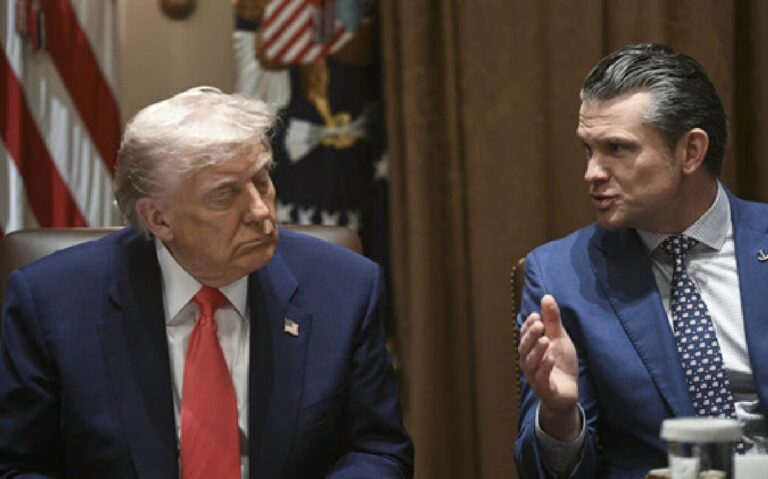
The escalation has unfolded against a backdrop of confusing signals from the White House. According to reports, US President Donald Trump signalled a “thaw in operations against Iran,” stating that Iran had “sought a seven-day pause on American strikes targeting its energy infrastructure, but he decided to extend the window to 10 days to April 6.”
This reported timeline, with a pause extending to April 6, suggests that the current military operations may be calibrated around diplomatic deadlines. However, the IRGC’s continued strikes through late March indicate either that Iran did not accept the pause terms or that coordination between diplomatic and military tracks has broken down.
Trump’s separate claim about the Iranian agreement to allow oil tankers through the Strait of Hormuz, contradicted hours later by the IRGC’s closure announcement, raises questions about the reliability of US intelligence assessments or the coherence of US policy messaging.
Political analyst Trita Parsi, executive vice president of the Quincy Institute for Responsible Statecraft, comments: “The contradiction between Trump’s public statements and Iran’s actions suggests either a fundamental breakdown in communication channels or, more likely, a deliberate effort by the White House to project control it does not actually possess. The administration appears to be improvising its Iran policy in real time, with dangerous consequences.”
IX. HUMANITARIAN CONSEQUENCES AND CIVILIAN IMPACT
A. Iranian Casualties
The February 28 attacks that precipitated Operation True Promise 4 reportedly killed over 170 schoolchildren in Minab, a coastal city in Hormozgan Province. If confirmed, this would constitute one of the deadliest single incidents involving children in any conflict since the Gaza war of 2023-2024.
Independent humanitarian organisations have been unable to verify casualty figures due to restricted access. Médecins Sans Frontières (Doctors Without Borders) issued a statement noting: “We are receiving reports of significant civilian casualties from multiple locations in Iran, but without independent verification, we cannot confirm specific numbers. What is clear is that the scale of the conflict is creating urgent humanitarian needs that are not being met.”
The IRGC’s framing of Operation True Promise 4 as a response to the “martyrdom” of schoolchildren has become a powerful mobilising tool domestically. Iranian state media has extensively covered funerals and memorial services, framing the conflict as a defensive war against foreign aggression.
B. Impact on Israeli Civilians
The IRGC has emphasised the impact of its operations on daily life for Israeli settlers, noting that “siren-to-siren living and prolonged confinement in shelters have become a daily routine for the Zionists.”
This characterisation of civilian life under missile threat mirrors the language Israel has historically used to describe Hamas rocket attacks from Gaza. The reversal of roles, with Israeli civilians now experiencing sustained bombardment from state-level Iranian forces, represents a significant psychological and operational shift.
Israeli media have reported widespread disruption, with schools closed in northern Israel and residents of communities near Haifa and Ashdod relocating to central Israel. The Israeli Home Front Command has issued repeated guidance on shelter protocols.
X. INTERNATIONAL LAW AND THE QUESTION OF PROPORTIONALITY
The conflict raises profound questions under international humanitarian law. Both sides have made allegations of violations, and both face scrutiny regarding their targeting practices.
The US-Israeli February 28 attack that killed a head of state and over 170 schoolchildren would, under most interpretations of international law, constitute a disproportionate use of force. Even if Iran’s nuclear program or regional activities justified some military response, the scale of civilian casualties challenges claims of adherence to the principle of distinction.
Iran’s retaliatory campaign, while ostensibly targeting military objectives, has employed massive barrages of missiles and drones across multiple countries. The IRGC’s warnings to civilians, while unusual, do not automatically render all subsequent strikes lawful. International humanitarian law requires attacking forces to take all feasible precautions to verify that targets are military objectives and to avoid civilian casualties.
Professor Mary Ellen O’Connell, an expert in international law at the University of Notre Dame, argues: *”What we are witnessing is a breakdown of the legal framework that was designed to limit armed conflict. Neither side appears constrained by the Geneva Conventions. The February 28 attack was legally questionable at best. Iran’s response, while perhaps understandable in political terms, does not meet the standard of lawful self-defence under Article 51 of the UN Charter, which requires necessity and proportionality.”*
XI. MEDIA COVERAGE AND INFORMATION WARFARE.
A. The Iranian Media Ecosystem
Coverage of Operation True Promise 4 within Iran has been near-uniform in its support for the government’s military response. State-controlled outlets like Press TV and Nournews have provided extensive coverage, framing the operation as a justified retaliation against aggression.
The language used in Iranian media, references to “Zionist forces,” “terrorist forces of the US,” and “usurping regime, reflects the Islamic Republic’s foundational ideology. The IRGC’s dedication of operations to “the warm-hearted people of the southern strip of the country in the north of the ever-Persian Gulf” and use of religious codes like “Ya Aba Abdullah Al-Hussein (AS)” serve to sacralize military operations.
B. International Media Challenges
International journalists have faced significant obstacles in covering the conflict. Iran has restricted access for foreign correspondents, and Gulf states have imposed censorship on reporting about US military operations conducted from their territory.
The result is an information environment characterised by claims from official sources that are difficult to verify independently. The US Department of Defence has limited its public statements, citing operational security, while Israeli authorities have implemented strict censorship on reporting about military casualties and infrastructure damage.
C. Disinformation and Narrative Warfare
Both sides have engaged in what military strategists term “information operations”, the use of information to influence perceptions and shape the strategic environment.
Iran’s claims of US forces “hiding in hotels” serve multiple purposes: they undermine the perception of American military invincibility, justify Iranian targeting of civilian structures, and appeal to anti-US sentiment in the region. The US and Israeli governments, meanwhile, have sought to emphasise Iranian aggression and the threat posed by Iran’s nuclear program.
Open-source intelligence analysts have identified social media campaigns amplifying both official narratives. A report from the Atlantic Council’s Digital Forensic Research Lab noted: “We are seeing coordinated amplification of Iranian military claims from networks of accounts that appear to be state-aligned. Similarly, pro-US and pro-Israeli accounts are circulating unverified claims about Iranian military setbacks. The information battlefield is as contested as the physical one.”
XII. REGIONAL AND GLOBAL GEOPOLITICAL IMPLICATIONS.
A. Impact On Gulf States
The Gulf states hosting US forces now face existential questions about their security arrangements. The strikes on bases in the UAE, Kuwait, and Bahrain demonstrate that Iran can and will target facilities on their soil. This reality forces a fundamental reassessment of the US security guarantee that has underpinned Gulf state defense policies for decades.
Dr. Kristian Coates Ulrichsen, a fellow at Rice University’s Baker Institute, explains: “The Gulf states are discovering that the US security umbrella no longer provides the protection it once did. Iranian capabilities have evolved to the point where the cost of hosting American forces may now exceed the benefits. We are likely to see a period of intense diplomatic activity as these states seek ways to de-escalate with Iran while maintaining their US relationships.”
B. The Future Of Us Force Posture In The Region
Operation True Promise 4 has exposed vulnerabilities in the US military presence in the Gulf. The reported relocation of personnel from bases to hotels, whether for dispersal or protection, suggests that the US Central Command is adapting to an environment in which its forward bases are no longer secure from Iranian attack.
The question of whether the United States will maintain its current posture or draw down forces in the Gulf will likely dominate Pentagon planning in the coming months. A withdrawal would create a security vacuum with unpredictable consequences; a reinforcement would risk further escalation.
C. China And Russia
The conflict has unfolded against a backdrop of great power competition. China, which has expanded its economic presence in the Gulf and maintains a naval facility in Djibouti, has called for restraint while continuing to purchase Iranian oil. Russia has positioned itself as a potential mediator while providing diplomatic support to Iran.
Neither Beijing nor Moscow appears eager to be drawn directly into the conflict, but both have strategic interests in preventing a full-scale regional war that could disrupt energy markets and destabilise allied governments.
XIII. THE PATH AHEAD: Scenarios And Projections.
A. Continued Escalation
The most immediate scenario is continued military operations along current trajectories. Iran has demonstrated the capability and willingness to sustain multiple waves of strikes; the US and Israel have shown no indication of backing down. Under this scenario, the conflict could grind on for weeks or months, with incremental damage accumulation on both sides.
The IRGC’s warning that “we will find you, and with God’s will, we will make you pay for your despicable deeds” suggests no imminent de-escalation. The closure of the Strait of Hormuz, if sustained, will create mounting economic pressure that may eventually force diplomatic intervention.
B. Diplomatic Breakthrough
Despite the intensity of the fighting, diplomatic channels remain technically open. Oman and Qatar have historically served as intermediaries between Iran and the West, and there are reports of behind-the-scenes contacts aimed at establishing a ceasefire framework.
Any diplomatic resolution would require addressing the core issues that led to the conflict: Iran’s nuclear program, its regional military activities, and the security concerns of Gulf states and Israel. These are precisely the issues that decades of diplomacy have failed to resolve.
C. Regional Conflagration
The worst-case scenario involves the conflict expanding beyond its current parameters. If Hezbollah launches a full-scale war with Israel from Lebanon, or if Iranian strikes cause mass civilian casualties in a Gulf state, the conflict could spiral into a regional war drawing in multiple actors.
Such a scenario would have catastrophic humanitarian and economic consequences. Oil prices would likely exceed $200 per barrel, triggering a global recession. The human toll would be measured in tens of thousands of lives.
XIV. INVESTIGATIVE FINDINGS AND ANALYSIS/
A. Assessment Of Iranian Claims
Based on available evidence and expert analysis, several conclusions can be drawn about Iranian claims regarding Operation True Promise 4:
- Iran has indeed conducted multiple waves of strikes against US and Israeli targets. The pattern of damage reported from various locations, while not independently verifiable in all cases, is consistent with sustained military operations.
- Iranian casualty claims for Israeli forces (2,500 dead or wounded) cannot be independently verified. Israeli officials have not released comprehensive figures, and the number may be inflated for propaganda purposes.
- Iran’s claims of advanced weapons capabilities appear credible. The reported use of precision-strike and multi-warhead missiles, along with loitering drones, reflects capabilities Iran has been developing for over a decade.
- The closure of the Strait of Hormuz is a significant escalation that, if sustained, will have immediate global economic impacts. Iran has demonstrated the ability to enforce such closures in the past.
B. Assessment Of Us And Israeli Operations
US and Israeli operations remain shrouded in greater secrecy, but available information suggests:
- The February 28 attacks that killed Khamenei represented a dramatic departure from previous US-Israeli approaches to Iran. The decision to decapitate the Iranian leadership carried significant risks and appears to have achieved mixed results.
- The combined force continues to strike Iranian missile infrastructure, indicating an effort to degrade Iran’s ability to sustain its campaign. The reported strikes on the Shiraz airbase suggest operations are expanding deeper into Iranian territory.
- US force protection measures, including reported relocations to hotels, indicate that Iranian strikes are having a meaningful impact on US operations in the region.
C. Legal And Ethical Dimensions
The conflict raises serious concerns under international humanitarian law:
- The February 28 attack that killed over 170 schoolchildren, if confirmed, would constitute a serious violation of the principle of distinction between military targets and civilians.
- Iran’s targeting of military objectives is not per se illegal, but the scale of its campaign and the use of imprecise weapons in populated areas raise proportionality concerns.
- The reported use of civilian infrastructure by US forces, if substantiated, would violate the prohibition on using civilians as human shields.
- Both sides bear responsibility for ensuring the protection of civilians in accordance with the Geneva Conventions.
XV. CONCLUSION: A Conflict Without Precedent.
Operation True Promise 4 represents a watershed moment in the modern history of West Asia. For the first time, a non-Arab state in the region has engaged in sustained, direct military operations against both US and Israeli forces across multiple countries. The technological sophistication of Iran’s strikes, combined with the strategic patience shown in conducting over 80 waves of attacks, suggests a military campaign planned and resourced for the long term.
The assassination of Ayatollah Khamenei, a decision that appears in retrospect to have dramatically underestimated Iranian resilience and capabilities, has unleashed forces that neither Washington nor Tel Aviv may fully control. Iran’s response has unified its fractious political elite, demonstrated military capabilities that challenge regional assumptions, and exposed vulnerabilities in the US security architecture that have been taken for granted for decades.
For the people of the region, the consequences are already devastating and may become catastrophic. Iranian civilians have endured attacks on their capital and the reported death of over 170 schoolchildren. Israeli civilians now live under a sustained missile threat. Gulf state citizens find their countries transformed into battlegrounds in a conflict not of their making. The closure of the Strait of Hormuz threatens the economic livelihoods of millions across the globe.
The international community, having failed to prevent the escalation that led to this point, now faces the urgent task of preventing further catastrophe. The United Nations Security Council has been paralysed by great power divisions, with Russia and China blocking resolutions critical of Iran while the United States and its allies resist calls for restraint.
As the conflict enters its second month, the question is no longer whether the region has entered a new era of confrontation; it has. The question is how destructive that era will become before exhaustion, diplomacy, or military victory produces a new equilibrium.
The words of the IRGC’s statement, “we will find you, and with God’s will, we will make you pay for your despicable deeds”, echo across a region already scarred by decades of violence. Whether those words prove prophetic or merely rhetorical will depend on choices made in the coming days by leaders in Tehran, Washington, Jerusalem, and the Gulf capitals caught in between.
Source: Multiple News Agencies
Submissions:
For The Secure Submission Of Documentation, Testimonies, Or Exclusive Investigative Reports From Any Global Location, Please Utilise The Following Contact Details For Our Investigations Desk: enquiries@veritaspress.co.uk or editor@veritaspress.co.uk
Help Support Our Work:
Popular Information is powered by readers who believe that truth still matters. When just a few more people step up to support this work, it means more lies exposed, more corruption uncovered, and more accountability where it’s long overdue.
Help Protect Independent Journalism, Which Is Currently Under Attack.
If you believe journalism should serve the public, not the powerful, and you’re in a position to help, becoming a DONATOR or a PAID SUBSCRIBER truly makes a difference.
DONATION APPEAL: If You Found This Reporting Valuable, Please Consider Supporting Independent Journalism.
Help Support Our Work – We Know, We Know, We Know …
Seeing these messages is annoying. We know that. (Imagine what it’s like writing them … )
Your support fuels our fearless, truth-driven journalism. In unity, we endeavour to amplify marginalised voices and champion justice, irrespective of geographical location.
But it’s also extremely important. One of Veritas Press’s greatest assets is its reader-funded model.
1. Reader funding means we can cover what we like. We’re not beholden to the political whims of a billionaire owner. We are a small, independent and impartial organisation. No one can tell us what not to say or what not to report.
2. Reader funding means we don’t have to chase clicks and traffic. We’re not desperately seeking your attention for its own sake: we pursue the stories that our editorial team deems important and believe are worthy of your time.
3. Reader Funding: enables us to keep our website and other social media channels open, allowing as many people as possible to access quality journalism from around the world, particularly those in places where the free press is under threat.
We know not everyone can afford to pay for news, but if you’ve been meaning to support us, now’s the time.
Your donation goes a long way. It helps us:
- Keep the lights on and sustain our day-to-day operations
- Hire new, talented independent reporters
- Launch real-time live debates, community-focused shows, and on-the-ground reporting
- Cover the issues that matter most to our communities, in real time, with depth and integrity
We have plans to expand our work, but we can’t do it without your support. Every contribution, no matter the size, helps us stay independent and build a truly people-powered media platform.
If you believe in journalism that informs, empowers, and reflects the communities we serve, please donate today.
The United Kingdom is not merely experiencing a spell of hot weather; it is undergoing
As Iran locks down the Strait of Hormuz and its Houthi allies turn the Bab
As social media mobilises thousands for a new mass crossing into Ceuta, evidence mounts that
Exclusive report from Gaza City, 10 August 2026 — Despite a ceasefire agreement that has
It happens roughly once every five days. A brick through a prayer-hall window. Graffiti scrawled
President Donald Trump was told that the war with Iran would be quick and decisive.
MUZAFFARABAD / RAWALAKOT / ISLAMABAD — The Pakistan-administered territory of Azad Jammu and Kashmir (AJK)
With Damascus silent, weekly incursions and home raids turn Quneitra countryside into a militarised frontier.
A spiralling confrontation in the Persian Gulf, the collapse of a fragile ceasefire, and the

From Virginia’s Data Centre Valley to the parched communities of Uruguay and Gaza, the hidden