


Help support our mission, donate today and be the change. Every contribution goes directly toward driving real impact for the cause we believe in.
The General’s Warning:
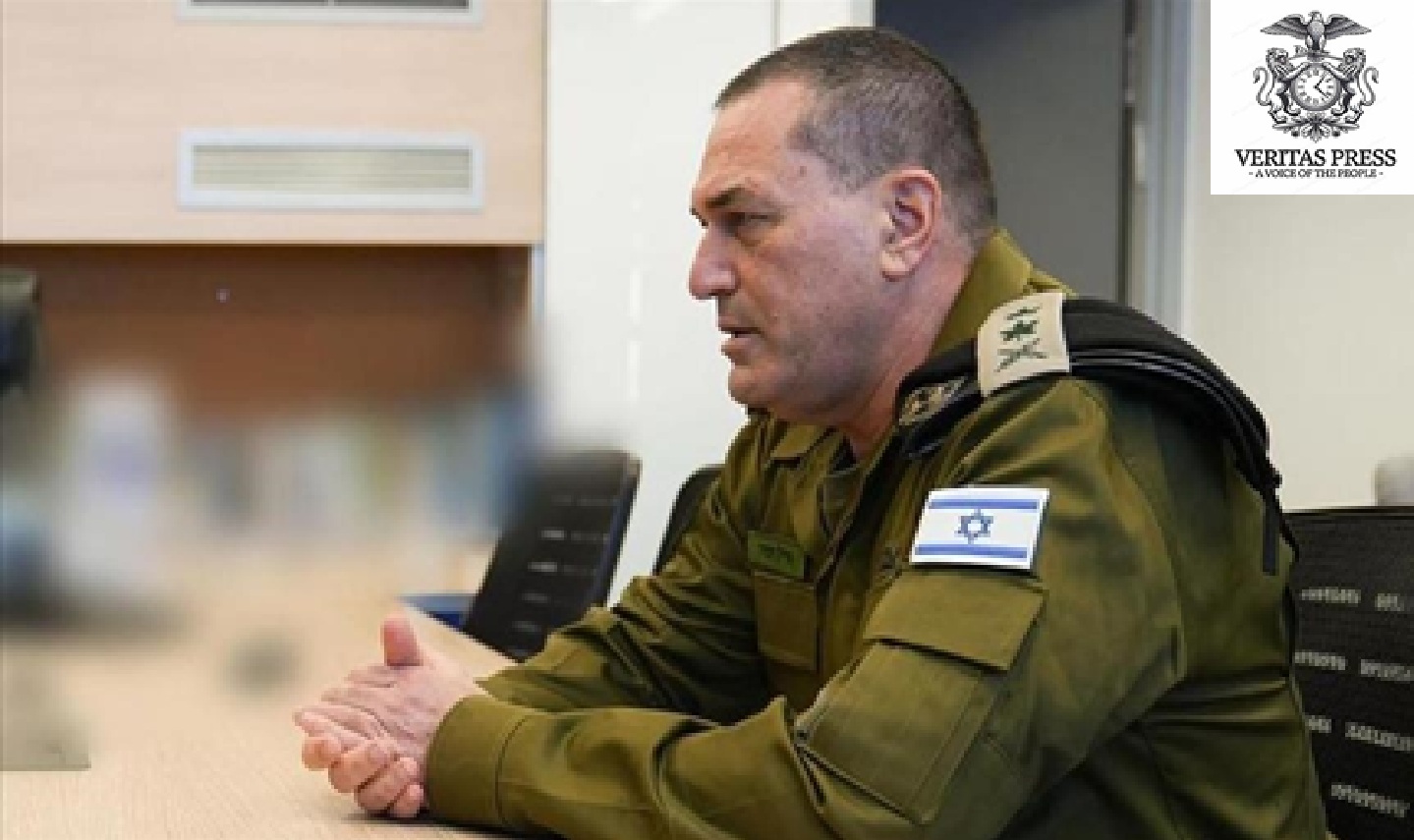
TEL-AVIV – When Lieutenant General Eyal Zamir, Chief of Staff of the Israel Defence Forces (IDF), stood before the security cabinet on March 25, 2026, his words carried the weight of a commander who sees the foundation of his army cracking under unprecedented strain. “I am raising 10 red flags before the IDF collapses into itself,” Zamir declared, according to media reports confirmed by The Jerusalem Post. This was not the usual bureaucratic plea for more resources; it was a stark warning that the military, an institution central to Israel’s national identity and survival, faces an internal implosion if urgent action is not taken.
The warning comes at a critical juncture. Israel is currently fighting on multiple fronts: its bombing campaign against Iran, which entered its second month on February 28; a ground invasion of Lebanon following Hezbollah’s cross-border attack on March 2; sustained operations in Gaza; and ongoing security deployments in the West Bank and Syria. According to military officials, the army faces a shortfall of approximately 12,000 to 15,000 troops, including 8,000 combat soldiers. Even in “peacetime,” military sources told The Jerusalem Post, Israel would need more soldiers on its borders, not fewer, to maintain operational readiness.
This article undertakes a deeper investigative critique of the crisis, moving beyond surface-level reporting to examine the structural contradictions, political calculations, and social divisions that have brought the IDF to this precipice. Drawing on the latest news reports, official statements, opposition responses, and on-the-ground developments, it analyses the multiple dimensions of a crisis that threatens not just military readiness but the very social compact upon which Israeli security has historically rested.
The Warning Heard Round The Cabinet Room:
1. “Ten Red Flags”:
According to Israeli media reports, including Channel 13 News, Zamir’s remarks during the security cabinet meeting were unusually direct. “Right now, the IDF needs a conscription law, a reserve duty law, and a law to extend mandatory service,” he told ministers. “Before long, the IDF will not be ready for its routine missions, and the reserve system will not last”.
The phrase “collapse into itself” is significant. Zamir was not warning about external defeat by hostile forces, Iran, Hezbollah, Hamas, but about internal breakdown. Military sources expressed “tremendous concern” to The Jerusalem Post, noting that without additional personnel, “there will be places with big gaps” in operational coverage. The language suggests a military stretched so thin that its structural integrity is failing.
This is not Zamir’s first warning. In January 2026, he sent a pointed letter to Prime Minister Benjamin Netanyahu and other senior officials, cautioning that the shortage of soldiers could harm military readiness in the very near future. During the Gaza conflict, he had already expressed concern that reservists were being called for their sixth or seventh rotations, leading to extreme exhaustion. He had also reportedly opposed Netanyahu’s plans for long-term military occupation of Gaza, describing it as “walking into a trap” that would strain resources beyond sustainable limits.
2. The Official Response:
At the same cabinet meeting, Prime Minister Benjamin Netanyahu signalled the government’s intention to lengthen compulsory military service. According to Israeli public broadcaster KAN, Netanyahu announced that conscription laws would be revised and service periods extended after the Jewish Passover holiday (April 1-9, 2026). Currently, Israeli men serve 32 months of mandatory service while women serve 24 months; proposals under discussion would extend the term to 36 months.
Cabinet Secretary Yossi Fuchs confirmed that the government would examine both extending service and advancing a new draft law immediately after the holiday. Netanyahu also dismissed objections from a legal adviser to the Knesset’s Foreign Affairs and Defence Committee regarding plans to ease draft requirements for the ultra-Orthodox community, asserting that “his role is to advise, but decisions are made by us”.
Yet the government’s response reveals a fundamental contradiction. While Netanyahu speaks of extending service for those already serving, he has simultaneously delayed the one reform that could meaningfully expand the manpower pool: the conscription of ultra-Orthodox (Haredi) men, a population of approximately 80,000 eligible individuals aged 18-24 who currently do not enlist. A proposed draft law aimed at increasing Haredi enlistment was “set aside” by Netanyahu at the beginning of “Operation Roaring Lion” (the campaign against Iran) for the sake of wartime unity. Critics argue this was less about unity and more about preserving the fragile coalition on which Netanyahu’s government depends.
The Political Earthquake: Conscription As Existential Battleground.
1. The Haredi Exemption: A Historical Anomaly Under Siege
The exemption of ultra-Orthodox yeshiva students from military service dates back to the founding of Israel in 1948, when the Haredi community was tiny, and its religious study was seen as a spiritual contribution to national defence. For decades, this arrangement persisted as a political compromise, with Haredi parties serving as kingmakers in Israel’s fractured parliamentary system.
But the calculus has changed dramatically. The Haredi community has grown exponentially; it now constitutes approximately 13% of Israel’s population and is projected to reach nearly 20% by 2040. Meanwhile, the security challenges facing Israel have become more complex and demanding. The High Court of Justice ruled in June 2024 that there was no legal basis for the blanket exemption, ordering the state to begin drafting Haredi men. Yet implementation has stalled amid fierce political opposition from the ultra-Orthodox parties that are essential to Netanyahu’s coalition.
The current crisis has brought this fault line to the breaking point. Military sources told The Jerusalem Post that before “Operation Roaring Lion,” the government was rapidly advancing controversial legislation that was said to enforce Haredi conscription. Critics, however, argued the proposed bill was a political measure intended to appease Haredi parties and would not effectively enforce conscription. When the war with Iran began, Netanyahu announced the draft bill would be “set aside” for unity reasons, a decision that military leaders now say has directly contributed to the manpower shortage.
2. Opposition Fury: “In The Next Disaster, They Won’t Be Able To Say ‘We Didn’t Know'”
Zamir’s warning unleashed a torrent of criticism from opposition figures, who see the crisis as a predictable consequence of political cowardice.
Opposition leader Yair Lapid (Yesh Atid) delivered a televised statement on March 26 that minced no words: “The government is sending the army into a multi-front war without a strategy, without the necessary means, and with far too few soldiers”. Lapid warned that the government is leaving “the army wounded out on the battlefield” and that reservists are being called for their sixth and seventh rotations, “worn out and exhausted”.
His most pointed remark was a direct jab at the government’s pattern of post-disaster deflection: “In the next disaster, the government won’t be able to say ‘We didn’t know.’ It bears responsibility. This is on its head”. The reference was unmistakable, a preemptive denial of the “we didn’t know” defence that became infamous after the government’s failure to anticipate the October 7, 2023, attacks.
Members of the Yesh Atid Party sent a letter to the Knesset Foreign Affairs and Defence Committee demanding an emergency session, stating that the stalling of Haredi conscription “is not a political dispute but a security danger that rises to the level of pikuach nefesh” (a matter of saving lives). “After we have warned many times, it is no longer possible to ignore this,” the letter added.
Avigdor Liberman, leader of the Yisrael Beytenu party, called for universal conscription, arguing that the government has “become accustomed to ignoring warnings before a disaster”, a pointed reference to the October 7 intelligence failures. Former Prime Minister Naftali Bennett asked with evident frustration: “What are you waiting for, for heaven’s sake?” and accused a government dependent on ultra-Orthodox party leaders Arye Deri (Shas) and Yitzhak Goldknopf (United Torah Judaism) of being “incapable of providing security”.
Former military chief Gadi Eisenkot, now a political figure, stated that mandatory service for all “is the need of the hour” and “a moral imperative” that would “return Israel to the right path, fulfil the IDF’s mission, and safeguard Israel’s security”. Benny Gantz, another former military chief and leader of the Blue and White Party, accused the government of promoting mass draft evasion while promising to “change the Middle East” and win the war, adding: “You will not be able to sweep this disgrace under the rug”.
3. Coalition Silence And Political Calculations
Notably, the government’s ultra-Orthodox coalition partners have remained publicly silent following Zamir’s warning, but their actions speak volumes. They have reportedly boycotted parliamentary votes over the proposed conscription legislation, signalling that any attempt to draft their constituents will be met with maximal political resistance. Netanyahu’s government, the most right-wing in Israeli history, depends on the support of Haredi parties to maintain its Knesset majority. Any move to enforce conscription could bring the coalition crashing down.
Analysts cited by Xinhua News Agency suggest that Netanyahu has “set multiple obstacles” to prevent the conscription bill from passing, and even if it were passed, its implementation would face enormous difficulties. The prime minister, they argue, is prioritising political survival over military necessity, a calculation that military leaders say now threatens the survival of the army itself.
The Reserves: A System At Breaking Point.
1. “Sixth And Seventh Rotations”
Perhaps the most alarming dimension of the manpower crisis is its impact on the reserve system, which has historically been the backbone of the IDF’s ability to mobilise large forces quickly. According to Lapid, Zamir told the cabinet that reservists are currently serving their sixth or seventh rotations, a level of deployment unprecedented in Israel’s history.
“These reservists are worn out and exhausted and can no longer meet our security challenges,” Lapid said. The strain is not just operational but personal. Reservists must balance extended military service with civilian careers, family responsibilities, and their own mental and physical health. Many have been away from home for months at a time, with employers growing increasingly reluctant to release key employees for indefinite periods.
The military has acknowledged the problem. A senior officer from the IDF Personnel Directorate told Walla news that the army aims to reduce the maximum annual number of combat reserve days to under 60 per soldier, a reduction from last year but still well above pre-war levels. “We set a boundary of up to 70 days, but we plan to keep it under 60 days per soldier at the most,” the officer said. “Last year, we were at eight weeks of operational duty. This year, we aim for six weeks. Still, it’s an extremely heavy load”.
2. Cutting Readiness To Save Resources?
In a deeply counterintuitive move that has sparked fury among reserve commanders, the IDF issued a new directive in early February 2026 that reduced reserve preparation and recovery days, even as the crisis deepens. According to a report by Ynetnews, the order includes the cancellation of post-deployment processing days, a return to one-day readiness status for emergency depots across all units, and a reduction of preparation days to just three.
A battalion commander who reported for a reserve rotation last month described the decision as “turning off the tap on the reserve force.” “Everyone is furious,” he said. “We invest weeks organising them so they’re ready for anything, before and after every rotation. Reducing that to one day means chaos, shortages and a direct hit to readiness. It’s that simple”.
The commander also criticised the cancellation of processing days for combat soldiers returning from the front. “How do you send them home like that, without a structured process where they can talk, decompress and actually take care of their mental health?” he asked. “Who are you cutting at the expense of? The reservists who have been doing the hardest work for the past two years?”
Lt. Col. (res.) Eli Meiri, a senior armoured brigade commander and leader of the “To the Flag” reserve protest movement, called the directive an “Israeli bluff” that would collapse during the first serious security incident. He traced the problem to budget constraints imposed by the Finance Ministry. “The Finance Ministry comes to the IDF and says it has to fit into a certain budget,” he said. “So what does the army do? Something impossible. It cuts reserve days from 70 to 42 and sets a 10–4 rotation instead of week-on, week-off”.
Meiri warned that the cuts to preparation days are detached from operational reality. “As an armoured brigade deputy commander, I need a week to fix tanks after they’ve been used. There’s no way to reduce that to one day. And for all units? It’s a bluff. The IDF knows it, the Finance Ministry knows it”.
3. The Mental Health Cost
The directive’s cancellation of post-deployment processing days has drawn particular fire from mental health advocates and commanders. Knesset member Moshe “Kinley” Tur-Paz of Yesh Atid sent a letter to Zamir under the heading “Harm to readiness and resilience of the reserve force,” writing that “reservists who have borne the burden of war for more than two years are not an inexhaustible resource”.
“Processing and preparation days are not luxuries. They are essential operational tools for maintaining a soldier’s mental fitness and ability to function at home and at work, which is a prerequisite for future service,” Tur-Paz wrote . He called the decision to cut recovery days at a time of peak exhaustion “both a moral and operational mistake”.
Speaking to Ynet, Tur-Paz added: “After two years of fighting, the soldiers are worn down to the edge. Instead of easing their burden and bringing in additional manpower, the coalition is promoting exemptions for hundreds of thousands of healthy young people and cutting the recovery and processing days the fighters desperately need. This is a direct blow to readiness and resilience”.
The Multi-Front Reality: A Military Spread Too Thin.
1. Lebanon: The New Front
The immediate catalyst for Zamir’s urgent warning appears to be the escalation in Lebanon. On March 2, 2026, Hezbollah launched a cross-border attack that prompted Israel to launch ground operations in southern Lebanon. According to Israeli army spokesman Brigadier General Effie Defrin, the military is grappling with a shortage of roughly 15,000 troops, including 8,000 combat soldiers, with the Lebanese front placing particular strain on available forces.
“On the Lebanese front, the forward defensive zone that we are creating requires additional IDF forces,” Defrin said in a televised briefing. He also mentioned increased needs in the occupied West Bank, Gaza, and Syria.
The fighting in Lebanon has already exacted a cost. The Israeli military announced on March 26 that two soldiers were killed during the invasion, bringing to four the number of Israeli soldiers killed there since the March 2 escalation. Hezbollah has claimed to have conducted a series of ambushes against invading Israeli troops and destroyed many Merkava tanks. On March 26, the IDF announced that one soldier was killed and four others wounded in a Hezbollah anti-tank missile attack.
According to Lebanese authorities, at least 1,070 people have been killed by Israeli strikes since March 2, and more than 1 million have been displaced. The humanitarian toll in Lebanon has drawn international concern, even as Israel’s political leadership emphasises the necessity of pushing Hezbollah back from the border.
2. Iran: The Expanding War
Israel’s conflict with Iran has added another layer of strain. On February 28, 2026, Israel, in coordination with the United States, launched “Operation Roaring Lion,” an extensive campaign of airstrikes on Iranian targets. The operation has killed more than 1,340 people since it began, according to reports. Iran has retaliated with drone and missile strikes targeting Israel, US bases, and Gulf countries.
The campaign against Iran has required significant air force and intelligence assets, as well as defensive deployments to protect Israeli territory from Iranian retaliation. It has also fundamentally altered the strategic calculus, transforming what a shadow war was into an overt military confrontation.
Military sources told The Jerusalem Post that the situation has become so severe that even in “peacetime”, a concept that seems increasingly theoretical, Israel would need more soldiers on the border in Gaza, Lebanon, Syria, and the West Bank. “If the government does not add more soldiers, then there will be places with big gaps,” they warned.
3. Gaza And The West Bank: The Ongoing Occupations
While the world’s attention has shifted to Iran and Lebanon, the conflicts in Gaza and the West Bank continue to consume manpower. The war in Gaza, sparked by the Hamas-led onslaught of October 7, 2023, has entered its third year. According to Israeli government figures, a total of 1,152 Israeli security personnel have been killed in various conflicts since October 7, including members of the IDF, Israel Police, Shin Bet, and civilian emergency response squads.
In the West Bank, where settler violence against Palestinians has intensified, the IDF has deployed thousands of troops. The army is responsible for securing hundreds of settlements built on occupied Palestinian land, a task that requires constant patrols and rapid response capabilities.
The cumulative effect is a military that is fighting on four fronts simultaneously, Gaza, Lebanon, the West Bank, and now Iran, with a manpower pool that has not expanded to meet the demands. The IDF’s official shortage of 12,000-15,000 troops translates into operational gaps that commanders say are already affecting mission readiness.
The Human Toll: Soldiers, Families, And Society.
1. The Reservist Experience
Behind the statistics and political debates are real people whose lives have been upended by years of continuous service. The experience of a reservist serving his sixth or seventh rotation—a reality that Zamir reportedly described to the cabinet is one of accumulated exhaustion, dislocation, and trauma.
One reservist quoted in Israeli media (though not named in the search results) described the experience of being called up repeatedly: “You never know when you’ll be home next. You can’t plan anything. Your employer is frustrated. Your kids barely recognise you. And every time you go back, you’re going to the same horrors you thought you’d left behind.”
The cumulative impact on mental health is increasingly recognised as a crisis within the crisis. The cancellation of processing days, the structured debriefings and decompression periods that help soldiers transition back to civilian life has been condemned by commanders as a dangerous false economy. “After everything they’ve sacrificed,” the battalion commander told Ynet, “until we return to a reality where a reservist serves no more than 30 days a year, don’t shut off the tap. It’s dangerous”.
2. The Haredi Question: Social Solidarity Or Social Fracture?
The debate over Haredi conscription goes to the heart of Israeli social identity. For decades, the exemption has been a source of resentment among secular and religious Zionist communities who bear the burden of military service while Haredi men study in yeshivas. The current crisis has intensified that resentment.
Opposition figures have framed the issue in terms of social justice and shared sacrifice. “The government must stop being cowardly, immediately halt all funding for Haredi draft dodgers, send the military police after deserters, and draft the Haredim without hesitation,” Lapid said.
Yet the Haredi community sees the issue differently. For many in the ultra-Orthodox world, yeshiva study is not an evasion of duty but a form of spiritual protection for the nation. The idea of drafting young men into an environment that is often hostile to their religious practices and values is viewed as a threat to their way of life. Haredi parties have consistently demanded protections for their communities, and their leaders have threatened to bring down the government if conscription is enforced.
The result is a standoff that pits military necessity against political survival. Netanyahu’s coalition cannot survive without Haredi support, but the military may not survive without Haredi conscripts. This contradiction lies at the heart of the current crisis.
3. The Economic Dimension
The manpower shortage also has significant economic implications. Employers who have released key employees for extended reserve duty are increasingly reluctant to continue doing so. The Israeli economy has shown remarkable resilience, but the cumulative impact of prolonged reserve mobilisation is beginning to show.
In response, the government has proposed making permanent a policy of compensating employers of reservists. A legislative memorandum published in February 2026 proposes that the National Insurance Institute compensate employers for the “inconvenience” of loaning out valuable employees to the military on a regular basis. Defence Minister Israel Katz said in a statement: “Reservists are the protective barrier around the State of Israel, but behind them also stand employers, who bear the burden through extended periods of military service. This is a move that strengthens both national security and the economy”.
Yet compensation alone cannot solve the problem. The fundamental issue is that the current demand for military manpower exceeds the supply, a problem that no amount of financial incentives can fully address.
The International And Regional Dimension:
1. Regional Perceptions
Israel’s manpower crisis has not gone unnoticed in the region. While no state has openly celebrated the IDF’s difficulties, regional powers are undoubtedly watching with interest. Hezbollah’s continued attacks in Lebanon, despite Israeli ground operations, suggest that the organisation believes it can outlast Israeli forces. Iranian leaders have framed the conflict as a test of endurance, betting that Israeli society will eventually tire of war.
Turkey, a regional power with complex relations with Israel, has been “closely observing Israel’s military expansion amid escalating regional hostilities,” according to Anadolu Ajansı. Turkey has consistently warned against the destabilising effects of unchecked military operations in the Eastern Mediterranean and beyond, advocating for diplomatic solutions. The Turkish government’s watchfulness reflects a broader regional concern about the sustainability of Israel’s military posture.
2. US Involvement
The United States has been Israel’s closest ally throughout the current conflicts, providing military support and coordinating on the campaign against Iran. Yet the US has also expressed concerns about escalation and the human toll of the fighting. The joint US-Israeli offensive on Iran has drawn criticism from some quarters, and American officials have reportedly urged restraint.
The manpower crisis may affect US calculations as well. If Israel’s military is stretched thin, it may be more reliant on American support, or more likely to take risks that draw the US deeper into regional conflicts. The Biden administration (and potentially its successor) will have to weigh these factors in its ongoing support for Israel.
3. Ceasefire Dynamics
The current fighting has continued despite existing ceasefire agreements. Israel has carried out strikes and incursions into Syria in breach of previously agreed terms. The escalation with Hezbollah followed a period of relative calm, and the war with Iran represents a dramatic expansion of the conflict.
Whether the manpower shortage will push Israel toward ceasefires or, conversely, toward more aggressive operations aimed at achieving quick victories before forces become further depleted, remains an open question. Military leaders like Zamir appear to be signalling that the current pace of operations is unsustainable, a message that may influence both domestic political debates and regional strategic calculations.
The Path Forward: Options And Obstacles.
1. Extending Mandatory Service
Netanyahu’s proposal to extend mandatory service from 32 to 36 months for men would provide additional manpower in the short term, but it comes with significant costs. Longer service means that young Israelis will spend more of their prime years in uniform, delaying education and career starts. It also places additional burden on a population that is already bearing the heaviest military load in the country’s history.
Moreover, extending service does nothing to address the fundamental structural issue: the exclusion of the Haredi population from the draft. If 80,000 Haredi men remain exempt, the overall pool of available soldiers will continue to shrink relative to operational demands.
2. Enforcing Haredi Conscription
The logical solution to the manpower crisis, from a purely military perspective, is to enforce the High Court’s ruling and begin drafting Haredi men. The IDF has repeatedly told lawmakers that it lacks 12,000 troops; the Haredi community of eligible age numbers approximately 80,000. Even a modest enlistment rate would close the gap.
Yet the political obstacles are formidable. Haredi parties have already boycotted parliamentary votes over the proposed legislation, and they have the power to bring down the government if their core interests are threatened. Netanyahu has shown little appetite for a confrontation with his coalition partners, preferring to postpone difficult decisions.
The political calculus may be shifting, however. If military leaders continue to sound alarms, and if the opposition maintains pressure, Netanyahu may eventually be forced to choose between coalition stability and national security. Zamir’s “ten red flags” may be designed to force exactly that choice.
3. Rebuilding The Reserve System
Beyond conscription policy, the IDF faces the urgent task of rebuilding a reserve system that has been severely strained. The cuts to preparation and recovery days, imposed for budgetary reasons, must be reversed if the army hopes to maintain the mental and physical readiness of its reservists. As commanders have warned, cutting corners on soldier welfare is a false economy that ultimately undermines operational effectiveness.
The IDF’s plan to create a new division, the David (Gilad) Division, with nearly 30 new battalions, is a step in the right direction. This division is intended to help enhance security operations while relieving overextended reserve units that have completed multiple tours of duty. But new units require soldiers to fill them, bringing the problem back to the core issue of manpower.
4. Technological Solutions
The IDF has also invested in advanced technologies to reduce workforce needs, particularly in border and outpost security. Drones, sensors, and automated systems can perform some functions that previously required human soldiers. Yet technology is not a substitute for the kind of sustained ground operations that Israel is currently conducting in Lebanon and Gaza. As one senior officer noted, closing the personnel gap ultimately requires either extending mandatory service or drafting the Haredi community, or both.
Conclusion: The Unravelling Social Compact.
The crisis facing the IDF is not merely a military problem; it is a reflection of deeper fissures in Israeli society. The exemption of the Haredi community from military service was always an anomaly, but it could be sustained when the community was small, and the security challenges were manageable. Today, with the Haredi population growing rapidly and Israel fighting on multiple fronts simultaneously, the anomaly has become a structural vulnerability.
Zamir’s warning that the IDF could “collapse into itself” is a stark acknowledgement that the old arrangements are no longer viable. Yet the political system has shown itself incapable of adapting. Netanyahu’s government, dependent on Haredi parties, has stalled on conscription reform, while simultaneously asking the military to fight wars of increasing scope and duration. The contradiction is unsustainable.
The voices of opposition leaders, Lapid, Liberman, Bennett, Eisenkot, and Gantz, reflect a growing consensus that the status quo is untenable. “In the next disaster, the government won’t be able to say ‘We didn’t know,'” Lapid warned. The implicit comparison to October 7, 2023, is deliberate and damning. The government, these critics argue, is repeating the same pattern of ignoring warnings, postponing hard decisions, and hoping that disaster will not come before the political calculus shifts.
Whether the current crisis will force a reckoning remains to be seen. The Passover holiday, the deadline Netanyahu has set for legislative action, will be a critical moment. If the government emerges from the holiday with no concrete steps to address the manpower shortage, the gap between military necessity and political reality will continue to widen.
For now, the IDF continues to fight on four fronts, its soldiers stretched thin, its reservists exhausted, its commanders sounding alarms that seem to fade into the political noise. Zamir’s ten red flags are waving. The question is whether anyone in power is willing to see them and to act before it is too late.
Source: Multiple News Agencies
Submissions:
For The Secure Submission Of Documentation, Testimonies, Or Exclusive Investigative Reports From Any Global Location, Please Utilise The Following Contact Details For Our Investigations Desk: enquiries@veritaspress.co.uk or editor@veritaspress.co.uk
Help Support Our Works:
Popular Information is powered by readers who believe that truth still matters. When just a few more people step up to support this work, it means more lies exposed, more corruption uncovered, and more accountability where it’s long overdue.
Help Protect Independent Journalism, Which Is Currently Under Attack.
If you believe journalism should serve the public, not the powerful, and you’re in a position to help, becoming a DONATOR or a PAID SUBSCRIBER truly makes a difference.
DONATION APPEAL: If You Found This Reporting Valuable, Please Consider Supporting Independent Journalism.
Help Support Our Work – We Know, We Know, We Know …
Seeing these messages is annoying. We know that. (Imagine what it’s like writing them … )
Your support fuels our fearless, truth-driven journalism. In unity, we endeavour to amplify marginalised voices and champion justice, irrespective of geographical location.
But it’s also extremely important. One of Veritas Press’s greatest assets is its reader-funded model.
1. Reader funding means we can cover what we like. We’re not beholden to the political whims of a billionaire owner. We are a small, independent and impartial organisation. No one can tell us what not to say or what not to report.
2. Reader funding means we don’t have to chase clicks and traffic. We’re not desperately seeking your attention for its own sake: we pursue the stories that our editorial team deems important and believe are worthy of your time.
3. Reader Funding: enables us to keep our website and other social media channels open, allowing as many people as possible to access quality journalism from around the world, particularly those in places where the free press is under threat.
We know not everyone can afford to pay for news, but if you’ve been meaning to support us, now’s the time.
Your donation goes a long way. It helps us:
- Keep the lights on and sustain our day-to-day operations
- Hire new, talented independent reporters
- Launch real-time live debates, community-focused shows, and on-the-ground reporting
- Cover the issues that matter most to our communities, in real time, with depth and integrity
We have plans to expand our work, but we can’t do it without your support. Every contribution, no matter the size, helps us stay independent and build a truly people-powered media platform.
If you believe in journalism that informs, empowers, and reflects the communities we serve, please donate today.
GENEVA — A United Nations fact-finding mission has concluded there are “reasonable grounds to believe”
Iran’s GDP is projected to contract by 5.4 to 6.1% in 2026, its worst performance
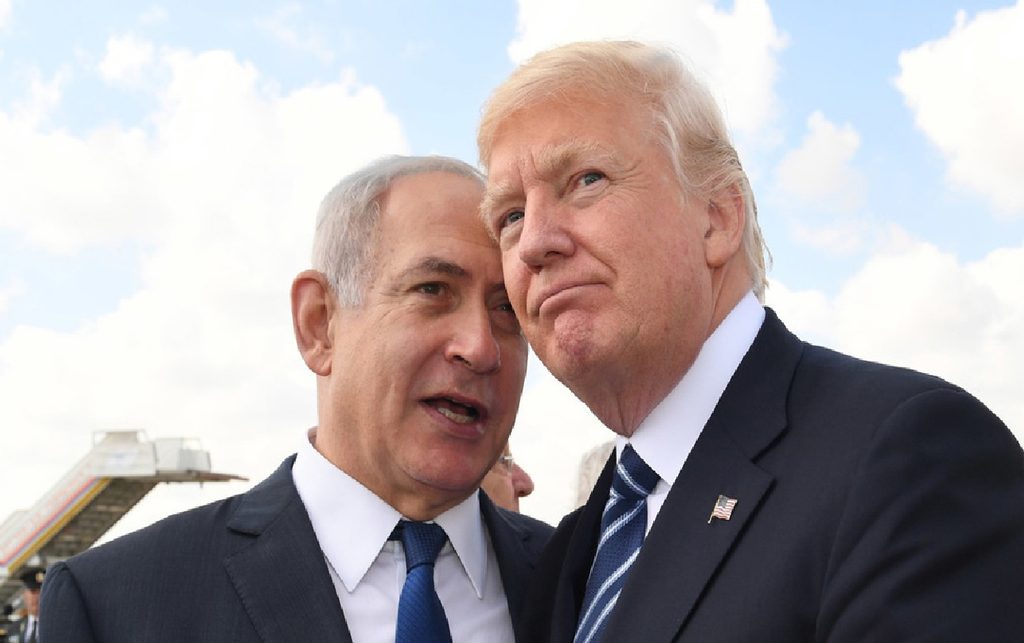
The Trump administration is preparing a $2.8 billion weapons package for Israel containing 40,000 2,000-pound

Film alleges mass civilian deaths are routinely built into military decisions amid Israel’s genocidal war
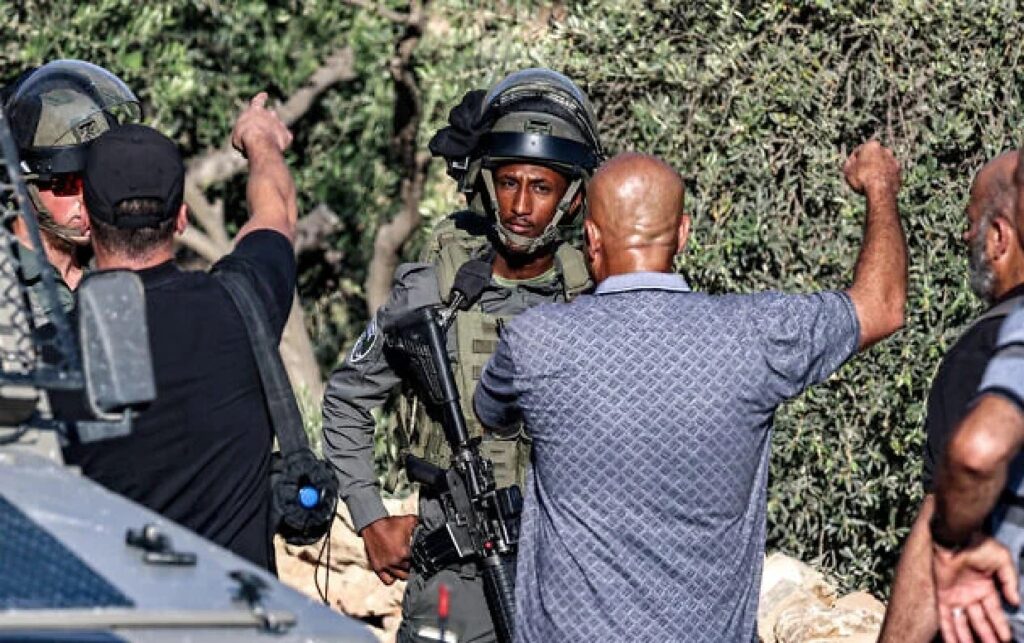
The Israeli rights group says violence, displacement, economic strangulation, and settlement expansion form part of

Houthi forces have captured the historic Red Sea port of Mocha and are advancing on
London’s historic sanctions against Israeli settlements mark a watershed moment in UK foreign policy, but
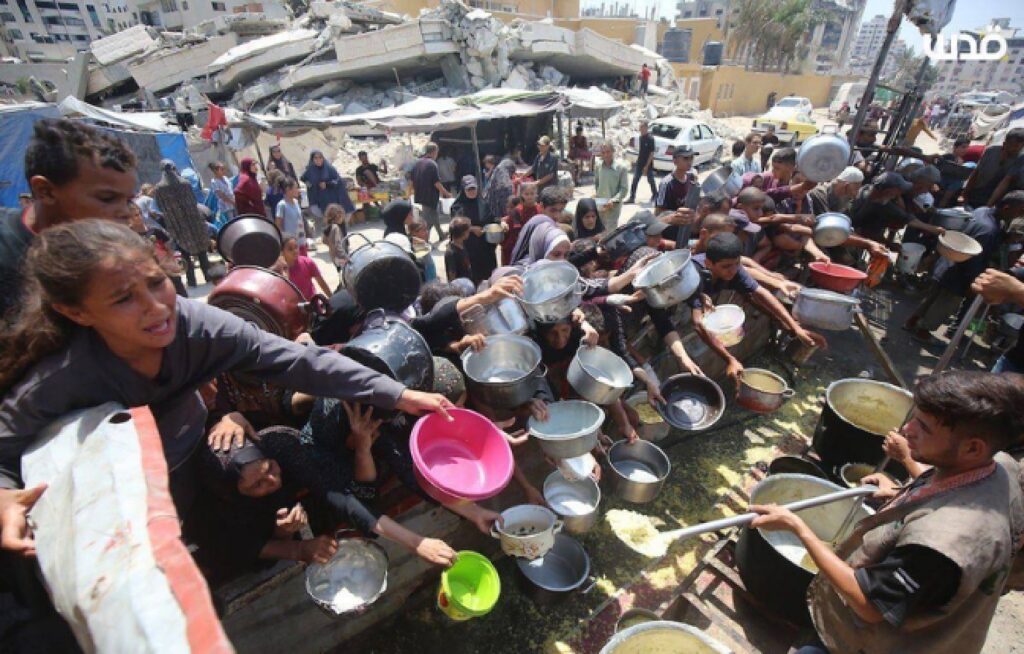
With 95% of Gaza’s population now wholly dependent on aid and more than 90% stripped
India calls for Kashmir and Ladakh to appear only on its official map after a
ISLAMABAD – In the high-stakes political theatre of Pakistan, the battleground has shifted from the