





Help support our mission, donate today and be the change. Every contribution goes directly toward driving real impact for the cause we believe in.
The “Shovelling” Of An Empire:
In the early hours of what the Iranian calendar marks as the eve of the last Wednesday of the year, the Islamic Revolution Guards Corps (IRGC) announced the successful completion of the 62nd wave of Operation True Promise 4. The communiqué was characteristically defiant, employing a verb rarely seen in official military parlance: shovelled. According to the IRGC, all American bases across the region and Israeli gathering points were not just struck, but “shovelled”, a Persian colloquialism implying complete demolition and disposal.
The statement, rich with the rhetoric of “national cohesion” and “world public opinion,” claimed simultaneous strikes on a constellation of US installations: Ali Al Salem and Camp Arifjan in Kuwait, Al Udeid in Qatar, Al Dhafra in the UAE, and the Fifth Fleet Naval Base in Bahrain, among others. It also asserted successful destruction of targets deep inside occupied territories, including Acre, Haifa, Tel Aviv, and Beersheba, all achieved without the activation of warning sirens, a claim of technological penetration that, if true, represents a fundamental failure of Israeli air defence doctrine.
This report does not merely reiterate the duelling press releases from Tehran, Washington, or Tel Aviv. Instead, it digs into the strategic reality behind the 62nd wave, investigating the verifiable impact, the geopolitical fallout, and the new, terrifying normal of a conflict where red lines have been erased, and the region’s geography is being rewritten by hypersonic trajectories.
The Anatomy Of Wave 62: Psychological Warfare And Physical Damage.
The IRGC’s list of targeted bases reads like a Pentagon inventory of Gulf power projection. Al Udeid Air Base in Qatar, struck repeatedly in this campaign, is not just another installation; it is the forward headquarters of US Central Command (CENTCOM) and houses over 10,000 US troops.
Investigative Analysis:
While US officials have remained largely tight-lipped on specific damage assessments, a tactical silence that suggests either successful containment or an unwillingness to expose vulnerabilities, open-source intelligence and regional reporting tell a different story.
- The Qatari Skyline: Following the strike on Al Udeid on June 23, 2025, residents in Doha reported seeing flares and hearing loud explosions. Qatar temporarily shut its airspace. This is significant: a host nation closing its airspace indicates a perceived failure of the host’s and the US’s ability to guarantee safety, a critical blow to the “security umbrella” narrative the US sells to Gulf partners.
- The “Nerve Centre” Narrative: Pro-IRGC Telegram channels, such as “Iranian Military Capabilities,” celebrated the strike on Al Udeid not just for the physical damage but for the psychological breach. One post analysed by the Middle East Media Research Institute (MEMRI) stated the attack targeted “its nerve centre of command, its weapons stockpile, and its launch point for B-52 bombers,” concluding that “the American aura of invincibility has now taken a major hit”.
- The Australian Connection: The strike on Al Minhad Air Base in the UAE, confirmed by Australia’s Ministry of Defence, marked a significant moment. It directly implicated a Five Eyes partner in the ground reality of the war, damaging a facility used by Australian forces. This forced Canberra into a direct, albeit reluctant, acknowledgement of the war’s expanding geography.
The Drone War: The $330 Million Question.
Beyond the missile barrages, the air war has been defined by a silent killer: the drone. A report citing US officials revealed that over a dozen MQ-9 Reaper drones, valued at approximately $330 million, have been destroyed since the conflict began.
Investigative Analysis:
The loss of the MQ-9 Reapers is strategically more significant than the dollar value suggests.
- Capability Gap: The Reaper is the backbone of US intelligence and strike capability in the theatre. Losing over a dozen represents a critical depletion of situational awareness. On June 15, 2025, Iran shot down another MQ-9 Reaper launched from Israel near the Iraqi border. This suggests Iran has developed a reliable electronic warfare or air defence envelope along its borders capable of neutralising America’s most advanced unmanned surveillance platforms.
- Production Line Closed: General Atomics closed the Reaper production line in 2024 after completing 575 units. These are irreplaceable assets in the short to medium term. Every drone shot down is a permanent reduction in the US inventory, a fact not lost on military planners in the Pentagon.
The Assassination Cascade And The Leadership Vacuum:
The context for Wave 62, as stated by Iran, is the “US-Israeli war of aggression that began on February 28,” which included the assassination of the Leader of the Islamic Revolution, Ayatollah Seyyed Ali Khamenei.
The Intelligence Failure:
A detailed report from The New York Times following the initial June 13 strikes painted a picture of catastrophic surprise within the Iranian leadership. Senior officials, expecting diplomacy to continue, ignored security protocols. Gen. Amir Ali Hajizadeh, commander of the IRGC’s aerospace unit, was killed when Israel struck a military base where he was holding an emergency meeting, a direct violation of the “do not congregate” directive.
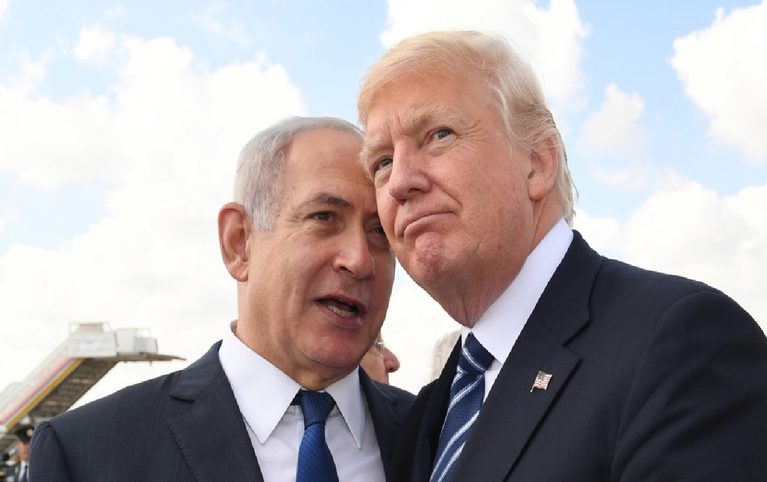
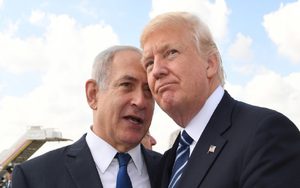
This initial decapitation strike forced Iran to adapt. By March 2026, the conflict had taken on a new, personal edge. The IRGC vowed to “pursue and kill” Israeli Prime Minister Benjamin Netanyahu, claiming uncertainty over his whereabouts reflected a “deepening crisis within Israel”. Concurrently, Netanyahu signalled potential targeting of Iran’s new Supreme Leader, Mojtaba Khamenei, stating, “I do not intend to provide precise reports here on our plans”.
Diplomatic Trenches: The Isolation Of Israel.
While the world watches the explosions, the diplomatic war has yielded perhaps the most significant strategic shift. An analysis by the Tehran Times claims that over 30 countries, including key players like Saudi Arabia, the UAE, Pakistan, and Russia, condemned Israel’s initial strikes.
Voices from the Ground:
- The Italian Peace Advocate: Fernando Cabal, an Italian activist, told Taghrib News Agency, “Iran has prevented the triumph of Zionism, the genocidal state of Israel, and U.S. imperialism.” He noted that “public opinion is gradually shifting in favour of Iran and Palestine, especially as Western complicity becomes more evident”.
- The Regional Silence: Conversely, the “pro-Israel front” found itself limited to the US, UK, Germany, and a handful of others, many of whom qualified their support with calls for de-escalation. This diplomatic math is critical. For Gulf states hosting US bases, the condemnation of Israel while American jets fly from their soil to defend against Iranian missiles creates an impossible political dichotomy.
The New Military Lexicon: Hypersonic And “One-Ton.”
Iran’s military spokespersons have been keen to emphasise the use of new, advanced weaponry. The arsenal mentioned in Wave 62 includes:
- Kheibar Shekan: A solid-fuel, high-precision ballistic missile.
- Haj Qassem: A ballistic missile with a range of 1,400 km, named after the slain General Soleimani.
- Fattah: An IRGC-hyped hypersonic missile, claimed to be capable of manoeuvring past advanced air defence systems like the Arrow and David’s Sling.
- Khorramshahr: Equipped with one-ton warheads, designed for maximum destructive capability.
The Verdict of the Sirens:
The most compelling evidence for the success of these systems comes from Israeli media reports cited by the Iranian press. The lack of warning sirens in some affected areas in Tel Aviv and Haifa suggests either a failure of detection or a failure of interception. If Iranian missiles are arriving without triggering the layered air defence network Israel has spent decades and billions perfecting, the doctrine of “active defence” is in jeopardy.
Casualty Figures: The Unseen Ledger.
The human cost remains the most opaque and contested metric. Iran’s Ministry of Defence claims to have killed at least 600 American troops since the war began, with over 3,000 wounded in the first week alone. A senior Iranian intelligence official, speaking to Press TV, detailed a “critical depletion of air defence stockpiles” for the US and Israel.
On the Israeli side, Channel 14 reported two settlers killed in Ramat Gan by an Iranian missile. The disruption of electricity, the evacuation of thousands of settlers from Tel Aviv, and the suspension of train services paint a picture of a home front under sustained, unrelenting pressure.
Conclusion: The “Era Of Hit And Run” Is Over.
The 62nd wave of Operation True Promise 4 is not an isolated event but a data point in a new strategic reality. The IRGC’s statement declaring the enemy trapped in a “triangle of Iranians’ national cohesion, the immense missile and drone power, and the support of world public opinion” is propaganda, but it reflects a perceived strategic truth in Tehran.
The US and Israel have failed to deliver a knockout blow to Iran’s military capacity. Conversely, Iran has demonstrated a sustained capability to project power, inflict financial damage (the $330 million in Reaper drones is just a fraction of the cost of this war), and erode the “security” guarantee the US provides to its regional allies.
As one Iranian military spokesman framed it: “God willing, after the war, we will have a new order in the region, without the US.” Whether that order comes to pass remains to be seen, but the old order, where US bases were sanctuaries and Israeli skies were impenetrable, has already been “shovelled” into the dustbin of history.
Source: Multiple News Agencies
Submissions:
For The Secure Submission Of Documentation, Testimonies, Or Exclusive Investigative Reports From Any Global Location, Please Utilise The Following Contact Details For Our Investigations Desk: enquiries@veritaspress.co.uk or editor@veritaspress.co.uk
Help Support Our Work:
Popular Information is powered by readers who believe that truth still matters. When just a few more people step up to support this work, it means more lies exposed, more corruption uncovered, and more accountability where it’s long overdue.
Help Protect Independent Journalism, Which Is Currently Under Attack.
If you believe journalism should serve the public, not the powerful, and you’re in a position to help, becoming a DONATOR or a PAID SUBSCRIBER truly makes a difference.
DONATION APPEAL: If You Found This Reporting Valuable, Please Consider Supporting Independent Journalism.
Help Support Our Work – We Know, We Know, We Know …
Seeing these messages is annoying. We know that. (Imagine what it’s like writing them … )
Your support fuels our fearless, truth-driven journalism. In unity, we endeavour to amplify marginalised voices and champion justice, irrespective of geographical location.
But it’s also extremely important. One of Veritas Press’s greatest assets is its reader-funded model.
1. Reader funding means we can cover what we like. We’re not beholden to the political whims of a billionaire owner. We are a small, independent and impartial organisation. No one can tell us what not to say or what not to report.
2. Reader funding means we don’t have to chase clicks and traffic. We’re not desperately seeking your attention for its own sake: we pursue the stories that our editorial team deems important and believe are worthy of your time.
3. Reader Funding: enables us to keep our website and other social media channels open, allowing as many people as possible to access quality journalism from around the world, particularly those in places where the free press is under threat.
We know not everyone can afford to pay for news, but if you’ve been meaning to support us, now’s the time.
Your donation goes a long way. It helps us:
- Keep the lights on and sustain our day-to-day operations
- Hire new, talented independent reporters
- Launch real-time live debates, community-focused shows, and on-the-ground reporting
- Cover the issues that matter most to our communities, in real time, with depth and integrity
We have plans to expand our work, but we can’t do it without your support. Every contribution, no matter the size, helps us stay independent and build a truly people-powered media platform.
If you believe in journalism that informs, empowers, and reflects the communities we serve, please donate today.
The Trump administration is preparing a $2.8 billion weapons package for Israel containing 40,000 2,000-pound

Film alleges mass civilian deaths are routinely built into military decisions amid Israel’s genocidal war
The Israeli rights group says violence, displacement, economic strangulation, and settlement expansion form part of

Houthi forces have captured the historic Red Sea port of Mocha and are advancing on
London’s historic sanctions against Israeli settlements mark a watershed moment in UK foreign policy, but
With 95% of Gaza’s population now wholly dependent on aid and more than 90% stripped
India calls for Kashmir and Ladakh to appear only on its official map after a
ISLAMABAD – In the high-stakes political theatre of Pakistan, the battleground has shifted from the
Francesca Albanese says third states have an ICJ-mandated obligation to end Israel’s occupation. But with
As Israeli jets bomb a Syrian air base over alleged Turkish deployment plans, Ankara, Washington