Kamran Faqir is a volunteer investigative journalist and writer committed to exposing hidden truths and amplifying underreported stories. Driven by social justice, he brings sharp insight and fearless truth-telling to independent journalism. NUJ registered.
Original Article Date Published:
Article Date Modified:
11 minutes
Views:373
Listen to this article
Help support our mission, donate today and be the change. Every contribution goes directly toward driving real impact for the cause we believe in.
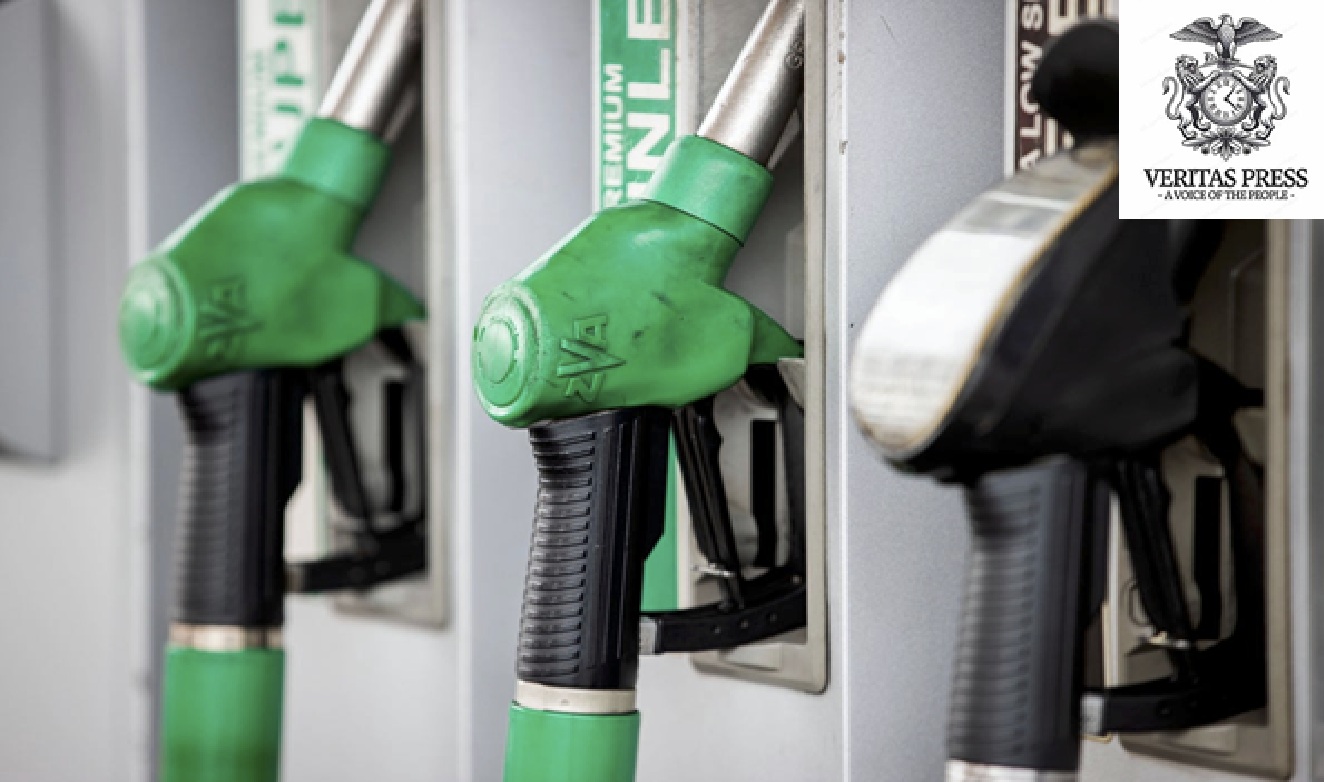
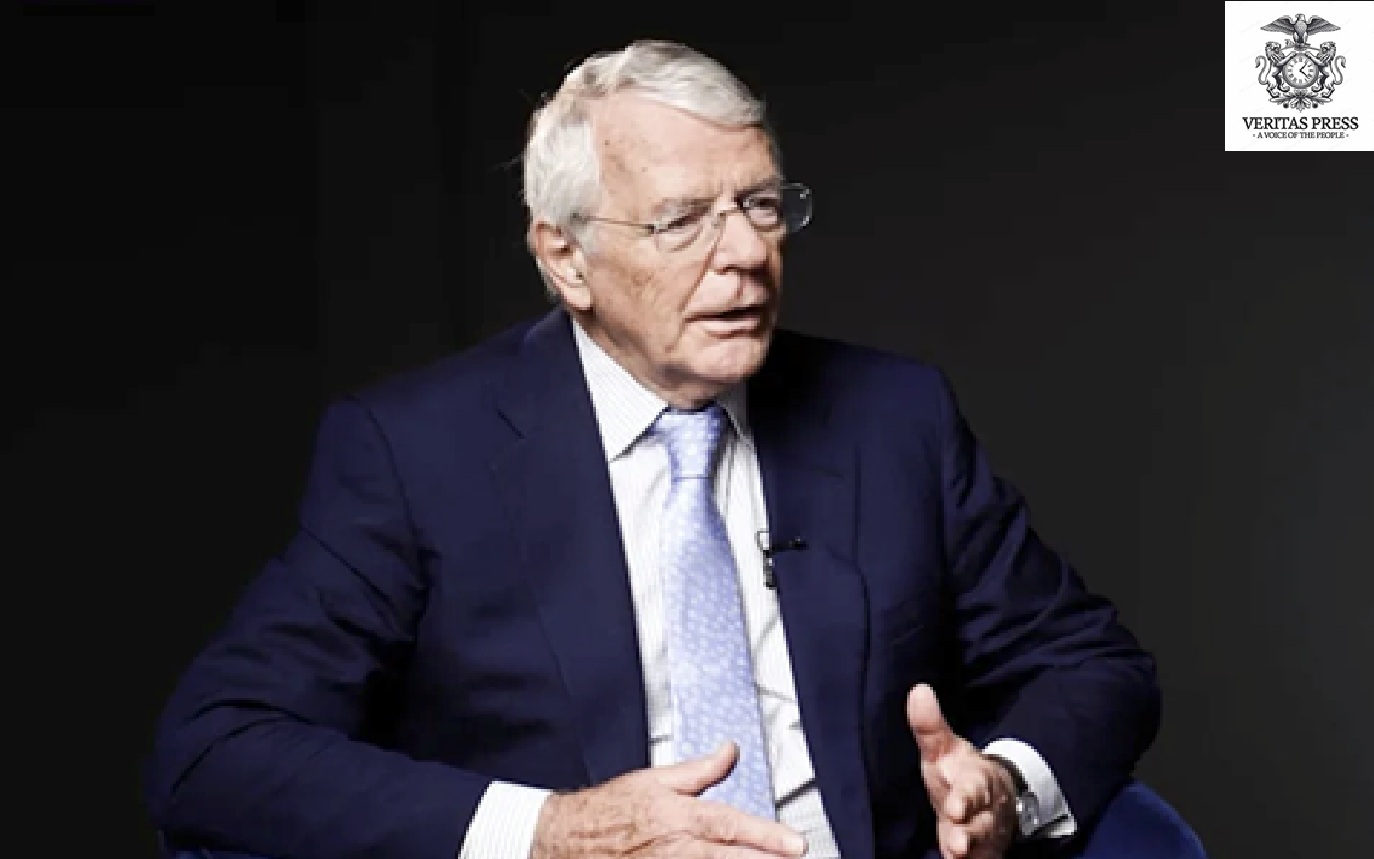
LONDON, UK – The warning, delivered with the calm authority of a former insider, has sent a jolt through Westminster. Motorists in the UK should brace for fuel rationing. The source is Nick Butler, a man who has sat at the intersection of corporate strategy and government power, a former head of strategy at BP and an energy adviser to Prime Minister Gordon Brown. His message to Sir Keir Starmer’s government is stark: prepare now for a “significant shortfall of supply over the next two months”.
Butler’s intervention on the BBC’s Today programme is not merely another pundit’s prediction. It is a direct challenge to a government already reeling from the economic shockwaves of the escalating US-Israeli war with Iran. With the Strait of Hormuz effectively blockaded, a chokepoint through which a fifth of the world’s oil normally flows, Butler sees a perfect storm brewing. “There will be a real shortage, a physical shortage, of supply in a few weeks’ time,” he warned, evoking memories of the fuel protests in 2000 that brought the country to a standstill.
His words conjure a troubling vision of the near future: not just soaring prices at the pump, but the return of a relic of a less secure age, rationing. “In the short-term,” Butler stated, “we have to look at what supply we have and look at the crucial sectors, the health service, food supply, and hospitals. Those are key elements that must be protected. And beyond that, it is then for the government to decide how to ration what is left”.
This is not a far-off problem. The logistical arteries of the global economy are hardening by the hour.
The Global Price Of A Blockaded Strait:
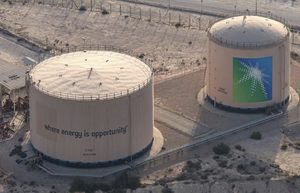
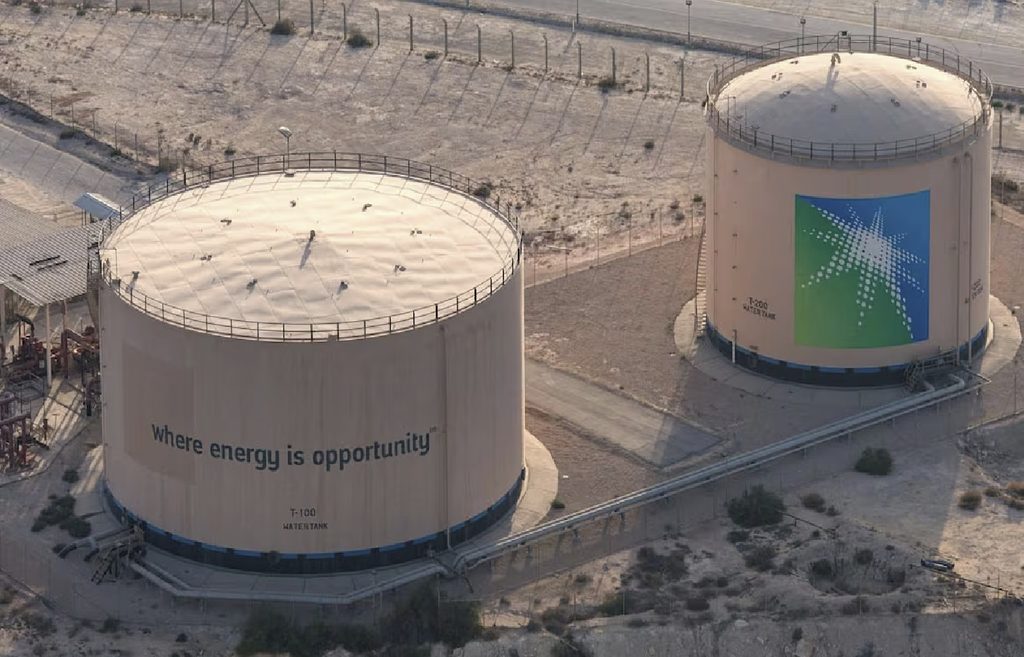
The numbers are staggering. In the days following the closure, Brent Crude soared past $119 a barrel, its highest level since 2022. Goldman Sachs has described the impact of the blockade as 17 times larger than the disruption to Russian oil production following the Ukraine invasion. In the Gulf, the situation is dire. Saudi Arabia’s state-owned oil giant, Aramco, has had to pause production at its two largest offshore fields, Safaniyah and Zuluf, slashing the kingdom’s output by a fifth. In Iraq, production has cratered by 70%; in the UAE, it has been cut in half. Analysts estimate the Middle East is now pumping 7 million to 10 million fewer barrels per day.
The crisis extends beyond crude. Qatar has entirely suspended its liquefied natural gas (LNG) production, cutting off 20% of the global LNG supply and telling customers they may not receive shipments until May. For the UK, which relies on imports for its energy, this is an existential threat to its economic stability.
As one Saudi crude buyer ruefully told Reuters, the situation is so uncertain that “I might as well just call Iran and ask them when their war is going to end”. This sentiment underscores a new and terrifying reality: control over the world’s energy supply now lies less with the Western powers and more with Tehran’s ability to wage asymmetrical warfare.
The Military Impasse: Why “Gunboat Diplomacy” Is Failing.
The response from the United States has been characteristically bellicose. President Donald Trump has promised to use the US Navy to “take over” the Strait and guarantee safe passage, urging allies like the UK to join a naval escort mission. But on the ground, or rather, on the water, military experts are deeply sceptical.
The Strait of Hormuz is a maritime guerrilla’s dream. At its narrowest, shipping lanes are just two kilometres wide. Iran has spent decades preparing for this exact scenario. While its conventional navy has taken losses, the Islamic Revolutionary Guard Corps (IRGC) has deployed swarms of fast attack boats, land-based anti-ship cruise missiles that have already targeted the USS Abraham Lincoln, and, most dangerously, naval mines.
Retired Canadian Vice-Admiral Mark Norman points to the 1988 example of the USS Samuel Roberts, a frigate that struck an Iranian mine, reportedly costing $1,500. The damage to the warship cost $96 million to repair. Today, US destroyers are being asked to escort tankers through these same waters. “It actually doesn’t take a lot to wreak havoc in a very tight piece of water like this,” Norman said. A single tanker sunk in the shipping lane could close the Strait for weeks.
The US Energy Secretary, Chris Wright, has suggested escorts could begin by the end of March, but naval experts like Sal Mercogliano of Campbell University warn that “without putting troops on both sides of the Strait of Hormuz and ensuring that you’re able to prevent drones and mine attacks, I just don’t see a military solution”.
The Economic Fallout: Stagflation Fears Return To Britain.
While the military strategists debate the feasibility of clearing the strait, the economic reality is already hitting home. Chancellor Rachel Reeves has admitted to MPs that the conflict “affects us all” and that it is “likely to put upward pressure on inflation in the coming months”. This is an understatement. David Miles, a senior figure at the Office for Budget Responsibility (OBR), told the Commons Treasury Committee that if energy prices remain at current levels, UK consumer prices could be a full percentage point higher by the end of the year than previously expected.
This shock threatens to plunge the UK into a cycle of stagflation. Ian Stewart, chief economist at Deloitte, noted that “surging oil and gas prices are harbingers of economic trouble,” pointing to the recessions of 1973, 1979, and 1990, all of which were triggered or worsened by Middle East energy crises. The Bank of England, which had been poised to cut interest rates, now faces the grim prospect of holding firm or even raising them to combat the inflationary spike, choking off growth just as households are already stretched to their limits.
In a move that acknowledged the immediate pain, Starmer’s government announced a £53 million support package for vulnerable heating oil customers. But critics dismiss this as a sticking plaster on a haemorrhage. Shadow Chancellor Mel Stride attacked the government over “ruinously-high taxes” and demanded the Chancellor reverse the planned 5p fuel duty hike scheduled for the autumn.
A Political Storm At Home: The North Sea Divide.
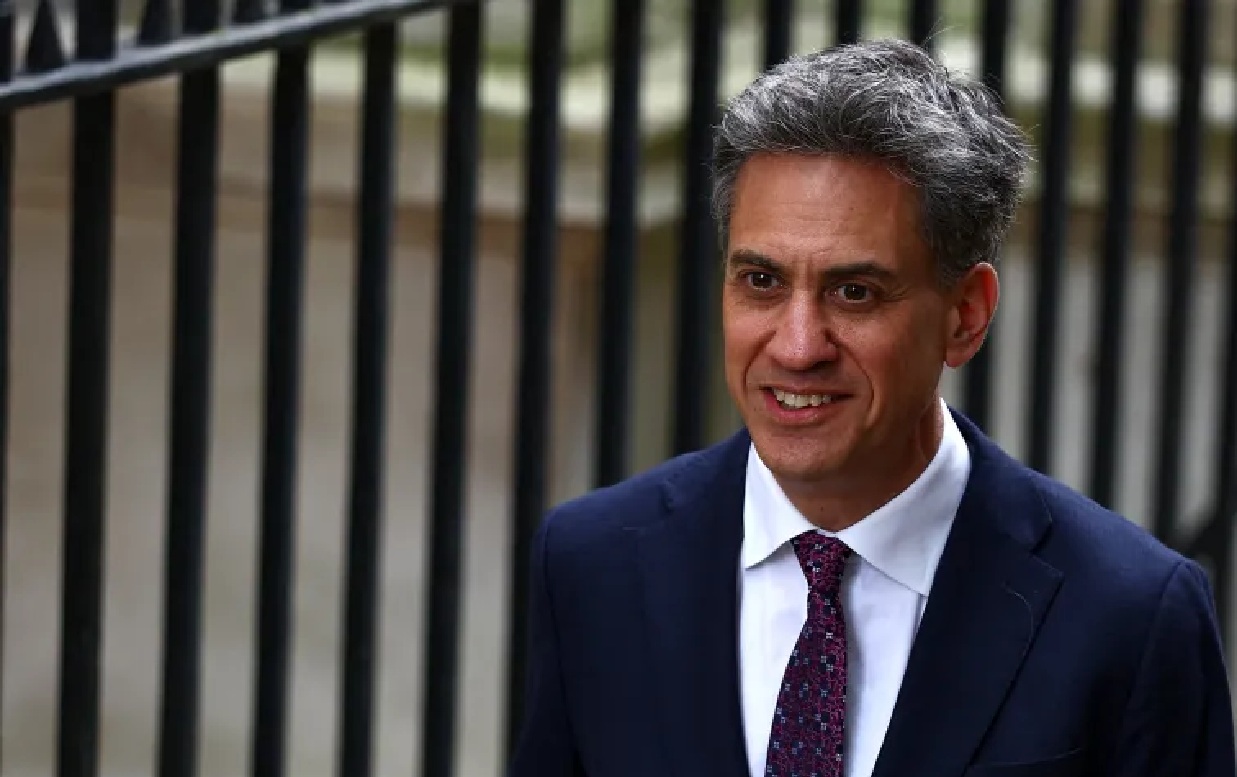
The crisis has brutally exposed the ideological fissures at the heart of Labour’s energy policy. Energy Secretary Ed Miliband, the architect of the government’s net-zero strategy, is under immense pressure to issue new licences for oil and gas drilling in the North Sea. He is refusing to budge.
Appearing on the BBC, Miliband argued that increasing domestic production would not lower bills. “The price of gas is set on the international markets, whether it comes from the North Sea, which is an important resource, or is imported,” he said. His solution is to double down on the green transition: “There is one lesson from this crisis, and only one in my view, for the long term on energy policy, and that is we need homegrown, clean power that we control”.
His stance has infuriated the energy industry and trade unions in the north-east of Scotland. Russell Borthwick, chief executive of the Aberdeen and Grampian Chamber of Commerce, accused Miliband of being “in denial.” He argued that the war has proven the folly of relying on imports. “His position…cannot stand. The past few weeks have underlined why the UK must create the conditions for greater activity in the North Sea”.
This domestic row highlights a deeper strategic vulnerability. The UK has a “just-in-time” energy policy, holding only about two days’ worth of gas storage. Sir Dieter Helm, professor of economic policy at the University of Oxford, published a damning report during the crisis titled Britain’s energy security – what the Iran war reveals. In it, he argues: “The central pillar of energy policy should be security. It is no good being ‘green’ if you cannot defend your country. We need gas, and we will go on needing it for a long time to come”.
The Long Shadow: How Many Wake-Up Calls?
The UK has been here before. The 2000 fuel protests, the 2022 Ukraine invasion, and now the Iran war. Each time, the government has been caught off guard. The National Energy System Operator (Neso) warned as recently as last October of “an emerging risk to gas supply security”.
Yet, as one commentator for The National noted, one must ask “how many wake-up calls is it possible for one entity to have before they cease to be wake-up calls?”
Even if a ceasefire is brokered tomorrow, the damage may be long-lasting. Chatham House analyst Neil Quilliam warned that if the US and Israel are seen to have won on terms unpalatable to Tehran, Iran will continue to use mines and drones to prove it hasn’t been beaten, ensuring that the “supply confidence” that once underpinned global trade is permanently shattered. Insurance costs will skyrocket, and international oil companies may be hesitant to return to the Gulf for years.
For British motorists and families, the next few weeks will be a test of resilience. Nick Butler’s warning of rationing may yet prove to be a worst-case scenario, but as the government scrambles to keep the lights on and the pumps flowing, one thing is clear: the era of cheap, secure energy is well and truly over. The question now is whether Sir Keir Starmer’s government can learn the lessons of history, or whether it will be condemned to repeat them.
Source: Multiple News Agencies
Submissions:
For The Secure Submission Of Documentation, Testimonies, Or Exclusive Investigative Reports From Any Global Location, Please Utilise The Following Contact Details For Our Investigations Desk: enquiries@veritaspress.co.uk or editor@veritaspress.co.uk
Help Support Our Work:
Popular Information is powered by readers who believe that truth still matters. When just a few more people step up to support this work, it means more lies exposed, more corruption uncovered, and more accountability where it’s long overdue.
Help Protect Independent Journalism, Which Is Currently Under Attack.
If you believe journalism should serve the public, not the powerful, and you’re in a position to help, becoming a DONATOR or a PAID SUBSCRIBER truly makes a difference.
DONATION APPEAL: If You Found This Reporting Valuable, Please Consider Supporting Independent Journalism.
Help Support Our Work – We Know, We Know, We Know …
Seeing these messages is annoying. We know that. (Imagine what it’s like writing them … )
Your support fuels our fearless, truth-driven journalism. In unity, we endeavour to amplify marginalised voices and champion justice, irrespective of geographical location.
But it’s also extremely important. One of Veritas Press’s greatest assets is its reader-funded model.
1. Reader funding means we can cover what we like. We’re not beholden to the political whims of a billionaire owner. We are a small, independent and impartial organisation. No one can tell us what not to say or what not to report.
2. Reader funding means we don’t have to chase clicks and traffic. We’re not desperately seeking your attention for its own sake: we pursue the stories that our editorial team deems important and believe are worthy of your time.
3. Reader Funding: enables us to keep our website and other social media channels open, allowing as many people as possible to access quality journalism from around the world, particularly those in places where the free press is under threat.
We know not everyone can afford to pay for news, but if you’ve been meaning to support us, now’s the time.
Your donation goes a long way. It helps us:
Keep the lights on and sustain our day-to-day operations
Hire new, talented independent reporters
Launch real-time live debates, community-focused shows, and on-the-ground reporting
Cover the issues that matter most to our communities, in real time, with depth and integrity
We have plans to expand our work, but we can’t do it without your support. Every contribution, no matter the size, helps us stay independent and build a truly people-powered media platform.
If you believe in journalism that informs, empowers, and reflects the communities we serve, please donate today.
Kamran Faqir is a volunteer investigative journalist and writer committed to exposing hidden truths and amplifying underreported stories. Driven by social justice, he brings sharp insight and fearless truth-telling to independent journalism. NUJ registered.
SEATTLE, TEHRAN — The U.S. Department of Homeland Security (DHS) will allow Iran’s national football team to enter the country 48 hours before their critical World Cup match against Egypt on Friday, a modest concession in a tournament where Team Melli’s travel conditions have sparked claims of oppression and competitive disadvantage.