Kamran Faqir is a volunteer investigative journalist and writer committed to exposing hidden truths and amplifying underreported stories. Driven by social justice, he brings sharp insight and fearless truth-telling to independent journalism. NUJ registered.
Original Article Date Published:
Article Date Modified:
Views:350
Listen to this article
Help support our mission, donate today and be the change. Every contribution goes directly toward driving real impact for the cause we believe in.
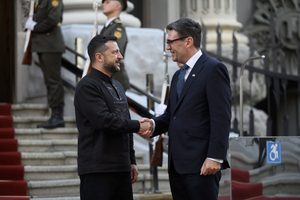
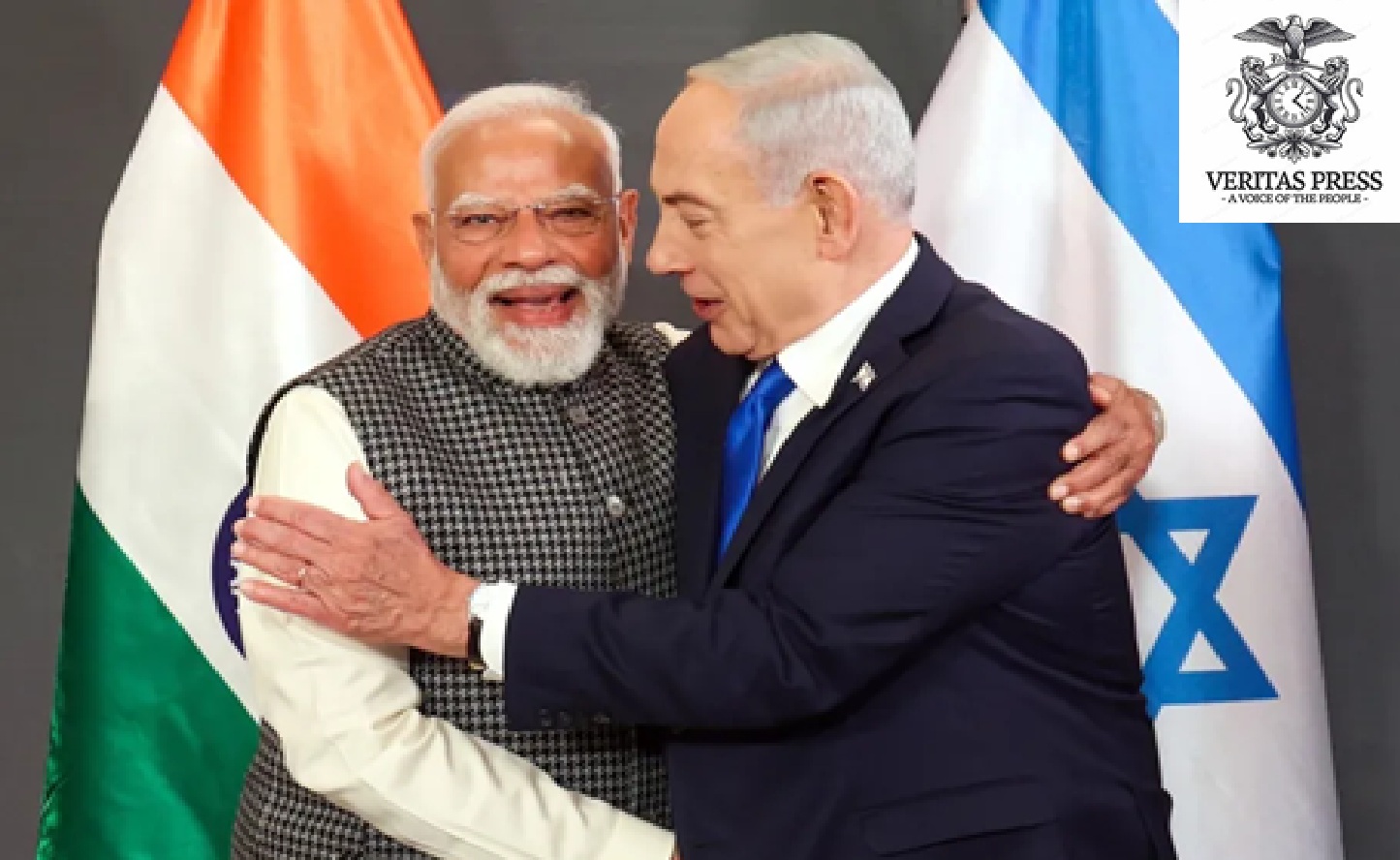
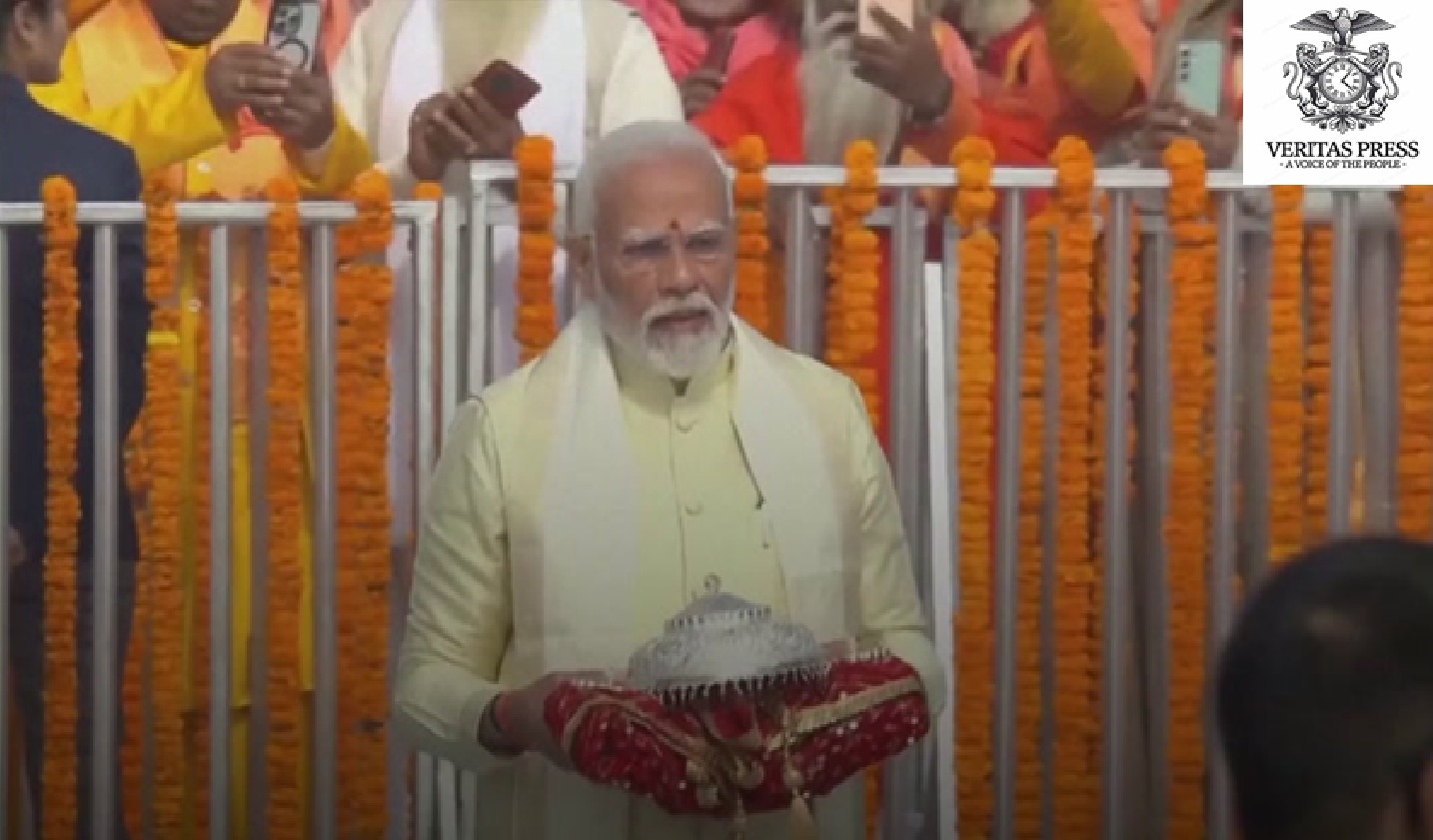
NEW DELHI/TEL AVIV – When Narendra Modi stood before the Knesset and described Israel as the “father” and India as the “mother,” the symbolism was unmistakable. For critics at home and across the Global South, it marked not just diplomatic warmth but a civilizational repositioning, a rupture with the India of Mahatma Gandhi, Jawaharlal Nehru, and Indira Gandhi.
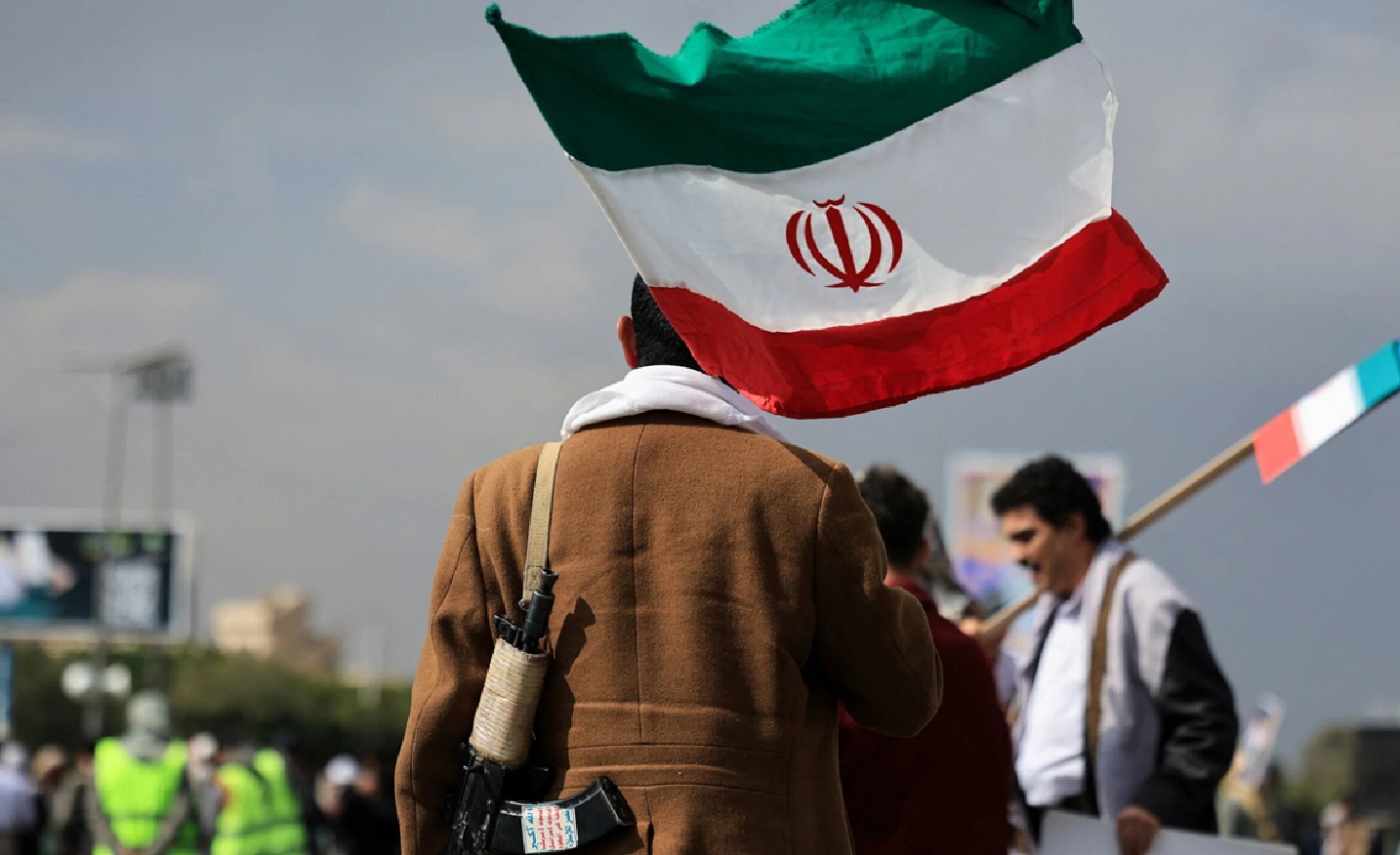
An earlier version of this article was completed on the eve of the joint Israeli–American military escalation against Iran. At the time, analysts were already warning that Israel’s long-standing objective, to draw Washington into a decisive confrontation with Iran, was nearing fruition. Since 1948, critics argue, Israel has repeatedly leveraged American military and political capital to reshape the Middle East’s balance of power, from the destruction of Iraq and Syria to the implosion of Libya and the fragmentation of Sudan.
Iran, in this reading, was always next.
From Non-Alignment To Strategic Alignment:
Post-independence India positioned itself as a moral force in the Non-Aligned Movement, resisting Cold War polarisation. Under Nehru, sovereignty was anchored in industrialisation, public education, and strategic autonomy. India formally recognised Israel in 1950 but kept relations limited for decades, balancing its support for Palestinian self-determination with pragmatic diplomacy.
That balance has collapsed.
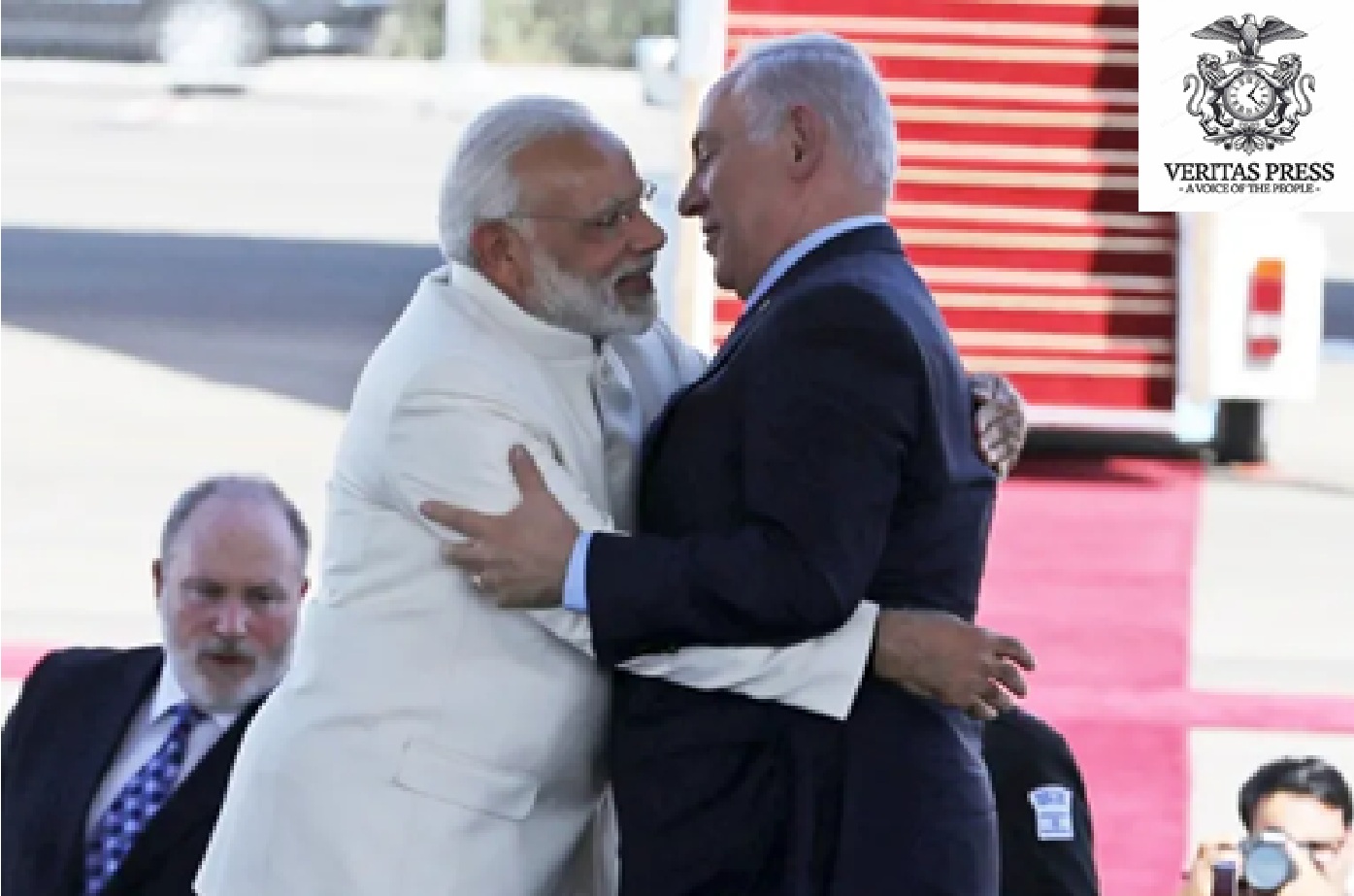
Under Modi and the Bharatiya Janata Party (BJP), India has cultivated one of the closest strategic relationships Israel enjoys outside the West. Defence trade has surged. Israeli drones, surveillance systems, and missile defence technologies now underpin significant portions of India’s military modernisation. Joint ventures between Indian conglomerates and Israeli arms manufacturers have proliferated.
The shift is not merely transactional. It is ideological.
Hindu majoritarianism and Jewish Zionism, critics argue, converge around ethnoreligious nationalism, securitised statecraft, and a doctrine of demographic control. The language of counterterrorism, border fortification, and “civilizational defence” flows seamlessly between New Delhi and Tel Aviv.
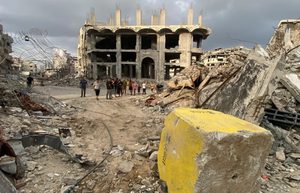
In his Knesset speech, Modi referenced the October 7 attacks while remaining largely silent on the catastrophic humanitarian toll in Gaza. Human rights organisations such as Amnesty International and Human Rights Watch have documented mass civilian casualties and described Israel’s actions in Gaza as potential war crimes. UN experts have warned of famine conditions and collective punishment.
Yet New Delhi has abstained from or diluted criticism at key international forums.
Iran As Act One:
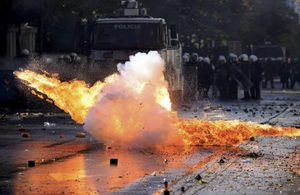
The recent Israeli–American strikes on Iranian targets, justified as preemptive and a war of choice, actions against alleged nuclear escalation, have intensified fears of regional war. Iranian officials condemned what they called “naked aggression,” while analysts in Doha and Beirut described the campaign as an attempt to redraw deterrence lines permanently in Israel’s favour.
“This is not about one nuclear facility,” a Gulf-based security analyst told regional media. “It is about restructuring the region’s security architecture.”
At the heart of that restructuring lies the U.S.-backed Integrated Air and Missile Defence (IAMD) network, linking radar and interception systems across parts of the Gulf. While Gulf states have poured billions into American defence contracts, critics note that Israel’s multi-layered shield, including Iron Dome and Arrow systems, remains uniquely robust.
“Arab money finances the architecture,” a former regional diplomat remarked, “but Israel is the fortress.”
The Emerging Axis:
The deeper concern among critics is not Iran alone but what they describe as a widening India–Israel–U.S. triangle. Through initiatives such as the I2U2 grouping (India, Israel, UAE, U.S.) and expanding naval cooperation in the Arabian Sea, India is no longer a peripheral actor in West Asian geopolitics.
For Israel, India offers three strategic assets:
Demographic and military weight — a counterbalance to Pakistan and a potential eastern anchor.
Economic depth — a massive market and investment partner.
Post-colonial legitimacy — a Global South power whose alignment softens accusations of Western imperialism.
For India, Israel offers advanced defence technology, intelligence cooperation, and lobbying leverage in Washington.
But the costs may be high.
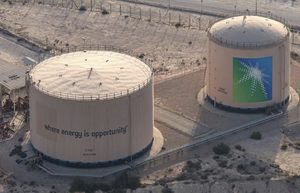
India’s trade with the Gulf Cooperation Council (GCC) states and Iran dwarfs its economic exchanges with Israel. Millions of Indian workers reside in Saudi Arabia, the United Arab Emirates, and other Gulf states. Remittances form a critical pillar of India’s foreign exchange stability.
Should tensions escalate further, particularly if Saudi Arabia or other Gulf states become direct theatres of confrontation, New Delhi’s balancing act could collapse.
Pakistan, Turkey, And The Wider Arc:
Regional observers also point to the implications for Pakistan and Turkey. An emboldened India, buttressed by Israeli intelligence and defence systems, could intensify pressure on Pakistan amid longstanding disputes over Kashmir. Ankara, which has positioned itself as a vocal critic of Israel’s Gaza campaign, may find itself further isolated within NATO structures increasingly sympathetic to Israeli security narratives.
The broader arc, critics argue, stretches from Greece through the Eastern Mediterranean to India’s western coast, a corridor of maritime cooperation and energy corridors that sidelines traditional Arab centrality.
Voices Of Dissent:
Within India, opposition leaders and civil society groups have questioned the moral and strategic trajectory. Members of the Indian National Congress have accused the BJP of abandoning India’s historic solidarity with Palestine. Student activists and academics warn that surveillance technologies tested in occupied territories are being deployed domestically.
“This is not the India of Nehru,” a Delhi-based political scientist told an independent news outlet. “We are trading non-alignment for entanglement.”
In the Gulf, commentary has grown more cautious but increasingly uneasy. While official statements remain measured, regional columnists have warned that reliance on U.S.-centric defence frameworks has not translated into equal protection.
A Strategic Gamble:
Whether the India–Israel partnership represents pragmatic realism or ideological overreach remains contested. Supporters argue it enhances India’s global standing and diversifies its defence suppliers. Critics counter that it entangles India in conflicts far removed from its core interests and risks alienating longstanding partners across West Asia.
What is clear is that the geopolitical landscape is shifting.
If the confrontation with Iran marks Act One, subsequent acts may unfold across the Gulf, South Asia, and the Eastern Mediterranean. The question facing Arab leaders, and indeed New Delhi, is whether alignment with Israel’s security doctrine ensures stability or accelerates fragmentation.
History suggests that regional conflagrations rarely remain contained.
As the Middle East absorbs the shockwaves of the Iran escalation, the durability of this emerging axis and the resilience of those caught in its tightening geometry will determine whether the next chapter brings consolidation or collapse.
Conclusion: The Architecture Of Entanglement.
What is unfolding is not a routine diplomatic realignment but the construction of a new security architecture, one that fuses ideology, arms commerce, intelligence integration, and geopolitical ambition into a single project. The India–Israel axis does not exist in a vacuum. It is embedded within a broader American security framework that has repeatedly destabilised the Middle East while insulating Israel from accountability.
Iran was not simply a target of opportunity. It was a test case.
The Israeli–American escalation demonstrated how regional airspace, radar networks, and Gulf-funded defence systems can be operationalised primarily for Israel’s protection. Gulf capitals financed contracts and hosted infrastructure, yet decision-making authority remained concentrated in Washington and Tel Aviv. The message was unmistakable: sovereignty is conditional within this framework.
India’s role in this architecture marks a decisive departure from its historical posture. The country that once championed anti-colonial solidarity now aligns openly with a state accused by major human rights organisations of apartheid and war crimes. The transformation is not merely diplomatic; it is ideological. Hindu majoritarianism and Zionist ethno-nationalism reinforce one another’s narratives: demographic anxiety, securitised citizenship, internal enemies, civilizational siege.
This convergence carries consequences beyond rhetoric.
First, it risks entangling India in conflicts whose escalation trajectories it does not control. Israeli doctrine has long favoured preemption and escalation dominance. When crises erupt in Gaza, Lebanon, Syria, or now Iran, Washington is pulled in, willingly or reluctantly. If New Delhi is structurally integrated into this axis, it may find its economic lifelines in the Gulf exposed to retaliatory shockwaves.
Second, the alliance recalibrates the balance in South Asia. With Israeli surveillance systems and missile technologies embedded in India’s arsenal, the asymmetry with Pakistan deepens. That imbalance may not deter conflict; it may encourage brinkmanship. The subcontinent, already nuclearised, cannot afford imported doctrines of permanent confrontation.
Third, the economic gamble is stark. India’s trade with the Gulf and broader Arab world far outweighs its exchanges with Israel. Millions of Indian workers live and labour across the Arabian Peninsula. Remittances stabilise families and foreign reserves alike. Should regional populations, not merely governments, begin to perceive India as complicit in Gaza’s devastation or future regional wars, the social contract underpinning that diaspora presence could fray.
Most critically, this alignment normalises a worldview in which regional fragmentation is not an accident but an instrument. The pattern from Iraq to Libya to Syria reveals a grim calculus: weakened states, fractured societies, and securitised enclaves serve certain strategic interests. If Iran’s neutralisation was Act One, the broader play concerns the long-term restructuring of the Middle East’s political geography.
There is still agency in this story. Gulf states retain leverage through energy markets, investment flows, and labour dynamics. India retains the option to recalibrate, to pursue strategic autonomy rather than strategic absorption. Even within Israel and the United States, dissenting voices question the sustainability of endless militarised dominance.
But time is narrowing.
History shows that alliances forged in the language of civilizational destiny often end in unintended consequences. Empires overextend. Proxies become liabilities. Economic interdependence punishes ideological rigidity. The India–Israel convergence may deliver short-term tactical gains, but it binds New Delhi to a security doctrine premised on perpetual confrontation.
The original architects of independent India warned against precisely this outcome: the surrender of sovereign judgment to great-power entanglements. If India completes its transformation from leader of the Non-Aligned Movement into an auxiliary pillar of a militarized Western–Israeli order, it will not simply be choosing partners. It will be choosing a historical identity.
And history, unlike diplomacy, does not offer easy reversals.
Source: Multiple News Agencies
Submissions:
For The Secure Submission Of Documentation, Testimonies, Or Exclusive Investigative Reports From Any Global Location, Please Utilise The Following Contact Details For Our Investigations Desk: enquiries@veritaspress.co.uk or editor@veritaspress.co.uk
Help Support Our Work:
Popular Information is powered by readers who believe that truth still matters. When just a few more people step up to support this work, it means more lies exposed, more corruption uncovered, and more accountability where it’s long overdue.
Help Protect Independent Journalism, Which Is Currently Under Attack.
If you believe journalism should serve the public, not the powerful, and you’re in a position to help, becoming a DONATOR or a PAID SUBSCRIBER truly makes a difference.
DONATION APPEAL: If You Found This Reporting Valuable, Please Consider Supporting Independent Journalism.
Help Support Our Work – We Know, We Know, We Know …
Seeing these messages is annoying. We know that. (Imagine what it’s like writing them … )
Your support fuels our fearless, truth-driven journalism. In unity, we endeavour to amplify marginalised voices and champion justice, irrespective of geographical location.
But it’s also extremely important. One of Veritas Press’s greatest assets is its reader-funded model.
1. Reader funding means we can cover what we like. We’re not beholden to the political whims of a billionaire owner. We are a small, independent and impartial organisation. No one can tell us what not to say or what not to report.
2. Reader funding means we don’t have to chase clicks and traffic. We’re not desperately seeking your attention for its own sake: we pursue the stories that our editorial team deems important and believe are worthy of your time.
3. Reader Funding: enables us to keep our website and other social media channels open, allowing as many people as possible to access quality journalism from around the world, particularly those in places where the free press is under threat.
We know not everyone can afford to pay for news, but if you’ve been meaning to support us, now’s the time.
Your donation goes a long way. It helps us:
Keep the lights on and sustain our day-to-day operations
Hire new, talented independent reporters
Launch real-time live debates, community-focused shows, and on-the-ground reporting
Cover the issues that matter most to our communities, in real time, with depth and integrity
We have plans to expand our work, but we can’t do it without your support. Every contribution, no matter the size, helps us stay independent and build a truly people-powered media platform.
If you believe in journalism that informs, empowers, and reflects the communities we serve, please donate today.
Kamran Faqir is a volunteer investigative journalist and writer committed to exposing hidden truths and amplifying underreported stories. Driven by social justice, he brings sharp insight and fearless truth-telling to independent journalism. NUJ registered.
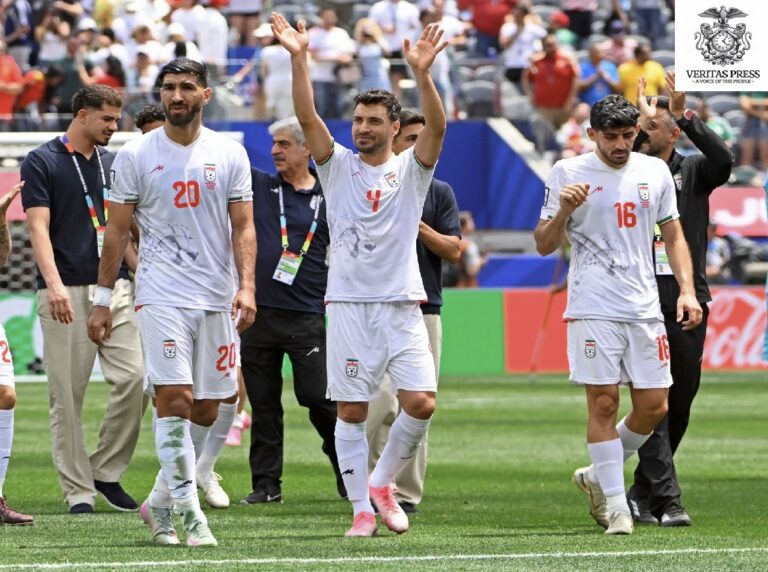
SEATTLE, TEHRAN — The U.S. Department of Homeland Security (DHS) will allow Iran’s national football team to enter the country 48 hours before their critical World Cup match against Egypt on Friday, a modest concession in a tournament where Team Melli’s travel conditions have sparked claims of oppression and competitive disadvantage.