Kamran Faqir is a volunteer investigative journalist and writer committed to exposing hidden truths and amplifying underreported stories. Driven by social justice, he brings sharp insight and fearless truth-telling to independent journalism. NUJ registered.
Original Article Date Published:
Article Date Modified:
Views:380
Listen to this article
Help support our mission, donate today and be the change. Every contribution goes directly toward driving real impact for the cause we believe in.
Just four days into what President Donald Trump has dubbed “Operation Epic Fury,” the United States finds itself mired in a conflict whose financial, strategic, and human costs are already spiralling far beyond initial projections. While the White House projects an image of overwhelming firepower and imminent victory, a growing body of open-source evidence, satellite imagery, and official admissions paints a starkly different picture: a U.S. military absorbing staggering equipment losses, a network of elite diplomatic and intelligence installations breached, and a nation entering a war of choice with no discernible exit strategy.
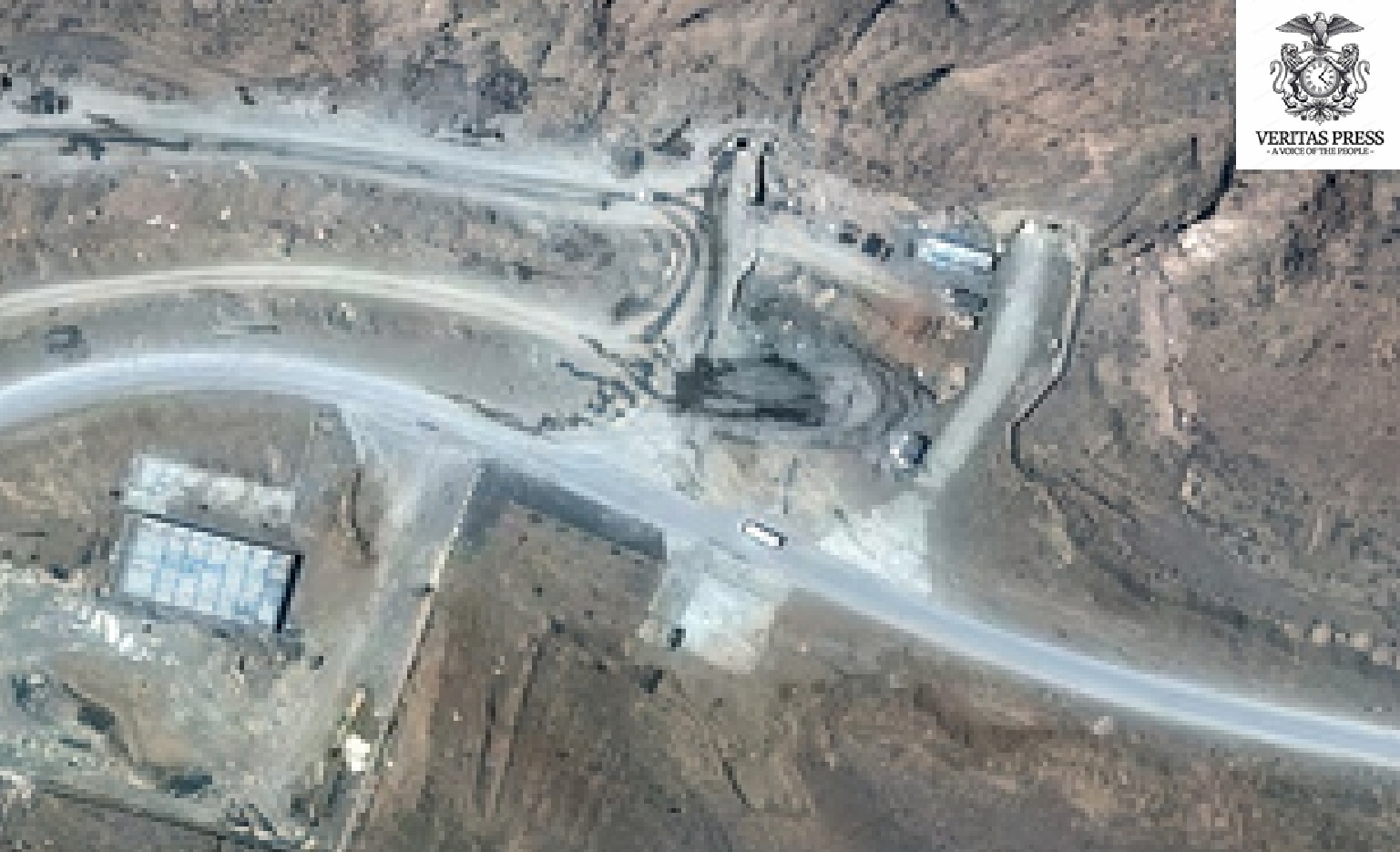
According to an analysis of satellite imagery and open-source intelligence by Turkey’s Anadolu Agency, the U.S. has suffered nearly $2 billion in direct equipment losses since hostilities commenced on Saturday, February 28. This figure, conservative in its estimates, represents the most immediate and tangible cost of the conflict and raises serious questions about the vulnerability of America’s most advanced and expensive military assets in the region.
“The Biggest Surprise”: A Multi-Billion Dollar Toll On US Assets.
The chief driver of these staggering losses is the confirmed destruction of a $1.1 billion AN/FPS-132 Early Warning Radar system at Qatar’s Al Udeid Air Base, the Pentagon’s largest military installation in the Middle East. A missile strike on Saturday scored a direct hit on the radar, a linchpin of regional missile defence. While Qatari officials have confirmed the damage, the loss creates a critical gap in the US’s ability to detect and track incoming ballistic missiles.
The costliest single item is just the beginning. In the United Arab Emirates, Iran claims to have destroyed the AN/TPY-2 radar component of a THAAD anti-ballistic missile system at Al-Ruwais Industrial City. Open-source satellite imagery “suggests that there has been a hit” on the facility housing the half-billion-dollar radar. The THAAD system is designed to intercept short, medium, and intermediate-range ballistic missiles; the loss of its most sensitive component is a massive strategic blow to the region’s defence architecture.
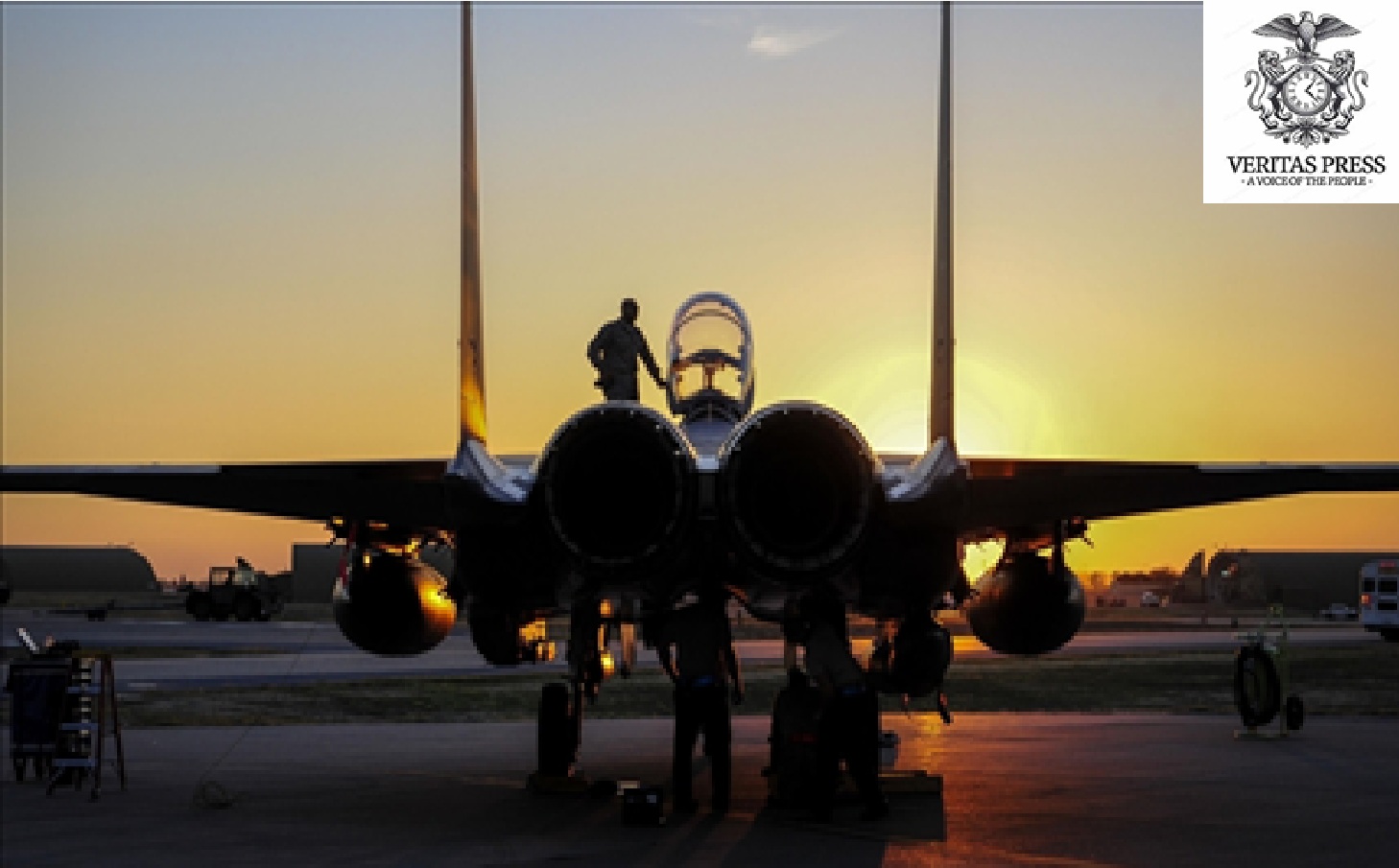
The human toll of this vulnerability was nearly compounded by a catastrophic friendly-fire incident. On Sunday, Kuwaiti air defences, operating in a high-alert environment described by CENTCOM as including “attacks from Iranian aircraft, ballistic missiles, and drones,” mistakenly engaged and shot down three U.S. Air Force F-15E Strike Eagles. Video footage circulating online showed one of the jets spiralling to the ground in a flat spin. While all six aircrew ejected safely, the loss of the aircraft, estimated at $94 million each, adds $282 million to the replacement ledger. In a statement, CENTCOM acknowledged the incident, adding that it was “under further investigation,” offering little solace for a $300 million mistake.
At the U.S. Navy’s Fifth Fleet headquarters in Manama, Bahrain, the opening salvos destroyed two massive AN/GSC-52B satellite communications terminals, valued at approximately $20 million. These radomes, critical for high-capacity, near-real-time communication across the theatre, were seen burning in verified videos.
A “War Of Narratives” And The Attack On Diplomacy:
While the U.S. military remains tight-lipped about overall casualties, a furious war of narratives is underway. The Islamic Revolutionary Guard Corps (IRGC) claimed on Monday that its retaliatory strikes had killed or injured 560 U.S. troops, a figure the Pentagon has vehemently denied. CENTCOM maintains a far lower count of four U.S. troops killed and several injured. However, the sheer number of impacts captured by satellite imagery across 11 different facilities, from Camp Arifjan in Kuwait to Erbil Base in Iraq, suggests the Iranian barrage was far more effective than initial U.S. briefings let on.
Perhaps the most alarming development for the U.S. is the apparent targeting of diplomatic missions, which under international law are considered sovereign territory. In a move that a Kuwaiti official described to reporters as a “brutal” attack, the U.S. Embassy in Kuwait City was struck, forcing its indefinite closure and the evacuation of non-essential staff.
The U.S. Consulate in Dubai was hit by a suspected Iranian drone that struck a parking lot adjacent to the main chancellery building.
Most significantly, the U.S. Embassy in Riyadh, Saudi Arabia, was hit by two drones. While the Saudi Defence Ministry reported only “limited fire and minor material damage,” a report in The Washington Post has sent shockwaves through the intelligence community: the CIA station inside the compound was also hit, with part of the roof collapsing and the interior filling with smoke. The targeting of a CIA station represents a direct and sophisticated attack on U.S. intelligence infrastructure, a red line that will undoubtedly escalate tensions behind the scenes.
The Price Of War: A $5 Billion Tab And A Booming Stock Market:
As the death toll and equipment losses mount, so too does the financial burden on American taxpayers. An initial estimate from the progressive think-tank, the Centre for International Policy, places the cost of the first few days of “Operation Epic Fury” at more than $5 billion. This includes the pre-positioning of forces, the daily operating costs of two carrier strike groups (estimated at $18 million a day), and the munitions expended, Tomahawk missiles at $2 million a pop and thousands of one-way attack drones.
This exorbitant spending occurs as the Trump administration pushes for austerity measures on social programs at home. As one analysis notes, a single Tomahawk missile could cover 775 children on Medicaid for a year. “If this war continues at the same pace, Americans could see their government burn through tens of billions of dollars, funds that would amount to the cost of Medicaid for millions in the United States,” the analysis warns.
The only sector seemingly guaranteed to profit from the chaos is the defence industry. Lockheed Martin, maker of the THAAD system, saw its stock rise 3.4% on Monday. RTX (formerly Raytheon) jumped 4.7%. But the biggest winner was Northrop Grumman, whose share price soared 6%, adding billions to its market value in a single day, buoyed by the use of its B-2 stealth bombers in the conflict. As market analyst Jonathan Siegmann of Stifel bluntly told clients, “Defence spending was already set to surge in 2026, and a protracted war with Iran will make the spending more urgent and less controversial.” The greatest threat to these investors, he noted, is peace.
“Recklessness Dressed Up As Resolve”: Political Blowback And A Missing Endgame.
On the home front, the president faces a political firestorm. California Governor Gavin Newsom was swift in his condemnation, stating, “The corrupt and repressive Iranian regime must never have nuclear weapons… But that does not justify the President of the United States engaging in an illegal, dangerous war that will risk the lives of our American service members”.
Senator Adam Schiff echoed this, accusing Trump of launching a “war of choice” without congressional authorisation, while former Vice President Kamala Harris labelled the operation “recklessness dressed up as resolve”.
Beyond the constitutional debate lies a more profound strategic question: what is the endgame? The strikes have killed high-value targets, including, reportedly, Iran’s Supreme Leader Ayatollah Ali Khamenei. President Trump has urged Iranians to “take over your government,” framing the campaign as a war of liberation. But history offers a grim lesson.
As an international relations scholar and analyst for The Conversation, points out, “Decapitation strikes assume that removing a leader removes the obstacle to political change. But Iran’s political system is institutional… The group most likely to fill the vacuum is the Revolutionary Guard, whose institutional interest lies in escalation, not accommodation”. The analysis draws parallels to the disastrous aftermaths of the Iraq and Libya interventions, where “Shock and Awe” led not to democracy, but to power vacuums, sectarian militias, and the rise of ISIS.
Furthermore, the strikes have likely crushed the pro-democracy movement that was gaining traction inside Iran just weeks ago. “Decades of research on rally-around-the-flag effects confirms that external attacks fuse regime and nation, even when citizens despise their leaders,” the analysis notes. Iranians who were chanting “death to the dictator” are now watching foreign bombs fall on their cities during Ramadan, with reports emerging of over 100 children killed in a strike on a girls’ school in Minab.
As the U.S. prepares for the promised “big one,” the words of Ebrahim Azizi, head of the Iranian Parliament’s national security commission, serve as a chilling warning: “We warned you! Now you have started down a path whose end is no longer in your control”. With $2 billion in equipment already smouldering, U.S. diplomatic missions breached, and no political strategy in sight, the United States is learning a hard lesson: you can’t bomb your way to a stable peace.
Source: Multiple News Agencies
Submissions:
For The Secure Submission Of Documentation, Testimonies, Or Exclusive Investigative Reports From Any Global Location, Please Utilise The Following Contact Details For Our Investigations Desk: enquiries@veritaspress.co.uk or editor@veritaspress.co.uk
Help Support Our Work:
Popular Information is powered by readers who believe that truth still matters. When just a few more people step up to support this work, it means more lies exposed, more corruption uncovered, and more accountability where it’s long overdue.
Help Protect Independent Journalism, Which Is Currently Under Attack.
If you believe journalism should serve the public, not the powerful, and you’re in a position to help, becoming a DONATOR or a PAID SUBSCRIBER truly makes a difference.
DONATION APPEAL: If You Found This Reporting Valuable, Please Consider Supporting Independent Journalism.
Help Support Our Work – We Know, We Know, We Know …
Seeing these messages is annoying. We know that. (Imagine what it’s like writing them … )
Your support fuels our fearless, truth-driven journalism. In unity, we endeavour to amplify marginalised voices and champion justice, irrespective of geographical location.
But it’s also extremely important. One of Veritas Press’s greatest assets is its reader-funded model.
1. Reader funding means we can cover what we like. We’re not beholden to the political whims of a billionaire owner. We are a small, independent and impartial organisation. No one can tell us what not to say or what not to report.
2. Reader funding means we don’t have to chase clicks and traffic. We’re not desperately seeking your attention for its own sake: we pursue the stories that our editorial team deems important and believe are worthy of your time.
3. Reader Funding: enables us to keep our website and other social media channels open, allowing as many people as possible to access quality journalism from around the world, particularly those in places where the free press is under threat.
We know not everyone can afford to pay for news, but if you’ve been meaning to support us, now’s the time.
Your donation goes a long way. It helps us:
Keep the lights on and sustain our day-to-day operations
Hire new, talented independent reporters
Launch real-time live debates, community-focused shows, and on-the-ground reporting
Cover the issues that matter most to our communities, in real time, with depth and integrity
We have plans to expand our work, but we can’t do it without your support. Every contribution, no matter the size, helps us stay independent and build a truly people-powered media platform.
If you believe in journalism that informs, empowers, and reflects the communities we serve, please donate today.
Kamran Faqir is a volunteer investigative journalist and writer committed to exposing hidden truths and amplifying underreported stories. Driven by social justice, he brings sharp insight and fearless truth-telling to independent journalism. NUJ registered.
SEATTLE, TEHRAN — The U.S. Department of Homeland Security (DHS) will allow Iran’s national football team to enter the country 48 hours before their critical World Cup match against Egypt on Friday, a modest concession in a tournament where Team Melli’s travel conditions have sparked claims of oppression and competitive disadvantage.