Kamran Faqir is a volunteer investigative journalist and writer committed to exposing hidden truths and amplifying underreported stories. Driven by social justice, he brings sharp insight and fearless truth-telling to independent journalism. NUJ registered.
Original Article Date Published:
Article Date Modified:
13 minutes
Views:327
Listen to this article
Help support our mission, donate today and be the change. Every contribution goes directly toward driving real impact for the cause we believe in.
Catholic Assembly Calls For Accountability, Says Incident Reflects ‘Grave Affront’ To Christian Faith.
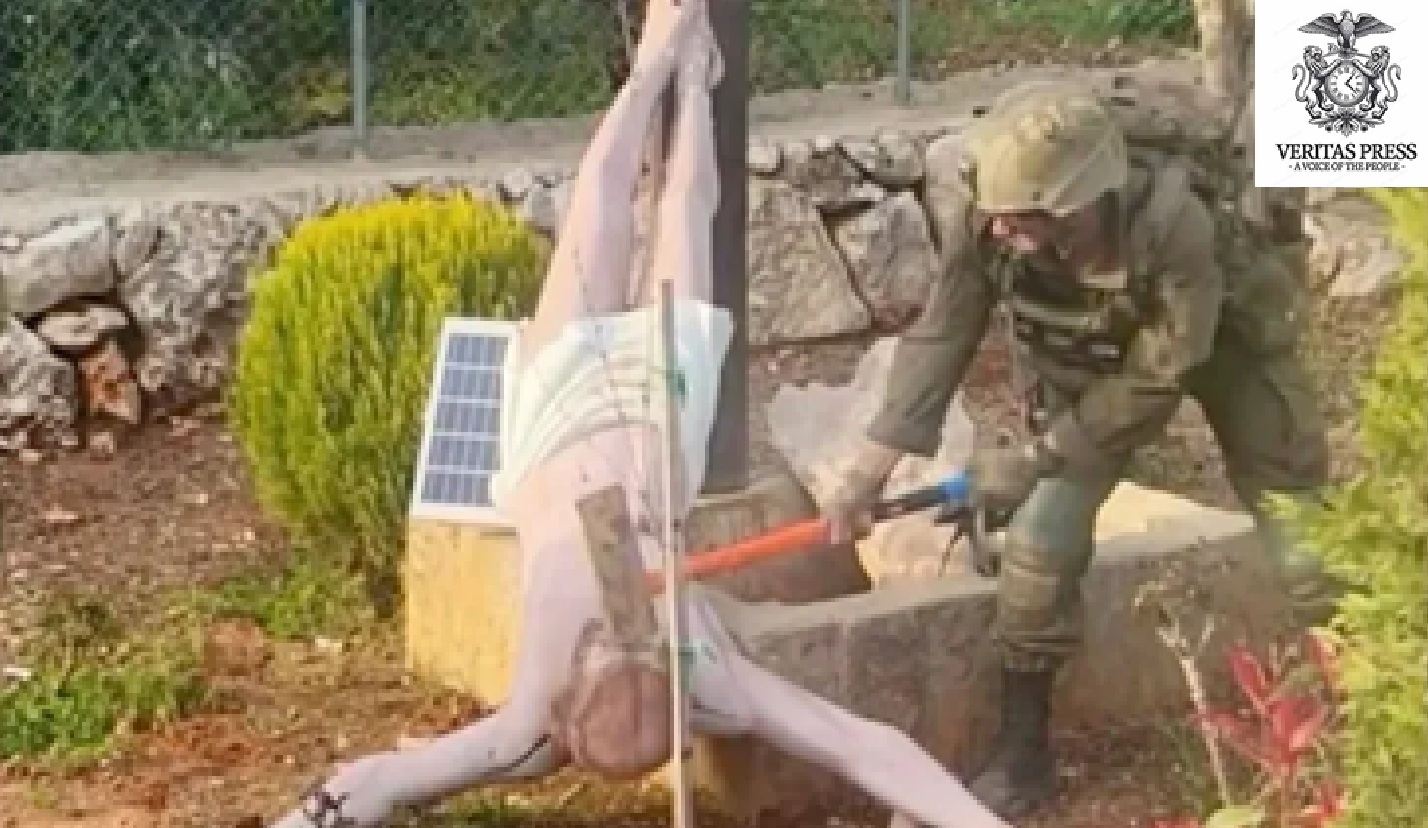
BEIRUT — On a quiet Saturday afternoon in Debel, a Christian village nestled among the hills of southern Lebanon just kilometres from the Israeli border, an Israeli soldier raised a sledgehammer and brought it down on the face of a fallen Jesus statue. The moment, captured in a single photograph, travelled across the world within hours, igniting fury from the Vatican to Washington, forcing an unprecedented apology from the Israeli government, and exposing the widening chasm between Israel’s self-professed values and the conduct of its forces in the field.
The image, posted to X by Palestinian journalist Younis Tirawi, showed a soldier in an Israeli Defence Forces uniform striking the head of a statue of the crucified Christ that had apparently toppled from its cross. The statue stood on a family’s private property at the edge of Debel, part of a small shrine in their garden. Within 24 hours, the IDF confirmed the photograph’s authenticity, launched a formal investigation, and promised to help restore the statue, an acknowledgement that the damage was done not by Hezbollah, not by accident, but by one of its own soldiers.
“I prayed it was AI,” said Farid Jubran, spokesman for the Latin Patriarchate in Jerusalem, encapsulating the disbelief felt across the Christian world. “I hoped it wasn’t true”.
The Village And The Image:
Debel is one of the few predominantly Christian villages in southern Lebanon where residents have remained throughout the latest round of fighting. The community, located roughly six kilometres from the Israeli border, has found itself trapped between the Iranian-backed militant group Hezbollah and the Israeli military campaign that began on March 2, 2026.
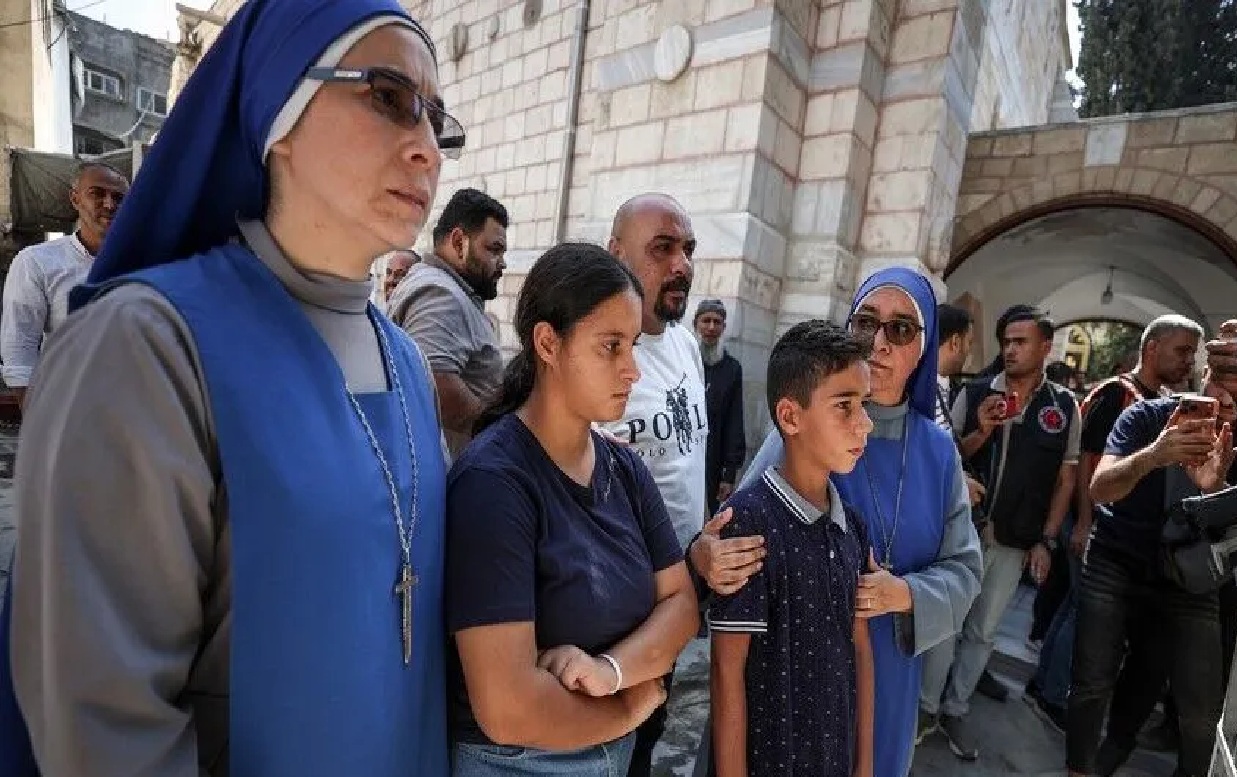
The cross in question belonged to a small shrine on the property of a local family living on the village’s periphery. Father Fadi Falfel, the priest of Debel’s congregation, described the scene with anguish: “One of the Israeli soldiers broke the cross and did this horrible thing, this desecration of our holy symbols”.
The photograph was posted by Younis Tirawi, a Palestinian journalist who has previously documented apparent misconduct by Israeli soldiers in Gaza. Reuters independently verified the location as Debel.
The IDF’s response moved with unusual speed. Lt. Col. Nadav Shoshani, the military’s international spokesperson, initially indicated the army was examining the photograph’s authenticity. By midnight on Sunday, the military confirmed it was genuine: “It was determined that the photograph depicts an IDF soldier operating in southern Lebanon”.
Official Condemnation: Unprecedented And Uneven.
The rapid and public nature of Israel’s condemnation was itself remarkable, a tacit acknowledgement of the diplomatic firestorm the image had unleashed. Prime Minister Benjamin Netanyahu, writing on X, said he was “stunned and saddened” and condemned the act “in the strongest terms”. He promised “harsh disciplinary action” and invoked Jewish values of tolerance.
Foreign Minister Gideon Saar went further, calling the incident “grave and disgraceful” and “shameful”. “We apologise for this incident and to every Christian whose feelings were hurt,” he wrote.
Yet even in his condemnation, Netanyahu could not resist drawing a political contrast that struck many observers as tone-deaf. “While Christians are being slaughtered in Syria and Lebanon by Muslims,” he stated, “the Christian population in Israel thrives unlike elsewhere in the Middle East”.
The reaction from the United States, Israel’s most crucial ally, was swift and sharp. U.S. Ambassador to Israel Mike Huckabee, a Baptist minister, demanded “swift, severe, & public consequences”. The response from the American right was particularly notable, given that evangelical Christians have long formed a bedrock of pro-Israel sentiment in U.S. politics. Former Republican Congresswoman Marjorie Taylor Greene, once a vocal Trump ally, posted mockingly: “‘Our greatest ally’ that takes billions of our tax dollars and weapons every year”. Former Congressman Matt Gaetz called the image “horrific”.
The Church Responds: A “Disturbing Moral Failure”.
The most forceful response came from the Assembly of Catholic Ordinaries of the Holy Land, the leadership body representing Catholic churches in Israel, Palestine, Jordan, and Cyprus. In a statement issued April 20 and signed by Cardinal Pierbattista Pizzaballa, the Latin Patriarch of Jerusalem, the assembly expressed its “profound indignation and unreserved condemnation” of the desecration.
“This act constitutes a grave affront to the Christian faith,” the statement read, “and adds to other reported incidents of desecration of Christian symbols by IDF soldiers in southern Lebanon”.
The assembly went beyond condemning a single act. It identified a systemic failure: “It further reveals a disturbing failure in moral and human formation, wherein even the most elementary reverence for the sacred and for the dignity of others has been gravely compromised”.
The leaders demanded, “immediate and decisive disciplinary action, a credible process of accountability, and clear assurances that such conduct will neither be tolerated nor repeated”.
This was not an isolated voice. The Maronite Catholic community in Lebanon, one of the oldest Christian communities in the world, spoke of suffering “greatly from the war,” pointing blame at both Hezbollah and Israel.
A Franciscan Catholic priest near Jerusalem, speaking anonymously, offered a more structural critique: “I don’t blame these kids who smashed a statue and posted a picture of it to the internet. I blame the educational system, which barely even tries to teach Jewish Israeli children about their Christian neighbours”.
The priest added: “I also blame the Rabbis who tell their followers that it’s okay to have an attitude of contempt towards Christians and the New Testament. Christian clergy in Jerusalem’s Old City get spat on by Orthodox Jewish children all the time… It’s been going on for years”.
Not An Isolated Incident:
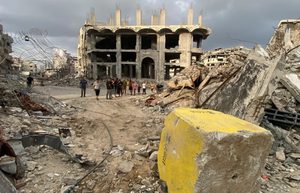
The Debel statue is not an aberration. It is the latest entry in a growing ledger of documented attacks on Christian and Muslim religious sites across Gaza, the West Bank, and southern Lebanon during Israel’s military operations.
In Gaza, the destruction has been systematic. The Church of Saint Porphyrius, one of the oldest churches in the world, was struck in October 2023, killing civilians sheltering inside its compound. The Holy Family Church, Gaza’s only Catholic church, has been repeatedly damaged by airstrikes. According to local authorities, approximately 79% of mosques across Gaza have been destroyed or severely damaged during Israeli operations.
In southern Lebanon, the pattern extends beyond Debel. During the November 2024 ground invasion, Israeli forces destroyed the Maqam Shamoun Al-Safa shrine in the village of Chamaa, a site long venerated by local communities and associated with Saint Peter. The St. George Melkite Catholic Church in Dardghaya was destroyed in an airstrike in December 2024. An ancient shrine and adjacent mosque in the border village of Mhaibib were levelled during military operations.
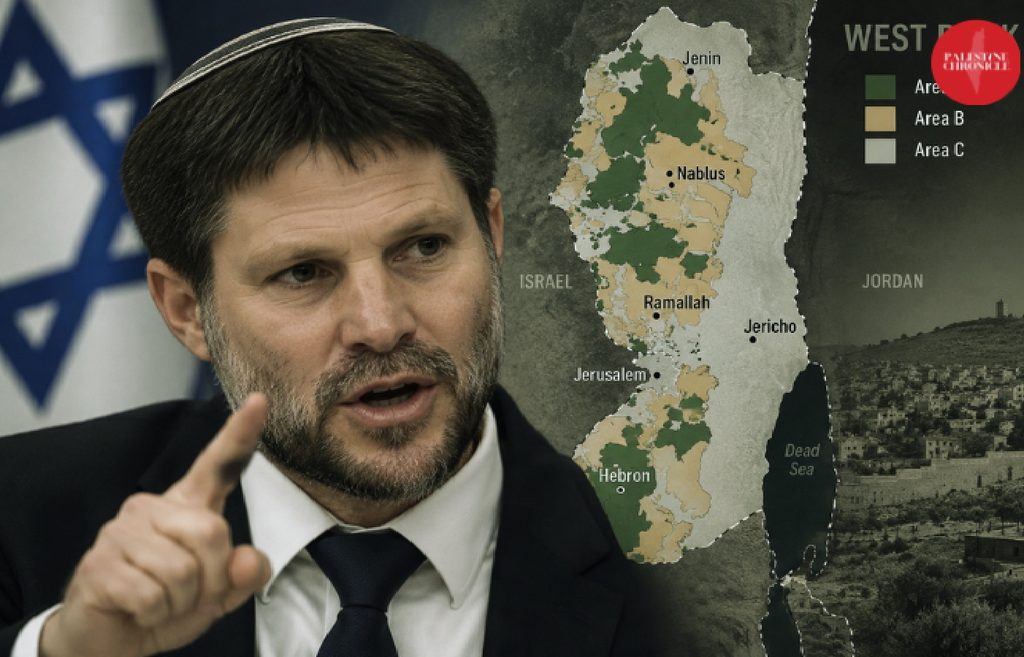
In the occupied West Bank, Christian leaders have warned of a rise in attacks by extremist Jewish settlers targeting churches, clergy, and religious property. In the Christian-majority town of Taybeh, settlers set fires near a Christian cemetery and a 5th-century church, prompting Greek Orthodox Patriarch Theophilos III to describe the incidents as “a direct and intentional threat” to the community.
The cumulative effect is a portrait of institutional indifference, or worse, toward the sanctity of non-Jewish religious sites in conflict zones where the IDF operates. The IDF maintains that it “has no intention of harming civilian infrastructure, including religious buildings or religious symbols”. But the gap between stated policy and documented reality grows wider with each incident.
The Ceasefire’s Fragile Context:
The statue’s destruction occurred against a backdrop of immense suffering and displacement. The current conflict erupted on March 2, 2026, when Hezbollah began firing rockets at Israel in support of Iran, two days after Israel and the United States launched a war on Tehran. Israel responded with massive airstrikes and a ground invasion of southern Lebanon.
According to Lebanese authorities, more than one million people have been displaced and over 2,290 killed — including 177 children and 100 healthcare workers. Israeli officials report thirteen soldiers and two civilians killed by Hezbollah attacks during the same period.
A U.S.-brokered ceasefire came into effect on Friday, April 17, just two days before the photograph was posted online. Yet Israeli troops remain in occupation of a wide area of southern Lebanon, including dozens of villages now under effective Israeli control.
For residents of Debel, the ceasefire has brought little relief. “We have every kind of crisis,” Father Falfel said. “We thought the ceasefire would bring us some relief, but we’re still surrounded, unable to travel to and from the town. There are some houses on the edge of town that we’re barred from accessing”.
The Accountability Gap:
The IDF has promised action. The Northern Command is investigating; the matter is being “addressed through the chain of command”; “appropriate measures will be taken against those involved”. The military says it will work with the local Christian community to “restore the statue to its place”.
But what does accountability mean in practice? The soldier has reportedly been identified. Yet history offers little reassurance. Israeli soldiers have been photographed destroying or looting property in Gaza and Lebanon before, and disciplinary action, when it comes, rarely meets the demands of “swift, severe, and public consequences” that U.S. Ambassador Huckabee called for.
The investigation faces inherent limitations. It will be conducted internally, by the same military chain of command that oversees the soldiers operating in southern Lebanon. There is no independent international mechanism to verify findings or ensure transparency.
The International Criminal Court (ICC) cannot fill this void. Lebanon retracted its consent for an ICC investigation into alleged Israeli war crimes in May 2024, closing off that avenue of international legal scrutiny.
The result is a system in which Israel investigates itself, announces measures it deems appropriate, and the world is asked to accept the outcome, while the pattern of documented abuses continues.
A Crisis Of Perception:
The Debel photograph has struck a nerve beyond the usual circles of Middle East watchers and human rights advocates. The image is visceral: a soldier in uniform, weapon-like tool in hand, obliterating the face of the Christian world’s central religious figure.
The political fallout extends beyond immediate condemnations. Polling by the Pew Research Centre indicates 60% of U.S. adults now hold an unfavourable view of Israel, up from 53% just a year ago. The erosion of support among American Christians, once a bulwark of pro-Israel sentiment, represents a strategic vulnerability that Israeli leaders cannot ignore.
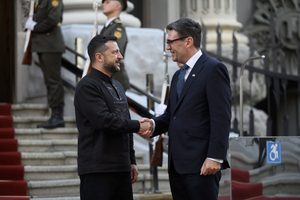
The diplomatic damage was compounded by a public exchange on X between Foreign Minister Saar and Polish Deputy Prime Minister Radosław Sikorski. Sikorski commended the apology but added that “IDF soldiers themselves admit to war crimes,” prompting Saar to accuse Sikorski of spreading “grave, baseless, and slanderous” statements. The exchange illustrated how a single photograph can escalate into a diplomatic spat between allies.
The incident also revives long-standing concerns about Israel’s treatment of its own Christian minority and Christian holy sites under its control. Last month, Israeli police prevented Cardinal Pizzaballa, the Latin Patriarch of Jerusalem, from entering the Church of the Holy Sepulchre for a private mass on Palm Sunday, citing safety concerns during the Iran war. Huckabee called that episode an “unfortunate overreach already having major repercussions around the world”.
Beyond One Statue:
A statue can be rebuilt. Stone and plaster can be restored. What cannot be easily repaired is the message sent by a photograph that has now been seen by millions: that a soldier of the Jewish state felt entitled, even compelled, to destroy the central icon of the world’s largest religion, in a country where Christians have lived for two millennia, and to document the act for public consumption.
The Assembly of Catholic Ordinaries identified the core problem not as a single act of vandalism but as a “disturbing failure in moral and human formation.” That failure extends beyond one soldier. It implicates a chain of command that permitted this behaviour, a military culture that allowed it to be photographed and shared, and a political leadership that has struggled to reconcile its stated values with the conduct of its armed forces in the field.
Father Falfel, speaking from a village still under effective siege despite a ceasefire, offered the simplest indictment: “We totally reject the desecration of the cross, our sacred symbol, and all religious symbols. It goes against the declaration of human rights, and it doesn’t reflect civility”.
The investigation is underway. It is claimed that the restoration has been promised. Is this accurate? The Christians of Debel, and indeed the entire global Christian community who are monitoring this situation from afar, are left contemplating a significant question: given that history indicates the emergence of another photograph is probable, will the response to that future visual evidence be any different from the current one?
Source: Multiple News Agencies
Submissions:
For The Secure Submission Of Documentation, Testimonies, Or Exclusive Investigative Reports From Any Global Location, Please Utilise The Following Contact Details For Our Investigations Desk: enquiries@veritaspress.co.uk or editor@veritaspress.co.uk
Help Support Our Work:
Popular Information is powered by readers who believe that truth still matters. When just a few more people step up to support this work, it means more lies exposed, more corruption uncovered, and more accountability where it’s long overdue.
Help Protect Independent Journalism, Which Is Currently Under Attack.
If you believe journalism should serve the public, not the powerful, and you’re in a position to help, becoming a DONATOR or a PAID SUBSCRIBER truly makes a difference.
DONATION APPEAL: If You Found This Reporting Valuable, Please Consider Supporting Independent Journalism.
Help Support Our Work – We Know, We Know, We Know …
Seeing these messages is annoying. We know that. (Imagine what it’s like writing them … )
Your support fuels our fearless, truth-driven journalism. In unity, we endeavour to amplify marginalised voices and champion justice, irrespective of geographical location.
But it’s also extremely important. One of Veritas Press’s greatest assets is its reader-funded model.
1. Reader funding means we can cover what we like. We’re not beholden to the political whims of a billionaire owner. We are a small, independent and impartial organisation. No one can tell us what not to say or what not to report.
2. Reader funding means we don’t have to chase clicks and traffic. We’re not desperately seeking your attention for its own sake: we pursue the stories that our editorial team deems important and believe are worthy of your time.
3. Reader Funding: enables us to keep our website and other social media channels open, allowing as many people as possible to access quality journalism from around the world, particularly those in places where the free press is under threat.
We know not everyone can afford to pay for news, but if you’ve been meaning to support us, now’s the time.
Your donation goes a long way. It helps us:
Keep the lights on and sustain our day-to-day operations
Hire new, talented independent reporters
Launch real-time live debates, community-focused shows, and on-the-ground reporting
Cover the issues that matter most to our communities, in real time, with depth and integrity
We have plans to expand our work, but we can’t do it without your support. Every contribution, no matter the size, helps us stay independent and build a truly people-powered media platform.
If you believe in journalism that informs, empowers, and reflects the communities we serve, please donate today.
Kamran Faqir is a volunteer investigative journalist and writer committed to exposing hidden truths and amplifying underreported stories. Driven by social justice, he brings sharp insight and fearless truth-telling to independent journalism. NUJ registered.
SEATTLE, TEHRAN — The U.S. Department of Homeland Security (DHS) will allow Iran’s national football team to enter the country 48 hours before their critical World Cup match against Egypt on Friday, a modest concession in a tournament where Team Melli’s travel conditions have sparked claims of oppression and competitive disadvantage.