Kamran Faqir is a volunteer investigative journalist and writer committed to exposing hidden truths and amplifying underreported stories. Driven by social justice, he brings sharp insight and fearless truth-telling to independent journalism. NUJ registered.
Original Article Date Published:
Article Date Modified:
8 minutes
Views:448
Listen to this article
Help support our mission, donate today and be the change. Every contribution goes directly toward driving real impact for the cause we believe in.
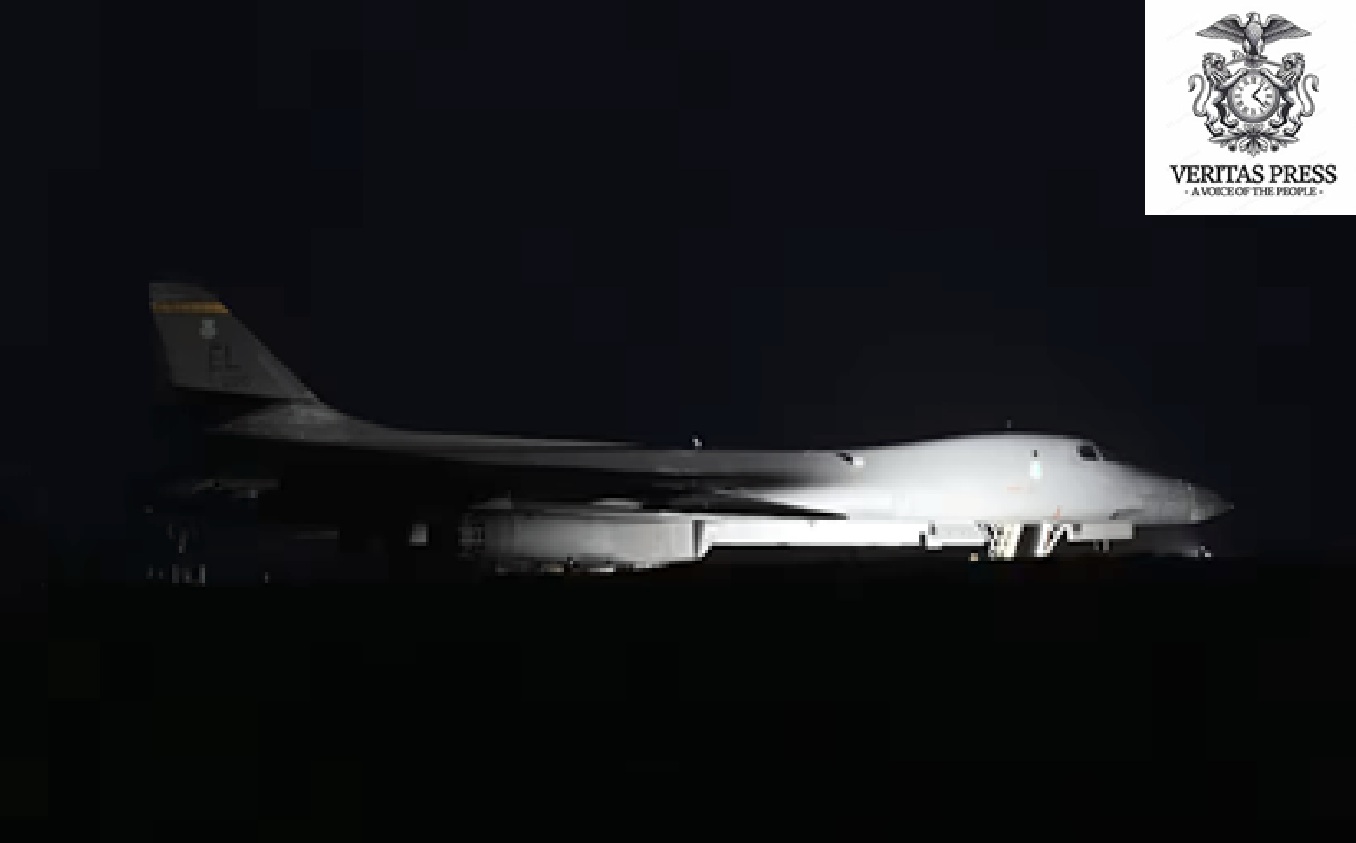
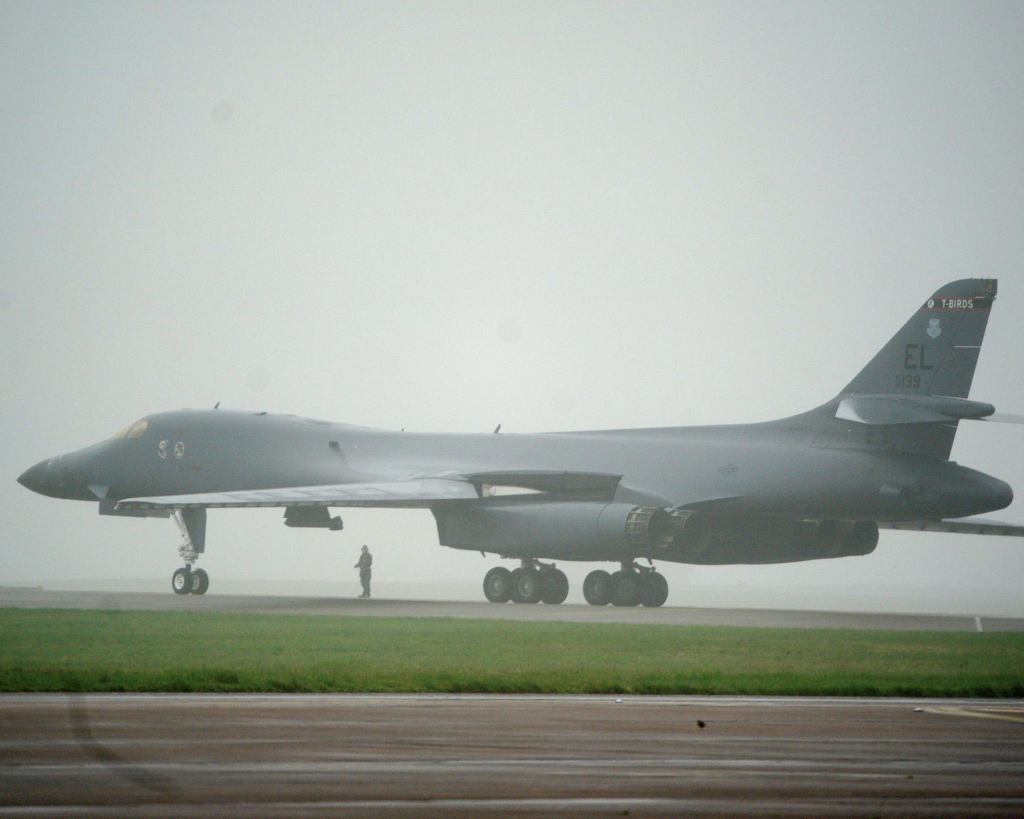
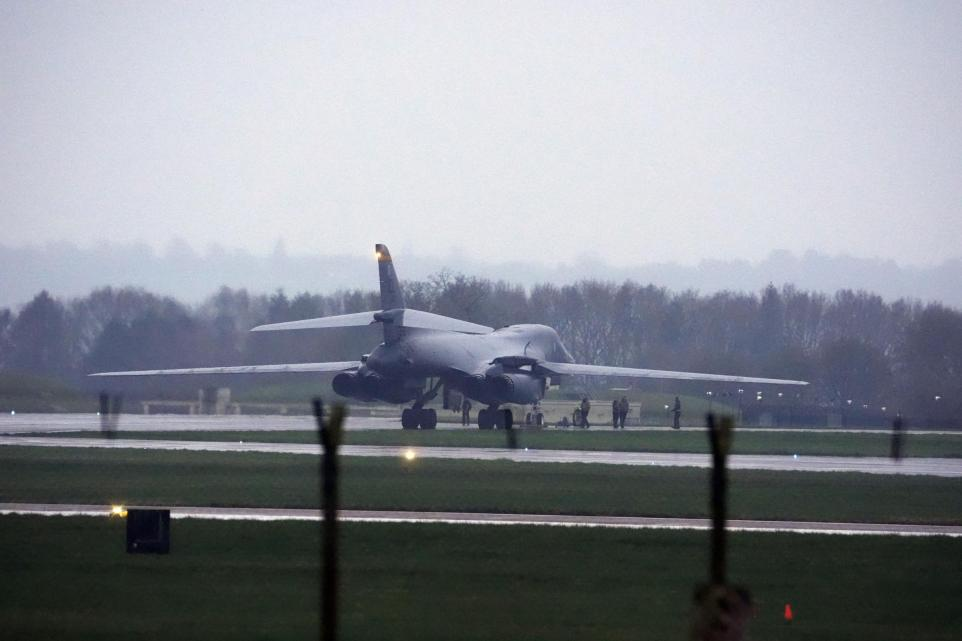
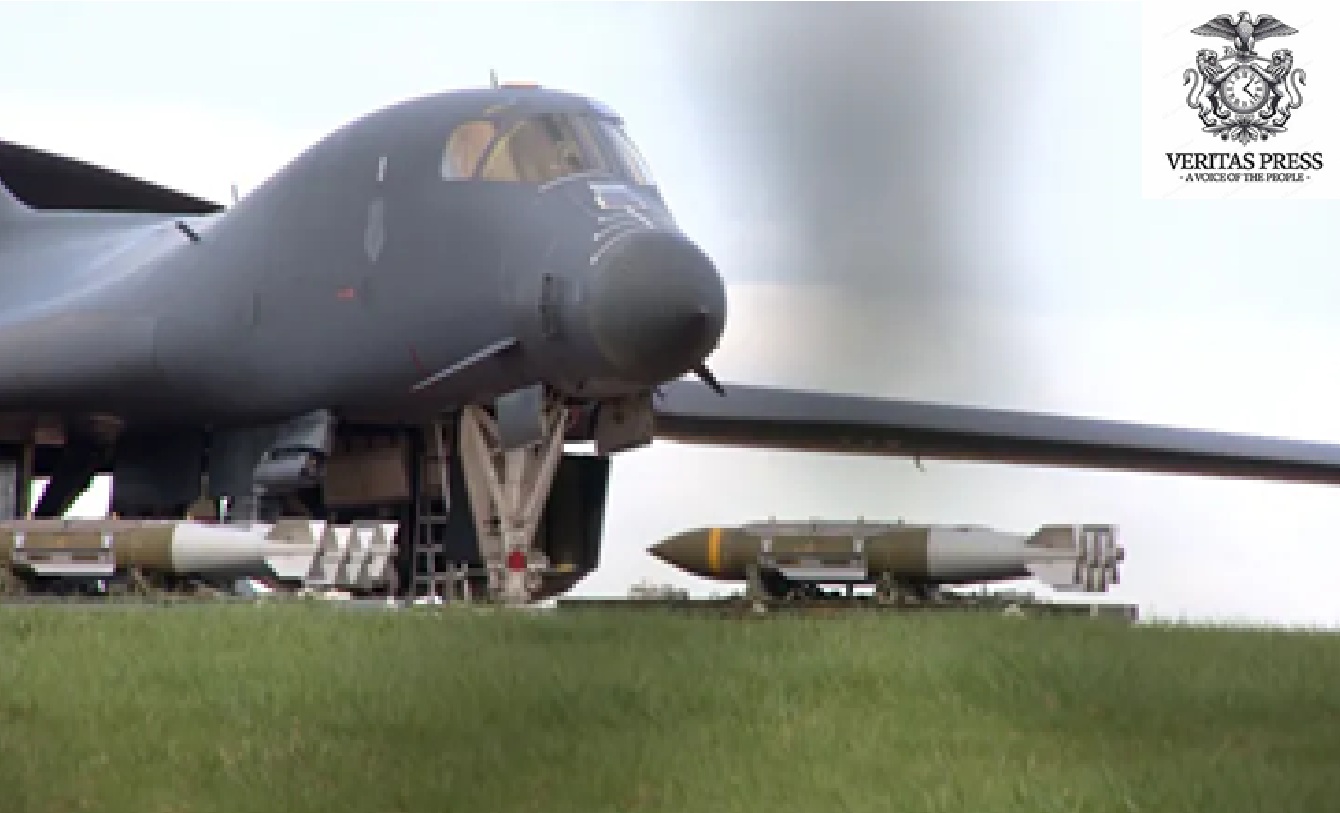
LONDON, UK – As the Middle East conflict entered its eighth day, the ominous silhouette of a Rockwell B-1 Lancer, nicknamed “The Bone,” touched down at RAF Fairford in Gloucestershire on Friday evening. The 146-foot heavy bomber, capable of delivering 24 cruise missiles at speeds exceeding 900 mph, was not merely a logistical asset; it was a deliberate act of political theatre.
A United States Air Force Rockwell B-1 Lancer bomber arrives at RAF Fairford in Gloucestershire. Photograph: Ben Birchall/PA
US Defence Secretary Pete Hegseth underscored the escalation, warning that strikes on Iran were “about to surge dramatically,” with “more fighter squadrons, more defensive capabilities, and more bomber pulses more frequently.” For British Prime Minister Keir Starmer, the arrival of the B-1 highlights the impossibly narrow, and increasingly illusory, line between “defensive” support and active belligerence. By allowing the US to use UK bases for strikes on Iranian targets, Britain has already stepped onto the battlefield indirectly, its territory becoming an operational extension of the war.
A B-1 Lancer arrives at RAF Fairford in Gloucestershire (Andrew Matthews/PA)
The “Defensive” Paradox: Semantics Or Complicity?
At the heart of the controversy is a single, heavily contested word: defensive. On Sunday, Starmer authorised the US to use RAF Fairford and the UK’s strategic base in Diego Garcia for strikes against Iranian missile sites framed as “defensive.”
Starmer defended his decision in the House of Commons: “The United Kingdom was not involved in the initial US and Israeli strikes on Iran. That decision was deliberate,” citing a historic UK preference for negotiated solutions on Iran’s nuclear program. He argued that after Iran’s retaliatory attacks on Gulf states and the drone strike on RAF Akrotiri in Cyprus, Britain had a right to participate in the “collective self-defence of longstanding friends.”
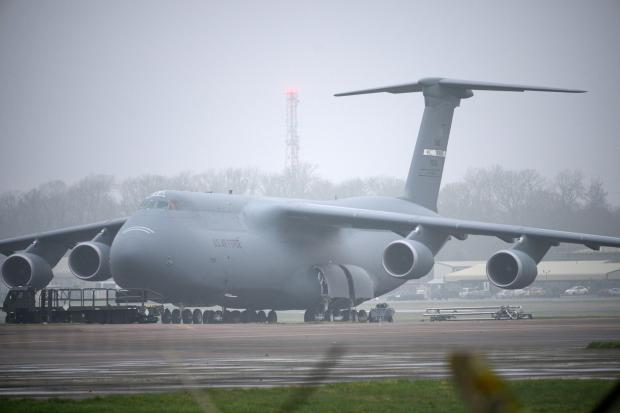
A US Air Force C-5 Galaxy stands on the apron at RAF Fairford (Image: Christopher Furlong / Getty Images)
Critics call this a distinction without a difference. By allowing US bombers to operate from British soil to take out “missile sites,” the UK is facilitating the very core of the US air campaign. In effect, Britain has entered the war against Iran indirectly: hosting and enabling US military action from UK bases makes the conflict a shared operational endeavour, not a distant “defensive” obligation. Shadow Foreign Secretary Priti Patel condemned the government: “Never in the history of our great nation has a government been so feeble at a time when our people and allies are under assault.” Reform UK leader Nigel Farage went further, framing Starmer as a victim of an internal “left-wing revolt” that left Britain “humiliated” on the global stage.
The UK government’s legal justification hinges on the claim that RAF jets could strike Iranian missile sites if they threaten British interests, a loophole that could draw the UK into offensive operations under the guise of protection.
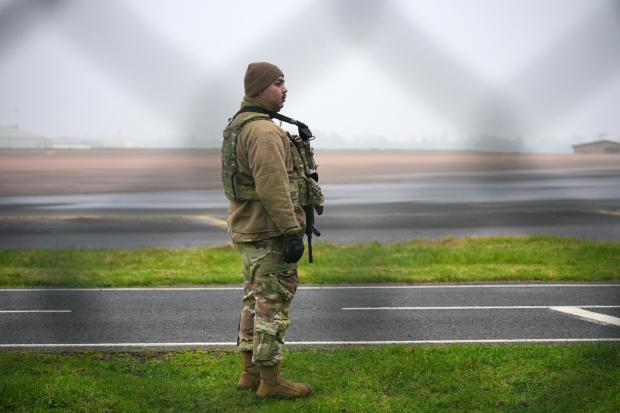
Armed airmen of the US Air force guard the perimeter fence at RAF Fairford (Image: Christopher Furlong / Getty Images)
The Gulf Betrayal: Iran Miscalculates.
While London navigates semantics, Tehran is grappling with strategy. Analysts note that Iran’s decision to strike Gulf states, Saudi Arabia, UAE, Qatar, and Kuwait, represents a serious miscalculation. These nations had repeatedly assured Tehran that their territories would not be used as launchpads for military action. Yet Iran launched hundreds of missiles and drones against them.
On Friday, Saudi Arabia intercepted drones targeting the Shaybah oil field and a ballistic missile aimed at Prince Sultan Air Base, which hosts US personnel. Qatar’s Energy Minister Saad al-Kaabi warned the conflict could “bring down the economies of the world,” pushing oil prices toward $150 a barrel.
The Gulf Cooperation Council (GCC) responded with an unprecedented joint condemnation, branding Iran’s actions a “serious violation of sovereignty and a clear breach of international law.” For the UK, whose economic and strategic ties to the Gulf are crucial, this represents a diplomatic earthquake. By allowing US forces to operate from British bases against Iran, London has effectively tied itself to the escalation and now shares a strategic stake in the fallout from Tehran’s miscalculations.
The Cyprus Conundrum: HMS Dragon And The Cost Of Delay.
The crisis exposes Britain’s stretched resources. On Monday, a drone, believed to have been launched from Lebanon by Hezbollah, struck RAF Akrotiri’s runway, landing within 800 yards of British personnel.
While France and Greece rapidly deployed assets, the UK’s promised air defence destroyer, HMS Dragon, remains in Portsmouth, undergoing preparation for long-term deployment. Its delayed arrival leaves the UK exposed and undermines confidence among allies. “We feel more supported by other European countries than our own,” said Lorraine, a Briton resident of Cyprus for 35 years.
The broader implication is stark: by hosting US operations on British soil and in nearby territories, the UK is no longer a neutral bystander in the region. Its military and logistical footprint, coupled with delayed responses, effectively embeds Britain into the war, leaving it vulnerable both strategically and diplomatically.
Voices From The Diaspora:
In Manchester, approximately 1,000 British Iranians gathered to express the complexity of their positions. Many expressed reluctant support for US-Israeli action, not out of militarism, but desperation for regime change.
Farid Vahidi, a human rights activist, said, “It’s not easy to talk about, but the fact is we’ve been under so much repression and pressure that we just want to break free.” Another young woman, speaking anonymously, admitted her “bittersweet feelings”: “In an ideal world, no citizen would like their country to be bombed, but the regime pushed us to the point where foreign intervention seemed like the only option.”
Meanwhile, protests are expected outside RAF Fairford, where anti-war activists decry Britain’s role as a launchpad for what they see as an illegal war of aggression.
The “Big One”: Escalation On The Horizon:
As the conflict intensifies, rhetoric hardens. President Trump demanded Iran’s “unconditional surrender,” threatening potential deployment of the GBU-43/B MOAB. On the battlefield, Iran reportedly fired a coast-to-sea missile at the USS Abraham Lincoln, while Israeli airstrikes continue across western Iran and into Beirut.
Casualties mount. Iran’s UN ambassador reported at least 1,332 civilian deaths, including women and children, accusing the US and Israel of war crimes and crimes against humanity.
In this volatile environment, the UK’s role can no longer be framed as merely peripheral. By authorising US operations from British bases, even under the veneer of “defensive” support, London has become an indirect participant in the conflict, tied legally, strategically, and politically to the unfolding war. Starmer insists on “calm, level-headed leadership,” but as US bombardment surges, Gulf allies seethe, and British citizens remain vulnerable, the question is no longer whether the UK is involved; it is whether Starmer’s legal and political scaffolding can withstand the full weight of a regional war.
Source: Multiple News Agencies
Submissions:
For The Secure Submission Of Documentation, Testimonies, Or Exclusive Investigative Reports From Any Global Location, Please Utilise The Following Contact Details For Our Investigations Desk: enquiries@veritaspress.co.uk or editor@veritaspress.co.uk
Help Support Our Work:
Popular Information is powered by readers who believe that truth still matters. When just a few more people step up to support this work, it means more lies exposed, more corruption uncovered, and more accountability where it’s long overdue.
Help Protect Independent Journalism, Which Is Currently Under Attack.
If you believe journalism should serve the public, not the powerful, and you’re in a position to help, becoming a DONATOR or a PAID SUBSCRIBER truly makes a difference.
DONATION APPEAL: If You Found This Reporting Valuable, Please Consider Supporting Independent Journalism.
Help Support Our Work – We Know, We Know, We Know …
Seeing these messages is annoying. We know that. (Imagine what it’s like writing them … )
Your support fuels our fearless, truth-driven journalism. In unity, we endeavour to amplify marginalised voices and champion justice, irrespective of geographical location.
But it’s also extremely important. One of Veritas Press’s greatest assets is its reader-funded model.
1. Reader funding means we can cover what we like. We’re not beholden to the political whims of a billionaire owner. We are a small, independent and impartial organisation. No one can tell us what not to say or what not to report.
2. Reader funding means we don’t have to chase clicks and traffic. We’re not desperately seeking your attention for its own sake: we pursue the stories that our editorial team deems important and believe are worthy of your time.
3. Reader Funding: enables us to keep our website and other social media channels open, allowing as many people as possible to access quality journalism from around the world, particularly those in places where the free press is under threat.
We know not everyone can afford to pay for news, but if you’ve been meaning to support us, now’s the time.
Your donation goes a long way. It helps us:
Keep the lights on and sustain our day-to-day operations
Hire new, talented independent reporters
Launch real-time live debates, community-focused shows, and on-the-ground reporting
Cover the issues that matter most to our communities, in real time, with depth and integrity
We have plans to expand our work, but we can’t do it without your support. Every contribution, no matter the size, helps us stay independent and build a truly people-powered media platform.
If you believe in journalism that informs, empowers, and reflects the communities we serve, please donate today.
Kamran Faqir is a volunteer investigative journalist and writer committed to exposing hidden truths and amplifying underreported stories. Driven by social justice, he brings sharp insight and fearless truth-telling to independent journalism. NUJ registered.
SEATTLE, TEHRAN — The U.S. Department of Homeland Security (DHS) will allow Iran’s national football team to enter the country 48 hours before their critical World Cup match against Egypt on Friday, a modest concession in a tournament where Team Melli’s travel conditions have sparked claims of oppression and competitive disadvantage.