



Help support our mission, donate today and be the change. Every contribution goes directly toward driving real impact for the cause we believe in.
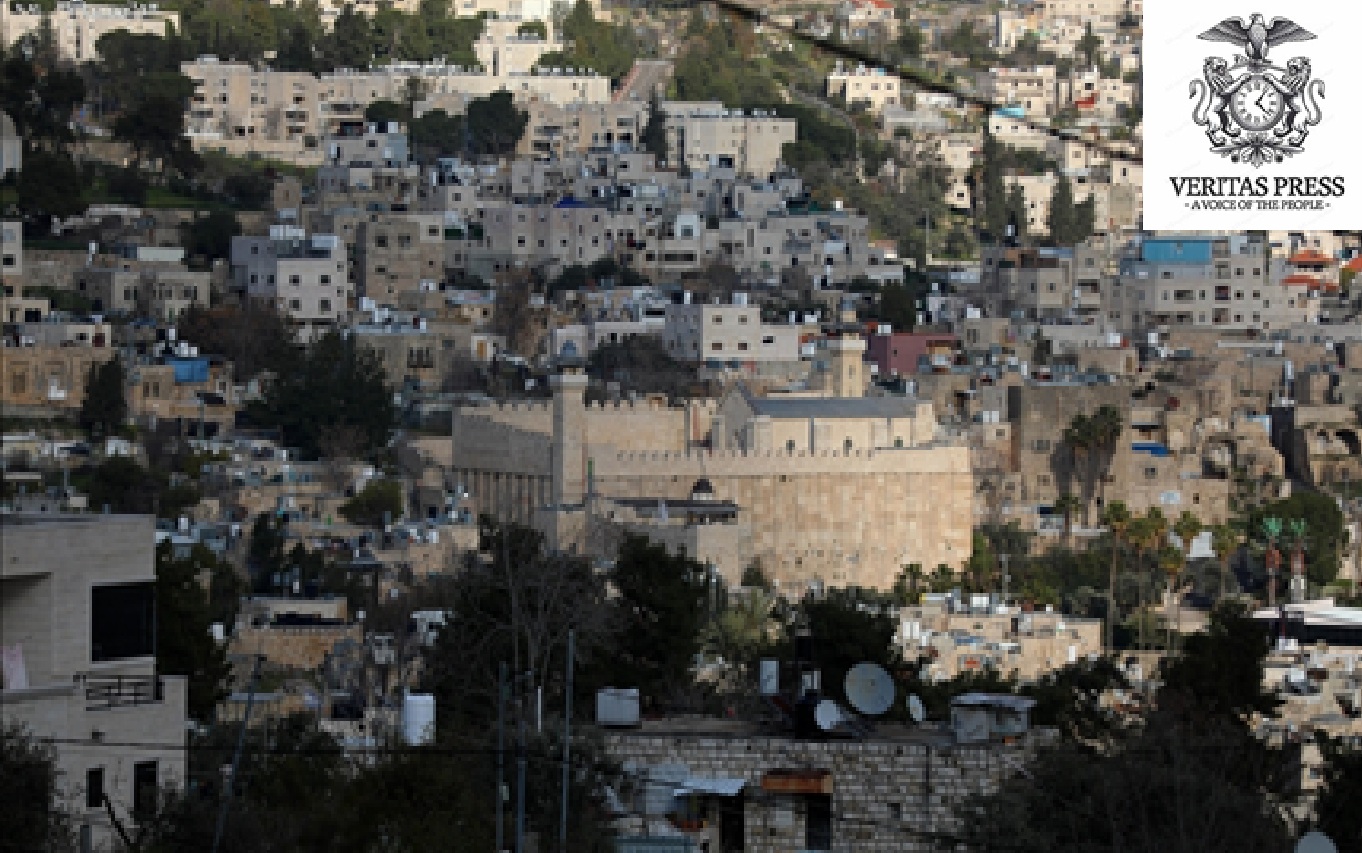
The third Friday of Ramadan is typically a day when the ancient stones of Hebron’s Old City vibrate with the footsteps of thousands of worshippers.
The narrow alleys leading to the Ibrahimi Mosque, the revered site where tradition holds that the Prophet Ibrahim (Abraham) is buried, are normally filled with worshippers, the air thick with prayer and the spirit of the holy month.
This year, however, the scene was starkly different.
Instead of crowds and celebration, the streets were marked by military checkpoints, heavily armed soldiers, and barricades sealing off access to one of Islam’s holiest sites in Palestine.
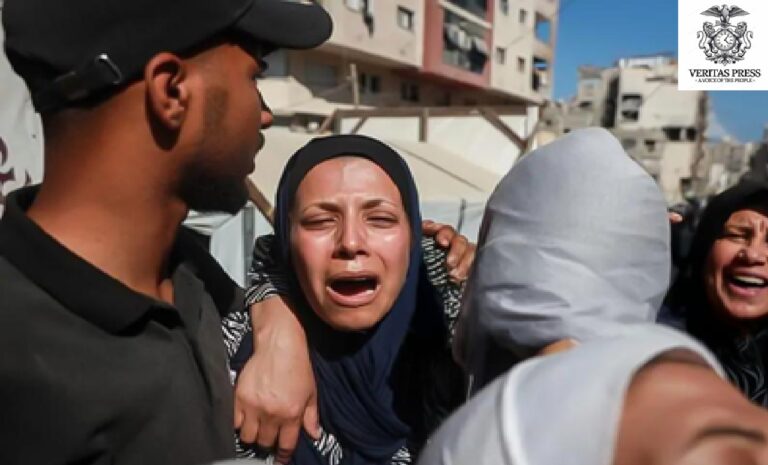
On February 27, Israeli authorities permitted only 60 Palestinian worshippers to enter the mosque for Friday prayers. Thousands gathered outside its gates, blocked by Israeli military checkpoints and steel barriers. Many were forced to pray in the surrounding streets; others turned back in frustration.
“Thousands of worshippers were expected to gather for prayer on this blessed day, but the occupation set a very small limit,” said Mutaz Abu Sneineh, director of the mosque. He warned that the measure sets “a dangerous precedent that violates freedom of worship and undermines Islamic religious rituals.”
Palestinian officials and rights groups say the restriction cannot be understood as an isolated security decision. Instead, they argue it is the latest stage in a three-decade process of spatial fragmentation and administrative takeover that has gradually transformed the mosque and the surrounding city.
The number 60 has therefore become symbolic: a stark indicator of how a sacred site has been steadily hollowed out under military occupation, settler expansion, and administrative control.
From Massacre To Partition: The 1994 Blueprint.
The current reality traces back to one of the darkest episodes in modern Palestinian history.
On February 25, 1994, during Ramadan, an American-Israeli settler, Baruch Goldstein, opened fire on Muslim worshippers inside the mosque.
The attack, known as the Cave of the Patriarchs massacre, killed 29 Palestinians and injured more than 100.
Instead of dismantling the nearby settlements that had produced the attacker, Israeli authorities responded by restructuring control over the mosque itself.
The site was divided:
- 63% allocated to Jewish worshippers, known as the Tomb of the Patriarchs
- 37% retained for Muslim prayer
For Palestinians, the decision institutionalised the consequences of the massacre.
A letter submitted by the Palestinian mission to the United Nations in 1994 warned that the measures, “portrayed by the Israeli Government as security steps… aim to create a new illegal de facto situation and establish Israeli rights over Al-Haram Al-Ibrahimi.”
That warning proved prescient.
Three years later, the Hebron Protocol formalised the division of the city. Roughly 80% of Hebron came under Palestinian administration (H1), while the Old City and the area surrounding the mosque, known as H2, remained under full Israeli military control.
In this area, the Palestinian movement was sharply restricted, while Israeli settlers living in fortified enclaves enjoyed military protection.
The once-bustling commercial artery of the Old City, Shuhada Street, was gradually closed to Palestinian traffic. Hundreds of shops were shuttered, transforming what was once the economic heart of Hebron into a militarised corridor.
Administrative Annexation: The New Phase.
While the 1994 partition created a physical division, Palestinian officials warn that a new phase is now underway, one based on bureaucratic control rather than overt force.
In February 2026, the Israeli government approved sweeping changes to land registration and civil administration across parts of the occupied West Bank.
Under the new measures, authority over building permits and municipal oversight surrounding the Ibrahimi Mosque was transferred from the Palestinian Hebron municipality to the Israeli Civil Administration.
For Palestinian officials, the move represents a significant escalation.
“What is happening today is the most serious development since 1967,” Abu Sneineh said. “It paves the way for a new division or an even harsher reality than the spatial and temporal division imposed since the massacre.”
Critics say the decision effectively enables Israel to alter infrastructure and planning rules around the mosque without Palestinian consent, further entrenching settlement expansion.
Mohannad al-Jaabari of the Hebron Rehabilitation Committee described a broader strategy involving:
- confiscation of Palestinian shops
- expansion of settlement infrastructure
- Integration of municipal utilities into Israeli networks
Together, he said, these measures create what Palestinians describe as “an entrenched apartheid system.”
Ramadan Under Restrictions:
The dramatic restriction on the third Friday of Ramadan is the visible result of these policies.
According to the Palestinian Ministry of Religious Endowments, Israeli forces prevented the call to prayer, the adhan, at the mosque dozens of times in recent months. On some occasions, loud music was reportedly played in the Jewish section during Muslim prayer hours.
Access restrictions have also affected humanitarian services.
Officials say Israeli forces have blocked Palestinian Red Crescent teams from reaching parts of the mosque compound and the surrounding Old City.
Hajj Husni al-Rajabi, a survivor of the 1994 massacre, told Palestinian media that the current conditions are worse than those immediately after the attack.
Entering the mosque now often requires navigating multiple checkpoints and identity inspections, turning what was once a short walk into a prolonged ordeal.
During Ramadan, worshippers say they were also prevented from bringing water and dates for communal iftar meals, traditionally shared among those breaking the fast.
Regional War And Local Repression:
These developments are unfolding amid wider regional tensions.
Israel has cited heightened security concerns linked to its confrontation with Iran and regional escalation following recent attacks and counterattacks across the Middle East.
Palestinian officials argue that the regional conflict has been used as a justification to tighten restrictions in Hebron and across the occupied West Bank.
At times, Israeli authorities have completely closed the mosque to Muslim worshippers, citing security threats.
Rights groups warn that such closures amount to collective punishment, prohibited under international humanitarian law.
Human Rights Groups: A System Of Segregation And Control.
For years, international human rights organisations have warned that the system governing Hebron’s Old City represents one of the starkest examples of segregation and military control in the occupied West Bank.
In a landmark 2019 report, the Israeli human rights organisation B’Tselem described the restrictions imposed on Palestinians around the Ibrahimi Mosque as part of a broader regime of separation designed to privilege Israeli settlers while confining Palestinian residents to shrinking enclaves.
According to the group, the area surrounding the mosque, located in Hebron’s Israeli-controlled H2 zone, has been transformed into a network of military checkpoints, restricted roads, and surveillance posts that severely limit Palestinian movement.
B’Tselem documented that dozens of streets in the Old City are either partially or completely off-limits to Palestinians, while settlers move freely under the protection of Israeli soldiers.
“The result,” the organisation wrote, “is a policy of separation based on nationality that systematically favours settlers and severely harms the daily lives of Palestinian residents.”
A separate report by Human Rights Watch concluded that Israeli policies in Hebron, including restrictions on movement, discriminatory planning rules, and the expansion of settlements, fit within a broader system the organisation has described as “apartheid and persecution” under international law.
The group noted that Hebron represents one of the most visible examples of this system, where a few hundred Israeli settlers live among tens of thousands of Palestinians but receive vastly different legal protections and access to public space.
“The Israeli government’s restrictions on Palestinian movement in Hebron go far beyond what would be necessary for legitimate security concerns,” Human Rights Watch reported, arguing that many measures appear designed to facilitate settlement expansion while pushing Palestinian residents out of the area.
UNESCO: Heritage Under Threat.
Beyond the political and humanitarian implications, cultural heritage experts warn that the transformation of the mosque also threatens one of the region’s most historically significant religious sites.
In 2017, UNESCO voted to designate Hebron’s Old City, including the Ibrahimi Mosque, as a Palestinian World Heritage Site in Danger.
The designation cited concerns about the site’s preservation under conditions of military occupation and settlement expansion.
Israeli authorities strongly opposed the decision at the time, arguing that it ignored Jewish historical ties to the site.
But UNESCO officials warned that ongoing restrictions, infrastructure changes, and settlement construction risk permanently altering the historic character of the Old City and its religious landmarks.
For Palestinians, those fears are now increasingly visible on the ground.
Settler Violence And Systematic Harassment:
Hebron is not only a story of administrative takeover; it is also a city where Palestinian residents face daily threats of settler violence.
According to the United Nations Office for the Coordination of Humanitarian Affairs (OCHA), between January 2025 and January 2026, there were over 120 documented incidents of settler attacks against Palestinians in H2, including physical assault, property damage, and intimidation at checkpoints.
OCHA noted that Israeli military forces are frequently present but rarely intervene effectively, contributing to a climate of impunity. In one report, the agency highlighted that settlements in Hebron are “protected and expanded at the expense of Palestinian rights, including the right to worship, move freely, and access essential services.”
Palestinian residents describe being “trapped between the soldiers and the settlers,” forced to navigate checkpoints, patrols, and sporadic violent incidents simply to access their homes, schools, or the Ibrahimi Mosque.
Mohammed al-Tamimi, a teacher in the Old City, told OCHA investigators:
“Even when there is no shooting or overt attack, the presence of armed settlers and soldiers, the barricades, the restrictions, it is all violence. It shapes every decision we make, every movement we take.”
Checkpoints, Closures, And Depopulation:
The demographic impact is stark. Data collected by OCHA and corroborated by Palestinian municipal records show that Hebron’s H2 Palestinian population has dropped by nearly 50% since 1997, with many families relocating due to restrictions and harassment.
The closure of Shuhada Street and surrounding lanes, once the city’s commercial heart, has not only blocked movement but also shuttered hundreds of Palestinian-owned businesses. UN reports estimate that over 1,800 shops in the Old City remain closed due to access restrictions and permit denials, a figure that has grown steadily since 2010.
Israeli authorities justify these closures as security measures, but international observers highlight a pattern: restrictions are implemented unevenly, almost exclusively affecting Palestinians, while Israeli settlers enjoy unrestricted access to roads, utilities, and public spaces.
UN OCHA concluded in a 2025 report that “Hebron exemplifies the systematic imposition of conditions designed to pressure Palestinians to leave while consolidating settler presence.”
UN Special Rapporteur: Hebron As A “Test Case For The Occupation.”
In February 2026, Michael Lynk issued a statement condemning measures around the Ibrahimi Mosque.
He described Hebron as a “test case for the slow, bureaucratic methods of occupation” and warned that recent administrative changes, combined with settlement expansion and restrictions on worship, constitute a breach of the Fourth Geneva Convention.
Lynk emphasized:
“The restrictions placed on Palestinians in Hebron, including limitations on access to holy sites, movement, and municipal services, demonstrate a systematic effort to alter the demographic and cultural character of the city. These are not temporary security measures; they are a sustained policy of dispossession and erasure.”
The UN office also reiterated calls for international enforcement of protections for cultural heritage, freedom of religion, and the rights of the occupied population, highlighting that without global intervention, the slow dispossession and transformation of Hebron is likely to continue unchecked.
“The City Is Being Taken Step By Step”:
For Hebron residents, the political and legal debates translate into a daily sense of siege.
Mamdouh al-Natsheh, a shop owner in the Old City, described what he sees as a slow process of dispossession.
“The city is being taken from its people step by step,” he said. “Restrictions are becoming permanent policy.”
His greatest fear is what the next generation will inherit.
Children growing up in Hebron today are surrounded by checkpoints, surveillance cameras, and military patrols.
“I fear the day will come when we are told this area has been officially annexed,” he said.
“In Hebron, a house is not just walls. It is history and identity.”
International Law And Global Inaction:
Under international law, the status of Hebron and the West Bank remains clear.
The International Court of Justice has repeatedly affirmed that Israeli settlements in occupied territory violate international law.
The Fourth Geneva Convention prohibits an occupying power from transferring its civilian population into occupied territory or making permanent changes that benefit the occupier.
Meanwhile, UNESCO designated the Old City of Hebron and the Ibrahimi Mosque as a World Heritage site in danger in 2017.
Despite these rulings, enforcement mechanisms remain weak.
Palestinian officials say the lack of meaningful international pressure has allowed restrictions and settlement expansion to continue with little consequence.
Human rights organisations such as Al-Haq warn that preventing worship and altering control of religious sites constitutes a violation of international humanitarian law.
A Quiet Transformation:
What happened on the third Friday of Ramadan was not merely about 60 worshippers being allowed inside a mosque.
It was about the thousands kept outside.
It was about a survivor of a massacre watching a sacred site slowly transformed.
And it was about how administrative decrees, military checkpoints, and planning committees can reshape centuries-old traditions.
For Palestinians in Hebron, the transformation of the Ibrahimi Mosque represents more than a dispute over religious access.
It is a struggle over identity, history, and sovereignty, one unfolding quietly, behind the headlines of regional wars and diplomatic crises.
And as global attention shifts elsewhere, the slow remaking of one of the most contested holy sites in the Middle East continues, one Friday at a time.
Conclusion: Bureaucracy As Occupation, Erasure As Policy.
The story of the 60 worshippers at the Ibrahimi Mosque is not an isolated incident; it is the most visible manifestation of a long-running, calculated strategy of erasure.
For over three decades, successive Israeli governments have combined physical segregation, settler expansion, and administrative control to strip Palestinians of their historic, cultural, and religious rights in Hebron. The massacre of 1994 was not only a human tragedy, but it became the pretext for a permanent restructuring of the city, cementing a pattern in which Palestinian claims to space and heritage are subordinated to settler sovereignty.
The reports of B’Tselem, Human Rights Watch, and UN OCHA make clear that what is happening in Hebron is not a series of ad hoc security measures, but a systematic policy of displacement and exclusion. Streets are closed, businesses shuttered, checkpoints multiplied, and access to sacred spaces constrained, not as temporary measures, but as instruments of long-term demographic and cultural engineering. UNESCO’s warnings, ignored in Tel Aviv and Washington, highlight the international community’s failure to protect a site that is not only a religious landmark but a living testimony to centuries of Palestinian life.
The latest administrative measures transferring municipal control of the mosque and surrounding areas to the Israeli Civil Administration reframe occupation as legality, turning bureaucracy into a weapon. When water networks, building permits, and municipal authority are harnessed to reshape a city, the act of occupation becomes slow, methodical, and almost invisible, leaving Palestinians trapped in a system designed to erode their presence and heritage without firing a single shot.
As the region faces the flames of war with Iran, Hebron is becoming a laboratory for the wider application of these methods: a city slowly hollowed out, spiritually fragmented, and administratively annexed while global attention is distracted elsewhere. The quiet oppression of everyday life, checkpoint by checkpoint, permit by permit, is as destructive to Palestinian society as the bullets of 1994.
The Ibrahimi Mosque today stands not merely as a contested holy site but as a symbol of the Palestinian struggle against incremental erasure, a testament to the ways in which military power, settler ideology, and bureaucratic machinery converge to displace a people from their land, history, and memory.
Unless the international community enforces legal protections and holds occupiers accountable, Hebron’s Old City risks losing not only its Palestinian inhabitants but the very identity of a place that has survived for millennia, leaving behind an administrative ghost of what was once a vibrant centre of faith, commerce, and life.
Source: Multiple News Agencies
Submissions:
For The Secure Submission Of Documentation, Testimonies, Or Exclusive Investigative Reports From Any Global Location, Please Utilise The Following Contact Details For Our Investigations Desk: enquiries@veritaspress.co.uk or editor@veritaspress.co.uk
Help Support Our Work:
Popular Information is powered by readers who believe that truth still matters. When just a few more people step up to support this work, it means more lies exposed, more corruption uncovered, and more accountability where it’s long overdue.
Help Protect Independent Journalism, Which Is Currently Under Attack.
If you believe journalism should serve the public, not the powerful, and you’re in a position to help, becoming a DONATOR or a PAID SUBSCRIBER truly makes a difference.
DONATION APPEAL: If You Found This Reporting Valuable, Please Consider Supporting Independent Journalism.
Help Support Our Work – We Know, We Know, We Know …
Seeing these messages is annoying. We know that. (Imagine what it’s like writing them … )
Your support fuels our fearless, truth-driven journalism. In unity, we endeavour to amplify marginalised voices and champion justice, irrespective of geographical location.
But it’s also extremely important. One of Veritas Press’s greatest assets is its reader-funded model.
1. Reader funding means we can cover what we like. We’re not beholden to the political whims of a billionaire owner. We are a small, independent and impartial organisation. No one can tell us what not to say or what not to report.
2. Reader funding means we don’t have to chase clicks and traffic. We’re not desperately seeking your attention for its own sake: we pursue the stories that our editorial team deems important and believe are worthy of your time.
3. Reader Funding: enables us to keep our website and other social media channels open, allowing as many people as possible to access quality journalism from around the world, particularly those in places where the free press is under threat.
We know not everyone can afford to pay for news, but if you’ve been meaning to support us, now’s the time.
Your donation goes a long way. It helps us:
- Keep the lights on and sustain our day-to-day operations
- Hire new, talented independent reporters
- Launch real-time live debates, community-focused shows, and on-the-ground reporting
- Cover the issues that matter most to our communities, in real time, with depth and integrity
We have plans to expand our work, but we can’t do it without your support. Every contribution, no matter the size, helps us stay independent and build a truly people-powered media platform.
If you believe in journalism that informs, empowers, and reflects the communities we serve, please donate today.
HAKIMPUR, WEST BENGAL — The border checkpoint at Hakimpur is an unremarkable scar in the
Ahmed And Mahmoud Waleed Abu Hein Died In An Israeli Drone Strike On A Civilian
JERUSALEM / GAZA CITY — On a screen flickering inside a Jerusalem courtroom last Wednesday,
TEHRAN — In the predawn hours of Tuesday, Iranian state media erupted with a synchronised,
A special investigation into how Washington’s historic refusal to hold Israel accountable after a deadly
A Major Probe Reveals That Nearly One In Five Israeli-Labelled Food Shipments Entering The EU
A Private Jet From Tel Aviv. A Fake Gaza Charity. An Army Of Bots. And
A Palestinian detainee has died in Israeli prisons after more than 24 years in detention,
WALSALL — When Shazia Kausar visited her father’s grave at Streetly Cemetery earlier this year,
WASHINGTON — Tanya Vasquez paused in the cereal aisle of a Food Lion in Gastonia,